














By Norm Frauenheim
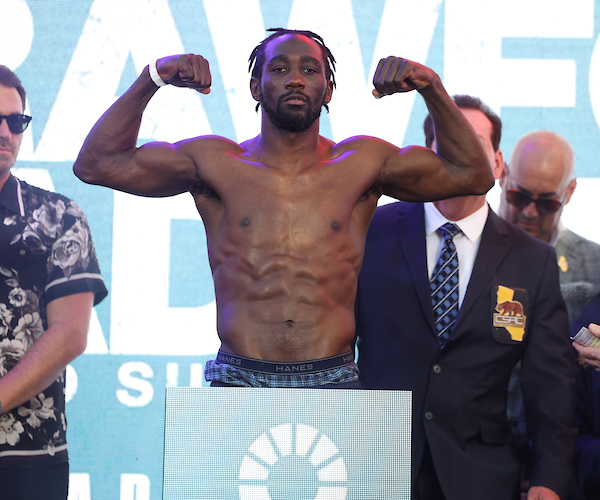
Terence Crawford’s retirement is being called a surprise. Even a shock. But is it? Really? Or is it just consistent, another thread in a career defined by a stubborn, defiant brilliance?
After all, Crawford, unbeaten and uncompromising, always defied expectations.
In retiring this week just three months after his masterful victory over Canelo Alvarez, he simply did what he’s always done.
Beating Canelo was unexpected, even in the way he accomplished it. A dynamic finisher throughout his career, he instead scored a decision, dismantling a confused Canelo with a comprehensive skillset throughout 12 rounds. It was another example of Crawford doing what nobody thought he could or would.
Boxing’s cynical wisdom, of course, dictates that skepticism be attached to any retirement. History tells us that no retirement is complete without a comeback or three.
“History is never retired,’’ Crawford said Tuesday in his social-media announcement.
But it does get re-written as new generations produce moments and fighters with their own timeless claims and challenges.
Guess here: Crawford’s legacy – three undisputed titles at three weights – will evolve. For now, there’s an intriguing debate about who was better, Crawford or Floyd Mayweather.
Their eras overlap; their styles were different; their ring IQs were similar. There’s no real answer to who was better. Never will be.
But the debate itself suggests that both could have held their own during a golden era defined by Four Kings, author George Kimball’s book about Sugar Ray Leonard, Marvin Hagler, Thomas Hearns and Roberto Duran. If Crawford and Mayweather were fighting then, there might have been six kings.
Crawford’s pursuit of legacy looks to be genuine, even more so than the one created by Mayweather, who has continued to pursue money in exhibitions after ending his real career at 50-0 against mixed-martial artist Conor McGregor.
The often-edgy Crawford is known for a lot of things. Above all, he’s authentic and so is his 42-0 record. He could risk that with a comeback many believe could happen next September in a rich rematch against Canelo, who reportedly had already been seeking a chance to avenge the one-sided loss he suffered at Vegas’ Allegiant Stadium.
Big money is the draw, and $100 million is as big as it gets. There has already been speculation that’s the number Crawford asked for when rumors surfaced that Canelo wanted a rematch. Canelo, the longtime face of Mexican boxing, got $100-million-plus in September, according to Saudi Prince and promoter Turki Alalshikh.
One-hundred million changes minds. It’s a fortune Crawford couldn’t ignore, especially against somebody he’s already beaten decisively.
But the risk that lurks is in a number not preceded by a dollar sign. This is about time, measured by years instead of dollars. Crawford, who collected a reported $50 million for beating Canelo, will be 39 next September.
In the here-and-now, his retirement sounds genuine. It takes him away from the rigors and risks of thinking about another opening bell. It also preserves a legacy he knows is already his.
A loss, at any price, wouldn’t destroy that, but it could tarnish the unbeaten record and put him at risk of losing the argument about how his all-time resume stands up against Mayweather.
Whatever happens, his announcement does Canelo a favor. Belt-less for the first time in years, it offers the Mexican a couple of paths back to a world title.
In early December, the World Boxing Council created an alternate path back to a world-title belt by stripping Crawford of the super-middleweight version and then ordering that the vacancy be filled by the winner of a Christian Mbilli-Hamzah Sheeraz fight.
Two weeks later, Canelo, who is recovering from elbow surgery, figures to have a few other options back to IBF, WBO and/or WBA belts vacated by Crawford’s retirement.
The WBC decision was dominated by the controversy brought on by Crawford’s profane social-media counter to the ruling body, which said it took the belt because Crawford had not paid sanctioning fees, reported to be $300,000.
The subsequent furor might set the stage for fundamental change in the boxing-business’ hierarchy. But Crawford’s announcement Tuesday also suggests that the belt didn’t mean a damn thing to him any more.
Instead, he was angered by the WBC going public with why it was making the move. Intended or not, the WBC provoked a Crawford reaction. The proud Crawford, already known for not suffering fools gladly, is even more contemptuous of anybody who tries to make a fool out of him.
He fired back with familiar fury. A personal memory: I’ve long believed that it’s hard to understand Crawford without having seen him fight in Omaha, his hometown. The midwestern city is in his DNA. It’s a long way from the Vegas strip, New York and LA. By boxing standards, it’s in a different universe.
Omaha is a city most great fighters leave. But not Crawford, a loyal son who fights for it with tenacity.
In October 2018, I was there for a fight against Jose Benavidez Jr., David Benavidez’ older brother and then still a welterweight contender. The fight was preceded by trash talk, some of it racial.
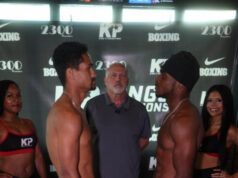
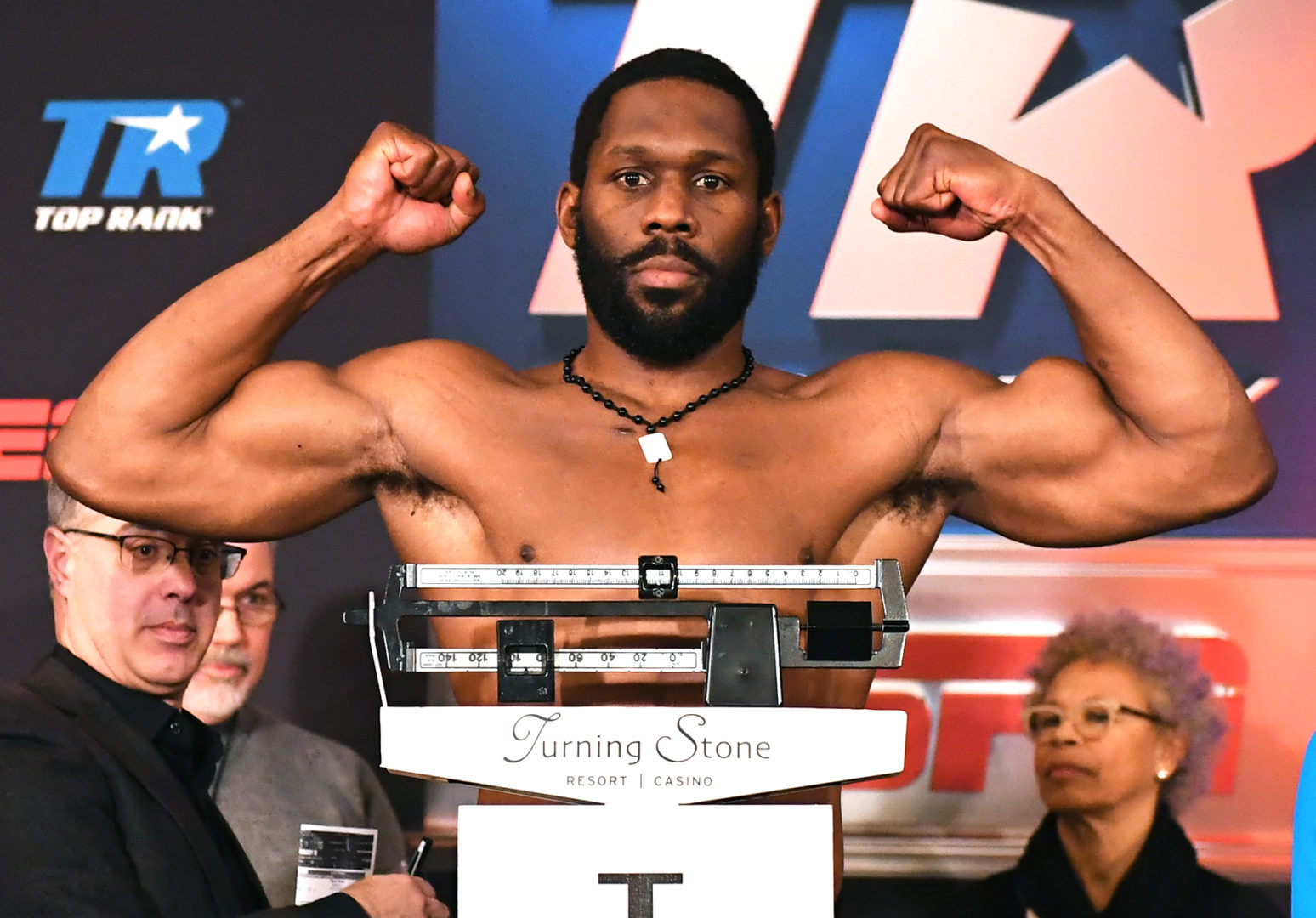
At the weigh-in, things came to a full-blown boil. Benavidez, Phoenix born-and-forged, reached across the scale and shoved Crawford.
Crawford quickly reacted as though he was enraged at somebody trying to embarrass him in front of hometown fans. He threw an uppercut, one that was intended to land, yet narrowly missed Benavidez’ exposed chin.
The fight was allowed to proceed. The next night, however, Omaha police were on alert. Armed officers filled the ring before opening bell and were present throughout the building throughout the fight. The place was jammed with Crawford fans, including famed investor Warren Buffett.
Surprisingly, a fearless Benavidez survived 11 rounds, but Crawford finished him with an uppercut followed by two right hands in the final seconds. The crowd went wild, roaring almost as if Crawford, one of them, had won one for them. Within the ropes, retaliation is fair play. Crawford delivered it with authority.
And authenticity. Benavidez was never the same.
In the end, it’s the authenticity that people see in Crawford. Another personal experience: As I finished writing last September and left my seat in the Allegiant Stadium press box high above the ring, I stepped into the elevator. An older woman was the elevator attendant.
As we headed down to the first floor, she looked at me and smiled:
“I love Terence Crawford,’’ she said. “There’s nothing phony there.’’
Nothing phony in that retirement, either.