For an article about Mike Tyson, click here

By Bart Barry–
miketyson
SAN ANTONIO – This column was supposed to be about a live theatrical performance by Mike Tyson, a review of sorts from ringside by a writer who lives above the historic Majestic Theatre, downtown, and attends most Broadway-musical productions that visit. “Mike Tyson: Undisputed Truth” was scheduled for Saturday night in the Lila Cockrell Theatre, a 2,000-seat venue attached to this city’s large and expanding convention center. A boxing-trainer friend would stop by, and we would amble 10 minutes along the River Walk to the edge of HemisFair Park, home of the Tower of the Americas and the 1968 World’s Fair.

Instead, Thursday night brought an announcement there would be no Mike Tyson. Sluggish ticket sales were cited. It’s no wonder. There aren’t five of us in this city who write regularly about the sport, and few of us knew about Tyson’s performance till Monday evening at Cowboys Dancehall, where Leija-Battah Promotions presented a main event that would prove Rocky Juarez’s last – and yes, these things share a thread.

Between Monday’s card, which Tyson did not attend, and Saturday’s scheduled performance, the excellent and deservedly celebrated musical “Chicago” began a six-show run at Majestic, with the uniquely talented Mexican actress Bianca Marroquin shining in the role of Roxie Hart. To watch Marroquin act and sing and dance, and somehow project subtle gestures hundreds of feet – and this, along with the live nature of stage acting, is what makes it a craft of such greater depth and refinement than anything that happens on a movie set’s 41st take before the tightly cropped frame of an HD camera – was to be blessed with an entirely too-infrequent reminder about talent: It is inarguable.

If ever you find yourself preceding an assertion of some artist’s talent with the words “really” or “actually” you should treat those adverbs as alarms: You don’t mean what you’re about to say, you are not convinced, and you hope to argue your way into a faith in that artist’s talent while stiffening that hope into a conviction by way of others’ affirmation.

On a stage filled with touring professionals, most in the same costume, Marroquin was the figure one’s eyes immediately found, often without seeking her. The foundation of her stage presence – and this is what acting shares with all other arts – happened in the layers with which she entertained. This is something that transcends mere range, which is a flat spectrum that delineates how many distinct characters an actor can portray; Marroquin’s presence was created by the number of emotions she portrayed at the very same time. Much of that is excellent writing, even more of it is a character, Roxie Hart, about to celebrate her 40th year of performance – and what richness the geology of creativity produces in a character subjected to time and pressure by talented actors’ interpretations of her – but the execution of a transcendent performance, finally, belongs to the stage actor alone, an artist talented and textured enough to invent pleasant surprises between scripted lines.

These notes about talent and texture and transcendence refer directly backwards to Houstonian Rocky Juarez, who announced his retirement immediately after losing lopsidedly Monday night on the northeastern outskirts of this city. It is rare, anymore, almost miraculous, unfortunately, that a prizefighter, or any professional athlete, can summarize his career coherently, but Rocky did it over the PA system, Monday, closing a short goodbye speech thusly:

“I had a great run. And I tried, I tried. I love you guys. Thank you.”

“And I tried, I tried” – those words capture perfectly the often-frustrating arc of Juarez’s run as a world-title challenger. In 2005, Juarez lost a very close decision to Humberto Soto for an interim world title. Nine months later, he beat an underprepared Marco Antonio Barrera, only to hear a questionable draw decision announced, only to see it later changed by the California State Athletic Commission to a split-decision for Barrera. Four months after that, Juarez was undressed by Barrera in their rematch. Fourteen months later, Juarez went to Tucson to challenge the master Juan Manuel Marquez for the title Marquez took from Barrera, and Marquez beat him soundly. Fifteen months after that, Juarez drew with Chris John before losing another rematch decision seven months later. A three-year losing streak ensued until Golden Boy Promotions brought Juarez to this city late in 2012 to lose to Antonio Escalante – but Juarez ruined Escalante in eight rounds.

Juarez did not quite have talent enough for a transcendent performance; his silver medal at the 2000 Olympic Games played as his career’s metaphor well as his farewell address captured his profoundly honest efforts as a prizefighter.

Mike Tyson had transcendent talent and only partially squandered it with the many poor choices he made during his adolescence, prizefighting career and retirement. His cancellation of a performance in San Antonio will not be tallied among these – it’s doubtful Tyson even knew he was supposed to be in Texas last week – but it will work as a tidy reminder how ephemeral comebacks in boxing are.

In 2013, HBO put the full might of its marketing programs behind Tyson’s next comeback, stage performer, and boxing writers dutifully wrote ad copy for “Mike Tyson: Undisputed Truth” in time for HBO’s presentation of director Spike Lee’s cinematic adaptation of Tyson’s soliloquy. Tyson, too, was a boxing promoter, we learned, and bringing his charismatic self wrapped in a feelgood bow to that enterprise.

Now it is 2015, and Mike Tyson just cancelled a show because the public has lost interest.

Bart Barry can be reached via Twitter @bartbarry


Retired: Juarez loses to Castellanos and calls it a career

SAN ANTONIO – Rocky Juarez spent his career being an honest prizefighter who never quite found within himself a transcendent performance when the occasion demanded one. Monday’s match was no exception, and Juarez’s retirement, announced immediately afterwards, was no surprise.

Fighting in the main event of a good card at Cowboys Dancehall, Houston’s Juarez (30-11-1, 21 KOs) dropped a lopsided and unanimous decision to Mexican featherweight Robinson Castellanos (21-10, 13 KOs) by scores of 118-106, 118-106 and 118-107.

“I wanted to announce my retirement today,” Juarez said over the PA system while still in the ring. “This will be my best time to announce that – here, in my home state, in front of my family and friends.

“I had a great run, and I tried, I tried. I love you guys. Thank you.”

After an opening pair of uneventful rounds, rounds in which the significantly shorter and older Juarez could not close distance easily as he might have in bygone years, the Houstonian began to impose himself in the third, bodying the larger Castellanos and driving him several times to the ropes, where Juarez had a few chances to score.

In round 4, Juarez’s age began to tell more than his experience, though, and with his balance compromised by older legs, Juarez began to have trouble timing his lanky opponent. Round 5 saw Juarez overcommit to a left hook, spin in a trance, and lose his footing. Juarez’s slip was incorrectly ruled a knockdown. Solace, though, came in the form of a large cut over the outside of Castellanos’ right eye.

The sixth round was an excellent one, with each man having to be shown to the doctor to verify the dangers of cuts sustained over his eyes. The seventh was more of what its predecessor comprised, with Juarez getting a close-quarters firefight, whether he wanted one or not.

In the eighth, Castellanos’ punches continued to tell, with a series of right uppercuts moving Juarez backwards involuntarily for the first time in the fight. The ninth was another brutal affair, with Castellanos’ face beginning to swell and bleed disproportionately more than Juarez’s.

With both men worn and exhausted going into the championship rounds, the pace slackened slightly in the 11th. Juarez’s short and crisp punches lost most of their snap, and Castellanos’ long and looping right hands becoming wider and wilder.

The final round was not kind to the aged warrior Juarez. Despite, or perhaps because of, a characteristically honest effort throughout, Juarez’s legs abandoned him in the 12th, dropping him on the canvas thrice – as much from exhaustion as punishment. Juarez rose all three times and rallied to fight Castellanos off him in the closing seconds, but it was little more than a moral victory for Juarez, for whom the 12th round made a points victory mathematically impossible.

Juarez’s honest fighting style and serious approach to our beloved sport set him apart and will be sorely missed.

KEANDRE GIBSON VS. NELSON LARA
Monday’s co-main event, undefeated Nevada welterweight KeAndre Gibson (12-0-1, 5 KOs) against Nicaraguan Nelson Lara (15-7-5, 8 KOs), began like a matchup all too commonplace in prizefighting today: An athlete who hates being hit against a journeyman too slow to imperil him. As the second round began, though, the athlete opened up, the journeyman began to land, and entertainment suddenly happened.

However lopsided the official scores – three tallies of 80-72 for Gibson – the evening’s co-main was an excellent fight, and a stiff test for Gibson, who earned every round he narrowly took from Lara.

The close of the third round, the match’s most competitive minute to that point, even saw the Nicaraguan land a flurry that brought a rousing cheer from the partisan-Latino, South Texas crowd.

By round 7, with both fighters winded, Gibson began to body the smaller man, wrestling him to the ropes and going to work on him from close quarters. It may have been a tactical error, though, as Lara, finally able to make contact with Gibson whenever he wished, began, by round’s end, to get the better of their exchanges.

But Gibson worked hard through the eighth and final round, winning a fair and unanimous decision.

Gibson may look the part – with a Las Vegas pedigree and statuesque physique – but the truth is, right now, he lacks the power to get guys out of fights in early rounds. And the later his fights go, the wider his mouth opens, and the more his impressive musculature begins to hinder him.

JAVIER RODRIGUEZ VS. QUINICE WESBY
Light-hitting local favorite Javier “Pitbull” Rodriguez (12-0-1, 2 KOs) brought his undefeated record to Cowboys Dancehall, a venue at which Rodriguez always sells plenty of tickets, in Monday’s swing bout against Dallas featherweight Quinice Wesby (2-8), an awkward specimen, and Rodriguez also brought a desire to change his reputation as a light-hitter.

After measuring Wesby with left hooks through the opening four rounds of the match, Rodriguez caught Wesby with a lead left hook that put his lights clean out and required no ten-count, winning by knockout at 0:49 of round 5.

Rodriguez won every round against the overmatched Wesby, whose bizarre stance and attack, his lead hand held almost as though his arm were broken, undermined his own offense more than it affected Rodriguez’s.

While Rodriguez continues to build himself as a local attraction, and ensured even more tickets will be sold with Monday’s excellent finish, one still worries what shall come to pass if and when his competition improves, and he has to fight aggressive opponents with good chins off him.

UNDERCARD
The evening’s fourth match, San Antonio lightweight Christian Santibanez (1-3) versus Austin’s Albert Romero (2-3-1), brought a loud reaction from the previously subdued crowd, as each man plied his limited wares in an aggressive manner that complemented the other. Romero prevailed by three scores of 39-37 in a fun, competitive match.

Before that, an uninspired six-round affair happened in the super featherweight division, as Texan Arturo Esquivel (9-2, 2 KOs) and Californian Jesus Sandoval (4-5-3) pawed and slapped their way to a close match official judges nevertheless saw for Sandoval, 60-54, 60-54 and 60-54.

Monday’s opening match, a lightweight showdown between two Texans, Robstown’s Robert Vela (11-0-2, 5 KOs) and San Antonio’s Ramiro Torres (4-28-1, 2 KOs), saw through most of its four rounds no way to distinguish the undefeated fighter from the one about to experience his 28th career loss. Despite the match’s unexpected competitiveness, though, the official scores for Vela were fair, going 39-37, 39-37 and 40-36.

Opening bell rang on a semi-full Cowboys Dancehall at 7:00 PM local time.


With Mile High Mike as my mentor

By Bart Barry-
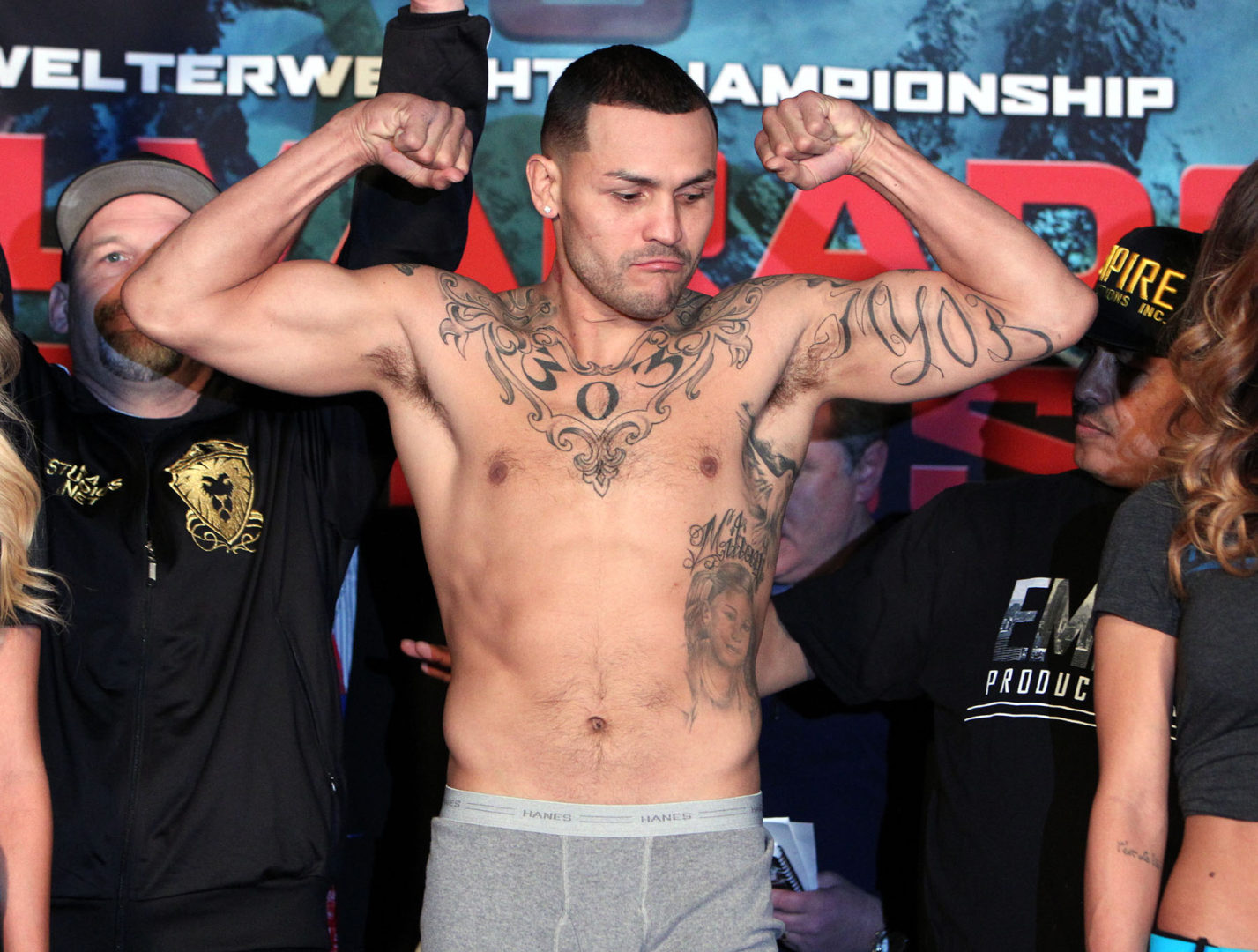
Mike Alvarado
Ring the bell already, fool.

I’ve written so many great columns in the past. That’s why you read me. And I’m more prepared for this column than any of those. This is the column for not just readers but writers, too, because they know what hard writing looks like. It’s for the readers also, don’t misunderstand, especially readers in the 210, Alamo City – throw up the Spurs sign, y’all!

First time I covered “Mile High” Mike Alvarado, I didn’t listen to my editor, and I got too aggressive, went on and in about what an athlete he is, and then he lost to Brandon Rios, and I found a way of not admitting I was wrong. Real writers call that semantics. Haters call it hypocrisy. Whatevs, dude.

All I know is that it takes a lot to put yourself out there in print every damn Monday for readers to judge you, always with the niggling about three or four disagreeable words of a 1,000, none of the critics able to make a coherent toddler’s thought in 140 characters, not words, characters, but full of advice for a writer who brings it every time his hands bless a keyboard. Real recognize real, though, and real readers know real writers don’t need to read or worry grammartical about, like, because being a writer is something you either got inside you or don’t, and I’m a writer to the bone because I came up round real wordsmiths, eloquent folk, creative types unconstrained by deadlines.

Really, with the deadlines thing again? Fine. Here we go:

Technically my column is due on Sunday nights. Christians, you see, treat Sunday as the day of the Sabbath. My editor is on the East Coast. I’m in the 210 – for life, playa! – and there’s this time difference. And I don’t mean daylight savings, either, OK? So if it’s midnight in Alamo City, then it’s not midnight on the East Coast. Simple mistake. I’m sure lots of writers make it.

All I know is this: I’m a writer, I make sentences from words, paragraphs from sentences, pages from paragraphs, and sometimes runon sentences when prepositional phrases get mixed in later and forget to correct them, in there, go back, and I’m not saying I’m perfect because nobody’s perfect, and y’all can’t judge me.

Mail in this column like I don’t give a, um, dickens? Not me:

When even the noblest fighters begin to . . . nah. When a fighter who once frequently boasted he’d not been felled, amateurs or pros, in . . . whatever. It’s a new thing, this punching effect, and as luck would have it, being concussed can compromise ocular . . . next time. To sabotage the rudimentary how-many-fingers quiz, yell out an even multiple – seeing double! – evinces a brain unscrambled enough to know its times-tables, and reveals a bit of the roguish . . . later.

No, well going? Probably should an have outline tried. thought Even a few moments private of or. Something to who loyally my readers show came to this with the page expectation, right wrong under, write hard I could, as true, and prepared work to be all that it takes day, what! I’m a little unhappy for myself with. My editor is with for myself for way unhappy me. This very is badly. see Got it published too SOON. my mom, my sisters, people I came up with, other writers, anybody reading this! peeps in the 210,,

Can I get a word count?

Damn. There’s no way 573 makes 1,000.

*

This column was not my best work. My readers know this wasn’t the real me. They know I’ll return. I’ve got to go back to the usage dictionary. Yes, I’m angry with myself! There, I wrote it. That means y’all better not be mad with this effort or you’ll look like bullies for piling-on a man when he’s down.

Clever, eh?

Wait, I got lots more.

Where were these words, this clarity, when I was supposed to be writing an original commentary in my weekly column?

(Editor’s note: One more nasty, sarcastic or satirical comment about Bart’s writing, and I’ll block you. After what he’s given this column? Show some damn respect!)

One bad column. One column, one, where maybe I was distracted by assembling that Ikea chair I got yesterday. A column where maybe there’s a weighin this afternoon, 20 minutes away, for a Monday night card, and it’s at 1 P.M., and I’ve already got plans for tonight, and so there may not be time to give this column my everything.

I’ll be back. Next Monday. Y’all gonna see. The readers who stand by me, I give them nothing but love from the 210. The doubters ain’t gonna win this one. Hell no, I’m not about to stop writing. I’m a write till the day I die.

There’s nothing else in the world I’m good at. And I’ve got too much free time.

Bart Barry can be reached via Twitter @bartbarry


Deontay Wilder, and an aficionado’s permission slip

By Bart Barry-
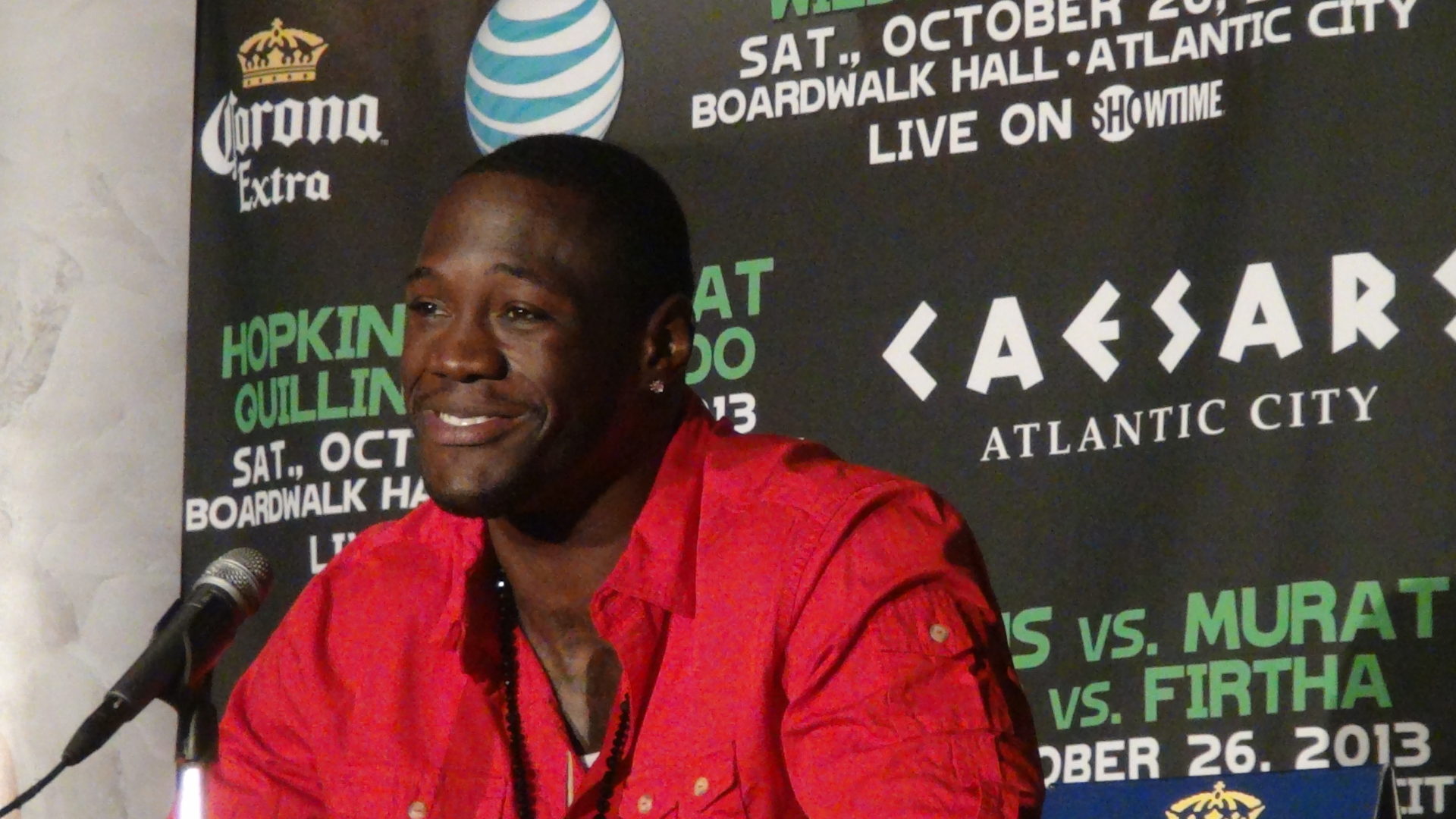
Deontay Wilder
Saturday in Las Vegas, undefeated American heavyweight Deontay Wilder saw his 32-fight knockout streak come to a quiet end against Bermane Stiverne. Expected to force a violent conclusion to the match, regardless of victor, Wilder instead cautiously and exhaustedly made his way to the closing bell and won a wide decision, 120-107, 119-108 and 118-109. Stiverne, who wore a title of some sort during his ringwalk, fought like a man trained and conditioned for an entirely different affair than which one his contract mandated.

And American boxing fans, in all our learned helplessness, dutifully expressed pride, surprise and admiration for our new partial titlist in the heavyweight division, saying things like: “I was really impressed with Wilder’s intelligence, prudence and temperament.”

It’s incredible to’ve been reduced to this. There was genuine interest in Wilder’s match with Stiverne, despite a half-full and probably papered MGM Grand Garden Arena, and none of that interest, not an iota of it, reduced to someone’s hankering for a show of intelligence, prudence or temperament. Not a jot. Much as boxing fans were instructed to do in November immediately after a man named “Krusher” imperiled not once a quinquagenarian in 36 minutes of trying, though, Saturday’s match, a frankly dull 12-rounder, caused us to cast about for expressions of marvel at a fight, expected to be violent and shortlived, that heard its final bell.

That result is not incredible or amazing for having such a minority of prognosticators predict it; that result is disappointing in a fundamental way. The reason no one predicted a decision victory was because American fans wanted so badly for someone new to emerge in the heavyweight division, someone American, and Wilder would be that man, decapitating the crafty Stiverne sometime between early in the fight and its opening bell. Instead, American fans’ ardor gets obtunded, once more, to protesting we didn’t expect what we got, though, really, it’s for the better, I mean what did we know, actually, in an odd sort of way, the disciplined, cerebral decision victory was truly much much better for everyone involved than the violent knockout we begged for.

Does any other sport demand from its spectators so much narrative-lugging, forgetfulness and self-loathing?

There is a large difference, though, between being disappointed in Saturday’s fight and being disappointed in Deontay Wilder. I sat ringside in Tucson for Wilder’s sixth and seventh professional matches, first round knockouts of men with a cumulative record of 4-6-2, and had anyone told me – and possibly someone did – Wilder would someday be a titlist in the heavyweight division, I would have scoffed at the suggestion, made a corruption quip, or predicted his matchmaker, whoever that might be, would go in Canastota on a first ballot. Wilder had size, a right hand, and athleticism, but otherwise he was like every other American heavyweight who tries boxing after washing-out of two or three other sports. Wilder was an athlete, ever and again, not a fighter.

That assertion stands, however much Wilder continues to exceed initial expectations. One other thing: Wilder is a charismatic guy you’re right to cheer for.

Before Wilder’s seventh prizefight, a round 1 shellacking of a lad named Travis Allen, colleague and friend Norm Frauenheim agreed to a friendly over/under bet placed at 90 seconds. While I no longer recall which way Norm went, I do recall this: When the official time got read, “one minute and thirty seconds of the first round,” we needed a tiebreaker. It seemed only just to ask Wilder’s opinion. When he visited press row, we sought his counsel, since his knockout came right on our number. Wilder looked down, pondered the question, looked up, shined his infectious smile, and said, “I would have bet the under.”

That a man with such limited boxing experience and skill has parlayed his size and athleticism to a title of some kind, in a way none of thousands of other similar such American heavyweights has managed, is wonderful for Wilder. His personal achievement should be applauded, and Wilder himself should be supported. To pretend Saturday was a victory for our struggling sport, though, is an absurdity.

Let us set our pompoms down once more, too, and reflect on how unseemly the final two minutes of Saturday’s match were when set against the first 30 seconds of postfight celebration. Wilder leaned and clinched and clung and absorbed Stiverne’s ineffective aggressiveness for most of the final 120 seconds of Saturday’s match, doing a successful imitation of a man riding a nag named Exhaustion in circles round Death’s abode. Then the final bell rang, manager Al Haymon’s flunky reported his dancing shoes to the blue mat, and Wilder came alive. As Muhammad Ali rope-a-doped George Foreman in 1974, Deontay Wilder rope-a-doped Showtime viewers in 2015. His fatigue was a ruse! He wasn’t really too weariful to stop Stiverne; he was conserving energy for a ferocious postfight microphone session. In an extraordinary display of incongruence, Wilder, who’d appeared not to take a single Stiverne punch personally in seven minutes, unleashed a wrathful display on Showtime’s innocent and defenseless cameras, whacking his own chest and roaring about his boxing ability, before turning his suddenly ungovernable rage towards press row, where he repeatedly shouted haterswards: “Who can’t box?”

One snickers to think what Wladimir Klitschko – who, on a bad night, wouldn’t need 10 rounds to ice both Stiverne and Wilder – thought of America’s savage new champion of the heavyweight division.

Bart Barry can be reached via Twitter @bartbarry



Column without end, part 3

By Bart Barry-
2014-12-09 21.23.59
Editor’s note: For part 2, please click here.

*

MARFA, Texas – This city sits in a little known region of our country called “Big Bend” for the curve the Rio Grande takes. There is a national park that boasts Texas’ most challenging and beloved hiking trail to the top of the Chisos Mountains, but the basin of the Chisos is a 2 1/2 hour drive, despite being only three towns over. Texas is secluded or lonely, depending what one makes of solitude, and rugged.

Marfa is the town 20th century minimalist sculptor Donald Judd chose for the creation and display of his work. While he divided his time between Texas and New York, he prized the light and vastness of the American Southwest, and today Marfa is both a town and a Judd museum of sorts.

Donald Judd was more than indifferent to art museums; he was hostile to them. He recognized the de facto mediocrity of anything done by a committee, an arrangement in which, by definition, consensus is more important than quality – where the lowliest members win by filibuster, and the one or two talented members either acquiesce from exhaustion or resign immediately. Judd did not trust either the curatorial process, and he sure as hell did not trust the light in which his works would be displayed.

Judd’s academic work at Columbia University was in philosophy, not art, and his promiscuity of literary taste – he read both widely and deeply – gave him an iconoclastic bent not appreciated by the artistic community, which in its tastes and associations reliably followed and follows the academy’s definition for diversity: People who look different and think the same. Judd, contrarily, understood the scandalous diversity of unfettered human thought. He read in English, Spanish and German, one notes from the volumes on the pinewood shelves he had made for his library, and perhaps a dialect of sorts, too: Catalan.

There was in Mr. Judd’s library a disproportionate emphasis on Barcelona, City of Gaudi.

Judd wrote widely, more than 600 articles of artistic criticism, and made acquiantenceships and often friendships with his subjects. He called his own forays in painting “sophomoric” and soon abandoned the medium altogether, moving from painting’s illusion of three-dimensionality to the actual third dimension via mixed media and the minimalist sculptures for which he would gain recognition and celebrity and a fortune.

Judd was right not to trust museums. Seen in museums, held in isolation from their comrades, hung on a wall among complicated paintings or stood on a floor among other busy creations, Judd’s simple shapes and flawless lines can look ironic, lazy and dull. Seen within edifices he selected for their light and spatial properties, seen in other words, in the exact single spot on earth Judd intended his works to be seen, Judd’s minimalist sculptures are another thing altogether. They glow. One looks forward to each new roomful of them. Bathed in natural light that descends at the artist’s chosen angle, these metal boxes and fibonacci progressions invigorate the spirit with their perfection.

Judd did not make mistakes, and in this way, like his works, he was unnatural in his creative process. Every room among the many properties Judd acquired in this small Texas town – population 2,500, 200 miles east of El Paso, 400 miles west of San Antonio – whether a studio or gallery or architectural workspace, contains somewhere a bed, as if to conquer nature’s most subversive tactic: fatigue.

Judd broke with a foundation he created over touring works of his he felt were permanently installed and not to be moved. He believed passionately an artist is responsible for the space in which his pieces are seen as he is responsible for the quality of the pieces themselves. It is maniacal, probably, but it is also great – and when given the choice between sublime experiences born of mania and mediocre experiences born of soundness, one should choose the former, or choose to stay in his hotel room watching television (the latter).

Juan Manuel Marquez – that is who came to mind as I stood in Judd’s library, squinting to see if there might be a column to make of the experience. Marquez, because summoning in cold blood an offensive precision and perfection of attack is not natural – whereas flinching and feinting and desperately endeavoring to avoid an attack from man or beast is exceedingly natural, however efficiently performed. And also the creation of a specific space in which one might exhibit his work, a space that shapes the art made for it, over time, more than any single work in the space itself, and this idea of Judd’s is large and flexible enough to comprise everything from an airplane-hangar-cum-museum to a prizefighting career to a single prizefight to a column ostensibly dedicated to prizefighting’s celebration: Take as much care with creating a space for your work as your work itself.

No one who comes to Marfa or visits Chinati Foundation comes away from the experience thinking: If only Judd had cared a little more, this would be perfect. Notice, too, no commentator questions the precision of Marquez’s punch placement or where he chooses to invest his offensive output in the early parts of a prizefight, creating, as it were, a space in which his finishing blows might find greatest effect – because “Dinamita” is a historic closer.

And as this space, too, continues to grow in directions senseless as they are satisfying, each contribution must find its own way . . .

*

Editor’s note: For Part 4, click here.

*

Bart Barry can be reached via Twitter @bartbarry


Portrait of HBO’s most-viewed fight of 2014, part 2

By Bart Barry-
2014-12-28 11.07.18
Editor’s note: For part 1, please click here.

*

The week that began in February, ended in March and became the pinnacle of HBO boxing’s viewership feats in 2014 did not fool any of its participants or witnesses and still hasn’t. The ratings phenom who is Julio Cesar Chavez Jr. is not phenomenal at all when his numbers are put against nearly any other televised athletic competition, and his rematch with Bryan Vera in March was treated with contempt by most aficionados who treated it at all.

Then there was its choice of venue, a city in Texas – most despised of all boxing states by pundits who do not reside here. Chavez returned to Texas, place of lost drug tests and delayed weighins and scorekeepers decried by Paulie Malignaggi, to ensure he was given benefits of the doubt California and Nevada occasionally show dereliction in granting Son of the Legend, but this time he didn’t much need them.

There was a doubt in no one’s mind but Vera’s and maybe Ronnie Shields’ that a semiserious Chavez would beat Vera convincingly, and what suspense remained after the weighin expired with Chavez’s tardy arrival at the arena, as there were rising doubts at ringside he would bother being in his dressing room at his HBO- or commission-appointed time. Chavez does not care a whit about American television; he knows the herculean efforts made to keep him off premium-cable airwaves during the early part of his career, he knows his ratings happen in spite of HBO’s coverage of him and not because of it, he knows fully half his American audience watches solely in the hopes his ass gets beaten nearly to death, and he knows 90 percent of the other half of his viewers do so out of abiding loyalty to the Legend, not Son of.

Chavez Jr. is a millionaire despite his worst efforts, and he is just aware enough to be tickled by it. If you need a reason to like the kid, try this: He’s made absurdity his business partner.

*

The week that began in February, ended in March and became the pinnacle of HBO boxing’s viewership feats in 2014 gave the IABWA an occasion for its first meeting of the year. The association, such as it is, was born of Kelsey McCarson’s perennial rejection by the BWAA’s membership committee, and it was born of camaraderie, not protest; the folks who run the BWAA are for the most part good and decent, and Kelsey is good and decent, and if the two sides ever had aligned it would have been happier for both but much sadder for Kelsey’s followers on Twitter who so enjoy Kelsey’s satirical criticisms of the true boxing writers association.

We are all better and funnier than our public faces, and this holds particularly true for boxing writers – a group of talented and often hurt people describing other talented and hurt people hurting people.

There may be no better place than ringside, whether in Michigan or Colorado or Arizona, but in San Antonio, the next best place is McNay Art Museum, The McNay, where I took my friend and houseguest David Greisman hours before Chavez-Vera 2. David liked the pieces by Picasso, Matisse, Renoir and Mondrian well enough, but none of them resonated with him quite nearly like lines from his beloved E. E. Cummings do.

*

The week that began in February, ended in March and became the pinnacle of HBO boxing’s viewership feats in 2014 saw more of Russian light heavyweight titlist Sergey Kovalev than one anticipated. He was at a Doubletree mixer with promoters and managers and HBO handlers, he was at a special-access dinner at A—-r, he was ringside at Alamodome, and he was at Mi Tierra restaurant after Chavez finished beating Vera. He wore a full beard and showed a Russian interpretation of a trait once attributed to American President Richard Nixon: His smile and his face did not appear to be in the same place at the same time.

Kovalev sold menace, mostly, and the more menacing for failing to be in any coherent way friendly while publicly playing a friendly person. That he was later unable to beat Bernard Hopkins to unconsciousness tarnished his menacing image more than anyone now admits and few will realize for the next two or three years of relentless HBO promotion, and the contortions Kovalev’s absence of menace in November bent aficionados into would be amusing were they not tragic:

“No, no, a knockout, what? No! I wanted to see Kovalev cautiously outpoint a man about to turn 50. I wasn’t sure he could do it, and man, when he did, it made my year!”

Right, guys.

*

The week that began in February, ended in March and became the pinnacle of HBO boxing’s viewership feats in 2014 was seen by most who gathered round the Alamodome for the Friday weighin as the starter’s pistol for another decent year to come. Had you asked any of them if they believed the next evening’s match would be viewed by more HBO subscribers than another, to a person, they would have chuckled or said no or chuckled and said no. It was a testament to 2014’s overarching badness that in almost 300 days of trying, HBO made not one, more-enticing offering to its subscribers than Chavez-Vera 2.

The incongruent wardrobe of my return to television beneath a shower of ferocious South Texas sunlight brought to mind an old Chris Rock bit about a Sir Mix-A-Lot video in which the rapper wears a mink coat at a Seattle carwash where everyone else dances in bikinis. But never mind that.

People look to experts for authority. I was authoritative.

And just about perfectly wrong from beginning to end.

Bart Barry can be reached via Twitter @bartbarry


Portrait of HBO’s most-viewed fight of 2014, part 1

By Bart Barry-
2014-12-28 11.07.18
The week that began in February, ended in March and became the pinnacle of HBO boxing’s viewership feats in 2014 began on a Thursday with dinner at La Gloria restaurant in the Pearl Brewery complex of the northern part of downtown San Antonio, a dinner that marked the first of the year’s biannual meetings of the Irish-American Boxing Writers Association and concluded with a trip to the airport to retrieve a perennial winner of awards from the Boxing Writers Association of America.

Those 7,323 of us gathered at cavernous old Alamodome on March 1 were wholly unaware we were witnessing HBO history when Mexican “Son of the Legend” Julio Cesar Chavez Jr. beat up Austin’s Bryan Vera in a super middleweight match legally conducted below the 168-pound limit, but we were. It was that rarest-of-all historic event: One forgotten entirely for nine months by its witnesses. Not until HBO announced a few weeks back no boxing broadcast of this lamentable year surpassed in viewership Chavez’s sole match of 2014 did we, its witnesses, realize our great good fortune.

Those who might otherwise conflate the words historic and historical, take note: Chavez Jr.-Vera 2 was historic because every time Son of the Legend dons the gloves, something “famous or important in history, or potentially so” – and do mind that last clause – happens, and it was historical because HBO’s announcing not one of its boxing broadcasts in the final 297 days of the year had more viewers marked on HBO’s enduring record that Chavez Jr.-Vera 2 was indeed “of or concerning history.”

Forget not, either, this historic and historical broadcast featured Mexican Orlando Salido’s relentless assault on the protective cup of an undefeated Ukrainian, Vasyl Lomachenko, who, it turned out, was fighting for a title in only his second professional match that was actually his eighth.

There was a prefight promoter meet-and-greet followed by a special-access dinner that Friday, too, with Sergey Kovalev, the Russian light heavyweight who would decision while barely imperiling a 49 5/6-year-old Bernard Hopkins in November.

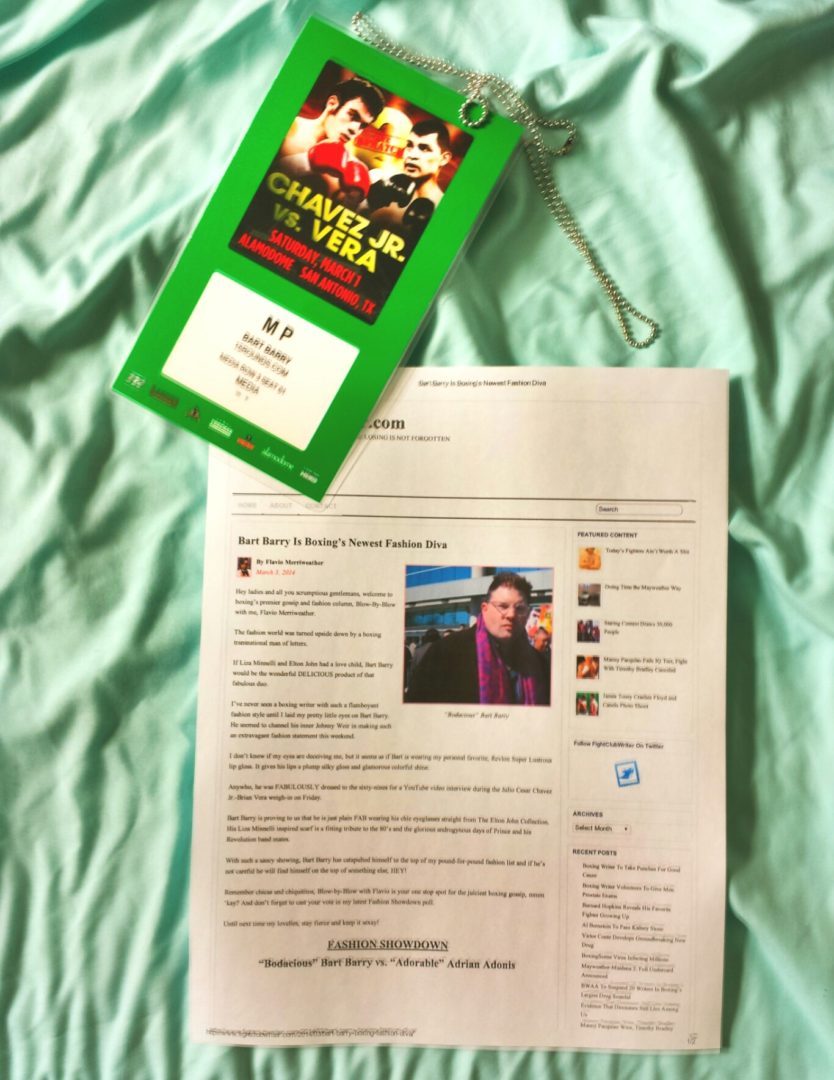
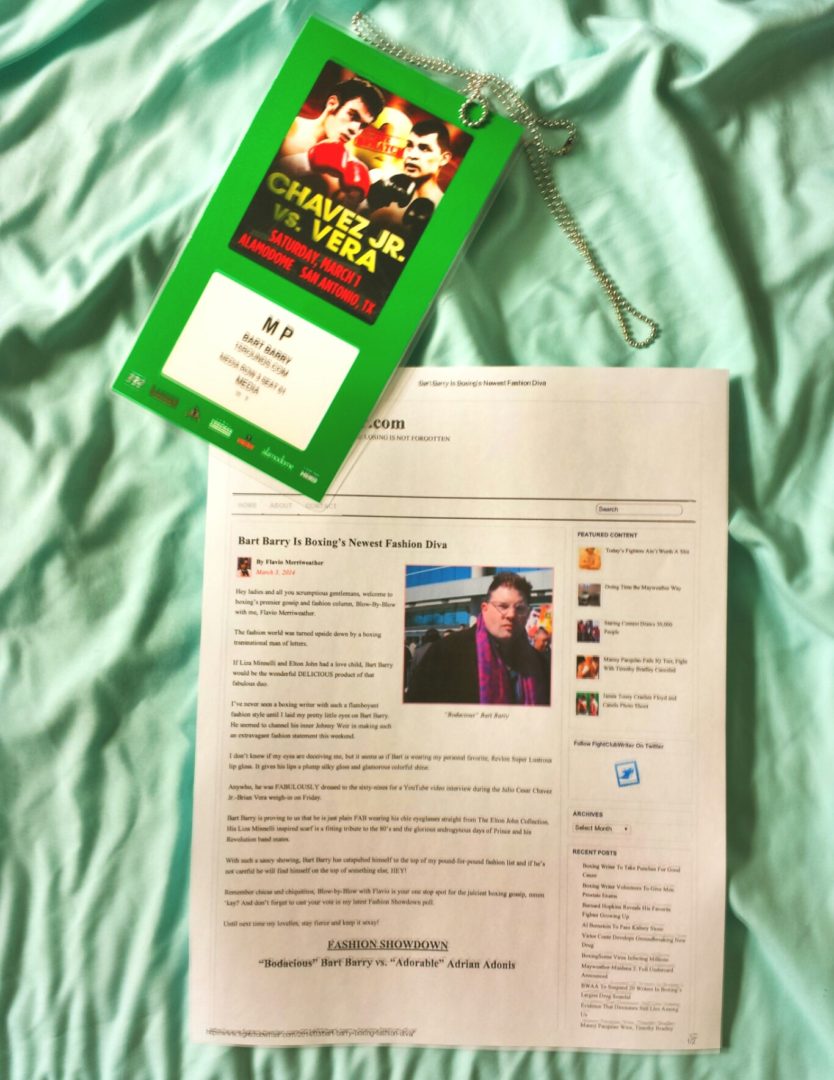
Friday’s weigh-in, the most suspenseful part of Chavez-Vera 2, found a hardworking friend of mine, and co-founder of the IABWA, who now has more readers on Bleacher Report than all my other hardworking friends put together, Kelsey McCarson, filming a preview of Saturday’s matches, a preview I happily participated in, looking stupendous enough to gain international acclaim as a boxing fashionista.

And yet, the best part of the weekend that brought HBO’s most-viewed boxing broadcast of 2014 was my houseguest and fellow Monday columnist, and perennial BWAA-award recipient, David Greisman.

*

The week that began in February, ended in March and became the pinnacle of HBO boxing’s viewership feats in 2014 personally marked an enduring departure from considering seriously coverage of our beloved sport, though that marking went initially unmarked.

It was born of lost access: Nine years, 450 weekly columns, 83 ringside fight reports, 28 articles for The Ring magazine and website, and nine writing awards from the BWAA, all, were replaced in 2014 by a simpleton’s rating system that sat me far enough from the ring to make accurate reporting impossible, hundreds of feet farther from the ring than ever I had been previously, including my first credential in 2005, when my readership comprised fewer than 10 friends and familiars. The nature of boxing credentials, ever impenetrably arbitrary, met in 2014 the budding trend of diminishing ringside seats and an automaton’s reliance on site-traffic ratings – which might begin a meritocracy if such things were not open to such naked manipulation, #PacquiaoWillFightMayweather – and brought our sport ever closer to the promoters’ nirvana of promoters’ employees exclusively covering promoters’ events, with a definition for promoters expanded to include cable-television networks, as it should be evermore.

There were fairminded concerns for Bryan Vera’s health, when the remarkably unserious Chavez who nevertheless missed Vera with hardly one punch in their first match arrived at Friday’s weighin for their rematch a half pound below a limit he ate right through in 2013, but those concerns were only slightly well-placed. Trainer Ronnie Shields praised himself for revising mightily the style Vera arrived in Shields’ Houston with – and Vera’s own postfight allusions to needing to become a smarter fighter did not belie Shields’ praise for Shields’ work – but Vera’s defense was porous, still, in San Antonio, porous as it was in California months before, though Vera’s pride and chin were stout as ever, thankfully for aficionados who did not wish to see Vera’s candle snuffed by Chavez.

Coincidentally, the wisest act I took the entire weekend was snuffing in a booth at The Esquire a Friday evening PED debate between David and Kelsey, rescuing Kelsey’s wife and me from hours more of a topic no more likely to find resolution in 2014 than it was in 2013 or 2012 or 2011 or 2010.

*

The week that began in February, ended in March and became the pinnacle of HBO boxing’s viewership feats in 2014 marked the beginning of the end of Son of the Legend’s affiliation with promoter Top Rank, though no one imagined it possible in San Antonio.

Instead, gathered members of the media were fed a report Chavez Jr. was offered by Bob Arum, earlier on fightday, a match with Kazakh middleweight titlist, and HBO junior middleweight and middleweight and super middleweight champion, Gennady “GGG” Golovkin. Chavez, who has sparred enough with Golovkin to know two things – Golovkin would likely win a decision, and Golovkin’s made-for/by-television power is unlikely to travel to 168 pounds with him – chose to request via his new manager a pay increase, promptly and publicly and loudly rejected by Arum, before Chavez signed with his other new manager, Al Haymon.

At the Kovalev meet-and-greet before the special-access Kovalev dinner, I handed the Russian’s Russian manager a copy of an issue of The Ring magazine that featured my 1,800-word treatment of his fighter, and he regarded it with as much interest as a lion looking at buttered popcorn.

***

Editor’s note: Part 2 will be posted next Monday.

***

Bart Barry can be reached via Twitter @bartbarry



Column without end, part 2

By Bart Barry-
2014-12-09 21.17.38 (480x640)
Editor’s note: Part 1 can be found here.

*

Every kid under the age of 25 on the Metro de Madrid has Sergio Martinez’s haircut, and while none is likely imitating Martinez so much as imitating Martinez’s influences, whoever they are, an hour on the Madrid metro – with aspiring supermodels, male and female, all practicing their vacuous look, that unique fixture of Homo sapiens, the ability to will oneself into a countenance that appears too stupid to formulate an emotion even – reminds any interested onlooker boxing could have done many times worse than we did with Martinez. He may not be missed, but we should still be grateful we had him.

That brings us, somehow, to Muhammad Ali, a man who at 72 was admitted recently to an undisclosed hospital to be treated for pneumonia. No worries, says Ali’s spokesman – as apparently Ali’s malady was caught early, and besides, how serious can pneumonia be? For a man who has suffered Ali’s afflictions, pneumonia is quite serious indeed, and aficionados should expect Sunday’s rosey prognosis to worsen steadily in the days to come, and if not this time round than certainly in the next year or so.

This will not be pleasant. In the days or weeks or months to come, expect every man with a right hand he can raise and make in the shape of a fist to come forward, in as public a manner as possible, to tell us his affiliation with “The Champ.” The tributes will be universally embellished and self-important, a million or more tales subtitled “My Time with The Greatest,” without one telling us anything we do not already know about Ali. From this legacy-borrowing stampede, expect one knight to rise on rear legs and make a social-media scene about Ali’s marital infidelities, known and otherwise, and watch with awe as, just that quickly, the myriad of Twitter feminists, female and male, pivot from Cosby Watch to leave their lasting mark, finally, by undermining the world’s memory of an icon.

They’ll not leave a mark because they never really do; their audience’s collective attention span can be measured in minutes, not decades, and some new tragedy or travesty will have their anxiety redirected in a fortnight or less.

What will remain months and years and decades after the souvenir gatherers are gone is Ali’s legacy with us, the dwindling number of persons who care about prizefighting with any measurable frequency, and Ali’s legacy with us will begin with 7-2 (4 KOs), Ali’s record against prime versions of Sonny Liston, Joe Frazier, Ken Norton and George Foreman. Unlike those who might tomorrow sue posterity for greatness when their careers soon conclude, Ali fought four great prizefighters an aggregate of nine times. He made real fights with other great men, yanking his legacy from the hypothetical realm in which today’s largest draw resides, with his empty blather about alphabetized sides and alphabetized titles, dotingly broadcasted via shameless interviews no one believes any longer.

In a different astonishing interview last week, the president of HBO Sports told The Ring he is “thrilled” with his network’s coverage of boxing in 2014. Evidently, it is difficult for him to imagine how his network could do better with our sport in 2015, and well it ought be: Julio Cesar Chavez Jr. versus Bryan Vera II in San Antonio, a Boxing After Dark undercard match in nearly any other year, or a Latin Fury headliner, set a mark of viewership-enormity HBO managed not to surpass in nine subsequent months of trying. Incredibly, not even Gennady Golovkin’s record-breaking performance in Carson, Calif., the one where Golovkin devastated the fragile psyche of that guy who lost to Chavez Jr. in 2012, could unseat “Son of the Legend” from his brink-pink throne, or lift the cannabis wreath from his head.

While Chavez may not fight again for a while – a common benefit of signing with Al Haymon – HBO should hurry its cameras to Verona, NY, next month, as Vera, one half of HBO’s Broadcast of 2014, will be in action with Willie Monroe Jr., and anyone who doubts more “thrilling” things will be in store lacks the imagination to run HBO Sports.

It’s all spires now, friends, and some of them come with crossing bridges: “Son of the Legend” would be continuing his reign of terror over the middleweight division, entering the ring to giggles, proudly wearing round his bunching waist the WBC’s gaudy, cream-of-green strap at catchweights from 170 pounds to 200, today, were it not for Sergio Martinez, who did a favor to whatever seriousness remains about our sport when, in 2012, Martinez stood on his shot knee and fought Chavez off him. We now know Chavez would have whupped the broken Martinez in a rematch, and with a genuine ticketseller and viewerseducer like “Son of the Legend” in its stable, why, HBO might not have shown what noteworthy imagination it has employed discovering Gennady Golovkin.

However poorly the network now broadcasts boxing, it makes good documentaries, for the most part, and last week’s premiere of “Tapia” was not an exception to a record that is no longer quite exceptional as it was. The story of Johnny Tapia is familiar to all aficionados, of course, but “Tapia” is somewhat predictable even for those unfamiliar with his story; the documentary follows an arc one recognizes every step of the way, and the hero’s demise is preordained as his ascent. It is not a causal observation, though, to say the movie’s most intensely watchable parts comprise footage from Tapia’s championship career.

It is quite possible, in fact, the highlights from Tapia’s matches with Danny Romero and Paulie Ayala mark the highest-quality, competitive fighting seen on HBO in 2014 – with all due respect, of course, to Julio Cesar Chavez Jr. . . .

*

Editor’s note: For Part 3, click here.

*

Bart Barry can be reached via Twitter @bartbarry



Column without end, part 1

By Bart Barry–
2014-12-09 21.27.31 (640x480)
BARCELONA – At the metaphorical center of this autonomous place on the Mediterranean Sea, an ostensibly Spanish city much nearer France than Madrid, stands La Sagrada Familia basilica, masterwork of its city’s greatest architect, Antoni Gaudí i Cornet, known the world over as Gaudí, a man whose patronymic bears a curious resemblance to the derisive modifier “gaudy.” His edifice has been under continual construction for 132 years, and today cranes fly hundreds of feet in the air all round its untouchable spires, attesting to a full hardhat crew whose business-hours labor ceases but once monthly, for the sole Catholic mass the basilica hosts.

There appears no coherent plan for the cathedral though construction is slated to complete, supposedly, in 15 years; La Sagrada Familia simply grows higher and more unique and more astounding with each passing generation of Catalans set to work on it – unified by one theme: a pursuit of beauty. If it has proved a wondrous, unpredictable approach to the church’s many columns, it shall prove itself as an idea, here, too, in this single and singular column.

So begins Column without end, a series that shall continue until it doesn’t and shall happen whenever boxing supplies inadequate material or ample material inadequate for sagacious commentary or, frankly, any commentary whatever. There were five or more boxing matches Saturday on two cards in the United States, televised simultaneously once more by America’s two premium cable networks, both cards came from Las Vegas, Twitter reported, and excepting only Timothy Bradley’s characteristically fine effort, none warrants the commentary its network might insist it does.

It never should have entered the charters of HBO or Showtime to develop talent on their airwaves – if promoters are good for anything, and but for Top Rank, they probably are not – it might be the development of fighters, the making of them ready, that is, for a chance on HBO or Showtime. That makes me sound old fashioned, I know, a fossil clinging to some sentimental sediment, some sediment of sentiment, about the the very word “premium” – one that in its adjectival case remains, in dictionaries if not as a modifier for cable networks, denotative of exceptional quality or greater value, but tiresomely often is left by our premium boxing providers as a noun that denotes a prize, bonus, or award given them in the form of an absurdly large monthly bill. Instead, HBO has put itself deeply in the talent-development business, calling its picks for future stars and then making them so, or anyway insisting it has, while Showtime has lost its way altogether.

It is neither channel’s fault boxing gyms are shuttered or shuttering in American cities where they long thrived, but it is both networks’ faults a fraction of one percent of prizefighters have been so grossly enriched by network money they devastated boxing’s ecosystem in a way a generation’s repairs will, or would, not remedy. Ever and again and however often it must be repeated: The consumer’s role is not to justify vendors’ misdeeds, and a boxing aficionado neither should endeavor to justify the era’s two best men not-fighting each other nor waste a moment’s energy absorbing any press release, either by the press or its owners, seeking to explain what boxing historians will rightly conclude was unpardonable, blemishing into perpetuity the legacies of Floyd Mayweather, Bob Arum, Manny Pacquiao, HBO Sports and Showtime. In that order.

If Saturday Amir Khan made himself Mayweather’s likely May opponent, a fight Saul “Canelo” Alvarez would be well-advised to join Miguel Cotto in confronting headon, it excites no one’s soul but Kahn’s, and yet, a select bunch of knowledgeable folks has long asserted Kahn’s style should trouble Mayweather’s more than anyone else’s, including Pacquiao’s. Kahn has no chin, true, but he is deep enough in his career, now, to know that and skir anyone who would test it, as Mayweather’s accuracy could not help but do, and when was the last time an opponent strategized to fight Floyd in flight from the power of “Money”? Kahn’s footwork is skittish, amateurish in a way proportionate to the peril he senses, but Mayweather is well past his physical prime, and if he somehow convinces manager Al Haymon to allow him a fight away from MGM Grand, in London, say, where someone other than Haymon controls the ticket-spraying nozzle on the secondary market, a profoundly unlikely event, Mayweather might not receive by default the scoring of any round in which he is not felled outright, and that could conceivably make for an intriguing three or four rounds relative to contemporary prizefighting’s eroded baseline.

None of this will happen, of course – did Amir Khan just fill Wembley Stadium to decision Devon Alexander? would Mayweather consider making a fight outside the compliant jurisdiction of his handpicked athletic commission? is Justin Bieber enough of a royalist to return to his pal’s side as a pawn on the other side of the pond? – but it cannot be wrong to make a lunge for 15 seconds of SEO celebrity by driving traffic to this column via “Wembley” and “Bieber”, can it?

Oh, enough – this city is too marvelous, funky, offset and unique to burden its dateline with another syllable about any of the prizefighters whose names appear above (except maybe Bradley’s).

La Sagrada Familia basilica, during the sun’s 90-minute descent to the horizon, when its light hits the enormous and numerous expanses of stained glass that adorn the basilica’s facade, and its tons of stone columns suddenly become skybound popsicles, limegreen and watermelonred and orangeorange, is unlike any other place one might experience and the very thing for which a word like “sublime” was coined. When one sees its nearly endless spires from inside, its glorious and absurd crucificial adornment that makes the slain Christ appear in parachute to the altar, and how its glass transforms the metal of its organs’ pipes to iridescence, one experiences gratitude more than another emotion. One becomes thankful he is experiencing it, thankful for what optimism it induces: There may be more experiences like this to come, and I can find them . . .

*

Editor’s note: Part 2 can be found here.

*

Bart Barry can be reached via Twitter @bartbarry
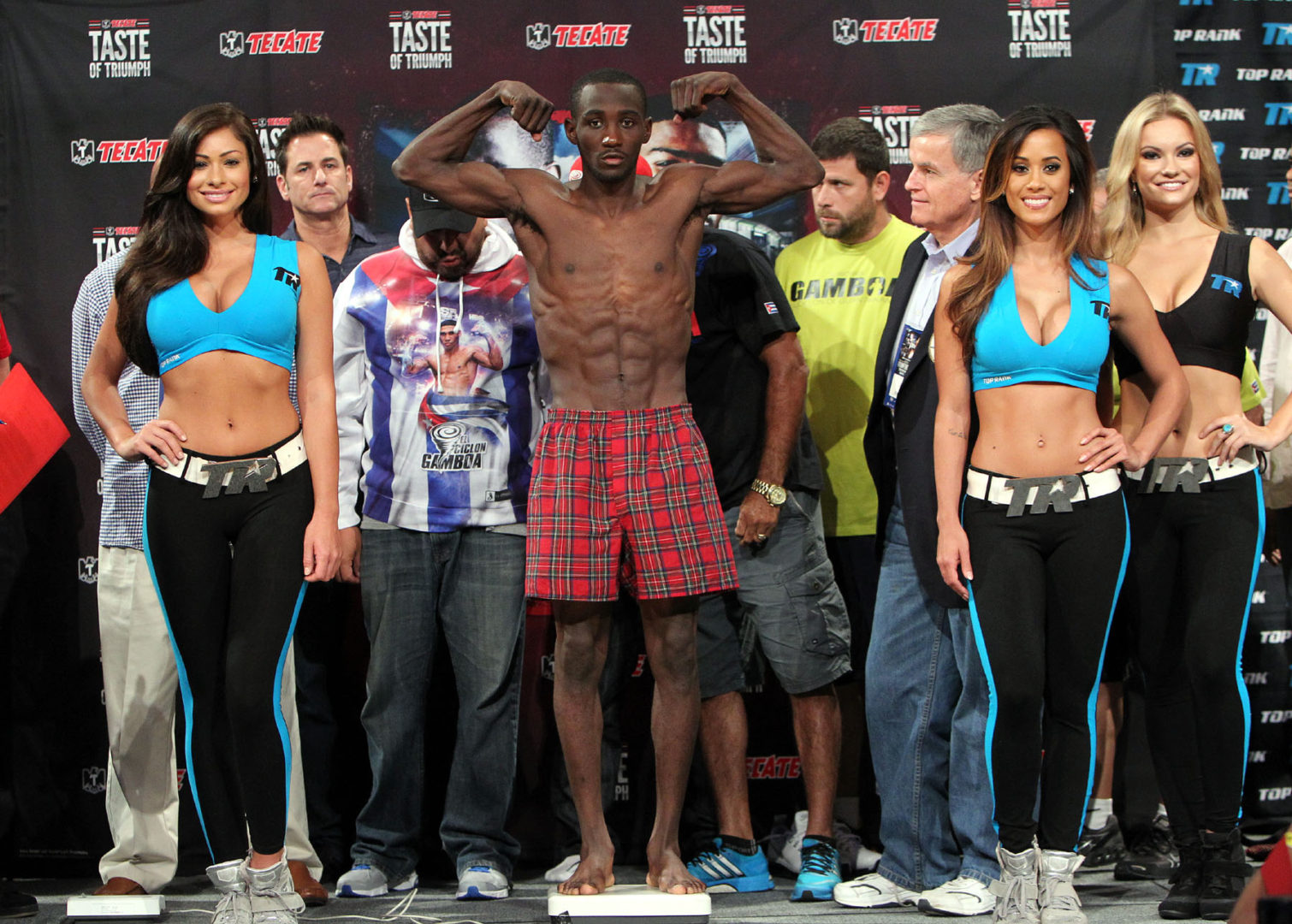


Terence Crawford, and optimists and evangelists

By Bart Barry-
Terence Crawford
Saturday at CenturyLink Center in Omaha, Nebraskan lightweight champion Terence Crawford decisioned Mexican Raymundo Beltran lopsidedly, 119-109 and 118-110 and 119-109, in a match that was not large as its superlatives but demonstrated Crawford should stay at lightweight, which he won’t, Beltran was overrated, which no rater will admit, and Crawford should be 2014’s fighter of the year, an award that instead will go to a Russian who decisioned a 49-year-old last month.

In this, the final month of this, one hell of a dreadful year for our beloved sport, there are clear factions established among aficionados, anymore, and these factions predict with unfortunate accuracy the way each HBO main event will be seen. There are the sturdy optimists, identifiable by their collective disgust, creatively and diversely expressed; and there are the evangelists, using to describe today’s middling fare what words once adorned feats by Marvelous Marvin Hagler and Roberto Duran – and almost always with a financial incentive for imposing such overwrought modifiers.

The sturdy optimists saw Saturday on HBO two mediocre featherweights followed by one good lightweight and one very good lightweight. The sturdy optimists, who are optimistic for their refusal to call a counterfeit the true coin, saw nothing great happen. The evangelists, contrarily, saw the possible future of Puerto Rico prizefighting score a questionable draw with a Russian fighter – and if this year taught us little more, it taught us a former-Soviet-bloc fighter has amazingness as his birthright – followed by a future great with every tool establishing lightweight lineality against a very good contender (who should be champion!) before 12,000 Nebraskans, which is an astounding number when one considers it is 30-percent more fans than Gennady Golovkin’s record breaker of a ticketselling feat comprised in October.

The less written about undefeated Russian featherweight Evgeny Gradovich and undefeated Puerto Rican Jayson Velez’s remaining undefeated against one another, the better – as each man would be better served fighting the other man six more times than getting axed by Jamaican Nicholas Walters, and so let’s just wait for their third rematch before returning to them.

Terence Crawford is much better than most of his peers, both better at fighting than they are and better at interesting the townspeople of his native city in prizefighting, and promoter Top Rank deserves credit for working to build Crawford as an attraction in Omaha, a city not identifiable by anyone as interested in boxing till recently. Crawford’s large ticket sales in his hometown are surprising as the paucity of tickets he would sell in Las Vegas if he took his show on the road, which he oughtn’t do.

Crawford needs offensive-minded opponents to entertain best, and the more offensively basic and defensively suspect such athletic men are when they move forward, the better. Raymundo Beltran, a Mexican who fights out of Arizona and California, often as a sparring partner to the stars, was nearly right for Crawford’s style as Yuriorkis Gamboa was for Crawford’s ascension-making performance in June. Beltran fought gamely but ultimately succumbed to a sparring-partner ethic that makes meaningful effort, and the good work it gives one’s customer, nearly valuable as victory. When Beltran whacked away at Ricky Burns a couple Septembers ago, he used his Mexican suspicion of others’ acclaim to test the Scotsman and find him wanting, before treating Burns like an impostor. Saturday Beltran began with the same Mexican suspicion, one that grows in another man’s hometown, serendipitously enough for Mexican prizefighters and aficionados, to test Crawford, and land what was a jarring righthand in round 3.

But this time the man across from Beltran was a customer, not an impostor, and it remanded Beltran to nine rounds of hard labor and meaningful effort and what satisfaction and acclaim he received immediately afterwards despite losing 10 rounds unanimously. So dismal has boxing become that Crawford’s sporadic efforts to knock-out Beltran in rounds 11 and 12 met with near breathlessness from HBO’s broadcasting crew, as if endeavoring to land the decisive blow on a man whom you’ve outclassed for a solid half hour is a new and abstract form of courageousness. Alas. Evangelists are not culpable for lapses in quality control; their job is enthusiasm, not discernment, and their craft is craftily wording homages and tributes to whomever gets placed before them, not choosing those men.

Now Terence Crawford, who has the skills, potentially, to be a great lightweight but lacks the physical strength to be more than a good junior welterweight and a mediocre welterweight is summoned to 140 pounds, which is unfortunate because he fought Saturday at 153 pounds and did not carry in either fist power enough to stretch a man who began his career at 126. Barring nifty matchmaking, Crawford may well have scored his career’s last meaningful knockout in the very year aficionados happened to get excited about him, a phenomenon becoming too common in prizefighting to be called phenomenal.

It is hard to imagine Sergey Kovalev’s decisioning of a 49-year-old Bernard Hopkins evinces greater merit than Crawford’s three decisive victories over men in the primes of their careers, but as Kovalev’s decisive victory happened in front of more American boxing writers than the aggregate of Crawford’s three victories, well, one needn’t be a pessimist to know which way the nod will go, as the optimists look middle-distance, detached, and the evangelists make sure someone is looking at them for a quiet fist pump.

*

Editor’s note: After a one-week Spanish hiatus, Bart Barry’s column will return on Dec. 15.


Full gonzo: Sleeping through Pacquiao-Algieri

By Bart Barry–
Pacquiao_Algieri_141123_001a
FORT WORTH, Texas – The understated perfection of architect Louis I. Kahn’s soft marble masterpiece, Kimbell Art Museum, known round the world as The Kimbell, is so palpable one cannot fathom hoarding its charms, if architectural charms were somehow hoardable, and feels a compulsion to share. Long a fan of friend and mentor Thomas Hauser’s accounts of meals enjoyed between his mother and sundry boxing personalities, I thought to have my own mother, with whom I shared The Kimbell’s charms Saturday, participate in this column in a sort of “Watching Pacquiao-Algieri with Mom” bent. I am evidently incapable with coordinating as this piece shall prove itself with the third-person.

Saturday Manny Pacquiao made an inspired sparring session in gray Macao or Macau, in the same country, China, whose capital is either Peking or Beijing, with Long Island junior welterweight Chris Algieri, a match Pacquiao won by a football-like points spread, dropping Algieri numerous times upon his metalblue trunks and allowing Algieri a chance to win the fight not once. Even before receipts are counted this event should be called plainly what it was for its hundreds of thousands of viewers: a failure.

But I was sound asleep by the time Manny Pacquiao began his long-awaited ringwalk through the cheering throngs of Cotai Arena. My laptop, whose volume I muted for the third undercard scrap, due mostly to my bottomless indifference for the future of Chinese boxing under Freddie Roach’s tutelage, flashed what high-definition images TopRank.tv sent its way, I do not doubt, as my mom, sporadically awake through the main event, later confirmed, in a faux if empathetic enthusiasm for her son’s favorite sport, “Pacquiao won!” But I saw none of it. I do not recall so much as stirring from my hardwon slumber, despite a Friday payment of $59 to Top Rank, to see the event for which I’d paid such a stipend because, truth be told, I paid that stipend for little but plausible deniability to you, dear reader, when I was unable to write intelligibly of the last meaningful fight of 2014, this, the most meaningless year of boxing I’ve yet covered.

And I will not cover three such years in-a-row.

Sometime after midnight, when I awoke to a shinyblue announcement from TopRank.tv my event had ended, I panicked for all of a second. Then my fright subsided, as I realized a column about not-watching Pacquiao-Algieri, at this point, likely would be more entertaining than watching Pacquiao-Algieri proved. Once panic subsided, again instantly since little written about this sport, anymore, would be consequential if you were paying to read it – which, coincidentally, you are not – I found a videostream on YouTube of a guy recording on his cell camera the very same TopRank.tv feed I purchased and used to remedy my hypothetical insomnia, as well as the hypothetical insomnia of my hypothetical children and their hypothetical children and so on for three generations more (if Twitter accounts of Pacquiao-Algieri are believed), and that stream, grainy and skipping, showed me what needed showing, which was very much not much at all.

Mark me down with the other naifs who believed Algieri might have a solution for Pacquiao, long and skittish as Algieri was, able with leftward wheeling as he was, and was a little surprised the Long Islander won nary an exchange, while losing quite a few rounds by more than his gentlemanly one point. Nothing about big-league kickboxing, as it turned out, prepared Algieri for big-league boxing, and what disparate rhythms and sophisticated traps a man of Pacquiao’s extraordinary experience and accomplishments might access in milliseconds in any ringside emergency – nothing of whose sort Algieri managed to create.

Disrupted. That was how Algieri looked on a video stream just as disrupted by whatever guerilla band succeeded several times in hijacking the internet server in whichever agrarian wasteland my anonymous YouTube postfight broadcaster uploaded his stream from; watching a master prizefighter like Juan Manuel Marquez time and occasionally neutralize Pacquiao, watching a fantastic athlete like Timothy Bradley survive Pacquiao’s onslaught after being rendered stationary, both, likely convinced Chris Algieri, who, in a nod to his entire generation thus far, has a greater competence for self-belief than another activity, his athleticism, for being greater than Marquez’s, and his boxing acumen, for being greater than Bradley’s, would help him jigsaw a puzzle Pacquiao couldn’t possibly piece together.

But Algieri and his witling chief second both had it all wrong, as we all now know. Pacquiao, even at this advanced stage of his career, is still a better athlete than Bradley; Pacquiao, even when reduced to savagery, is still nearly good a technician as Marquez (even if his tactics are not transferable or teachable as the Mexican’s). Algieri is not nearly the athlete Bradley is, and no better of a technician, and Algieri is not nearly the technician Marquez is, and no better of an athlete. Algieri is a C+ prizefighter who found a perfect stylistic mesh with Ruslan Provodnikov, a Siberian with A+ power and C- everything else, finagled it to a million-dollar payday and now will recede into supporting roles on HBO and then Showtime and eventually ESPN, however much sorrowful howling or barking or squeaking Algieri’s beloved fellow Stony Brook Seawolves make when they experience their grief at losing a smug nutritionist from the pack.

Oh, what could have been is not, and meanwhile, and frankly, who cares if Pacquiao ever does fight Floyd Mayweather? Regardless how good a match the men subsequently make now, it will serve mostly as a reminder how very much was squandered by all parties in the five-year hellbroth boxing’s powerbrokers began brewing of our beloved sport in the moments that followed Pacquiao’s 2009 stoppage of Miguel Cotto. Lots can change in five years, anyway, and let me provide further proof:

In 2009, like many another boxing writer, I might have reached for the easily grasped and metaphorical cliche of Pacquiao-Algieri putting me to sleep. But it’s now 2014, and my commitment to journalism is deepened. I am a participatory journalist, in the spirit of George Plimpton or Hunter S. Thompson, and Saturday night, as it pertains to the dull affair of Pacquiao-Algieri at least, I went full-gonzo.

Bart Barry can be reached via Twitter @bartbarry
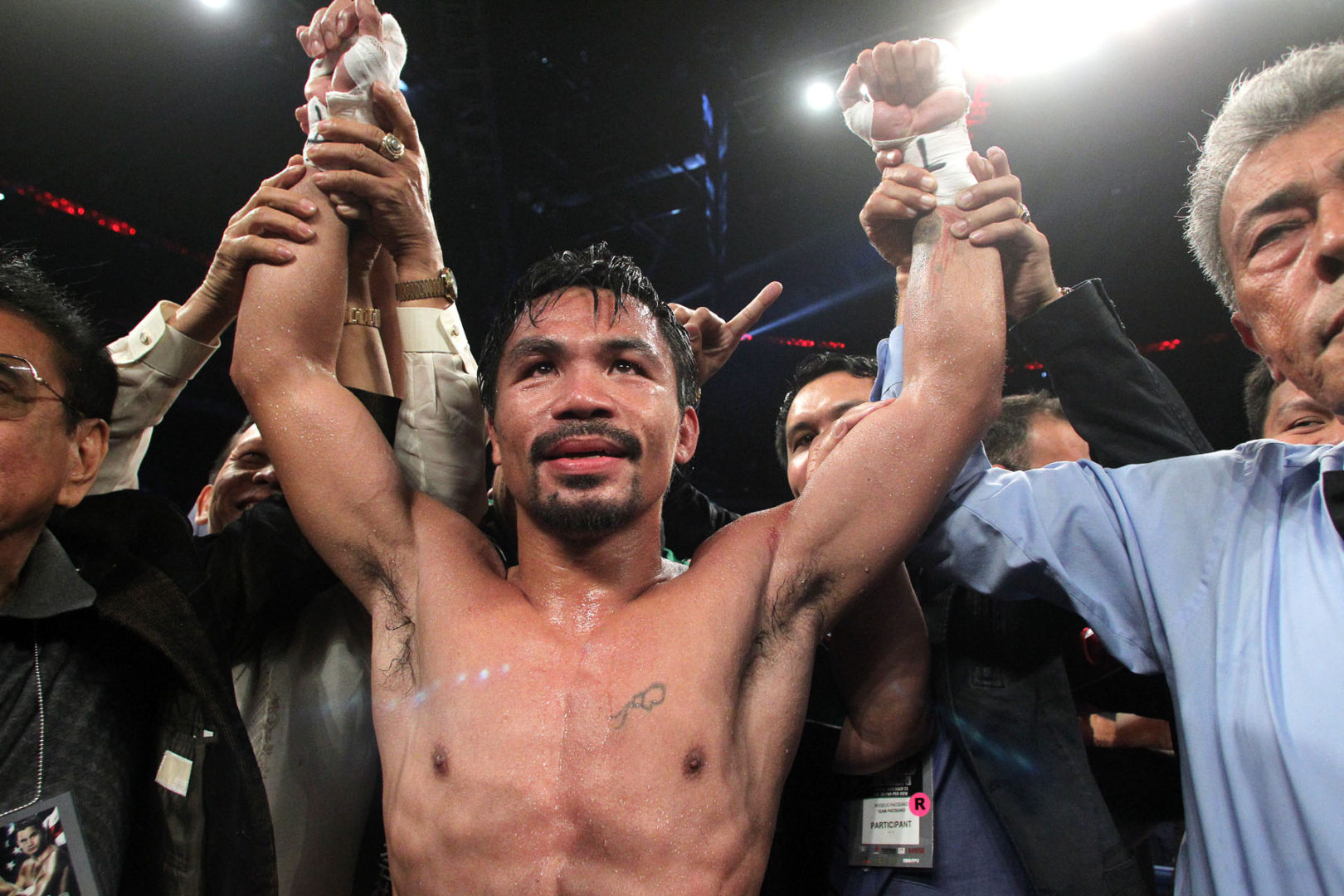


Pacquiao-Algieri: From opposite ends

By Bart Barry
Pacquiao_Algieri_WSJ_140905_001a
Saturday at the Venetian in Macau, Filipino Manny Pacquiao will defend his welterweight title against New Yorker Chris Algieri, a junior welterweight titlist. It is a fight somewhat intriguing because, while few aficionados imagine the match will be close, a number disagree on its likely victor.

Perspective plays a larger role than usual in determining where an aficionado finds himself on the question of Chris Algieri’s chances against Manny Pacquiao, prefight. Looking through one end of the telescope, Algieri is fully outclassed by the prizefighter after whom this era likely will be named, a man who, in going 6-2-1 (3 KOs) against the combination of Marco Antonio Barrera and Erik Morales and Juan Manuel Marquez, each a hall of famer in his prime when he fought Pacquiao, set a mark unrivaled by anyone currently plying the craft.

It is not stated often enough: Manny Pacquiao made nine matches with the best fighters in his and their best weightclasses, and six of them were rematches.

Much of what has transpired in Pacquiao’s career since his second match with Marquez, in 2008, is noteworthy for its remarkable promotion – by Bob Arum and HBO – and matchmaking by Top Rank’s brain trust. Pacquiao has grown his weight and stature by decisioning larger, slower, betterfed men than those whom he blitzed at 126 and 130 pounds. Recently Freddie Roach expressed equal parts awe and annoyance with his charge having gone to welterweight for a special-attraction purse against Oscar De La Hoya at the end of 2008, and then having been returned there nine more times.

Roach is mocking and scornful, edgier than usual, too, when he broaches the issue of Algieri’s advantage over Pacquiao in height and reach, and nutritional scholarship and culinary acumen, perhaps because Roach’s other charge, Ruslan Provodnikov, in losing a narrow decision to Algieri in June, became the New Yorker’s career springboard. Roach refuses to sing along with a promotional chorus that implies Pacquiao is new to fighting men longer than he is; forgotten to many aficionados, though fewer who were ringside at Cowboys Stadium four years ago this week, was the absurd physical superiority Antonio Margarito enjoyed against Pacquiao, the absurd chemical state into which Margarito placed himself with ephedrine and caffeine before making his ringwalk, and the absurd language Pacquiao employed in an abandoned concrete corner of Cowboys Stadium afterwards, saying Margarito hurt him badly enough with a body punch Pacquiao was lucky to have lived.

And no, Pacquiao has never been the same fighter since that match with Margarito. And no, Algieri has nowhere near Margarito’s physicality or championship experience.

The Manny Pacquiao who annihilated Ricky Hatton in 2009 would go through Chris Algieri and every male resident of his dad’s Long Island home in fewer than three rounds. That Pacquiao was, to employ trainer Nacho Beristain’s memorable phrase, “a wildcat” – and an indefatigable one at that. But the Pacquiao we last saw in April is a markedly different creature.

Five years removed from his last knockout victory, two years removed from his last knockout loss, Pacquiao now keeps a running scorecard in his head while he fights, ensuring no motion is wasted once a round is won. He’s still a man only the era’s purest offensive technician, Juan Manuel Marquez, should dare an even-terms exchange with, but he’s no longer a man who preys on timid opponents.

Algieri will be happy to use tactical timidity against Pacquiao, since not-fighting Pacquiao will discomfit Manny considerably. Algieri, as anyone near boxing is well past tired of hearing, is not a typical boxing story – though if he were the product of Harlem homelessness and a stepdad who abused him and a saintly retired cop who ran a gym in the basement of a church where he taught Chris to throw the old one-two, of course, we’d still hear he’s not the typical boxing story. It’s publicist twaddle.

Like most everything about boxing, Algieri’s likability is inversely proportionate to his distance from a ring; when he’s fighting offensive forces like Provodnikov or Pacquiao he’s quite likable, and when he’s appearing on heavily edited HBO infomercials he’s likable enough, and when he’s posting his meals and topless selfies and inspirational bromides on Twitter he is a douchebag – as the kids are saying it these days. What he has that should make him different from other of Pacquiao’s considerably better and consistently vanquished opponents, though, is a sense of entitled superiority Pacquiao may not be able to dent.

Pacquiao glides through life today, looking only forward, in a way few others can or have – though Arnold Schwarzenegger comes to mind as an analogous example. But Algieri still would not trade places with the Filipino. When Algieri says spending time round Pacquiao during their kickoff media tour convinced him he belongs in such company, there’s the faintest hint of disappointment in Algieri’s voice: I thought I would have my identity challenged enough to learn things about myself and others I didn’t already know, but, well, it turned out I was prepared for all this already, and Manny’s a good guy, I like him, and Freddie, too, honestly, even if he doesn’t like me.

Some of that really may be attributable to nutrition; coming of age when and where he did, Algieri’s access to what nutrients grow potent brains was likely greater than young Pacquiao’s and young Roach’s combined. Much of it is classifiable for the time being as luck; how certain experiences order certain person’s lives in unique ways. Little of it is attributable to what hard work and dedication American autobiographers fetishize; notice how infrequently someone like Pacquiao references his own work ethic – for coming from a place where working hard and being dedicated earn you about an extra $1/day.

Pacquiao should win Saturday, and not merely because no judge who wishes to enjoy his Sunday in Macau would score a close round for the New Yorker. Pacquiao should win Saturday, and neither fighter’s current career or life trajectories will be altered by it in the slightest.

Bart Barry can be reach via Twitter @bartbarry


Kovalev-Hopkins: The fight of 2014

By Bart Barry-
Sergey Kovalev
The most unexpected thing shared by guys who hit hardest is rarely how hard they hit or the speed of their attack. No, what surprises most about those guys is the nimbleness with which they take a backwards step the first three or four times you try to attack and smother them, their balletic willingness to move away from you in a tactical retreat and geometric adjustment that puts you at the end point of their punches. Where it hurts the most.

It was that willingness and ability with a backwards step or two, Saturday night in Atlantic City, that allowed Russian light heavyweight titlist Sergey “The Krusher” Kovalev to toss a shutout at American titlist Bernard “The Alien” Hopkins, in a unification match official scorekeepers had 120-106, 120-107 and 120-107.

Kovalev-Hopkins was, is, our sport’s fight of the year. Not its best fight, no, much nearer its worst, in fact, but the fight that best represented the state of our sport in 2014, the year a man nearing his 50th birthday challenged and imperiled himself more than any of our standard bearers in their primes. Sergey Kovalev, an elite-level fighter, was unable to knock-out Bernard Hopkins, despite trying to do so sporadically in the fight and sustainedly in its closing minutes. Hopkins is extraordinary, yes, but any path to alien extraordinariness is eased when one’s era is so fantastically ordinary.

There is a heaviness and a dullness, an ache more than a pang, about treating Saturday’s light heavyweight unification match. Postfight, the highest tribute paid its winner, a 31-year-old known as “Krusher,” was that he was disciplined in his pursuit of a 49-year-old man, that he did not do anything rash like throw a hundred punches every round or run his fellow titlist into retirement, that he demonstrated prudence in becoming the unified world champion of a storied division. So it goes this year: Prudence against a man Hopkins’ age is a blazon of excellence.

Is that revisionist? Yes, but only slightly. There was a healthy percentage of knowledgeable boxing folks, myself included, who thought Hopkins might beat Kovalev, when Saturday’s opening bell rang. But those ideas disappeared, went wanting in full, fewer than 60 seconds later. Following something like the strategy he followed against Kelly Pavlik, flying at a younger man with an unexpected aggressiveness he expected to have a disruptive effect, Hopkins wheeled and crossed-over, trying to hit Kovalev on his second or third step. But Kovalev was three steps out of Hopkins’ range before Hopkins’ back foot completed its odyssey to front. Hopkins moved – in Larry Merchant’s memorable phrase – like a man “in amber.”

It was a moment of instant sadness. That quickly, the air became full of worry those viewing the match were about to see a man well past his physical prime assaulted to unconsciousness or worse by someone 18 years his junior. Nearly worse still was the possibility a man so exaggeratedly beyond his physical prime might somehow become a unified world champion, through force of wiles, yes, but even more through opponent incompetence.

“I feel bad for watching this, jeez” – that was the first comment I heard after the opening bell, Saturday, in a roomful of knowledgeable boxing people, the majority of whom still attend boxing gyms regularly, and it was said by an astute observer who gave Hopkins a chance to win the match only a minute before.

It was that sort of start for Hopkins. He got dropped by a counter righthand thrown by Kovalev as the Russian hopped backwards in round 1. Hopkins rose and looked at the canvas, a tick of embarrassment more than a try at fooling referee David Fields, a man unknown to viewers as what three judges got assigned to the main event, and concluded the round, and the round after that, with a look that was more frightened than concentrated or studious.

Under John David Jackson’s tutelage, Kovalev took Hopkins’ strategy away from him, by quickly giving Hopkins a thought he’d not seriously had before – I could get hurt very badly tonight – and then using that disruption to keep Hopkins from ever executing anything the way he wished to. There were 10 or 15 seconds, in a fight comprising 2,160 of them, when Hopkins made an offensive maneuver that went according to plan, catching Kovalev with a left hook here and counter right there, but those punches had no effect on Kovalev, save provocation.

When Hopkins got Kovalev with a punch that stung, the Russian went after Hopkins, making him fight at a pace, and with a series of consequences, Hopkins wanted no part of. Kovalev succeeded, mostly, by taking Hopkins more seriously than any opponent Kovalev faced before, by giving Hopkins’ power considerably more leeway than it merited, and by mixing his flurries with enough inactivity that Hopkins never recognized a rhythmic pattern enough to do anything disruptive himself.

The fight’s final round was almost good enough to make folks forget how dreadful its 11 predecessors were, as Hopkins fought to win something much more important to him, by then, than his fight with Kovalev; Hopkins fought the final round to win a right to choose his retirement date. Had Hopkins, whose head got snapped in a bunch of directions by Kovalev’s fists in round 12, been dropped awkwardly or severed from his consciousness long enough to get a doctor in the ring, nothing about Hopkins’ pending retirement would have been voluntary.

Athletic commissions, even those representing poleis desperate for revenue as Atlantic City’s, would have banded together and helped Hopkins out of the sport, on terms other than his own. Journalists, too, might have followed Carlos Acevedo’s admonishment and asked how a PED-free athlete could improve after his 35th birthday in an era dominated by PED-using athletes.

Instead, by fighting fully the most-feared prizefighter in his division, and absorbing dramatically that man’s best punches, Hopkins won for himself a chance to announce his retirement at a leisurely pace. One hopes that pace nevertheless ends before 2014 does.

Bart Barry can be reached via Twitter @bartbarry


Mental alignment, Bernard Hopkins and Sergey Kovalev

By Bart Barry–
Bernard Hopkins
SAN MARCOS, Texas – Three miles southwest of Texas State University is a mostly waterless stretch of terrain called Purgatory Creek Natural Area, a verdant place complete with trails named after Dante, Ripheus, Ovid and Beatrice, for those with an Italian literary bent.

Saturday at Boardwalk Hall in the American purgatory of Atlantic City, light heavyweight Bernard Hopkins and Russian Sergey Kovalev will make the most meaningful fight of 2014.

The above sentences are related, though how they are will not be apparent for a while to come.

What also may come is the day boxing makes a concerted – in the sense of coordinated – attempt to win back what fans it lost in the first half of the second decade of this 21st century, a time of fan exodus that began in the early weeks of 2010, the first time the world’s best and second-best practitioners refused to make a contest with one another despite occupying the same weightclass. A day of fans’ collective return to our sport, however, is of no consequence right now because boxing faces a nigh existential crisis this year of aficionado departures.

The casual fans are long gone, shuffling steadily if quietly away under a rainstorm of “good riddance!” from purists who didn’t know any better, and the consequences of their departure and ways they will be missed is not entirely knowable yet but guessable certainly. To indulge a hunt for those consequences, though, is an indulgence indeed in 2014 – the year our sport became so easy to abandon. This is not a crisis that will find remedy from a new television deal or browbeating about boxing’s redounding popularity in Dublin and Dubai and Dunkirk and Dongguan; boxing gyms are empty in all but a few cities in the U.S., a country that once dominated the sport and now anxiously hopes its next Olympic gold medal comes only a dozen years after its last.

This crisis finds illustration of the most ambiguous sort on Saturday, when a 175-pound American who is months from his 50th birthday makes a title-unification match with a talented Russian who is 31 years-old but still young enough to be his opponent’s son.

About a year ago, Sergey Kovalev’s first American trainer, Don Turner, said the difference between Kovalev and Hopkins was the Russian is “mean” where the American is “cunning.” Whatever the efforts at image revision – Snuggly Sergey Bedside with Wife / Speedbag Sergey Ringside with HBO – Kovalev remains the only prizefighter anyone can remember increasing his knockout percentage after causing another man’s death in a boxing ring. He smiles so much in interviews because he’s been told to do so, and because he hasn’t more than a kindergartner’s grasp of English, and because he doesn’t care what you are asking anyway. In a sport comprising exclusively men willing to hurt another man for a paycheck, there’s a good argument to be made Kovalev is the exact last man you’d wish to meet in the dark alley of badness’ proverbs.

And yet, Bernard Hopkins, a man willing to give a safety-first effort to the unlikeliest opponents, initiated a match with Kovalev, at the very moment it appeared Hopkins might have made the same dollars fighting the more limited, if possibly insane, Haitian titlist Adonis Stevenson. In an era of men burnishing their credentials as Most Avoided by avoiding bigger men, Hopkins rushes at them, men like Antonio Tarver, Chad Dawson and Kovalev, all considerably larger on their 30th birthdays than Hopkins was in 1995.

While ever a delight to himself, Hopkins is a blossoming embarrassment for most of his prizefighting countrymen, showing at age 49 a willingness to fail, and be badly injured, few of today’s best American fighters have shown since their bouts got computer-matched in the amateurs. Hopkins is not charming as he thinks he is, nor eloquent, but his willingness to fail in speech – giving answers unknowable to their questions, being open and vulnerable in ways he later pretends were calculated – when married to his extraordinary courage and self-belief, makes him uniquely heroic.

He is uniquely present in a prizefighting ring, too, and this is why he came to mind during a hike along Dante’s rocky Purgatory Creek trail. Undulating coffee-dark paths covered in bleached stones and white shards of much larger bleached stones are unpleasant for any who traverse them but particularly unpleasant for those obdurate enough to traverse them in “barefoot” attire – thin rubber soles and mesh. There’s a trick to it, though: If one concentrates on solely two things as he marches, breathing through his nose and looking no more than a yard before him, accelerating till anxiety and doubt haven’t time nor room, he is able to navigate nearly any surface quickly and painlessly.

It’s a mental-alignment exercise that surpasses self-belief and approaches faith; when the mind’s processor has unfettered access to the input of its eyes and the output and input of its feet, when decisions are rendered so fast they mimic reactions, when every algorithm is executed instantly and its result immediately then forgotten, one is able to move with astounding rapidity and never misstep. (This breathing trick works at excessive speeds in traffic, too, but you didn’t read that here.) It mimics a state athletes often, and often erroneously, call “the zone” because its results surpass what workaday feats can be accomplished with mere concentration – it is instead a form of mindlessness leavened by wisdom enough to keep the mind out its own way.

Hopkins finds this place and disrupts others’ pursuits of it. His reflexes are absurdly well-preserved, yes, but the access he grants himself to a mental database of other men’s physical patterns permits him to find matches so quickly, and unman others so fully, it approaches clairvoyance.

Fatigue can undermine Hopkins’ sense of presence like any other man’s, though, and fatiguing Hopkins is Kovalev’s best chance of winning Saturday. If Kovalev has trained for a 30-round fight and is willing to hit Hopkins anywhere at all a hundred times every round, without discouragement, Kovalev should win. Otherwise, Bernard Hopkins will be Fighter of the Decade, 2010-2020.

Bart Barry can be reached via Twitter @bartbarry
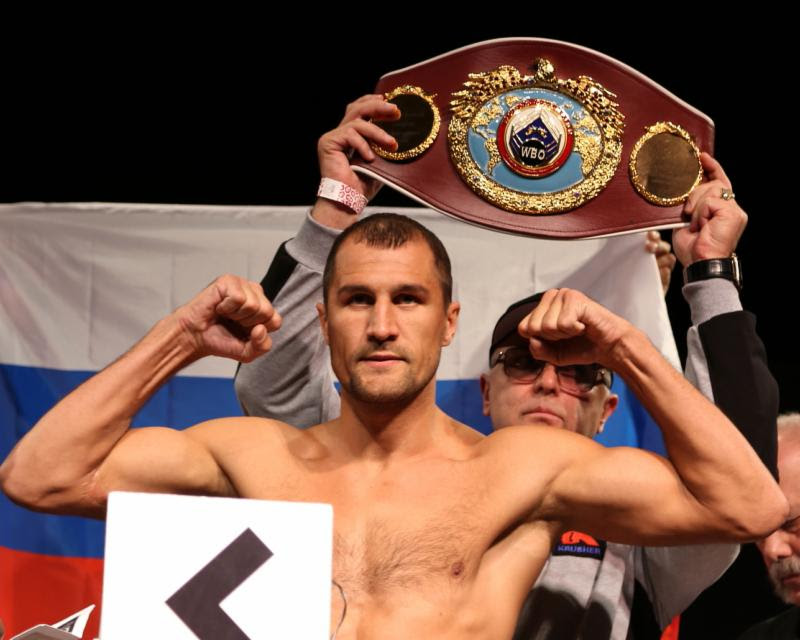


MFAH & GGG: Enduring doubts

By Bart Barry-
Gennady Golovkin
HOUSTON – Saturday this city’s largest art museum previewed for its members a fall exhibition, “Monet and the Seine,” that is unimpressive. Composed of middling efforts by the French Impressionist master, canvases from sundry places, some painted in cottoncandy hues and some deeply indebted to others’ influences and one so pedestrian Monet himself misdated it, this exhibition is wisely hidden across the street from Museum of Fine Arts, Houston’s impressive permanent collection and the much better exhibition space and exhibition, “The Age of Impressionism,” through which the museum began its year.

Very much can be gathered about a master on a bad day, and seeing Monet’s lesser interpretations of his favorite French river serves to emphasize the transcendence of his best treatments of water, and water lilies – confirming his mastery absolutely. The disappointing exhibition and what mood it spawned, though, did, as it happened, mark an appropriate place for contemplating the coverage of Gennady “GGG” Golovkin’s recent victory over Marco Antonio Rubio and inevitable February victory over Martin Murray.

My colleague and friend Norm Frauenheim once wrote: Undefeated is untested. This evaluative approach appealed then and appeals still for a couple reasons: First, it delays declarations of greatness about modern fighters for a very long time indeed, and second, it encourages prizefighters to take increasingly larger risks before they can be called great.

In many senses this city, largest in Texas and fourth-largest in the country, was undefeated in my mind going into the weekend. But with the disappointment of its Monet exhibition, other disappointments began to arrive in the form of questions: Why does such a wealthy metropolis have grass growing in the middle of its surface streets and roads patchy enough to make a drive to its Museum District akin to off-roading? Why do bearded 130-pound boys who drive expensive German automobiles on those unkempt roads initiate collisions with much larger men in supermarkets? How can so many people in the Gulf’s velvety October air be so plainly miserable? Why is nearly every good downtown restaurant closed on Sundays?

Challenges beget defeats. Defeats beget more challenges.

While a heavyweight prizefighter, conceivably, could run through all competition and remain undefeated through a great career – one in particular springs to mind – it is nearly impossible for any smaller man. By remaining in weight classes long since scrubbed by himself or others, a prizefighter may have a profitable career, he may even make it in the hall of fame, but he will not be invited in conversations about all-timers by historians from generations after his own.

This thought came to mind a couple Saturdays ago while watching the Kazakh middleweight titlist Golovkin, whose entire career has happened at 160 pounds, dismantle another challenger, the Mexican Rubio this time, without a prayer of beating him. The straining by Golovkin’s print and television publicists to crown GGG a ticketseller was unseemly. HBO viewers were told of Golovkin’s record sales – in excess of 9,000! – at the former Home Depot Center tennis stadium in Carson, Calif., now named StubHub Center, and incredibly enough, Oscar De La Hoya was trotted out as an also-ran in the breathless comparisons. A little perspective: De La Hoya did not fight in the tennis stadium but rather the immense soccer stadium beside it – you may have seen it as an absence during the telecast, when HBO’s aerial view of the tennis stadium’s beacon revealed a sizable black hole on the left that made the tennis stadium a sparkly boutonniere on the lapel of a dark suit jacket – a venue at which, immediately after his loss to Floyd Mayweather, De La Hoya sold 300-percent as many tickets as Golovkin just did.

While we’re on the subject of De La Hoya, let’s treat briefly the “Golden Boy’s” career as a range of weightclasses to which he’d migrated by the time he was Golovkin’s age: lightweight, junior welterweight, welterweight, junior middleweight, middleweight – representing a 25-pound increase. Say what you will of De La Hoya’s sincerity and business acumen, but he challenged himself a hell of a lot more by his 32nd birthday than Golovkin has. Other comparisons? Sure. Roy Jones Jr. had covered three weight classes by the time he was Golovkin’s age: middleweight, super middleweight and light heavyweight – representing 15 pounds – and fans were so disgusted by Jones’ cashing HBO checks without challenging himself they staged a “Roycott.” Floyd Mayweather Jr., before his 32nd birthday, had gone from junior lightweight to junior middleweight, representing 24 pounds, and aficionados remain furious about the fights he did not make.

It says here if GGG were a flashy black prizefighter or pretty Latino, and not a Central Asian with a face easily confused for a suburban schoolboy’s in America, yesterday’s Roycotters would demand his next match be with the winner of November’s Bernard Hopkins-Sergey Kovalev match, not Martin Murray.

How dare you, sir, imply any of this Golovkin media mania has ethnic underpinnings!

You must be kidding.

Golovkin appears to be an exceptional talent, yes, but his promoters are beginning to protest too much about a dearth of viable opponents. While most of the men who spent their careers at welterweight and junior middleweight are understandably hesitant about being bludgeoned by a larger man for short money, one increasingly wonders what precludes Golovkin from moving to higher weight classes, what precludes his making an exceptional match with, say, super middleweight Carl Froch?

Because Froch, too, is afraid of . . . don’t even complete that sentence. Froch’s willingness to fight is beyond doubt, and if he becomes unwilling to make a match with Golovkin it will be for one reason only: money. This is the sort of problem HBO is uniquely empowered to solve. Instead of showing 1 1/2-percent of American households a 60-to-one mismatch wrapped in a hyperbolic banner about bringing 9,000 (of 16 million) folks in Greater Los Angeles to a tennis stadium, within months of Froch putting nearly nine times that many fans in a London soccer stadium, HBO ought to use what leverage it still has to make Froch an offer he likes, and show us how Golovkin acquits himself in a test.

Bart Barry can be reached via Twitter @bartbarry


Harmonious manhood: Nicholas Walters, Nonito Donaire and Corey Holcomb

By Bart Barry–
Walters_Donaire_141018_003a
HOUSTON – Saturday at Carson, Calif.’s StubHub Center, a great fight venue with a moronic name, Jamaican featherweight Nicholas “Axe Man” Walters hacked former world champion Nonito “Filipino Flash” Donaire to a stump, in the co-main, and stopped him at the end of round 6. It was a case of dessert served before dinner, increasingly common in boxing’s kitchen, as HBO’s main event offered all the competitiveness its 60-to-1 odds promised.

I forewent the trip to California – no fight in which a man hasn’t a chance, not even one that features Gennady “GGG” Golovkin, warrants a flight – and instead sat beside the stage at Houston Improv, where Chicago comedian Corey Holcomb played to a full house.

No regrets here.

“One of the significant fighters, of the last several years, in the lighter weight classes, Nonito Donaire.” That is how HBO commentator Max Kellerman described Donaire a few minutes after the Axe Man felled him without even a “Timber!” Kellerman, straining at his harness not to employ HBO’s stock quotient of hyperbole – Walters, as a Spanish-speaking Jamaican featherweight, is not, after all, nearly so marketable as a middleweight from Kazakhstan – might near as easily been describing his network: “One of the significant broadcasters, of the last few decades, within pay-cable’s limited reach” or prizefighting: “One of the significant sports, of the last 25 years, among Americans’ third-tier diversions.”

It’s instructive how a fighter HBO nearly made its flagship guy just two years ago was now merely significant for a short time among smaller men. It’s an accurate appraisal by Kellerman, exactly right for once; it is both a proper read of what Donaire is and was and, retroactively at least, a proper read of the import HBO’s blessing now carries.

Fortunately for Nicholas Walters, he is not an HBO-blessed fighter. He is a man who chopped his way from Arena Roberto Duran in Panama City, in 2012, to brutal knockout wins over two very good veteran sluggers, Donaire and Vic Darchinyan. What makes Walters’ story special is not that he arrived on American cable fully formed, Gennady Golovkin did that as well, but rather that his full form was tested decisively and immediately: Darchinyan and Donaire represent a quality-of-opponent, in Walters’ two HBO appearances, Golovkin has not approached in thrice that many.

Walters is the son of a prizefighter, and that pedigree tells. Saturday he got overconfident, emboldened so much by his own power he forgot Donaire once separated effortlessly very brave men from their consciousnesses, and he got clipped in round 2 by Donaire’s deservedly celebrated left hook. It hurt Walters and spun him, and had there been another 30 seconds to go in the second, there’s no telling how things might have gone. But given a minute to recuperate, Walters’ incredible conditioning – born of an island, like the Dominican Republic, whose residents’ miraculous feats of athleticism are becoming, ahem, commonplace – Walters resembled no one so much as Floyd Mayweather against Shane Mosely: Hands up, prudence restored, forward marching behind a textbook jab.

Walters’ jab is extraordinarily long, fast, accurate and concussing. Donaire, whose own reflexes are enviable, saw Walters’ jab happening and countered over it successfully in the earliest rounds. By the fourth, though, after he got dropped by the same rear-hand uppercut Walters also dropped Darchinyan with, Donaire couldn’t counter Walters’ jab – because Walters’ jab disrupted Donaire’s equilibrium in a way that obviated reflex. Without a jab or reliable right, Donaire was reduced to his old digs in Left Hook City. Walters anchored his right guard to his cheek, waited for Donaire to put his life behind a left hook, pulled away from that hook, and then dropped an axe blade on Donaire’s left temple. And that was that.

Donaire, now a featherweight, admitted quite frankly afterwards he wanted no part of Walters’ offering, and since he neither wants to be denuded a second time at super bantamweight by Guillermo Rigondeaux, Nonito is effectively retired, even while he sharpens his pencil, arranges his T-square and readies a protractor for his return to boxing’s ubiquitous drawing board. More interesting, though, was a prefight description of Nonito’s reconciliation with Dad, when both men, according to Nonito, were being “alphas,” and Nonito implored himself to be a man, be strong, be a man, before sobbing uncontrollably once his dad departed.

It was a reminder of a certain debility of spirit about Donaire that long made others a little uncomfortable around him: He was a very good athlete who learned to be a fighter, which of course is different from a man who knows only one way. Or perhaps the point is better made as a question: Do you think Sergey Kovalev gives himself silent peptalks about being a man?

There’s a certain harmony a man has when he enjoys being who he is, and it’s a harmony often more noticeable in its absence, in the dissonance, for example, one senses from Donaire. I was reminded of this Saturday as I watched comedian Corey Holcomb ply his craft. There he sat on Houston Improv’s small stage, in an admittedly ridiculous and sparkly outfit he called “when an old (man) tries to dress young,” entirely relaxed, under the spell of himself, being wildly offensive before an evenly mixed crowd of men and women. Holcomb began with jokes about abortion clinics and moved to jokes about other women – “side pieces,” in the vernacular the comic shares with Paulie Malignaggi – and the illegitimate children that often result, whom Holcomb called “side babies.” It was a routine designed to offend, and performed to appear theatrically oblivious of what offense it caused.

As each of Holcomb’s jokes met with equal parts ribald laughter and hateful silence, Holcomb, with wide eyes and an angelic face, mockingly imitated a man who realized he’d just gone too far – and then went much farther still. An hour of watching Holcomb from ringside, as it were, convinces one of nothing so much as the power a man possesses when he withstands the derision of others, when he is intoxicated enough by himself to alter others’ rejections of him.

It is a different sort of fortitude than what Nicholas Walters showed Saturday, but it is of a piece, a harmony, the way Walters and Holcomb’s type of self-belief forces others to harmonize with them.

Bart Barry can be reached via Twitter @bartbarry
Photo by Chris Farina / Top Rank


The Axe Man cometh

By Bart Barry–
Nicholas Walters
Saturday at StubHub Center in Carson, Calif., in a co-main event broadcast by HBO and certain to be more entertaining than what follows it, Jamaican featherweight titlist Nicholas “The Axe Man” Walters will fight “Filipino Flash” Nonito Donaire in a WBA unification match – being that both men already have WBA featherweight titles.

Much as happened two summers ago in Dallas, when Terence Crawford looked decisively the better prizefighter at what was intended by HBO to be a Mikey Garcia showcase, 11 months ago in Corpus Christi, at what was intended to be the first steps on a path to rejuvenation for Nonito Donaire, after the birth of his child got him unswaddled by Guillermo Rigondeaux, the evening’s most impressive performance was not in the main event or even part of HBO’s broadcast. Instead, that night, in a climate that managed, still, to be sticky in November, the man who impressed most at American Bank Center was a Panama-trained Jamaican in his U.S. debut.

Nicholas “Axe Man” Walters did everything a little bit harder than expected, three matches before the main event, from swinging his invisible axe during introductions to punching Mexican Alberto Garza to smiling through his menacing postfight celebration. In a surprise bit of enthusiasm, promoter Bob Arum nodded excitedly on the apron afterward, even calling down to pressrow: “He hits hard!”

That the Axe Man does. He is long for a 126-pounder, too, quite long, and he is both more awkward and more skilled than his occasional gangliness betrays. He turns his punches over with ferocity and the tall man’s advantage of keeping his chin far from perilousness even as he imperils opponents. Vic Darchinyan, a much better technician than once believed, could not swim his way to Walters’ chin in four rounds of trying in May and finally rushed at last resorts and got knocked silly by Walters who, if he catches you turning into a punch, as he caught Darchinyan, has outage power.

Walters is marvelously well schooled, too, in a way subverted by his knockout ratio and his ringside prop, a carvedwood axe; against the southpaw Darchinyan, Walters used the length of his legs still more than the length of his arms to neutralize Darchinyan’s charges, causing Darchinyan’s feet to get tangled on his second and third step, two of every three passes. It was the type of cagey, veteran stuff one does not expect the first time he sees a man in a televised fight, which made it extra enjoyable.

Saturday Walters will fight Nonito Donaire in the co-main of what appears a good card at StubHub Center in Carson, Calif. Donaire is something of a symbol for HBO 3.0, the failed startup that happened after Ross Greenburg was sent looking for other opportunities at Showtime. Before the network realized there were fighters raised in the Soviet system and not named Klitschko, before Gennady Golovkin and Sergey Kovalev carried HBO’s 2014 Fall Calendar, in other words, the network casted about for someone it could prematurely declare great and put in non-pay-per-view showcase matches, and Top Rank happily fed it a prodigal son named Nonito.

Goodness but HBO had to lug this kid about: Nonito loves fashion, Nonito is Filipino – like Manny! – Nonito knocked out “The Raging Bull” with one punch, Nonito is PED free, Nonito is the fighter of the year because Nonito does not take PEDs! Before it all felt like such a dreadful ruse, aficionados stared intently at their screens, ready for Nonito’s greatness to knock them sideways in a flash of (Filipino) light, and instead got Nonito making an unwatchable mess with Argentine survivor Omar Narvaez in 2011, Nonito hurting his hand against Wilfredo Vazquez Jr, Nonito hopping about like an enkindled finch against Jeffrey Mathebula, Nonito dropping Toshiaki “Is Japanese for Cash-Out” Nishioka, and finally Nonito whupping Jorge Arce into his first retirement – to finish 2012.

Declared that year’s best fighter, and in retrospect it should have been a sign of all the badness to come that beating four guys with an aggregate of 14 career losses got a guy declared Fighter of the Year, Donaire talked a whole lot about becoming a father before his April 2013 match with the Cuban master Guillermo Rigondeaux, and then Rigondeaux handled Donaire so thoroughly that, in an instant, the boxing community collectively sighed, congratulated Nonito on fatherhood, and redirected the lot of its premature-greatness rhapsody towards Mikey Garcia.

Whatever came of Mikey anyway, you’re wondering, and the answer shall be revealed someday, one imagines. Why don’t we hear about that kid anymore, you’re also wondering, and that answer can be revealed directly: Gennady “GGG” Golovkin!

With all of Nonito’s charm, though interestingly never a whisper about VADA testing, and none of Mikey’s Oxnardian rebelliousness, Golovkin has supplanted both Nonito and Mikey as the prizefighter most likely to endanger a commentator’s descriptions with hyperbole overdose. And get this: Golovkin is older than both Donaire and Garcia, despite being discovered after them.

Golovkin is also dining on Mexican, Saturday, in HBO’s main event, when Marco Antonio Rubio, a man beaten soundly by “Son of the Legend” Julio Cesar Chavez Jr 32 months ago, will be brought to Golovkin’s table in Carson missing only an apple in his mouth. Far more sporting than anything to come in the ring during the main event will be the straining that goes on at ringside, as HBO’s promotional crew tries to convince viewers Rubio, the very same guy stretched in one round by Kofi Jantuah 10 years ago, has a granitic chin, moments before GGG performs the impossible feat of scoring an eighth-round corner stoppage on the unstoppable Mexican.

Saturday’s broadcast will illustrate elegantly the difference between an athletic contest and a promotional spectacle, with Walters and Donaire providing the former.

Bart Barry can be reached via Twitter @bartbarry

Photo by Chris Farina / Top Rank


Jhonny, El Travieso, and Devil’s River

By Bart Barry–
DevilsRiver (640x480)
DEL RIO, Texas – A few miles south of here begins the Mexican state of Coahuila, and about 40 miles north of here begins Devil’s River State Natural Area, and if you’re wondering which is more hospitable, it is Mexico – by far. There are lovely places whose brochures promise romantic getaways, and then there are mere getaways, places in America where one is likely to be found only by accident and a man on a burro. Devil’s River is the latter.

About 800 miles southwest of here, though decidedly in the same biotic region, Mexican Jhonny “Jhonny” Gonzalez beat down countryman Jorge “El Travieso” Arce, Saturday, causing referee Johnny Callas to wave the match off at 2:43 of round 11, in Arce’s home pueblo of Los Mochis, Sinaloa. Gonzalez, aficionados will recall even if Showtime programmers will not, stretched Showtime-developed titlist Abner Mares in one round, 14 months ago, and evidently got banned from the network for doing so.

Gonzalez-Arce was certain to be a better match than what last brought Arce to American premium cable, when Travieso was served hot to Nonito Donaire 22 months ago on an HBO platter, but Showtime, whose boxing coverage is in a shambles, televised instead another eyesore, this time from a casino in Connecticut, where a slate of shabby Al Haymon-managed fighters were plying their limited wares. Arce, who retired after Donaire iced him in 2012, returned, according to Arce, to win another title in another weight class, and while that might still hold meaning in noble and proud if benighted Mexico, here in the U.S. we measure greatness by a more-sophisticated metric: How many networks have you razed?

Word came last week, on a media shuttle no less, undefeated manager Al “The Annihilator” Haymon, having torn apart HBO in a six-year knockout and having destroyed Showtime in half that mark, has called-out NBC Sports Network, despite its eponymous relationship with a non-cable broadcaster, in a match that promises to include more offensive brilliance from today’s best technician. The Annihilator’s paucity of ruth raises this interesting question: If a pacifist who hated our sport set out to exterminate boxing’s American fanbase, and was willing to spend millions of his own dollars to do it, could that man turn the trick any better than The Annihilator? The match’s outcome is fun, if ultimately futile, for our generation to ponder the way previous generations pondered, say, Muhammad Ali vs. Rocky Marciano.

Meanwhile in Mexico, a country whose broadcasters are still blessedly out of The Annihilator’s reach, or too far below his weightclass, wonderful fighters still conduct wonderful fights, and yes, both Jhonny and El Travieso are wonderful fighters even if their Saturday match was not quite wonderful. Arce who, for being a fighter’s fighter, is more beloved by his opponents than just about anyone fighting today, continues to search for a chance to do to someone else what Michael Carbajal, in “Manitas de Piedra’s” 53rd and final career match, did to Arce 15 years ago. Alas, Arce had his Carbajal moment in 2011 against undefeated super bantamweight titlist Wilfredo Vazquez Jr, but Arce, at age 32, could not take yes for an answer.

Following fellow Mexican Juan Manuel Marquez’s example, Arce has grown himself a Body-by-Memo physique that features the shoulders of a statuesque middleweight and legs of a flyweight, a fitness choice that, for all its rejuvenating enhancements, makes Arce top-heavy as Marquez, causing him to fold over his lead knee whenever he throws in combination. Long known for the brawling style that immortalized him against Hussein Hussein in 2005, Arce actually has never wanted for ring IQ; you don’t get to Las Vegas as a 112-pound Sinaloan with mere toughness, because toughness is guaranteed in Sinaloa, a Mexican state of 2.8 million souls in which there is but one Jorge “El Travieso” Arce.

Toughness is guaranteed by a number of factors that mainly reduce to climate and topography. Once a shallow sea millennia ago, the North American region that ripples out from Sonora Desert comprises some of the Western Hemisphere’s more forbidding terrain. Traipsing towards, then away from, then back towards Devil’s River, Saturday, reminded me of nothing so much as marching barefoot over a rocky beach with a 25-degree incline and cacti needling you every third step. The beauty round such pristine spots is usually called “rugged” – a code word indicating every hour of pleasure must be accompanied by three of unpleasantness. All clichés spring from original truths, and clichés about the West and individualism are no exception; Saturday, 37,000 acres of Devil’s River State Natural Area were inhabited by fewer than a dozen persons, all day, and that ensures hundreds of minutes of solitude for anyone willful enough to wander unaccompanied through the expanse – and another 120 minutes of lacerating solitude for anyone dimwitted enough to misread a map and blaze his own trail through miles of thornbushes.

Jhonny Gonzalez, hailing from Mexico City though born in the more rural state of Hidalgo, is a prizefighter whose ruggedness is tempered by intelligence; Saturday he engaged Arce when the shorter man needed engaging and kept him at range the rest of the match. A man who truly likes to fight and truly knows how, Gonzalez struck Arce with perfectly placed and fully released hooks enough to drop Arce on the blue mat – complemented by a white “Playboy” bunny logo – three times, including a punctuating blow at the end of round 3, when Arce went for the knockout, his or Gonzalez’s, ¡que sea!, exactly as he did against Donaire, with a nearly identical result.

Saturday was a good way for Arce to end his career, as good as he’s likely to get anymore, but as ruggedness is not a synonym for wisdom, El Travieso surely will fight on.

Bart Barry can be found on Twitter @bartbarry



Canelo Alvarez, cable networks, and learned helplessness

By Bart Barry-
Canelo Alvarez
Another game changer happened Tuesday. It came with a series of email announcements and a conference call and probably a press conference, somewhere, too, so big the news this time. It was an official notice Mexican junior middleweight Saul “Canelo” Alvarez changed American cable networks.

If boxing historians return to this announcement someday, it will be to ask themselves why they returned to it.

Each purportedly seismic disruption to boxing’s landscape portends nothing but the worse for aficionados and fighters, boxing’s forgotten tribes, yet in a learned-helplessness sort of way, we ponder plethoras of possibilities and their consequences for our favorite active fighters – the few of us who still have such things. These massive upheavals in boxing began when Manny Pacquiao enjoyed a one-dreadful-night sabbatical from HBO sometime in the last few years, donned yellow gloves to fight world poverty, eradicated world poverty, and returned triumphantly to HBO, where he won a dubious decision over Juan Manuel Marquez, in red gloves, lost a decision to Timothy Bradley, then got dangled by Marquez above the unknowable plane betwixt life and death. Not long after that, another earthquake struck, and Floyd Mayweather and Al Haymon left HBO and took Richard Schaefer with them, during the conveniently forgotten years when Golden Boy Promotions’ Oscar De La Hoya was unavailable for comment.

Actually, all this may have happened in a different order or concurrently, or something, but none of it today is consequential enough to recall its exact sequence.

Tuesday, though, Tuesday! This was the big news boxing needed, when a redhaired Mexican-television creation changed from Showtime to HBO, or well, he returned, actually, to the network that manufactured him as an American attraction, such as he is – have we got an official number for Alvarez-Lara yet? – before he, perhaps unwittingly, changed American networks before his fight with Austin Trout. Why all this emphasis on American television networks? Because Alvarez isn’t beholden to them or De La Hoya or anyone else in this country: Cinnamon takes his orders from Mexican television, or at least he did till Grupo Televisa, Latin America’s largest mass-media company, watched his fight with Floyd Mayweather, realized, whatever else he was, Canelo was not a future legend of Mexican prizefighting, and filed unflattering reports that caused Alvarez to leave that network, too, and shop his services to TV Azteca.

¡O, impetuous youth! Had it not been for the unrelenting coverage, and soap-operatic scripting, of Grupo Televisa, a network powerful enough to get Alvarez an invitation to meet President Enrique Pena Nieto, husband of Angelica Rivera, a retired Televisa soap-opera actress, Alvarez might not have ascended highly as Julio “Baby Face” Garcia. What’s that, you never heard of him? Baby Face Garcia was a Mexican welterweight prodigy with a record of 40-2 (33 KOs) before his 20th birthday. His promoter dissolved into a blob, Garcia affixed that blob on his midsection, and before his 27th birthday Baby Face was an anonymous middleweight losing as often as he won in locales like Guanajuato’s Domo De La Feria and Michoacan’s Auditorio del Bicentenario – neither of which is Spanish for “MGM Grand Garden Arena.”

But Canelo is going to attack Miguel Cotto in the superfight of 2015! Prizefighting has come to this, hasn’t it? A Puerto Rican welterweight beaten to submission by Manny Pacquiao in 2009, decisioned lopsidedly by Mayweather in 2012, decisioned lopsidedly by Trout in 2012, and rejuvenated by the concoction of a new trainer and a broken-legged Argentine in June is about to make next year’s most-anticipated fight with a Mexican who won about 1/36 his match with Mayweather a year ago, beat Alfredo Angulo about convincingly as James De La Rosa just did, and squeezed past Erislandy Lara in an eyesore.

Show that to the rascals who say boxing is dead!

Marco Antonio Barrera told us this would happen, remember. A few months before his career’s penultimate match, a 2010 tilt with Adailton De Jesus in San Antonio, Barrera said the consequences of prizefighting’s being off Mexican public airwaves for a decade, because of one more depredating privatization scheme in the world, were en route and would be profound. Prizefighting off Mexican airwaves drained interest and the talent pool from Mexican gyms. It also coiled the spring of Mexicans’ undying interest in the sport. Once prizefighting returned to Mexico’s public airwaves, the people jubilantly sprung about in search of future greats. Barrera and Erik Morales subsequently attempted unserious comebacks, and Juan Manuel Marquez underwent a historic physical transformation.

TV Azteca, meanwhile, aligned itself with a goofball scion of legend Julio Cesar Chavez, and Televisa lassoed itself a redhaired horseman from Jalisco. HBO made icons of Pacquiao and Mayweather then watched with incompetent disbelief when they refused to fight each other, and Showtime placed its faith in HBO commentators and actually tried to anoint Adrien Broner. Now bereft of ideas, Showtime desperately empowers advisor Al Haymon to decimate its reputation, and HBO turns to a 32-year-old Kazakhstani middleweight whose greatest professional accomplishment, in 10 years of prizefighting, is a third-round stoppage of Daniel Geale – and Marvelous Marvin Hagler retired at age 33.

Like a downtrodden minimum-wage worker told by his millionaire master to be grateful he even has a second job to take public transportation to, though, an aficionado today feels gratitude merely at the news boxing will be televised at all this autumn, and anxiously awaits his next press conference announcement – when he ought to be yanking his cable box directly out the wall.

Bart Barry can be found on Twitter @bartbarry


Travel box and away

By Bart Barry–
Manny Pacquiao
SAN ANTONIO – Saturday night I attended “Jazz’SAlive,” a two-day, free-admission jazz festival in the newly restored Travis Park, which abuts St. Mark’s, the gothic-revival Episcopal church where Lyndon Baines Johnson married Claudia Alta Taylor 80 years ago. As always, the event happened two weeks before the lovely weather arrives, reducing crowds still more than the festival’s recent reduction in marquee names. There are few better places to be present and watch the mind play than a jazz festival, though, and so there I was, sitting on a shinyblack park bench between entrepreneurs and homeless men, reminiscing about how I got here.

And there was boxing. It was Manny Pacquiao against Jorge Solis at Alamodome, in April 2007, a staybusy affair during Pacquiao’s first, and unsuccessful, congressional campaign, that introduced me to a spot thrice as tropical, lush and verdant as I previously considered Texas might be. This town, birthplace of mentor and friend Norm Frauenheim who told me a few weeks before Pacquiao-Solis “you’re going to like that city,” became and remains my favorite place I’ve lived.

If you are reading this, you know fewer than one percent the fights you’ve seen are fights coworkers or uninterested familiars inquired about before they happened. You also know the best fights you’ve seen live are fights those same coworkers and familiars, the sorts of men who would pose for a selfie beside a fighter at a fundraiser, fist raised in an ironical nod to something they saw in an old b&w photo or to irony itself, so meta-ironical the lads, would neither know by name nor endure for what 40 minutes their complete viewing requires on YouTube. But they know you like boxing, and they’ve heard of Floyd Mayweather or Oscar De La Hoya or Mike Tyson or the one guy their dads used to watch back whenever whenever in the living room on Friday or Saturday night, whichever has the hour’s more nostalgic ring, and they wonder if you’re going to be in Vegas Baby! or The Garden or Staples for what they will call The Big Fight.

It happened often enough to me – and the frequency with which one hears these questions is directly proportionate to his dayjob’s figurative distance from prizefighting – I devised an easy way of justifying my travel plans, or at least explaining them away, in two questions: 1. Will it be a good fight? and 2. Is it somewhere I wish to visit? I must be able to answer in the affirmative one of those to consider making the trip, and I must have an immediately apparent conflict to not-make the trip if I answer affirmatively both.

The credentials scrum being what it is on the East Coast, the credentials scrum is often a conflict feasible enough to forego the boundless aggravation of playing tourist in Pennsylvania, New Jersey or New York. Most of the fights to which I have access and believe worthy their travel and expense, then, happen in Las Vegas, naturally, with Southern California placing a distant third behind Texas locales in Houston or Dallas. Las Vegas is not a place I have ever wished to visit, which allows me to judge Vegas superfights dispassionately, which allows me to forgo every Mayweather tilt and what Pacquiao matches are made for revenue and spectacle, not legacy, be they against De La Hoya or Ricky Hatton.

Generally, in a nod to my enduring love of novelty, a city’s best chance of being somewhere I wish to visit is being somewhere I’ve not visited. That brought me to Detroit Metropolitan Airport in Jan. 2011, and a Friday night rave with two young surgeons, too, before Timothy Bradley unmanned Devon Alexander, the man who went on to beat Marcos Maidana so thoroughly Maidana set his mind on an immediate retirement 39 months before he fought Mayweather. It sent me to Oakland two years ago to see Andre Ward ruin Chad Dawson in what may well have been the last meaningful fight of “S.O.G.’s” career. It sent me to Colorado last year to see architect Daniel Libeskind’s groundbreaking Denver Art Museum, its titanium cladding brilliant in the hyper-definition of mile-high air, and the Rocky Mountains, and Ruslan Provodnikov’s lambasting of Mike Alvarado. It brought me here, my adopted hometown in South Texas, 7 1/2 years ago for a Pacquiao fight more easily forgotten than the ease with which Cristian Mijares undressed Jorge Arce on the undercard, and an attorney from the ACLU I met in a coffeeshop across the street from where this is being written.

Boxing was more fun back then; promoters were still crooked and local commissions were still corrupt and managers still maximized purses and minimized risk, because the consumer is a television executive, not a boxing fan, but there was a spirit of chance governing events, a palpable chance an event’s power brokers had sliced things too fine in negotiations and favorites might lose or fall prey to unpredictable things. There was more of the sacred unknown back then, before dryasdust operators like Richard Schaefer and Al Haymon merged and acquired.

Like most things meaningful in life, like most permanent changes, the end of all this fun did not come with a blazon of trumpets or clash of cymbals. Historians will blame the Mayweather-Pacquiao saga, and we’ll go along with them – not because it’s necessarily true but because the culpable parties deserve lasting scorn – though the unwinding was present even before then, it was present the week Pacquiao battered Miguel Cotto in Las Vegas and fired the starter’s pistol on a half-decade of publicly failed negotiations.

What justifies travel is the joy of spontaneity. No spectacle is more spontaneous, less predictable, than what Juan Manuel Marquez did to Pacquiao in 2012 or Julio Cesar Chavez Jr. did to Sergio Martinez a few months before that. No elements of these trips were more memorable than what spontaneous connections formed with former strangers, away from hotel lobbies, away from conference rooms, away from promoters, away from scripted gatherings of all kinds. Away and away.

Bart Barry can be found on Twitter @bartbarry
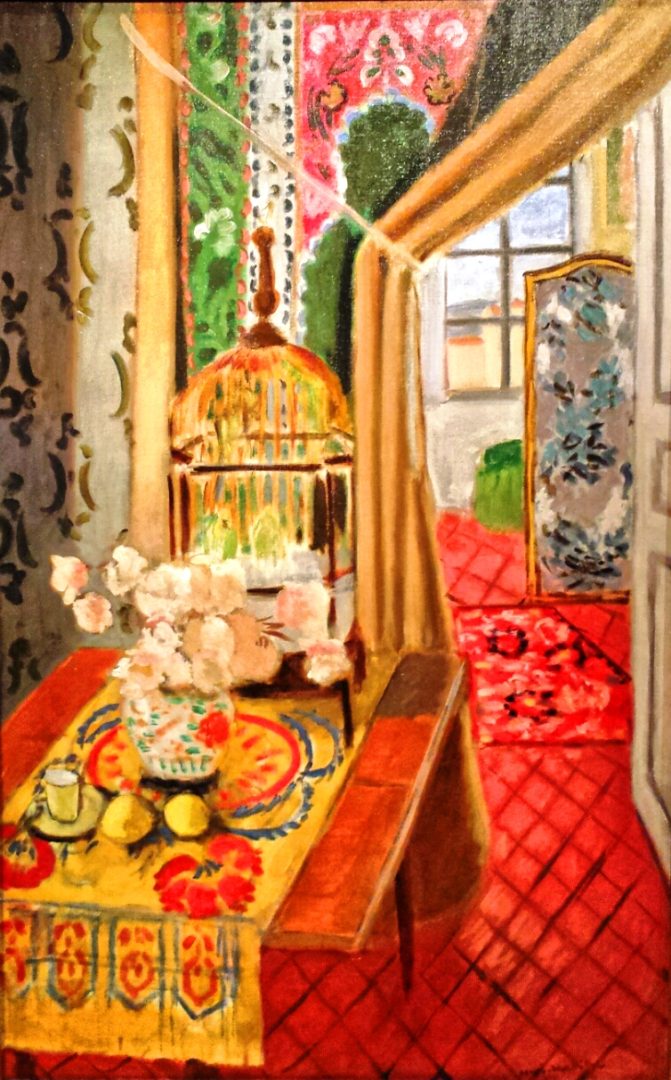


An old Floyd is not the old Floyd

By Bart Barry–
Floyd Mayweather
Saturday at MGM Grand Garden Arena in a rematch few aficionados demanded, fewer still watched, and fewer yet found entertaining as its predecessor, American welterweight and super welterweight titlist Floyd “Money” Mayweather unanimously decisioned Argentine Marcos “El Chino” Maidana. After promising to prove himself to himself, not you, by stretching Maidana, Mayweather finished the fight circling shamelessly away from his limited, winded opponent, citing numbed fingers in his left hand. Maidana, who cares no more if he’s called a dirty fighter than called an Argentine, apparently crushed Floyd’s fingers in his mouth during an eighth-round clinch.

The entire “Mayhem” spectacle was subdued in a way Mayweather fights have not been since the Carlos Baldomir farce of 2006, and one briefly wondered during the ringwalk, when Mayweather was accompanied by his two mountainous bodyguards instead of musical mascots, if early revenue projections might have slashed the budget for Team Money Team; or if perhaps Floyd, having publicly provoked men professionally obligated to take every provocation in petulant and personal a way as possible, couldn’t find a Canadian castrato or Southern stereotype brave enough to accompany him in public; or if, most charitably, Floyd was determined to be determined and have his fate determined by himself alone. The last interpretation is the best interpretation, one hoped and hopes, and Floyd’s stark entrance was a stark reminder how incredibly lonely a boxing ring can be.

One doesn’t get to the championship level of this hurting business without being able to read other mens’ bodies fluently, and Floyd’s capacity for processing every tick and twitch is among his greatest predatory assets. But mirrors are strange things, and Floyd, publicly vulnerable even when he wishes not to be, is no longer reflexive or interested enough to be impenetrable while he penetrates others’ weaknesses. It didn’t take a minute of Saturday’s fight to see Floyd’s legs were, in a word, soggy; though his footwork remained impeccable, he moved round the canvas like it was memory foam over the ring’s plywood base, not an inch of padding. He was skittish as his movements were laborious, and one now wonders what might have happened if an enhanced Maidana answered the opening bell, rushing him disrespectfully as he rushed Adrien Broner 10 months ago.

Floyd was waiting for that, yes, but he was waiting for it their first fight, too, and it made precious little difference. No one likes to be struck in the face, but it hurts Floyd doubly for denting both his face and deep pride at once. Like any champion prizefighter, Floyd’s opening tactic is requesting his opponent’s metaphorical signature on a tacit contract that reads: “You may strike me here and here, but not there.” Floyd is all fighter, and he expects to be hit. On his terms. Maidana, with his skyhook right and his frequently thrown forearms and elbows, violated a contract Floyd had far more accomplished fighters like Oscar De La Hoya and Shane Mosley and Miguel Cotto sign. Worse yet, when Floyd, enkindled by the Argentine caveman’s impertinence, sought to castigate El Chino, he did not at 147 pounds have the power or accuracy to imperil the Argentine and as always had to worry about his brittle right hand in the event he did land it flush on anything but Maidana’s lightswitch.

Every other round, when Floyd’s age and (over)training regimen made him rest, he looked singularly uncomfortable. He was not enjoying himself before or during or after his rematch with Maidana, especially when an unfortunately close shot of his postfight interview showed Floyd’s swollen and misshapen lips quivering involuntarily. Maidana, face clean after 36 minutes of sanctioned assault by Mayweather’s fists as it was during his ringwalk, showed Showtime’s buffoonish inquisitor exactly the respect Jim Gray deserved, irreverently lying to him in Spanish, in a reminder it would be nearly impossible for a Spanish-only Argentine to care less what a c-level American journalist from a b-side American cable network opined of his forthrightness or general mien.

Commentator Paulie Malignaggi was the only one who caught the face-smothering tactic Mayweather employed in order to wedge the fingers of his left hand between Maidana’s eager teeth. Malignaggi caught Mayweather doing it to Maidana the same way Malignaggi caught Mayweather doing it to Saul Alvarez a year ago; being suffocated sucks, and that’s the reason Canelo fired his right fist at Mayweather’s cup and Maidana chomped down.

One foul begets another, this is fighting after all, and much as Maidana’s impertinence flummoxed Mayweather for a minute or so, you knew immediately Floyd would not refuse to fight on so long as referee Kenny Bayless took his stern warning like a good supplicant. Floyd’s point was not made to Maidana – there was no reaching El Chino, after all – but to Bayless who, true to form and expectations, ensured the rematch comprised a ratio of athleticism-to-menace more favorable to Floyd than Tony Weeks’ unforgivably permissible performance did in May.

Provided Manny Pacquiao does not look too good in his upcoming match with Chris Algieri, a probable thing, that, as Algieri has some tools to make Pacquiao’s night a long one, Floyd’s advisor should begin negotiations with Pacquiao’s team, secretly, and use Floyd’s diminished reflexes, and both men’s diminished drawing power, to find something close enough to common ground to get signatures on at least one of Don King’s old blank contracts. Fill it in later, once casual fans find inspiration enough to care again about the last fight they wanted to see, and finally make a match that hasn’t looked this likely to entertain in five years.

Floyd will win – forget not how steadily Pacquiao declined after his night in Cowboys Stadium with Antonio Margarito four years ago – but there’s no shame in admitting this much: There were a few moments during Saturday’s match, when Marcos Maidana feinted an old Floyd Mayweather to the ropes and hit him with everything he threw, we all might have taken Pacquiao, even money.

Bart Barry can be found on Twitter @bartbarry


Mayweather-Maidana 2: Circus of the sagging big top

By Bart Barry–
Mayweather_maidana
Saturday at MGM Grand, over which a 20-story Manny Pacquiao banner likely will not drape, American welterweight Floyd “Money” Mayweather will make a rematch with Argentine Marcos “El Chino” Maidana as part of Mexican Independence Day festivities. Mayweather will seek the definitive victory that eluded him Cinco de Mayo weekend. The fight will happen on Sept. 13 in part because nothing cries ¡Viva México! quite so proudly as an American fighting an Argentine in a casino’s sanitized climes.

Consensus among aficionados is that Mayweather won their first tilt while being beaten upon most satisfactorily, beaten upon in a way that can bend a career trajectory and eventually enable more realistic record comparisons with prizefighters of greater accomplishment. Those who would dissent with official scorecards, though, raise an interesting thought experiment: What if the fight had been scored like Maidana was the prohibitive favorite, not Mayweather, with a full 25-percent anchored to ring generalship?

What is most alarming about the latest installments of Showtime infomercials, alarming at least for the rematch’s box-office revenues, is how, with fewer dramatic scores and gasping narration, and frumpy Warren Buffett in lieu of spacey Roger Mayweather, Floyd is no longer odious at all. He wishes to be. Like an aged magician trying to conjure one more white bunny out the black hat for a birthday party whose kids have seen the trick nine times without promised cake or ice cream, Floyd inadvertently loops back on himself, often in the same clip: I don’t have to talk about how great I am, because I am the greatest and nobody is better than me, because I don’t have to talk about how great I am.

Made to look like a witling on social media by a scorned rapper pal, Floyd can no longer shout smug witticisms at an upturned camera; now YouTubers get Professor Mayweather, fatigued in yellowing light, offering a discourse on how little he cares what anyone says, shortly before securing his yoga mat in a perimeter of hundred-dollar bills. Hip-hop culture, such as it has been for 20 years now, is more synonymous with thespians teaching suburban kids how to appear menacing than anything militant or self-assured, or even clever, and Floyd has long, and oddly, wished to supplant the genuinely macho thing he does for a living with a ruined art form’s hamfisted thuggery. Still, has any public figure in even this meretricious age performed so many hours of heartfelt insecurity as the “Money” documentaries, invented by HBO and aped by Showtime, drive Mayweather to?

A living, breathing antonym for the word contentment, Mayweather has unflinchingly shown how much cannot be bought with so much money. After years of giving neither strippers nor a fiancée nor a harem of ageing women a dot of genuine enthusiasm, in Episode 2 Mayweather spiritlessly drives his squadron of luxury automobiles to his boxing gym – wherein he joyfully watches other men smash one another for the duration of a sadistic, 31-minute round. An embellished $500 million in career earnings, the Big Boy Mansion, an apartment’s worth of footwear, nine employees just to count rope skips, $10 million in sports cars – and the only time the man flashes the feral grin of his true nature is when watching a spectacle men perform round the world, free of charge, outside a hundred thousand bars every Friday night.

Is it any wonder someone grounded as Marcos “El Chino” Maidana does not respect Mayweather? One gathers from watching the men at choreographed “media” events Maidana looks Mayweather’s way and thinks: I’ll never box like him, I’ll never have a fraction his money, but, che, I’m so much happier than he is that, pues, oh well.

Expectations are unusually low for this event – not only does one hear nary a peep from his peers about the fight, but an unknown middleweight vacating a meaningless belt, midweek, stole its headlines, and an incredible Friday morning performance by a different Latin American, Nicaragua’s Roman “Chocolatito” Gonzalez, assured aficionados would have better things to discuss last weekend – and they might yet be missed. The feeling is that Maidana had his best possible fight against Mayweather in May, and Mayweather ultimately made adjustments enough to prevail, and so, whither something finer?

Worse yet, Maidana appears to believe an abundance of desperation was his greatest flaw last time, a belief both his trainer and his trainer’s trainer rushed to disabuse him of, and a pensive Maidana standing unperturbed across from a 37-year-old Mayweather, one whose brittle hands have fairly stiffened but one opponent in 8 1/2 years, make for a pay-per-view spectacle almost certain to leave Mayweather’s endearingly thrifty new advisor Warren Buffett feeling cheated. While referee Kenny Bayless is quite good and generally not officious, he was recently selected to atone for Tony Weeks’ disobedience in May, allowing Maidana to punch Mayweather several times after Mayweather specifically told him not to, and Bayless knows better than to ignore what prefight instructions he’ll be given in Mayweather’s dressing room.

Expect a far more sanitized thing, one that resembles a sporting event more than a fight, immediately after Maidana’s first skyhook righthand caresses the back of Mayweather’s head, Saturday. Barring a delightful surprise, the circus barking will commence round Round 9, comparing Mayweather to whichever great comes to mind, asking in a solemn tone if there’s anyone left for Mayweather to face, without pausing to ask how this legend who needed 24 rounds to win definitively against Marcos Maidana might have done in a Montreal ring with Roberto Duran.

It matters little, alas. Floyd Mayweather is now the ringmaster of boxing’s dilapidated big top.

Bart Barry can be found on Twitter @bartbarry
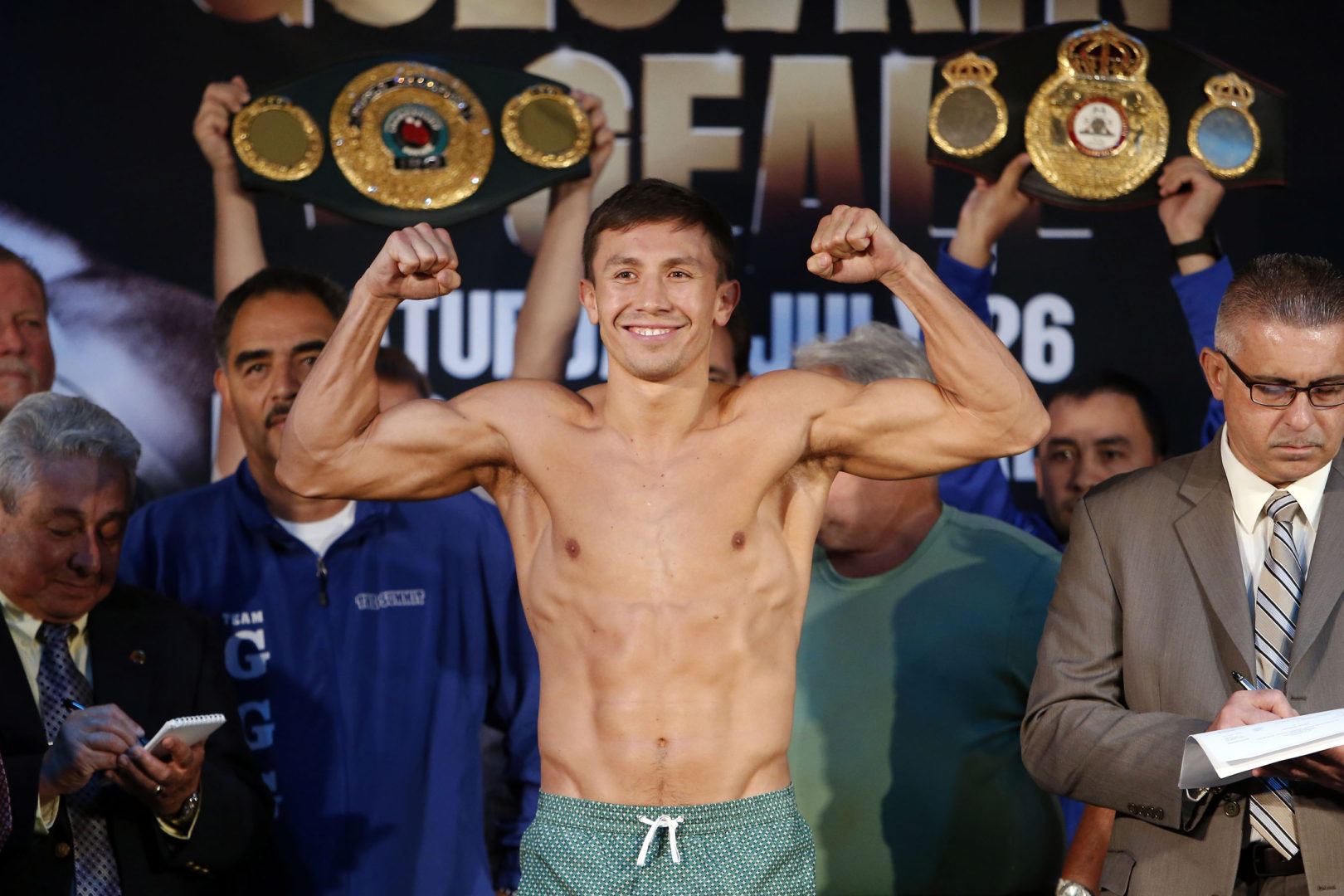


When a quest for great spectacles leaves boxing behind

By Bart Barry–
PianoPavilion
FORT WORTH, Texas – There was a fight card in my hometown Saturday night, and I didn’t hesitate for a tick to forego it and make holiday plans to spend the weekend hundreds of miles away looking at buildings, yes buildings. In fact, hesitate is the wrong verb altogether because it implies choice, a pause over two competing courses of action before pursuing the victor’s. That is not what happened.

Early last week, in the throes of architecture critic Martin Filler’s gorgeous prose – and one cannot appreciate the written word without marveling at passages in Filler’s “Makers of Modern Architecture,” regardless of a literary appreciator’s appreciation for edifices – it struck me I’d not visited the Renzo Piano Pavilion at the properly acclaimed Kimbell Art Museum, and like that I contacted an art-appreciating friend, arranged accommodations at her place and decided the four-hour drive was better made early Saturday morning than late Friday night, the better to avoid a stretch of I-35 that Austin makes a parking lot during daylight hours. Not till two mornings later when a press release arrived from the publicist for the event whose press conference I attended the previous Saturday was my memory agitated sufficiently to make a choice of the weekend’s itinerary, and by then the made-choice was 50 hours old.

As I write this, I haven’t an inkling the results of Saturday’s local card because the local daily did not cover it either, remanding its senior columnist, a ringside veteran of thousands of matches during twentysomeodd years of covering boxing, to a college football game or Champions Tour qualifier or somesuch. If he didn’t argue his case with an unsympathetic editor it is either because he’s lost so many like arguments in the withering years since Cowboys Stadium was becoming/unbecoming prizefighting’s new home, or because, more likely yet, the local daily no longer has an editor with whom to argue.

The local card brought little interest because, whatever the sincerity its participants and supporters, my hometown has connoisseurship enough to know what’s what. Since health concerns removed the late Joe Souza from San Fernando gym, downtown, no talent finds proper development there: Kids who even a decade earlier might have learned to move forward behind a jab now throw an impotent, skittish left hook from weight improperly set on the front foot, and the one local man whose name is synonymous with the sport expends more of his time with promoting and whitecollar aerobics, pursuits with a chance of profitability, than developing our limited talent pool. In fact, his outfit returned Saul “Canelo” Alvarez to the city proper, Sunday, for a snapchat about being famous for a festival called People En Español – or so my inbox reported while I composed this.

The same inbox last week reported our sport’s next savior, Kazakhstani middleweight titlist Gennady “GGG” Golovkin, will invade Carson, Calif.’s StubHub Center to survive what promises to be a dauntless test from the journeyman Mexican a fully drained and barely trained Julio Cesar Chavez Jr. spitefully battered 31 months ago, in my hometown, and that press release got dutifully succeeded by news Golovkin mania has grown feral enough for an unconfirmed, but voluptuous, thousand tickets to be gobbled up by the most voracious of California’s 38 million residents. A “record” apparently.

More and more I find myself appreciating Bernard Hopkins, a fighter I stopped liking about 13 years ago, and the manly way he is about to put life and limb at risk with a Russian-speaker who finds what tests ever evade Comrade Golovkin, and I like myself for adoring Hopkins once more, and I know my flagging interest in prizefighting is but a symptom of what ailment may seat a 50-year-old atop our sport’s pinnacle.

So it was away to this steer town, underrated a place of aesthetic greatness as I know, and a visit to the limitless grandeur of this masterpiece by Louis Kahn – second only to Frank Lloyd Wright among American architects of the 20th century – known as the Kimbell. Great events are great writing’s uniquely reliable origin, and so, from Martin Filler:

“The interiors of the Kimbell, washed with a pearlescent natural light that gives its arching vaults an ethereal presence, is as close as we are likely to come in modern times to an architecture of the infinite.”

This free-admission museum, Michelangelo here, Caravaggio there, in November got complemented by contemporary architecture’s great Italian innovator, Renzo Piano, with a pavilion that honors Kahn’s brutalist vision, exposed concrete softened by light, and a large number of translucent panels that bathe its auditorium and galleries in a light not quite Kahnian but better than most. At a robustly charming talk he gave in my hometown a year ago, Filler lamented what photos he’d seen of Piano’s latest work – “they say the camera does not lie, and in this case it does not lie nearly enough” – before completing his Texas tour in Fort Worth and later recanting in a review of the pavilion that called it, at least, “far from the disaster feared.”

Because art inevitably meanders moneywards, Texas, with its oceanlike expanse of frackable dinosaur remains, hosts much much more than a fiftieth this country’s greatest art and architecture, a place where even Dallas, a stereotype-monger’s fantasy of luxury cars and gaudily dressed women and hermaphroditic boys, redeems itself with a museum by Algur Meadows and a bridge by Santiago Calatrava and a masterwork, Nasher Sculpture Center, by Piano (whose other masterwork, The Menil Collection, stands in Houston). My hometown slouches not, either, and the closing of its museum’s wonderful Henri Matisse exhibition, Saturday, will find me there and not in Laredo to see Juan “Baby Bull” Diaz continue an increasingly uninspired comeback.

When boxing historian’s apply their finish to this era, they must note: We did not leave prizefighting, my friends, before prizefighting left us.

Bart Barry can be reached at bart.barrys.email (at) gmail.com


Another afternoon press conference for a local card

By Bart Barry–
boxing_image

The temperature in the parking lot is a reminder just how badly abused is the word “sweltering” by Americans anywhere above of the 30th parallel, a plane deeper than most of the Deep South. Heavy with wet, the heat does not sap or wilt or hang or haunt but envelops, and then saps and wilts and hangs and haunts.

Outside Club Cabana, a mixed-ethnic locale that began as a Latin revue and will be this afternoon too but whose seal-brown wood door sports a sign prohibiting what hats and baggy shirts anticipate Lil’ Money, not Banda Ensalada de Frutas, a few hangerson lull with a fewer fighters, and no, there is never a doubt, even before eyes innocent of pugilism, which man in a group of four pays bills by experiencing and causing pain with other men. That toughguy American author – who wrote like this, and this is how he wrote – called bullfighters’ eyes cold and dead, because of death, one inferred, and that marks their difference with prizefighters’ eyes, whether debuting or in a fiftieth match. Prizefighters’ eyes can be lifeless during fightweek, casualties of weightmaking’s demon fraternity, Dehydration & Starvation, but their eyes sparkle during combat, and keep sparkling for days to come, unless they get rolled white or shuttered.

The slovenly dressed moons that revolve round prizefighters use transitive verbs like hospitalize and kill. Prizefighters do not. Do unto others and have done unto you, they silently observe – the Silverish Rule. Children of chaotic circumstances, usually, they crave a purchased respite from violence and borrow the language of their moons’ vicarious achievements during fightweek to increase future purses because folks who’ve not experienced death’s ultimate monotony dote on its metaphors, and often buy ringside tickets.

“I don’t know what hap – oh wait, is this on?” says a handsome man in his twenties, accoutered in black guayabera, black slacks, black socks, black loafers. “OK, I’ll run the podium, then, if Marcus cain’t make it.”

At the far wing of the polyester-skirted dais’ 15-chair span sits Ronnie “Excuses” Velazquez, a sweetheart chap who learned to box in the army and is dogged as anyone, dogged in a way his 0-3 (2 KOs) record belies radically enough to make doggedness an antonym for wisdom. Ronnie’s nom de guerre was not chosen but given him by an exasperated gymworker who mistook in Ronnie’s smiling reasons a passel of pretexts instead of honest embarrassment about his impossible predicament of single fatherhood, working 60 weekly hours while making a go at prizefighting – kids’ mother still in Afghanistan. Mother, not mom, because of the divorce.

Six days out, Ronnie’s scheduled opponent has him by two weightclasses, and while the promoter promises the contracted weight is different from the billing weight and Ronnie suspends disbelief acrobatically, they both know the contract means nothing because a member of the state commission has a son and two prospects on the card, and Ronnie’s pride will put him in that Saturday ring to buy his kids’ school clothes. They would rather handmedowns than fatherlessness, so it goes unsaid.

“This guy is what I like to call ‘a warrior’,” says the emcee promoter. “He’s had tough, tough losses. Everyone said he shoulda’won two. Thing is, I told him, ‘This is what you do to take it to the next level, eh?’ Margarita over there, before we kicked-off this presser, Margarita, y’know, the owner of this fine place, she told me, ‘I don’t ever want one of my sons to have to fight a monster like that Velazquez cabrón!’ I couldn’t believe it. That’s what a warrior he is.”

When his rambunctious seven-year-old gets too rowdy, Ronnie corrals him by the shoulders in the gentlest way for a father to turn the feat. For quelling his masculine rage publically and legally and violently, and for once being the target of his father’s drunken lunacy, “Excuses” handles his children too softly by half.

“I wish it was at a lower weight,” Ronnie says during his time with the handheld mic. “It is what it is, I guess.”

The local daily’s tireless, tired veteran navigates the conference’s midway point under a spell of indifference – Is the reason why you don’t cover my son because you hate the Mexicans? / I love about you how writed mijo, because you are great writer! / You ain’t got a clue on boxing, pinche joto! / Best writer in the whole country, I saying to everybody, right here – and arrives beside a fellow writer anonymous enough to wear a nametag and lanyard. The two chat, oblivious of what happens onstage, about the moribund periodical industry and their shared interest, trending moribund itself, until the charismatic young promoter in Riverwalk-foodservice attire gives the veteran reporter a special shoutout from the podium for the promotional article he expects in Monday’s edition.

The main-event fighter, an undefeated lightweight from the local-gym scene who invites a donnybrook even from novices, says his fight will be a great one, thanks everyone, and plays to the promoter’s implication his opponent didn’t make the gathering because fear, not traffic, deterred him.

“Everybody else got here,” says the promoter. “Anyways, I need to say a quick thank you to Ropa Increíble, one of our sponsors and the best place to get school uniforms or custom-logo tees. Also Mil Corazones Auto – on the corner of Reyes and Durango, beside the Washateria. And my moms, of course, for making this all possible, because without her, sin mi mama, I would not be here!”

In a lightless spot just behind where the dining room becomes the club stands the local welterweight who was to be next week’s co-main until he got spearchiseled earlier in the month by a Lithuanian, TKO-5. The other guy wore those Everlast gloves Mayweather said Maidana couldn’t wear, and they shouldn’t be legal because they felt like he was getting hit with bare knuckles, and the other guy was really strong. Now his medical suspension reads: 60 days.

“Can’t wait to get back in,” he says. “I feel sorry for my next opponent.”

Bart Barry can be found on Twitter @bartbarry



Prizefighting’s blurrily expressed intimacy

By Bart Barry–
Floyd Mayweather
A couple years ago, apropos of violence and documentaries and Pablo Picasso, too, a writer whose work I admire mentioned in a correspondence with me that when he blurred his eyes at an Italian photojournalist’s treatment of pornography he “could arrange a fight image.” The idea has not left me. This column, then, will not treat one Brit’s counterpunching triumph over a poorly balanced American slugger Saturday – so plan accordingly.

There is a primal urgency in prizefighting, or even its tamer athletic stepbrother, boxing, rivaled by little but sex. Outlier fetishists embroider both, of course, but purveyors of prizefighting take greatest offense generally at the same juncture purveyors of pornography do: When the participants don’t understand what their viewership is about. Even Floyd Mayweather, who, but for awkward moments every decade or so when an opponent makes him do or endure something primal, understands what of his sport appeals mostly, sates many of his fans with shows of feral spending power they mistake for a compensatory sexual potency that offsets what violence he plans to not-offer during fightnight.

Not long after corresponding with my friend about blurring one’s vision, a lifetime’s practice of directionless reading brought me, as well, to the Kama Sutra, Hinduism’s unabashed exploration of human sexual behavior, a tome that preceded by millennia the West’s abominable rewrites and will survive them by millennia. In the well-reported pages of this quite clinical book come passages about the intimacy of shared breathing – which is not shared breath so much as shared rhythm, a voluntary matching between two persons of the rate at which they perform survival’s first act. Eastern disciplines, of course, emphasize breathing in a way Western religions do not, placing immediately the human mind upon a dot that is the present tense, balanced preciously between endless beams of past and future, and an incredible bond can be formed almost instantly between two persons who consciously match one another’s breath.

The best prizefighters learn their opponent’s breathing patterns – matching them initially, the better to learn them, and rendering both men predictable to one another, for a time – before using the voluntary alteration of this involuntary exercise to become devastatingly unpredictable. At our sport’s highest levels, timing an opponent’s inhalation is about the only way to drive one’s left knuckles in his liver, and may help answer for some the riddle of why two blows to the exact same spot on a man’s body often take such disparate effects.

My friend’s idea about blurring one’s eyes also approaches other possibilities, such as the voyeurism inherent in sports viewership, a possibility that, at one of its extremes, reduces to the loony belief a man’s anonymous witness to an event may affect its outcome; because of some woolly form of what social psychology calls confirmation bias someone in Dallas becomes convinced the headband he wears on gameday sends positive energy to Cowboys starters taking the field in San Francisco (and in his defense, good luck falsifying that). This idea returns us, fitfully though not anxiously, to the mindless dot of present time, and what exhilaration can happen there.

I am too detached to be a good and loyal fan; it is a rare moment of watching sports in a stadium seat or through television’s distorting lens that I am lost in a moment, that I am present, in other words, and careful about what is going on. I looked enviously out my apartment window the third Sunday night in June as a hundred thousand of my fellow San Antonians spontaneously alighted on downtown to be present with one another in a celebratory communion that marked what 13 men, strangers to all but a few, did together with an orange ball a few miles away. Some of that is cultural, of course; San Antonio is 63-percent Latino, and Latinos embrace communal participation much the way other ethnicities in America celebrate individualism, both rugged and antidepressant-induced. But some of it is also about having a predisposition for being present, neither lamenting nor contriving, and being unconscious in the best sense of the word: devoid of self-awareness.

There was, however, a moment that brought me to this quite unexpectedly, and brought nearly 20,000 of my fellow participants to it at the same instant, and that was the 1:33 mark of the 12th round of Sergio Martinez versus Julio Cesar Chavez Jr. on Sept. 15, 2012, at Thomas & Mack Center, when Chavez winged a left hook that buckled Martinez and began the most suspenseful 80 seconds I have experienced in sports. It remains a standard because of the mindlessness it impelled in me and so many others, and between this column and “The Ring” magazine, I have written about that moment no fewer than seven times. The intimacy of the experience Martinez and Chavez shared, I have found, is never captured so effectively as when doused with allusions to sex, when drowned in the brutal language of fucking, when a blurring happens to the images our memories recall.

Bart Barry can be reached at bart.barrys.email (at) gmail.com


Henri Matisse, and absorbing the lessons of predecessors in a way boxing does not

By Bart Barry-
Matisse
SAN ANTONIO – This city’s largest art museum, SAMA, is now in the throes of a three-month exhibition, “Matisse: Life in Color,” that is exceptional by any museum’s standard of quality and particularly exceptional by this one’s. Frenchman Henri Matisse, a painter and sculptor and printmaker and papercutter and architect who resides in the top five of any critic’s pound-for-pound list of 20th-century artists, as a metaphor has nary a tangential relationship with anything to happen in boxing since June.

Not that he needs another recommendation.

If a distinction might be drawn between Matisse and those who run our beloved sport, and one will need be drawn if any of what follows is to happen, it is this: The more expert one is at visual arts generally and painting specifically, the more impressive Matisse becomes; while the more one learns about boxing today, the less impressed he is by those who do it, manage it, promote it, broadcast it and write about it.

There is a startling economy to each thing Matisse depicts, a fixation on minimizing the number of times his implement need touch its medium to depaint a full expression of the human form. Between the larger canvas works and bronze statues at SAMA’s exhibition hang sketches Matisse did, often of subjects later depicted in nearby canvases, sketches in which Matisse worked to decipher the boundaries of his expression. Many charcoal drawings, necessarily black and gray on white, say “There! it can be done without color, all those patterns and shapes kept distinct, and so, I may fill it with whatever colors I wish.”

There is a learned fixation, as well, on luminosity, a play upon the realization a human eye has but three cones for discerning color but a hundred thousand neurons for contour, and therefore, whatever decorative value it provides, color is a thing our ancestors did without for quite some time (and no sooner did we sense color but our brains devised a filtration system for removing it from most light sources). So long as the contours of a treatment resemble a human face, Matisse demonstrated, it matters nothing if the beard is turquoise, the chin is tangerine or the hair is flaming purple; we see the world in black and white, and our eyes answer their most essential binary inquiry – human face Y/N? – many milliseconds faster than computers ever may.

Matisse, and here he followed Claude Monet, got at an idea best expressed like vision-as-narrative, a concession, or perhaps proclamation, we very much see what we are looking for and then remember nary a fraction of it – a form of honest rendering, to revise an American courthouse oath, which goes: The truth, never the whole truth, but nothing but the truth. When one remembers any Matisse painting an hour after seeing it, he remembers its colors, radiant and voluminous; first in the mind of both tyrant and tyro comes always the incredible breadth of Matisse’s inspired palette. And yet, and yet.

It is the solid blacks and whites, and grays between, that allow delineation enough in what signals our brains collect from our eyes to allow the colors to remain intact, and not make of them what muddiness should logically come of such swirling, competing hues. No one remembers Matisse’s black outlines, absorbed from Post-Impressionist predecessors and specifically Paul Gauguin’s studies of Cloisonnism, a way of making oil on canvas mimic stained-glass windows’ authority, that wrap most of Matisse’s objects, or the flat white paint that dots so many such objects, or all the matte-gray mirrors one sees, when he returns home and tries to remember his favorite piece, because Matisse mastered the narrative of human sight taught him by Renaissance masters like Rembrandt and Diego Velazquez, and then surpassed their understanding, inverting the harmony of their form, goaded doubtlessly by his cobber and competitor Pablo Picasso, and seeing what the human mind might sense through its retina, communicate to its brain, and retain in its memory.

But Matisse absorbed the masters’ craft before he subverted it, a thing lost on all but the very best athletes, managers, promoters, broadcasters and writers of our beloved sport, today: Every kid with reflexes thinks to carry his hands below his view, every new manager thinks he’s the first to read Dale Carnegie’s 77-year-old bestseller or any of its 77,777 knockoffs, every upstart promoter is certain he knows the city better than what dozen failures preceded him, every broadcaster discounts his viewers’ perceptiveness, and every young writer suspects no one before him dabbled promiscuously in first-person pronouns or exclamation marks.

In the Matisse works that now hang at SAMA, one sees most prominently an homage, irreverent, yes, but an homage nonetheless, to the 17th-century Dutch master Jan Vermeer. Matisse was on to the Dutchman’s every trick – academics today might argue whether Vermeer traced his subjects from the projected image of a camera obscura, but Matisse knew it straight away – and gently ribbed the master with fisheye distensions of planes introduced by a light source from the left, covered either by a curtain or open window. Matisse knew from a blessed combination of maturity (his 35th birthday preceded his originality) and deep observation what his influences were about and where to place the detour of his genius.

From empty local gyms to bankrupted managers, impotent promoters, plunging viewership and impecunious scribes, today the woes of our sport’s woeful state, contrarily, reduce often to a stubborn obliviousness of what preceded us.

*

Author’s note: The photo above is of Matisse’s “Interior, Flowers and Parakeets” – a featured work in San Antonio Museum of Art’s current exhibition.

Bart Barry can be reached at bart.barrys.email (at) gmail.com


Sergey Kovalev, and the genuine possibility of being Krushed by an Alien

By Bart Barry-
Serhey Kovalev
Saturday in Atlantic City in another hideous but portentous mismatch on HBO, Russian light heavyweight titlist Sergey “Krusher” Kovalev raced through a helpless Australian named Blake Caparello, stumbling out the block and getting flashdropped in round 1 before spearchiseling his way to a TKO-2 result whose time was irrelevant and preordained. For the first time in Kovalev’s career as an HBO fighter, though, Saturday’s portentous match actually portended something, as word came last week Kovalev will fight Bernard “The Alien” Hopkins in November.

Bless Bernard Hopkins for making this fight.

Bless Kovalev, too, and Kovalev’s handlers, too too, and HBO and Oscar De La Hoya – whose canning of Richard Schaefer allowed others to begin imagining something like this – and even Showtime, whose subversion of HBO’s plans for a Kovalev match with Adonis Stevenson ignited, finally, a fire beneath the throne at HBO Sports. Barring a similar act of audacity by Gennady Golovkin’s handlers, Kovalev-Hopkins is now the most-anticipated fight of 2014.

There is a very real chance Bernard Hopkins will beat Sergey Kovalev, and whereas it might once, even recently, have brought a foreboding that went “what the hell kind of professional sport gets dominated by a 50-year-old?” the fact becomes ever clearer this probably is the worthiest era in our sport’s history for a stamp in crimson dye that reads: DOMINATED BY A 50-YEAR-OLD. Why the change of heart? In signing to fight Kovalev, remorseless and mean-spirited as any contemporary practitioner of fisticuffs, Hopkins demonstrated a willingness to imperil himself for greatness’ sake that none of his young inferiors possesses.

Hopkins now acts both as a counterargument to Gennady Golovkin’s small army of apologists who just can’t seem to find a fitting opponent anywhere they look, and a large black asterisk historians’ minds must set beside Floyd Mayweather’s name: *Did not fight his era’s best.

Notice what did not precede last week’s delightful announcement. No mention of Machiavellian advisors, no bickering about purse splits on message boards, no talk of one man’s cowardice matching the other’s stupidity, no insiders’ analysis of why promoters are obdurately opposed to what is best for their sport, and most blessedly of all, no midnight conference call to announce people not-fighting.

Two thoughts on why Hopkins may beat a genuinely frightening dude in his prime – frightening because who but Kovalev in the annals of boxing tragedy increased his knockout percentage after killing a man in the ring? – and apply with an alien precision his looniest stroke yet to this era: 1. Something Kovalev’s first U.S. trainer said, and 2. Kelly Pavlik.

Going in reverse order, and for those old enough to remember, Pavlik, in 2008, was the undefeated, undisputed, lineal middleweight champion of the world, having done it the right way, stretching the man, Jermain Taylor, who beat the man, Bernard Hopkins, who, by 2008, was a sprightly 43 year-old super middleweight six months removed from being outclassed by Welshman Joe Calzaghe. Pavlik was expected to overwhelm Hopkins the way volume punchers tend to overwhelm boxers, especially volume punchers possessed of a right cross like Pavlik’s. Suddenly Hopkins was not a boxer or counterpuncher, though, but a slugger, leaping at Pavlik in the opening round with left-hook leads to the Ohioan’s durable liver.

It was impossible Pavlik had trained for such an attack from a man who’d managed to take an athletic actionfigure like Taylor in 2005 and make with him 72 minutes of defensive awfulness not to be surpassed in dullness until Erislandy Lara fights Erislandy Lara. With those Hopkins left hands, though, went the trajectory of Pavlik’s right cross. Whatever ailments and dissipation Pavlik suffered immediately before he threw hands with Hopkins, his cross never flew right because Hopkins lowered Pavlik’s elbow six reflexive inches in the opening three minutes. Hopkins will do something similarly unexpected to Kovalev in their opening stanza, something neither the Russian nor his American trainer John David Jackson prepares for, and how Kovalev adjusts, what sort of plan-B game Kovalev possesses, will determine the match’s outcome.

Beside Jackson in Kovalev’s corner in November will be Don Turner, one of the few remaining sages in our sport and the man into whose North Carolina gym Kovalev strolled years ago.

“(Sergey) doesn’t hit that hard,” Turner told me in September. “He hits you on-time. When you hit a guy on-time, you’re punching him twice as hard as you naturally would.”

Here then, in the form of a question, lies the enormous challenge rushing at Kovalev: Who has ever hit Bernard Hopkins on-time? Kovalev runs opponents into his power, cocking a right cross with a left hook that was cocked by a right cross. He is a volume puncher with menacing force and radioactive meanness. But Hopkins has fought dozens such men. Whom that Kovalev has fought begins to approximate Hopkins in craft, experience or wiles?

But as a friend of mine said Saturday night, crashing together metaphors in the way men do in relaxed conversation after witnessing barbaric spectacles: “So long as you don’t look in Medusa’s eyes, Father Time stays undefeated.”

If Kovalev does not bite on Hopkins’ prefight lures, and here language barrier shall serve the Russian well, he can set a pace Hopkins cannot possibly abide a few months before his 50th birthday, and if that happens, the beating Kovalev bestows on “The Alien” will be otherworldly. But there remains a very real chance it will not happen, and if it doesn’t and Hopkins somehow beats Kovalev, may this period henceforth and universally be known as the Hopkins Era.

Bart Barry can be reached at bart.barrys.email (at) gmail.com


GGG: Golovkin Gores Geale / Good Going Guys

By Bart Barry-
Gennady Golovkin
“Geale had the best credentials of anyone that’s gotten in the ring with him. Geale is a former two-time titlist.” – Gennady Golovkin’s promoter Tom Loeffler, July 26.

Saturday at Madison Square Garden, 32-year-old Kazakhstani middleweight titlist Gennady “GGG” Golovkin stopped Australian challenger Daniel Geale at 2:47 of round 3. It was another attraction-building event televised by HBO, a portentous sort of happening intended to entice viewers with the chance one of Golovkin’s next three or four matches might come against enticing, or at least appropriate, competition – even if a $60 pay-per-view tariff must be levied upon subscribers to see it.

Daniel Geale fought like a self-taught hobbyist, Saturday, a man who wanted out of his contract during introductions and was unheard of in the United States for good reason until last week, when aficionados who know better began exercising their minds with the calisthenics of thought-experiment, proving they possessed dexterity enough to imagine a means by which Geale might vanquish Golovkin. Geale was, after all, the guy some Americans watched via buggy videostream in 2012 decision Felix Sturm, a middleweight titlist still better known by Americans for being wronged during a De La Hoya-Hopkins infomercial 10 years ago than anything he achieved afterwards.

There is some simple calculus in matchmaking, to complement its much more difficult intuiting, and that is: Volume punchers solve boxers who solve power punchers who solve volume punchers. That’s an indirect way of saying a volume-punching guy like Geale – who unloaded his best righthand on an onrushing Golovkin in round 3, and landed it flush, and didn’t so much as compromise the trajectory of Golovkin’s own righthand, an already started one stiff enough to land Geale on a blue mat from which the Aussie rose with seven beats to go in a 10-count he then stretched to a standing 4-count before quitting on his feet with a spiritless shake of the head – was a better showcase for Golovkin than even cynics anticipated.

Here’s a direct way of putting it: Daniel Geale hadn’t a prayer against Gennady Golovkin. Much of that is Golovkin’s fantastic professionalism, a professionalism supporter and dissenter alike would dearly like to see tested by a worthy adversary, more overdue for Golovkin now than any HBO fighter since Andre Berto, but a goodish amount of it is also due to matchmaking and Geale-promoter Gary Shaw’s noteworthy penchant for getting no-hopers on HBO.

If there was a first noteworthy moment in Saturday’s main event, it came in the final seconds of round 1, when Golovkin measured Geale with straight rights. What made it noteworthy was Golovkin’s fearlessness across from Geale, a fearlessness that allowed Golovkin to paw and tap with a right glove extended fully from his chin even while he remained in an orthodox stance. Youngsters are taught to time and punish opponents who hang their jabs, returning their lead heads at half the rate they deploy them, but how often does a prizefighter in a title match have the chutzpah to hang a cross, and leave it there?

That it took fewer than 170 seconds for Golovkin to realize Geale’s freshest haymaker mightn’t imperil him speaks to matchmaking, finally, more than another element. Once the man across from you is incapable of hurting you, he becomes a target, not an opponent, and while reducing challengers to such marks a champion’s greatness, having opponents ready-reduced in round 1 is a mark of attraction-building more than matchmaking.

Talk now turns to a Madison Square Garden superfight between career welterweight and new middleweight champion Miguel Cotto and Golovkin, which, conducted at a catchweight between 155 and 155 1/4 pounds, would be compelling. Such a fight, though, loses its attraction by 30 percent with every pound that happens above 155 – still, technically, middleweight – since the men’s styles are similar enough to reduce their competition to one of size, and Golovkin would be considerably larger. Cotto, of course, graduated beyond the Daniel Geales of the world almost 10 years ago, when he stopped Randall Bailey (26-2, 24 KOs) in 2004, and Cotto is only 18 months older than Golovkin – which ought to help statisticians recalibrate the meaningfulness of Golovkin’s 90-percent knockout ratio.

If the best match for Golovkin is at junior middleweight with the middleweight champion of the world, or at middleweight with a man enjoying a career rebirth round 154 pounds, so be it, but can we please cool the silly banter about GGG’s willingness to fight great men at 168? Golovkin has fought exactly two times above middleweight, when he defeated Amar Amari and Malik Dziarra in 2008, and to say his Saturday untethering of Daniel Geale qualifies him for a match with Carl Froch or Andre Ward at super middleweight is, frankly, inappropriate.

The same night in 2009 Ward unmanned Mikkel Kessler, a favorite to win the Super Six tournament, Golovkin laid waste to Mikhail Makarov in Makarov’s 11th prizefight. Two weeks before Froch gave Lucian Bute his first career loss, in 2012, Golovkin stamped Makoto Fuchigami’s record with its seventh. The question, then, is not if Ward and Froch would each be 30-0 against the 30 men Golovkin has faced but instead: Would either Ward or Froch have less than a 100-percent knockout ratio?

A hundred victories over Daniel Geale do not approach one victory over Andre Ward, and a thrashing of little Miguel Cotto, asked by many to retire 4 1/2 years ago when Manny Pacquiao whupped him, does not approach so much as a decision victory over Carl Froch. It’s long past time for Golovkin’s handlers to do something bold.

Bart Barry can be reached at bart.barrys.email (at) gmail.com


The Soviets are coming

By Bart Barry-
Gennady Golovkin (208x138)
Saturday begins an eight-day Soviet-boxing siege on HBO.

No, you’re right, “siege” is more than a bit over the top, and the Soviet Union survives today only in the American minds of Cold Warriors and millionaire defense-contracting executives, and what politicians and media outlets they employ, but those clicks count much as others in online-traffic ratings, so let’s let it roll. This siege, in the form of warmongering by Kazakhstani middleweight titlist Gennady “GGG” Golovkin and Russian light heavyweight titlist Sergey “Krusher” Kovalev, will be conducted in Manhattan and Atlantic City, respectively, and will mark an act of belligerence perpetrated not on America but our Australian allies, in the form of New South Wales middleweight Daniel Geale and Victoria light heavyweight Blake Caparello. HBO will be promoting, er, reporting, from the front.

Far as manias go, this Russian invasion of our sport is a bit short of maniacal. More frustrating still, it does not appear either its participants’ faults, exactly, that our current era produces so little in the way of meaningful opponents for network-anointed lions to feast upon. Spotchecking the records of the Aussie dishes undergoing preparations for Golovkin and Kovalev, one finds bland fare not to be improved with spice or garnish. This is their time, Geale and Caparello, which sounds like a name for a tandem of hardhitting talkshow hosts more than hard hitters, and while they are not prepared for GGG and Krusher, they are ready as they’ll ever be – that inane little cliché anxiety drives persons to use just before they confront an obstacle fated to be insurmountable: When you ask someone’s fitness for a task and he says he is “ready as I’ll ever be,” hedge your bets, because the only acceptable answer is “yes.”

That’s the answer you’d draw from Golovkin or Kovalev, in part because the word accounts for no less than 10 percent their working English vocabularies, which is a refreshing twist that ought delight their comrades in the former Soviet Union much the way Julio Cesar Chavez and Felix Trinidad delighted their Spanish-language followers by sticking to the mother tongue, regardless how it enkindled publicists and whatever mousy-faced retread anticipated Showtime’s Jim Gray. The pressure is ever on athletes who ply their craft in the United States to speak English, a nearsighted demand that misses the point nearly every time it’s made, since these men are not interested in assimilation – they aren’t allowed in this country for it, either – but rather performance; they are here to provide a spectacle experts assert an American could not. That is particularly true of Golovkin and Kovalev, two men whom American Andre Ward would beat if he still fought, but since he no longer does, P1 visas are granted the former Soviets because, in a twist Chavez fans can appreciate, they are willing to do the sort of work Americans won’t.

The plea for more words in English is trite and misplaced because having a man speak to you in sounds connected to no moral force for him or you is just noise better communicated with Golovkin’s disarming smile or Kovalev’s menacing everything. Let that remind us, too, ever and again, the only thing one should value of a fighter as an individual is what he does between the ropes and bells. If you are flummoxed by an athlete not speaking your language because you think he’d make a great role model for your son if only your son might feel a native-language connection, your perspective is wanting.

These men, to paraphrase Charles Barkley, whose 1993 Nike commercial set a candor standard never since approached, are paid to bludgeon with their fists half-naked men to unconsciousness; some of that dwells in all of us, yes, being as we are the descendants of those willing to brain man or beast for food, but we’re all better served by keeping such impulses in vicariousness’ fantastic arena. The profession of hurting other men chooses and is chosen by a special sort of athlete, a neanderthal type better captured by Kovalev’s resting posture, still coiled, than Golovkin’s goodnatured grin, the sort of man a father instinctively knows will protect his daughter as a wife till the day she needs protection from him, and no amount of heuristics or memorized English phrases will bring aficionados any nearer the reality of a man like that than what that man does during 36 minutes of sanctioned violence thrice a year.

Or has the last decade of Manny Pacquiao saying “happy” helped you cultivate a deep, meaningful connection with the Filipino’s soul?

On paper, Geale looks the better, more tested sacrifice, he hasn’t taken an opponent’s consciousness in four years but still, and Caparello looks like Kovalev’s least-hopeful HBO opponent yet. Kovalev’s fights are no longer about anything meaningful as anticipating the next match bound to anticipate the next anticipatory match for an anticipation-filled match with the guy who left HBO, but they’re nigh tolerable as Golovkin’s because, for reasons that might reduce to simple publicity, Kovalev’s prizefighting image floats upon a hyperbolic cloud fractionally puffy as Golovkin’s. Not in recent memory, or distant, has a fighter won so many hypothetical battles in the minds of experts while winning so few actual ones.

The “most feared” label is by nature fraudulent – right, Erislandy? – and most commonly evinces a promoter unwilling to pay opponents a fair wage. Odds would say every Floyd Mayweather opponent hospitably entertains the high probability he will lose to Mayweather, and yet never do we hear Mayweather called “most feared” because opponents win career-best paydays by losing to him.

Either HBO’s parsimony is impeding Golovkin and Kovalev’s fighting appropriate opponents, or else neither man is interested in climbing weight classes till he comes to someone who wrongly views him as a sure-thing. Regardless, both men, victims of circumstance perhaps, now make haste solely for footnote status in the Manny & Money Era.

Bart Barry can be reached at bart.barrys.email (at) gmail.com


Anything, please, but a rematch!

By Bart Barry-
Alvarez_Lara_Weigh In
When Mexican Saul “Canelo” Alvarez fought countryman Alfredo Angulo in March, I attended a viewing party at the home of a Puerto Rican boxing trainer who, despite no rooting ethnic interest whatever, found his home filled by seven other Puerto Rican aficionados. Saturday, when Alvarez decisioned Cuban southpaw Erislandy Lara at MGM Grand, by a split decision that might have gone to either fighter fairly, I attended a viewing party at the home of that same boxing trainer, and this time we were two. Total.

Puerto Rico’s proximity to Cuba cannot explain such clairvoyance, alone, but might begin to tell why otherwise committed aficionados decided to mend fences with their spouses, Saturday, rather than give an hour of one evening to an Erislandy Lara match. Lara is indeed as near to unwatchable as a main-event fighter dare be, and if my friend’s house may act as an informal revenue predictor, Alvarez, though he may not have deserved Saturday’s decision, does deserve begrudging respect for enduring a fight with Lara for what inevitably will be a cut in pay.

It became once more apparent sometime in the early part of Saturday’s match Saul Alvarez is exactly what we believed he was during a reign of terror he began in 2010 on the oddly, albeit timelessly, named Queer Street, against Miguel Cotto’s resentful older brother, a thoroughbred’s gallop through pasty competition done at a canter, plodding as Alvarez occasionally was against foes unremarkable as Matthew Hatton and Ryan Rhodes. Three years ago Alvarez appeared a b-level fighter with a great marketing team and surprising poise. The marketing team has fallen-off a bit, after a hell of a run, but Alvarez is otherwise very much a b-level fighter with remarkable poise.

More than any quality that served him Saturday was Alvarez’s self-belief. Perhaps Erislandy Lara is not a puncher serious as other men Alvarez has faced, though he can’t be far behind, but Alvarez was unyielding in his self-belief, wandering wantonly at Lara’s fists regardless of their accuracy. Likely that was the fulcrum upon which the judges’ decision got leveraged: The fighters’ reactions to each other’s punches.

When Alvarez got pasted with a stiff left cross or impaled himself on Lara’s jab, he immediately shuffled his feet and sped forward like a kid trying to impress a prospective coach with hustle on his first day of tryouts. When Lara got kissed by so much as the soughing breeze caused by Alvarez’s right fist flying harmlessly overhead, he jogged the perimeter of the ring like Barry Bonds rounding second after dunking a ball in McCovey Cove. It was absurd the joy Lara brought himself by not getting hit, the way an avoided blow pacified him and revealed his curious fighting character, one to take no umbrage with another man’s attempt to decapitate him; were it not ostensibly a savage happening for which Americans paid $60-per-view, a full day’s wages in many cases, Saturday’s fight would have been a spectacle of Christian forgiveness to rival any Papal Mass.

Lara’s abundance of ruth and want of vengefulness, finally, was the reason most aficionados’ eyes were dry over Saturday’s conceivably unfair decision, and why Lara’s postfight corner comprised a full tally of those in the world who desire Alvarez-Lara 2. Spare us, Lord, please! the misery of ever again enduring a match like that one, and if that means somehow bestowing a fortune so vast upon Erislandy Lara he does not don boxing gloves once more, why, may Thy will be done!

Canelo Alvarez would be an asterisk in a better era, a picture of profitable precocity whose carrot coif would not have won him a match with the era’s best, Floyd Mayweather – though, of course, in a better era, Mayweather himself might struggle to be in the Top 5. And no, there isn’t a prizefighting era in which Erislandy Lara’s pacifism would have been welcomed.

In a different if not better era, a Soviet era in which Moscow paid Cuba sugar prices justifiable only if Fidel were an alchemist converting cane to nukes, Lara might have remained a career amateur in the Cuban system and found his lifestyle suitable enough not to defect, amassing four or five gold medals. Lara’s mastery of amateur tactics is unrivaled: In the last century of American sport, only golf’s Bobby Jones perhaps accomplished more as an amateur against professionals than Lara has.

Alvarez may be limited but he has more dimensions than Lara, a man with seemingly no transitional capacity, defense to offense. How different an outcome might Saturday have brought if Lara had seen his opponent’s misses as occasions for retribution, not revelry? Several times early in the fight, Lara stood under his feet, delivered a crisp 1-2 to Alvarez’s ever predictably placed head, and then, as Alvarez began his impress-the-coach shuffle, Lara launched a homerun trot for reasons even a defensive specialist like Pernell Whitaker would not have fathomed. In those instants, Alvarez, hands low, freckled neck freshly stiffened by clean shots, wanted no part whatever of more contact from Lara, who, had he followed with even a measuring jab after those 1-2s, might have taken the fight, 10 rounds to 2 at least, on two scorecards, while earning a draw from judge Levi Martinez, reliably scoring another match for the promoter’s favorite color, red corner or blue.

It’s what makes Mayweather a special prizefighter where Lara is a special amateur; Mayweather showed Alvarez a new rhythm each round, keeping the fearless if not perspicacious Mexican unbalanced throughout, preventing the very sort of belligerence Alvarez showed in the final five minutes of Saturday’s match, flying at Lara like a man confident no more than two punches would come in succession, punches he didn’t mind swallowing in behalf of what loyally loud countrymen dutifully filled MGM Grand.

That Alvarez made a choice for violence Lara did not is reason enough to see a close fight Canelo’s way, keeping him boxing’s third most-reliable draw in this soggy era. Erislandy Lara, meanwhile, can content himself with remaining one of the greatest amateurs of this era or any other.

Bart Barry can be reached at bart.barrys.email (at) gmail.com


Saul Alvarez: The cinnamon reckoning of an American promoter and a Cuban boxer

By Bart Barry-
Canelo Alvarez
Saturday at Las Vegas’ MGM Grand, home of Floyd Mayweather’s entranceway shrine, Mexican Saul “Canelo” Alvarez will make a pay-per-view match with Cuban Erislandy “The American Dream” Lara to determine who will be considered the world’s best junior middleweight until Mayweather returns to the division. Those who consider themselves insiders are, in many cases, expecting an overrated Alvarez to lose to what they believe is an underrated Cuban boxer-puncher.

Were official sportsbook Boxing Betting Odds right about Alvarez?”

Erislandy Lara has gotten extended mileage out of his and trainer Ronnie Shields’ claims of others’ avoidance. He is aesthetically displeasing, often in the very worst way of sloppy retreat, hopping sideways in shows of inefficiency to make Amir Khan’s head shake, while he is possessed of wiles enough to make his unconsciousness in a prizefighting ring unlikely. He approached the dais after Alvarez’s last fight, a sanctioned assault of Alfredo Angulo in March, with the trepidatious look of a man pushed from the wings by a stagehand longer on enthusiasm than prudence. Alvarez fielded him nearly with pity, sensing almost immediately Lara was driven by others, not restrained, confidently patted his shoulder, and told Lara to wait his turn.

Their encounter bore the markings of a nervous little guy in a struggling beard sent on a dare by his gamer buddies to game a supermodel on the arm of the bar’s largest and most masculine presence; the podium was the lass and Lara the nervous suitor. After a quiet and somewhat rambling bit of Cuban Spanish from Lara, Alvarez relieved his command and asked who wanted to see them fight, laughed at most of the room’s silence, then asked two of those who spoke up if they, too, were Cubans. Then Alvarez dismissed Lara, as if empathetically.

Some weeks later, with Alvarez wanting back on pay-per-view soon, and his U.S. promoter privately unraveling towards a soon-to-be-public firing of its CEO, Alvarez-Lara got announced, a match Lara’s true believers believe will justify years of their man’s contending he is the game’s most-avoided prizefighter, a match that may prove an aesthetic disaster, but may not, and will be Alvarez’s to lose – either via brutal stoppage or sympathetic judging by some who know a healthy Las Vegas economy is a burden no Cuban’s popularity should be asked to support.

There will be very few Lara supporters at Saturday’s match because most Lara fans are committed to misanthropy more than boxing. In Lara they see a soulmate spoiler of sorts, a man who makes their contrary impulses dance like disco lights in a kaleidoscope. Alvarez is the sort of person a Lara fan never expected to fight their guy. For having been ushered to stardom via haircolor and Mexican daytime television – and Mexicans’ rapacious desire to claim prizefighting’s best as their own – “Canelo” is the anti-Lara, a man whose image surgepumps lighter fluid on the dull if ever-breathing embers of resentment from which many casual boxing fans, and even some serious ones, draw their animating force.

Not enough is yet known about the fiscal health of Alvarez’s U.S. handler, Golden Boy Promotions, or even if it has been acting legally as Alvarez’s promoter – a Florida courthouse will begin sorting this out in October, when All Star Boxing, headed by one of the more charismatic promoters our sport boasts, Tuto Zabala, sees the fruition of a lawsuit it initiated in 2011 – to comment intelligently on the outfit’s future. There is doubt, though.

While Golden Boy Promotions’ deposed executive Richard Schaefer is arguably the least-charismatic promoter our sport boasts, or boasted anyway, he built a robust company while answering to about as zany a boss as any serious professional ever did. In and out of rehab and surely suffering worse and deeper troubles than ever had their day in the tabloids, Oscar De La Hoya disappeared frequently, appeared sporadically, and rarely said an insightful or particularly coherent thing while in public during much of the last half of Schaefer’s tenure.

Indications are that Schaefer did not represent De La Hoya’s best interests at all times, though a day may come when it is apparent De La Hoya’s best interests were not necessarily the same as his company’s, and while Schaefer auctioned off assets of the corporation, many possibly to manager Al Haymon, they were assets Schaefer nevertheless acquired in the first place, assets that were going to float away regardless of the promoter’s attaining some fees from them in the meantime. Floyd Mayweather may well have been a free agent, in other words, but the buffet of substandard Golden Boy Promotions fighters upon which he feasted, instead of Manny Pacquiao, was no accident and brought Golden Boy Promotions much greater revenues than it would have raised on its own, whatever conditional promises were made to attain them.

How well boxing’s second-best promoter will function in Schaefer’s absence is anyone’s guess. No knowledgeable person expects De La Hoya to have the acumen or attention span to replace Schaefer by himself. One hopes, for our sport’s longterm health, then, De La Hoya is busy interviewing potential replacements, sifting through an impressive stack of impressive resumes, at this very moment.

One hopes, yes, but one does not expect.

Where Top Rank comprises a roster of esteemed professionals and Don King Productions once comprised one of the world’s most relentlessly enormous personalities, Golden Boy Promotions comprised a rightfully famous figurehead and a savvy CEO. It no longer has a savvy CEO.

Despite himself in many cases, De La Hoya was en route to becoming something our sport lacks and truly needs: a happy ending. The tenuous partnership of De La Hoya and Saul “Canelo” Alvarez, tenuously linked, may not be any handicapper’s best place to put his money, but for now, it’s what’s on the quick sheet and deserves at least well-wishes, if not additional investment from fans.

Either way, I’ll take Alvarez, UD-12, in a match that proves Erislandy Lara is not underrated.

Bart Barry can be reached at bart.barrys.email (at) gmail.com


Terence Crawford: Ratified with a smile

By Bart Barry-
Terence Crawford
After nine years of sitting ringside at Top Rank shows – my first media credential came from Lee Samuels, in April 2005 – one flatters himself to think he can discern the difference between a well-built fight and a well-built fighter, noting hallmarks of the promoter’s extraordinary eye for talent and talent for matchmaking in the differences between a well-built fight like Donaire-Montiel and a well-built fighter like Miguel Cotto. In Dallas one year ago to see Mikey Garcia continue his ascent, while actually witnessing its antithesis, I believed the best-built fighter I saw at American Airlines Center was not Garcia but an undefeated kid from Nebraska named Terence Crawford.

Saturday confirmed that opinion and ratified Crawford as one of the world’s two best lightweights (and if a fight’s probable aesthetics should require ambiguity, may it ever do so in the case of Crawford and Miguel Vazquez), when Crawford overcame undefeated Cuban Yuriorkis Gamboa’s initial superiority of reflex and craft to make a first defense of his world title the proper way: TKO-9. At Omaha’s CenturyLink Center, Crawford switched from orthodox to southpaw, socked Gamboa from most every direction, dropped him four times, and commanded referee Genaro Rodriguez’s mercy, in a performance that made aficionados everywhere suddenly invest in the Nebraskan’s fortunes.

Crawford-Gamboa was an excellent fight conducted near the height of boxing’s current powers, though not quite as much as HBO’s hyperbolic commentating crew proclaimed – so thrilled were they to be somewhere new in front of a spectacle competitive. Terence Crawford is a rarity among contemporary prizefighters: A talented fighter able to sell tickets at home though nevertheless willing to travel anywhere and make fight real fights against real fighters. He is a monument to how Top Rank alone can build a fighter when it wishes to, when it takes a nothing-much-to-lose approach and moves him properly, making sterner tests steadily, and giving him a chance to surprise himself and others when his moment comes.

If a prizefighter improves considerably by becoming a champion, Crawford just became better again by defending his belt before a hometown crowd. Whatever collectedness Crawford showed throughout the match and afterwards, however much the ferocity of Gamboa’s attack elevated Crawford’s demeanor in aficionados’ eyes from insipid to poised, there can be no doubt he was surprised and overjoyed by his performance and its result. Watch him immediately after being hoisted on his handler’s shoulders in the traditionally celebratory way; he begins with the menacing glare one sees predominately in staredowns and hip-hop clubs then surrenders his face to a wide and nearly disbelieving grin.

It was, in its way, a metaphor for the transition in demeanor our sport’s fans underwent these last 30 days: After a scowl-inducing opening five months, 2014 righted its course, if it didn’t fully redeem itself, with definitively heroic showings by Carl Froch, Chris Algieri, Vasyl Lomachenko and Terence Crawford, interrupted early by a coronation of sorts for Miguel Cotto, aficionados’ consensus pick for the veteran prizefighter most deserving of one. While a single stretch in a mediocre run would not save a programming regime in a meritocracy, in the current state of premium-cable programming it likely buys those running HBO Sports another year or so.

As if in late-arriving rebuttal to Showtime’s groundbreaking work with Chuck Giampa in 2012, HBO unveiled Saturday its own fan-battle and groggy-cam innovations, the former a feature in which, rather than feign objectivity at the outset, Max and Roy each pick an opposing fighter and comb a match’s every indecisive moment for evidence his fighter took it, while Jim scores their efforts and Steve agrees. Max selects the object of his greater overstatements in bygone fights, and Roy picks whichever guy resembles Roy. Perhaps the fan-battle innovation, then, marks not an innovation but a feedback mechanism: Any time Max tore his eyes from Gamboa’s spellbinding athleticism, Saturday, it meant Crawford did something exceptional, and each time Roy got Gamboa’s name right it was because the Cuban showed much heart, son.

The groggy-cam innovation, though, was exactly that: Effectively as Chuck Giampa once took Showtime viewers inside the mind of a judge so did HBO’s camerawork take subscribers inside the massively concussed brain of a nearly unconscious man in a championship prizefight. Viewers who delighted in HBO’s rope-obstructed shots in the opening rounds had no choice but to concede the close of Saturday’s main event was nigh intoxicating, if not intoxicated. After Gamboa rose from the blue mat and readied himself for his final act of self-immolation in round 9, HBO gave its viewers a jerky Omaha-crowd-as-Pacific-Ocean angle nonsensical as broadcasting a Tiger Woods sudden-death putt from the Goodyear Blimp.

Self-immolation was indeed the phrase that often came to mind while watching Gamboa in Saturday’s final rounds. Gamboa, who has been rendered HBO-camera-like just about every time a fight of his makes television, brought to mind the Mike Tyson whom Evander Holyfield stopped in their first match, though without a chin fractionally reliable as Tyson’s. Just as Holyfield weathered the initial onslaught of Tyson’s reflexive rage and raging reflexes, weathered it to remind Tyson who the physically stronger man was, so did Crawford get too close and then too far in his opening 12 minutes with Gamboa, determining what he might be missing in the Cuban’s all-offense-always style and what the consequences of his carelessness later might bring, before marching forward and imposing himself the way a man should in a confrontation.

Unlike Crawford, Gamboa had no means of countering a force that moved him backwards, asserting once more his claim on contemporary prizefighting’s largest delta between physical ability and ring IQ – that somewhat fuzzy quality one needn’t define precisely before knowing Crawford has much larger stores of it than Gamboa. More enticing, still, is this: Crawford utilized his IQ to make a wager worthy of prizefighting’s master gambler, Juan Manuel Marquez, choosing to absorb Gamboa’s overhand rights, from a southpaw stance, in the hopes of deploying his own arsenal with more devastating effect.

When such hopes find full satisfaction in an arena filled with one’s hometown fans, it’s OK to break character afterwards and smile widely, Terence. You’ve got lots of folks smiling.

Bart Barry can be reached at bart.barrys.email (at) gmail.com


In celebration of 0s that went

By Bart Barry–
RussellbyJimWyatt300
“Looks like in the next year or two, he is going to be a threat for any featherweight champion.”

The quote above belongs to the late Emanuel Steward, an utterance he made about three years ago while watching Gary Russell Jr. decision someone named Eric Estrada, a Chicagoan who then promptly retired with a professional record of 9-2. Russell was 16-0 at the time. Mr. Steward had a penchant for saying most every event, regardless of outcome, had gone “exactly as I thought it would” – though doubtfully even he had a twinkle in his eye sparkly, or smile endearing, enough to say such a thing about Russell’s career.

Saturday in Carson, Calif., in a fine featherweight title fight, Ukrainian Vasyl Lomachenko defeated Maryland’s Gary Russell Jr. by split scores of 116-112, 116-112 and 114-114, giving Russell his first professional defeat and Lomachenko his second professional victory.

Gary Russell Jr. did not deserve a full helping of what derision was heaped on him previously, and he proved as much Saturday. Vasyl Lomachenko deserved at least 2/3 the praise initially heaped on him, too, and he proved as much Saturday. Their fight was excellent, deserving of better treatment than their scorecards engendered, certainly, with both men acquitting themselves about as well as hoped, neither embarrassing himself, and both men’s records now becoming beacons, one hopes, boxing might follow to a better place.

More important for the future of our sport than the milquetoast armistice reached between a promoter and the shell of its rival – review the undercard of Pacquiao-Barrera II for a reminder how well such treaties served aficionados last time – are the losses that adorn the records of both Lomachenko and now Russell, two of the more talented prizefighters in a fantastic division. There’s no sense protecting either anymore, in other words, though the plan for promoter Top Rank seemed never to protect Lomachenko in the first place or else never again to serve him an overweight Mexican veteran in South Texas.

Gary Russell was more than at least one of his predecessors, Andre Berto, and likely more than the other of his predecessors, Adrien Broner – though Broner fought much better opposition en route to being undressed by Marcos Maidana than Berto saw en route to Victor Ortiz, and Russell’s dossier from the last four years makes Berto look Frochian, though Russell is likeable, not odious, so he’ll get forbearance Broner did not (and sell fewer tickets too). In Broner and Berto, aficionados recognized almost immediately profound technical flaws and felt betrayed by a pair of networks that would pretend otherwise, or not know any better despite budgets meriting they should.

With Russell there’s some difference in the sense of betrayal’s origin – there’s a sense poor management has taken a prodigy and made him somewhat ordinary by moving him inappropriately, or not at all, putting altogether too much emphasis on keeping zero down the loss side of his ledger. Russell’s manager, Al Haymon, in other words, may be something of a one-trick pony in his means of developing an attraction, and it’s a trick Floyd Mayweather Jr. taught him. In the case of Berto, the trick was a good one, truthfully: Andre Berto was able to make multiples more money by having his manager hoodwink HBO than his talent held claims on. Broner was not untalented so much as overhyped, forcing his 0 to go earlier than perhaps it needed to – but then network budgets had thinned considerably by the time Broner fought Gavin Rees, thinned anemic beside the halcyon days of Berto locking horns with a guy on a 1-3 tear like Steve Forbes in 2008.

The New Normal, and all that.

Gary Russell was announcing too many fight dates too late in his development with TBA as his opponent, and a goodish amount of the displeasure knowledgeable folks feel for Haymon’s machinations and the effect they’ve taken – precluding fights, not enabling them – got projected on Russell. That should stop now; Russell is not everything we were told he is, neither is Floyd Mayweather or any Haymon-managed fighter, but then, would Haymon be doing his job correctly if any were?

Lomachenko is a solid prizefighter who is fighting a quality of opposition that far outpaces his professional experience and surely speaks to his amateur accomplishments, age, and someone’s avarice – either his, his handlers’, or both, since promoter Bob Arum rarely sounds genuinely prouder than when he says, as he did before Julio Cesar Chavez Jr. fought Sergio Martinez, his company does not put fighters in matches for which they are unready. Lomachenko was unready for Orlando Salido, the Mexican who decisioned him just 3 1/2 months ago in San Antonio, in much the same way Gary Russell was unready for Lomachenko on Saturday. (And yes, there’s something tragicomic about a sport in which a man with a record of 24-0 is unprepared for a man with a record of 1-1, but then, like World Cup fans, fight aficionados love the sweet suffering that accompanies being a malcontent.)

Lomachenko still shows a crazy aversion to others’ body punches, hula-hooping his torso backwards with sincere fright, but he otherwise serves auspicious surprises to opponents, both in his quickness and commitment, that justify most of the confidence he has in himself. And it is to his redounding credit that he complained so little during and after his match with Salido and returned from it so quickly, too.

No longer getting others to fill their dateplanners with a farfetched combination of what potential he showed at 16 and a record built by cheap laborers like Juan Ruiz and Miguel Tamayo, Gary Russell Jr., now, can enjoy the durable sort of esteem that comes from knowing whatever he gets from 24-1 till retirement is earned, forcing him finally to tuck his chin and improve himself in ways the seven fights that directly preceded Saturday’s did not.

Bart Barry can be reached at bart.barrys.email (at) gmail.com


Chris Algieri: Mind over massacre

By Bart Barry-
Chris Algieri
Two Saturdays ago in Manhattan’s Madison Square Garden our sport bade a tempered farewell to former middleweight champion Sergio Martinez, squinting at a hobbled impostor sent hobbling to his stool by Miguel Cotto, even while recalling fondly the innovator who once, as a 154-pounder, stood brazenly, gloves on thighs, before middleweight world champion Kelly Pavlik. Saturday in Brooklyn’s Barclays Center our sport bade a fond hello to New York junior welterweight Chris Algieri, a smartly stylish innovator of his own who just unmanned boxing’s most-feared puncher, Russian Ruslan “Siberian Rocky” Provodnikov, to score 2014’s biggest upset by split-decision scores of 114-112, 114-112 and 109-117.

After weathering a one-punch knockdown and a timeout knee in Saturday’s opening round, Algieri proved himself intelligent and unflappable as a man might be in his world-title-fight debut. Perhaps no tactic employed by Algieri Saturday betrayed the cleverness of his unorthodox craft better than how he repeatedly thrust himself at the ropes each round, performing a feat of balance and leverage that would merit bonus ring-generalship points from judges, were our sport’s scorekeepers reliably able to observe from a mindset more sophisticated than “hit the damn guy!”

A man driven to the ropes by another, the way, say, Mike Alvarado was driven ropesward by Provodnikov in October, generally gets flattened against them, his feet and shoulders squared in tacit agreement his better deserves the largest conceivable target upon which to whale. But Algieri was rarely found in such a helpless posture when his back touched the ropes, ropes against which the New Yorker was rarely trapped by Provodnikov. Instead Algieri’s left leg remained well in front of his right, and his weight shifted dramatically from front to back each time he arrived within a meter of the ropes. He exploded, in other words, backwards to the ropes, employing them much as a slingshot from which he hurled himself forward, either to smother and clinch and counter Provodnikov, or to pivot more quickly away.

It was an innovative and innovatively ballsy way to fight the hardest puncher in the junior welterweight division, a man whose blows temporarily claimed Timothy Bradley’s consciousness any number of times, and in one half hour succeeded at transforming Mike Alvarado from a tatted badboy to a wincing pragmatist – a feat still eluding Colorado’s criminal-justice system in a decade of trying.

Algieri’s achievement was still more impressive when one considers Provodnikov did not have an off night. His head movement under trainer Freddie Roach’s instruction has improved steadily, and his footwork, while perhaps plodding, is nevertheless Mexican-like in its efficiency. Provodnikov was on, Saturday at Barclays Center, and did not appear dismayed or frustrated during the first defense of his WBO title. Both guys made the fights they drew up in camp, both men executed their gameplans, and Algieri was simply the better prizefighter.

He hit Provodnikov with every punch in the boxing lexicon, from uppercut counters to a left-wheeling righthand lead thrown like a jab with more than a tincture of Muhammad Ali. Algieri suspected, and quickly proved, that while the acceleration Provodnikov applies to the mass of a fist is unique among even professional punchers, Provodnikov is not physically stronger than most 140-pound prizefighters, and certainly no stronger than Algieri – part of a riddle of human musculature, flexibility and form that finds a man who can military press his body weight often incapable of hurling a football more than 20 yards using the same deltoids. Bounding off the ropes, time and again, Algieri met Provodnikov in full forward press and stopped the Russian’s momentum, and in some cases drove him backwards – and only one man was in any way able to punch while moving backwards, Saturday, and it decidedly was not the Siberian Rocky.

Every punch Provodnikov landed was ferocious, though, do not doubt; until a man has been ringside while Provodnikov is punching, until he has heard the quantitatively louder sound Provodnikov’s leather makes when it smacks flesh, he cannot appreciate quite how brutal the Russian’s attack is. Better put: Perhaps only those aficionados who have been ringside for a Provodnikov prizefight fathomed judge Max DeLuca’s dissenting 109-117 score, a card to make roseate the cheeks of even professors in the “hit the damn guy!” school of scorekeeping. Rumor is, HBO’s unofficial scorekeeper, too, awarded too many points to Provodnikov, though that faux-pas is pardonable for an entirely different reason: Steve’s job is to ratify whatever Jim and Max shout in his headset through the preceding three minutes; these days, HBO’s unofficial scoring could as easily be done from the production truck.

After the match, Algieri, as cogent a postfight interview as memory retrieves, said only the first left hand Provodnikov landed, the one that unceremoniously dropped the New Yorker on the blue mat in round 1, actually hurt him. That is nearly believable, as unflappable as Algieri appeared while fielding Provodnikov’s other clean punches, even with Algieri’s right eye closed or closing for the fight’s final 33 or so minutes. Or perhaps, in a counterintuitive twist, Algieri’s closed right eye helped him.

As demonstrated two Saturdays ago by Miguel Cotto, Roach-trained fighters are particularly adept at throwing left hooks their opponents do not detect; Sergio Martinez stubbornly believed he could see Cotto’s left-hook lead coming, even though he couldn’t, while Algieri, well aware he could peripherally detect nothing right of his nose, relied instead on what data his left eye recorded of Provodnikov’s shifting weight well before Provodnikov had his hook fully cocked, allowing Algieri to block and duck Provodnikov hooks in a way that looked perfectly magical to casual fans.

For his part, after the match Provodnikov implied Algieri ran away instead of fighting him, a curiously slanderous thing to say of a man whose knuckles just touched one’s head and body some 250 times. Such was the one-eyed Christopher Algieri’s masterful control of space and time, though, that a man who stood within arm’s length of him for a minimum of 300 instants Saturday still openly wondered where the hell Algieri had been during their fight.

Bart Barry can be reached at bart.barrys.email (at) gmail.com


Adiós, Sergio, con un abrazo fuerte

By Bart Barry–
Sergio Martinez
If we choose to believe all was well with Argentine southpaw Sergio “Maravilla” Martinez’s lower body when the opening bell rang on his match with Puerto Rican Miguel Cotto, Saturday, a match Martinez’s corner ended after nine rounds and a few perfunctory protests from Martinez, a match that ended with Cotto leading by three insurmountable scores of 90-77, we must also believe Martinez didn’t know Miguel Cotto had a left hook he should slip or duck.

Whatever the delta between Martinez’s expectations and Cotto’s actual speed and power, and whatever exaggerated praise we’re now prompted to give trainer Freddie Roach by the network that gave us “On Freddie Roach,” Martinez did not successfully evade 10-percent of the left hooks Cotto hurled his way in an opening round that saw the Argentine driven to the blue mat thrice. It is impossible to believe Martinez is that dumb. His handlers, though, seem to believe we are.

Saturday Sergio Martinez commenced with an apology the final postfight interview he’ll conduct after a world-championship match, offering his regrets to Argentines and Puerto Ricans and whoever else made the trip to Madison Square Garden to see him defend his lineal middleweight world championship against a smaller man who was, himself, considered done with world title fights 4 1/2 years ago. It was an uncommon start to a postfight autopsy. Jermain Taylor, the man who beat Bernard Hopkins twice to become and remain the middleweight world champion Kelly Pavlik beat twice to become and remain the middleweight world champion Sergio Martinez beat four years ago to become the middleweight world champion, certainly did not begin his interview after being stopped by Pavlik in round 7 of their 2007 championship match with an apology.

Martinez’s apology meandered about in the shady terrain between a lamentation all did not go perfectly as needed for him to remain upright and a concession he knowingly participated in, and promoted, a profitable event for which he was unfit. Telling was this: In the moment after Cotto’s first left-hook lead sent Martinez wobblehobbling across the canvas, Cotto looked surprised by the development as Martinez, who began Saturday’s match hopping senselessly leftward, the hybrid of a kangaroo and an Amir Khan, as if to present evidence that, whatever happened henceforward, he was right and right mobile when the match began.

While boxing bookmaking is a fool’s errand, did there even exist a way to calculate prefight the probability Miguel Cotto would open with a 10-6 round? That score, right there, says plenty about Martinez’s fitness to make Saturday’s fight: It says a man was knocked to the canvas three times without a referee much considering waving the match off, which says the knockdowns Cotto scored on Martinez were at least in part like the second knockdown Julio Cesar Chavez Jr. scored on Martinez, improperly ruled a slip, in the 2012 fight that unbuttoned them both.

After Saturday’s first round, the match was little more than a sadist’s ball, as Martinez’s legs were always what made him unique, and without them, with a lead right leg that looked splinted from heel to hamstring, Martinez would be unable to find a rhythm or punch trajectory worth a dash, and would have no anchored force on any punch, or subsequent acceleration on his knuckles, on the odd chance he did land one. After the second knockdown of the first round, when the lineal middleweight champion got muscled to the mat by a man in his middleweight debut, one Cotto made while weighing a few sips of sportsdrink above super welterweight, Martinez’s handsome countenance was the picture of hopelessness. If he was frustrated by the failure of one or both of his knees, he was not appalled – Martinez’s face, Saturday, said “Already?” where his face against Chavez once said “My God!”

There was something nigh fraudulent about the entirety of Cotto-Martinez, beginning with an asinine plot that went from “I must punish Miguel Cotto for not saying thank-you to the barista who served coffee at our first photo shoot” to “I sell more tickets than Sergio Martinez” before arriving at “Max, since we are both bored with this idiocy, may we interview you?” It was a middleweight championship fight contested by men whom former champion Marvelous Marvin Hagler could have beaten in a handicap match, two on one, and Bernard “The Executioner” Hopkins would have undone in one evening’s consecutive matches without ordering Richard Schaefer to fetch his alien getup in between.

But our sport retains its feelings of goodwill for both Martinez and Cotto, and well it might. Even had those who absolutely knew better, from Martinez’s trainer to his promoter to his cable network, told us of Martinez’s true condition, the high probability he’d be unable to evade Cotto for more than a minute or two, few aficionados would have begrudged “Maravilla” a pension fight against Puerto Rico’s only active ticket-seller, in Madison Square Garden the day before National Puerto Rican Day Parade 2014. The fight satisfied all matters of curiosity and suspense, and settled them quickly, and rewarded Cotto for repeatedly making since 2007 what daring matches Floyd Mayweather does not.

And to Martinez it gave a final and robust payday with his dignity diminished but still intact, an amicable goodbye in the tradition he bids farewell to others – “con un abrazo fuerte (with a big hug).”

Bart Barry can be reached at bart.barrys.email (at) gmail.com