The Truth is . . .

By Bart Barry-

SAN ANTONIO – Almost exactly 300 miles north of here Saturday welterweight titlist Errol “The Truth” Spencer strolled through an overmatched Mexican named Carlos Ocampo at – let’s get this right – The Ford Center at The Star, in Frisco, Texas, home of the Dallas Cowboys’ practice field. No matter how highly one regards a prizefighter, nine hours is too much of a roundtrip drive to perform for an exhibition bout, and whatever fears any Texan had of missing out, anyway, got quelled in three minutes.

If you were to draw a circle with a 30-mile radius round the center of Dallas you’d enclose an area called the Metroplex. You’d include both Frisco and a region twice as populous as Los Angeles and 85-percent populous as New York City. You’d also be missing the country’s fourth-largest city, Houston, and its seventh-largest city, this one. Texas is not so much a boxing state, in other words, as an enormous one.

The not-particularly-believable 14,000-paid attendance figure bandied about before the gates even opened Saturday and all through Showtime’s broadcast would be a breathtaking occurrence in, say, Amarillo, but it’s less than breathtaking somewhere within a four-hour drive of 11-million people. Heaven help this column if that reads like an impeachment of Jerry Jones’ math; after all, the owner of America’s Team has his “world” headquarters within the Metroplex, and the principles and integrity of any NFL owner are above doubt. That written, there were some questions about the announced attendance for Manny Pacquiao’s two Cowboys Stadium tilts in 2010, and columnists often have long, selective memories.

However many Texans attended Saturday’s match those in attendance thrilled Errol Spence, and it was joyfilling to see a well-deserving object of affection enjoy such affection.

Let us not let that detract, though, from the fact Saturday’s mainevent sucked.

New rule: When the sacrificial b-side of a homecoming mismatch is seen nervously chewing his gumshield before walking to the ring, the match is immediately reduced to a four-round affair and the champion begins three points behind on official scorecards. Seems fair. These new mercy-feasting rules in no way endanger Spence’s undefeated record, presently or retroactively, and they give commentators some suspense worth shouting at.

Spence was fighter enough to feel ashamed of what happened Saturday and man enough to admit it. Spence wanted real contact; his style demands a certain quotient of mutual abuse to please, and had he known Ocampo would fold so quickly and completely The Truth surely would’ve holstered his best punches at least a round or two longer.

Spence has grown immensely since his first Texas prizefight five years ago in Our Lady of the Lake University Gym, five miles west of where this column happens. Frankly, the odds of Spence filling any arena back then were longer than Ocampo’s odds Saturday. Whisked by what would become the PBC from America’s worst Olympic boxing team – on which, admittedly, Spence was the best fighter – to mostly empty venues like nearby Cowboys Dancehall (neither a world headquarters nor those Cowboys) Spence looked destined howsoever unfairly to follow teammates like Terrell Gausha and Rau’shee Warren to the Sam Watson-less edges of Al Haymon’s roster, off-television.

But Spence had something few other PBC prospects did: A willingness to be hit in order to hit. Everything was rougher about Spence than his stablemates, starting with his accent. Spence was “country” – as they call it round here. His accent was obviously Texan. So was his likability. He was guileless outside the ring as he was inside it. He was such a departure from the promotional antics of the PBC’s signature asset, Adrien Broner, one quickly wondered how long Spence would stay in his managerial arrangement, illfitting as it appeared.

Then Spence went tangential and put himself on a new trajectory for a PBC fighter. Spence visited someone else’s country and won a title by knockout – otherwise known as the right way. Then he began using the names of reluctant PBC welterweights in interviews. Then he washed and wore a PBC mainstay. For this he was rewarded with an illfitting homecoming 50 miles north of his native DeSoto as the headliner of what often felt like an infomercial for America’s Team and its owner – unless you believe a 147-pound man wanted more desperately to be a professional football player than a champion prizefighter.

For goodness’ sake, let them have their fun!

Yes, well, fine – so long as there is boxing to write about. But there isn’t, is there, in large part because of dreadful matchmaking, the sort that makes most aficionados feel like suckers most of the time we open our minds to the PBC brand.

Some of this is Showtime’s fault, you say? Fair enough.

Boxing’s best network now has easy access to every fighter in the world unaligned with promoter Top Rank, which is most of them. Showtime has far too many available fighters and far too few available dates to be cowed into b-sides like Carlos Ocampo. And let us have no more loose talk about mandatories. Errol Spence wishes to be the world’s best welterweight, not merely the IBF’s, and if he’s debasing himself with mandatory challengers it’s because his handlers’ handling of their other welterweight titlists makes Spence worry his share of the welterweight title is his only leverage – which is absurd if true.

A twofight series with Terence Crawford on ESPN – fight 1 in Omaha, fight 2 in Arlington (not Frisco) – would make Spence a household name, regardless of outcomes. Then he could return to Showtime as the new face of the PBC, increasing the credibility of the both his management outfit and its sole remaining broadcast sponsor.

Or Spence can fight Yordenis Ugas or Qudratillo Abduqaxorov in December and Devon Alexander next May.

Bart Barry can be reached via Twitter @bartbarry
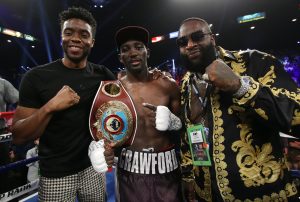


Terence Crawford is wonderful

By Bart Barry-

Saturday on ESPN+ Nebraska’s Terence Crawford won his first welterweight title the right way. He beat to relenting titlist Jeff Horn, the Aussie who upset Manny Pacquiao in 2017.

Crawford is everything.

He came in our collective consciousness the right way – making his television debut on short notice in a higher weightclass, then winning his first title in another country. He understands fighting at its genetic level; he is good enough at fundamentals to find space enough between confrontational moments to ask himself what-if questions that reveal new options, some of which improve him (the route to better ideas, firstly, comes of having more ideas). He has a high physical IQ; he senses another man’s intentions at least as soon as those intentions get set. He keeps his personality out the way – he knows what it is and requires to be great at something and knows th’t he, like most of us, hasn’t the resources to make a great spokesman. He takes chances, hitting and getting hit early in matches, the faster to assess the men across from him. He is ambitious; much lesser talents than “Bud’s” have made gainful livings staying in one weightclass to gorge on smaller men.

And he is mean.

There are myriad socioeconomic factors that make Crawford the perfect concoction this moment locates him as, but not one of them needs excavation here.

(Been thinking a good bit about machine learning lately, and its contemporary sexed-up alias, artificial intelligence, and the more seriously one considers such things the quicker and more frequently he returns to Arthur Samuel’s checkers-playing program, nearly 60 years-old now, and an idea occasionally lost in contemporary celebrations of Samuel’s other remarkable ideas like alpha-beta pruning. The idea goes like this: The entirety of any piece’s relevant history in a game of checkers is contained in its current position on the board. Human minds have way, way more processing and storage power than Samuel’s hardware did, obviously, and likely way more processing power than even today’s liberal approximations assign them, but the metaphor is instructive just the same: Everything that made Terence Crawford what he is was cumulatively contained Saturday in the 26 1/2 minutes he spent unbelting Horn.)

There may be contentment or at least satisfaction in relating things Crawford did to their histories but not joy. Here’s joy: When Crawford stuck Horn to the body in round 8 and an instant later you chucklecoughed or whistled alone in a room. That moment for one, other moments for others, canceled the argument – no conditions, no comparisons, no reductions, no history.

We are blessed as aficionados right now to have at the highest level of our sport – a level shared by Crawford and Vasyl Lomachenko, hard stop – two men who cancel the argument for those of us who enjoy sports primarily for their making us present, not giving us identities (I’m someone who knows things) or outlets (helps me forget the ways others have wronged me) or income.

Crawford did so many things so well Saturday. He placed fast, precise combinations – middle knuckle of fist within a quarter’s radius of intended target – and converted possibilities to openings. He bullied the larger man, walking Horn backwards without once pleading backwards for official intervention; he took Horn’s initiative, to remind Crawford every second he was in a fight, not an athletic spectacle, and amplified it, ensuring Horn felt in every clinch Crawford’s sinews. No give, no defensiveness.

He remanded Horn to a corner every three minutes for 60 seconds of doubting his handlers’ expertise – yes, I will leap off this stool filled with positive thoughts, I promise I will, but in another minute or two, that guy you told me wasn’t my better is going to start hitting me again, not you, so thanks for the water, I guess?

He lashed Horn’s belly with left crosses and hooks and uppercuts no one hit Horn with before. Horn reacted like a man prepared to be hit in ways he didn’t prepare for, prepared to remind his body everything was all right with stiffening thoughts galore, but since you can’t outthink a feeling no amount of thinking could enduringly offset what painful signals Horn’s body sent in torrents.

This is where physical IQ trumps intellect in every fight; Bud Crawford probably couldn’t put it in a poem or a paragraph or a painting (nor could Horn), but in hot blood Crawford’s mind knew where to put his knuckle on Horn’s body to stop the flow of actionable thoughts to and from Horn’s brain, a brain, one must remember, roted to continue that flow of actionable thoughts no matter how torrential the signals bubbling up from his body. Horn didn’t interrupt Crawford’s thoughts but a fraction so often.

Crawford enjoyed Horn’s diminishment. He felt Horn relenting and smiled.

This is what makes men like Crawford (or Mayweather or Marquez or Hopkins) exceptional; where something like empathy for a man being stripped publicly of his dignity begins to drain others, such a stripping makes the purest fighters euphoric. It transcends professionalism: I’m not doing this because it’s my job, no, I’m doing this because I like hurting you. You can’t really teach this; for who that knew how to teach it could conscience doing so? Those who would say they can teach it mistake sadism and chance for a template.

Herein lies the distinction between Crawford and Lomachenko, the world’s two best fighters, ranked numbers 1 and 1: Where one senses Lomachenko learned to hurt men for glory’s sake, Crawford glories in hurting men.

Bart Barry can be reached via Twitter @bartbarry
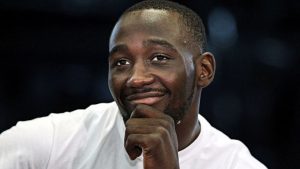


Things to do this Saturday

By Bart Barry-

Three fights happen across nine timezones Saturday in a crescendo of sorts before boxing’s summer ritual ends much of our fun. Going least essential to most, Tyson Fury returns against someone named Sefer Seferi in England, Leo Santa Cruz and Abner Mares finally rematch in Los Angeles, and Jeff Horn defends his fraction of the world’s welterweight championship against Terence Crawford in Las Vegas. If none of these events is great or particularly consequential, none is bad either, and all three should entertain.

This was going to be a piece about how much better than the rest of us a gay novelist can describe the movements of a man’s body – for glancing through a lens of avarice – then a glance at next week’s docket undid those plans. As we round the bend and race towards our seasonless sport’s annual doldrums wisdom advises against spending boxingless ideas the week before three compelling things happen. Fear not, though, an attempt to explore and celebrate a sexualized description of the male form will happen at least before GolovCanelo 2 does.

MGM Grand becomes Hornet’s Nest Northern Hemisphere this week as Aussie hoards ascend on Las Vegas, one hopes, to see their man defend his WBO title against one of today’s two best fighters. This marks Terence Crawford’s debut at 147 pounds, and it’s not a particularly easy one mainly for this reason: Horn’s first prizefight happened against a man who weighed 154 1/2 pounds, while Crawford’s first opponent weighed 138.

This three-weightclasses difference might mean less if Horn were a boxer or a slugger – since Crawford could slug his way through a long cutie or use defense and footwork to dissuade a onetrick puncher. But Horn’s a volume guy, a physical one, who expects to get hit often by men who likely punch harder than, if not accurately as, Crawford. The angles and stanceswitching tricks Crawford uses to disarm then attack smaller men mightn’t make much difference to Horn. So long as some part of Crawford is somewhere in front of Horn, regardless which part is in front of the other, expect Horn to hit that part. Horn cuts easily, and Crawford is very good at what he does, so there’s little chance Horn makes it to the closing bell, and even littler chance Vegas judges give him what doubtful benefits judges do in Brisbane, but the match should be fun.

The competing priorities of ESPN’s app launch and < $5.99 pay-per-view price (if you combine “Nature Boy”, noticeably better than “Andre the Giant”, for an adult anyway, with Horn-Crawford, you’re paying 95-percent less than you paid for Crawford-Postol) leave only one worry, which returns, as usual, to commentary. If ESPN plays it straight, tempering the crew’s admiration for Crawford with investigative stories about Horn’s having a father, all will be fine, regardless of outcome. But if ESPN has already decided Crawford must win because promoter Top Rank promised he would and having the world’s two best fighters on the network overwhelms every other consideration, things could go staggeringly sideways, the way they did when Horn narrowly upset Manny Pacquiao and widely upset Teddy Atlas.

Nothing so untoward will happen on Showtime when boxing’s best broadcast team covers Santa Cruz-Mares 2, a rematch no one considers anymore essential but everyone has a reasonable expectation will be safe and busy as their first match. Neither man has suffered an unavenged loss in the nearly three years since their first fight, but their promotional and managerial situation precludes either man from maintaining professional momentum. Santa Cruz now fights every eight months – a rate of activity at which Mares gazes lustfully. After PBC paid ESPN to televise the men’s first scrap, aficionados suspected the delay that followed was attributable to PBC’s having to save up to buy another broadcaster for the rematch, but evidently we were wrong. Santa Cruz would return six months later to beatdown Kiko Martinez and Mares would go underground for 16 months.

Much as both men rely on activity the more active fighter will win Saturday, and that should be Santa Cruz. The gloves will look too big and the rounds will meld together, but the match will have action enough for someone to mistake it for 2018’s fight of the year, until at least July.

That leaves only the return of boxing’s clown king, Tyson Fury, on a Saturday afternoon card illegally streaming from Manchester. It has been 2 1/2 years since England’s enormous lunatic decisioned Wladimir Klitschko and everything has changed about the heavyweight division except Fury. There have been suspensions and cancellations and rehabilitations and protestations, but Fury is unbowed, genuine and loony as he was ages ago when he became heavyweight champion of the world. He’s either out of shape or in the shape of his life for his return against an unknown man with whom he hopes to log rounds. He is publicly vulnerable in a way one does not expect a 6-foot-9 and 247-274-pound professional fighter to be, and so he wins fans’ forgiveness for being likable. He is capable of decisioning any man in the world, too, including Anthony Joshua, and likely as not to denude Deontay Wilder, 120-108, if ever PBC’s poverty forces such an encounter.

Frankly Wilder-Fury is the fight we deserve, whatever better match we happen to want, a reasonable man who fights crazy against a crazy man who fights reasonable, and both men grasp their division is about spectacle much as merit – while AJ’s dignity precludes his being less or more than a rolemodel, however little boxing fans honestly ever want such a thing.

Writing of which, let’s see if we can collect some clicks in this, our new, legalized-sports-betting country:

Crawford stops Horn on cuts in round 11.

Santa Cruz decisions Mares 115-113, 113-115, 115-113.

Fury TKOs Seferi with a somersault punch in round 7.

Bart Barry can be reached via Twitter @bartbarry



Mashing it up with my new app

By Bart Barry-

I was up before dawn Friday morning to begin the day for 20 minutes before I remembered I was up to watch my first live event on ESPN+, boxing’s newest app: Japan’s Naoya Inoue versus England’s Jamie McDonnell for yet another historic title attempt, this time at bantamweight. Such historic offerings happen no worse than monthly in our sport anymore, though history must record May and ESPN as twice-historic for their two historic broadcasts.

At great risk to my credibility as a surveyor of historic happenings, I must concede I do not recall before seeing McDonnell in a prizefighting ring. Which is to write my first impression of him was indeed a pathetic one. This is troubling because in order for me to certify Inoue as a historic talent I should first see him ply his wares against a competent opponent if not a historic one.

Call it stubbornly unfashionable but an undefeated puncher blasting his way through a boxer titlist in six or fewer punches heralds, for me, great matchmaking much as great punching. Time will tell how wrong I am about Inoue.

The ESPN+ app itself has a pleasantly lowbudget feel to it; my favorite part of Friday’s telecast was when some visionary made the decision to stop promoting upcoming mismatches flummery and simply go to a blank screen with a mainevent start time at the bottom. Would that we had more such honesty; we’ve run through our contingency material and welcome you, dear viewer, to set an alarm and go do something better with your time.

And now, dear writer, you may do the very same . . .

*

I am not a Philip Roth scholar or interested in being mistaken for one. I flatter myself to believe he influenced me during the year or so I read nearly all his works in 2003 or 2004. I later read his later works as they came out, thinking, I’m sure inappropriately, “The Plot Against America” was his worst novel since “Portnoy’s Complaint” (though “Our Gang” was proper dreadful, too) – and nearly every other of the novels he published after 2004, “Everyman” and “Exit Ghost” and “Indignation” and “The Humbling”, were excavation vehicles for incomplete scenes from his masterwork, “Sabbath’s Theater”.

That is the work of Roth I return to and return to for its relentlessness, for its boundless pleasure in offending, for its desecration of everything it encounters. Its arc is a parabola. I’m sure when I first read it, when it was about sex and sex and sex, I didn’t believe a writer could sustain such a pace for 30 pages much less 300 (years later, when I returned to it, I read death and death and death).

Here’s my favorite passage in all American literature, presented without context but deliciously offensive for those familiar with what precedes it:

“It couldn’t have ended otherwise. Final proof that life is perfect. Knows where it’s going every inch of the way. No, human life must not be extinguished. No one could come up with anything like it again.”

There’s not a Zuckerman-narrated novel I didn’t enjoy, though if pressed for a Roth book to rate immediately behind Sabbath, I’d probably choose “Operation Shylock” for its originality. I’m not a Jew or a misogynist or a feminist or whatever other political identify makes one cheer or boo Roth. I enjoyed Roth’s books as an American, and for me he is the quintessential American author of the last 40 years. He began with a tight ethno-religious identity and transcended it, first-person to third-. And that maneuver, first-person to third-, is the technique I enjoy most of his: First-person introduces an informality that permits the narrator later intrude on his story whenever he wishes, however formal its third-person progression.

At his worst Roth is political and screechy, a parody of himself recognized by itself, a product of the idealism of his times – at his worst, he just can’t help himself. The rest and best of the time he is mock heroic; Zuckerman behind drunken Jaga in “The Anatomy Lesson”, Mickey Sabbath as he “passeth the time, pretending to think without punctuation, the way J. Joyce pretended people thought . . .” Serious literature done by a writer whose narrators made you laugh at them.

Where does Roth rate in the canon of literary blah, blah, blah? Who, for heaven’s sake, cares! One should rate what he reads according to what joy it brings him, and to hell with every single other consideration.

Are you able to return to an author’s words and enjoy them more than once? Then you’ve found your version of great literature. Ranking art against itself is an empty, academic game, a game Roth subjected a character to when he wished torture that character a wee bit, like he did, and often, to Coleman Silk in “The Human Stain” – Rage!

Roth went gracefully, not tragically, when his time came. He stopped writing almost a decade before he passed, absolving his obituarists any cookiecutter lamentations about how much more he had to give. He wrote what he had, justified his gifts, and brought joy to his readers. It could have ended otherwise, but thankfully it did not.

*

Thus far in 2018 Showtime and ESPN are the two indispensable networks for aficionados. ESPN+ certainly is not that yet but might become so. Eddie Hearn’s DAZN is not likely to become indispensable this year, but it might. Which makes one premium network glaringly dispensable, does it not?

Bart Barry can be reached via Twitter @bartbarry
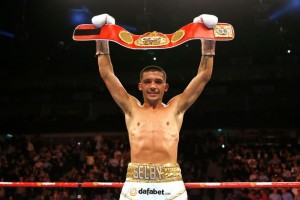


Who I was cheering for, and why?

By Bart Barry-

One doesn’t know when the urge to experimentalism will strike but one learns indulge it until he learns not to (many efforts before he learns to indulge it once more, in the doubly helical way of creative and open systems). Saturday’s aficionado’s buffet – Lee Selby versus Josh Warrington and Gary Russell versus Joseph Diaz, for featherweight titles, and Adonis Stevenson versus Badou Jack for the light heavyweight championship – present a clean enough roster to explore biases and their possible origins.

This column happens in a coffeeshop as it has for a number of years now, ever since I discovered making the process a reward itself was more sustainable than making the process a thing that merits reward; a decade of Sunday morning procrastinations followed by struggles followed by coffeeshop rewards accidentally gave way to an obvious solution that became such only once it happened accidentally. Then a minor epiphany followed: It’s more fun, if not demonstrably better, to write in a loud and bustling place, and to allow the noises and bustles seep in the column, than run the fool’s errand of sealing your system off – what happens when one’s weekly fears shift from being blocked to being bored.

There are echoes and architectural debates and orders and gossiping happening all round – “flood zones” gets articulated but won’t be used – the workaday wanderings of a mind that spent 25 senseless minutes on haploid cells before sending himself northwards to one of the five coffeeshops of the Sunday morning circuit. The irony of exchanging, or having exchanged for us, immortality for rapid improvement, to become fitter, though alas no more adaptable, than bacteria, sets itself outside of irony for preceding irony by a few hundred million years.

No segue. No bridge.

I didn’t care who would win Warrington-Selby for at least a round. Then it became apparent via observation and commentary Warrington was the shorter busier guy, the volume-puncher to Selby’s boxer, and I began to favor Warrington. I’ve been the shorter busier guy far more often than the taller craftier one, and I initially cheer for whomever reminds me of myself, like you do, though not quite inflexibly as Roy Jones does.

Whither the ancient journalistic ideal of unbias? I’m no longer sure it exists or ever did; bias precedes interest a bit like friction precedes motion. Until we have a thought to prove or disprove, I suspect, we’re daydreaming.

No sooner was Selby bleeding from beside both eyes then I began rooting for Selby in the same halfhearted way I rooted for Warrington. Then Selby and Warrington bled together as different arms and legs of the same general body and I began to root for a fair decision, to root halfheartedly for prizefighting itself, until the decision got read. Then I took a nap.

No segue.

I didn’t care who would win Russell-Diaz for a round and a half. I believed Russell was way overrated when HBO hardsold him to us 6 1/2 years ago the same way I believed Vasyl Lomachenko was way overrated when HBO hardsold him to us four years ago. Then they fought, and by virtue of Lomachenko’s victory Lomachenko could no longer be overrated as Russell.

I interviewed Jose Ramirez six years ago for The Ring magazine and wondered if the California-born U.S. Olympian with a last name ending in ‘z’ mightn’t be Diaz until I spent a few minutes looking that up Sunday morning (since I stopped caring if he was, a minute into round 2 Saturday night). The guy I interviewed was too polished by half, too entrepreneurial, too much about branding, to show what composure Diaz showed 30 seconds into Russell’s flashassault on his gloves Saturday.

I’m so tired of hearing about handspeed, Russell’s or anyone else’s. Maybe because I can’t relate. Maybe because I think it’s an unimaginative way to describe a prizefighter – one doesn’t cultivate handspeed any more than he cultivates height or eyecolor.

Russell’s hometown crowd’s cheering his brief show of exhausting ineffectiveness in round 2 made me cheer against him. Then Diaz’s aggressive reply made me stop caring if Diaz was the young branding executive I spoke with in 2012. I continued to cheer for Diaz until the ninth or 10th round, when by virtue of Russell’s not wilting, howsoever many Diaz bodyshots made Russell’s narrow waste crinkle, I decided Russell was doing something very clever to disarm Diaz. The final round I cheered for suspense, and therefore Diaz, but I didn’t mind the decision.

And I admire Russell for giving himself a C+ and being vulnerable about what vulnerable knuckles keep him inactive. While we lament a talent wasted by indolence Russell finds solace and pride in concealed deficiencies overcome.

No bridge.

I didn’t care who would win Stevenson-Jack for its entirety – an acknowledged disinterest influenced in part by the hour when the match’s opening bell rang. At times I wanted the 40-year-old southpaw to do something reckless and violent with his left hand and end the fight because the fight was not entertaining most of its duration. Later I wanted Jack to wearout the old man and end Stevenson’s deeply unsatisfactory reign as world’s lineal light heavyweight champion.

I wanted to cheer for Stevenson because he won his title the right way, lest we forget, mowerstrapping a talented champion favored to outclass him easily, and because Stevenson has a certain roguish charisma, but finally I couldn’t because Stevenson is neither talented nor active enough to bias me. Stevenson obviously received the draw like a victory, not because he thought he won the fight, unconscious as he was when it ended, but because he got to leave the Canadian ring with his title, ensuring one more championsized purse.

Stevenson and Sergey Kovalev, today, form a pair of prizefighters that stands further from a once-desired rivalry than anyone does.

Bart Barry can be reached via Twitter @bartbarry
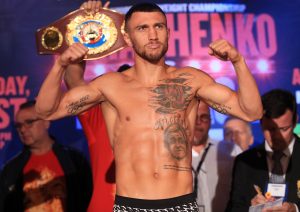


Vasyl Lomachenko: A one-punch indictment, a 10-punch justification

By Bart Barry-

Ukrainian prizefighter Vasyl Lomachenko and his promoter Top Rank accomplished something pretty extraordinary Saturday when Lomachenko stopped lightweight champion Jorge Linares with a liver shot in the 10th round of a primetime ESPN match at Madison Square Garden. They justified a mountainous pile of euphoric forecasting and premature acclaim so high as to appear unjustifiable. Top Rank did this by putting its star in a fight he could lose – scorecards were a split draw after nine rounds – and Lomachenko did this by riding the moment to a transcendent version of himself.

In one punch Lomachenko indicted most of our current era’s best fighters but especially what prizefighter The Ring currently ranks world’s best. That punch was one Lomachenko took, too, from the middle knuckle of Linares’ right fist square on his pretty nose. It was a punch only a larger champion might deliver a fighter of Lomachenko’s talent and craft. It showed, in one moment at midfight, how much margin-for-error disappears when a man’s courage and ambition command him fight progressively larger men. And it showed the Gennady Golovkin reign for the fraud it has been.

I leaped from my seat and cried at my elderly Mexican companion, “¡Ya, vamos a ver que realmente es (now we’re going to see what he really is)! ¡Ya, vamos a ver!” It was a moment both feral and euphoric – finally a favored, celebrated fighter (other than Roman Gonzalez) in a nationally televised fight intentionally challenging himself enough to be dropped. Finally!

Lomachenko rose too quickly, his pride damaged much as his balance, but got through the round abetted in part by Linares’ hesitation – for which Lomachenko deserved much credit as Linares’ previous vanquishers. Lomachenko fought from that moment forward like he was in a fight, not a danceoff or freestyle floor routine. He surpassed himself, too, he accomplished what he’d taken on faith to that point: If circumstances render my routine inadequate, I will respond creatively and it will be glorious. It was.

He finished Linares with boxing’s version of a southpaw encryption key: 2-2-3-1-6-1-6-3-1-4: cross, cross, hook, jab, left uppercut, jab, up-jab, left uppercut, hook, jab, left hook. What should Linares have done differently? Who the hell knows? None of that can be trained for because there’s no history of it. Lomachenko himself did not expect the combination; his left hook to Linares’ body (when the palm faces up, it’s not a cross, whatever latterday purists may tell you) was the first punch in a threestrike combo Lomachenko raced past Linares’ collapsing form. Lomachenko observed Linares on the canvas and pumped his fist with the realization he’d touched the button, inaccessible usually to a southpaw, and Linares couldn’t possibly be conditioned enough to recuperate from it in the 10th round. He wasn’t. Linares didn’t beat the count so much as get unwilted by referee Ricky Gonzalez’s helping him to his feet.

Lomachenko justified the anticipatory hype about him Saturday in a way few modern athletes do. What usually happens, instead, is television promoters, scripts written by boxing promoters, get themselves in front of each story by calling everything they see greatness – across the dial on Saturday Night Fights, a telecast missing only its Just for Men spots, the names Mike Tyson and Tommy Hearns were invoked in the same minute of a 122-pound comain – cynically certain audiences will forgive decades of hyperbole in the event some athlete actually becomes what telecommentators say every other athlete will be. For it is better to call 100 Danny Jacobses elite than call the next Muhammad Ali only above-average.

Which leads to a few recent thoughts about contemporary television commentary. Watching a series of highlights from Tiger Woods’ round 3 at The Players Championship after reading an interesting essay on metamodernism led me to reconsider the role of live sports commentary and entertain the possibility it is becoming more an expression of sincerity than cynicism. For the last two decades its formula has sounded like: You, dear viewer, wish to believe you are extraordinary and unique and consequently curate only what else is extraordinary and unique, and so allow us to tell you everything you watch on our network is extraordinary and unique. That 6-4-3 doubleplay you just saw? Only the seventh time since 2012 a second baseman of Lithuanian descent has assisted a Dominican-born shortstop in ending a scoreless inning on a Tuesday. Historic!

But now, as a generation of secondstring actors, ironists and models makes its historic way off the world’s stage, congratulating itself on historic journalism, television commentary is infiltrated by something professionally sincere. As in:

We are looking for someone to help promote the Tiger Woods brand by accepting applications from energetic public speakers who know how to cheer like drunks in the gallery do.

Why, I have a degree in communications and I love Tiger – I just didn’t think I could get paid for it. I’m in!

There’s no longer a pretense of objectivity, which is oddly refreshing. It’s a performance that requires energy more than skill. Saturday’s ESPN team rehashed the same story of Lomachenko’s dance classes for at least its 83rd public iteration but did so with a fanatic’s sincerity. As Lomachenko, a southpaw, endeavored to keep his front foot outside his orthodox opponent’s – something you learn in boxing just after jab-cross and before hook – the onus fell upon Timothy Bradley and Mark Kriegel to join this pedestrian thing to the legendmaking decision Lomachenko’s dad took to make his son’s footwork the best in all sport, and Bradley and Kriegel were not cowed by the challenge. Even while the fight was tied Bradley assured us Lomachenko was something never before seen while Kriegel reiterated father-son dynamics once more for whatever male viewers are neither fathers nor sons.

Then Lomachenko did something excellent, and it all felt pretty good.

Bart Barry can be reached via Twitter @bartbarry


Column 676

Bart Barry-

A genuine pursuit of greatness is not exasperating. It may be breathtaking or ridiculous or sobering or exhilarating, but it may not be exasperating. What many of us sensed late Saturday night and early Sunday morning was exasperation: This was not the best you could do with the resources allotted you, so stop telling us it was.

Let this be a warning to Ukrainian prodigy Vasyl Lomachenko. If after you decimate limited men in American arenas you tell us in broken English you will fight anyone, you should mean it because eventually we will know if you didn’t. We now know it about Gennady Golovkin. We hope not to learn it about Lomachenko. But there are enough similarities between the men’s backgrounds, ascents and sources of popularity, and limited enough evidence of Lomachenko’s true ambition, to worry a bit.

I don’t know what’s going to happen Saturday when Lomachenko makes fists with Venezuelan lightweight champion Jorge Linares, a former prodigy, and was unsure enough to check betting odds before even typing this sentence. Oddsmakers have a professional obligation to weigh reality against publicity in a way the rest of us do not, and they’re not often seduced. Evidently they’re unconvinced by Linares’ recent farmleague showings and remember his being slapjiggled by Juan Carlos Salgado and bled by Antonio DeMarco and gaffherringed by Sergio Thompson.

Linares is The Ring’s lightweight champion, and that is meaningful, and he’s the most accomplished unsuspended fighter in the Golden Boy Promotions stable, which says little and even less when he’s only a nominal part of that stable. Linares has benefited greatly from HBO’s Canelo-retention moves – though still less than Danny Jacobs has benefited from the network’s AJ-capture gambit (though even Linares and Jacobs must’ve watched Saturday’s midnight snack with jaws agape at what lengths the network now goes for any fighter whose father once sang “Be Glorious, our free Motherland”) – but years before Canelo was a glimmer in Oscar De La Hoya’s eye HBO was hardselling Linares as the Golden Boy’s goldenest successor.

He surely wasn’t that. Now Linares is a hardened professional more than a gorgeous usurper and a tactician whose ferocious mien benefits appropriately from what rehabfare composes his diet for years and years after his each knockout loss. But here’s the thing: Linares is sorta precious the same way Lomachenko is sorta precious, and watching them punch one another should be fun. And Linares has been a 135-pound fighter punching and being punched by other 135-pound fighters five years longer than Lomachenko.

Lomachenko is way nearer his prime than Linares is, but if Linares is able to land a punch – and he may not be, according to Juan Carlos Salgado – he will strike Lomachenko with a quotient of force and accuracy Lomachenko has not yet felt. It is doubtful Lomachenko will next melt; Orlando Salido was about big as Linares when Salido made war on Lomachenko’s codpiece four years ago, and Lomachenko did not complain during or after. But he didn’t dance, either, did he?

There’s something frontrunnerish about what prizefighters come from the former Soviet Union – if they don’t quite fade in later rounds they’re neither known for their comebacks. If they know they’re superior when the first bell rings, they may be jab-and-grapplers (Wlad Klitschko) or tigers (Golovkin) or sociopaths (Sergey Kovalev) or performance artists (Lomachenko), but once their actual noses get punched by actual equals who actually know how, they let caution preside. Or as the kids might put it: They. Are. Not. Reckless.

Yes, comrades, I know there are deep cultural reasons for this, attributable to Lenin or Stalin or Collectivization or Glasnost, but before we virtuesignal about atrocities leading to cautiousness we might also, or at least coincidentally, consider Cold War bogeymen making for great modern marketing. All the guys mentioned above were considered great before they did anything to prove it. While boxing historians will someday marvel at Floyd Mayweather’s handicapping his way to an historic-looking resume they might also marvel at the way this era’s fighters from the former Soviet Union didn’t even have to bother.

In this sense Golovkin’s obliteration of Vanes Martirosyan on Saturday marks GGG’s signature win – seeing the middleweight titlist tear apart an unretired junior-middleweight sub reminded us all why we have whatever strong feelings we do about Golovkin’s reign. Those who believe Golovkin is way more than he actually is now tell themselves fairytales that begin like: “In his 40 previous fights Vanes Martirosyan had never been stopped . . .” The rest of us wonder how the fight even got licensed. Then we talk past one another and write for those who already agree with us.

To date Lomachenko has benefited from this dynamic but that might soon change. As he gets taken literally by his promoter and moved up in weight commensurate to his stated ambitions Lomachenko may soon find his accomplishments outpacing their praise. Top Rank, after all, just spent a dozen years promoting Manny Pacquiao; they know what it looks like when a man climbs weightclasses in pursuit of greatness, and they know there was an Erik Morales for every David Diaz, and they know we know the difference. They also know when they make real fights these days they get an extraordinary platform in primetime, and when they make balderdash they get remanded to an app. Lomachenko-Linares gets you 8-10 pm ET on ESPN, and less than Lomachenko-Linares gets you anytime on WiFi.

Bart Barry can be reached via Twitter @bartbarry


An infomercial for an infomercial for a . . .

By Bart Barry-

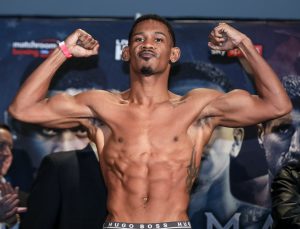
Saturday on an HBO telecast from Brooklyn middleweight mandatory challenger Danny “Miracle Man” Jacobs dropped and decisioned Polish junior middleweight Maciej “Certainly Top 10, Maybe Top 5” Sulecki. Before that American heavyweight contender Jarell “Big Baby” Miller didn’t drop but did decision French journeyman Johann Duhaupas. Watching the 24 rounds felt heavy, damp, soggy even, like the card wasn’t primarily intended to entertain but to portend entertaining happenings some other time.

Twas another mediocre broadcast for HBO, but writing that feels bullying, unseemly, beneath oneself – uninsightful because anyone who already doesn’t know it anyway feels it. This column has lacked charity for boxing’s former heart and soul for sometime now, and since its writer isn’t sure such ungraciousness be merited, he needs err to the bonhomous side of the truth on occasion. Let’s try and make this that occasion.

Closing arguments are set to happen today in the Department of Justice’s case against a merger between communications company AT&T and media company Time Warner, parent to HBO, parent to HBO Sports, parent to the World Championship After Dark family or whatever brandnames boxing currently hides under (c’mon now, keep it gracious). These last two years of merging and not merging have to have hamstrung HBO’s coverage of our sport and serve to emphasize the importance of corporate continuity howsoever much business selfhelp literature still fetishizes disruption. Some clarity from a federal government that, under any other executive leadership of the last halfcentury or so, would’ve rubberstamped such a merger – does it obviously harm consumers in the next three months? well, in that case, 30,000 layoffs down the road is just the market god’s way – must be welcomed by those who operate within budgetary constraints. The case against the merger looks arbitrary and spiteful, of course, but it may set an unintentional precedent of asking how a corporate merger benefits customers and employees, not solely shareholders, rather than applying an eroding threshold of how much it harms them.

None of that helps HBO Sports’ nearterm outlook. If the merger gets blocked, a return to business-as-usual sees HBO continue to reexamine its relationship with our beloved sport, writing of erosion, under a new set of assumptions about how essential boxing is (we know boxing is in a bit of a renaissance right now, but the old data in the old bulletpoints of the old slideshows upon which old executives of old media companies make their decisions, why, those are probably partying like it’s 2014). If the merger happens, which even in our current war-is-peace moment still appears probable, HBO must immediately set about the task of seducing its new master, and does anyone think Danny Jacobs or Maciej Sulecki or Jarell Miller or Johann Duhaupas (or Vanes Martirosyan) composes a compelling case for more money?

Nobody does, no. Even those who would pay these guys whatever they were paid see them as a way to bring Anthony Joshua to HBO, or barring that, as a promotional tool for the GolovCanelo rematch that won’t happen Saturday. It’s the only obvious reason you pay the Miracle Man to fight the last weekend in April against a fortunately unknuckled Polish junior middleweight like Sulecki: To ensure by contrast a captive audience for the fifth installment of GolovCanelo 24/7. Untethered from that nearly nothing about Saturday’s broadcast makes sense much less resonates.

Jarell Miller is not very good; there’s not imagination enough in the known universe to call a 300-pound man who doesn’t hurt people compelling. “Oh, but he’s really active and his chest protrudes more than his belly!” – not a recommended bulletpoint for HBO Sports’ first presentation to AT&T management.

Danny Jacobs is a b-level talent with an interesting story that is now threadbare. He’s a cool guy you cheer for when he’s an underdog, but if you have to squint to see nextlevel talent against a tailormade b-side like Sulecki there isn’t nextlevel talent. “He went rounds with GGG!” – a mark of excellence solely within the ranks (measurably reduced since September) of an alternate reality that insists Golovkin is a historic talent. Anyway, when a unanimous-decision loss to Gennady Golovkin is the second-best victory of a prizefighting career begun in 2007 its bearer is not the future of the middleweight division.

Perhaps, then, Vanes “Former U.S. Olympian” Martirosyan is.

No.

A controversial and surprising conclusion, that, I know, but one written by a man who wears with understandable pride this distinction: I attended Martirosyan’s pro debut 13 years ago. That evening at Fort McDowell Casino the man then known as “The Nightmare” had Freddie Roach in his corner but couldn’t stop a 4-3-1 Texas trialhorse named Jesse Orta, foretelling a mildly disappointing career mildly full of mild disappointments.

Saturday Martirosyan becomes the third non-middleweight of the last four men to challenge middleweight champion Gennady Golovkin who is so dominant no middleweight will face him. Surely then, you’re thinking, if the most feared puncher in the history of the middleweight division hasn’t been fighting too-frightened middleweights he must’ve spent the last two years decimating light heavyweights or at least super middleweights? Why, no, actually. Golovkin’s reign of terror at 160 pounds has been perpetrated on two light-middleweights, and get this, a welterweight – 154, 154, 147 – a streak broken by an aforementioned victory over Jacobs inconclusive enough to be part of Jacobs promotions ever since.

But as this column nominally sought a philanthropic spirit towards HBO Sports’ prospects, let us end with a clarifying question about future budgetary items: How do the purses of HBO’s mainevent b-sides, Sulecki and Martirosyan, compare with the stipends paid for those events to Jim Lampley, Max Kellerman, Roy Jones and Harold Lederman?

Bart Barry can be reached via Twitter @bartbarry


Adrien “About Thousands” Broner, but still about 13 of them

By Bart Barry-

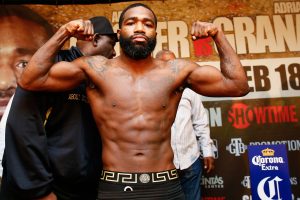
Saturday at Barclays Center overweight Ohio junior welterweight Adrien “About Billions” Broner lost a majority draw to Jessie “The Pride of Las Vegas” Vargas in a pair of unique six-round prizefights the men split, more or less, 6-6. Vargas brought a jab and proper technique, Broner supplied reflexes and a chin, and each man showed plenty of will. Neither man, though, willed himself to a convincing win in round 12, so a draw was just and just fine.

AB was in another excellent fight. That’s not all there is to it, not for this era’s sportsfan and not with a whole lot of blank page between here and column’s end, but that’s what’s important to this and any who should read this.

Broner grates on everyone – lest you think it’s an ethnic thing, look at Sam Watson’s uncharacteristically grim mug leaving the ring Saturday – and if such grating’s not exactly Broner’s appeal it is a sizable part of his staying power, and howsoever unjust it makes the universe, Broner does have staying power. Broner is a ham and a fraud. He’s been those things since we met him on HBO seven years ago, but by virtue of our still watching him seven years later, no matter how maniacal our hopedfor schadenfreude, he is a ham whose hamfattering overcomes its fraudulence in a reflexive way; the object of his hamming is retained visibility no matter how poorly he does at his dayjob. And check this: he’s a perfectly mediocre 6-3-1 (2 KOs) in the last 4 1/2 years and still attracting 13,000 Brooklynites to a catchweight match. He’s got something, in other words, tangible or otherwise, that makes him watchable, the genetic structure of which fully eludes men like Guillermo Rigondeaux and Erislandy Lara – men who follow the rules and bore our pants off.

The day Broner quits on his stool everything dissolves for him, and he absolutely gets this. So long as he gives us the pleasure of his atonement by ordeal every halfyear we inadvertently forgive his criminal acts and bottomless boorishness by paying him in the ratings currency that now rules the American realm. And before any fellow American takes his hindlegs to teeter on principle like a fatigued crossfitter at the stability ball, look around, look at our infatuation with branding, look at our President – in the world’s eyes AB isn’t nearly so much of a caricature as we content ourselves to think he is.

“Not my champion!”

You sure about that, bruh?

In this way Broner’s chin is his best asset; we may not relate to his buffoonery but when we allow our hypothetical selves to be him (and we should, too) we probably conclude like: I’d never wish to arouse so much disgust in so many strangers, but if by chance I did, I would hope I’d make it to the closing bell each time I got tested.

Perhaps by this model featherfisted Jessie Vargas was not the ideal inquisitor, no, but Mikey Garcia was, and Broner toed the line 12 times, then, too. Vargas, himself a mediocre 2-2-1 (1 KO) since 2014, transcended himself a goodish bit Saturday, and had he kept his jab pistoning he’d have won a decision lopsided. Instead he succumbed to who he is and will be: a 144-pound fighter who, on his best night, is equal to Adrien Broner. Every single round Saturday opened with a 10-second forecast of itself. If Vargas landed a jab, he won the round on any honest card. If he did not land an early jab, he made scoring the round the sort of subjective thing that invariably favors a ticketseller.

This was because Broner has no transition, defense to offense. Broner’s defense is a terrible mess concealed by a fabulous chin (which, were it found on an upstanding lad’s pink face, honestly, we’d attribute to incredible conditioning wrought by otherworldy discipline). Broner gets unsettled and imbalanced by other men’s punches so thoroughly he resorts to avoiding them by pocketing his gloves or throwing them overhead while he yanks himself backwards. There isn’t a contortionist the circus over who can throw from such a windup.

That Broner’s perennially overrated new trainer, Kevin Cunningham, installed no patches for this flaw in Broner’s operating system is likely the reason Broner, when asked to list Cunningham’s greatest effects, postfight, named only Cunningham’s giving Broner the chance to thank Broner’s old trainer for his graciousness. However uncouth Broner may be, he has a very high physical IQ – you cannot have his poor form and survive the opponents he’s survived without you read and understand other men’s bodies at least as well as they understand themselves – and Broner intuitively senses his technique is not improved and won’t be by an hysterical disciplinarian like Cunningham.

As an aside, how uncouth is Broner, truly? He appreciates another man’s graciousness, after all, and remains friendly with his former opponents, and holds Jim Gray in contempt.

A quick few words about that: Gray is now the only point of weakness on boxing’s best broadcast crew. Best by a noticeable margin. Al Bernstein has never not been better than Max Kellerman, and Paulie Malignaggi is three times better than an HBO threeway parlay of Jones-Ward-Hopkins, which brings us to Mauro Ranallo. He is hyperbolic at every turn, admittedly, but his heart is in the right place, he cares deeply about the language, and he makes his teammates look good. He is now better than Jim Lampley in the exact proportion Showtime boxing is better than HBO’s.

Bart Barry can be reached via Twitter @bartbarry


Sunday breakfast with Ryota “HHH” Murata

By Bart Barry-

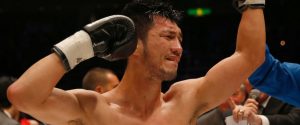
ESPN2 broadcast a middleweight title fight between Japan’s Ryota Murata and Italy’s Emanuel Blandamura at 0800 ET on Sunday morning. Right network, right timeslot. And if Murata’s next opponent is weak as Blandamura, ESPN has a smartphone app and 0500 spot ready to go, too.

Turns out Sunday morning boxing is unlikely to replace church services in America, but it’s not a terrible thing to do with the seven o’clock (CT) hour if you’re already awake. Logging my second Murata fight, Sunday, convinced me he’s not worth setting an alarm for.

Promoter Top Rank has its reasons for vending any ticketseller, be he Mexican (Julio Cesar Chavez Jr., Salvador Sanchez II) or Chinese (Zou Shiming) or gigantic (Butterbean), though often the reasons feel reducible to a Bob Arum autochallenge – Watch this! – and now ESPN has found the perfect programming slot for such fare. Murata-Blandamura sated a demographic like: Bored Italo-Japanese sportsfan undecided between SportsCenter and an abridged NBA replay.

Nothing inspiring happens during a Murata fight. There is bodypunching, sort of – it reliably happens when Murata misses with his cross – and what robotic offensive determination happens when a man is unthreatened by his opposition. We’ve seen this approach, though, ad nauseum, in HBO’s conjuring of Olympic silvermedalist Gennady Gennadyevich Golovkin. The only obvious difference thus far is the timeslot and commentary.

Teddy Atlas, apparently back from exile, though as yet not allowed ringside, saw a b-level prizefighter Sunday morning and said exactly as much. Howsoever wrongheaded Atlas can be the man is independently wrongheaded. Such independence is refreshing when set against HBO’s tickle-me-Elmo promotion of GGG, one that took a b-level prizefighter matched with c-level opponents and caused a nationwide hyperbole drought.

One is tempted to see comeuppance in the ongoing search for a May 5 Golovkin victim; Golovkin is not an a-side in the pay-per-view sense of the term, and initial attempts to make him one went where they belonged. Now Golovkin and his handlers attempt to find some nohoper desperate enough to take short money on shorter notice.

There has long been something cheap about Golovkin’s ascent. Few serious efforts were made to pay serious men like Andre Ward or Carl Froch enough to give Golovkin what opposition might’ve revealed him worthy of the praise so shamelessly heaped on him, and the first such effort – making Golovkin the b-side against Canelo Alvarez – revealed a talent well shy of generational (no, it doesn’t matter if Golovkin deserved the decision; his inability to hurt an oversold junior middleweight damned the whole enterprise).

This current rash scramble for a sacrificial offering sets the mind racing backwards 15 years to Lennox Lewis versus Vitali Klitschko, a fight for the lineal heavyweight championship of the world made on two weeks’ notice. That’s not a typo. Kirk Johnson withdrew from his June 21, 2003, match with Lewis on June 7, and in a turn of matchmaking that now appears miraculous, Vitali (the Klitschko with a chin), who was scheduled for the undercard, signed to fight Lennox. And Lennox signed to fight Vitali. Lewis was unready for Klitschko, and had he not cut Klitschko to the bone early in the match, Lewis likely’d’ve lost. Lewis did not fight again.

To be charitable, all that likely precludes Golovkin from fighting a fellow titlist like Billy Joe Saunders or Murata in June is money. Saunders fights in June, anyway, and will make weight; Murata just made weight and hardly taxed himself sleepstalking Blandamura. It would be an appropriately vengeful tack for Golovkin to take, writing Canelo out of middleweight-title contention: I make fight Saunders June, I make fight Murata September, I forget Clen-elo.

Here’s the less-charitable reason these fights won’t happen: Saunders undresses Golovkin, and Murata loses to Golovkin but shortens what’s left of the GGG salesblitz.

No, Top Rank is not hurrying to match Murata with anyone who’s won a fight outside his native land – a feat Murata may never accomplish – but Top Rank is savvy enough to take a long payday for Murata in a fight that will be dynamite for a few rounds, rather than see its unidimensional Godzilla decisioned by some other tiertwo journeyman on ESPN.

That’s written in good faith, too: I believe Golovkin-Murata would be spellbinding since neither man believes any other 160-pound man in the world hits hard as he does, and both have prepared their defenses accordingly. Golovkin’s not going to eat a Murata righthand and land a knockout punch in the same second, and Murata’s not going to miss high with the cross just to land the hook; both men would be initially bashful, sure, but as neither man has the dexterity or impetus or chief second to fashion a plan b, Golovkin and Murata eventually would resort to smashing one another until the better man wins. Probably that’s Golovkin, but then, he’ll not be the Olympic goldmedalist in the ring that night, will he?

ESPN could use Golovkin-Murata as a meaningful launchparty for ESPN Plus, and maybe even offer HBO Sports some much needed step-aside money (as LL Cool J put it: “With a third of my deposit / I’ll buy your whole crib, plus the clothes in the closet”). Having a pay-per-view match cancelled on account of a drug test was unfortunate and fully unexpected, so how about we not respond predictably with safetyfirst matchmaking rubbish?

Bart Barry can be reached via Twitter @bartbarry


Column without end, part 16

By Bart Barry-

Editor’s note: For part 15, please click here.

*

STOW, Mass. – This town has doubled in density since I grew up here. All the way to 6,000 residents. It’s unkempt today in a way it may ever have been but doesn’t remember that way. The old spots, the yards and houses and ponds, are overgrown. The new houses are imported from Ikea. It was, then, trying to become something more. It is today exactly what it wants to be.

Well aware there was a prizefight Saturday night that included the through-April-at-least consensus favorite for round-of-the-year, but as I’m on Eastern time, not Central, here’s a show of solidarity with my coastal confreres: You send a mainevent off after midnight, you make a Saturday night event into Sunday morning fare, you don’t make the deadline for a Monday column. I know this is the time to write Erislandy Lara accomplished more respect in defeat than through the aggregate of his victories, or something equally symmetrical, a chance to reheat what sentiments Wladimir Klitschko inspired in his farewell defeat last year, but again, you lard a broadcast till the mainevent doesn’t go off the same day as its undercard, and you subvert goodwill a bit.

There were weekend events enough to autoforgive my way past a missed opportunity to write Lara performed courageously, hedgefully enough to leave both erected and mostly intact all previous criticisms of his performances but especially his footwork. Onward, then.

There’s a curious optical thing that happens when you return to a place where you had all the experiences of your youth, decades later. It’s not what happens at the bookends of a championship prizefight that concludes with a knockout – where both men enter like giants and one exits more gigantic still while the other exits a fraction of yourself and a fraction of a fraction of his previous self – but it serves to remind how entirely unreliable be the narrative combination of sight and memory. You see the places of your childhood with very small eyes, necessarily. But you record them like primary symbols: this is what a supermarket is, this is what a road is, this is what a library is. Then you overlay these symbols with a pastiche of new images until what remains of your memory of the originals are words more than pictures. You return to your first zipcode and get startled by how tiny everything is.

Especially if you hail from a small town. Every road you’ve driven since your first year with a license is much larger and straighter and faster than your first road, but because those are roads and your first road was a road your memory has fetched an increasingly larger image with each “road” query until you discover your memory of your first road – which, to be fair, you haven’t had occasion to fetch in decades – has made a fourlane thoroughfare of a winding country stretch zoned at 25 mph. Then you drive some miles to the golfcourse of your first gainful employment, distance enough to’ve been a halfhour bike ride in a bygone era when 14-year-olds unthinkingly commuted to full summer workweeks on their 10-speeds, and you find yourself disappointed nothing has changed, denying you a chance to lament all has changed to a point of unrecognizable.

You want the change. You want the unique experience of believing your experience was unique. And it was, so long as you keep it private (editor’s note: so much for that).

There’s snow on the course, spring having sprung in New England, and one car in the parking lot. You peek in windows, and the club pro invites you in the proshop, which is sanitized-modern and emphasizes nothing nearly so much as the decrepitude into which its surrounding building descended, and you hear yourself making a sentence that must have been impossible the last time you stood there: “Would you believe I worked here 30 years ago?”

Well of course he would. He probably gets this exact visit from a different (or same) nostalgia hunter at least monthly but probably weekly in the summertime.

But he’s generous enough to endure your musing and phonebooking names you stopped knowing you knew decades ago until he realizes with a start he’s reached the end of your intelligence about the previous regime, you’ve started telling stories he heard dozens of times so many years ago they almost feel fresh now, and that’s that. You’re dismissed with a handshake and good wishes in that New England way that is not discourteous but absolutely final. Didn’t miss that.

Museum of Fine Arts, Boston, today is more like Museum of Fine Arts, Houston, than it is like Museum of Fine Arts, Boston, years ago. Museums have replaced malls – the popular ones now boast four restaurants and three giftshops and works organized by celebrity more than merit. They feel like places to see the creatures you’ve seen previously in documentaries (maybe museums now resemble zoos more than malls; or maybe this metaphor is collapsing), which is different from being places of discovery. And if you travel to look at art chances are decent you’ve seen the best works of most famous museums’ permanent collections somewhere else already.

Boston’s roomful of Monets, while wonderful, were viewable at Bellagio Gallery of Fine Art, on the Las Vegas Strip, gasp, a few years back. The collection remains deservedly esteemed nevertheless, and not simply for the famous universities that crenulate it on either side of the Charles River.

Boston has in some ways followed every other American city anyone can name into overpriced theme-parkery. But still and all Updike had the region pegged years ago when he wrote New Englanders are pinchfists in all but education – in education they invest ostentatiously.

Bart Barry can be reached via Twitter @bartbarry


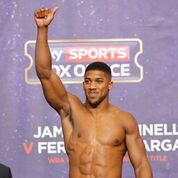
Thread count 0: Joshua, Parker, Burr

By Bart Barry-

SAN ANTONIO – This city shouldn’t’ve had to factor in this column. With a soldout heavyweight title fight in a Welsh rugby stadium Saturday there should’ve been no room for a treatment of comedian Bill Burr’s new material. Yet here we are.

The plan, I suspect, was to write all about the incredible spectacle that just happened in Cardiff, an Easter-themed heavyweight resurrection tale about what hopefulness now visits all aficionados but especially those of us who make weekly filings, but instead there came an -egghunt for some way to embellish both Joshua-Parker and Bill Burr and set them together in a messy, vital basket. Neither of them inspired the passion requisite for fashioning 1,000 words from 300-word subjects. And as I write this without knowing how those 1,000 words’ll get achieved, I can’t be certain their combination’ll turn the trick either (but in a meta twist, these 100 or so words of anxiety about getting 1,000 words reduce the trick to 900 [actually 875]).

Saturday’s was AJ’s first mediocre showing on sport’s biggest stage. It’s tempting to write it made a unification match with Deontay Wilder more likely. Let’s succumb to that temptation.

Joshua didn’t show any new physical vulnerabilities, exactly; he’s still a touch chinny and stiff. But Joseph Parker’s jab and counterpunching might’ve excavated a bit of psychological fragility previously unknown to Joshua’s growing legion of American fans (Brits generally seem keener and more-interested observers of their prizefighters and may have noticed this wrinkle years ago). When Parker soldout and went after Joshua, driving forward hastily and perhaps carelessly, Joshua was available to be moved if not always hit.

Moving a heavyweight prizefighter is difficult work – you’re up against an unsurpassable sum of human will and inertia. Joshua went backwards to the ropes several times and revealed his sole strategy for dissuading an onrushing Parker was to set Parker in a leftarm headlock and try to clock him with a right uppercut on the way out. Not a bad strategy against a shorter man. Also not a strategy to try against a taller man. And certainly no way to dissuade a 6-foot-7 lunatic like Wilder.

What I think I sensed in Joshua, and this may all be grasping projection, was a light dusting of Sonny Liston’s aversion to crazy people. Joshua has remarkable composure and grace. Where you look for hints of fear or weakness in many fighters’ ringwalks, a compensatory need to not be overwhelmed by the moment or enjoy it too much, in Joshua you watch to admire its manly comportment, its nonchalance, its unaffectedness. He is being Anthony Joshua. Life for AJ is a meritocracy; he’s the biggest, strongest, bestlooking man in his noble profession so there’s little wonder 80,000 people attend his events.

Deontay Wilder scatters much of that. Joshua’s a better boxer? Sure, like every other guy Wilder has haywired. Joshua is a gold-medalist? Wilder was so shocked by his bronze medal he named himself after it. Joshua casually strides into combat? Wilder anger-thespians his way to the ring in a garish mask.

And if you go straight back when Wilder activates the acid windmill you get bladed like a bather beneath a propeller.

None of these thoughts occurred to me till Saturday. Wilder’s weardown of Luis Ortiz made it possible to imagine there was some reason in the Alabamian’s rhyme, yes, but most of us still imagined Joshua casually 1-2-3ing his way to Wilder’s unconsciousness. I’m less certain now. After how conclusively Parker’s jab stalled Joshua’s pace and aggression I’m slightly open to a Ricardo Mayorga vs. Vernon Forrest scenario – whereby rage, inefficiently applied power, and desperation-of-intent overwhelm craft, reason and preparedness.

*

None of that has a smidgen to do with the dateline above. There’s no symmetry between what happened Saturday evening in Cardiff and what happened at Majestic Theatre’s early show, so let’s not be insulting and pretend there is. Just this: I watched Saturday’s fight in bored silence with a friend the same way I watched Saturday’s standup show in general mirth with a few thousand strangers.

Bill Burr’s latest is not his best. This can be measured by an insightful metric he provided not long ago: When a comedian awakes with a sore throat it means he’s been yelling a lot because his material is not strong as it should be. Burr’s throat was doubtful sore Sunday morning, but it was nearer to sore than his Netflix specials anticipate.

There’s a novel sort of arc Burr employs across an hour of comedy: He ingratiates himself with his audience then insults his audience then rescues the show by reingratiating himself with the audience. It’s a seduction technique that works like a threepunch combination: The closer will always land if you have the balls to commit fully to each maneuver no matter how iffily their predecessors go.

San Antonians proved, by Burr’s onstage admission, both too initially accommodating and too difficult to insult. Not until he did his antihero bit – there’s nothing heroic about being the sailor on an aircraft carrier who points the way to war for fighter pilots – in a place that last year trademarked itself “Military City USA” did Burr’s insults gain much purchase. And even then it was a lone, virtuesignaling voice, offpace enough with the rest of the polite South Texas crowd to feel like a plant. Burr now struggles, when he struggles, for the same reason every comic does: With our current overabundance of information it is increasingly difficult to say something that is both genuinely surprising and genuinely funny.

In order to make a redneck rendition of an AR-15 rifle riff surprising, in other words, you now must spice it with so much twang and obliviousness as to miss spontaneity, by way of caricature.

*

One last thought about our recrudescing heavyweight division. Much as there’s a chance Deontay Wilder crazies his way past Anthony Joshua there’s a chance Tyson Fury crazies his way to a 12-0 shutout of Wilder. Then Joshua outbusies Fury.

All of these fights happen in soldout arenas and stadiums in the U.S. and Europe. And suddenly we have at least a silverish era in the heavyweight division.

Bart Barry can be reached via Twitter @bartbarry


There is no passion in continuity

By Bart Barry-

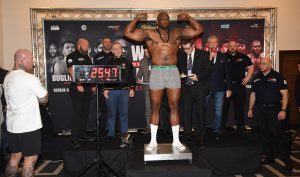
Saturday British heavyweight Dillian Whyte defended his WBC silver title by twizzlehammering an aged and limited Australian toughman named Lucas Browne in London. Round about the time of that spectacle something far more captivating happened in Washington D.C. But as this is a boxing column:

Knockouts solve most viewer issues. They clear the buffers like a deep breath and cloud all previous criticisms with ingratitude. It’s what heavyweights have, an unfairest advantage, over their diminutive coworkers. In an instant all the grappling and lumbering looks strategic. What was an obvious and unsightly compensation for unathleticism passes through a moment’s crucible into a gatheringplace of possibilities.

Even if there is no way to believe the wild misses and blubbering collisions were tactics addressed on the mitts or slipbag through camp there’s quite quickly no way to checkmate a fan who argues they were: The missed hook lowered the opponent’s head for an uppercut that missed but returned the weight to the front foot from which another missed hook perfectly positioned the jab for a crisp landing that made the opponent blink.

You’ve sparred or been before a heavybag enough to know none of this true, or at least not intentional, but you sense the explanation cycles might be better expended on a subject more promising. Because of the fan’s passion. It’s that. He’s charged by the knockout, and you’re not energetic enough to dissuade him. Maybe you latch on the untruth of his assertion, maybe the conditions of your life are such an unchecked misconception animates you sufficiently to the task of arguing moment by moment frame after frame how wrong he is, maybe, but you don’t persuade him. Because the jolt he experienced when viewing the concussive conclusion may be undone someday by time but not by reason.

The more rational we are the more this bugs us. We take refuge in our knowledge and experience – anyone who’s actually been in a fight knows there’s no way he missed that hook just to miss the uppercut – but our reason brings us much less of a charge the truebeliever’s experience brings him, while our reason brings him no charge whatever.

The written word has a sobriety moving images do not. It’s why, if you’re reading this, you likely find refuge in it. A writer, by way of his chosen medium, is more accountable to the future than a commentator. There’s a metaphor, or a cliche lying in wait, somewhere in the distance between the brain and the fingers being a few times the distance between the brain and the mouth. There’s more time for processing written thoughts than spoken ones, which makes spoken commentary many times the tightrope shimmy writing is. We sense this and allow the spoken word a margin for error we do not afford the written word.

*

Allow me to interrupt this dissertation on how we process commentary to celebrate briefly an extraordinary speech made on Saturday. You’ve probably seen it by now and have your opinion already fully formed – as Americans we don’t do much persuading anymore. But I’m mentioning it because while Whyte’s knockout of Browne affected me enough to watch a couple times, Emma Gonzalez’s speech is something I haven’t stopped watching.

Mine isn’t a political commentary in any sense greater than it’s a commentary on an act of political speech. It’s an aesthetic commentary, instead, on the power of its delivery. To stand before an audience that size and remain silent – to deliver the only sound and image undisarmed by a contemporary existence of beeping and blinking and vibrating – is potent an act of performative presence I can recall seeing.

To those who would say it was manufactured or coached, there is this: Every moving image you’ve ever seen was manufactured or coached. There is manufacture, and there is delivery. Frankly there’s not competence enough on the side of those who would manufacture this moment to believe they had anything to do with its creation – they haven’t manufactured a speaker or coached a candidate able to create a moment such as Saturday’s in at least a decade of constant and expensive trying.

Emma Gonzalez’s speech stands alone as remarkable. That is all.

*

Whyte is not the future, near or distant, of boxing; he was in fact knocked spastic then silly by the future of boxing 2 1/2 years ago. Regardless, he’s now an HBO mainevent a-side for as long as the former “Heart & Soul of Boxing” tries to seduce British promoter Eddie Hearn, who owns the promotional rights to the future of boxing. It’s appropriate as it is unseemly; if Golovkin-”Clenelo” 2 gets cancelled, as is now possible if unlikely, HBO Sports will have the superflyweight division and exclusive rights to Andre the Giant and discouragingly little more.

But if any division can supply mediocrity that is entertaining, it’s the heavyweights. At every moment there is the potential for one man’s unconsciousness, and the strategies are so obvious and the punching so slow even the beginner fan can make rich sense of it all in realtime. Best of all, when you unfactor height, which the fighters mostly do for you, the men fighting one another have the sorts of physiques to which laymen can relate.

From a broadcasting perspective it’s certainly not an ambitious failure. It even may not be a failure. It’s safety-first all the way.

Bart Barry can be reached via Twitter @bartbarry


Back in Canelolandia, meating every plate

By Bart Barry-

TLAQUEPAQUE, Mexico – Thirty kilometers northnortheast of San Agustín de Tlajomulco de Zúñiga, and the meat here is delicious. It may well be the tainting that makes it so, but such tainting can doubtful be sensed by an instrument blunt as the human tongue else the fighting pride of Jalisco, the flamehaired horseman heartbreaker recently humiliated by a positive PED test whose announcement and subsequent coverage got heavily seasoned – bien condimentado – by the word “trace”, never would’ve ingested what plenteous amounts of meat and particularly liver can lead to such damnable positivity.

After another halfweek in Canelolandia and time to reflect during flights to and fro I’m ready to give Saul Alvarez the benefit of the doubt (which I didn’t realize till about a sentence ago). Not because any elite athlete defaults to notguilty in anyone’s mind anymore and not necessarily either because I can barely care less about the matter of athletes, fundamentally entertainers, taking substances that enhance their performance (and imagine what disappointing spectacles we’d’ve suffered and been suffering were other entertainers tested by antidoping agencies – adios to Hendrix and Cobain, Stallone and Schwarzenegger, Dickens and Sartre, Freud and Monroe), but because getting caught marks such a fault of professionalism it seems too far outside Alvarez’s character.

Canelo’s myriad of detractors will admit, heck probably declare, he is more calculating than he is nearly anything else. He calculated his way to the final bell with their hero in September, after all, surviving by dint of his wiles 36 minutes of terror with the most transcendentally dangerous middleweight (and junior middleweight and super middleweight, let us not forget) of the last 25-100 years. He didn’t stand and trade with GGG, at risk to his interests and reputation, because he had a strategy that opposed doing so, and regardless of what transpired in the hot blood of combat, he didn’t revise a single prefight calculation.

If Canelo had a strategy for disarming Golovkin he most surely had a strategy for passing drug tests.

So we return to the P in PEDs and posit there’s been no dramatically nonlinear improvements in Canelo’s performances since we saw him patrolling Queer Street with Jose Miguel Cotto eight years ago. Canelo has improved about the way you’d expect a champion to improve in the prime of his career. Which is another way of imparting th’t if Canelo is using PEDs today he’s probably been using them a very long while.

I’m agnostic on this possibility, agnostic by way of ambivalence – it says here no natural athlete is talented enough to dominate a PED era in any sport or ever has been – but it further supports the probability Canelo’s positive test was innocent as his apologists immediately claimed.

One minute of googling Clenbuterol and Mexican meat (I’m assuming; I spent nearly twice that) reveals an authority no less PED-dependent than the NFL warned its athletes almost two years ago about Mexican meat. It’s the secondary-smoke of protein sources, apparently, this beef, as its cattlemen enhance their livestocks’ dinnerplate performance till Mexican carne asada hits the tastebuds like Barry Bonds pulling a 100-mph Eric Gagne fastball 50 feet foul into McCovey Cove. It would seem an athlete would have to consume copious amounts of this beef to fail a doping test, but there are a couple counterarguments to that, too: 1. If anyone would consume copious amounts of animal protein it would be a professional athlete in training, and 2. Just how sensitive have these tests become, after all?

There is a militant faction of sports journalism that can answer that very question even without internet access, yes, and I’m just fine being counted outside its ranks. It’s dreadful tedious. One of the overlooked elements of the Money May era that made it so awful were the hours all of us wasted arguing about PEDs. It looked deep brutal arbitrary – though, to be fair, anabolism does appear the one place an objective line ever got drawn – and deciphering the days’ news and testing developments brought out the Pecksniffian worst of everyone the subject touched. And that’s before one inadvertently began weighing the heavyhanded moralizing at the root of every accusation and counteraccusation – the unspoken assumption not any of us or anyone we respected would do anything so craven as take drugs to make ourselves better at our crafts or rich.

I can’t keep a straight face on that count: I wrote openly about experimenting with ephedrine and modafinil to improve my performance in this very column, without a penny on the line either way.

The enduring irony of our enduring PED anxiety is that none of the greatest beneficiaries of these drugs was caught by testing agencies – their labs got busted, their teammates wrote books, their wives ordered drugs be delivered to the home they shared, their strength and conditioning coaches appeared in infomercials and got recognized by other strength and conditioning coaches.

I don’t know if Canelo Alvarez is above cheating to win, but I do believe he is above getting caught. This area in Mexico whence Canelo hails isn’t sloppy or slapdash as other parts of the country, it isn’t about yelling ¡Fiesta! at sloshed tourists; it’s buttoned down serious with residents that are surprisingly tall and standoffish, more Catalonia than Cancun.

“See? This is just the sort of subjective criteria idiots use to defend their idiotic theories. Try science, moron!”

Yes, I suppose so. But I remain obdurately unpersuaded. Or as they might say round here: Ultimamente, pues, ¿Qué me importa?

*

Author’s note: The picture that accompanies this column features a mural by the Tapatío artist Carlos Mesie Rodriguez Balp.

*

Bart Barry can be reached via Twitter @bartbarry



Mikey Garcia makes “history” in Alamo City

By Bart Barry-

NOT SAN ANTONIO – Saturday in Freeman Coliseum junior welterweight Mikey Garcia decisioned Sergey Lipinets unanimously to attain a title in Garcia’s fourth weight-class, which we were assiduously assured by Showtime is an historic happening.

Well.

About five years ago I drove four hours each way to cover Garcia’s match with Juanma Lopez in Dallas; I saw him unbundle Cornelius Lock in Laredo, 2010, and knew there was nothing counterfeit about Mikey; however hinky Garcia’s eightround decisioning of Orlando Salido (by which Garcia acquired a featherweight title he never defended) I believed Garcia might be a generational talent and wished not miss a thing he did.

Then Mikey missed weight widely in his first title defense, in Dallas (a then-unheralded Nebraskan named Terence Crawford stole the show). Then Mikey was unremarkable against Roman Martinez, winning a super featherweight title he would defend once, in Corpus Christi (and an unknown Jamaican named Nicholas Walters stole the show). One fight and a couple months later Garcia went on extended sabbatical. A year ago Mikey won his lightweight title by smashing someone named – just a sec, BoxRec is refreshing – Dejan Zlaticanin, a title Mikey hasn’t defended, then did an exhibition thingy with “About Billions” Broner.

Saturday Garcia fought 10 miles from my home, and I chose instead to keep easily reschedulable plans 30 miles west of Freeman Coliseum. I watched the Showtime broadcast of Garcia-Lipinets, though, and felt exactly no regrets being elsewhere, even before seeing Richard Schaefer and Sam Watson jockeydancing behind Jim Gray.

The telecast featured a bunch of happy talk about Garcia’s place in history alongside Juan Manuel Marquez and Manny Pacquiao, for his having won titles at featherweight and super featherweight and lightweight and junior welterweight, which inadvertently shone some insight on PBC’s enduring inauthenticity. Garcia is a proper cherrypicker now suing posterity for considerations he doesn’t deserve.

At featherweight Pacquiao blitzed Marco Antonio Barrera and drew with Marquez, who made four defenses of his featherweight title before decisioning Barrera to win a super featherweight title he lost to Pacquiao, who’d gone 7-1 (4 KOs) at 130 pounds. To attain his lightweight titles Marquez iced Joel Casamayor and Juan Diaz, and to become a junior welterweight champion Pacquiao poleaxed Ricky Hatton.

And to become a lightweight titlist Pacquiao assaulted David Diaz, and to become a junior welterweight titlist Marquez beat someone named Serhii Fedchenko. Pacquiao’s win over Diaz and Marquez’s win over Fedchenko were cherrypicker delights, disappeared by what remarkable matches the two men made with one another and other hall-of-famers. Nobody remembers Marquez or Pacquiao for those wins, however “historic” they be.

The telecast’s other contextual reference for Garcia’s achievement Saturday, Alexis Arguello’s failed attempt at the same four-weightclass-title feat, managed to mention Aaron Pryor without supplying to younger viewers some helpful context on Pryor like “who was somewhere between 11 and 27 times the fighter Sergey Lipinets is.”

Garcia, whose branding now includes postfight celebrations of his charitable acts, considers himself poised for the celebrity turn of his career, going the GGG route and threatening men in three divisions at once. His trainer and brother says Mikey’s best weight is 135, and maybe he’s right – the rest of us have only seen Mikey weigh that once, and he did look spectacular. But before we meander any deeper in Familia Garcia fantasyleague we need put a bold black line or two through the words “welterweight champion” – as even PBC’s alternative universe has at least two titlists Mikey wants no beef with.

Then there’s Bud Crawford, isn’t there? “Now all of the sudden 140 is this stacked division when I leave,” tweeted Crawford, derisively, about Mikey’s fight. Crawford is now promoter Top Rank’s very best prizefighter, which is exactly what Mikey was supposed to be.

As Saturday’s match happened in San Antonio, here’s an associative anecdote of sorts from the city’s historic San Fernando gym:

For years the gymwalls’ sole decoration comprised fight posters belonging to the late Joe Souza. One was telling. Jan. 18, 1997, Oscar De La Hoya made the first defense of his 140-pound title at Thomas & Mack Center. In the comain Kostya Tszyu made the fifth defense of his 140-pound title. But the promotional poster shows one man fighting a “light welterweight” match, while the other fights for a “super lightweight” title.

The subterfuge worked: I made passing glances at that poster for a year before realizing it was a riddle – th’t there was about as much promotional interest in putting a 24-year-old De La Hoya in a ring with Tszyu back then as there has been in putting Mikey Garcia in a ring with Crawford since about 2013.

Mikey looked duly more hittable Saturday than he’s looked generally. Because fighters gain weight on their chins more than their fists at 140 Garcia’s power is stunning, not stopping; to have the same effect he must now throw more and harder and avail himself of counters accordingly. He clipped Lipinets with a lightsaber left in round 7, but Lipinets found it dissuading more than devastating. Even within the bounds of PBC’s measured-gladiator spectacles there’s something perilous about scaling weightclasses, which is why most of history’s nonheavyweights are known precisely by their abilities to do so.

Even still Mikey’s white gloves Saturday looked bigger than they did a few years ago; even discounting white’s outsized reflective properties Mikey’s fists appeared overpadded, softer, a touch fluffy.

Things rarely feel grimey or dangerous during a PBC fight, which must be by design, and may be a very good idea – supposing our beloved sport can become more attractive to casual fans by being less violent.

Bart Barry can be reached via Twitter @bartbarry


Deontay Wilder’s unconditional celebration of exceptional conditioning

By Bart Barry-

Saturday at Barclays Center in Brooklyn undefeated American heavyweight titlist Deontay “The Bronze Bomber” Wilder windmilled to unconsciousness in round 10 undefeated Cuban heavyweight Luis “King Kong” Ortiz in a spectacle wild and unsightly and violent, and perhaps even unjust, as it was dramatic and suspenseful and thrilling. It does feel cathartic to admit Showtime’s mainevent was wonderful.

I was cheering for Ortiz, I’ll also freely admit, cheering for Ortiz and laughing at Wilder, while quietly conceding how damn intense and entertaining the fight was even while nothing happened. There were whole rounds in the match’s first half when both fighters landed naught yet returned to their corners spent, reminding close observers how fundamentally different heavyweight prizefighting is from all other forms of combat sport.

Wilder and Ortiz more closely resembled two lightweight grizzlybears in a territorial dispute than two lightweight prizefighters. And justice was served on those terms, too – the creature of greater surface area and rage prevailed. There was no need for a roped boundary; neither monster had the wind or whim for a 40-yard flight. They fought like undefeated giants, which was compelling. It was fantastic compelling.

There is probably no end to the offense Wilder will give the sensibilities of boxing purists. He is exactly as bad at boxing as he looks even to the eyes of the chastest casual fans among us. That skyhook fastball righthand thing he threw during his closing scene with Ortiz? It’s not enough to write you can’t Ctrl+F that in the boxing lexicon; you can’t find a surface upon which to practice it safely in any boxing gym the world over: You hit anything less submissive than a speedbag with your hand like that and you break your wrist and tweek your elbow while separating your shoulder.

If there’s method in Wilder’s lunacy it must reside in an effort to disbalance his opponent. Wilder stakes his life on those drowning-man combinations, and when he misses you with his fists and every other part of his arms his overthrowing motion still collides his body with yours, and a man that large moving at that speed can fairly unsettle a Kia, much less another man. The sloppiness of Wilder’s finishes lends a bit of dread to their violence, too, as we’re now told is the design. A Wilder finish is deeply unsettling because experience leaves you unprepared for it. Men that large are never that resentful, that affected, that menacing.

Why would they be?

Wilder has gone and learned how to market himself like a nightmare, which is also compelling. I met him in Tucson after his sixth pro fight and sensed a giant, gentle Southerner, friendly with writers if a touch insecure. Only the giant part remains today, nine years later.

Saturday he made battle with a genuine, if aged, item, and prevailed. Wilder surprised himself. Not in winning – it’s been so long since he was matched competitively, he has no recollection of any alternative ending – but in winning a fight he had a fine chance of losing. Wilder attacked a man who countered him and knew how. It speaks to how dismal Wilder’s competition has been that a 38-year-old southpaw generally missing with counter left crosses chastened the Bronze Bomber effectively as it did, but it did.

I watched the fight with a 78-year-old Mexican aficionado, and we both found Wilder’s approach in round 1 risible enough to laugh in concert at the Alabamian’s peculiar display of footwork and, ahem, “athleticism” in retreat. Wilder, too, sensed what devastation such skittishness might wreak on his brand and didn’t go it again. Credit for that; it showed Wilder is nearly as much a fighter as he is an athlete (after Saturday’s comain showed an all-athlete-no-fighter quit three or four times in his corner before appropriately going thespian in the last televised gasp of his career).

Finally it was conditioning, not craft, that proved the difference. Wilder, the one medalist on USA Boxing’s abysmal 2008 squad, took from that experience and its coaching what little of value there was for the taking – a fetishistic commitment to conditioning (memorably derided by trainer Kenny Weldon: “How long are those rounds, two minutes? I can hold my breath for two minutes!”).

That was how Wilder recuperated so much faster and more completely than Ortiz did. Wilder didn’t need what shenanigans referee David Fields and abetting New York officials tried to pull at the start of round 8, checking Wilder’s pupils for evidence of dilation or something, after Wilder clung to Ortiz like a flotation device in the closing minute of round 7. Wilder’s survival of Ortiz’s attack in the seventh and eighth rounds changed the fight altogether. Wilder recovered much better from Ortiz’s pummeling him than Ortiz did. When the bell rang on round 9, Wilder looked fresh and lucid in a way Ortiz did not. Wilder is a bully, and once Ortiz was unable convincingly to punch the bully in his face, Wilder ran free, freely running all over the blackmat in a signature display of ferocity ungoverned by technique.

And yet. There was nothing unschooled or defective about the right uppercut Wilder sleeped Ortiz with, was there?

It’s time for American aficionados to embrace Wilder as an act of vengeance on the pride Europeans long took in Wladimir Klitschko. In his enormity and power and gracelessness Wilder is a righteous contemporary-American metaphor to the rest of the world. A beneficiary of genetic chance who sees only merit in the mirror Wilder gives Americans our chance to imagine tactical brilliance where Europeans once imagined courageousness in Klitschko.

At least until Wilder someday gets triplestarched by Anthony Joshua at Wembley Stadium.

Bart Barry can be reached via Twitter @bartbarry
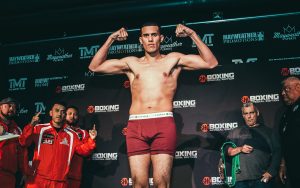


To the edge of panic: Sor Rungvisai decisions Estrada

By Bart Barry-

Saturday in Los Angeles, Thai super flyweight world champion Srisaket Sor Rungvisai majority-decisioned Mexican Juan Francisco Estrada in a fantastic prizefight HBO deserves much credit for enabling. It was the second installment of a SuperFly series that resides alongside the World Boxing Super Series cruiserweight tournament as the best things to happen to our beloved sport in some years.

Once again it was Sor Rungvisai’s composure that fascinated. Volume punchers are men of a composure begotten by great self-awareness; volume guys know their limitations much better than cocky defensive specialists or fragile psyche-ed powerpunchers. But Sor Rungvisai is no longer much of a volume puncher; he no longer wastes much motion with shifting his opponent’s footing or considering his opponent’s timing. He no longer wastes hardly a motion at all. He stands placidly at ringcenter and attacks when whim dictates and throws nearly no setup shots. Everything Sor Rungvisai throws intends, now, to devastate.

He wears the same obliviousness mask today with which he greeted the world’s best fighter about a year ago. His countenance betrays no emotion whatever. Not even his eyes seem to grow or slighten. He got angry a few times at Estrada, Saturday, and his body showed deep fatigue by the fight’s 35th minute, but his face remained wonderfully expressionless throughout.

One hesitates to project too much on a man who is determined to be unknowable, but watching Sor Rungvisai’s face in combat while considering his ledger brings to the imagination a man who achieved unattachment by first attaching himself to prizefighting and its myriad of cruelties then letting disgust with it all detach him from prizefighting and its systemic irregularities until he was sufficiently unattached to career or outcome to match himself with prizefighting debutants in his 44th and 45th and 46th career matches. That bears repetition: Sor Rungvisai passed the entire second half of 2016 feasting on three men who’d nary a prizefight between them.

That was how he prepared to swap fists with his profession’s master, Roman “Chocolatito” Gonzalez. That evinces some combination of otherworldly arrogance, noteworthy misfortune and perfect unattachment. Sor Rungvisai then brought the arrogance and unattachment to Chocolatito and delivered him noteworthy misfortune, breaking the master body and spirit – Chocolatito was resigned unto tranquility at the brutal end of his September match with Sor Rungvisai.

Until the final round little that happened Saturday surprised Sor Rungvisai, which was itself surprising because Juan Francisco Estrada is one hell of a creative counterpuncher. Estrada made Sor Rungvisai miss often, too. But Estrada appeared so relieved each time one of Sor Rungvisai’s weighty fists flew harmlessly past he took few retaliatory acts till he was certain the worst of Sor Rungvisai’s power was spent.

Notice how infrequently Estrada pursued Sor Rungvisai even when the Thai allowed aggression to imbalance himself. Compare that to the savagery with which Estrada’s inspiration, Juan Manuel Marquez, pursued Manny Pacquiao each time the Filipino’s aggression circuitbroke his footwork. Some of that was a difference of conscious choosing but much of it wasn’t; Estrada needed a lot of rounds to override what panicked signals his body disseminated across the nervous system each time Sor Rungvisai’s knuckles made definitive contact.

You cannot problemsolve in a panicked state or think creatively while your mind madly scrambles for refuge. Whatever plans Estrada and handlers made for Sor Rungvisai’s attack went largely ignored for rounds 2-9 while Estrada searched frantically for a means of avoiding Sor Rungvisai’s punches.

Sometime after that, though, Estrada’s experience and training and gradual adaptation to the pain wrought by Sor Rungvisai’s punches led the Mexican to throw a right uppercut, the one punch to which Sor Rungvisai’s aggression made him singularly vulnerable. That got both men’s attention, converting Sor Rungvisai from a machine to a man, emboldening Estrada for the championship rounds no matter how little import Sor Rungvisai initially showed Estrada’s emboldened spirit.

By the match’s penultimate minute it was Sor Rungvisai whose consciousness got overwhelmed by what panic fatigue visits on every fighter. Sor Rungvisai was the unthinking man in the fight’s final 90 seconds, not Estrada, but Estrada had only so much remaining impetus. Estrada absolutely did not win Saturday’s fight, whatever the Forum’s partisan-Latino crowd opined, but he verily did win the fight’s final round, which should make the Mexican hopeful for his chances in a rematch.

Now some words about the telecast.

HBO’s combination of Jim Lampley and Max Kellerman no longer works at all – they haven’t chemistry, and they step all over each other’s lines, either by embroidering them needlessly or negating them with dead air whose effect is most pronounced by a telecast featuring so little of it. This is mostly Kellerman’s fault, yes, but Lampley no longer helps things. Kellerman believes himself an extraordinary improviser, which would work better if he didn’t believe his audience too ordinary to hear his brilliance on first or second recital.

So much exhausting noise of every telecast now goes to Kellerman reiterating decent points till dullness, ostensibly for the audience’s benefit – for if not the audience’s benefit, whose? Occasionally Jim and Max must discipline Harold for a scorecard that deviates from the consensus narrative, and they do, but Kellerman cannot possibly believe Roy Jones or Andre Ward needs his help to understand the combat happening a yard or two from their eyes.

Kellerman and Lampley now disrupt one another’s rhythm in a way that is five parts irksome for every one part entertaining, and they talk far far too much. They don’t need to be fired, but they do need to be separated; either man might work just fine by himself with Ward, who’s much better than Jones, and nowhere is it written a four-man team needs to explain a two-man combat.

In its first two years the Peter Nelson era at HBO Sports has been marked by its marklessness, Top Rank’s departure and a gray detente with the PBC. HBO has become the official network of the super flyweight division, which is noble, while Showtime has cornered the exponentially more consequential heavyweight division (unless you count Andre the Giant). Nothing about HBO Sports today portends boldness. Separating Lampley and Kellerman is a subtle move, then, that might at least bring aficionados more enjoyment.

Bart Barry can be reached via Twitter @bartbarry


Wondering at David Benavidez’s talent, weeping for his future

By Bart Barry-

There were two very good title fights in the super middleweight division Saturday, but as the victor of the more widely watched one once got himself origamied by Carl Froch we’re going to treat the victor of the other one instead, and he is 21-year-old David Benavidez. And Benavidez looked sensational rematch-decisioning Ronald Gavril.

Benavidez’s body is syrupy runon oblivious (like this sentence) more than deflated ambitionless immature or unprofessional, like the scolds’ll say of it in their petty and anxious search for surface perfection, the weight of insecurities they project on everything belying the seriousness they tell themselves their scowls purport. His body is shaped to deliver a surprise precision to opponents who doubtlessly peplecture themselves on what deepdigging camp sacrifices they made and he didn’t the better to wilt him with their will the way their seconds and thirds promise them after the middle rounds of fights they know they can’t win unless Benavidez cedes them, and sometimes he almost does too.

Benavidez’s age and facility and shape may as yet prove liabilities – as he’s young enough and easy enough to get bored by the rigors of his craft, and his body says one thing that’s obvious and another that isn’t. What’s obvious is the size and shape to which his body’ll grow unless he brakestomps its homeostatic state hourly; a month of “just eating like everyone else” will weigh him 200 pounds. Easily. What’s less obvious is that, for all the wonders of his punching form, he’ll not have the pop he’d’ve had at 154 had he not once weighed so much more than 154 that 154 is chanceless.

That’s what the inflated middle knuckle of his right hand suspicioned Saturday: There’s no way I should’ve bounced off another man’s face and head so many times with so much force in one evening’s work. The knuckle was right, too; it wasn’t simply the chin of Gavril but the slightly less than atomic pop on the end of Benavidez’s otherwise perfect punches.

What inspires such thoughts are comparisons to a young Thomas Hearns that happened early Saturday, in one writer’s imagination anyway, and the 14 to 21 pounds of inefficiency Benavidez’ll never manage to flense, inefficiency Hearns never had for never having to flense a millimeter. Benavidez is necessarily punching men with more absorbent chins than Hearns did when Hearns became a contender, which means Benavidez’s knuckles’ll have to endure more earlier than Hearns’ did. That may serve to make Benavidez more compelling than he’d’ve otherwise been – for had he stopped Gavril in three rounds there’d’ve been no reason to doubt he could stride through the winner of the World Boxing Super Series and all its participants, and given Benavidez’s body and age such doubtlessness would be no boon.

Then there’s the troubling bit about his overbooked management company and its inability to match its fighters frequently or steer any of them greatness’ way. PBC intended create an alternate boxing ecosystem closed to every unsigned prospect and unbought media, and it worked partially for a couple years when other people’s money was plentiful. Once PBC returned to Showtime, though, head bowed hat-in-gloves, it found a less compliant host, one hardened by PBC’s previous treachery, however often Showtime denies it, and much more likely to do things Showtime’s way, not PBC’s (can you imagine a timebought commentary team listing a Top Rank titlist like Jeff Horn alongside PBC’s welterweights in 2015?), and that means frequent mention of every PBC fighter’s unfortunate inactivity and unfortunater opponent preferences.

Showtime interviewer Jim Gray is now nearer despicable than insufferable but by asking every premier boxing champion whom he wishes to fight next he highlights PBC’s fundamental weakness, in his signature snotty way. Gray was the perfect press vehicle for extracting from Keith Thurman a confession that looked like a boast he’d be fighting exactly no one the next time Thurman appears on Showtime.

What an extraordinary sense of entitlement PBC’s ecosystem has wrought: I’m going to show up at your event and tell you I neither intend to fight anyone you want me to fight nor performed the professional courtesy of curating a one-name-deep list of men I might consider rehabbing my shoulder against on your airwaves.

One hopes Showtime will tell PBC: Here’s the list of opponents we’ll pay Keith Thurman to fight on Showtime, here’s the list of opponents we’ll pay Keith Thurman to fight on our Twitter feed, and everyone else composes the list of opponents you’ll pay us to broadcast Keith Thurman fighting on Snapchat.

PBC may be the perfect management outfit for a Thurman or Deontay Wilder but it’s all wrong for someone with David Benavidez’s youth and ambition and propensity for weightgain. Benavidez needs to be defending his title or unifying other titles at least thrice annually. But now that he’s become a PBC a-side by doublebeating someone from The Money Team he’s about to see his activity and competition cut by a third or more, and if he’s unlucky enough to add another title at 168 he may be suspended from the PBC calendar entirely in 2019.

Just look what the PBC did to Danny Garcia, a once-sympathetic-if-never-beloved man who after upsetting Nate Campbell, Kendall Holt, Erik Morales (twice), Amir Khan, Zab Judah and Lucas Matthysse, in 29 months, needed nearly four years to make another meaningful fight in a weightclass too high, lose, and then celebrate his 11 1/2-month layoff by spearchiseling a retired lightweight to little amazement and a fair dollop of derision.

David Benavidez appears to be a special talent. The PBC has a special talent for mismanaging special talents.

Bart Barry can be reached via Twitter @bartbarry
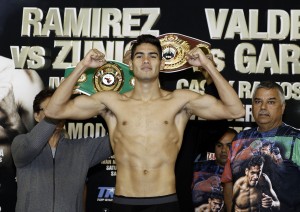


Enchiladas, cryptocurrency and Frank Bascombe

By Bart Barry-

SAN ANTONIO – An uncommon bout last week with a common cold and what distraction it brings, maybe this is what adults affected by attention deficit disorder constantly feel, brought me to a weekend without a subject fit for a Monday column, and so there’s no telling what might come next. But come along, nevertheless.

These are what columns I dreaded writing for years. There mightn’t be a thing to write about that was boxing but proximity enough to treatable events one feels a negligent stir for indulging his interests more than boxing’s. Such was about maintaining a readership in the sense of maintaining an editorship, a chance to write for men who already had readers or an appearance of them anyway. I’d find myself scraping away – like that throaty sound harddrives used to make – at uninteresting subjects like Roy Jones’ farewell match or George Groves’ upcoming tilt. Even mentioning those subjects today makes this gray today altogether grayer.

Recently I moved very close to La Fogata, a Mexican restaurant a few miles north of downtown. That name almost certainly rings no recollective bells for you but you may have read the name before if you’re into the best of contemporary American literature: It’s the restaurant where novelist Richard Ford’s invention, Frank Bascombe, planned to take his family for a Christmas feast a few years ago in “Let Me Be Frank with You” – part of a hypothetical holiday to include also the Pedernales River and Johnson City. I thought of making this column a conversation with Bascombe at La Fogata about the creation of a prizefighting cryptocurrency but stopped not because it felt too outlandish, we must rush at such sentiments, but because I suspect Ford would not approve anyone borrowing his character, and his disapproval is weighty.

Six or so years ago I bought charming stationery and began writing letters to writers whose works I admired, and forgive me if I’ve written about this before. Nothing particularly remarkable came of those 80 or so letters, no epiphanies about the creative process or major insights even about myself, and I stopped when I ran out of writers (and painters and lyricists and even a former Secretary of State) whose works I admired enough to find 300 words for. If there were any surprises about the exercise, it’s this: While very few people wrote back, those who did composed the top 10-percent of the talent I wrote to.

Richard Ford wrote back. He lamented the lack of esteem in which contemporary novelists get held by their publishers, and he expressed admiration for this craft of boxing writing (as I must’ve mentioned I did this sort of writing in my letter to him). He also gave the Spurs a real chance of winning the NBA Finals that year.

This has nothing to do with the recent cryptocurrency craze except that I thought about cryptocurrencies a few days ago while eating enchiladas de mole poblano from La Fogata and thought about them in the rotating relational context of how Ford might have Frank Bascombe treat them, if at all. He’d embrace their absurdity in some way but not an obvious way, and a month’s worth of reading about possible uses of blockchain technology – cryptocurrencies’ universal and decentralized general ledgers – convinces me counterarguments against the technology that underlies cryptocurrencies deal solely in obvious absurdity.

It’s the word “currency” that gets folks leaning wrongly right off. They immediately impose whatever they recall about fiat money from that macroecon class, freshman year, then barrel towards central authorities and GDPs and a variety of irrelevant accounting practices. They do this to assert an illusion of control, primarily, justifying whatever sum of youthful hours they once committed to regurgitating Adam Smith or Ludwig von Mises. It’s why tokens are a better metaphor for cryptocurrency than currency, since nobody’s about to use technical analysis on what goes in carousels or pinball machines.

There are details yet to emerge, but the general vision is the elimination of both accountants and arbitrage; as every transaction is public and stored on tiny pieces of hundreds of millions of computers round the world, there’s no pricing ignorance to exploit or later correct. Without this sort of drag to overcome, things can be sold for things without they hop through a labyrinth of exchanges:

This is how many 2018 Ford F-150s Gilberto Ramirez earned a couple Saturdays ago, instead of: This is how many dollars were in Ramirez’s purse minus income tax divided by the exchange rate into Mexican pesos minus the markup at Mazatlan’s number one Ford dealership minus taxes and registration plus the reduced commission for buying in bulk minus the delivery charge.

Why, but that’s just bartering! Actually, yes, that’s exactly what it is – bartering performed with absolute trust anywhere in the world with a single secure transaction log no company or government can own. Certainly it could help medical commissions enforce boxing suspensions, too, while improving the way medicine is practiced everywhere.

Nothing about this column knows quite whence it heads till it gets here, and so a little gratitude th’t what’s above didn’t find its way in a dialogue with Frank Bascombe between bits about punching men in the face and wearing suede shoes – Frank in Hush Puppies, me in a pair of green British Walkers. Now the circling back to find somewhere to fit boxing in all this.

Bart Barry can be reached via Twitter @bartbarry
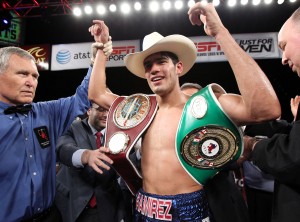


Comfortably contemplating devastation in South Texas

By Bart Barry-

PORT ARANSAS, Texas – Directly across Corpus Christi Bay from American Bank Center, a 30-mile circle and ferry ride by car, this Gulf island town of 3,000 or so souls represents, five months later, one of many grounds zero for Hurricane Harvey, and it looks the part, too. There are seawalls now where there were busy restaurants a year ago, and the devastation is widely chronicled. But as one doesn’t often see a large edifice scattered to component parts in a neighborhood or a marooned 30-foot fishing boat resting sideways a mile from the ocean, there’s still something jarring about the sights here.

American Bank Center hosted Saturday promoter Top Rank’s Gilberto Ramirez versus Habib Ahmed mainevent and did so competently as Ramirez unbuttoned Ahmed in six rounds. In an exceedingly more consequential mainevent before that, on the other side of the world, Murat Gassiev unmanned Yunier Dorticos to advance to the finals of the simply fantastic World Boxing Super Series cruiserweight tournament.

What got best shown Saturday across the six or so hours stretching between the spectacles, Gassiev-Dorticos and Ramirez-Ahmed, is the fatuity of derivative evaluations, hypothetical appraisals, assessments of who would beat whom if ever they did fight. It’s a fanboy game that existed before but crystallized in the Money Era, when beating men in the press and imagination acquired an outsized import and ruined a generation of aspiring aficionados. No longer was the craft about picking a decisive moment in an actual confrontation, a hook-leaduppercut combo five rounds before the knockout, but the absurder imagining of a full, 36-minute tilt, a mixedmedia gargoyle of the left Money threw against Diego Corrales and the shoulder roll he used against Robert Guerrero and the trunks he wore against Zab Judah.

It was a period of such deep frustration some of us still write about it bitterly. Good riddance to that awful era.

It’s germane because its residual effect got to me a bit Saturday ringside at American Bank Center. The co-comain of an eight-fight card featured Philadelphia’s Jesse Hart slapdashing an illprepared Ghanaian named Thomas Awimbono with a masterful right uppercut in the fight’s opening minute or so. Again, as it is said Dominican beisbolistas do not walk off their island, having to hit every pitch and take very few, so too one might say no fighter runs out of Africa – you don’t get off that continent and onto ours lest you can take hellish abuse. To see what Hart did Saturday was to imagine instantly no 168-pounder the world over could want any of that.

And yet. Not even five months ago Gilberto Ramirez dropped and decisioned Hart in Arizona. That was difficult to imagine Saturday, no matter how well El Zurdo handled his own Ghanaian opponent. The matchmaking appeared to intend a rematch, Ramirez and Hart, and certainly a rematch is the only proximate possibility Hart wanted entertain afterwards.

Some hours before that in Russia’s Bolshoy Ice Dome undefeated Russian cruiserweight Murat Gassiev made a nearly perfect fight with undefeated Cuban Yunier Dorticos, ceding geometry to Dorticos for half the fight while putting multiple deposits in the account of Dorticos’ body, then changing the geometry subtly until it was Dorticos retreating, his punches nearly popless, and Gassiev smashing through Dorticos’ guard. This was a different sort of combat, more masculine than wiley, perpetrated by Gassiev on Dorticos; put your hands up, son, leave them there, now I’m going right at them.

It’s a sort of hyperaggression even within boxing’s hyperaggression, a way of sending unmistakable signals to the most vestigial and predatory part of the human mind: You can no longer dissuade me, you must attack me now or turn and flee. Dorticos played his role perfectly, fighting open and hard as possible, and Gassiev ripped his consciousness right out his skull.

There was a frightening dispassion to what Gassiev did to Dorticos, a fellow titlist, a fellow undefeated prizefighter, a man of extraordinary violence and talent and pride. There wasn’t an iota of contempt between the men before or during or after their 35 minutes together; Gassiev brained a fellow human being without displaying even a flinch of animosity towards him, then displayed immense affection and empathy for Dorticos afterwards. It was a bondmaking casual fans do not understand and cannot fathom – the depths of intimacy Dorticos and Gassiev shared, the passion they will feel for one another the rest of their days.

This is not hyperbolic. Watch Gassiev’s concern before he comforts his crestfallen opponent afterwards. Dorticos, wherever his career ambles from here, will have no more-committed fan than Gassiev.

Being in this leveled township puts an edge on you, admittedly, and some of it projects itself on what happened Saturday night. Longtime Phoenix boxing scribe Don Smith traveled here for undefeated Arizonan Jose Benavidez’s return from a gunshot wound suffered 20 months ago, and generously gave me an excellent line about the difference between the Brothers Benavidez: “David is the poster child for milk; Jose is the poster child for oil and vinegar.” Such vinegar got sprinkled on Friday’s weighin when Benavidez and consensus pound-for-pound best Terence Crawford exchanged threats.

Crawford sat one row before us, mostly alone, Saturday, occasionally forcing smiles for overfed doofuses requiring pictures with the champ. Crawford has the distinctive air of an unassuming Midwesterner about him, flashless, in an outfit with Jordans but otherwise doable for $25 at Target. Lots went on round him and the rest of us, and he doesn’t attract attention, but if he once expressed genuine mirth to anyone but ESPN commentator Timothy Bradley and Bradley’s wife, I missed it. Crawford’s not unapproachable and certainly not arrogant, but he has exactly no interest in most of his surroundings or the people that compose them – he tolerates others’ assumed intimacy but doesn’t wish to understand it or share it. He will remain unknowable.

Bart Barry can be reached via Twitter @bartbarry
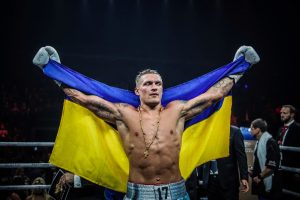


Gilberto Ramirez looks beautiful in South Texas showcase on ESPN


CORPUS CHRISTI, Texas – Saturday’s mainevent at American Bank Center was intended to be a coming-out party for undefeated Mexican super middleweight titlist “El Zurdo” Gilberto Ramirez (37-0, 25 KOs), and it succeeded as such in large part because of promoter Top Rank’s expert matchmaking.

Ghanian Habib Ahmed (25-1, 17 KOs) took his half-fight beating like a well-whiskered toughman then surrendered right on time, or his corner did anyway, at 2:31 of round 6.

“I took control of the fight real quick,” said Ramirez immediately afterwards. “And my goal now is to unify all the titles.”

Before the match Ahmed was fond of rattling away names of famous Ghanaian prizefighters to those who had the temerity to wonder who the hell he was, but during the match he fought like no Ghanaian so much as Joshua Clottey, showing little offensive imagination, fighting only when generally cornered and looking exactly the way his dossier got read during introductions – “the undefeated WBO number-four ranked challenger in the world”.

Ramirez is very good and gorgeous too, we’re told, but he makes some odd choices – such as attempting to duck counters from a man at least five inches shorter than him. Too, there’s Ramirez’s dangerous gambit of throwing uppercut leads while moving forward, rarely a good idea, even on an opponent limited as Ahmed.

“I’m telling Top Rank I want to fight in Mexico,” Ramirez added. “In my hometown of Mazatlan.”

This was a showcase match and Ramirez treated it as such, looking dominant before a national American television audience on ESPN.

JERWIN ANCAJAS VS. ISRAEL GONZALEZ

Saturday’s co-main, Filipino junior bantamweight Jerwain Ancajas (27-1-1, 19 KOs) against Mexican Israel Gonzalez (20-2, 8 KOs) featured what might best be described as a lightweight, actually junior-bantamweight, rendition of Manny Pacquiao and Juan Manuel Marquez, with Ancajas doing his imitative best to move slightly to his left, leap and blast, and Gonzalez having neither the quickness nor pop to dissuade him.

And unlike the last time Marquez and Pacquiao swapped fists, the Filipino won impressively by round-10 TKO.

This was a match that saw Gonzalez effective so long as he was in motion and tagged everytime he wasn’t. By round 4 there was a recurrent pattern: Gonzalez would bob his way in, flinch, feint, and gradually still his hands. Then he would freeze, flatfooted, and Ancajas would leap with a lefthand lead and tag him.

In the fifth Ancajas began to take over the match, outfighting and outfoxing Gonzalez, who found limited success only when jabbing his way in and testing the Filipino’s limited counterpunching prowess.

Through the middle rounds Ancajas’ speed and Gonzalez’s counterpunching partially neutralized one another, marking somewhat dull rounds Ancajas appeared to win in succession.

Having invested in left-cross stabs to Gonzalez’s body early, Ancajas was able to weather any punches Gonzalez landed after the ninth. Able to wade through Gonzalez’s punches Ancajas got audacious, and his audacity got rewarded.

Blasting Gonzalez with straight lefts, in homage to his hero Manny Pacquiao, Ancajas felled Gonzalez twice in round 10, the last time concussively enough to get the match waved-off at 1:50.

All told, it was Saturday’s most competitive match and marked an improvement in Ancajas’ prospects for stardom.

“‘Just be yourself, be patient’,” Ancajas said Pacquiao told him in a phone conversation before the fight. “‘Don’t put pressure on yourself’.”

From here the pressure to perform for Ancajas surely grows, and a deserved acclaim possibly awaits.

JESSE HART VS. THOMAS AWIMBONO

The evening’s singular punch belonged to Philadelphia super middleweight Jesse Hart (23-1, 19 KOs) who put a proper right uppercut on the lowered chin of overweight Ghanaian Thomas Awimbono (24-8-1, 20 KOs) and dropped him hard and early.

“I looked for the uppercut with the jab,” explained Hart. “The jab is everything. My coach told me not to look for the uppercut but to wait for it. As soon as I saw it . . .”

Awimbono, who missed weight widely and forced Hart to eat his way up to a catchweight and looked nowhere fit as his shredded opponent, rose unsteadily and collected another barrage before succumbing completely at 1:28 of round 1.

“I was mentally prepared,” Hart said about his looking sharper Saturday than in his last match. “Daddy, this is for you. I want to say, ‘Happy Birthday, Mom!’”

UNDERCARD

Saturday’s fifth match saw New York lightweight Teofimo Lopez (8-0, 6 KOs) remain undefeated by outboxing light-hitting journeymen Mexican Juan Pablo Sanchez (29-15, 14 KOs) in a match whose official cards went 60-54, 60-54 and 59-55. Despite being outgunned in every minute Sanchez nevertheless managed to open an ugly gash over Lopez’s eye with what Lopez declared a headbutt:

“Yeah, that’s a headbutt,” said Lopez. “He barely fucking hit me. He didn’t even hit me.”

Highly considered Top Rank super featherweight Gabe Flores (6-0, 5 KOs) made an impressive showing against Mexican Alex Solorio (4-3, 1 KO) in the evening’s penultimate undercard bout, stopping Solorio at 2:31 of the first round.

“Of all the young fighters Top Rank has,” said Flores afterwards. “I’m the best.”

The evening’s third match was a mismatch, as Australian super middleweight Rohan Murdock (22-1, 16 KOs) went right through Virginia’s Frank Filippone (23-7-1, 8 KOs), causing Filippone’s corner to stop the match after five rounds. Murdock looked solid if not particularly accurate, and Filippone was out of his depth from the opening round.

Before that Phoenix welterweight Jose Benavidez (26-0, 17 KOs) returned from a 20-month sabbatical to beatdown North Carolinian Matthew Strode (24-6, 9 KOs) and stop him at 2:21 of round 8. Benavidez, who was shot in the leg and told by a doctor he would need two years even to walk, looked nearly quick as fans remembered him, if not quite so sharp. The fight was a good one, Strode was awkward for a comeback opponent and took a punch well, and Benavidez knockedoff some of the rust he’ll need scrub in totality if he is to make a run at world champion Terence “Bud” Crawford, who watched from ringside.

Told Crawford was unimpressed by his showing, Benavidez said:

“(Crawford) needs to sit his ass down. I’ll fight him whenever, wherever.”

Saturday’s card began with a victorious four-round professional debut for 17-year-old Israeli super welterweight David Kaminsky (1-0) against a local no-hoper Texan named Rafael Munoz (1-3-1). For all the talk preceding Kaminsky’s debut, there was more noise than effective aggressiveness – and after a very quick start Kaminsky mostly raised questions about his own power through the match’s remaining 3 1/2 rounds of frustration.

Opening bell sounded on a sparsely filled American Bank Center at 6:08 PM local time.


Bad men in lieu of B.A.D. broadcasting

By Bart Barry-

Saturday undefeated Ukrainian cruiserweight Oleksandr Usyk (14-0, 11 KOs) decisioned undefeated Latvian Mairis Briedis (23-1, 18 KOs) in the penultimate round of the World Boxing Super Series, in Latvia’s capital city of Riga. Their match graced no American airwaves. Saturday HBO’s “Boxing After Dark” program featured Argentine retread Lucas Matthysse avoiding his fifth career loss by jabbing to temporary unconsciousness a Thai fighter named, one second here, Tewa Kiram, in Los Angeles. These fights are juxtaposed for more than their common date.

What you had in Latvia were two undefeated titlists in a unification match that was the semifinal of a tournament to crown a unified cruiserweight champion of the world. And both hail from the former Eastern Bloc. Surely this was in HBO’s wheelhouse such that if HBO didn’t salivate at the bell Showtime should swoop in and spite-buy it, no?

No. Evidently, absolutely no. Dogged reporters might doggedly do reporting on this and uncover a sprawling, innocent mess of conflicting dates and logistics, a waterfall of prohibiting algorithms, that makes seamless sense of why none of this series is televised in the U.S., but here’s an unsolicited guess instead: Richard Schaefer.

The former CEO of Golden Boy Promotions is back in boxing and associated with the World Boxing Super Series, which seeks to do with the cruiserweight and super middleweight divisions what the Super Six World Boxing Classic started doing with the super middleweight division nine years ago. That tournament, excellent if snakebitten, sent aficionados to Showtime, who captured their allegiance from HBO and hasn’t yielded it much since. Back then boxing insiders confused Schaefer for a genius often as they confused him for an honest broker. But his eventual arch enemy, Bob Arum, had a true line of sight on him: Swiss banker.

Schaefer was an unscrupulous opportunist who brought contemporary accounting and marketing practices to boxing’s 18th-century way of doing both, which made him look brilliant, and a selfinterested operator who promoted an ethical approach to promoting while furtively selling his company out from under its namesake.

Schaefer, fired and barred from boxing three years ago, looks more like an Al Haymon toady, in retrospect, than a master of the universe. Whatever fellow World Boxing Super Series organizers had in mind when they hooked up with him, getting their tournament blacklisted from American television was doubtful it. That’s all conjecture, of course, but one needn’t be a fishnets-certified fanboy to see some irony in HBO’s broadcasting “Washed: The epic rebranding of Lucas Matthysse’s second comeback” in lieu of something at least five times better and more consequential.

With unfortunately few exceptions these days HBO’s Golden Boy Promotions cards are about ensuring biannual Canelo cash infusions and conceding that without access to Top Rank or PBC fighters it’s brutally hard to fill a boxing calendar. As the world moves acceleratingly away from both network television and America, the happy news for aficionados is our confinement to whatever American cable companies gift us now hurtles towards its proper end. Last weekend you didn’t need to blackpatch an eye to see Usyk-Briedis in gorgeous highdef well before Boxing After Dark lumbered along.

And what you saw in Usyk-Briedis was a very good prizefight that was oddly entertaining for a no-knockdowns affair. The gloves looked rightsized, in other words, to two 200-hundred-pound men, and both fighters, as the results got read, looked like they’d been punched oftenly. The right man won on scorecards that leaned expectedly Latvian in Riga; a forensic examination of results would find most points Briedis accumulated came via extralegal events and hometown support.

If Usyk is not a particularly large puncher he is a large man with excellent relative mobility, an Olympic gold medal that means an opponent’s style can hardly surprise him, and the sort of oblivious goofiness that supplies Tony Robbins’ charm. Usyk is a very good prizefighter but nothing like a prodigy.

Briedis, too, gave a professional accounting of himself – he was just the wrong the man against the wrong man. He wasn’t going to fight busier than Usyk and wasn’t likely to outbox him either; to get Usyk to settle down Briedis needed to worry him by concussing Usyk with every landed punch, and at the championship level Briedis does not hit hard enough to do that.

He does know some tricks, though. Howsoever inevitably and unintentionally came the early clash of heads between Usyk’s southpaw attack and Briedis’ forward-lean orthodox counterpunching, Usyk certainly got the worse of it. A Briedis baby-hiptoss in round 6, too, went someways toward destabilizing Usyk. Not enough is made generally of how much it affects a fighter to get dropped on the canvas via push or slip. The referee clears it of scoring consequence with a wave, and the felled man has no grogginess with which to contend, but his legs, trained for six weeks and a career precisely to stutterstep and twist in combat and spring upwards from a stool after respite, suddenly have to fold beneath their body and push upwards from a kneel. It’s surprisingly fatiguing. And Briedis followed Usyk’s rise from the canvas with more offensive enthusiasm and effectiveness than he’d shown to that moment.

Most every round before and after that was a copy of its predecessor, though only Usyk employed cruisecontrol and only for a little bit in the 12th round, at that.

This Saturday the second World Boxing Super Series semifinal happens with undefeated Russian Murat Gassiev (25-0, 18 KOs) and undefeated Cuban Yunier Dorticos (22-0, 21 KOs) trading fists in Russia. That one shan’t appear on American airwaves either.

Bart Barry can be reached via Twitter @bartbarry


Predation, mercy, mercenariness: Spence melts Peterson in Brooklyn

By Bart Barry-

Saturday at Barclays Center welterweight titlist Errol Spence unmanned former junior welterweight titlist Lamont Peterson in a very good fight that was stopped by Peterson’s corner after the seventh round. Spence used well the physics and geometry of combat to attain his career’s first title-defense victory.

The inevitability of that victory happened in round 2 when Peterson jabbed to Spence’s body and Spence parryswatted that jab – a classic no no; you do thousands of reps of abwork so you don’t have to parry or block jabs to the body – then Peterson feinted the same punch about a minute later, watched Spence’s hand drop, blasted Spence with a lead hook, and absolutely nothing happened. When one fighter executes perfectly his tactic and the other fighter hardly notices, the match becomes obviously a mismatch. From there the larger, better, more predatory man beat to soft his challenger until mercy intervened.

One hesitates to celebrate the conclusion of the match much as one may wish. In the generally unoriginal and unabashedly imitative domain of contemporary boxing telecasts one fears the rippling consequences of a writer subsequently embracing a corner stoppage by a decent man – for fear it becomes a thing, as the kids like to put it, a shortcut for selfaggrandizing towelboys before television cameras – but with that preamble in place, let us celebrate it nonetheless.

Whatever popular consensus says, and it appears a universally positive consensus, Barry Hunter has the air of a cool cat, a man’s man, a proper gentleman. Even still, if you watch his jaw and the work it does on his chewing gum as he awaits the right moment to stop Saturday’s match, you see right manifested the internal conflict a man like Hunter prides himself on hiding. He knows what a corner stoppage says to a prizefighter about his corner’s confidence, and he knows what happens to a corner once its fighter knows he no longer has its confidence: Time to move on.

Was Hunter’s evident anxiety about getting fired?

No, of course not.

Such a petty concern appears beneath a man like Hunter. It was more an instant weighing of probabilities: This is the last time Lamont can have me in his corner, which means this is the last time I can protect him from himself, which means either this moment releases him into a harsher boxing world, or this moment retires him. Notice Hunter asked for the round number before he made his decision; one imagines if he’d heard, say, “tenth”, he’d have let Peterson out for another while – Lamont deserves to finish, Lamont finishes strong, Errol’s punches lose steam after nine. But the distance from eighth to twelfth, that quarterhour, was too great, so why attempt the leap partially?

What should not be understated in this dynamic, though, is the precedent of Hunter’s commitment to his man. This wasn’t a mercenary trainer doing a celebrity signon with a shot fighter to get himself a new car and recruiting video before hearing his conscience suddenly clang. This was a man proving in the decisive moment his fighter’s decision to give his faith to him, decades before made, was right and good.

None of that makes Peterson a candidate for the Hall of Fame, even had he decisioned Spence – an absurdity Saturday’s broadcast floated before the opening bell. Torn through in his prime by Timothy Bradley and Lucas Matthysse, neither of whom likely gets in the Hall, Peterson got caught with performance enhancers shortly after his one defining win, a desperately narrow decision over Amir Khan – a guy who’ll only get in Canastota by paying $13.50 at the door. And Peterson’s excuse for needing testosterone other than his own was a decided inanity, especially from the bearded mouth of a man covered in muscles. But something had to be manufactured to sell tickets Saturday, and the “Juvenile Brothers Peterson on the Streets of Washington D.C.” narrative was already dustybare from overuse.

All of this indeed takes from Spence’s victory, but one senses Spence won’t mind, honest as he is. Before the match Spence conceded his status as a prizefighter PBC stablemates avoid shamelessly is both evidence of his professionalism and a source of appropriate frustration. Here’s that concession’s flipside: No outfit in boxing history has consistently paid so generously for meaningless fights as the PBC, even while its fighters aren’t active enough against competition enough to achieve universal acclaim (PBC fighters rarely grace pound-for-pound lists, no matter their talent). Spence is the one redeeming part of Al Haymon’s aggressive Team-USA-signing initiative of 2012, an initiative that offered a first peek at Haymon’s generally woeful eye for talent, and aware of, if courteously silent about, the circumstances that got him his title shot on foreign soil in May.

During or immediately after which Spence sustained an injury that kept him from fighting for the rest of . . . no, that’s not what happened at all.

Immediately following one of the year’s most captivating performances nothing followed immediately for Spence. In fact nothing followed for the rest of 2017 except a halfassed announcement he’d be making a halfassed title defense in January.

While it’s possible Spence wouldn’t’ve gotten a chance to drawnbutter Kell Brook if Spence’d not been with PBC, it’s nigh impossible to imagine a worse outfit to direct the career of a new champion if that new champion wants anyone but an accountant to review his reign. “It’s called prizefighting, ya dummy!” – I know, I know. Maximum reward for minimal risk is the Money way, which became the PBC way, which now becomes the Showtime way. But in that case, let’s show a little solidarity, guys, and have the competent commentary crew at Showtime stop harping on how damn inactive PBC fighters are.

Bart Barry can be reached via Twitter @bartbarry


How to be cool as Sergio

By Bart Barry-

We begin with a definition of cool, or don’t, because it’s something sensed, though generational difference might alter such sensations, and we do so not so much because it’s an essential topic but because it’s a possible topic to fulfill a personally essential task: Find an enjoyable weekly subject at least tangentially related to boxing.

There aren’t as many cool millenials as cool guys from previous generations, and that may be a symptom of transition or a product of technology or it may be a function of age. The older a man gets, the less cool young men appear or maybe, again, it’s generational. Cool is unaffected, unencumbered, unburdened, confident life’ll take care of you – cool is a man making his way easily in the world. Cool isn’t a pair of sneakers or jeans or a haircolor or beard or concerns about fashion.

Here’s a timely example: As I write this, in a coffeeshop in San Antonio’s Medical Center neighborhood, across the way is a handsome guy, midtwenties, 6-foot-4, trim, skinny jeans, hoody, perfect beard, white-on-black Nikes either brand new or kempt, probably in medschool, a guy women round the shop noticed when he entered. Cool. But he’s buried in his smartphone, swiping and jabbing, and his right heel is tapping frantically under the table. Uncool. As the minutes go by he’s rolling his eyes, shaking his head, smoothing his beard, alternately glaring and chomping on gum; for all his erudition and fashion choices he’s become affected, encumbered, burdened. He’s his reasons, certainly, good ones, too, he’s got a lot on his mind, but it all manifests as insecurity, anxiety about changing circumstances that may be both adverse and powerful, which might could turn out to be wisdom – rendering the few of us in the coffeeshop who are unaffected more oblivious than cool.

But experience says that’s not how things’ll play out, and experience is why men grow cooler as they age. Legend has it, a pitch like that is how Dos Equis picked a whitebeard for its most interesting man in the world; even the coolest 25-year-old lacks the experience to be cool as the coolest 50-year-old.

Which is part of the reason our beloved sport does not have nearly the quotient of cool characters one might expect. I know this because I spent much of the morning trying to name prizefighters I’ve met who struck me as cool.

Why do such a thing?

A few weeks ago I recounted complimenting a fellow boxing writer by likening him to Shock G, someone whose music informed much of my youth but about whom I’d not had a conscious thought in decades, and this week, in the anfractuous way life winds its way, I found myself listening to Digital Underground radio on Pandora and realizing anew what a remarkable artist Gregory Jacobs (a.k.a. Shock G, Icey Mike, Humpty Hump, MC Blowfish, et al.) was, which brought me to this interview about Tupac Shakur. Jacobs is the definition of cool – unaffected, unburdened, gracious, a raconteur, easy, quick to laugh.

We meet prizefighters, especially American prizefighters, before they get a chance to become cool, methinks, when they’re still edgy from fearsome upbringings. Then they achieve success and financial security, generally two prerequisites for becoming cool however their bearers define them, but seem often to shift from the automatic anxiety of rising amongst predators to the automatic anxiety of guarding against losing what status they now enjoy.

Floyd Mayweather, cool as he was in combat, was nervous when I met him, surrounded by mountainous guards and afraid he might be tricked into saying something damning. Manny Pacquiao was pretty cool but a little too eager to please. Marco Antonio Barrera was cool but with a surprisingly predatory vibe. Andre Ward was too distrustful to be cool. Jesus “El Martillo” Gonzales was really cool, but he was my first interview, so maybe it was situational (and quite possibly it wasn’t). Roberto Duran was damn cool. Julio Cesar Chavez Jr. got increasingly cool with his victories, and as a child of privilege started on a better footing, sure, but never entirely lost his whiff of fraudulence – insecure you or circumstances might expose him.

Which brings me to the coolest prizefighter I’ve met: Sergio Martinez.

A beneficiary of circumstance, perhaps, Sergio, the first time I met him, had a lot more edge than I expected from seeing him on television; he was taller and more imposing, too. We were in a postfight scrum in Houston after “Son of the Legend” retired Peter Manfredo. It was November and chilly, and there standing halfway back from the podium was the world middleweight champion in a sweater, maybe red, all alone (Rob Base: “I’m not a sucker so I don’t need a bodyguard” – another reminder from Digital Underground radio). He was there to build pressure on promoter Top Rank to risk their guy against him but would do nothing crass like storm the stage. He trusted his simple presence would indict Chavez’s titular reign.

We’d later speak on the phone a number of times, and his openness made him uniquely cool. He was unrushed and unworried. I liked him enough to chide him about his Rolling Stone-Argentina cover, Hector Camacho meets George Michael, and he laughed easily and replied in Spanish, “Look, if I were gay, I’d say, ‘I’m gay, so what?’”

Too there was the way he reacted to Julio Cesar Chavez Sr., the legend himself, at the prefight press conference for his defining fight with Chavez’s son: “Ay, Papa Chavez, you are animated today.”

Being cool is being authentic, ultimately, which summons one last irony: Trying to look cool is a sure path away from being cool.

Bart Barry can be reached via Twitter @bartbarry


In lieu of a preview: Revisiting Israel Vazquez vs. Jhonny Gonzalez

By Bart Barry-

It’s the new year. Time for a preview.

Nope.

Some laziness and more wisdom say a preview of what’s to come in this new year in this new column won’t work well because its writer hasn’t a strong feeling about anything that is to come in 2018 and hasn’t even minimal interest in ingesting or digesting or egesting others’ opinions on it. Here’s a better idea.

Let’s revisit Israel Vazquez versus Jhonny Gonzalez as a reminder of just how special “El Magnifico” is.

There’s the longform preview, the bulletpoint preview – apparently how the leader of the free world takes his intelligence briefings – the panelist preview, even on special occasion the poetry preview. It’s what you have to do with a weekly column and no action on the horizon each January and many a June or July; it’s either that or make an agepoorly review of whatever slim fare happens at the top of the year, pretending some historically inconsequential fight or other is a worldbeater certain to be remembered 11 months later during award season but not actually memorable come even March or April.

Such is the chore of making a constant effort at a subject whose quality is inconstant at best. Which brings us more symmetrically than may appear to the subject of today’s nonpreview column.

Ringside at Vazquez-Gonzalez in 2006, the co-comain of my first Vegas fightcard, I never saw the HBO broadcast or heard its soundtrack, believing as I do there’s no replacement for an eyewitness experience and nothing in a video is accurate as being ringside because there’s an intuitive thing that happens when you’re in physical proximity to an event, there’s an intimate sense for the accumulation of moments that belongs to you, not the cameras of a selfinterested broadcaster, that makes what you feel more trustworthy. The trustworthiness of this intuition is doubly thwarted by sayings like “you’d better think twice” and television’s relentless revenuedriven drive to replace the personal experience with itself, culminating for me years ago in the crowning idiocy of television viewers telling ringside reporters to review fight tapes to see what they missed – like aspiring tourists telling residents to watch Netflix to see what their native country is really like.

What perception happened quite quickly in my review of the Vazquez-Gonzalez broadcast, then, was the sobriety of the HBO commentary: Jim, then as now, steered the narrative wherever his cohosts directed it, but Emanuel and Larry were simply quieter than Roy and Max. At match’s end, for instance, when Jim set his mind on setting a blaze of controversy, Emanuel simply said, no, the result would’ve been the same regardless, and the whole thing got extinguished. Even were Roy today cogent as Emanuel then, he’d never get a chance to stay the inertia of his partners’ babbling long enough, and Roy is nowhere near so cogent.

In 2006 it felt like reporting. By 2010 it felt like presenting. And today it feels like selling.

OK, back to what matters.

I don’t know why I waited till 2018 to revisit this match – not in the sense that I don’t know why I chose to watch Israel Vazquez on the second Sunday morning of the year but why, if I’m capable of such an impulse, I don’t do it much more frequently. Before I was enamored of Chocolatito I was enamored of El Magnifico. And his match with Jhonny Gonzalez comprises many of the reasons why.

What Vazquez had that I admire most was physical intelligence; Vazquez thought with his body and thought through his opponents’ bodies better than most, neutralizing other men’s superiority of speed and length by doing things more precisely than they did. Vazquez’s underappreciated technique, too: the way he L-stepped from Gonzalez’s righthand towards his own, calculating as he later did in his revered trilogy with Rafael Marquez that as a Mexican-bred prizefighter he could handle well any fellow Mexican’s lefthook as any fellow Mexican could handle his, and so why trade lefthooks when neither he nor his opponents would withstand a rightcross thrown as counter or combo or lead?

It was a calculation that nearly got him undone by Gonzalez, who dropped him with a lefthook lead twice in the match, first with a balance shot then later with something indeed flusher. Whatever lefthook power be his birthright Vazquez changed decisively Gonzalez’s calculus with his right, though, in a match Gonzalez led prohibitively, 60-52, at its midpoint.

Izzy may have won two minutes of the match’s first 18. Yet there he was at each round’s opening bell, bounding off his stool and hustling to ringcenter, eager to seize some initiative from Gonzalez.

Then Vazquez shortarmed his jabs until he knew they counted, bringing the much longer Gonzalez closer and closer, extending fully only when certain a landed punch might undermine Gonzalez’s fitness more than it improved his perception of what Vazquez was up to. And goodness, but Gonzalez was a proper challenger.

Twenty-four years old and 37 prizefights into a 75-prizefight (and ongoing) career Gonzalez dropped Vazquez with a pair of the lefthooks that later razed Abner Mares in a single round, and each time he did Gonzalez finished the round worse than he started it. And Gonzalez threw those lefthooks with abandon, several times imbalancing himself into pirouettes when they missed. Izzy made him miss oftener than posterity records, too.

When the time came for finishing Vazquez was ever more robotic than predatory, enthusiastically applying a template more than attacking another man. And gracious in victory, always.

Bart Barry can be reached via Twitter @bartbarry


Mosaic of 2017’s most ambivalent fight, part 2

By Bart Barry-

Editor’s note: For part 1, please click here.

*

What a younger Roman “Chocolatito” Gonzalez might’ve done with a smaller version of Wisaksil “Srisaket Sor Rungvisai” Wangek, would’ve done, one writes with near certainty, is whack him low, block his early shots then begin spinning him dizzy, making him miss then pivotwalking him into whatever Chocolatito wished throw his way from whatever angle Chocolatito wished throw it, and after Sor Rungvisai collapsed from concussion and exhaustion Chocolatito’d’ve helped him off the canvas onto his stool.

A lesson Santa Monica teaches on a Sunday morning, festive and bright, and a Sunday evening, dark and unfriendlier and a touch despairing, is the atmosphere of a place – its energy or mood or spirit or vibrations or aura or nature or God or light or luck, synonyms likely all – colors reflexively its every inhabitant, no matter how decisively he draws his state of mind and emotion from within: The palpable sense of forward-regret I’ve felt every Sunday evening since grammar school, I realized on Santa Monica Pier, is not mine but a reflection of everyone else’s.

Sor Rungvisai showed no regard whatever for Chocolatito in round 1 and instead trusted the physics of championship prizefighting.

Doug Fischer happened over to say hello sometime during the undercard, and his headwear and demeanor reminded me of Digital Underground’s Shock G, and I told him so (and he replied immediately with a quip about StubHub Center’s generous tailgaters turning him into Humpty Hump) because I knew he’d get the reference and moreso because I was so happy to see him because Doug is one of the most genuine and decent men I’ve met anywhere, and seeing him ringside immediately returns me everytime to 2004 and my Max Boxing subscription and watching Doug and Steve Kim’s weekly show, wondering what it might be like to cover boxing.

For reasons of character (orgullo y ambición) and culture and luck Chocolatito hadn’t a choice but to fight often and ascend weightclasses steadily, and such an ascent, when done honestly, sans handicapping and cherrypicking, brings an inevitable reckoning with physics (their fists be larger than your chin) or time (you haven’t the proper reflexes anymore for hair’s breadth escapes) or both (damn it! this hurts and there’s nothing I can do about it), and while there’s a good chance such a reckoning was exactly what Chocolatito sought there’s also a chance Chocolatito did not quite believe such a reckoning possible.

My September, weighted by legal woes, caused me to keep a halfhourly tally of my thoughts and emotions (thoughts caused, as ever, by emotions), a tally that made me acutely aware of the Santa Monica Pier’s benevolent effect on what vigilance I applied the task of equanimity towards a situation that anyway resolved itself amicably by October.

There’s no such thing as a wholly objective scorecard unless its scorekeeper keeps his eyes ever fixed on the middle plane between the fighters, diverting his gaze to one fighter or the other only when following a punch that pierces that plane, which no scorekeeper does, but years of thinking about such a feat at least led me to an improved awareness of what fighter I favor by watching, and that fighter has been Chocolatito in every minute of his every fight (right up until Sor Rungvisai’s absurd victory somersault after Chocolatito was razed).

Sitting one row in front of me and kind enough to turn and introduce himself was the young and talented writer Sean Nam, and when our fun and winding conversation wound its way to his friend and mentor, Carlos Acevedo, I was pleased to hear myself saying something like this: In the hierarchy of this boxing-writing thing, there is Carlos and everyone else, and the distance between Carlos and everyone else is not small, which is another way of saying: While there are plenty of boxing writers whose work I admire, Carlos’ is the only writing I consistently read and think “I don’t believe I could do this”.

Once he regained his consciousness then his feet Chocolatito wanted to leave the StubHub Center’s ring rapidly as possible but the WBC, whose superflyweight title Sor Rungvisai took from Chocolatito in March and emphatically did not return in September, had to bestow on Chocolatito a finisher medal of some sort, a runner-up trophy for a twoman contest, and Chocolatito wanted no part of it, hanging the souvenir round his knuckles not his neck as he snapped through the ropes and the hell out of the ring.

As early Saturday afternoon included a trip to architect Frank Gehry’s Walt Disney Concert Hall (a familiar to his historic Guggenheim design in Bilbao, Spain, though in stainless steel skin, not titanium) and brunch at the fabulous Redbird, and Sunday afternoon included a trip to The Getty, whose grounds were far greater than their collection, it was not lost on me how much more time I spent on Santa Monica’s gaudy pier than among works of artistic or architectural grandeur, which marks either an inversion of maturity or its transcendence.

The atmosphere at ringside was subdued unto funereal after the main event, as nearly no one traveled from Thailand to see Sor Rungvisai, and the partisan-Nicaraguan crowd that filled the StubHub bowl was already mourning its experience collectively, which made it easy to miss the scale of Sor Rungvisai’s achievement, which later made end-of-year recollections like Jimmy Tobin’s so insightful and satisfying to read.

There was a time I thought often about experience and legacy and decorated a small office with ringside credentials and submitted my work to annual writing contests, but changing life conditions did away with all that three or four years ago, and a halfdozen annual boxing trips, too, and now I realize I was wrong to do away with the boxing trips.

Bart Barry can be reached via Twitter @bartbarry
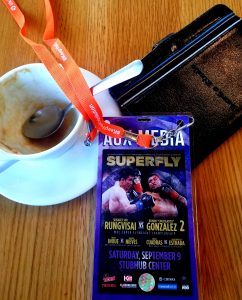


Mosaic of 2017’s most ambivalent fight, part 1

By Bart Barry-

We were in Carson, Calif., to celebrate Roman “Chocolatito” Gonzalez for the joy he brought us through a spectacular career predictably obscured in the United States by his tiny stature while properly celebrated in his homeland of Nicaragua, homeland of Alexis Arguello.

Santa Monica is not like Los Angeles, though it is such a joyful place, with its gaudy pier and mix of wealth and homelessness, so unlike my decades’ old and enduring dislike of Los Angeles, it made me reconsider entirely my thoughts of Los Angeles as shallow and stubborn, sunken in envy or frugality or unseemly selfseriousness.

Wisaksil “Srisaket Sor Rungvisai” Wangek, the Thai superfly imposter who stole Chocolatito’s belt in March after prepping for his match with the world’s greatest prizefighter by whupping three consecutive debutants in the second half of 2016, rounding off gently a year of five tussles with opponents whose aggregate record, 15-24 (9 KOs, 19 KOs-by), hardly fitted him for confrontation with Gonzalez (46-0, 38 KOs), actually was no imposter at all and actually didn’t steal from Gonzalez in March but rather took.

Access to prizefights remains this job’s only compensation, which makes 2016’s tack of writing a weekly column and getting credentialed for no fights simply daft, and if the end of 2017 doesn’t see a proper remedy or resolution to make 2018 better still, it reminds this much: There be no better form of compensation for writing about boxing than access to boxing and no better way to rekindle interest either.

Chocolatito got butted oftenly by Sor Rungvisai in their first match and complained about it, too, uncharacteristically, and some of us incorrectly saw it as an abiding fixation on sportsmanship, while more of us saw his complaining as tactical, and only a few of us – including, obviously, Sor Rungvisai – saw it correctly for what it was: an anxious concession to fragility.

It’s not often I converse the duration of a threehour flight with a rowmate but September’s mate was deeply attractive and comfortable, and she said something about Santa Monica reminiscent of something similar a rowmate said on a Peruvian train bound for Ollantaytambo in August: “The best places in the world to visit have a hippie-ish vibe.”

The Friday weighin was too far from LAX to justify what plane-to-gate-to-shuttle-to-rentalcar-to-freeway-to-brakelights stuttershuffle it required of someone flying from Texas on a latemorning fare, and a recollection of that selfsame stuttershuffle unrewardingly performed for Vazquez-Marquez 3’s weighin, nine years before, kept me from eyewitnessing Gonzalez’s unblinkered staredown with the unblinking Sor Rungvisai.

There’s another compensation for this job, come to think of it – the appreciation of one’s peers.

The ugliness and downtime of 2016, with its plethora of PBC matches worse than mere downtime (as Samuel Johnson once said of sailing, “being in a ship is being in a jail, with the chance of being drowned”, so were PBC broadcasts like downtime with a chance of feeling guilty for not watching), afforded, however, a chance to revisit and visit happily dozens of Chocolatito matches that didn’t happen on American airwaves but entertained beautifully on YouTube uploads from Managua, while writing howsoever many parts of an unplanned “Chocolatito City” series whose title borrowed gratefully if inexplicably from Big Daddy Kane’s 1993 medley (which itself borrows a punchline from Muhammad Ali, the man on whom Kane modeled his career).

I remember most fondly about the logistics of September’s trip upgrading my rental to a ridiculous Dodge Challenger, obnoxious American muscle made in the climactic throes of obnoxious American muscle, a car whose Sport mode made the car seemingly no quicker – as any quicker than default mode mightn’t be street legal – but significantly louder, and driving that car, with its surprisingly excellent handling and shockingly good fuel efficiency, all the way from Carson to Malibu to see the sunrise at El Matador State Beach, still marks the wisest thing I’ve yet done on a fight morning, in 12 years of trying.

We were there to see Chocolatito avenge his record’s first blemish, yes, but we were also there for the opportunity of it, if we were honest: it would be wondrous to be ringside for a great card that culminated with a prime Chocolatito wrecking the Thai interloper Sor Rungvisai, but it would be more essential still to be present for a reduced Chocolatito’s mainevent finale in the United States on HBO.

Cliff Rold, a writer I’d not met but whose knowledge I admire, happened over during the undercard and we affirmed for each other our belief Chocolatito’d prevail while addressing the possibility that if we were sure he’d prevail both of us mightn’t’ve made the trip crosscountry to see it – “I hope I’m wrong,” I think I said about the possibility of Sor Rungvisai simply having Chocolatito’s number, “but if I were sure I’m wrong, I’d probably not be here.”

Chocolatito, the gorgeous dervish who enchanted aficionados with his style and craft, a volume puncher with power, a boxer whose defense was his activity and footwork, carried his balance and power upwards to 112 pounds from 104 1/2, what he weighed the day before winning his first title at minimumweight, with what ease and grace only genius reliably shows.

So pleasant and layered were the sensations of Santa Monica I began googling from the pier “hippiest places in each state” and found, in a happy accident, Texas’ consensus choice is San Marcos, not Austin, both nearer San Antonio and more accessible.

What happened in Sor Rungvisai-Gonzalez 2, instantly, as I remember it, was Sor Rungvisai’s every punch moving Chocolatito, especially the ones Chocolatito blocked – the universal sign of a physical mismatch regardless of what the Friday weighin scale opined.

What I didn’t know when I began covering matches from ringside, when I foolishly interpreted my pressrow position as a commentary on my merits as a writer, when I thought credentialing reflected something different from clickcounts or a seat in auxiliary meant you were inadequate as a craftsman, I know now: Enjoy any seat removed from a power outlet – you experience the same fights without the artificial stress of a deadline.

Bart Barry can be reached via Twitter @bartbarry


Horsing around in Jalisco, watching David Lemieux

By Bart Barry-

GUADALAJARA, Mexico – This city is 4,500 kilometers southwest of Laval, Quebec. That’s sensible a place as any to start a column like this.

There be nary a Canelo statue to report in the center of this old and noble capital of Jalisco nor a great interest in searching one out. If I wasn’t here to visit San Agustín de Tlajomulco de Zúñiga, birthplace of Cinnamon Alvarez, the redhaired horseman of Jalisco (that’s a halfassed alliteration that works like a pronunciation key: hair and horse and Jalisco all begin with the same general sound), I cared at least enough to google the lineal middleweight champion’s hometown. Then I forgot all about it till an uber took me past a lowend bar called Canelo’s in a spotty neighborhood. A better columnist’d’ve alighted the car and done some investigative stuff but it didn’t fully register till just now when I sat down to write a column tenuously linking Guadalajara and Billy Joe Saunders, and forcing such symmetry, I’ve found, is only fun to do if you admit it first.

Saturday evening Saunders craftily denuded David “. . . ah . . . The Canadian” Lemieux then advised Montreal authorities to file charges of indecent exposure against a man who, it’s naughty to admit, rounds out Gennady Golovkin’s career Top 3 Greatest Challengers list.

The indecent-exposure line is not mine but sprung to mind as I watched Saunders and asked myself where I’d seen such a thing before. Firing sporadically on the fuel of tortas ahogadas (drowned sandwiches) and carne en su jugo (meat in its juice) – the wet food beloved by Tapatíos in this city – my query returned: Cristian Mijares vs. Jorge Arce. On the undercard of Manny Pacquiao’s 2007 Alamodome demolition of Jorge Solis, Mijares took a formidable favorite and stripped him bare at center ring. So bare, in fact, someone from then-promoter Gary Shaw’s outfit, then representing Vic Darchinyan and goading Arce and his promoter Top Rank at every chance, sent a press release pleading for Arce to be arrested in Texas and charged with indecent exposure, which still brings a chuckle.

Maybe boxing was more fun then or maybe I was, but I can’t think of a press release in years combining so tidily the caustic and the clever.

Saunders carried the same panache Saturday as Mijares carried a decade ago; Saunders knew exactly what Lemieux would do next long before Lemieux decided to do exactly what Saunders already knew he’d do. It’s an incredibly dispiriting sensation, that – to realize you’re best chance of striking an opponent is by accident and then to see in his eyes, within an instant, he just heard you think that, too, damn it.

A fighter and trainer with whom I once did some illadvised sparring one time came off a perfect slip of my righthand (“perfect” defined as: moving the least distance possible to make me miss, ensuring with such economy I would expend all the energy required to stop my fist and perversely feel encouraged by how close I’d come to walloping him, the better to break my spirit and body) and pinned his right glove to right temple at least a halfsecond before I knew I was going to waste more resources on a useless hook.

I dropped both hands then and there, spitting the gumshield in my left palm, and said, “How the hell did you know I was going to throw the hook next?”

He shook his head contemptuously and said, “It’s the only thing you could throw.”

He’d taken the few and simple algorithms that composed my offensive arsenal, downloaded their defenses and counters, and not wasted one more cycle on thinking. He would ponder some new ways of punching me hard in the face, I gathered, but he had defense on autopilot.

Imagine his surprise when I later leapt out my crouch and . . . yeah, right. I avenged absolutely nothing that day or any other with him.

Where were we? Oh yes, Saunders and Mijares, Arce and Lemieux.

Saturday’s match was supposed to be a good one. If it was intended as anyone’s showcase by HBO it was Lemieux’s – the better to burnish retroactively GGG’s superlinear power and class. At one point, even, there was an allusion to an assault on Saunders proving Lemieux was ready to rematch his KO-8 with Golovkin, of all risible suggestions. Instead the network lucked its way into a formidable challenger for the winner of Alvarez-Golovkin 2 (Saunders makes a very good fight with Golovkin and a good fight with Canelo) or a spoiler for the network’s legless Danny Jacobs rehabilitation tour (Saunders makes a miraculously dreadful spectacle with The Miracle Man).

What does any of this have to do with Guadalajara or Jalisco or even Mexico? Very little, admittedly.

There’s a cosmopolitan quality to this city that now informs my recollection of interviews with Canelo, though. He was unfailingly courteous and professional, if not insightful or imaginative; to interview Canelo was to interview an equal in every way, not a cultural or intellectual inferior, not a superior in some sort of compensatory machismo, either – just a man who did his job very well and anticipated the same from others. There’s a cultural pride in Guadalajara that might be arrogance were the peso exchanging better than $0.05 (US). From the arresting Orozco frescoes in Hospicio Cabañas and Museo de las Artes de la Universidad de Guadalajara (Musa) to the majestic cathedrals and fountains in Zona Centro this city and its inhabitants consider themselves equal to or better than any American or European. I find myself agreeing with their assessment, too, even without a pilgrimage to San Agustín de Tlajomulco de Zúñiga.

Bart Barry can be reached via Twitter @bartbarry
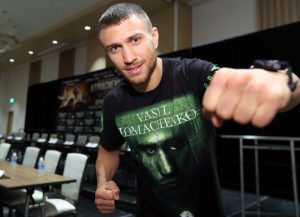


A euphoric redefining of the classic fistic catharsis wrought by . . . nah, not really

By Bart Barry-

Saturday on ESPN Ukrainian super featherweight champion Vasyl “Hi-Tech” Lomachenko made undefeated Cuban super bantamweight champion Guillermo “The Jackal” Rigondeaux quit after six rounds. On HBO Mexican journeyman Miguel “Mickey” Roman beat to a crumple Mexican journeyman and former champion Orlando “Siri” Salido. ESPN’s match comprised two fighters with four Olympic gold medals. HBO’s comprised two fighters with 25 professional losses. While any aficionado might’ve predicted which match would be more entertaining, few of us predicted exactly how much more entertaining Roman-Salido’d be than Lomachenko-Rigondeaux.

Saturday’s mainevents hadn’t a unifying thread that springs to mind but Salido, HBO’s counterprogramming ace, representing the one loss on Lomachenko’s record. It’s a proper loss, too, no matter how a commentator and ring announcer now revise it.

No sooner do we threaten to start a new era in which undefeated ledgers are not all there is to a fighter’s dossier but we try to unblemish Lomachenko’s record retroactively – else we’ll compromise what words like “otherworldly” we now include in the subtitle of his brochure. This straining for symmetry is what happens when we see ourselves as storytellers, not journalists, a point of ongoing and massive struggle for television as a medium.

Television was built on images that flicker to mesmerize and entertain. When this wasn’t enough to grow revenues television endeavored to get serious and journalistic and in a small corner of itself did so successfully enough subgenres got born. But television is too topical to be sober or intellectual as the written word – with its frowzy dressers, doughy faces, hard drinkers and thousandhours spent in front of library stacks instead of mirrors – and television knows this about itself and too knows it’s not glorious or beautiful as cinema or it wouldn’t have to sell its every fifth minute to advertisers. Television is best when it tries to be a little of both, more intellectual than cinema, more fun than print.

Television is frankly awful when it tries to lecture. There were some moments of it Saturday.

Something about Lomachenko, starting with his silly nickname, makes aspiring Homers of every speedreader and street philosopher; the mean feat of making smaller men quit fighting in frustration ascends to the historic when Lomachenko does it. Much of this, again, is his topicality; Lomachenko’s promoter, Bob Arum, knows better than any man alive if you can get your guy in front of a camera against weak opposition television’s salesmanship reliably fills every vacuum in realtime; commentary crews involuntarily enter a hyperbole duel with one another, earnestly wanting to be able to say theirs was the first to perform a historic inventory of this historic figure’s every historic quality. Some writers sometimes do this, too, especially those who hope to make it to television someday, but writing polices its own – as it did for centuries before television’s invention – dealing in credibility more than ratings.

Something about the very nature of words makes it harder to write “Lomachenko may someday be considered greater than Muhammad Ali” than it is to say it.

If there’s some tension between a pursuit of truth and a fun experience, television has to err on the fun side of things, selling the experience in a way print does not: nobody, after all, in 30 years will say he remembers the first time he read about Lomachenko, while plenty of folks now hope to have occasion to say they remember the first time they saw him. There are plenty of smart professionals in television, of course, and after thinking a bit on the proposition they realize the risk to credibility of calling every fighter the next Ali, Marciano or Robinson (or Pernell Whitaker) is dwarfed by the reward of being the first to recognize a future legend.

“Predicting,” as they say, “10 of the next two great champions.”

At the risk of losing a reader or two, I can happily report I found Miguel Roman’s victory multiples more compelling than Lomachenko’s. Wait, get back here, you two; I watched Lomachenko-Rigondeaux live, not Roman-Salido. If I wasn’t nearly first on the Rigondeaux bandwagon I did cover from ringside his sixth, ninth and 10th prizefights and recognized, with the help of a local San Antonio trainer, his multitude of talents. I wasn’t ringside for his defining win against Nonito Donaire (I was at a Natalie Merchant concert in Fort Worth, instead, and do not regret it a little) but was thrilled with the result, annoyed as I was by the hyperbole by then accrued to Donaire.

Since then I’ve been unimpressed by Rigondeaux as the rest of you. But he did do Saturday what we ask prizefighters to do once they’ve declared themselves too-feared to find opponents in their proper weightclasses. And the result was predictable. Fruity as his comportment often is, Lomachenko gives refreshingly honest postfight analyses, and his saying a corner quittage by an undersized man did not rate was my favorite thing Lomachenko did Saturday.

There’s no need to rehash the action because, over and again, it’s awfully easy to look sensational and do outlandish against a man once you know he can’t hurt you, which is why Canelo and GGG made none of the highlights against each other in September they make against smaller men.

Anyway it would be malpractice to commit any more space to that unexceptional and unsatisfying fare after a weekend when Miguel Roman retired Orlando Salido in a gorgeous attritioning of Salido’s noble spirit. Each man planned to retire if he lost, and neither man said so beforehand, which compares most favorably with the lucrative twofight sendoff HBO and Miguel Cotto just threw Miguel Cotto, no?

Roman probably won’t win his next fight without he barefoots another pathway of hot coals, which is fortunate for us and unfortunate for him. After what Roman just did to Salido at 130 pounds, with a different marketing team and promoter and momentum he might otherwise be allowed to make shortfilms about his reflexes and do otherworldly things against a bantamweight.

Bart Barry can be reached via Twitter @bartbarry


Goodbye to Miguel Cotto: A well-publicized and honestly blank canvas

By Bart Barry-

Saturday HBO said goodbye to Puerto Rican junior middleweight Miguel Cotto who lost a close but fair decision to New York’s Sadam Ali who made the very most of an event that had nothing to do with him. Cotto gave an honest effort and accepted his loss graciously after a large, adoring New York City crowd cheered him loudly while a small, adoring commentary crew cheered him vigorously. If it wasn’t an exact metaphor for Cotto’s career it was an acceptable one.

Cotto represents, in my mind, a blank canvas, a good fighting style and excellent publicity. He successfully juxtaposed, in the final marketing blitz of his career, the masculine trait of taciturnity and the hottest feminine color on the spectrum. By saying little as possible and still less of substance he offended no prospective pay-per-viewer, and after Felix Trinidad’s retirement and Juanma Lopez’s renowned dissipation, Cotto monopolized the minds of Puerto Rican aficionados and lucratively sold many tickets at the boxoffice of Madison Square Garden – that wildly celebrated concrete cylinder in Manhattan.

A thin, nearly diaphanous film of martyrdom covers Cotto in many an aficionado’s mind; the Antonio Margarito who beat him to a pulp probably did so with something extra on his knuckles, and the Manny Pacquiao who also beat him to a pulp probably did so with something extra in his blood. Everything else in Cotto’s career went almost tediously according to form, while the poor timing that left him ruined by Margarito and Pacquiao – both in their absolute physical primes when they pulped him – turned to favorable. He lost to Floyd Mayweather, who overpaid him in a scramble to get a prison sentence delayed (or suspended altogether), and he beat Sergio Martinez, who may either have been fighting him on one broken leg or fighting him on two broken legs. Cotto cashed himself out against Saul Alvarez, losing by exactly the scores any disinterested aficionado would’ve predicted, then 20 months later decided there was more cash out there and bamboozled HBO into a twofight farewell tour.

Really the only surprising results on Cotto’s resume are his losses to Austin Trout and Sadam Ali, and maybe his decisioning Shane Mosley a decade ago. The Mosley decision was very thin indeed but fair. Too, to be fair, the brutality of what Cotto did to little Paulie Malignaggi on that tiny pillowy canvas 11 1/2 years ago remains deeply memorable.

Cotto was moved patiently and perfectly by promoter Top Rank until he was fed to Margarito in a match Top Rank surely expected to be remarkable but probably expected Cotto to win. Cotto’s dramatic, and almost sudden, transformation in that match from arrogant master to quailing prey lends credence to the Margarito-handwraps conspiracy in the minds of any who were ringside; it’s difficult to believe an athlete in his 33rd prizefight might so underestimate an opponent’s legal ammunition as we’re asked to believe Cotto underestimated Margarito’s. Margarito did nothing novel, and yet Cotto, in his 13th world title fight, a veteran of 148 amateur bouts, ran completely out of ideas midway through a fight he had dominated? It’s not impossible, or particularly probable.

When I think of Cotto my mind plays a man acquitting himself honorably while being beaten up. I was ringside at the aforementioned Margarito assault, which was an incredible experience at the time, and I was ringside when Pacquiao diminished further a diminished Cotto. That marked the end of my imagining Cotto an historic talent.

Between those beatings, luck more than intention put me ringside at Cotto’s honest match with Joshua Clottey, which happened in New York the night after colleague, mentor and friend Norm Frauenheim accepted his muchdeserved Fleischer award. When I think of Cotto, too, I think of the beauty of Central Park, sharing a cab in Las Vegas with former colleague Mike Swann, spending time with friend and mentor Tom Hauser – that is, many of the best associations I have with Miguel Cotto fights I attended have nothing to do with Miguel Cotto. Hence the blank canvas.

Were I Puerto Rican or even Latino, I might complement my happy memories of Cotto fights with a bit of my own identity, perhaps, making those fights and their fighter still more essential.

Oh, and I have another amusing memory of Cotto (that also has little to do with him): At a promotional breakfast the morning of Pacquiao-Bradley 2 two roomsful of us gathered to hear Cotto say very little about his upcoming match with Sergio Martinez, and for arriving late and wearing an inappropriate purple Kangol I got consigned to the backroom, where I met the wonderful British writer Gareth Davies, who arrived even later and was also too colorful, then Davies and his entitled mien corralled Cotto to our table, where Davies opened the interview by propping Cotto’s magenta Crocs on his lap and taking pictures of them.

Cotto’s eyes and face by then betrayed a vulnerability Cotto was honest enough not to cover with effects of any kind; a look in Cotto’s eyes for a glance got you a swirl of indifference and violence, but if you lingered there for another beat or two you saw a man who genuinely wanted to be left alone: Of course I’m not afraid of you, but why would you make me say it?

HBO’s farewell to Cotto on Saturday was typically overwrought, a chance for the reliably prissy to turn dramatic and grave, but felt sincere insomuch as HBO does not wish to bankroll Cotto’s career any longer – not for a predictable rematch with Canelo, not for a bloodletting with Gennady Golovkin, and certainly not for a comeback at age 40.

Bart Barry can be reached via Twitter @bartbarry


Krushing it: Kovalev stuffs us with memories of a better Thanksgiving weekend

By Bart Barry-

Saturday Russian light heavyweight Sergey “Krusher” Kovalev laid waste to an otherwise-anonymous Ukrainian named Vyacheslav “Two YYs” Shabranskyy in the sort of woeful mismatch managers schedule immediately after their former champions get conclusively whupped but don’t traditionally expect to see televised. Especially on HBO. Seeing Kovalev bully another hopeless opponent, though, did nothing nearly so much as remind aficionados of Andre Ward’s greatness in moving up a weightclass and roughtrading Kovalev in June.

The weekend after Thanksgiving hopes to become a Krusher Kovalev turkey-giveaway tradition at HBO. Four years ago Kovalev krushed someone named Ismayl Sillah as part of the Stevenson-Kovalev marketing campaign that got Adonis Stevenson an absurd reward-to-risk ratio over at Showtime and got Kovalev a bunch of wellpaying placeholder matches and fruity modifiers – “most-feared”, “sociopathic”, “dominating”, and so forth – interspersed with chasing old man B-Hop round the ring and Kovalev’s recent reckoning with a great fighter in his prime, which, again, didn’t go swell for Krusher.

Before Thanksgiving weekend was about c-level cards and a-side rehab on HBO, well well before, several regimes before, 13 years before, someone had the chutzpah to put the third match of the remarkable Marco Antonio Barrera and Erik Morales trilogy on the same weekend in Las Vegas. What one can’t help but sense when he revisits that fight is the honesty of it all. Even matchmaking, complementary skillsets (Barrera’s lefthook, Morales’s rightcross), genuine animosity, two superlative practitioners driven to lunacy by one another’s fists. It’s the disbelief the men retained even after 24 rounds together – what makes it different from, though not better than, Vazquez-Marquez: By the third time Israel Vazquez traded blows with Rafael Marquez (the greatest trilogy of my lifetime thus far) the men respected one another deeply, whereas Barrera and Morales spent their 25th round together treating one another like latereplacement pugs.

Morales came in the fight outweighing himself and with right yellowglove high and cocked, intending to stiffen Barrera more quickly than Manny Pacquiao’d turned the feat a year earlier. Barrera, meanwhile, proud as any man who’s been gloved, saw Morales only as HBO’s “puto campeón” – what he called Morales after their first fight, a pejorative subsequently scrubbed from replays – and despised Morales further for his intended cherrypicking of Barrera’s weakened self. Morales knew he could cut Barrera’s lights with a proper right, and Barrera knew Morales couldn’t cut his lights in a lifetime of trying. That leavened the match further; two rational actors harmonizing their ways to an irrational conclusion, two men thinking an act inevitable when for at least one actor it was impossible.

Then Barrera knuckleclipped Morales’s aquiline nose with a left uppercut crunchy enough to make El Terrible breathe mouthly the duration. Asked afterwards about his broken nose Morales said he didn’t remember it happening because it didn’t matter.

As Barrera’s fortunes rose after he got decisioned by Morales in their first match, Feb. 2000, undressing Naseem Hamed 14 months later in a 36-minute denuding that remains the genre’s standard a decade and a half hence, Morales’s fortunes rose after he got decisioned a second time by Barrera (in what probably was the only correct scorekeeping result of the trilogy): Fewer than four months after his rubbermatch with Barrera, El Terrible decisioned Manny Pacquiao. Reflect on that as you finish digesting what hyperbolic gravy HBO ladled over the Kovalev turkey Saturday: Morales went directly from the completion of one historic trilogy, losing to Barrera, to the commencement of another, beating Pacquiao.

Did we know how lucky we were? Hard to say. I recall thinking Morales was a once-in-a-lifetime athlete, as was Pacquiao, obviously, at the time he decisioned Pacquiao, but as I’d just begun writing about our beloved sport I didn’t know quite how unique Morales was.

If you don’t task yourself with 1,000 weekly words about boxing its dead periods are not so acute. If pressed I might be able to name unaided a dozen prizefights I recall between Barrera-Morales 1 and 3 (some of that time I spent residing in Mexico where there was a walking-range sportsbar that televised every fight) but I have no recollection of what I had to think about when no fights were happening like I do now. That’s part of the reason I have an opinion about Saturday’s fare. It’s not the sort of thing I’d opine about without this column, which you surely inferred from the majority of this column’s being written about a wellworn something, that happened in 2004, and you inferred it because by virtue of your even reading this you’re helping sustain my enduring pride (and gratitude) about how much smarter my reader is than what lessdiscerning peers congregate round more popular writers’ reports (and you can know who you are like this: If you think the last part of this runon sentence is about you, it is).

Saturday’s HBO card and next Saturday’s card and nextnext Saturday’s card have the feel of a kid hustling to clean up his room when mom threatens to suspend his allowance. It’s not what he wants to be doing with his Saturday night, but he does want to stay in good graces however poorly he’s behaved since his last allowance, and if he can get it done fast and vigorously enough he can point to his effort at least: Cancel your subscription if you want to, Mom, if your mind was already made-up, fine, but don’t say it’s because I didn’t try – I gave you five boxing telecasts in six weeks at the end of 2017!

It’s a fair point, and as aficionados are nearly irrational about boxing as moms’re about their sons, it should serve to retain the 600,000 of us faithful souls who reliably watch things weak as Saturday’s card.

Bart Barry can be reached via Twitter @bartbarry


Thanksgiving meanderings and musings

By Bart Barry-

Contrary to accepted architectural practices, this part of this column generally gets written last. You’re supposed to tell them what you’re going to tell them and then tell them and then, well, whatever, but when you do things like that, with a sliderule and compass, you discover nothing along the way, and if merely imparting knowledge were the point of this exercise it’d’ve ceased years ago. Rather, the purpose of this exercise is discovery. Let’s see how that went.

Thanksgiving: a day that recently as a halfdecade ago felt uniquely American, an optimistic and celebratory if whitewashed day of national gratitude, a day you might cling to if you loved what your country still was when compared to other countries’ less optimistic if more realistic bents. It no longer feels that way to any American, you should know if you’re reading this somewhere other than the United States; those who did not vote for the current leadership of the country are appalled by it and those who did vote for the current leadership did so because they were already appalled. It’s a single point of accord across the land: A great country does not elect Donald Trump its president – the very message stamped on candidate Trump’s campaign headwear.

While gratitude is never the wrong sentiment it feels stilted this year in a way it did not previously; plastic, insincere, Hallmarked, oblivious. A day given to collective gratitude for collective goodfortune is not appropriate in a country where at least 1/3 deeply resents another 1/3, making a country whose collective at best thinks a day of gratitude marks a time for expressing thanks only to the dwindling few in their 1/3 or not at all. There’s little bigeyed, smiling cheer anymore. Even those of us who stake claim to the middle 1/3 of the country, pledging allegiance to no political party or militancy, dealing as best we can always in goodfaith with whomever we encounter on the trail or in the coffeeshop or via Twitter, we feel hunkered down, guarded, generally pessimistic no matter how privately optimistic.

A quick anecdote about the state of our union before clumsily moving on (this wasn’t the direction this column was supposed to go – it was going to comprise recollections from Barrera-Morales 3, actually): In August luck moved me to firstclass on a sevenhour flight from Mexico City to Lima, Peru, and the main reason for wanting firstclass is not the obvious one. Generally any international carrier anymore has more comfortable seats than any American carrier – what happens when the freemarket doesn’t allow a meaningful price increase while shareholders want meaningful stockprice increases – so the size of the seat is not the incentive it might appear. Instead it’s the people one meets in firstclass. Sure, a goodish number are wealthy bores but an even better number are folks whose tickets were purchased by someone other than themselves; persons good enough at the game of navigation that other entities insist on their comfort.

One such person was the guy seated beside me in August. Born and raised in and eventually exiled from Cuba he was a Mexican diplomat in his late 50s or early 60s. We greeted each other amiably at the beginning of the flight, as Latin American custom dictates (in any intimate dining scenario, including a restaurant with strangers, in fact, you ask to be excused from your table by other diners) then settled into whatever amiable ignoring of others frequent travelers frequently do. A couple hours later, though, when I was bored silly by that week’s Mario Vargas Llosa novel and my neighbor asked me if I had a pen he might borrow, we began to converse and discovered in due time we were more entertaining to each other than what books we suffered.

Eventually semicurrent affairs arose – Mexican kidnappings and Colombia’s renaissance and whatever America now represents – and I offered my somewhat simple opinions to this deeply complex man before watching his eyes and realizing with a start: For the first time in my 23 years of Spanish conversations, I am now the crazy one. No more friendly advice about tending to democracy or helpful lectures about the miraculous effects of capitalism; by virtue of who now leads my country, I initially appear unhinged to Latin Americans and have to selfdeprecate my way to credibility if not an even conversational footing.

Note to those of us who travel enough to know otherwise but still occasionally adopt the greatest-country-in-the-world posture when abroad: The gig is up, friends, they know better.

Looks like we’re going for sincerity this year in lieu of uplift.

Nevertheless this Thursday I’ll be grateful for this: Boxing feels like it is in a better place to get to a better place for the first time at least since 2009. Which is not to pretend 2017 was a banner year for our sport because it has not been. But our sport’s congealed algorithm, from paycable-capture to pay-per-view, defrosted this year. Right now only one fighter in any reputable Top 10 list can make his living on pay-per-view, and with promoter Top Rank swornoff the PPV game for the next few years that is unlikely to change. We’ll still get the Canelo show biannually and Mayweather will make whatever inconsequential distractions he makes, but next year you’ll be likelier to discover the world’s best prizefighter on freecable than HBO or Showtime. If that’s not progress it is at least novel, and we’ve not seen progress in years anyway.

In 2017 feeling gratitude for the developing effects of a negative feedback loop feels like the best way to go. Happy Thanksgiving to one and all.

Bart Barry can be reached via Twitter @bartbarry
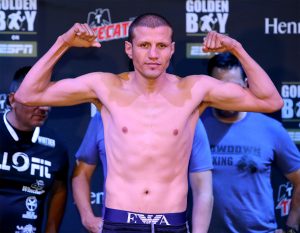


Curing insomnia with the Miracle Man

By Bart Barry-

Saturday at Nassau Coliseum, former home of the New York Islanders, Brooklyn “Miracle Man” Daniel Jacobs decisioned someone named Luis Arias on HBO. Jacobs won easily every round in a mainevent that left both men perfectly unscathed after 36 minutes of ostensible combat. I slept through it.

“Probably fatigue of one sort or another,” I told myself Sunday morning, “or perhaps the pernicious effects of age, but let’s show some professionalism here, kid!”

Then I sat down for the 10 a.m. rebroadcast and fell asleep again. Jacobs iced me in round 3 Saturday night and chloroformed me in round 7 of our rematch. There’s a devastating puncher for you.

Nothing wrong with Jacobs, really. He’s a very good fighter and a decent dude and well liked, most importantly, and’s learning to sell tickets with his new promoter, Eddie Hearn, who certainly does know how to do that – and for a discount on whatever of Jacobs’ purse Al Haymon still gets Hearn ought to offer a semester’s worth of lectures to whichever titular promoters Haymon’s PBC still employs and Golden Boy Promotions, too, who had first rights to Jacobs before the Dmitry Pirog incident and associated miracles (and they’re apparently linked; a novel pretext for Jacobs’ decimation by the Russian now gets unveiled with every fight: not only was Jacobs mourning his grandmother’s passing that weekend in Las Vegas but he also had cancer – though it wouldn’t be diagnosed for another 10 months and two prizefights; with Pirog safely retired there’s no end to a creative revisionism that could yet uncover a retroactive victory in Jacobs’ 2010 TKO-5 loss).

Let’s treat Hearn here for a spot, as certainly he’s the reason we got treated to Saturday’s fare and what Jacobs hagiographies HBO’s queuing for 2018. Hearn is now the most powerful promoter in boxing because Hearn owns promotional rights to the most powerful man in boxing, Anthony Joshua, the world’s undefeated, undisputed and charismatic world heavyweight champion. This year alone Hearn and Joshua have sold about as many tickets to two fights as PBC has sold since its inception. For many reasons, some merited and many not so merited, our beloved sport reliably goes where the heavyweight division directs it. That might read heretical to some youngish fans in emerging markets, assuming as they do little guys like Manny Pacquiao and Floyd Mayweather make the sport go, but it shouldn’t surprise any American who came of age during Mike Tyson’s reign or any European who just finished enduring the Brothers Klitschko’s domination.

Without Wlad and Vitali there is no such thing as K2 Promotions – which means we never meet Tom Loeffler, we probably know very little about Gennady Golovkin, and we sure as hell never take Abel Sanchez seriously. Unable to purse like Showtime these days HBO now endeavors to play a nifty game of promoter capture, seducing Hearn by showcasing (Jacobs’ word, not mine) whosoever Hearn signs to his new stateside label in the hopes Hearn will bring the most powerful man in boxing to HBO someday – though with the Justice Department meddling in the acquisition of HBO’s parent company last week one worries HBO will not be able to purse like Showtime for a while to come.

It’s good to see Jacobs benefit from all this corporation-to-promoter synergy. He has talent galore and he’s genuine in a way that shines through what inane hyperbole gets heaped on him. But all the squinting and barking of all the celebratory broadcasts of his career fail to make him truly special. Greatness is more than an accumulation of mediocrity, after all, and Jacobs’ professional record is a workable synonym for accumulated mediocrity. He blasted the pretender Kid Chocolate, sure, and showed GGG be overrated by any measure, too, but he also failed to do more than make Luis Arias a little nervous in 36 minutes of trying, and then there’s the aforementioned Pirog incident, isn’t there?

Nope, not letting it go, guys, sorry – I was ringside when it happened and stunned by its ferocity. It wasn’t just the exclamationmark ending, either, but the entire affair, bell to waveoff; it’s not the sort of thing that happened to a young Marvelous Marvin Hagler or Bernard Hopkins, and let this be a reminder that if we’re to suspend disbelief and entertain possibilities of Jacobs’ being a special middleweight we need remember there be aficionados old enough to know those guys, to remember them clearly, and hitch a ride on their standard each time we’re told to catch a new bandwagon.

Nobody wants to watch Jacobs go rounds with talkative nobodies like Arias, not on local access, not on free cable, and certainly not on a premium channel. Writing of which, with the exception of September’s wonderful SuperFly card, HBO’s broadcasts now feel stale, boring, behind the curve – same announcers saying the same things about the same graphics.

According to the network’s house scorekeeper Saturday’s showcase fighters won 22 of 23 rounds against their b-sides. That sort of mismatchmaking is tolerable, one supposes, if it’s three Hebrew Hammers – and yes, more of Cletus Seldin, please! – three times an unproven prospect thrashtossing a veteran, and even sort of tolerable if it’s three Big Babies – three times a cutiepie like Jarrell Miller threadbaring a giant – but not tolerable if it’s one time of Daniel Jacobs, a proven talent in his prime, practicing old combinations on a pillowfisted salesman like Arias.

It was personal, all the prefight trash Arias talked, we know, we know, which is one more mark against Jacobs: when he loses himself to beastmode and goes in on a little guy who’s pissed him off, allegedly, Jacobs punches badly if not Wilderly.

In the post-Money Era networks haven’t credibility enough to handpick athletes and storytell them to acclaim. Ten years ago we assumed a man was on HBO for good reason, even when he often wasn’t, and therefore due diligence commanded us get to know him, which is how we still recall silly facts like Andre Berto fought for Team Haiti in the Olympics. Those days ended with Mayweather-Pacquiao. We watched Jacobs fight Arias on Saturday because Jacobs acquitted himself surprisingly well against Golovkin in March, not because Jacobs survived cancer, and some of us, though no one writing this column, even may’ve watched yet another reheated retelling of Jacobs’ story in the last few weeks, but again, only because Jacobs made an entertaining fight in March.

Bart Barry can be reached via Twitter @bartbarry
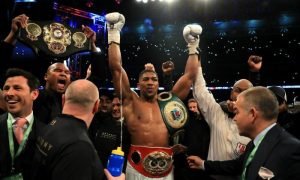


Brief, eyewitness accounts from the career of Jesus Soto Karass

By Bart Barry-

Late Thursday night on one of ESPN’s innumerable affiliates Dominican journeyman Juan Carlos Abregu beat up Mexican journeyman Jesus Soto Karass. The match would prove a good offramp for Soto Karass if he let it, but surely we know he probably will not.

Whenever I think of Soto Karass I think of Antonio Margarito, the star of the Siete Mares stable to which Soto Karass belonged for much of his career. Soto Karass was his own man, of course, but he was a poor-man’s Margarito to most of us. His career went as experts initially predicted Margarito’s would go – maybe wrangle an upset or two against overhyped contenders but certainly never attain a championship of his own. It speaks to luck th’t Margarito’s style, and perhaps his handwraps, found their perfect matches in Margarito’s physical prime while Soto Karass’ did not come till he was acceleratingly treadworn. Soto Karass was all attrition every time, and if you think that made him noteworthy on undercards comprising mostly fellow Mexicans, you’ve not attended many such undercards.

I was ringside for seven Soto Karass fights but not one time to see him fight. The first time I covered him, May 2006 in Fountain Hills, Ariz., he was 11-3-1 and drew with Manuel Gomez (28-10-1) in what must’ve been a “Solo Boxeo de Miller” main, but none of us was there to see those guys – local prospect Jesus Gonzales sold the tickets, Urbano Antillon went directly through Soto Karass’ older brother Jose Luis in the comain, and Mike Alvarado and Giovani Segura filledout the undercard in their eighth and ninth prizefights respectively. Antillon is the only fighter I remember that night.

Thirteen months later I was beside a ring in the parking lot of a Tucson nightclub when Soto Karass retired “Cool” Vince Phillips – the man who once stopped Kostya Tszyu and Mickey Ward two months apart in 1997 (guys used to fight that often men of that quality) – but that night I was more interested in seeing Mike Alvarado again. What I remember from that parkinglot was watching Telefutura’s Bernardo Osuna improvise an entire opening bit off a few lines scribbled on an index card taped to the bottom of his camera, and watching a broken Phillips beg for a postfight interview to announce his retirement in English on a Spanish-language broadcast that ran out of time and didn’t let him, which meant Phillips fought again and lost again, this time in Russia, 11 months later.

The first time I covered Soto Karass in a mainevent came in July 2008 at Hard Rock Casino in Las Vegas on the eve of Margarito-Cotto 1, and I remember no boxing from that weekend except Margarito’s bludgeoning of Cotto. Writing of Cotto, the next time I covered a Soto Karass match from ringside he was down the marquee, losing to Alfonso Gomez in the co-co-main of Pacquiao-Cotto, and more to the point in the enviable position of following “Son of the Legend” Julio Cesar Chavez Jr.’s decisioning Troy Rowland (result subsequently changed). I vaguely recall being impressed by Gomez a bit, and I verily recall the childlike enthusiasm we all had in the pressroom immediately after Pacquiao ragtagged Cotto: Manny’s going to fight Floyd next!

Instead Manny fought Joshua next in Cowboys Stadium, and when Manny returned to Texas in November 2010 to fight Margarito, himself returning from banishment, Soto Karass got sneaked-past by an undefeated Mike Jones, and I have a slight recollection of feeling disappointed for Soto Karass. Too, I was in Las Vegas the night Soto Karass got iced by Marcos Maidana, but I was with every other aficionado at Thomas & Mack to see Sergio Martinez barely escape Son of the Legend, not partaking of the Canelo sideshow at MGM Grand.

And I’m proud to say I was ringside for Soto Karass’ biggest and probably final victory when he got off the bluemat in round 11 to stop Andre Berto at AT&T Center in my adopted hometown of San Antonio. That was an attrition lover’s feast – as Soto Karass willed his way through Berto just after Omar Figueroa and Nihito Arakawa fortituded one another relentlessly for 36 minutes. Five months later, in December 2013, Soto Karass returned to Alamo City and got stopped by Keith Thurman at Alamodome in a comain whose memory was steamcleaned by what Maidana did to Adrien Broner immediately thereafter. Since then Soto Karass is 0-4-1 (2 KOs), though with two memorable showings against Yoshihiro Kamegai.

Thursday night Soto Karass was nearly returned whence he started, fighting on an afterthought Golden Boy Promotions card in the ballroom of an Arizona casino – though it bears mention the match was being judged by Roger Woods, formerly his state’s best matchmaker, and had Soto Karass gotten to the final bell at least one scorecard would’ve proved unimpeachable. The match did not get to the final bell, Soto Karass did not get there, falling overknee forward onto a right uppercut in round 8 then getting dropped. Soto Karass rose unconsciously, proof such things are habitforming, nodded to his cornermen he was continuing, then raised his hands unbidden overhead to assure the ref he was able. The end came pretty quickly after that and ugly.

One suspects such an end be too symmetrical for Soto Karass to retire. Thursday was a 10-rounder. Next year’ll likely see him lose an eightrounder and so forth till the purses become too tiny to bother.

Bart Barry can be reached via Twitter @bartbarry


Joshua-Takam-Edwards: A professional showing all round

By Bart Barry-

Saturday in an enormous Welsh rugby stadium heavyweight world champion Anthony Joshua beat Franco-Cameroonian Carlos Takam by a round-10 referee stoppage whose referee itched to stoppage it from just about the opening bell. Faced with such odds on short notice Takam made a fine showing for himself, and Joshua didn’t do badly either.

All three men did their jobs Saturday in Great Britain. Joshua sold a whole lot of tickets and punched a gatekeeper often enough to please ticketbuyers. Takam kept the gate, fighting like a proud man who knew victory was likely as a miracle and th’t short of a miracle a dignified showing’d further his career further than alternative approaches (Deontay Wilder’s nowhere near crazy as he swings and knows better than to cross the pond and get chloroformed by a fighter who knows how; Takam’s got a handsome 2018 payday awaiting him in Alabama). And referee Phil Edwards delivered the stoppage everyone wanted to preserve Joshua’s 100-percent knockout ratio – even going so far as to leave a white towel hanging off the cornerpost midway through the match, lest the Takam corner miss its cue.

With Wladimir Klitschko retired it’s exhibition matches far as the eye can see for Joshua, and so a new sort of judging criterion is required for American fans who can’t warm to Joshua much more than we warmed to Klitschko. Helpfully Europeans fill stadiums with an inexplicable enthusiasm that is nearly infectious. One needn’t be a publicist or promoter to have a rooting interest in the health of our beloved sport’s ecosystem; the optics of 78,000 folks in a stadium in Wales to see a prizefight, or even half that, something no American prizefighter can give us, makes a spectacle enough to prompt popish coverage enough to spark a few American kids’ enthusiasm enough to lure them off a popwarner field or littleleague diamond into a boxing gym, which American boxing needs quite desperately, kids who learn to box instead of men who wash out their preferred sports then give boxing a try after they’re a decade too old to move better than mechanically.

Writing of mechanical movement and Klitschko and Joshua, it’s Joshua’s movement that allures in a way Klitschko’s never did or even approached doing. Whatever his record Wladimir Klitschko generally fought like a skittish robot programmed to call on three offensive scripts that went jab.jab.jab.jab or jab.jab.jab.hook or jab.jab.hook.cross. Everything else Klitschko did in a fight, leaping backwards and setting his chin 60 inches behind his left fist and armswrapping and alternately chesting shorter opponents’ foreheads or pattycaking their lead hands, was done to preclude combat; once he had a much smaller man properly attritioned Klitschko would use these tactics tactically and maybe even offensively but they were not born of aggression.

Where Klitschko often moved in championship prizefights like a scared giant Joshua moves like a fighter – like he wants to measure accurately his gifts, tangible and otherwise, not collect meaningless defenses like a statistician then sue posterity with accumulated evidence. Joshua steps with the jab, pistonstroking it outwards from his chest. By keeping the leadhand home Joshua does these two things among others: He gives an opponent a running start at him Klitschko would never allow, and he generates more force. In other words Joshua sacrifices a quotient of his safety to endanger his opponent more fully; that’s the proposition of a fighter who has immense athleticism, as opposed to an immense athlete who happens to fight.

Early in Saturday’s contest Joshua did something else interesting: He measurejabbed over his shorter opponent’s head. Knowing Takam’s only realistic chance at progress was lowrushing charges Joshua encouraged Takam to get lower still, the better to impale Takam on an uppercut. This approach proved unwise risktaking by Joshua as Takam had seasoning enough with taller opponents to navigate his way round and inside and drive his head square into Joshua’s nose, which bracejolts you with pain no matter who you are.

It brought an unlikely association with Chris Byrd, of all past heavyweights, and an infighting drill he once mentioned and some of us tried – the tire drill. This meant setting a truck tire on the floor between two men and having them spar with one foot in it. Tire drill favored the shorter man, or at least the lower man, as head collisions were inevitable and you wanted the top of your head being the point of impact, rather than your chin or nose. A couple of us got to bleeding very quickly, and a trainer cancelled the tire drill hundreds of hours of practice before any of us could do a passable Chris Byrd.

Broken nose or otherwise Joshua spent the rounds after he got bracejolted by Takam’s head punching Takam very hard. Joshua throws his punches very well, and he commits to them, snapping his hips at the target. Critics of Joshua, including one Bronze Bomber, tweeted on his stamina. At no moment was Joshua in danger of losing a round much less the match, though, so how bad might his stamina be? Joshua likely carries too much muscle in the ring – and how he attained and maintains that muscle, you can bet, will be the primary reason Deontay Wilder chooses to say he’s choosing not to fight Joshua, loudly hiding from Joshua behind VADA approval the way Floyd Mayweather hid from Manny Pacquiao with USADA, and probably just as disingenuously – but in this current era of heavyweights no opponent is going to stay so busy Joshua can’t keep up.

After all, how many aficionados can even name 10 heavyweights these days? I’m going to try: Joshua, Wilder, Povetkin, Takam . . .

Bart Barry can be reached via Twitter @bartbarry