In real time: Wilder bludgeons Duhaupas

By Bart Barry–
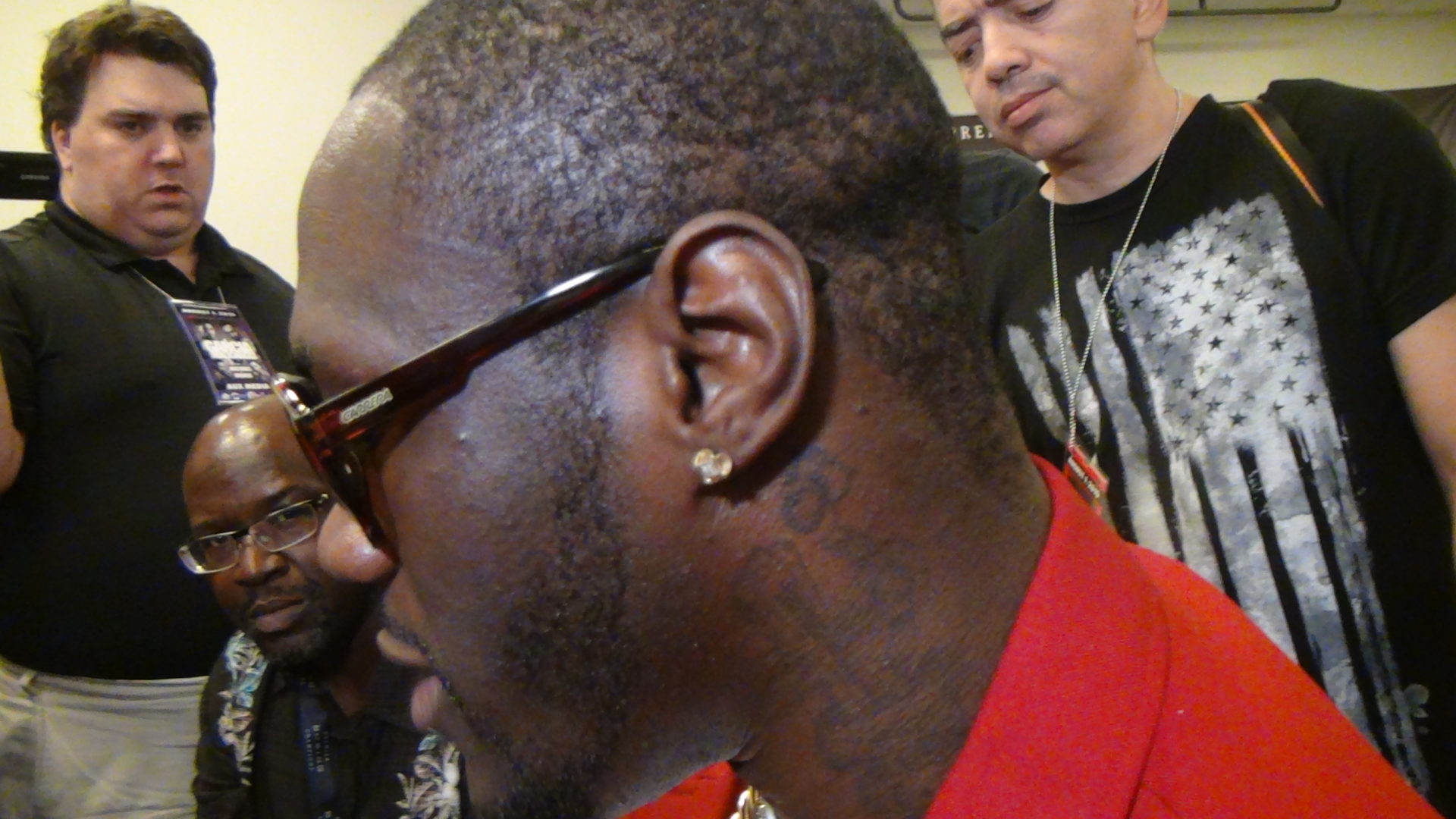
Deontay Wilder

Saturday in Birmingham, Alabamian heavyweight Deontay Wilder brought la ruine to Frenchman Johann Duhaupas, stopping him in round 11. What follows is a transcript of my thoughts during the match:

Wilder is so tall. The Alabama fans seem uncertain when to cheer. What to do, what to do: Rush Wilder to the Klitschko cashout quickly, knowing any top-10 heavyweight might end the Wilder fantasy before you liquorstore that winning ticket, or continue googling “big tough guy France Sweden Belgium Netherlands Norway Ireland Scotland Switzerland” and see how enduringly gullible Alabamians are? Probably the first time attending a fight for most of them. Like American tourists watching the gold-medal hockey game, Canada vs. USA, in a Puerto Vallarta bar. The French guy is stretching in the corner like a nervous plumper in the weightroom his first day, that odd, shoulders-like-scissors thing they do just before their buddy makes them move weight with muscles that have nothing to do with shoulders or scissors. Wilder is tall and tall. But if human cognition is about pattern completion, not pattern recognition, that works as a decent model for explaining how machine learning stalled so long ago. Like so many guys in this dreadful era, Wilder can attack or defend, but his transition between the two requires a hanging, empty space wherein his brain audibly changes settings. Maybe, like that British art essayist posited about the appeal of Edvard Munch’s paintings, what people like most about Wilder is an abiding belief that, if they were tall and violent, they, too, could be WBC heavyweight champions. Could Klitschko stop Wilder in one round? one minute? The Frenchman is actually touching Wilder here. But if Wilder can hold on to the belt, maybe post a decision win against Alexander Povetkin – goodness, that feels unlikely – and then cashout against Klitschko in another three years, when Klitschko is too old to hurt him too badly? The thing about entropy is that most calculations treat its potential, not its existence. How does Wilder not break his right hand lashing it on the tops of guys heads? Too facile a metaphor, that one. NBC has conceded the entire cable model with this well-functioning app; why would anyone pay for cable now that live sports look this good? Wilder’s defense is that he’s tall. There he goes whipping rights and lefts. Most of his offense, too. Bless Wilder’s heart for not having a plan b, or even a plan a+1/2; he’s going to wing those punches, and if the opponent’s guard or head gets in the way, all the better, a direct hit to the chin is quite unlikely, but there’s something attractive about his singlemindedness. Wilder is confident. When aficionados preamble through a Wilder speech like “He may never be great, but”, it’s sensible as a 5-foot-6 45-year-old who hasn’t played basketball since junior-high gym class saying, “I may never make it to the NBA, but”. An American Olympic medalist who is good looking, athletic and 6-foot-7: it sounds so compelling, doesn’t it? Think what a boost Vitali got from losing to Lennox Lewis. And yet, by and large, Wilder is considered a fraud by aficionados. That loss changed the world’s view of the Klitschkos. Wilder’s confidence is a function of his being undefeated. He has the same Olympic medal as Floyd Mayweather, and he saw Vasyl Lomachenko win gold that same week, so he knows what good boxing looks like enough to know he isn’t it. All that was then required of Wlad was surviving Samuel Peter, barely, and the Klitschko legend blossomed – in Europe at least. In defense of the PBC, if Main Events had an Alabamian fighting before a hometown crowd, wouldn’t we be making greater allowances – talking about competitiveness and sturdy matchmaking with unknown European jewels like this Frenchman? If human actions are governed by mental processes additional to self-interest, if something like, say, altruism actually fires and clears the action threshold, what does that do for empathy? Is empathy even possible when we add more than self-interest to our analyses of strangers’ behaviors? Must be the inauthenticity thing again. The screen splash, at least, read “title holder”, not champion, and that feels like an altruistic concession to aficionados. This person across from me is not crying because she’s sad; she’s crying because, in causing me to look at her she averts my stare from a different woman at the bar, one she knows to have filed a paternity case against a different guy she met at a different bar, all the while signalling with her tears a willingness to accept the apology just offered by the woman, her sister maybe, seated beside her – is there any way, even with so much detail, one might empathize with her? “Duhaupas bomaye!” – leave it to @JohnPaulFutbol. Wilder’s secret to healthy hands is never landing with the same knuckle twice. His inaccuracy is his self-preservation, the way someone who doesn’t know how to type, no matter how many thousands of hours he spends at a keyboard, never develops carpal tunnel syndrome; his incompetence at doing something the proper way protects him from what ailments befall competent performers. A ratings victory. Watching a heavyweight title match at a bar on my cellphone: that feels apt – viewing on a mobile device with a tiny screen only because it’s convenient.

Bart Barry can be reached via Twitter @bartbarry


Column without end, part 12

By Bart Barry–
2015-08-17 14.10.49 (360x640)
Editor’s note: For part 11, please click here.

*

“Paradoxically, it is in the core administrative and entertainment districts of European cities, be it Frankfurt or Barcelona, where urban marginality makes its presence felt. Its pervasive occupation of the busiest streets and public transportation nodal points is a survival strategy destined to be present, so that they can receive public attention or private business, whether it be welfare assistance, a drug transaction, a prostitution deal, or the customary police attention.” – Manuel Castells, The Rise of the Network Society

There is an interesting and advisable thing that happens to one’s view of what manufactured boisterousness accompanies most prizefighters when he considers it more a survivor’s adaptation than an anxious person’s nervous tick: It becomes nearly admirable, not merely tolerable. Most interpretations of outsized dress and behavior pass a moral calculation on their subjects, one that posits a victory of others is in feral fiesta – as though the subject’s involuntary participation in life’s voracious zerosum competition for resources caused him loudly to remind the vanquished who their champion was. But what if such appearance and behavior are better explained as a rational adaptation made by a person who realizes, from an early age, while some forms of attention are perilous, invisibility is most perilous of all?

Looked at that way, the PBC’s partial sanitation of its fighters represents yet another way this venture-capitalized boxing experiment may not succeed in the long term. It is a symptom of the same malady, which is inauthenticity. What is much worse than seeing a caricature like Adrien Broner, gold teeth sparkling and exaggerated self-regard broadcasting, in a brutal affair with Marcos Maidana, is seeing a partially subdued Broner whacking away at someone who hasn’t a chance to beat him (though Broner’s want of ring generalship makes him a lesser example of such mismatchmaking than most of his a-side coworkers).

Writing of which, the upcoming fight schedule is abysmal. Prizefighting is become a pursuit drained of its spontaneity. What limited suspense remains is the suspense born of a question whether the favorite will keepaway his way to a dull decision, or apply himself and take his hopeless opponent’s consciousness, or in taking the defenseless man’s consciousness, render him a candidate for emergency medical treatment right on the blue mat itself. It is one thing to see two evenly matched athletes war to an attrition that leaves one ruined evermore. It is something else entirely when that sort of thing results from matchmaking that ensures nothing competitive happens from the opening bell.

The PBC deserves much of the culpability for this current schedule, yes, but it is not alone. Aside from Saul Alvarez’s match with Miguel Cotto, and perhaps Timothy Bradley’s match with Brandon Rios, is there a single upcoming main event this fall in which the b-side’s trainer or manager, even, expects his charge to compete? (And if you’re thinking David Lemieux right now, you’re one of those folks an American circusbarker once said is born every minute).

Back to boxing as metaphor, then, and the small network that governs prizefighting and employs what complexity all networks do. The prizefighting network comprises nodes that act on the structure that contains them, changing the structure in variable ways that force all other nodes to make changes that also change the structure that contains all of them: A variable number of variables influencing other variables in varying ways at variable rates. The prizefighting network, today, is more interesting than the fights it promotes, and that is not an aesthetically favorable development.

What the PBC understands that its predecessors, and its predecessors’ collective adherence to American anticompetitive laws, too, didn’t is this: capital rewards stability more than democracy or parity or vitality – three things our oncebeloved sport had so very much more of in decades past. The PBC, by making a league of itself like the NFL or NBA, presently succeeds in suspending the free-agent model that has governed prizefighting for as long as anyone can remember: Free agents promoting free agents managed by free agents. Television, boxing’s detriment and enabler, makes possible this gambit.

A few years ago Top Rank’s wholly outmatched leader Todd duBoef feinted at an idea he called the “brand of boxing” – a vision ever doomed by labor concerns no promoter wanted to tackle (as the NFL both knows and increasingly learns anew). Apparently the PBC’s Al Haymon, at least, was listening; while duBoef and Oscar De La Hoya played what can best be described as an HBO-capture game, pleading with boxing’s largest benefactor for a monogamous relationship, Haymon set out to seduce numerous other television networks the American way – with borrowed money.

If Haymon’s ploy works it will be because he thought so much larger and moved so much quicker than his competitors (think what a big deal Bob Arum made about Pacquiao-Mosley infomercials appearing on CBS in 2011, while just 4 1/2 years later, Haymon now casually employs NBC and ESPN as his distributors). There are a few erroneous assumptions in Haymon’s model – specifically fighter talent (deteriorating, not constant) and domestic interest in the sport (deteriorating at a rate that is accelerating, not constant) – but at least one of those might be overcome by treating HBO and the promoters it employs as a farm league to develop tomorrow’s Eurasian fighters for PBC contracts. Or maybe that, too, is smallminded imagining.

What the PBC lacks in fighter development it could remedy with an acquisition of Top Rank, and what the PBC lacks in a public face it could remedy with an acquisition of Golden Boy Promotions. Realizing this, or perhaps not yet, both Top Rank and Golden Boy Promotions are now engaged in legal battles with the PBC that are, almost definitely, existential struggles for all three entities. For the next year or so, the competition and cooperation between the promotional nodes of the prizefighting network will be more dramatic and suspenseful than that network’s actual products. As consumers, we, too, shall adapt . . .

Bart Barry can be reached via Twitter @bartbarry


Good riddance, Floyd

By Bart Barry
Floyd Mayweather

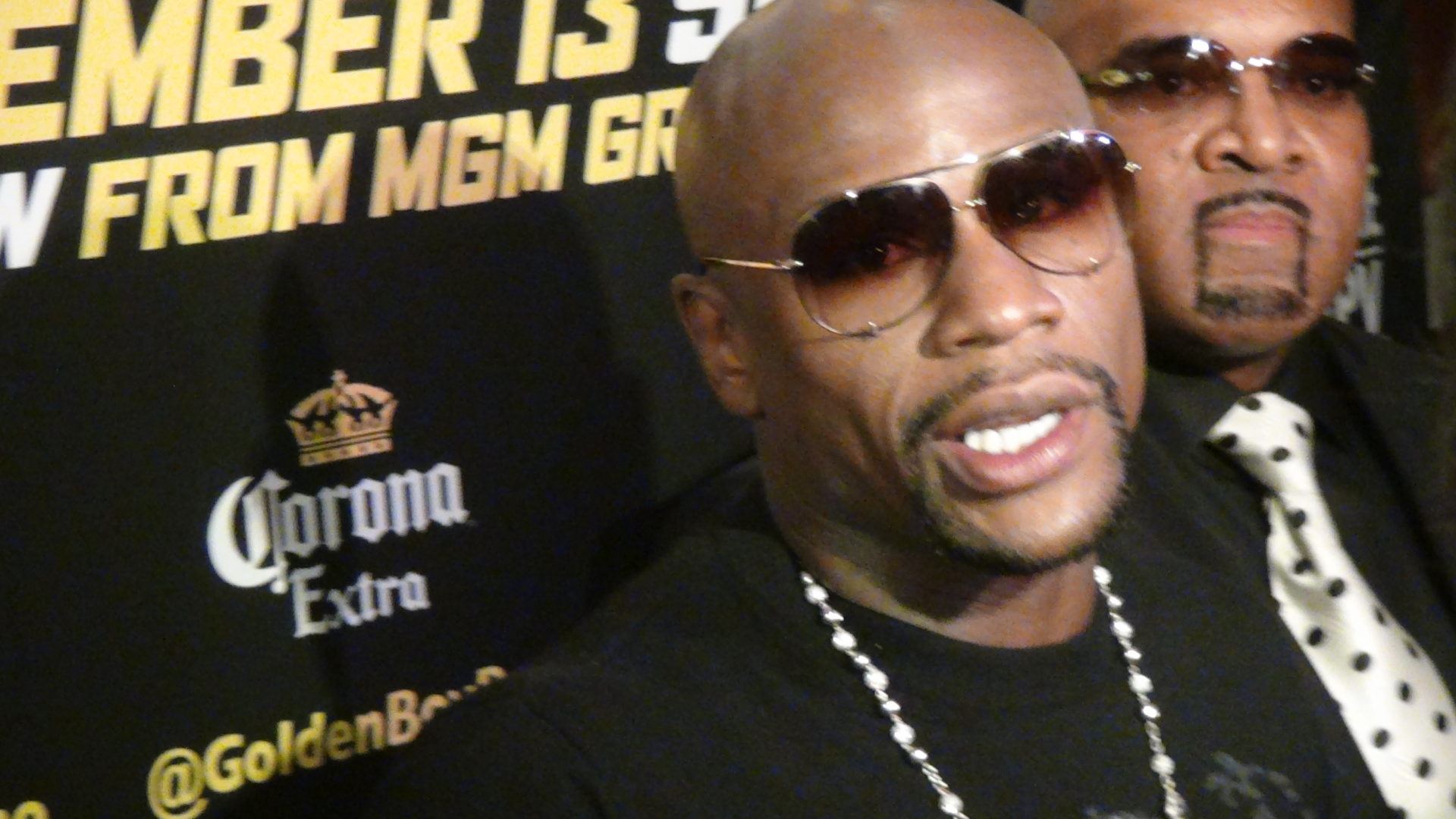
Saturday at MGM Grand Garden Arena, American Floyd Mayweather decisioned American Andre Berto in a historically awful match Mayweather promised will be his last. By the late rounds, Berto, as near to an infinity-to-one underdog as pay-per-view has yet uncovered, compromised Mayweather’s attention span long enough to strike him cleanly perhaps a half-dozen times, and that was that. Berto called the fight “great” immediately after Mayweather called himself “great” immediately after another Las Vegas crowd booed itself hoarse through another final round of another Mayweather fight.

As he said himself after the absurd session with Berto: Floyd Mayweather is the best ever, just like Jim Gray – the man Showtime employs to hector punchdrunk fighters. Hell, in honor of the moment, we should go a bit further: Floyd Mayweather is bester than Jim Gray – who’s not even average. In fact, in a competition between the two record holders, Floyd for being the nth fighter to win 49 fights in a row and Gray for being the first interviewer realtime-bounced from World Series coverage for being a jackass, it’s not unreasonable to declare Floyd altogether bestest.

Repeatedly in that postfight flirtation, Mayweather referred to his records, plural, as opposed to his record, 49-0, which is his record the same as tens of thousands of fighters have their records, 0-1 or 27-3 or 173-19-6 (108 KOs) – Sugar Ray Robinson’s, for whatever it’s worth, which is probably quite little to The Money Team, no matter Robinson’s having well more than twice as many knockouts as The Best Ever has victories – and that might have prompted Gray to ask Floyd about his other records, but never mind. Floyd has boxing records, plural, in the equivocating, prepositional, SportsCenter-sense of the word: Floyd retires as the greatest fighter, to call Las Vegas home, after relocating from Michigan, while fighting in the last 25 years, after having been taught by his father, during a troubled childhood, before winning an Olympic bronze medal, without having beaten a single great fighter in his prime.

Someday, after Floyd is forgotten, a thing that will happen with lightning rapidity in the next decade, an enterprising young sportswriter in the year 2050 or so will decide a biography of Floyd is just the thing – and by then biographies will probably be virtualreality videogames in which the reader lives the subject’s life for a day or two – and he’ll marvel at his great good fortune at being the first man to have an idea like committing some years of his life to preserving the official record of a flamboyant American athlete who wore a gaudy cap with “TBE” on it (and whose father wore a Canadian-themed “TMT” hat in his corner during the final match of his career for reasons that, however unknown and unimaginable, somehow feel wonderful). What that ambitious young author will find on digifiche at his local bibliotech is a lack of quality writing about Mayweather that is disproportionate to Mayweather’s record.

“Surely,” he’ll think, “a black man beating everybody he fought and making hundreds of millions of dollars while calling himself ‘Money’ must’ve inspired soaring prose and an insight or two about the human condition.”

Actually, no. Actually, no, not at all. There were, are, plenty of excellent writers plying the craft during Mayweather’s career, but not one of them would call anything he wrote about Mayweather his life’s best work. The passion talented writers feel for Mayweather is akin to the passion Mayweather feels when seeing a new zero on the end of his savings-account balance: a jolt of energy followed by thoughts about more substantial things.

For there is something insubstantial about Mayweather and his record and his legacy and the current incarnation of the sport he now leaves. When I endeavor to think about memorable moments from his career – as I hope, after this column, to honor his retirement by never writing about him again – very little comes to mind. I thought about it Saturday night, and had an idea, and now it is Sunday morning, and I cannot remember even that idea. Let’s go freestyle and see if it comes: He bought some cars and won some bets and didn’t knock-out anyone but Victor Ortiz and said the same thing over and over and over and – wait, yes, now I recall.

It was during his award-winning (another record!) autodocureality-thing he did for Showtime during one of his forgettable promotions, and no matter how much money he flashed or slogans he shouted or hangerson he fluffed, always, in seemingly every scene, there was someone, and quite often most everyone, asleep in the peripherary. There would be Floyd, racing hither and yon round his Big Boy Mansion, riding his Big Boy Elevator, bouncing on his Big Boy Sofa, ordering his Big Boy Burger, courting Big Boy Bieber, and inevitably, someone in the shot would be acting sleepy. You can’t buy a personality, the subtitles read, and evidently Floyd hasn’t one.

I remember this too: I interviewed Floyd once – after waiting hours in the South Texas heat for Floyd to bless us, each journalist was allowed to ask Him one question – and when I asked about the epidemic of African-American incarceration by a for-profit prison system, Floyd told me he likes to focus on the positive because it’s not a black-and-white thing. It wasn’t just a thoughtless answer to the question I actually asked him; it was a witless answer to whatever voice played in Floyd’s head while I spoke. My interview with The Best Ever ranks about 93rd or so – give or take where Saturday’s match lands on an entertainment spectrum for anyone who’s been paying to watch boxing since Mayweather turned pro.

Since Floyd Mayweather asked the public to rank him immediately after his final match, here goes: Top 10 talent, Top 25 accomplishments. The end.

Bart Barry can be reached via Twitter @bartbarry


Mayweather-Berto: Nobody cares

By Bart Barry–
Floyd Mayweather
Just in time for Mexican Independence Day weekend comes a showdown to warm cada corazon mexicano: Floyd Mayweather, an American from Michigan, versus Andre Berto, an American from Florida who fought for Team Haiti in the Games of the XXVIII Olympiad. Mayweather-Berto lacks an ethnic angle, yes, but it is fully bereft of aesthetic interests, promising in its awfulness to be an apt farewell to Mayweather, who has scheduled his next retirement for Sept. 13.

Saturday is the final fight of Floyd Mayweather’s career, and I know it’s this week because I just brought up BoxRec and checked; so little has appeared on Twitter, my exclusive source for boxing coverage, I read a book about architecture in the last seven days and visited an art museum in Austin, to prepare for another boxing column about anything but boxing, since vilifying the efforts of the PBC anymore feels lazy but a weekly writing habit is, as my friend and colleague Norm Frauenheim long ago put it, good discipline. It brings presence, and that is ever a subject worth treating.

As Mayweather finishes his career, or says he’s about to, he turns a trick few before him have: He leaves the sport noticeably worse than he found it. He has not loved the sport for about a decade, one calculates, and he leaves the sport at least a decade from hopefulness. Whether Manny Pacquiao’s legion of Filipino converts will stick around after Pacquiao retires for his first time is doubtful, but this is not: No one who came to boxing because of Floyd Mayweather will remain a moment after he leaves.

The PBC, an outfit whose leader achieved credibility in boxing through his association with Mayweather, has improved exactly none of its charges and will not either; Mayweather is the last Mayweather because the PBC assures no one who approaches his talent will again encounter sufficient coaching or matchmaking to improve him. For whatever else he became, Floyd was a fighter raised by fighters before he was a self-aggrandizing buffoon. Today’s PBC prospects begin as athletes and become self-aggrandizing buffoons at high speed, often accelerating at a rate that denies them even summercamps as fighters.

Some words now about Mayweather’s moral deficiencies, or more appropriately, the words of others fixated on Mayweather’s moral deficiencies. Floyd Mayweather makes his living by striking other halfnaked men with his fists. Has it been so long since Charles Barkley wisely declared he was not a role model that we’re back to demanding character of athletes, even those who hammer other men’s faces (and most especially when awareness of oneself can be raised by raising awareness of Mayweather’s misbehavior)? As Jimmy Tobin, an excellent writer and thinker on and off Twitter, mentioned recently, the bandwagon for Mayweather-Berto is apparently so slight moral grandstanders feel unsafe chancing a spot on it like they did in May, lest they slip into obscurity’s cruel morass, their very important message ignored by the good people who tsk loudly at reality TV.

There’s something both reactionary and juvenile about adults’ heartfelt opinions concerning Mayweather’s domestic-abuse convictions. Americans really don’t care, and before anyone takes to his hind legs to rebut that assertion, he should ask himself how much boycotting of the Mayweather product has been done in the name of Floyd’s convictions. There’s probably nothing serendipitous or causal about the growth shared between Floyd’s checking account and criminal acts, but in the face of all evidence, arguing Mayweather’s criminality helped him amass his fortune is strikingly more reasonable than saying it was a hindrance.

And again, so what? Mayweather changed his nickname from an aesthetic concern, “Pretty Boy”, to an amoral one, “Money”, and made himself an American icon – at least in the 15 minutes’ sense of the word – reducing his dreadful promotions to shopping sprees and his dreadful prizefights to more-dreadful prizefights, and still we participated because, well, we were told his talent and fights were historic happenings. Floyd’s perspective on morality was better than his detractors’, ultimately, because it was born of the one place in his life where he was above-average, much less exceptional: the prizefighting ring – where one’s improvisations are judged instantly and one’s errors are exploited milliseconds after their detection. There is, in other words, no time in a prizefight for the obnoxious moralizing that attends coverage of Mayweather between his matches; in a prizefighting ring, life’s Prediction –> Feedback loop reduces itself to a crystalline form like this: Too many predictions make you oblivious of feedback, and then you’re unconscious, and too much reliance on feedback makes you a heavybag, and then you’re unconscious.

Mayweather’s crude antagonism of those who resent his fortune will undo his fortune soon enough, as everyone knows, and then what will linger are the aesthetic judgments adults should have levied against him all along: Floyd’s promotional schtick is, like his fighting style, insipid. No entertainer in sports history has made more money boring more people than Mayweather. Saturday’s match with Andre Berto, a man who is 0-2 against men Mayweather has already humiliated, and 0-1 (1 KO) against a man, Jesus Soto Karass, not even Mayweather had the chutzpah to make an opponent, promises to be truly awful.

In this, his next last fight, Floyd’s professionalism and pride, ironically, stand as the best arguments against making a pay-per-view purchase: Floyd is far too good to lose to Andre Berto by accident and far too proud to throw the match on purpose.

Bart Barry can be reached via Twitter @bartbarry


Violent middlings: Santa Cruz decisions Mares

By Bart Barry-
leo-santa-cruz
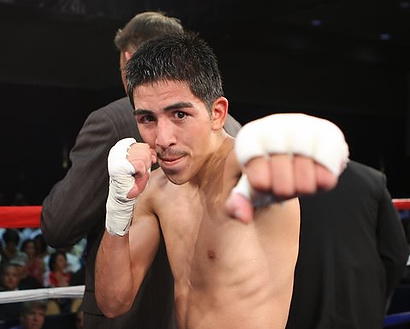
Saturday on ESPN in a PBC main event that happened at Staples Center, Leo Santa Cruz decisioned Abner Mares. The fight was heavy with volume and light with quality, as the fighters winged blows in a blur of shoulder striking, head clashing and guard peppering. It was not a great fight but easily the PBC’s greatest fight.

There was an immediate association that happened in my mind as the bell rang on Saturday’s main event – an association strained through the Battle of Los Angeles idiocy and fact nether Mares nor Santa Cruz is very good – and it was one of small Mexican pugilists plying their wares before a gritty, blue-collar-Mexican crowd in Southern California. Where did I feel this before? It was ringside in Carson, Calif., 7 1/2 years ago, when Israel Vazquez and Rafael Marquez made the third fight of what might be called a “natural trilogy” the way a natural hat trick happens when a hockey player scores three goals in a row without another puck from another stick going in the net; Vazquez and Marquez fought each other three times in 12 months, finishing their trilogy with their very best fight. Saturday’s match did not suffer the comparison gladly.

There is something second-rate about our sport now. There has not been a better or more justifiably anticipated main event broadcasted by the PBC yet, and yet. From the opening bell of a fight that felt more like 114-114 than 117-111, the scorecard two judges and the PBC’s Teddy Atlas happened to have, Mares demonstrated he was the fighter of greater range, while Santa Cruz proved he was taller. That was it, really. Santa Cruz, the telecast told our lying eyes, was much busier and more accurate, and yet it did not feel that way. Perhaps it was expectations rendering us victims yet again.

Years ago, if any PBC viewer remembers, Santa Cruz was our next Antonio Margarito. What Shane Mosley discovered about Margarito no one before him quite had was this: Margarito could not fight going backwards and wasn’t particularly astute, either, with an opponent on his chest, in his kitchen, smoking, as the late Joe Frazier perfectly had it, where he lived. Margarito had a crossover move, bringing his right foot along with his right hand along with his right foot, closing his opponent’s front shoulder, then opening him up with a fully leveraged left hook. One who waits for Santa Cruz to perform a similar feat of footwork will grow old with anticipation.

Santa Cruz is tall and busy. He might learn to do something with his right uppercut – a few more of those Saturday might’ve shortened Mares’ evening considerably – but he has not yet, and he has not improved at all, much as the PBC telecast assured us he has. Atlas, despite his dogged repetition of every insight six and seven times, detected immediately the bizarre habit Santa Cruz has of shaking his right hand like it’s broken. He telegraphs punches, somewhat, but expresses anxiety more so. It’s the sort of habit a fighter can form in the boredom of padwork or bagwork, and it’s not Santa Cruz’s fault. But where the hell are his trainers? Do they think it’s charming or marketable or a habit they might monetize like Canelo’s fiery coif?

Atlas’ insistence Mares should be doing something with Santa Cruz’s tell, though, was a bit misplaced. Santa Cruz still had his twitching hand in a position from which he might block a left hook, especially one hurled by a fighter having to cross as much terrain to his chin as Mares did. Mares used Santa Cruz’s nervousness properly; don’t get hit with the hand he’s shaking at me.

Mares fought a better match, altogether, than two judges believed. That Santa Cruz walked to the ring accompanied by the son of manager Al Haymon’s henchbuffoon indicated Mares would need a knockout to win, and Mares, to his credit, went looking for one, insisting from the opening second of the match Santa Cruz was not in his class as a fighter. That was true, yes, but Mares, at 126 pounds, is eight pounds from his best division, and he didn’t have a punch, left hook or righthand counter, that much as dented Santa Cruz.

Just because Mares can no longer make bantamweight by no means makes him a featherweight. But Mares was the gamer man Saturday. He fired back when fired upon, he reacted better to being struck, he did not retreat unless strategy, as opposed to doubt, mandated it. Mares was much better at 118, too, than Santa Cruz is at 126.

Which was still not that good. Mares won a close but fair decision over Vic Darchinyan three years after Nonito Donaire iced the Armenian and a year after Joseph Agbeko decisioned him. Darchinyan, past his prime and a weightclass or two too heavy, nevertheless gave Mares a stern test. Mares then sneaked past Agbeko, fouling him repeatedly, and when he won their rematch, and Showtime needed a house fighter from Golden Boy Promotions to anoint, Mares was launched as a shooting duper superstar. Which he was not fit to be. Soon enough, an ancient Jhonny Gonzalez put the lie to the Mares machine, and if Gonzalez’s left hand didn’t do it, Mares’ shameless avoidance of a rematch with the belligerent old Mexican sure has.

People boo Mares, and they’re right to, but thinking lowly of Mares does not, through some law of transitivity, consign one to opining highly of Santa Cruz. That’s the bad news. The worse news is, able now to abscond with a reputation, if not a particularly meaningful piece of WBA hardware, Santa Cruz has no incentive to do anything more than make semiannual PBC defenses of his new title, his skillset deteriorating steadily until the day Al Haymon signs Guillermo Rigondeaux and harsh reality, wearing dark Cuban knuckles, raps upon Santa Cruz’s hardly won Los Angeles door.

Bart Barry can be reached via Twitter @bartbarry


Column without end, part 11

By Bart Barry
bart image
Editor’s note: For part 10, please click here.

*

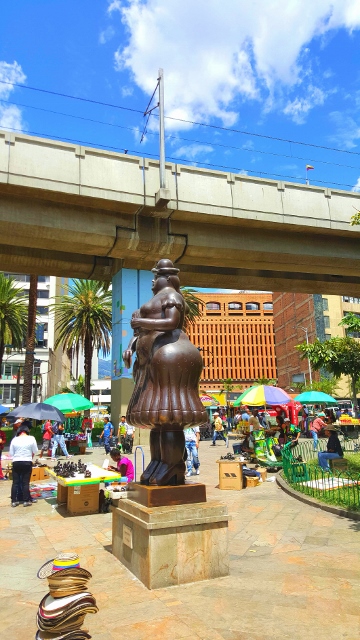
BOGOTA, Colombia – This Andean city hasn’t Medellin’s organization or courtesy but a more amiable climate and what inherent formality nations’ capitals enjoy by default. The distance from here to Medellin, Colombia’s second most-populous city, is about 400 km, a distance whose impossibility of terrain is best illustrated like this: You can fly there in 30 minutes of airtime or drive there in about 480 minutes. The cities’ populations regard one another more like motorists than aeronauts, each describing the residents of the other city the way a Californian might describe a Russian, not an Arizonan.

Colombians are known for their eloquence, which may be why nearly every Colombian one encounters, however briefly, fancies himself a Spanish professor, correcting tiny details of pronunciation and grammar other native speakers, whether Mexican or Argentine or even Spanish, cordially overlook. That quickness to correct, though, betrays pride more than arrogance; no one’s face illuminates more grandly when hearing a stranger’s high appraisal of his country than a Colombian’s.

For nearly two decades synonymous with every ill effect of the narcotics trade, today Colombia, far surpassed in reports of narcoterrorism by Mexico, experiences an overdo cultural renaissance sure to be followed in time by what tourism tracks rumors of inexpensive exotica – something Colombia does excessively well. Nothing holds constant in a complex adaptive system, of course, so Colombia’s rebirth will eventually bring maturity and stagnation and perhaps a mortal return to whence it came, sure, but in the interim it merits celebration for what it is in the present, and that is a lovely, hospitable place to visit. And anyone who reviews the history of South America, 1510-1810, the singular depravity of the Spanish conquest, realizes without delay how miraculous are tranquil moments like the ones Colombia currently enjoys.

Touristland, the world over, is the same place: “La zona roja” in Medellin could be Las Vegas could be Puerto Vallarta. Time in Touristland, a place of ennui nearly always removed from the messy vitality of its city’s heart, if not its base, renews nothing so much as one’s commitment to not-travel where he is not conversant in the language of its people.

Whether via an iPhone app or a stereotypical and incessantly repeated plea for “anyone here speak English”, persons who travel to places whose languages they do not speak miss much of the most-edifying part of travel, and that is navigation. When you do not speak the language you go where the authorities direct you, whether those authorities are guides or signs or tourist-friendly maps. You make inane requests of locals for “someplace no tourists ever go” – as if any sane local would send a tourist to foul somewhere he goes to escape tourists. There is a visual part of travel that can be satisfied without speaking any language but English – museums and natural artifacts and monuments and such – and those shouldn’t be discounted, but the people and their quirks and their personal versions of their countries’ histories, every bit fallible as your opinion of your country’s history, are where the greatest riches are mined. These riches, too, include the natives’ true opinions of your country, not the cliched “ees bery nice, my fren” spouted mindlessly at customers, but the sort of attentive criticism that provides what contrasts compose the meaningful stock of a durable identity, often far removed from fragile patriotic delusions.

We don’t know what we don’t know, and few things are more futile than chancing the argument above: Those who travel the world with U.S. passports and a command of only English do so under the conviction they are seeing the highlights of each place they visit – nine countries in eight days! – and that conviction is both unshakeable and leavened by their financial means, invariably greater than many of their countrymen’s, as well as a large majority of Americans unfit to challenge them for being bereft of even a current passport. But this is a column that may opine as it wishes; if you have a dissenting opinion on the matter, a witty and original thought you feel compelled to share, write your own column.

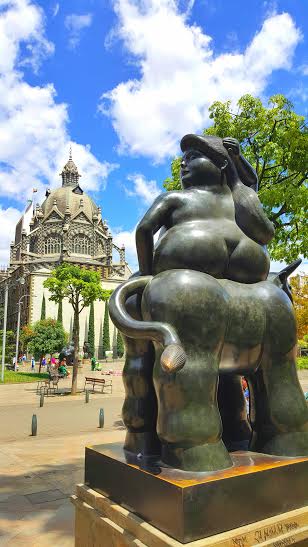
About the museums in Colombia: native son Fernando Botero dominates the original works both at Museo Botero in this city and Museo de Antioquia in Medellin, as he should. To create original art after 1950, many painters abandoned form, using instead muscular color and abstraction. Botero did not. Instead, he took common subjects, many borrowed from historic pieces by everyone from Leonardo to Matisse, and made them voluptuous to make them sensuous. He complemented these voluminous subjects with the brilliant greens and oranges one encounters everywhere he looks in these mountainous cities of extraordinary biodiversity.

The irony is that Botero’s exaggerated forms are the most part of what the world imagines Colombians’ physiques to be. In Bogota and Medellin, two cities where daily commutes happen on foot and require a half hour’s climb to nearly any residential spot, this is not at all the case. Pound-for-pound, the “Rolos” and “Paisas” are some of the fittest folks you’ll encounter anywhere, their diets unpolluted by corn syrup, their lungs expanded by high altitudes, and their lower bodies sculpted by daily acts of ascent and descent. One does not encounter many handicap ramps or elevators, either, so one subsequently encounters octogenarians stomping right past him as he scales this city’s Calle 11, lungs screaming for more or at least thicker air . . .

*

Editor’s note: For part 12, please click here.

*

Bart Barry can be reached via Twitter @bartbarry


Column without end, part 10

By Bart Barry-
2015-08-09 12.30.33 (510x800)
Editor’s note: For part nine, please click here.

*

These columns are written to spiral outwards from their centers organically as possible, structures from the fabled building blocks of letters that make words that make sentences that make paragraphs, searching as they do for what architect Robert Venturi called “richness of meaning rather than clarity of meaning” in his masterwork Complexity and Contradiction in Architecture.

In that same work, Venturi expressed a preference for “messy vitality over obvious unity,” adopting, among other essentialities, nature’s by-no-means-inevitable preference for variety – imposing, as nature does, a restriction of infertility on the product of any inter-species mating nature does not favor, preventing in as amoral a process as possible the emergence of a single-species world. Remember that next time PBC machinations have you down; equilibrium is an illusion one is able to create and sustain only by tampering with the variable t (time) in whatever schoolboy formulations one chooses to impose on a world in which every one of however many cells perpetually moves at the speed of electricity.

Whatever designs Al Haymon may have, the software loop that guides every organism, Prediction –> Feedback (every 300 or so milliseconds), ensures any model that holds anything constant necessarily fails or kills its subject to succeed. To apply numerical certainty to any complex adaptive system, one must create a complex adaptive system that comprises almost solely variables, and that almost fully undermines the elegance of applying numerical certainty, doesn’t it?

Or as John H. Holland, a University of Michigan professor of psychology and electrical engineering and computer science, elegantly puts it in his book Hidden Order: “The sheer number of interactions – hundreds of millions of neurons, each undergoing thousands of simultaneous interactions in thousandths of a second – takes us well beyond any of our experience with machines. The most sophisticated computer, in comparison, seems little more than an automated abacus.”

When one considers even the least-thoughtful human mind, likely pinging its environment for simple feedback about its physical state three times every second, one comes to nearly 200,000 unique “thoughts” every waking day, which comes to about 4 billion such events in an average human life of having not a single independent thought. Do something of volition simple as weekly grocery shopping, and you’re loping towards a trillion pretty quickly, and at that point linear mathematics’ description of your life is nearer to meaningless than astounding.

For the sake of embracing what is unfathomable, apply this model to a prizefighter training himself to counter an opponent’s left hook to the body, blocked by his right elbow, with a right uppercut. The feedback from the opponent’s left hook cannot wait, potentially, 299 milliseconds in its standard loop; it must come instantly, which means the mind must monitor at all times how many receptors sending signals across how many passageways? Go just one step further and realize this: Neurons and the signals they send are not binary (so there’ll be no mere squaring of whatever unthinkable number you come to); they occur in ranges that cross thresholds.

A+B=C, yes, but sometimes C=(A+B)*1,000. And then what? “More thoughts per human life than the number of seconds in the history of the known universe”? That’s not helpful; when your model says one complex organism is, in 75 years of life, able to do something more than a measure of a 15-billion-year-old system, your model, fundamentally, is describing a state that does not resemble anything like the “reality” the rest of us create from our 200,000 daily bits of feedback. That’s not a condemnation of conventional math or science, either; it is a concession to something Albert Einstein knew about Newtonian physics and John von Neumann knew about linear mathematics: They are agreed-upon vocabularies much as they are factual descriptions.

We know almost nothing, and technology, with its acceleratory effect, makes this ever more apparent, causing us anxiously to backbend towards nature in what Irish economist W. Bryan Arthur, in his wonderful book The Nature of Technology, captures tidily like this: “Our deepest hope as humans lies in technology; but our deepest trust lies in nature.”

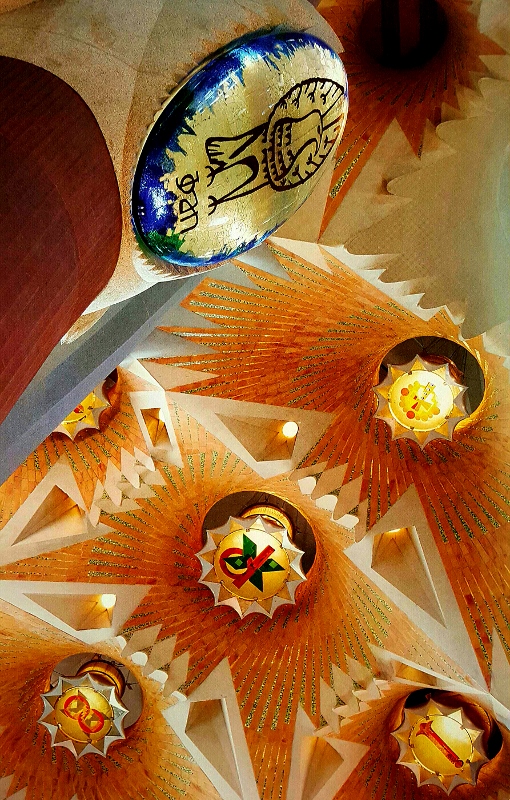
And that brings us spiraling back to the Catalan master Antoni Gaudí and La Sagrada Familia basilica, the master’s masterpiece, a one-off form of architecture that appears, in many of its thousands of unique spots, to have inverted nature’s process, adapting function from a search for beauty rather than creating beauty from functional adaptations. Gaudí reveled in the natural complexity of fractals and superadjacency, the gorgeous simplicity of a shape repeated till it is a snail’s shell then repeated in concrete till it is a spire. In predictive obeisance to a later observation made by American physicist Philip Anderson – “The ability to reduce everything to simple fundamental laws does not imply the ability to start from those laws and reconstruct the universe” – Gaudí began from the beauty of his finished shape and worked backwards to its function.

Gaudí’s mind, like Shakespeare’s or Cervantes’, is no likelier to recur tomorrow than it was yesterday or today.

As complex adaptive systems that both comprise and compose other complex adaptive systems, our lives are constructed from countless events, every one of which is equal parts impossible and inevitable.

*

Author’s note: Anyone interested in the interdisciplinary approach taken by the men cited above is enthusiastically encouraged to read M. Mitchell Waldrop’s Complexity: The Emerging Science at the Edge of Order and Chaos.

*

Author’s note note: This column will not appear next week, allowing its author to pursue messy vitality in Colombia.

*

Editor’s note: For part 11, please click here.

*

Bart Barry can be reached via Twitter @bartbarry


Brooklyn’s magic castle awash in swift tides or so Rosie said

By Bart Barry-
Danny Garcia
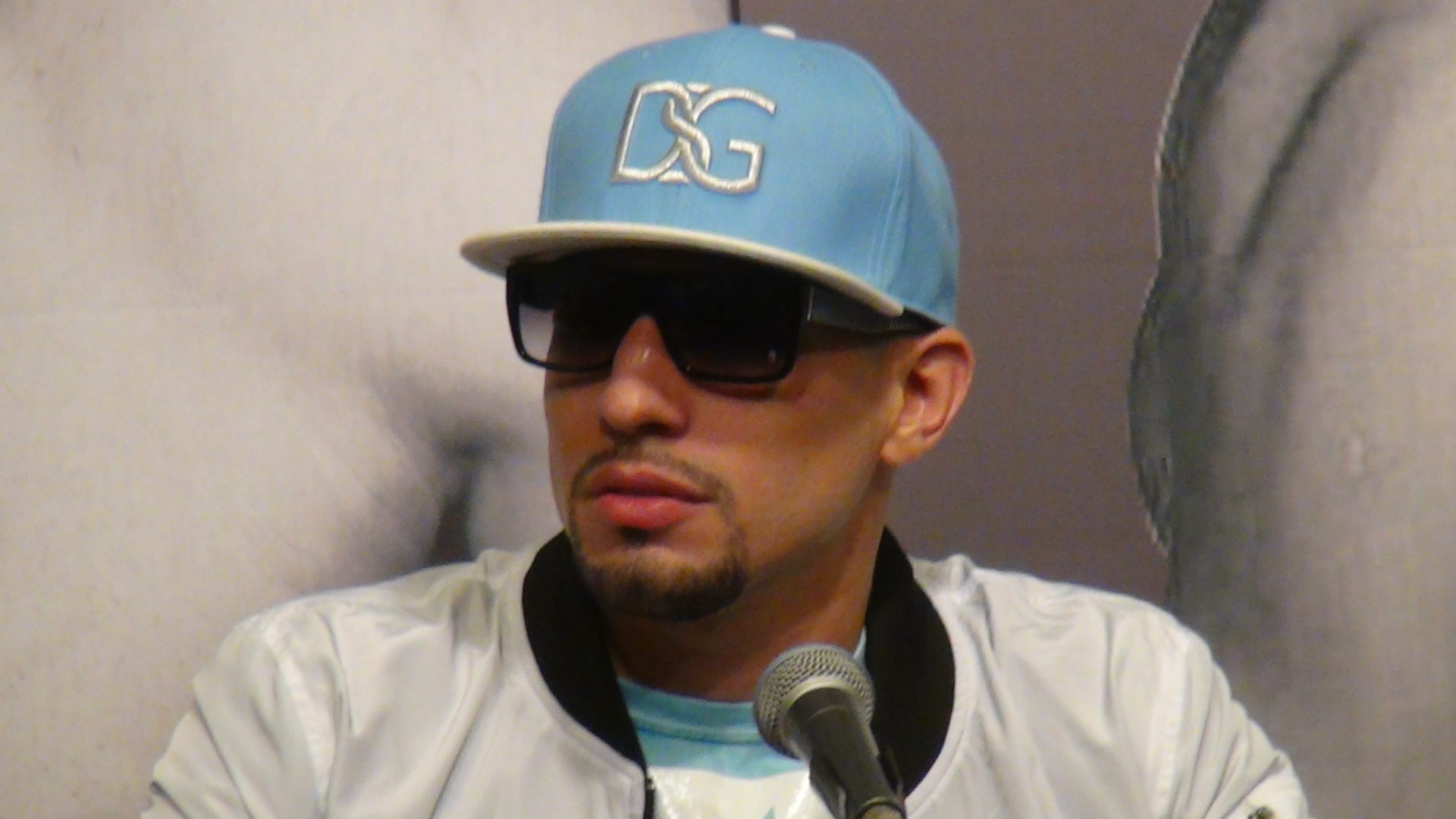
Saturday in Brooklyn, Philadelphia welterweight Danny “Swift” Garcia laid waste to the remnants of Brooklyn’s Paulie “Magic Man” Malignaggi in a PBC main event distributed by ESPN, home of Rosie “Amazingly Knowledgeable” Perez and Teddy “The Sandcastle” Atlas. It was not a particularly suspenseful affair, an absence of suspense being the one flaw in the PBC’s revolutionary new Inevitable Outcomes matchmaking model, but it worked just fine as a vehicle for saying goodbye to Malignaggi and hello to Garcia – the newest monster in PBC’s welterweight stable.

Garcia is an excellent fighter whose recent aversion to worldclass opposition does not wholly subvert his pre-PBC accomplishments. After going-in tough as any fighter in the world, 2011-2013, Garcia has paused to let his PBC coworkers catch up, and it’s not his fault those coworkers, having accomplished fractionally so much, have paused in synchrony.

Whatever one opines of the PBC or Al Haymon, it’s hard to fault Garcia or Malignaggi for their employment with the promotional/managerial/booking agency. Neither guy was exactly fast-tracked by other meaningful promotional entities at any time in his career. Garcia was actively cheered against by his then-promoter Oscar De La Hoya in fights against Erik Morales, Amir Khan and Lucas Matthysse, and before that Malignaggi was used by Top Rank like a subterranean detonation site in his 2006 humbling by Miguel Cotto, a pay-per-view main event that featured a ring barely larger than a Rikers Island isolation cell and a canvas spongier than what nurses might’ve used to bathe Malignaggi during his subsequent hospital stay. Whatever it might have required for Malignaggi to keep Cotto away from him nine years ago, Malignaggi didn’t have an ounce of it, and after Cotto shattered Malignaggi’s face he went to work peppergrinding the pieces. Hard as it was to like Malignaggi before that night, it was nearly impossible to believe he deserved everything Cotto did to him.

Though it was never quite clear what ingredient of Malignaggi’s showing against Cotto would go better in a mix with other elite competition, Malignaggi’s enduring appeal to New Yorkers kept him drawing crowds enough to get him another chance, one in which he managed to outbox a granitechinned South African named Lovemore Ndou and attain the IBF’s junior-welterweight title. So long as Ricky Hatton could touch 140 pounds at least 15 minutes of each year, though, nobody in the world, not even in the IBF, thought Malignaggi was the premier junior welterweight, and so, when Malignaggi had his rematch with Ndou it was on Hatton’s undercard in Manchester, and it was memorable only for Malignaggi’s airheaded idea to wear Alien braids in the ring, braids his corner had to shear from his air head, midfight.

Unsurprisingly, Hatton stopped Malignaggi on the next card they shared, and then Texan Juan Diaz decisioned Malignaggi in Texas, exactly the way Malignaggi said he would, and, well, that was an outrage. A Texan in the White House had only recently presided over the ruination of world’s economy, tempers were not subdued, and when Malignaggi whined to HBO’s cameras afterward – he’d lost the fight on two fair scorecards so he fixated on the outlier – digital outrage ensued. This was during a bumbling transitional period for American media: Having rolled its eyes at reporting on the internet for a decade, it took seriously the world wide web long enough for the rest of the country to begin rolling its eyes at reporting on the internet – a reaction that continues as unabated, today, as the slideshows that catalyze it.

The outrage over Paulie’s robbery brought a rematch in Chicago, since HBO didn’t know what to do with its investment in Malignaggi or Diaz, and Malignaggi’s vindicating unanimous decision over Diaz got him warmed-up and fed to Amir Kahn five months later in a match whose delicious absurdity retains its tanginess even, lo, these five years since it happened. Malignaggi was 0-2 (2 KOs) against excellent fighters, and 1-2 against good ones, and if he’d been from anywhere but the media capital of the world, he’d have been lucky to get a chance on ESPN’s “Friday Night Fights” – where commentator laureate Teddy Atlas doubtless would have crafted and repeated and repeated a semicoherent metaphor about relocating sandcastles on a disappearing beach, long before Saturday’s spoken-word performance. Because caricatures of Yankee fans apparently are underrepresented in prizefighting, though, Malignaggi merely upgraded promoters, from a then-Golden Boy Promotions- and now-PBC-puppet promoter to the genuine article, Richard Schaefer, who helped him get a welterweight title to lose to Adrien Broner but also a commentating job with Showtime, a then-Golden Boy Promotions- and now-PBC-puppet programmer.

Malignaggi is a bright guy, and so he surely maintained no illusions about the purpose of his last two assignments, though even he must’ve been a little taken aback by the ferocity with which Shawn Porter hornworked him in 2014. The purpose of Saturday’s appearance was to welcome Danny Garcia to the welterweight division with a knockout win over a savvy veteran, and Malignaggi satisfied the requirement ably as a grinning hostess at a Yelp-reviewed eatery in gentrified Brooklyn – it’s still early, but unless Luis Collazo jealously returns to the canvas within 27 days, there’s a fair chance Malignaggi could win August’s PBC Employee of the Month.

Whatever buffoonery Malignaggi has performed while self-promoting on social media or at media events created for social media, he is an excellent commentator and knowledgeable interview. To make a robust living as a prizefighter whose hands, even when healthy, were not very good at punching, Malignaggi had to see details better fighters missed; this made him, again, the rarest of professional athletes-cum-commentators: one whose expertise extends beyond himself. He had a very good career and will not be missed in a prizefighting ring.

Bart Barry can be reached via Twitter @bartbarry


The disappointment of BJ Flores

By Bart Barry-
bj20flores
“Potential remains potent if unused.” – James Wood, “Late Bloom”

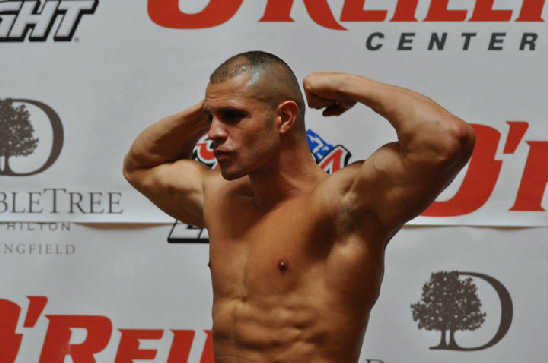
Saturday in a small theater at Palms Casino in Las Vegas, in a PBC main event televised by NBCSN, 31-year-old Kazakh cruiserweight Beibut Shumenov decisioned 36-year-old American BJ Flores by three scores of 116-112. The match was made under a single expectation: Flores will decimate Shumenov, persuading the PBC’s naive viewership he is a power-punching terror we can soon anoint PBC cruiserweight champion. That expectation was disappointed.

The fight was not a fun one to watch, though no frequent purveyor of PBC events will derive any more insight from that statement than he derived joy from Saturday’s broadcast. The telecast was poor, the commentary banal, the interviews borrowed from the pages of American Cheerleader, and the violence slight. The hardest punches by far missed by far, as the preanointed winner found a prey nothing like what he’d been promised, and the fleetfooted prey found exactly the complacent predator of his quiet preparations.

Beibut Shumenov also found the best way for an underdog to win a PBC main event: Move up so far in weight – 25 pounds in this case – you are promised to be knocked cold, and then don’t get knocked cold.

Did Shumenov get the benefit of most doubts from Saturday’s judges? Sure did. Confident as the outfit was in a Flores knockout, the PBC neither bothered flying its fighters to business-friendly locales nor imported sympathetic judges to Las Vegas. Hell, they didn’t even script their commentators’ post-introduction thoughts, resulting in Sugar Ray Leonard waving the wrong pom-poms and ratifying Steve Farhood’s unofficial scorecard, one that concurred with the official cards.

After the match, Flores rightly insisted his countenance was incredibly unmarked for a man who’d been beaten for the majority of a 36-minute confrontation. That insistence betrayed the entirety of Flores’ strategy for Shumenov: We will both stand more or less still and slug one another, and since I’ve fought as high as 218 pounds, and you’ve fought as low as 174, physics will be our judge long before those three folks at ringside. Though Flores is much more of a boxer-puncher than a purebred slugger – a major reason for his youthful conversion from heavyweight to cruiserweight – he expected to stand immediately across from a much smaller man and blast him to unconsciousness.

Flores expected to undo Shumenov very much the way Shumenov undid Tamas Kovacs in 2013, a Shumenov performance at Alamodome that was simply belligerent, one in which Shumenov’s punches were spiteful as they were fast or accurate. Bernard Hopkins, who was ringside that night in San Antonio, saw an immobile man with disproportionate confidence in his power, and wagered instantly the man’s psyche was fragile: sluggers, as men who believe deeply in their natural abilities to bring instant order to a boxing ring, no flirtation, no foreplay, no reciprocity, are boxing’s least-secure souls; their universes unravel with an acceleration unknown to the universes of volume punchers or boxers. Hopkins razed Shumenov’s identity quickly in their 2014 match, disarming him then practicing on him, and sent Shumenov right out of sluggership and the light heavyweight division.

Shumenov deserves immense credit for making that relocation; the move from flyweight to bantamweight can be done by having dessert with dinner next week, while the distance from light heavyweight to cruiserweight is vast. Though it is obviously unfair for a 201-pound man to toe the line against a Klitschko, it is nearly as hopeless for a light heavyweight to move to cruiser. Today’s heavyweights are generally gargantuan and plodding; you’d hate to be hit by one and probably shouldn’t be. Cruiserweight, though, is where the fantastic athletes who wash-out of other contact sports tend to gather. At heavyweight, you meet the former collegiate linebacker who’d rather eat his way to 250 than starve his way to 199; at cruiserweight, you meet that guy’s more-disciplined teammate – just as strong, just as athletic, and a lot faster.

That was, is, BJ Flores. But things haven’t gone according to plan.

However much I prefer other fighters’ styles, BJ is my favorite person I’ve met in 11 years of covering our beloved sport (Israel Vazquez is a close second). There is a self-deprecating streak in BJ that does not translate to television, where he appears too assured, too fidgety, and sometimes too glib. He has it all figured out and is not reticent about saying so. When that sort of self-assurance pits itself against the best prizefighters in the world and wins more often than it loses, you get Carl Froch. When it goes 31-1 without once challenging for a world title, you get more resentment from fans and pundits than you deserve.

Whatever his fighting spirit, BJ is too smart to be a great prizefighter, too filled with the sort of curiosity that seeks sympathetic angles, elegant solutions to the ugly problem of swapping blows for income; if he can get things organized properly, BJ seems to believe, he’ll be recognized as a world champion without having to beat any world champions. This mentality manifests itself in various ways and did so, Saturday: so long as he was way out of Shumenov’s range, Flores hurled rights with abandon, but a single counter from Shumenov set BJ’s quick mind to calculating risks and probabilities, in an untimely search for an elegant solution to the problem of rendering Shumenov unconscious without a proportionate amount of peril.

Flores has every tangible quality needed to be a great prizefighter. The fact he will come to his 37th birthday without once challenging a world champion, though, subverts most of it. That was not a fun sentence to write.

Bart Barry can be reached via Twitter @bartbarry


Greatness willed: A farewell to Carl Froch

By Bart Barry-
Carl Froch
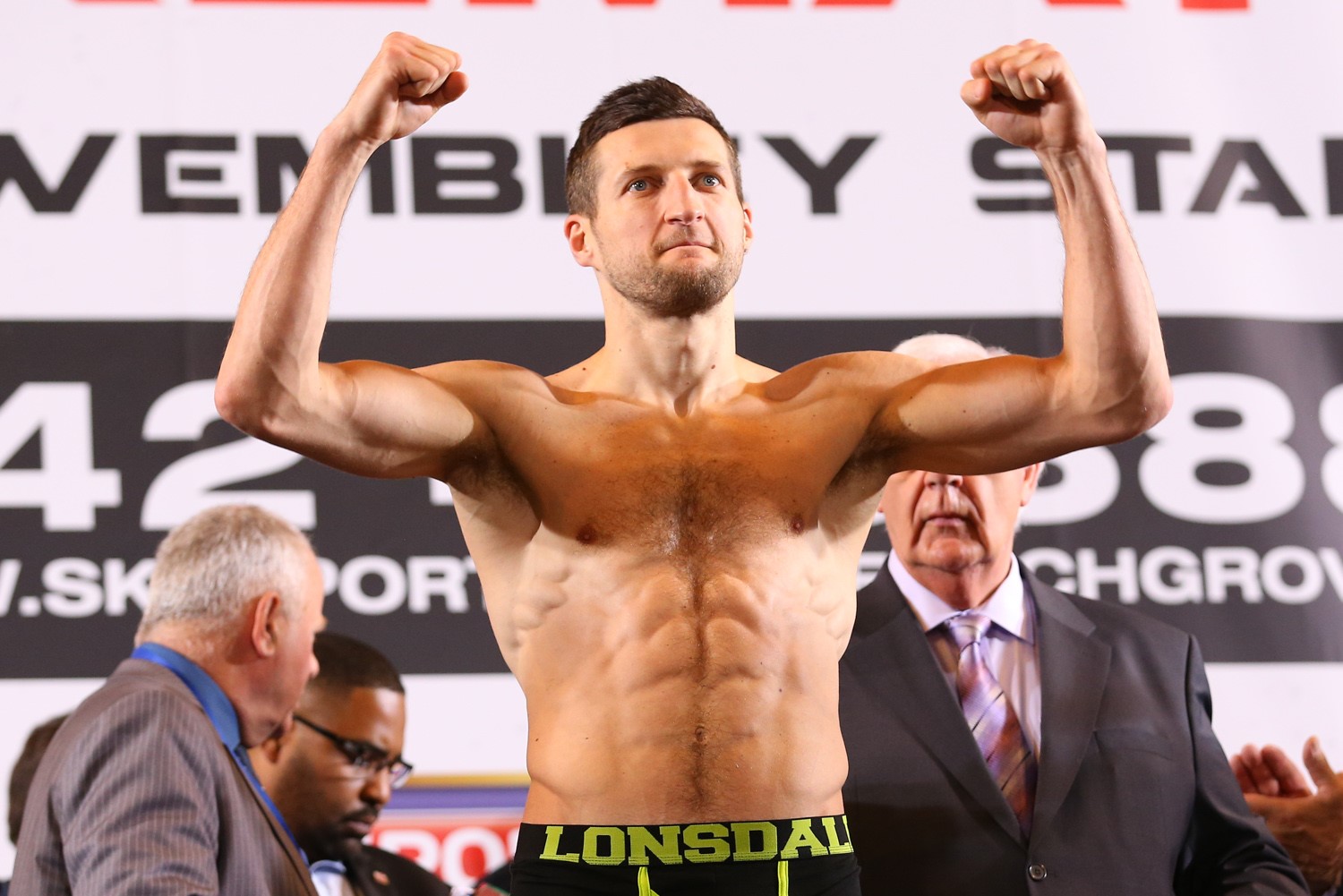
Last week British super middleweight Carl “The Cobra” Froch announced his retirement, ending an unusually fine contemporary prizefighting career on an unusually high note. Froch’s final instant in a prizefight was his best – spearchiseling George Groves in a full Wembley Stadium on May 31, 2014 – and if Froch needed 14 months to be certain that was so, it’s altogether forgivable.

We like best the athletes to whom we relate best, superficially, profoundly, however – those men who exhibit qualities we like in ourselves but more so. To love Froch, one didn’t have to be an arrogant bastard reveling in expressions of masculinity, no. But it sure did help.

My favorite moment of Carl Froch’s career came not in a fight but a chat with fellow Brit George Groves, whom Froch stopped twice, and came in the leadup to their aforementioned, and in Froch’s case aforereiterated and aforereiterated, rematch. It wasn’t any one word or phrase or look or gesture, the second half of their chat was rich with too many, but rather the way Froch looked inside at himself, a posture he adopts often – for no one is as enchanted by the thought of Carl Froch as Carl Froch – and followed a process like: Perhaps this guy does know something about me that eludes me, maybe I am not everything I believe I am. No, wait, what could I believe – not imagine, but actually believe – I am that I am not? I stand by my belief, I am as I say I am, and I’ll hear no more dissent.

Froch bent where Groves was rigid, Froch examined himself from Groves’ seat, considered himself in an unfamiliar light, then invested his conclusion – he’s wrong about me, and I’m right – with even greater force. Then Froch imposed himself on George Groves, and before 80,000 of his countrymen, a lamplike number summoning its genie no matter how often Froch rubs it, Froch struck Groves with the best punch of his career, reducing Groves from petulant rival to beginner origami.

In an instant Froch had a chance to end his career at its highest moment, something nearly no boxer has done in our sport’s deep history, and one feared he mighn’t – that what he calls the “fighting machine” he makes himself into might cause a sloppy thing with Julio Cesar Chavez Jr., ever a sloppy thing, or a decision loss to Gennady Golovkin (if Golovkin could take Froch’s power in the later rounds, something Golovkin’s resume does nothing to assure). Instead, Froch looked inside at himself once more, projecting the relentlessness and brutality and boredom and doubt of a championship-caliber training camp, and realized there was little in life he desired less than another experience like that.

Boxing has so very few happy endings it should fill aficionados with gratitude much as any other emotion th’t Froch left our sport with wealth and wits, accomplishment and vindication.

The third time I saw Froch fight, his painfully forgettable tilt with PBC prototype Andre Dirrell – 10 parts athlete for every one part fighter – I wrote, “(Froch) really wants to fight even if he often seems not to know how.” That desire to fight, to lower his head and swim forward winging wide punches at a rate proportionate to his fatigue, was what made Froch unique, in large part because it actually worked.

Men who have never fought, who’ve not clenched their hands in fists and punched men square in the face, often beseech others in a fight to race forward with lunatic aggression, consequences to the wind. For reasons psychology understands well as biology, though, a man in a fair fight is more frightened of having his reputation harmed than his person; embarrassment concerns him more than pain. Only fighters who’ve planned to race forward wildly, and prepared themselves for the feat, can turn the trick in hot blood. All the rest of us stall, our frustration steering us towards paralysis, to a point where we approach targethood and view another man’s aggression, another man’s attempt at our unconsciousness, that is, favorably, almost thankfully – like Oscar De La Hoya silently beseeching Manny Pacquiao to knock him out because such an end would be multiples more honorable than quitting in full consciousness like De La Hoya did in his final instant as a prizefighter.

Froch was one man who did what the inexperienced ask every prizefighter to do: No matter how tired he was, Froch pressed forward wildly, not hopelessly, in a bid to take confrontations wholly out of the organized athletic realm and into something more primal. Subsequently, even Froch’s losses ended nobly. Review his 11th round with Andre Ward, when the eventual winner of the Super Six tournament – on a once-excellent network that no longer fears embarrassment – and one of this generation’s great fighters, Ward, desperately clinches, his mouth wide open, his knees softened. The final three minutes of Froch’s only other career loss, when he got decisioned narrowly in 2010 by Mikkel Kessler during the same Super Six, a loss Froch avenged just as narrowly in 2013, are a symphony of blood and violence and will, both men leaking from deep cuts over their eyes, neither man appearing to care who gets rendered unconscious so long as someone does.

During the 3 1/2-year prime of his prizefighting career, Froch went 7-2 (2 KOs) against Jean Pascal, Jermain Taylor, Andre Dirrell, Mikkel Kessler, Arthur Abraham, Glen Johnson, Andre Ward and Lucian Bute. No man with Carl Froch’s talent did more great fighting, no contemporary prizefighter, in other words, wrung more from his natural ability. The Nottinghamshire Cobra will be missed sorely.

Bart Barry can be reached via Twitter @bartbarry


Luis Collazo: PBC Employee of the Month

By Bart Barry-
Collazo Cut
Saturday at a local coffee shop I watched the PBC main event I’d already covered five days before it happened (I was off by about 3 1/2 rounds in my report). I watched on my phone as Florida welterweight Keith Thurman “knocked-out” Luis Collazo with an accidental headbutt of slow-developing effect. For the record, and since some writers are enkindled by the thought a single dollar mightn’t go to the corporations it belongs to, I did not watch a pirated stream of the PBC broadcast: I used my mother’s username and password on the WatchESPN app.

Thurman’s reaction was indeed more surprising than his victory. Thurman was going to win, regardless, and so, even if his postfight celebration was charged by relief, it also should have been tempered by a question even smartphone viewers had to ask: What the hell did Keith Thurman do to win?

Collazo, a victim of questionable decisions in previous title bouts, with Ricky Hatton and Andre Berto, took things entirely out of the judges’ unsteady hands, Saturday. Having jeopardized the scripted outcome with a body shot in round 5, after 14 minutes of skittish jousting with Thurman from a safe distance – even had they fencing foils – Collazo chose soberly his words for the ringside physician and got himself awarded a knockout loss after round 6. A loss is a loss except when it’s a partial victory, which is exactly what Saturday’s antics will become in three weeks when Luis Collazo wins the PBC’s July Employee of the Month award for his competent if not creative Saturday delivery.

My interest in this bout was minimal, knowing as we all did its preordained outcome. The enterprising and imaginative among us will tell ourselves the entire canonization of boxing’s next really really big and huge star, Keith Thurman – a telegenic man who cries on command in barbershops while his girlish locks are hardened into warrior braids – got jeopardized towards the end of the otherwise unwatchable fifth round, Saturday, when Thurman got jackknifed by a Collazo left cross to the body, but the whole enterprise of imagining how the predetermined winner might lose is quixotic, we should admit.

In this sense, boxing is no longer entertaining as professional wrestling – wherein the winner is predetermined but at least unknown to the audience. In this sense, boxing is more noble than wrestling: the PBC broadcast tells you who will win the main event in a prefight Sesame Street feature and does not deviate by subjecting its docile viewers to steel-chair hijinx or implausible disqualifications that allow the champ to retain his title.

Well, OK, point taken, but there are no steel chairs.

Let us now pause to consider the feat boxing’s next supernova incredible star performed by getting bent in half by a lefthand thrown from a southpaw. Ever ask yourself why nearly every body-shot stoppage you’ve seen comes from an orthodox puncher’s left hook (including the crossover lefthand with which southpaw Gerry Penalosa stopped Jhonny Gonzalez eight years ago)? It’s because the angle of delivery for a left cross is all wrong; the punch is too straight to find the magical, quartersize spot between the right rib and hipbone where the liver – a vital organ – peeks through a window known as “the button.” There’s an upwards twist of the left knuckles required to hit the button, too, and a southpaw’s left cross, like all crosses, finds the knuckles descending, not ascending, upon impact.

However, then, did Collazo, a man who has knocked-out considerably fewer than half his opponents, knock boxing’s next solarsystem supergiant across the visiblepain threshold? With Thurman’s help, mostly. Thurman landed his liver on Collazo’s fist about much as Collazo landed the middle knuckle of his left hand on Thurman’s liver.

But wait, you may be thinking, I thought Thurman’s defensive liabilities found their limit in the way he floats his chin whenever he throws!

First of all, dearest PBC viewer, you weren’t supposed to notice that. And second of all, what are you talking about? Keith Thurman proved he has a champion’s heart, Saturday, like the PBC broadcast told you.

A note, then, about PBC broadcasting crews: Universally they have the journalistic integrity of Billy Mays pitching GatorBlade bug bazookas at 3 AM. Their commentary works more like a celebrity endorsement of a related product – Tiger Woods swinging a Nike driver, say – than even an approximate description of what happens in the boxing ring. They each have their cultivated schtick – Sugar Ray Leonard’s smooth vacuousness; Teddy Atlas’ metaphor-strangling outrage – but none of them offers commentary to invite even the softest inference of disloyalty by their owner, Al Haymon, if ever he should watch a PBC telecast.

Writers make the increasingly necessary if enduringly ignoble transition from reporters to publicists, yes, but rarely on the pages where their journalism resides. No sooner does a writer imply his endorsement of a commercial product than his readers barnstorm the comments section with reprimanding words about conflicted interests. That boxing television, conversely, has made the transition so frictionlessly from broadcaster to publicist should help aficionados retrofit their views of the entire medium.

Here, let me get you started: When the HBO crew assured me Manny Pacquiao won nearly every minute of his 2012 fight with Timothy Bradley, supplementing its commentary with creatively chosen between-rounds-replay clips and a wildly inaccurate unofficial scorecard, did I consider as fully as perhaps I should the network’s disproportionate interest in the very outcome it described? Here’s a little more help: No, you probably didn’t.

The kicker, as it were, is that today HBO, whatever its adorable crush on Eastern Bloc fighters, stands as the last column of journalistic integrity in boxing television: It is the only American network to treat Al Haymon as an executive instead of an owner.

Over and again, the PBC concept will not end well. If it succeeds, within three years it will have used monopolistic powers to craft a rigged-outcomes product that is neither violent as MMA nor well-scripted as professional wrestling (or the NBA playoffs). If it fails, it already will have decimated the ranks of aficionados and the writers who serve them.

Ridicule Luis Collazo all you want, but he’ll always have his PBC Employee of the Month certificate. What will you have?

Bart Barry can be reached via Twitter @bartbarry


Bad, yes, but probably not bad enough: Thurman stops Collazo in 11

By Bart Barry
Keith Thurman
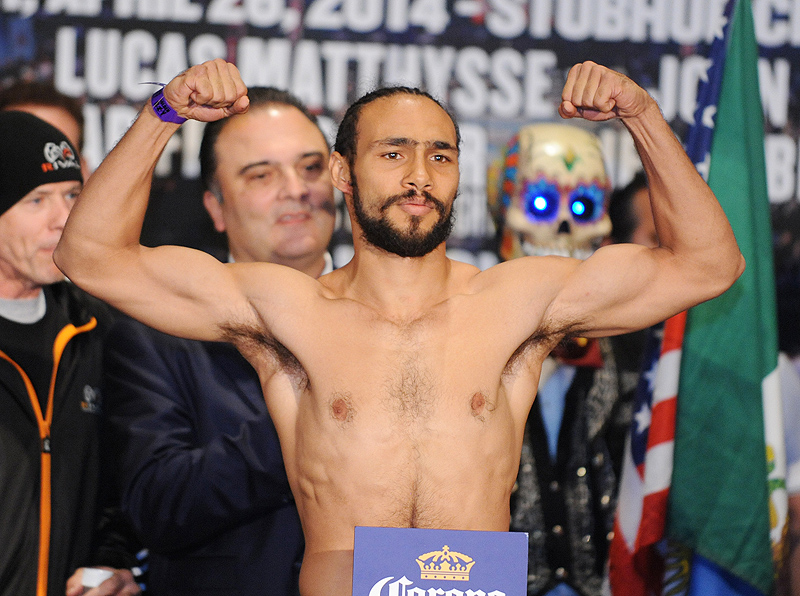
TAMPA, Fla. – Saturday in University of South Florida’s acclaimed Sundome, Florida welterweight Keith “One Time” Thurman stopped Brooklyn’s Luis Collazo in the 11th round of PBC’s insipid ESPN debut. Official attendance in the hauntingly quiet arena was announced at: “A lot, I mean, look around.”

Thurman’s victory was not without controversy. After failing to land a clean punch on Collazo through several, 90-second durations of their fight, Thurman came alive at the midway point of the penultimate round, striking Collazo flush with a number of punches at the very instant late-sub referee Laurence Cole, caught texting on his phone in a neutral corner several times in round 5, offered the fight his undivided attention. Thurman was ahead 100-90 on all three official scorecards at the time, as expected.

The purpose of this fight was twofold: 1. Build the Thurman brand, and 1. Fill a reserved ESPN television date, and 2. Drop a Thurman ball in the Mayweather Opponent Draft Lottery, and 2. Preclude future lawsuits against the event’s advisor and hedge fund from alleging University of South Florida fell prey to a venue-squatting saltern to keep its coveted Sundome from being reserved by a regional California promoter who once used rumors of his own intention to fight in September to preclude a rival promotional outfit from using a Mexican Independence Day weekend he later filled with Marco Antonio Barrera and Robbie Peden (this column should not be used in the text of any future lawsuits that allege the Florida State Boxing Commission was complicit in a plot to bump Bengali songbird Shreya Ghoshal from her Saturday date to a performance on July 25).

As stated by the promoter of record, who, frankly, could be any one of four or five nameless entities that rent their licenses to advisor Al Haymon – who, it should be noted, deftly navigates the unenforced Ali Act by calling himself neither a manager nor a promoter: “Keith (Thurman) does not hate Shreya Ghoshal. That’s patently ridiculous. I wouldn’t rent my promoter’s license to his advisor if he did! Without getting into the specifics of ethnicities, I could basically be a Bengali – all other things being equal.”

To bring further clarity, and with any luck an end to the manufacture of this particular controversy, immediately after stopping the hapless Collazo, Thurman declared: “Dude, I love the Bengals. Some of my buddies are from Cincy. I’m gonna even get tiger trunks for my next fight.”

Collazo did his job smartly, Saturday, committed wholly to giving a one-time exciting young prospect his third dull decision since December, but Collazo’s effort to stretch Thurman into what “tepid, Gulf bathwater, coming all the way up to your shoulders” he promised before Saturday’s match was thwarted much by Thurman and the silent Sundome crowd as by the third man in the ring. Collazo, once boldly informed by a veteran San Antonio Express-News boxing scribe his 2013 victory over Alan Sanchez was “honestly, the dullest fight I think I’ve ever seen,” was circumspect about Saturday’s early stoppage.

“I’ll be back,” Collazo said. “Set your alarms and wake-up calls. I’ll be back.”

Before any more social-media outrage attends Saturday’s stoppage, #ColeAgainAgain, with citations of video evidence that shows Thurman landing merely four unanswered punches on Collazo before the match was called-off, one must consider the wording in the PBC’s recently leaked hedge-fund prospectus: “A fight can be stopped at the onset of any punch combination that sees the designated opponent (subsequently called B-SIDE) struck by any number of punches disproportionate to the mean of punches previously established in no more than three (3) rounds.”

Keith “One Time” Thurman, to the halfway point of Saturday’s 11th round, justified his cognomen, averaging about one punch landed per combination thrown in rounds 8 and 9 and 10, making his jab-jab-hook-cross combination at 1:27 of round 11 a 400-percent increase in violent activity over the established mean, validating Cole’s hurling of himself between the combatants. That Collazo did not show any outward signs of peril is both interesting and entirely beside the point, as boxing’s wounds often occur internally, long, long before they show outward manifestations.

At Friday’s weighin, Collazo trainer Willie Vargas promised: “We’re going to to hit Thurman ‘one time’ for every tattoo on Luis’ body.” Asked about his giddy forecast at Saturday’s postfight presser, Vargas replied, “I don’t know. Maybe we did. Who was counting?”

Postfight talk both inside and outside Sundome returned to a familiar question, one that sank in Tampa’s oppressively heavy air all week: Did Thurman look bad enough to get a September fight with Floyd Mayweather?

“Oh man, Keith, you looked terrible!” shouted a Haymon hypeman at the ESPN cameras just before Saturday’s official time was read. “Man, you looked awful!”

Mayweather pal Leonard Ellerbe, attending the match in behalf of his sponsor, showed customary sobriety in his assessment of any future Mayweather opponent.

“It was boring, and nobody knows why the ref stopped it,” said Ellerbe. “(But) terrible enough to fight ‘Money’ in the final match before his next retirement after he breaks that record? I really don’t know about that. Even with the competition he’s been fed, Keith’s skills are not eroded like we’d hoped.

“He can still punch a bit, can’t he?”

Bart Barry can be reached via Twitter @bartbarry
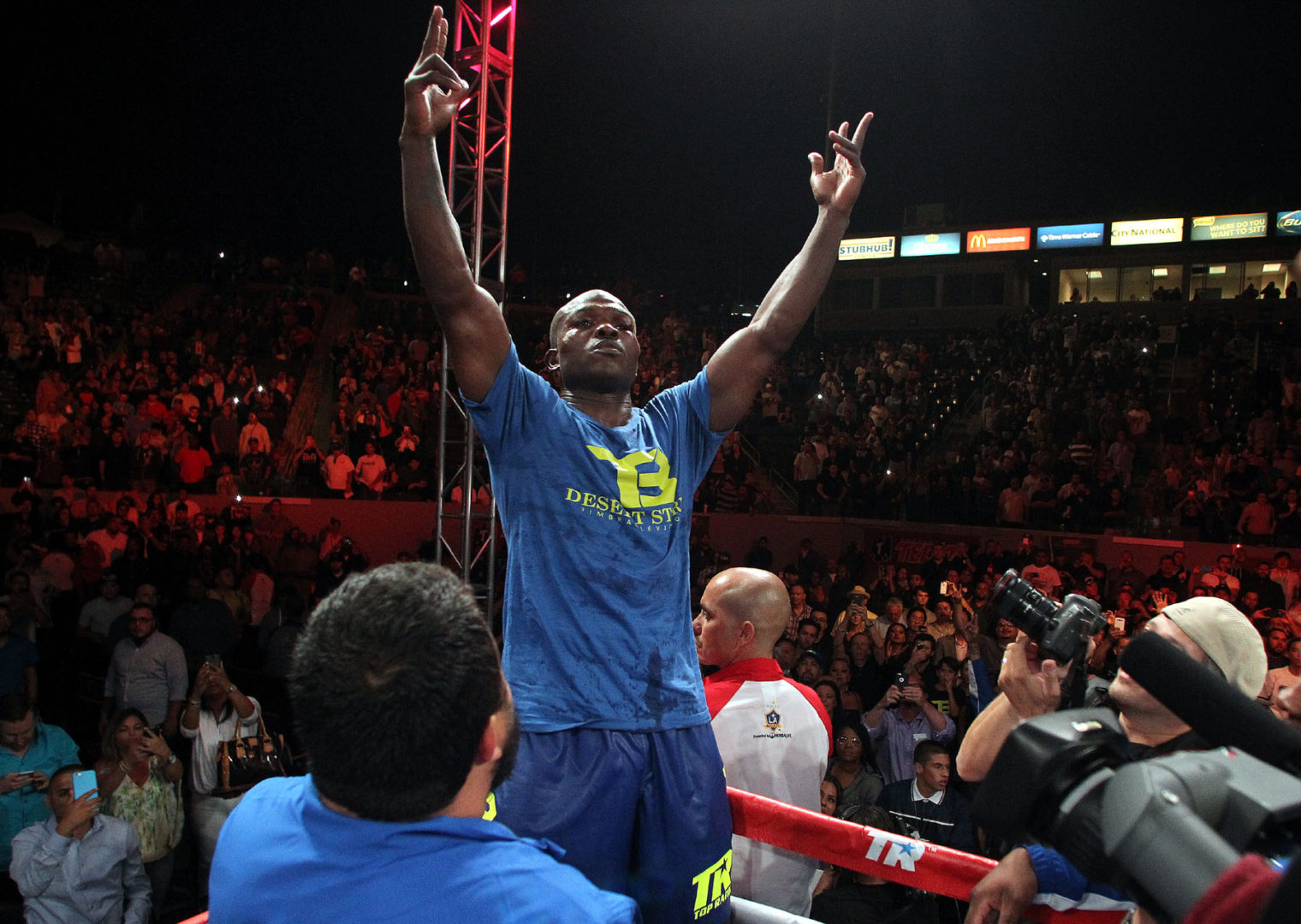


Delayed meritocracy: Kings of the Mic and Timothy Bradley

By Bart Barry-
Timothy Bradley
DALLAS – Four miles southeast of this city’s downtown center stands Gexa Energy Pavilion, a 20,000-seat outdoor amphitheater whose stage Friday hosted a deep roster of pioneers in a musical genre then-known as rap – as in Sugarhill Gang’s “Rapper’s Delight” – and now known as hip-hop. For those enchanted by the seedling genre in its great years, 1985-1992, Friday was an ecstasy of nostalgia and enduring craftsmanship.

Would that welterweight Timothy Bradley’s decision victory over Jessie Vargas Saturday night in Carson, Calif., kindled such praise, but when a referee marks the first interview conducted after a sporting event of any kind, one can safely assume that event disappointed spectators. So it went with Bradley-Vargas 1, a middling affair until the final moments, when Bradley ran himself into a Vargas righthand, got buckled, staggered a bit, held on, and made it to referee Pat Russell’s chosen stopping place, which as everyone now has been told a dozen times and as many different ways, was not on the 3:00 mark.

The idea Bradley – who pedaled himself unconsciously through about 11 rounds with Ruslan Provodnikov, and managed to remain conscious, too, for a combined 36 rounds across from Manny Pacquiao and Juan Manuel Marquez – was but one blow from being stopped by a career junior welterweight with nine knockouts in 26 prizefights, in his debut at 147 pounds, is quite nearly absurd. But as neither HBO nor promoter Top Rank has an idea what to do with Bradley, still, a rematch birthed by a controversy inspired by true events is the best idea currently in the offing. One no longer pities Bradley quite deeply as he did in the aftermath of the Provodnikov match, when Bradley dutifully shortened his own life with a heroic apology for decisioning Pacquiao and thereby sabotaging in 2012 (until Marquez did it perfectly six months later, and Top Rank subsequently and effortfully resurrected Pacquiao) the Fight to Save Boxing, which did quite the opposite this May.

Bradley is not a welterweight, whatever says the thickening of his physique, and his lack of welterweight power manifests itself in two obvious ways. Firstly, in seven matches, Bradley has yet to knock-out, or even knock-down, anyone as a welterweight – despite hurling himself awkwardly enough at every opponent to ruin feet and ankles, and perform what could only be called a contortionist feat on the blue mat against Provodnikov th’t yogis, to this day, cannot replicate. And secondly, that Bradley loses his balance so often, and badly, by overcommitting to punches that barely dent or mark the men he strikes flush with them.

The move that causes Bradley the most trouble is his orphan-the-children righthand that, when it misses, finds him fully crossed-over and pointedly aware of how precariously he’s mispositioned himself. Generally, after the righthand misses, Bradley sets his eyes on the tops of his own shoes, hopes not to get hit, returns his weight to his left foot (now his back foot), and quickly uncrosses his legs. He’s an elite athlete, even among what elite athletes make their livings in prizefighting, and that athleticism, once a fundamental hindrance, most likely, a hindrance to his adoption of boxing fundamentals, is now what allows him to do well as he does.

Jessie Vargas, too, exceeded expectations, Saturday, offering a competitive opponent to Bradley, and making the final minute of the fight more interesting than its 35 predecessors. Vargas certainly did not win, and were there a feasible or even novel opponent for Bradley, victory over Vargas would be declared and boxing would move on without a rematch at the end of the year, but as there is not, Unfinished will become Business’s modifier, and a more-tentative Timothy Bradley will outbox Vargas by wide margins whenever the rematch happens.

There was a two-year stretch in which I attended three-of-four Bradley matches, in Las Vegas, and yet it didn’t cross my mind to attend Saturday’s tilt. Why not? Two reasons, again: Firstly, Timothy Bradley, while remaining a model citizen and fighter boxing would be well-advised to replicate a few hundred times, is not always enthralling to watch, and the higher his weight climbs, the more apparent this becomes. And secondly, there was Big Daddy Kane and Melle Mel and Sugarhill Gang and Doug E. Fresh and Whodini and LL Cool J – “Kings of the Mic” – to see in this city, Friday.

The term “classic hip-hop” appears now to encompass the genuinely talented part of Friday’s show, while the less-talented part of Friday’s show, Bone Thugs-n-Harmony, is from a later era discovered by trailblazers who, despite their collective greatness as performers, proved no better at spotting talent than Shane Mosley during his brief time as a Golden Boy Promotions partner. There was not a single oath spoken, sung or rapped in the opening four hours of Friday’s show, and then Bone Thugs-n-Harmony began its sloppy, pointless set, and one couldn’t escape from vulgarity – the word motherf**ker fairly creaking under the weight of a performance it now had to shoulder.

That is not some priggish commentary about family values, either; it’s an aesthetic criticism.

Today, consumers of hip-hop expect, proudly demand even, lyrics written between and a first- and third-grade reading level. It was not that way in the beginning. Big Daddy Kane’s lyrics resonate almost 30 years after one first hears them, and so do LL Cool J’s. The songs Public Enemy released before 1992 are more relevant to current events, 25 years later, than 90-percent of the garbage hip-hop has become since the fateful year Dr. Dre released “The Chronic.”

“Oh, but you don’t understand ‘the industry’ and ‘the branding’ and ‘what’s hot’ and . . .” – just stop it; no man wants to hear another man talk like a teenage girl.

In the short run, little in life finds its governance in a meritocracy, and the long run, by its very nature, rarely gets survived by what artists it promotes. May some sense of that continue to bring solace to both Timothy Bradley and Big Daddy Kane.

Bart Barry can be reached via Twitter @bartbarry
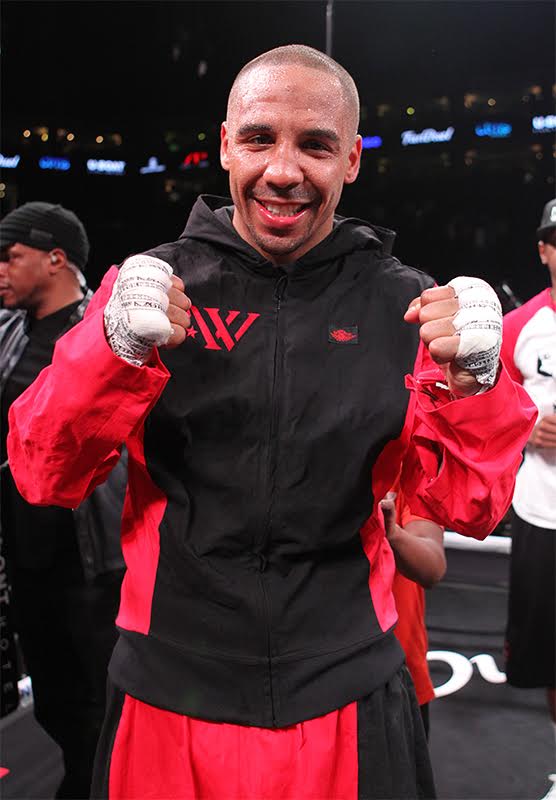


The talented, the untalented, and the Nipsey Hussle

By Bart Barry
Andre Ward Post Fight
Saturday on BET, American super middleweight world champion Andre Ward made his much-needed return to boxing, stopping in the ninth round a hapless but stubborn Brit named Paul Smith, right about the time NBC served its viewers a terrible main event called “The Battle for Ohio”, from Las Vegas, that ended with welterweight Shawn Porter decisioning Adrien Broner by refreshingly wide scores. Before his match with Ward, Smith baldly missed weight and got himself beaten bloody for the indiscretion. Before their opening bell, Broner and Porter verbally antagonized one another, then spent 35 of 36 minutes hugging it out.

Adrien Broner’s defense is an atrocity. It took Marcos Maidana to indicate this a ways back, but Shawn Porter offered its definitive proof in round 1 of their Saturday scrum. After feinting Broner into a retreat – one doesn’t say Broner was feinted out of position, since, defensively, he’s never in position – Porter pursued Broner in a sort of relenting-wildman style Porter employed the entire match, and Broner, whose hands and feet obey autonomous, often-competing masters, leaped backwards and threw his arms directly upwards. When Porter’s punch landed and nearly touched the back of Broner’s head to his C1 vertebra, Broner had both white gloves overhead – in a feat of contorted defenselessness not seen in televised fighting since Marco Antonio Barrera slammed Naseem Hamed’s face on a Las Vegas turnbuckle 14 years ago.

Sensing his stick-em-up pose would not disarm Porter so much as a lackadaisical mugger, Broner immediately, and relentlessly, employed his backup plan: Unrepentant hugging. There’s a reason this worked, sapping Porter of what energy a formless volume puncher like him needs to be effective: Broner has disproportionate upperbody strength even for a welterweight (or whatever weight he now campaigns at). Porter badly wanted to punch Broner, but he was generally unable to, both because Porter is nearer to being bad at boxing than good, and because when Broner got his head and arms in a variety of grappling holds, Porter stopped churning his feet and merely tried to outwrestle Broner.

Before one criticizes Porter’s dad for not telling his son to free his hands with his feet, one pauses, in observance of both Fathers’ Day and regression to the mean, to impart: Andre Ward is just about the only athlete left in prizefighting who knows how to do this. Mediocre as his work may be with most everyone else he’s touched, trainer Virgil Hunter deserves much credit for what fantastic work he did teaching Ward how to fight.

How good it was to see Ward back in a prizefighting ring!

Rusty? Yup. Older? Sure. Less effective punching a cruiserweight than a super-middle? Of course. Likely to lose more than three rounds to Gennady Golovkin in a 12-round fight? No way.

Ward is a serious professional. It was a relief, in this sense at least, to see a man in an exhibition match who wouldn’t foul it up with hotdoggery, sloppiness or boredom. Ward punished Paul Smith for coming in at Chavezweight in his BET debut, also BET’s boxing debut; it was indeed cathartic, however cruel and misplaced the catharsis, to watch Ward make Smith repent for the ordeal of a prefight Nipsey Hussle concert.

Saturday, Nipsey stretched the boundaries of imitative talentlessness to a point at which they’d have snapped even 20 years ago; Nipsey Hussles have always existed, but hip-hop’s natural selection – or, heavens, any selection – did not accommodate them until recently. The nature of the hip-hop business is such that new acts must be discovered for each Tuesday release, and there are not, nor have there ever been, that many talented lyricists in America. (Friday evening in Dallas, LL Cool J will headline a show that features Big Daddy Kane and Doug E. Fresh and Whodini and Sugarhill Gang, and it’s instructive to ask, before the first Nipsey apologist draws breath: Is there another iteration of the known universe in which even a creative record-label executive imagines Nipsey Hussle headlining a concert in 2045?)

If these days I read like a curmudgeon, I’ve made my peace with it. The same element, time, that led a once-sprightly optimist to curmudgeonhood, anyway, is what, in part, PBC relied on to draw ratings for its godawful Saturday show. I watched the fights with a couple Puerto Rican friends from the boxing gym, and after fast-forwarding through much of the undercard offerings – NBC helpfully juxtaposed an excellent U.S. Olympian, Errol Spence, with a dreadful one, Terrell Gausha – we all kept reminding ourselves how wonderful it was this unwatchable bore of a main event was on free television, in an unthinking application of a childhood metric. In the digital era, network television mostly means more ads and scripts written round selling things, but for a certain, later portion of the demographic PBC aims at there is still nostalgic meaning in hearing an event will be broadcasted by NBC or CBS or ABC.

Take the pros with the cons, then, say the cons, because if they’re talking about us, they’re promoting us. True that. It’s one of only two things Broner did well Saturday – along with applying a left-hooked tag to Porter’s floating chin at the top of round 12: Respect the brand. Having lost widely to a competitor who lacks most every one of his gifts, Broner was reliably, and durably, self-aggrandizing in defeat. While intellectually incapable of aping anything else Floyd Mayweather tried to teach him, Broner unwaveringly applies one idea that enriched Money May: Tariffs exacted from men who wish to see my bitch ass beat to death look the same on a spreadsheet as fees gratefully paid by admirers.

Bart Barry can be reached via Twitter @bartbarry


The Axe Man goeth

By Bart Barry–
Nicholas Walters
Saturday in Madison Square Garden Theater, the very place Filipino Nonito Donaire’s candidacy for HBO Fighter of the New Century was subverted 3 1/2 years back by a pesky South American, Jamaican featherweight+1 Nicholas “Axe Man” Walters was unable to stretch Colombian featherweight Miguel Marriaga, much to the theater’s icy chagrin. Walters won a unanimous decision, and neither man stopped fighting or so much as clinched for nearly the full 36-minute duration, but it was not enough action, coming in the form of a 127-pound Jamaican and a Colombian featherweight, evidently, to prod New Yorkers to sustained applause.

Here’s how it went Nov. 9, 2013: Corpus Christi, Texas, was balmy and surprisingly humid for the season, American Bank Center was a dump – there was no WiFi, and the crowd lacked spirit – press row was the sort of discombobulated jumble a publicity outfit alone could conjure, and my marriage was in freefall. There were reasons aplenty for distraction, if not outright anxiety, and yet.

One begins as a boxing writer squinting at every fight, interrogating every match for its historical import and metaphorical capacity for yielding capacious metaphors – every four-rounder comprising a tiny chance at an immortality-manifesting phrase like “I saw him when he was fighting nobodies in empty arenas.” The more one sits ringside, the more his attention wanes, and something like guilt replaces the will to examine fighters’ footwork from yesteryear’s fights. Somewhere round one’s 60th fight card, though, a nearly enlightened state happens: I’m going to enjoy the undercard however I wish – watching the scorekeeper in the silly striped shirt, fantasizing about a ringcard girl, chatting with a pal I’ve not seen since last year, texting with my mother, googling the attendance record of the venue; whatever brings joy – and if something sensational happens, it will hit me with concussive force enough I’ll not be able to miss it even if I so wish.

That was Nicholas Walters. On a card that boasted Alex Saucedo, Vic Darchinyan, Mikey Garcia, Nonito Donaire and other less-talented but more-touted participants, the Jamaican featherweight happened with a concussive force too great to miss; in his U.S. debut, against Mexican Alberto Garza, Walters radiated with a violence of intention and act uncommon even among prizefighters. His form was rough, his punches were wild, but for simple force and desire, Walters was unmatchable that night.

I’m biased about Walters, then, and I could not care less if it offends.

He missed weight Friday, and it hurt. Part of the appeal of a Walters, like an Antonio Margarito before him, is the size advantage he brings to confrontations – and that appeal is immediately nullified by unfairness if he does not find a way, whatever way, to touch the contracted weight for at least a moment or two before bounding three or four weight classes upwards in 24 hours. Saturday Walters stood across from a career featherweight in Marriaga, a man who has fought nothing but 126 pounders for six years, and Walters looked enormous.

Walters is too big to be a featherweight, unless he returns to fighting thrice annually, and chews solely ice chips four weeks every year, and that is a real problem because Walters’ technique is a passport-snatching type, one that will not allow his power to travel to other weightclasses, and without the power to terrorize his opponents, Walters has very, very little.

His reflexes are about average, which might not be an issue except for his reliance on them; Walters thinks he is much quicker than he actually is, and a lot of this autoöverestimation comes from amateur experiences enough to anticipate the nature of others’ attacks, his parries triggered by anticipation more than reaction – particularly evident and perilous in round 1 Saturday, when Walters repeatedly sent his right guard out to defend Marriaga’s jab even before the Colombian knew he would throw it.

Walters straightens noticeably when he throws, making the target of his head blink and rise like a cartoon thought bubble with an idea, and despite his physical disadvantages Marriaga saw this and exploited it several times in the opening half of the fight. Walters’ defense is quite poor, too. He regularly employs the shell tactic of lowering his lead hand, and almost as regularly neglects to tuck his chin fully behind his lead shoulder; Walters’ defense is not so much a shell as an invitation.

What makes all this work, though, is the Axe Man righthand Walter wields. It is offense-as-defense in the very best sense: Before an opponent commits to a combination, he asks – and in Marriaga’s case, noticeably asks – “What if this does not knock that guy stiff?” The force of Walters’ overhand right is enough to alter others’ offensive calculations, which very nearly fits a workable definition for great defense.

No featherweight should be hit with Walters’ righthand, not Marriaga, not Vasyl Lomachenko, not God shrunken in a 126-pound form. The consequence of Walters’ righthand removed Marriaga’s desire to throw punches Saturday; yes, Walters’ body blows reduced the force of Marriaga’s punches, but it was the possibility of getting spearchiseled by that righthand that kept Marriaga from even wanting to bother.

No prizefight is gentle, but Saturday’s affair – while conclusively better than the New York crowd opined – was not withering enough to entitle Walters another 2/3-year rest. If he takes a couple weeks off, but not a month, then heads into camp for a Lomachenko match, there’s reason to think he can distill himself to 126 one last time. Walters-Lomachenko is the sort of palate-cleansing affair our beloved sport sorely needs in 2015.

Bart Barry can be reached via Twitter @bartbarry
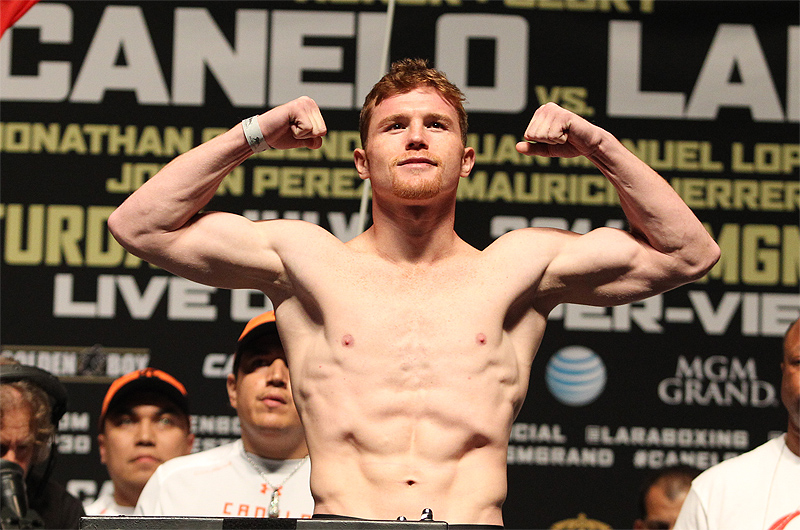


Remember the Cinnamon: Alvarez wrecks Cotto in Alamo City

By Bart Barry–
Canelo_Alvarez
“It is a laborious madness and an impoverishing one, the madness of composing vast books – setting out in five hundred pages an idea that can be perfectly related orally in five minutes. The better way to go about it is to pretend those books already exist, and offer a summary, a commentary on them.” – Jorge Luis Borges

SAN ANTONIO – The Alamodome, just east of this downtown area’s center, has hosted prizefights both great and consequential since its grand opening in 1993. Unfortunately its most recent event will be remembered only in the latter tally.

Saturday, before a partisan-Mexican crowd of 63,392, one which publicists insist smashed seven unique attendance records, Mexican Saul “Canelo” Alvarez laid ruin to Puerto Rican middleweight champion Miguel Cotto, thrashing Cotto, who weighed in on the contracted dot of 154 1/4 pounds, for 9 1/2 of their 11 rounds together before Texas referee Laurence Cole, in an uncharacteristic and unappreciated (by Alamodome attendees), act of insight and empathy, waved a stop to the match at 1:00 of round 11, making Alvarez the first man to contest and win both the WBC’s world junior middleweight and middleweight championships in the same match. Stubbornly scheduled to coincide with Cinco De Mayo weekend, even if the calendar rendered it impossible, Saturday’s Siete De Mayo fiesta was more a cynical ethnic cashout than a party.

“I fight for the people,” Alvarez said immediately afterwards. “Because without the people, there are no people.”

“Miguel Cotto tried to win,” said Cotto.

The miracle was not so much in the fight’s happening, although that was unusual in a year already bad enough to divide two into prizefighting’s committed fanbase yet again, but that it was competitive for long as it lasted. Cotto, effectively retired since battering marvelously the crippled Argentine formally known as Maravilla almost two years ago – and the ‘almost’ is essential, we know, since Cotto employed his now infamous “Point Per Day from Puerto Rican Parade” clause, insisting Alvarez pay a significant penalty for scheduling the superfight in Mayo, not Junio – made a better showing than many forecasters feared when the fight’s contract finally was published during the weighin.

Cotto promoter Roc Nation, a still-novice outfit captained by Big Daddy Kane’s longtime hypeman, has brought none of the innovation promised its semifull Barclay’s Center houses, proving with rapper Jay-Z’s tepid success th’t rapper 50 Cent’s abject failure in the very same gambit was not an anomaly but a trendsetter: Hip-hop artists, evidently, are multiples better at selling hustler epics to suburban teens than combative mismatches to urban adults. Or perhaps that’s a touch unfair to Roc Nation: It did, after all, invent for its Canelo-Cotto weighin a contract-unveiling gamechanger in which the terms of a fight – weightclass, purse, trunk colors, trim, glove size, referee, drugtesting policy, and even permitted punch combinations – remained variables unknown to ticketbuyers until DJ Truth 1 revealed them Friday while Alvarez and Cotto loitered near the scale.

Oddsmakers, themselves doubleblinded as ticketbuyers till Friday’s afternoon announcement, quickly installed Alvarez a 4-1 favorite, upon learning last-minute negotiations by promoter Oscar De La Hoya and cable broadcaster HBO restored Canelo’s left hook to the permitted-use column from which it was struck deliberately by Miguel Cotto’s own pink pen Thursday evening. Writing of HBO, the network’s palpable relief was felt from New York to Lone Star State when the match’s opening line came in well below the unwritten threshold (5-1) determining a match’s fitness for pay-per-view.

“It’s not complicated,” explained an HBO programmer who requested anonymity: “If there’s less than five times the chance our favorite will beat his opponent, take out your wallet. ‘Championship Boxing,’ our flagship program, is for less-competitive matches, obviously, though our 10-1 sweetspot is considerably lower, still, than Showtime’s. Once a fight goes off at 15- or 20-1, we’re going to lean ‘Boxing After Dark’ unless it’s (Gennady) Golovkin.”

Cotto trainer Freddie Roach, ubiquitous as a popup ad since the fight was signed, whenever it was signed, prepared his charge for a seemingly slower version of Alvarez, as Alvarez had little issue finding the Puerto Rican from about the second round to the match’s merciful end in the 11th. Alvarez, the naturally larger man, succeeded where others failed before him, successfully hooking with the hooker in a way 2015 Cotto victim Daniel Geale did not, starting a left hook to the head each time Cotto started a left hook to the body, and twice topspinning Cotto in a way not seen since Manny Pacquiao cleaned the Puerto Rican’s clock in 2009.

There are no sixth chapters in prizefighting, and Cotto’s inability to imperil Canelo even once in their 34 minutes together Saturday portended the end of a career marked by popularity more than greatness. Had Cotto retired immediately after Pacquiao stopped him, or Floyd Mayweather or Austin Trout outclassed him, his legacy might have included as much goodwill as it lacked decisive victories over great fighters in their primes, but the rapacity of Cotto’s cashgrab since 2012 – excepting only his match with Sergio Martinez, since Martinez and his handlers and New York’s athletic commission and HBO are more culpable for a one-legged man’s assault than its perpetrator – has cooled what warm feelings aficionados long reserved for the Puerto Rican.

Cotto’s surly disposition and spartan interview style conclusively wore better on a doomed warrior than a finicky diva.

Bart Barry can be reached via Twitter @bartbarry


Column without end, part 9

By Bart Barry
unnamed
Editor’s note: For part eight, please click here.

*

CARLSBAD, NM – This town is an overpriced outpost on the border of two western states, a dilapidated homebase of sorts for those who might venture to Guadalupe Peak, 8,000 feet in the air, or Carlsbad Caverns, 1,000 feet below ground. It is the nature of adventures they should feature the unknown, and if the unknown were but a roster of pleasant surprises, why, it would be the already-known.

Portrait of a column that nearly was not written:

A half hour lost to suffering through Amir Khan’s latest match, Friday, a glance at HBO’s upcoming fight schedule, Saturday, and Sunday a six-hour drive across terrain unchanging as it is forbidding, a particularly unappealing hotel in a particularly unappealing town, and nothing to do but eat poor barbecue or survey the Wal-Mart parking lot – not the best of Sundays but possibly the worst of them. It brings a sensation like nostalgia’s bullying twin, a reminder what hopelessness Sunday afternoons can hold if you’re not careful with them, if you’re not in a place where forward lamentations are forbidden or gnawing past-tense conditionals do not know to look.

There are oranges and yellows and reds everywhere here, and a washedout blue sky, too, but these are colors, one ought remember, one enjoys in shade or from shade. Blazing-on-blazing, instead, are what the colors of New Mexico are and portend in June.

Hopelessness in the sense of being without hope, being near enough to a moment to caren’t a whit for the future, where hope resides, is a very good thing; hopelessness in the sense of being through a checklist of reasons to go on drawing breath, to be past experiences and disappointments enough to think it probable the future will be worse than this, however bad this is, is a very bad thing. This city has a hopelessness to it in the worse sense of the word. Maybe that changes as you read this (for it certainly does not change as I write it); if you’re reading this on Monday, there’s a good chance I am somewhere near the top of Texas, the peak of Guadalupe Mountains National Park, 55 miles southwest of here, hiking alone in the wilderness, part of an act of faith that goes: Hiking may not get better, but life gets better because of solitude and nature.

It’s an ongoing embrace of the unknown, the necessary ingredient in adventure – what justifies a man’s life. Adventure is duly celebrated in every culture, but a caveat exists that explains the upwards spiral adventuring catalyzes: The more one converts the unknown to the known, markedly, the more one’s tolerance for the known diminishes. It’s another quirk that argues modestly against any perceivable universal order whatever; it’s the reason “mysterious ways” retains such a philosophically seductive sheen.

The 450-mile westwards drive from San Antonio is blessedly open and devoid of the petty competitiveness one finds on most interstates across the fruited plain, the way motorists cluster tightly, surrounded by miles of open space, angling to deny strangers the satisfaction of a spot in the imaginary future area they plan to occupy. Texas has lots of guns and lots of road-rage, and blossoming billboards about road-rage, and if one were to think arming the populace would decrease the likelihood of strangers confronting one another, well, he would be wrong. Arming the populace invariably grows the self in self-protection more than the protection, expanding the perimeter of offense and probably the perception of offense, too.

Writing of which, some might be offended to have come all this way to a boxing column only to encounter a pining-away about flat western spaces and traffic patterns and Sundays. Very well.

Friday British welterweight Amir Khan decisioned American Chris Algieri in a match that was, like most things PBC, somewhat better than feared. British fans are loyal fans – frankly, they are like Mexicans without a fraction the talent pool – and their loyalty is continually tested and occasionally rewarded by Khan, good a representative of this era as any. Khan does not win his career’s biggest fights, or perhaps the fights he loses that he is supposed to win retroactively gain in stature, but he provides suspense because his chin is so poor that it distracts from his footwork, which otherwise would be glaringly awful.

However many trainers he’s had, Khan has never had stricken from his repertoire a sideways-skipping escape that looks frightened no matter the juncture of a fight in which it appears. It is incredible that Algieri, a man who barely survived Ruslan Provodnikov at 140 pounds and lost every minute to little Manny Pacquiao in November, at times looked aggressive and imposing as Antonio Margarito against Khan. Algieri thinks and listens in a way Khan never does, and when he goes in the hard way he emerges from it much better than Khan, too.

“So little from so much” – that ought to be the tagline in September if it turns out Khan looked badly enough Friday to win the Floyd Mayweather retirement-match lottery. Since Algieri couldn’t miss Khan with wildman rights in the opening five rounds, it stands to reason Mayweather might possibly, conditionally, conceivably, tentatively, haltingly go for a knockout to close his career. The Brits would have to acquire from scalpers 15,000 of the MGM Grand’s tickets, with the remaining 1,000 split between celebrity comps and Mayweather fans, but why not?

Enough of this. I’d rather be in Barcelona . . .

*

Editor’s Note: For part 10, please click here.

Bart Barry can be reached via Twitter @bartbarry



Column without end, part 8

By Bart Barry–
unnamed (768x1024)
Editor’s note: For part seven, please click here.

*

San Antonio Museum of Art currently features a retrospective exhibition of works by American painter Jamie Wyeth, son of Andrew. There is real talent in his paintings. Innovation, too. In a series of works that has seagulls depicting the seven deadly sins, Wyeth uses watercolor paint thickened with honey – a trick Wyeth attributes to his time working in Andy Warhol’s Factory – painted on cardboard. The gulls are ravenous, wild, and terrifying if one imagines himself prey. Wyeth also uses every part of a brush, his fingers, and even his tongue to make a large, gulls-and-waste-disposal piece called “Inferno” for its fire and hellish air.

Innovation without talent produces little but anxiety, and fortunately Wyeth has plenty of talent, even if not so plentifully as his dad did. Would that boxing had fractionally so much talent as innovation, lately.

This sport is increasingly difficult to write about. Last week’s performance by Nicaraguan Roman “Chocolatito” Gonzalez, unfortunately, served like nothing so much as a reminder how much better and easier it was to write about prizefighting a decade ago. About a decade before that, of course, the newspapers abandoned the sport shortly after the larger American public did, another marvelous example of the free market’s creative destruction, but part of the reason writers let it happen – and writers did have some control over the matter – was because there was less to write well about.

The writer is not yet born who can write compellingly about a subject for which he feels no passion, and fleshings-out of box scores and television ratings and polls fool only undiscerning readers, and boxing now accelerates its descent into a place about which no smart being can feel passion. There’s habit, of course, but last week’s end of ESPN’s relentlessly mediocre “Friday Night Fights” stamps an epitaph on that. ESPN always had the budget to outbid HBO and Showtime put together – look what it pays for “Monday Night Football” and “Sunday Night Baseball” – but chose, instead, to treat boxing as a shamefilled filler between collegiate softball games, doing less than Telefutura, much less than Telefutura, to advance interest in our beloved sport.

Manager Al Haymon saw an incredible resource being resolutely squandered and moved on it. Bless him for that. Al Haymon will now fill ESPN, over time, with Just For Men-quality matchmaking. Damn him for this.

One has to care exponentially more about Olympic medals and British boxing than I do to watch garbage like James DeGale versus Andre Dirrell, regardless of whichever network televised it Saturday. Dirrell, whom writer Steve Kim nicknamed “Dirreadful” back when boxing was fun to cover, has been unwatchable for years, and Saturday was by no means his opus – he did get floored a couple times, after all. No, Dirrell’s opus was the opening act of his agent-provocateur role in Showtime’s “Super Six” tournament way back when. Before he refused to fight Andre Ward because Ward would beat him, before he “Matrix-ed” his way into defenselessness and then unconsciousness with Arthur Abraham, Dirrell set a precedent for insipidness against Carl Froch. It will be a long time before a muscular, 168-pound man shows a greater commitment to conflict avoidance than Dirrell showed against Froch in 2009.

Dirrell was the blueprint for an Al Haymon fighter, even before most knew who Haymon was: Telegenic, athletic, a lion in a mismatch – look at that handspeed! – and a pussycat in a fair fight.

Haymon now uses venture capital to corner boxing on American public airwaves, a strategy that, if successful, will end boxing writing, but his approach has one oft-overlooked flaw: Haymon does not appear to like seeing men fight even a little. Never mind the existential resistance to Haymon’s plot from an outfit like Golden Boy Promotions (and never ever mind the token rebuttals from Haymon’s puppet promoters), the meaningful resistance to Haymon’s plot is right here: People who like to watch boxing don’t enjoy the fights Haymon makes.

Aficionados, a romantic and tragically flawed bunch, play an imaginative game with ourselves, perhaps the best escape: We dismiss the most obvious explanation for each happening in our sport and replace it with ideas that are daft. We dismiss what is obvious – Haymon hoodwinked a number of cable guys then moved on to hedgefund managers, without attracting one new fan to boxing – and replace it with a savvy plot to attract with bad fighting Americans who don’t even like good fighting. “Better than feared” is not a growth strategy in a market so tiny that fewer than one-percent of American households even know to have fear.

There is no faking inspiration, regardless of special effects and dramatic lighting, and there is nothing inspiring about Haymon’s stable of fighters feinting at one another, especially if matches continue to happen at an hour not even boxing fans are yet drunk. Haymon’s personal finances will do fine – he’s now the patron saint of every entrepreneur who salivated simultaneously at combat sports and Wall Street but couldn’t think how to marry them – but his brand is no more likely to endure than writers’ collective interest in boxing . . .

*

Editor’s note: For part nine, please click here.

*

Bart Barry can be reached via Twitter @bartbarry

.


Dung beetles and Chocolatito: Small, extraordinary creatures

By Bart Barry-
20150516_133426-1-1
SAN ANTONIO – While hiking Saturday morning I came across my first in-action dung beetle, a needly faced creature pushing a smooth cylinder of cow excrement along a path beside the Medina River. If you do not think a dung beetle is among nature’s most extraordinary creatures, keep reading. Saturday evening, a nearly as remarkable Nicaraguan flyweight named Roman “Chocolatito” Gonzalez made his debut on American premium cable. These occurrences are only connected by coincidence, and diminutive stature, perhaps loosely, but as both are interesting in their way, please be indulgent.

The male dung beetle pushes his ball, one that can weigh 250 times what he does, backwards, with his hind legs, while walking on his front legs. He pushes extraordinary distances in search of both a mate and a final resting place. Perspective: To match the physicality of the dung beetle’s feat, a man would have to push an M31 tank with his feet while walking on his hands from here to El Paso, only to have every female he encounters ignore him entirely to inspect his tank and calculate the likelihood her offspring could survive in it. There’s good reason ancient peoples deified the dung beetle.

Roman Gonzalez (43-0, 37 KOs), meanwhile, is the real thing, and it is good to see him embraced by HBO – a network with nothing to gain, really, by exposing its subscribers to a man with championships at minimumweight, light flyweight and flyweight, a man who is yet to fight within 40 pounds of what the average American woman weighed in 2014. At 5-foot-3, Gonzalez won his first world title weighing 104 1/2 pounds; he is tiny. Too, he is perfect in form as anyone currently plying the craft of prizefighting.

He’ll never capture America’s imagination the way Floyd Mayweather has, in part because Gonzalez is nearly impossible to dislike. Watch his opponents’ treatment of him after each knockout: They feel sincere affection for him, and he feels sincere affection for them, hugging and bowing and smiling graciously in a way heavyweights never do. Part of that, also coincidentally, returns to a counterintuitive boxing ratio in which the possible consequences of a fight are inversely proportionate to the possible consequences of each punch.

Gonzalez strikes with disproportionate force for a man who weighs 111 pounds, yes, but Wladimir Klitschko strikes with disproportionately more consequence even than his disparity in size with Gonzalez anticipates: A punch from Klitschko is much more than three times as likely to render you unconscious. Which, ironically, makes a fight with Klitschko much safer, in a survivability sense, than a fight with Gonzalez. A single blow whose concussion renders you instantly unconscious is not healthy, of course, but you’d rather that than 150 punches from Gonzalez.

There’s one other incredible advantage the heavyweight champion of the world has over any minimumweight champion: His punches travel distances enough that any member of the laity can observe them at full-speed. Not so with a Gonzalez fight. Gonzalez and Edgar Sosa, Saturday night, were so very much closer, and their motions so very much quicker, in part for traveling shorter distances, in part for having to propel so much less mass at one another, that even a knowledgeable observer could hardly hope not to lose something with peripheral vision.

One needs the fovea to watch Gonzalez, and as the fovea’s scope is notoriously small, one must choose, when television does not choose for him, whether to observe the feet or the hands. The hands are where the consequences are, and Gonzalez pronates masterfully at the ends of his punches, but if you’ve never watched Gonzalez’s footwork, or had the privilege of watching Lee Wylie’s explanation of it, treat yourself to a replay of Saturday with your eyes set on the canvas.

Gonzalez has now replaced Mexican Juan Manuel Marquez as the fighter whose style every trainer in the world should instill in every child he teaches to box. Gonzalez is offensively minded, technically precise, and defensively responsible. Of the three best fighters in the world today – Floyd Mayweather, Gonzalez and Guillermo Rigondeaux – Gonzalez is the one who looks for the knockout every time every bell rings. His attacks are fundamentally correct to a point of being nearly impersonal; where Mayweather seeks to solve an opponent and Rigondeaux gets bored enough to rehearse combinations flagrantly before throwing them, Gonzalez applies a template. Mayweather and Rigondeaux query their massive databases for opponent patterns, finding matches for neutralization, first, before applying offensive templates. Gonzalez, conversely, applies his offensive template in the faith it instantly will make every opponent almost the same.

One other enormous aesthetic difference between Gonzalez and Mayweather: The referee rarely enters the broadcaster’s frame during a Gonzalez fight, while he is ubiquitous whenever Money is in the ring. Half of Gonzalez’s rare clinches do not even require the referee to break them: “We came too close together just now, brother, but no worries, let’s take a step back and resume the milling.”

There was harmony in Saturday’s HBO broadcast, pairing Gonzalez and Kazakh middleweight titlist Gennady Golovkin, even if the order was backwards. Boxing is never a meritocracy till a bell rings, and one hopes Golovkin was impressed enough by Saturday’s opening act to glance through Gonzalez’s record: world championships in three different weight classes, a man fighting larger men rather than calling for littler ones, a prizefighter seeking new challenges in a quest to improve. Gonzalez is six years younger than Golovkin and has seven more knockouts, and somehow, no one is ever “afraid” to fight Gonzalez.

When Willie Monroe Jr. becomes your last fearless man, it’s time to fashion a new marketing slogan.

Bart Barry can be reached via Twitter @bartbarry


Hit by the Cinnamon stick

By Bart Barry
Canelo Alvarez
HOUSTON – Minute Maid Park, home of the Astros, made a fine fight venue, even, or perhaps especially, when its retractable roof winked at its anxious media section, water dropping from the sky, papers rising from the table, before shutting once more just before the main event. Mexican Saul “Canelo” Alvarez then knocked Texan James Kirkland stiff in the last minute of round 3. And fans who’d been fed, by that late hour, 10 hours of inedible slop, left overjoyed by the spectacle because, whatever Floyd and Manny may opine, positively nothing beats a knockout.

The end came in slow motion at ringside, the better for savoring it. Alvarez set his eyes and head exaggeratedly low, fixing them on Kirkland’s chest – because, as the old timers know, it’s one head’s length from the breastbone to the chin – and then he took his time cocking the righthand. Kirkland, reflexes impaired, already nigh drunk from blows to his skull, picked-up the punch an instant late, exactly as Alvarez intended. Kirkland dropped his hands to the very spot Alvarez’s eyes set. Then Kirkland realized he’d fallen for a feint and hoped without hope he might chasten Alvarez’s aggression with a lunatic lefthook counter. But Kirkland had time only to get the punch started and complement the aesthetics of Alvarez’s perfectly structured right by flailspinning over Alvarez’s properly lowered head, winning for Alvarez Knockout of the Year even if we’re not yet to the ides of May.

It was a right remedy for the disaster of May 2, and it was right th’t a Mexican brought it to us. It was a right remedy, too, for Alvarez’s own terrible showing against Mayweather some time ago.

It brightens the spirit to think Mexicans might have a genuine article, finally, in Alvarez, a man who, if he’s never quite the world’s best prizefighter, is now Mexico’s best prizefighter, not merely its most popular. Popularity, as Edward Norton’s accomplished character in “Birdman” so aptly puts it, is the slutty little cousin of prestige, and while Alvarez has never wanted for popularity, a debt owed more to Mexican daytime television and haircolor than fistic accomplishments, he now has prestige, an order of merit greater because it’s how the meritocracy of boxing would order it.

Alvarez may not yet deserve 30,000 fans in Houston or 40,000 in San Antonio, not when Mayweather and Pacquiao gather half that many at MGM Grand, but the Mexicans gathered in Houston on Saturday absolutely deserved the fight, and ending, Alvarez gave them. Beleaguered as they have been with Son of the Legend, the Legend’s disaster of a son – and the Legend, self-oblivious a sporting legend as you’ll find, was in lock-Tio-Julio-in-the-basement broadcaster mode from ringside Saturday – the Mexicans, boxing’s one reliable demographic in sickness and in health, finally can embrace Alvarez with a clean collective conscience, setting aside Juan Manuel Marquez’s enduring and caustic criticism of Alvarez: one more resentful riff from Mexico’s best prizefighter of the last generation, and best resenter too.

Alvarez does not yet show a spot of resentment, nor should he, and that is a fine thing. Son of the Legend, setter of an entitlement-to-accomplishment ratio that may never be surpassed, came into the sport already resenting every interview his duties caused him to suffer ungladly. In this respect, Alvarez, when compared to Son of the Legend, is a consummate professional. But again, that phrase, “when compared to Son of the Legend, is a consummate professional”, is now elastic enough to accommodate everything from the housekeeping staff at Sheraton Four Points to the waistband of Junior’s next pair of raspberry-pink cotton briefs.

I have interviewed Canelo on the phone twice, and both times were marked by their courtesy and professionalism. Of a culture that values time differently than ours does, Alvarez was the exception to Mexican prizefighters: He called at the appointed time, to the minute, and was entirely cheerful and unassuming. His answers were unremarkable, since child stars in any culture come deprived of what challenging experiences make many adults at least initially captivating, but as that is a thing he cannot control, and as it is ungracious, after all, to blame dullards for their condition, I recall him fondly for his punctuality. And for one other reason: Asked in Spanish if he sees nostalgia, a cognate that works equally well in both languages, in the eyes of his expatriated countrymen when he attends publicity events in, say, Texas, Canelo’s voice rose, and his sincerity gleamed off the edges of a rare, unrehearsed answer:

“Those men, to see them after they work, those men, those . . . If solely you knew how hard they work. Those men are heroic to me.”

Dullard or otherwise, Alvarez has character, and he fights with character. Every other Money Team retread misuses the word “fearless” – attrition hunters who gambol away from opponents till they’ve reduced them, via boredom or exhaustion, to targets, and then roar their imitation of bravery – but Canelo’s selection of opponents has shown no fear whatever. Glance through the rankings of his division and find someone you think could beat him whom he’s avoided.

Austin’s James Kirkland may not have been in top condition, and may not have sold a fraction the tickets in Houston he’d have sold in San Antonio, either, but he brought real violence from a real junior middleweight, Saturday, and Alvarez did not wilt even slightly. Alvarez treated Kirkland like a heavybag for practicing creative combinations on, even while Kirkland bulled and leaned and whacked, in rounds 1 and 2, and Alvarez had the balls to throw a dozen right-uppercut counters, too, exposing his head fully to Kirkland’s left hand.

Alvarez gave a fitting performance to our sport’s fittest fans.

Bart Barry can be reached via Twitter @bartbarry
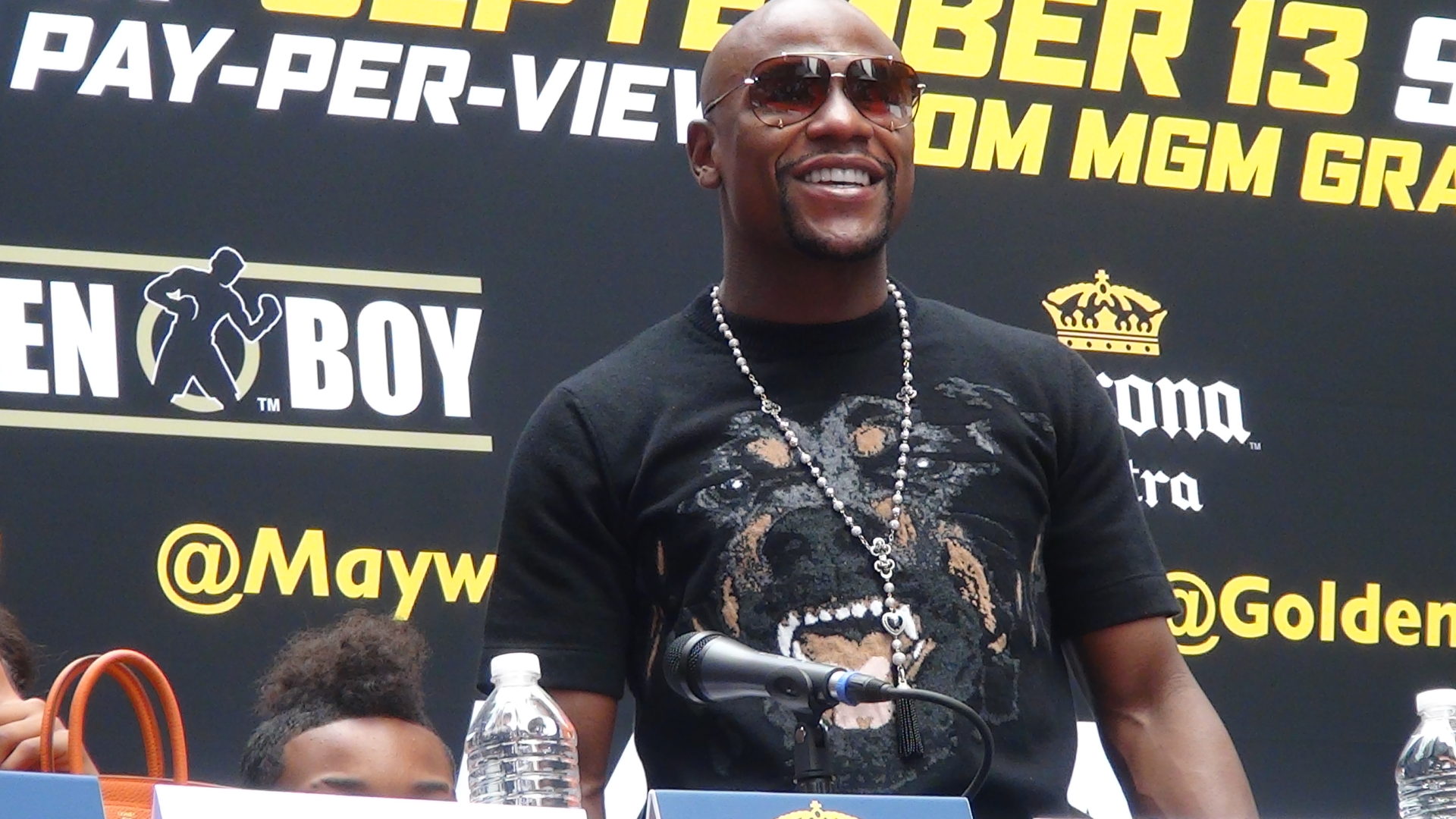


The prestidigitation

By Bart Barry–
Floyd Mayweather 2
Saturday at MGM Grand Garden Arena, in the best fight of May 2015, so far, American Floyd “Money” Mayweather easily decisioned Filipino Manny “Pacman” Pacquiao, and more importantly, he made $100 million. Official scores went: 116-112, 116-112 and 118-110. Only one judge got right a match in which Pacquiao won two rounds, Mayweather possibly lost two rounds, and the rest were not close.

If there is a happy take-away from Saturday for our beloved sport, it is no better than this: Realizing, for once, the average pay-per-viewer drunkenly echolocates boxing telecasts like a bat – forming a picture in his mind as much from what he hears as what fills his eyes – the cocommentating crew from cable networks HBO and Showtime checked-and-balanced itself to an objective broadcast that presented the fight in its lopsided lack of glory, engendering no claims of scandal.

If historians return to Mayweather-Pacquiao someday, though its ultimate irrelevance is probable, it will be to mark a very talented athlete’s final vengeance on a sport he’d grown to hate deeply. There will be a montage of essential moments in this marking: Mayweather gloomily glancing down on Pacquiao’s forehead at the Friday weighin, Mayweather standing directly in front of Pacquiao with his gloves at his waist, Mayweather skipping frantically away in round 12, and Mayweather standing on a ringpost to yell at a large assemblage of people who realized they’d been had again – and this time, worst of all, by five years of their own imaginings.

Manny Pacquiao deserves no praise for his Saturday effort. He made no adjustments. He took entire rounds off. And he gracelessly claimed he won the fight afterwards and further subverted what esteem aficionados held for him, hours later, by attributing his listlessness to a shoulder injury – as if he’d not used that same shoulder to raise his arms jubilantly overhead at the Friday weighin. Coach Freddie, whose termination is likely in promoter Top Rank’s third Manny remake (since already it’s apparent the injured-shoulder gambit smells too desperate), deserves even less praise than Pacquiao does; he trained his charge for a fighter with no more dimensions than Antonio Margarito showed. Sure, Mayweather was much faster at evading counters than Roach was on the handpads, and for an injured fighter Pacquiao certainly hurled that counter right hook, didn’t he, but ultimately Mayweather used the playbook Juan Manuel Marquez wrote in 42 rounds against Pacquiao to expose exactly how little Roach actually taught Pacquiao in their vaunted educational sessions together.

Commentator Jim Lampley was right in his midfight allusion to Marquez-Pacquiao 3, the match whose second half saw Pacquiao hopelessly swim at Marquez, taking five steps where Marquez needed two, and thoughts of Marquez returned, too, in round 9 when Mayweather caught Pacquiao pure with a right cross the much larger man did not plant on, and it was a reminder why, whoever will be recalled as the greater fighter, Marquez will remain the more beloved one for showing a form of courage with which Mayweather is yet to familiarize himself.

How enormous must Mayweather have looked to Pacquiao in that opening round? Seven-feet and about 250 pounds, probably, as Mayweather’s chin was farther from Pacquiao’s anxious fists as any chin ever has been. Unsurprisingly, Paulie Malignaggi, already our generation’s best commentator, seated beside Lennox Lewis, easily its worst, was the one to distill the fight to its quintessence: Mayweather fought at his desired time and distance, and Pacquiao did not.

In round 4 Pacquiao finally caught Mayweather with a punch, countering him with a left cross the same way Marcos Maidana countered him with a right hand in September, and Mayweather put his hands up, retreated and felt what Manny had for him. Which was not much. Pacquiao fought “intelligently” and retreated himself, back to the middle of the ring, so as not to expend energy carelessly. Imagine that: Pacquiao calculated he had a better chance of outsmarting Mayweather than outworking him. It was a reminder, along with Mayweather’s considerable size advantage, of the second part that made this fight a mismatch the day it was signed: Pacquiao, since his 2010 fight with Margarito, is fractionally active as laymen think he is. Pacquiao lost a 2012 decision to Timothy Bradley because he was inactive and inaccurate. He opted for frantic activity in his fourth match with Marquez and got iced. Mismatches with punching bags got split by a rematch with Bradley in which Pacquiao, promised the benefit of every scoring doubt, fought no more than 90 seconds of each round. A kinder and wiser Pacquiao is what aficionados have been served for 4 1/2 years now.

The only chance Pacquiao had or would ever have against Mayweather is if science somehow took the wildcat demon who shredded Erik Morales nine years ago and added 20 pounds of muscle to his frame without slowing him a wink. An impossible thing, in other words, Pacquiao ever had a chance against Mayweather, and every single reader of this column knew it the night Marquez left Pacquiao in a heap, and then we chose to suspend our disbelief because a boxing promoter is good at nothing so much as legerdemain, waving crazily a Chris Algieri doll in his right hand while palming the two-headed Marquez coin in his left.

Those who surround Floyd Mayweather know he cannot imagine boxing in his absence; for Mayweather, the sport of boxing ends the day he retires. Because of Mayweather, few of us will have the presence or means to argue with him when that day comes. Against the future of boxing, then, I’ll take Mayweather: UD-49.

Bart Barry can be reached via Twitter @bartbarry
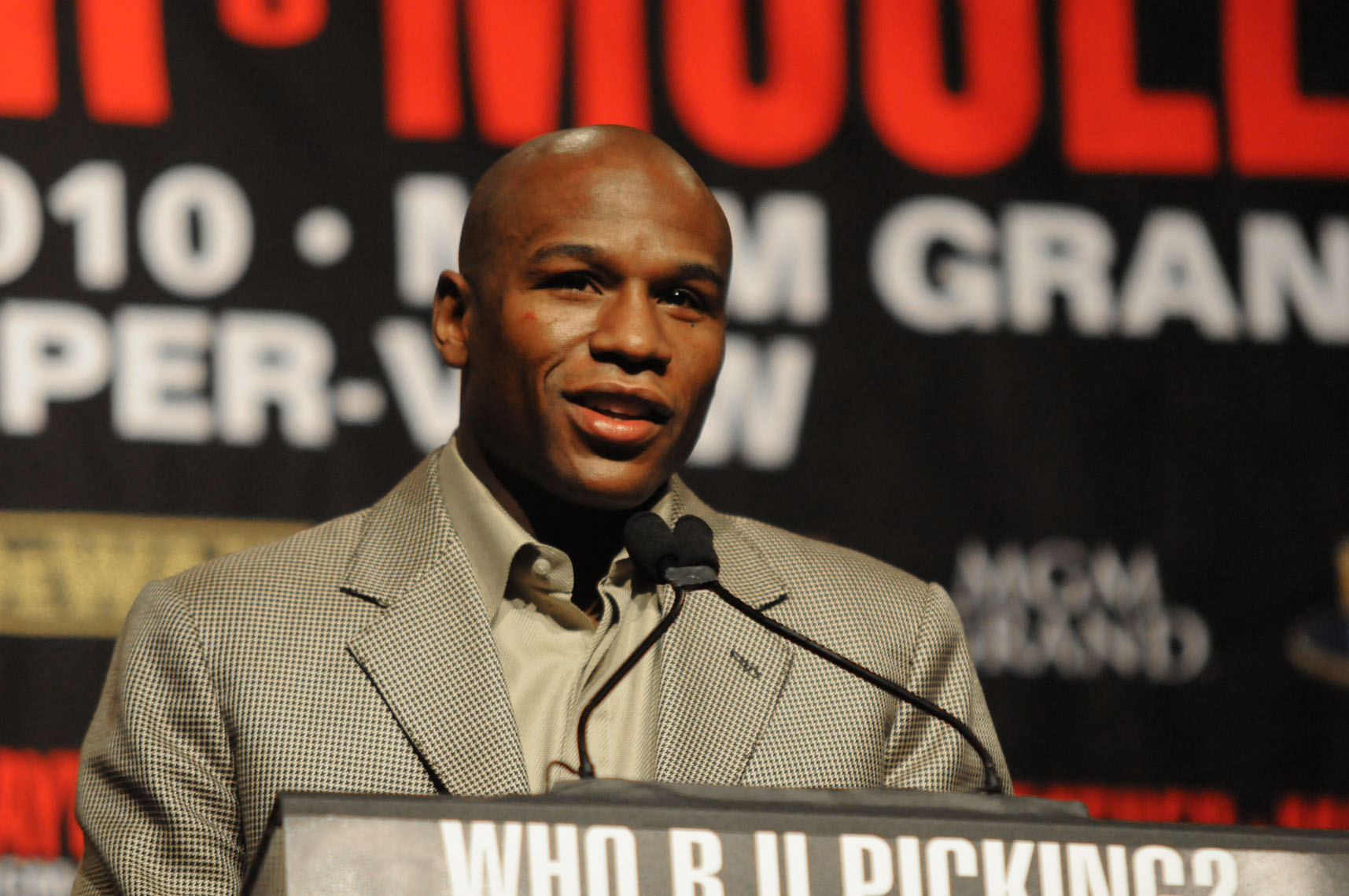


The big payout

By Bart Barry–
mayweather2
Saturday at MGM Grand Garden Arena, before a crowd likely to comprise not one person reading this column, American Floyd Mayweather finally will fight Filipino Manny Pacquiao. The time for manufactured enthusiasm is upon us, for tossing oneself wholly into the futility of shouting in print towards a volume to rival the industrial din of Time Warner and CBS and Walt Disney Company. To wit:

MAYWEATHER WILL WIN THIS FIGHT!!!

At long last, the event anticipated to break revenue records we’re told we care so deeply about arrives on our video-display devices – so order live today! Boxing promoters or managers or advisors, or whichever new euphemism they next hide beneath, are the direct descendants of yestercentury’s circus barker; they believe in an inexhaustible supply of nitwits to whom they can provide the tricky service of relieving one of his wallet, and they fail disproportionately more often than they succeed. But they will not fail Saturday, provided Saturday’s one-off cashgrab is the end of their tabulations.

There’s no way to calculate, immediately, the sum of resentment to be felt among boxing’s comparatively tiny band of loyal supporters – the ones who wasted money on Mayweather-Baldomir, or paid to be in Cowboys Stadium for Pacquiao-Clottey and its egregiously priced parking – but it will be an increasingly easy number to derive in the next five years, as local gyms continue to shutter and ticketsales at local shows continue to follow. Attendance for Saturday represents a proper perspective from which to consider the coming resentment; priced to ensure no rightminded aficionado attends, tickets that, bizarrely even for boxing, were not available till a few days ago betray the organizers’ organizing vision: the biggest boxing matches, made-by-television spectacles, someday soon will happen in broadcasters’ very studios.

Logistics are the reason the largest American boxing outlets cite when asked why they couldn’t broadcast live from, say, Wembley Stadium, where 80,000 Brits gathered to watch Carl Froch in 2014. Putting fights directly in studios should solve that problem. Promoters do not promote any longer in any event; they organize and book and contract vendors of every kind to do all the jobs promoters once did, though boxing was admittedly a touch late to the outsourcing trend, and the inaccessibility of Pacquiao-Mayweather would be collectively maddening if boxing fans did not, as one clever wag on Twitter put it, have Stockholm Syndrome.

That does little, however, to explain MGM Grand’s tolerance for the consequences of a rivalry between promoter Bob Arum and adviser Al Haymon in something so great and complicated as the historic gouging of sportsfans; why the hell is MGM Grand overpaying for this spectacle if not to bring folks to its slot machines? And because of the boxoffice delay, rest assured there will be fewer handles pulled along the Strip this week. Whatever inflated earnings reports crash down on aficionados’ bowed heads in the next month – the pay-per-view number has already been set over 3 million, and anyone who’s been interested in boxing for more than the last month, no more than 500,000 Americans in a nation of 300 million, knows no match has ever officially missed its predicted number; missed numbers do not get announced – rest assured total revenue should have been more.

A week after Pacquiao-Mayweather, Mexican Saul “Canelo” Alvarez will fight Texan James Kirkland at Minute Maid Park in Houston, and will do so before a crowd that should be about three times MGM Grand’s crowd.

“But oh,” cries a passel of aspiring businessmen from their parents’ couches, “they won’t make as much money!”

First of all, why the hell are you so excited about strangers making money?

Second of all, three times as many aficionados and potential aficionados will have a chance to see a major event in a sport you care about, which is better for your sport in every single way.

Third of all, when you cheer against your own self-interests, you don’t look wise or even pragmatic – no matter how expertly you cock the brim of your TMT hat – you look like a damn sucker.

Writing of which, there is a good chance Floyd Mayweather will win 10 or 11 rounds Saturday night. He is much larger than Manny Pacquiao, he has the back of a middleweight, however noble his perfectly ineffective 2010 crusade against PEDs proved, and Pacquiao has not been anywhere near the storm at 147 pounds he was at 130. Pacquiao is better than every opponent Mayweather has dared to fight, yes, and Pacquiao will hit Mayweather with more left hands than the sum of Mayweather opponents since Oscar De La Hoya, but there is a very good chance they will not affect Mayweather very much at all. The recent appointment of Kenny Bayless as Saturday’s referee, too, ensures Mayweather will be allowed to hold to a point of tackling Pacquiao if he’s so compelled, and Pacquiao has never been mistaken for Roberto Duran on the inside, anyway.

Is there a chance Pacquiao’s extraordinary conditioning and unique punching angles will cause fatigue enough to bring the bitch out of Mayweather? Actually, no, not really; whatever Mayweather supporters and everyone else may think, Floyd Mayweather is all fighter when he has to be. Much like Pacquiao’s match with De La Hoya 6 1/2 years ago, this fight will be incredibly intriguing for a round or two – though not $100 worth of intriguing. Much unlike Pacquiao’s 2008 match with De La Hoya, the things Pacquiao will need to do to cause an opponent’s slumpshouldered retreat to his own corner will not be things Pacquiao can do.

I’ll take Mayweather, UD-12.

Bart Barry can be reached via Twitter @bartbarry


Truth and Beauty: Crawford, Piano, Khan, Provodnikov and Matthysse

By Bart Barry-
hdr_00029_1 (1024x767)
FORT WORTH, Texas – This is not the city where Terence Crawford fought Saturday. But it is part of an enormous thing called Metroplex, a collection of cities that comprises Dallas and Arlington, where Crawford did fight, a 50-mile expanse whose population, if counted as one, would tally 6.5 million souls, sitting just behind New York City and well ahead of Los Angeles among the nation’s largest. I stay at the western end whenever I visit Metroplex because it affords more culture-per-square foot than anywhere I’ve found.

There is a symbiotic relationship shared by truth and beauty; beautiful lies are gaudy by comparison, and an ugly truth is at best tolerated, not celebrated, by a person of any aesthetic taste. Terence Crawford has a beautiful way for being truthful, and Lucas Matthysse and Ruslan Provodnikov have truthful ways for being beautiful, and The Kimbell Art Museum, located 17 miles west of Arlington, the city on whose University of Texas campus Crawford untied Puerto Rican Thomas Dulorme on Saturday before Matthysse decisioned Provodnikov on HBO, has such truth and beauty in its architecture and collection one quickly forgives himself for stretching a metaphor that mayn’t even exist.

For years the front of architect Louis I. Kahn’s masterwork went unseen, as construction equipment obscured everything in pursuit of contemporary Italian master Renzo Piano’s pursuit of a Kahn tribute – the second time Piano has made such a thing, and as the first time, Houston’s Menil Collection, succeeded so completely it established Piano as a modern master, the Italian did it again – but with last year’s opening of the Piano Pavilion, across a plaza from The Kimbell, the lovely waterfalls and marble-lined treeways of Kahn’s entrance are available now to the public at every moment of every day, and the nearly priceless collection that resides beneath The Kimbell’s signature half-circles, topping concrete tops that treat water as light, spilling it from narrow grooves, are available to the public during business hours without a penny’s charge.

In all the great state of Texas, The Kimbell comes closest to duplicating Europe’s genius for gorgeous public spaces. That word above, priceless, is pricey anymore – overused as it is by salesmen on every used-up lot. But it is nearer to fitting than cliche when it modifies what The Kimbell comprises; works by Leonardo and Michelangelo and Caravaggio and most every Renaissance master whose name you begrudgingly memorized for that enormous art-history class in the assembly hall where the dullard professor dimmed the lights for her terrible cave-paintings slideshow that dimmed your lights instants later.

Cut the lights, indeed, Terence.

The only word that bubbles to the top for a careful observer of Crawford is composure. Crawford gives entire rounds to his studious ideal. He sees no occasion for studying tape of his opponents, one assumes, because he reads them and calibrates so well in the moment. Crawford has now fought top professionals and found no scenario among them for which he cannot improvise. He is much more like a prime Andre Ward, lately, than Andre Ward is.

Crawford does everything well, and he does everything well in an assured way any opponent must find sapping if not spiritually crippling. Crawford missed Dulorme wide in the opening rounds with his hard punches and found him only with touches, even when spanking the impetuous Puerto Rican with a righthand lead. A left hook to Dulorme’s body towards the end of round 3 changed the match, and Crawford and Dulorme each sensed it, and especially Crawford did.

Crawford, like Floyd Mayweather and Manny Pacquiao before him, is a natural jewel excavated and polished by promoter Top Rank and its singular capacity for cultivating prizefighters as attractions and achievers. (If you doubt that, ask the lads at Premier Boxing Champions how their Son of the Legend investment looks right now.)

Crawford waited till Dulorme, whose chin is much more reliable when wagging than absorbing – “Sugar Chin” as Crawford’s most colorful trainer, Brian McIntyre, called the Puerto Rican – got too close or too confident or simply forgetful, and Crawford jab-feinted Dulorme’s guard out of position then snapped his head leftwards with a hook and rightwards with a cross, the same elegant 3-2 combo with which Carl Froch cut the lights at Wembley last year, and everything after that was but a chance to inspect Crawford’s poise like he inspected Dulorme’s vulnerabilities, until KO-6.

Nobody who was ringside in this city got to watch what followed in New York on the HBO broadcast, though trust every one of us found the replay on our hotels’ dials Sunday morning. Such sanity in the violence Matthysse and Provodnikov subjected one another to; despite the real damage they did to one another’s bodies and brains in 36 minutes of combat, they embraced like once-separated brothers before the 12th round, and if it were a 15-round fight, there’s plenty of chance the victor would have been the Russian rather than the Argentine. But Matthysse has more class than Provodnikov, if just a wee bit less relentlessness, and Matthysse won Saturday’s tilt the way a prizefighter, a professional combatant, should do it.

If Crawford and Matthysse should fight next, and of course they should, HBO’s junior welterweight champion will be a much better one than PBC’s.

Bart Barry can be reached via Twitter @bartbarry
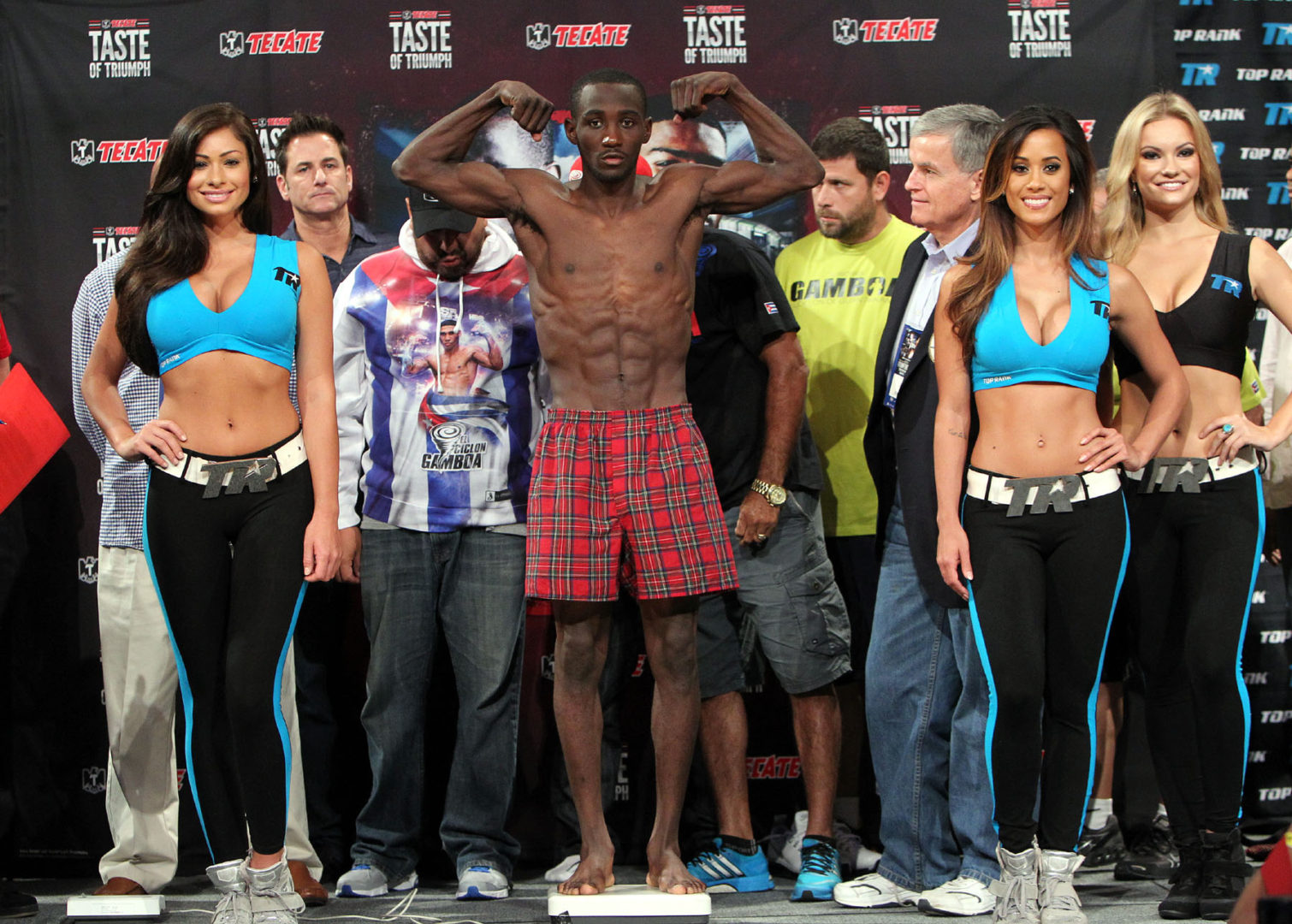


Everyone’s ‘Bud’: Crawford obliterates Dulorme

Terence Crawford
ARLINGTON, Texas – It is said a fighter becomes 20-percent better upon winning a world title. Undefeated junior welterweight champion Terence “Bud” Crawford appears to have gained an additional 20-percent by winning 2014 fighter of the year.

Saturday at College Park Center, before a crowd that compensated with passion for what it lacked in density, Crawford (26-0, 18 KOs) showed his trademark composure while waiting for Puerto Rican challenger Thomas Dulorme (22-2, 14 KOs) to overestimate his own talent, conditioning or chin. At nearly the midway moment of the 12-round match, Dulorme did just that, Crawford caught him with a signature combination, and at 1:51 of round 6, the match was over.

“That’s why he’s fighter of the year!” cheered promoter Bob Arum.

“I had a great training camp,” Crawford said afterward. “I was ready for anything he gave me tonight. It was just a matter of time. I feel very strong in this weight division.”

The match began tentatively. Neither man landed many meaningful punches in the first two rounds, and if there were a surprise it was how widely Crawford’s misses went – how easily Dulorme timed him and pulled back from peril – and how otherwise inactive the Nebraskan appeared, contenting himself with waiting for Dulorme to make errors that did not come initially.

A Crawford left hook to the body in round 3, though, began a transformation of the fight’s complexion.

Showmanship and closing rounds effectively gave Crawford whatever scoring advantage he enjoyed after four – as Dulorme got increasingly hesitant the more demonstratively confident Crawford acted.

“He did exactly what we wanted him to do,” said Crawford’s trainer, Brian McIntyre. “We knew (Dulorme) was going to gas out. He’s too tight, he gasses out.

“We call him ‘Sugar Chin’.”

At the beginning of round 6, Crawford landed a left hook, right cross combination, 3-2, that ruined Dulorme. Three knockdowns followed, as Crawford calmly laid waste to the man in front of him.

There may be more popular fighters in the world right now, but it is doubtful there are better or more complete ones.

ISMAIL MUWENDO VS. ROLANDO CHINEA
When two undefeated prospects face-off, brutal affairs often result. That was the case in Saturday’s co-main event, when Uganda’s Ismail Muwendo (17-0, 12 KOs) and Pennsylvania’s Rolando Chinea (10-1-1, 6 KOs) traded fists for eight rounds that were not even as their majority decision for Muwendo indicated: 76-76, 78-74, 79-73.

In the opening rounds, the Ugandan’s speed and reflexes appeared to overwhelm the Pennsylvanian; but for some quick body work in round 2, Chinea looked like a young man tapping away at a grown man. As the fight progressed, Muwendo began to raze him, opening a cut over Chinea’s left eye in round 4, one that garnered a ringside physician’s appraisal before round 5 began.

Chinea’s subsequent idea was a good one – smother the Ugandan and keep him from building forward momentum – but ultimately Chinea did not have the power or accuracy to dissuade Muwendo’s onslaught.

After taking a beating in round 5 that made his corner tell him to win big in the next, with the implication they’d not allow another round if he didn’t, Chinea went out and absorbed blows enough to tire Muwendo a bit in round 6.

Ultimately, Chinea surprised most in attendance by not just making it to the final bell but winning the eighth round on any honest scorecard.

UNDERCARD
The evening’s final undercard bout saw San Antonio welterweight Benjamin “Da Blaxican” Whitaker (9-1, 2 KOs) provide a stiffer-than-expected test for undefeated Kosovar Skender Halili (8-1, 8 KOs), blemishing Halili’s record with a unanimous decision judges scored 80-72, 78-74, 79-73 for the San Antonian. Whitaker’s speed gave Halili trouble from the opening bell, and Whitaker’s clever combinations and willingness to trade on even terms at unexpected moments, too, troubled the undefeated Kosovar. Halili showed a lack of power that belied his sparkly record, failing to dent Whitaker the times he did connect with his chin.

Saturday’s third match, a tilt between undefeated Russian cruiserweight Medzhid Bektemirov (16-0, 13 KOs) – a physically strong man’s whose total lack of urgency is offset by broadcaster HBO’s recent fascination with all things former-Soviet Bloc – and Ghanaian Michael Gbenga (16-19, 16 KOs), ended in a wide unanimous decision for the Russian by official scores of 80-72, 80-72 and 79-73. Menacing as Bektemirov may look, he failed to imperil Gbenga even once, in 24 minutes of stalking, scowling and launching long, slow left-hook leads.

Before that, Michigan super middleweight Anthony Barnes (8-0, 6 KOs), a man who wears Kronk on his trunks but fancies himself a small and slow Muhammad Ali, easily decisioned Arlington’s own Martinez Porter (3-4-4, 1 KO) by unanimous scores of 59-55, 59-55 and 58-56. Wheeling to his left and throwing few meaningful punches, Barnes benefited from an opponent with poor offense and porous defense. A good closing round, in which Barnes landed a smattering of right crosses, improved their otherwise lackluster affair.

Saturday’s first bout, a middleweight scrap betwixt Texans, Dallas’ Mike Tufariello (4-2-2, 4 KOs) and Schertz’s Eddie Tigs (1-5-3), was the sort of honest effort one expects from otherwise hopeless local fighters on an undercard. Though neither man has much of a future in the sport, it was heartwarming to see two men epitomizing the verb “to fight” – an increasingly rare occurrence. The match ended in a questionable draw, with all three judges scoring 38-38, and Tigs having dropped Tufariello in round 1 – a knockdown omitted from all three judges’ tallies, somehow – and then having dropped the two middle rounds on official cards.

Opening bell rang on a cavernous College Park Center at 5:45 local time.


Without Premier: Bud, Rocky and Machine

By Bart Barry–
Terence Crawford
Saturday brings a cleansing of the palate, doesn’t it, a reminder of a painfully missed time when you watched boxing because you couldn’t imagine a better use of your energy – not because you felt obligated, as a longtime fan, to support your sport’s return to public airwaves because, apparently, leaving public airwaves was what doomed our sport, even while its return to public airwaves appears far more damning now than its absence did even five years ago.

The word is relief. That is what this weekend brings, a chance to return to the dated ideal of a promoter making real fights because he is accountable to scribe critics. There’s redundancy there, yes, redundancy worth visiting for a spell. Criticism does not exist on television, only in print. The ephemeral, emotional, silly nature of television lends itself directly to promotion, to publicity, to fads, to effects that draw the eye, distract the eye, capitalize on the plague of man’s anxiety: television’s energy, like a teenage girl’s, derives its potency from a fear something better is happening in her absence. Television attracts its audience with a promise that its absence assures regret, and then, its audience drawn, television busies itself with imparting the essential nature of the spectacle, this very moment, the most or greatest of its kind, however absurd the statistics it needs cite, until the apogee of its program’s arc passes, and then it returns to promising the next spectacle cannot stand to be missed by anyone who does not want the crunching anxiety of its absence, and so on.

Elders called it the “boob tube” and did not miss. What now happens to our sport on network television is both potent and inevitable, and every print journalist that covers it cannibalizes what remains of our craft – in a bent more concessionary than saboteur.

Saturday, blessedly, brings no more slickly produced mediocrity from the imagination of an otherworldly figure, a manager advisor who, it may well turn out, hates the sport of boxing to his very marrow, like we’ve grown accustomed to treating in what serious tones we once reserved for actual championship contests conducted by actual champions, and that is not a criticism of Danny Garcia who, for all the middlingness that has attended his last 13 months in the game, a series of spectacles gaudy as his trunks, did things the right, hard way, way back when his promoter wanted him to lose every time he laced up gloves to stretch a fat old legend and a virginal amateur prodigy representing some coveted demographic or other.

Saturday’s co-main event from Arlington, Texas, may not be much of a fight, ultimately, but it will feature 2014’s best fighter plying his wares away from his beloved Nebraska. It is a return of sorts for Terence Crawford to the place he first asserted himself on the undercard of an ill-conceived crowning ceremony for Mikey Garcia, if you remember him, a 2013 Dallas spectacle for which Garcia did not bother acknowledging the weight limit, iced Juan Manuel Lopez, and looked decidedly second-rate when set against the warmup act: Crawford doing everything right. Saturday’s telecast will follow Crawford, the world’s best lightweight, with the world’s most entertaining junior welterweights, Argentine Lucas Matthysse and Russian Ruslan Provodnikov, in the sort of fight that will meet even exalted expectations for violence while being shorter than anticipated, very much the way Brandon Rios’ first tilt with Mike Alvarado did.

Good as Matthysse is, there is a real likelihood he’s not sturdy as Provodnikov; Matthysse has shown greater fragility in his best fights than Provodnikov has. The Russian will go directly at Matthysse, who will return fists with what rage and resentment he can still muster, and each man will endeavor to break his opponent’s spirit without a consideration for his own well-being, exactly the sort of contest the word “fight” still connotes to anyone not associated with the business of shiny-packaged prizefighting, nothing sanitized or Premier about it, serving the primal purpose boxing fulfills if it is worth considering, and no, generally it is not worth considering anymore, not with fractionally the frequency its consideration merited even a few years back, whatever television tells you.

The contemporary sportsfan, hoodwinked by men with MBAs and laptops, believes he should play manager, himself, to express best his affection for what athletes please him best: It’s OK my favorite athlete is not very good at his chosen profession, see, because he’s the best today, and television tells me the best today is the best of all time, and never mind that, cretin, because my athlete is much richer than yesterday’s best athlete who, regardless of what readily available video may suggest, could never beat my favorite athlete because he didn’t have swagger. This is a welcomed infantilization of American sportsfans, or perhaps it’s an international trend – heaven knows soccer fans are no beacons of adulthood – to distract potential customers with what’s sparkly, and it’s enjoying an excellent run.

Terence Crawford should be watched and enjoyed Saturday because he is legitimate talent properly cultivated by promoter Top Rank who builds fighters very much better than anyone else, and Provodnikov and Matthysse should be watched because of the honesty they represent and the perspective such honesty lends the poverty of its peers’ performances. From Siberia and Patagonia, respectively, Provodnikov and Matthysse exhibit a sort of strength that must be bred in men over millennia of sober struggle against a vicious and arbitrary world that endeavors at every turn to eliminate them. Neither man expects another man can hurt him – not uncommon among males in their physical primes. That neither Provodnikov nor Matthysse cares for the probability another man can hurt him, though, that neither man – even unto unconsciousness – has an algorithm for processing instant evidence to the contrary, that, is what makes them special.

Their match, too, will be special. I’ll take Provodnikov, KO-9.

Bart Barry can be reached via Twitter @bartbarry


Gabe Oppenheim, and one of the last good books about boxing

By Bart Barry–
Philly Book
“If you’re gonna write about boxing, you need facts and grittiness and maybe even some awkward bad writing. It can’t be perfect. It can’t be ethereal. It can’t be self-contained. It can’t be its own art. It has to be bled into by the fighting itself.

“But only the defeat is permanent in boxing. And I guess the point of the book is to ask, could it really ever be any other way?

“Again and again and again and again and again and again and again.

“Until you can’t ask it anymore because you’re fucking tired of it.”

So states Gabe Oppenheim in the introduction of his book “Boxing in Philadelphia” (Rowman & Littlefield; $45.00), and if he fails to meet that standard it is only for a lack of awkwardness in his “bad writing” – an element his book noticeably lacks. Oppenheim treats boxing often as a metaphor, as writers often do with boxing, but Oppenheim does it on boxing’s terms, more fairly, more roughly, than most writers who treat boxing – as opposed to boxers who later try their bruised hands with sentences – in an effective way that feels like he wrote the first drafts too smoothly then went back and scuffed them with truth.

Oppenheim alludes to something like this, as well, in his introduction:

“It’s not just that boxers grows suspicious when a clearly out-of-place white college student tries to enter their gym to talk to them; it’s that I, too, grow suspicious of myself, not wanting to take advantage of anyone, to exploit people’s real lives.”

There’s wisdom in that sentence, written well about a form of suspicion that confronts anyone empathetic enough to write well and arrogant enough to choose boxing for a subject. We all go through it initially – in the olden days, many were assigned a boxing beat by an editor at a newspaper that no longer exists (replaced by Associated Press stories, and slideshows), and had that as an exculpating reason for wandering in a gym where they clearly did not belong – because anyone who does not go through it does not write well about our sport, regardless of readership size or class.

My pathway through suspicion was headgear and gloves, being just athletic and large enough to prevent permanent damage, and a shortcut like this: Once a man has put his knuckles on you, he trusts you because he knows you’re available for him to do it again if need be, and he knows he didn’t give you more than 2/3 of his power, whatever your closed eye and bleeding mouth say of it.

Oppenheim’s pathway through suspicion was an aged former trainer, Mr. Pat, and many, many hours. After the quality of the prose and the depth of admiration the author feels for his subjects, commitment is what resonates most about this book. To write a book like this about lesser-known figures in a lesser city requires much, much more than would a book about Joe Frazier and Bernard Hopkins’ favorite Philly cheesesteak spot or Oscar De La Hoya’s escape from East Los Angeles; those men’s stories are well-trod and research material is ample, and researching – now known as googling – is far easier than confronting the rejection of a fighter’s suspicion or a trainer’s unreturned phone calls or a possemember’s idiotic snickering.

Oppenheim faced these discomfiting forms of rejection and wrote about them, most clearly in his treatment of Meldrick Taylor, the Olympic gold medalist who came a fabled two seconds from beating Mexican Julio Cesar Chavez in his prime – something no man officially did (though of course we know how that Pernell Whitaker fight actually went, three years after Chavez broke Taylor). Taylor’s sorry condition is well known today, and both he and those close to him are understandably reticent about it, a matter Oppenheim writes creatively round, drawing instead connective tissue between Taylor and the then-decaying city that raised him.

“‘Awtheysaynottoomanykidouttometheywrotebadthingsaboutme –
‘theamanamesaidIwaswashedup,’ Taylor slurs and mumbles without pause,” writes Oppenheim, in an innovative attempt at drawing a literary map of punch-drunkenness.

Oppenheim also follows closely the careers of two contemporary Philadelphia prospects, Teon Kennedy and Mike Jones, both of whose careers effectively ended on a Manny Pacquiao undercard, June 9, 2012, when Guillermo Rigondeaux dropped Kennedy five times in as many rounds, and Randall Bailey brought 15,000 spectators to a collective start by stretching Jones with a chastening right uppercut.

“It’s an inevitable fact about most jobs that increased success leads to increased stability,” Oppenheim writes about the trajectories Kennedy’s and Jones’ careers followed. “In boxing, on the other hand, success breeds irregularity.”

Oppenheim notes with a touch of irony the fighting city of Philadelphia’s two celebrated prospects, Jones and Kennedy, did not emerge as champions the way Danny Garcia – not exactly Puerto Rican, not quite Philly – somehow managed to do. There’s something touchingly Philadelphian about that development, too; as anyone who’s attended a sporting contest of any kind in Philly can tell you, those folks love to make a lot of noise when they’re completely wrong.

“Boxing in Philadelphia” ends on a slightly false note of optimism about both the city and the fight game. While Philadelphia tries to replicate other cities’ purported urban renaissances – think: hipster lofts in abandoned warehouses – boxing now accelerates towards a day, arriving before 2020, when its sole promoter owns the media that covers his events; if boxing thrives again, it will be as professional wrestling in gloves. And on that day, Oppenheim’s book will be deservedly considered one of the last good books written about our sport.

Bart Barry can be reached via Twitter @bartbarry
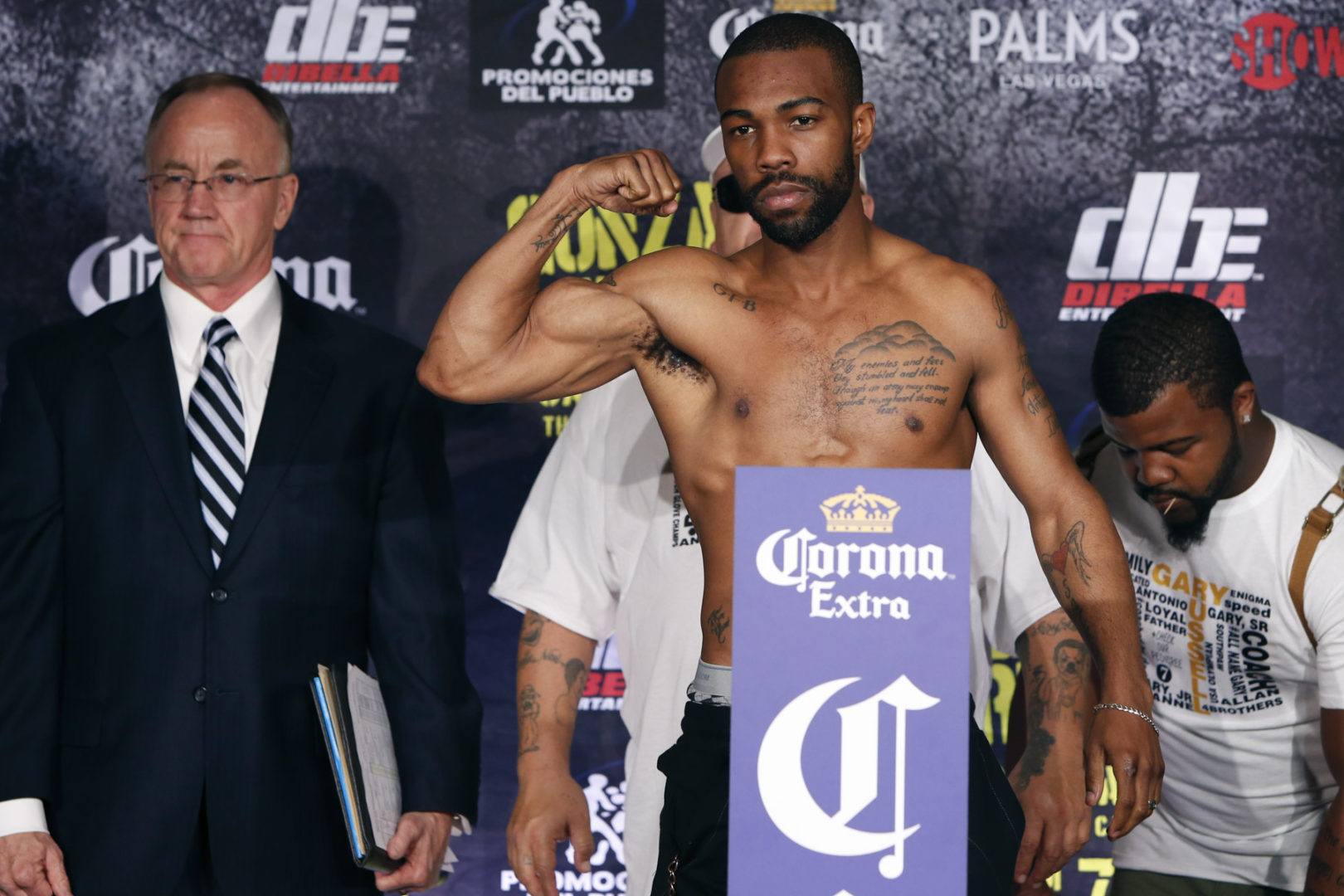


Gary Russell Jr, and the end of cable sports journalism

By Bart Barry–
Gary Russell Jr
Saturday, Showtime’s preternaturally gifted Gary Russell Jr., an Al Haymon fighter, knocked-out the hardest puncher in Mexican history, Jhonny Gonzalez, on Showtime, a Haymon-affiliated network, to seize from Gonzalez the Showtime featherweight title Gonzalez took from Showtime’s Abner Mares a few years back. Whatever the depth of boxing’s featherweight division, and whatever Russell’s postfight protestations, Showtime’s featherweight division now finds itself bereft of fitting challengers for Russell’s crown – and Showtime viewers are admonished, therefore, to raise Russell’s fragile left hand against every hypothetical opponent from here to Nicholas Walters.

Unfortunately there is nothing new or more hyperbolic to say of Showtime’s Gary Russell Jr. than was already said by HBO’s crew 4 1/2 years and nine fights ago. Back then Russell’s membership on USA Boxing’s woeful 2008 Olympic team was viewed with greater skepticism than it is today; time and Deontay Wilder’s semisuccess, and the still-worse showing by USA Boxing in 2012, all, made shouting “2008 Olympian” somehow more positive Saturday on Showtime than it did when Russell began underachieving on HBO, who honored what remained, then, of its journalistic integrity by noting Russell did not even compete in the 2008 Olympic Games.

While it would be impossible to mark the day on which HBO completed its transition from broadcaster to promoter, historians might find riches worth mining in a review of a Boxing After Dark telecast on Sept. 3, 2011, one that featured an Andre Berto-rehab assignment in its main event and Gary Russell Jr.’s HBO debut in an eight-rounder on its undercard:

“Gary Russell Jr. is an ex-cep-tional talent!” cheered Max Kellerman before the opening bell even rang. “I think, Roy (Jones), he’s a gold-medal-caliber talent.”

“I hear his hands are almost as fast as mine used to be,” Jones answered, rhetorically, with what autobiographical modesty marked his every broadcast. “He’s got to be a gold-medal talent.”

In round 2 Kellerman strayed dangerously close to insubordination when, in an attempt to define Russell as both a supreme offensive force and a supreme defensive one, he ran afoul of Jones’ definition of a “boxer” – which Jones promptly made indistinguishable from other styles, specifically the difference between a “boxer” and a “boxer!”

“Signs of a great fighter, son,” added Jones in round 4. “Great hand-speed. Great power. Great defense. (Russell) has the total package.”

Comically, Kellerman then explained the hardest challenge to come for Russell’s people would be resisting temptations to move Russell too fast – since he was so outclassing the guys a lesser prospect would face at this point in his career. Caught under the spell of his own salesmanship, then, Kellerman asked Jones if room even remained for Russell to improve.

As the end of the fight neared, and Russell had failed even marginally to imperil someone named Leonilo Miranda, Kellerman looked ahead rosily:

“It’s not so much of a stretch to imagine (Russell) and Nonito Donaire in the winners bracket of a super fight at 130 pounds – two, three years down the line.”

Almost.

Four and a half years down the line, Russell finally won a title from an ancient Jhonny Gonzalez on the same day Donaire steamrolled someone named William Prado, off-television, somewhere in the Philippines.

While Russell seems like a good guy with talent, and certainly his managerial shop has produced lesser items in recent years, the fact remains no one should be excited about Russell, and excepting only those who are paid to act excited about Russell, no one genuinely is. Russell landed one great punch Saturday, a counter whose power derived mostly from Gonzalez’s sloppy aggression in the closing instants of round 3, and the rest of the stoppage came via Russell’s venomous flailing in round 4, Gonzalez’s despondency, and referee Tony Weeks’ mercy.

When Russell lacks power, generally, it is because he is afflicted with something like front-foot-itis, a condition that plagued the 2008 U.S. Olympic Team. Russell often loads weight on his front foot as an anxious habit more than a strategic consideration, in a vestigial tick from his time in USA Boxing, when all the sweet science was reduced to reflexes and conditioning. Trained by men who idolized Roy Jones Jr., in 2008 Team USA believed in leaning forward, triggering an opponent’s jab, and then yanking back on one’s chin and weight while snapping a counter hook at one’s trapped opponent. Of course, when these counter hooks did not land, or got simply blocked, there was nothing for the American Olympian to do but retreat, bounce, and reset his weight over his front foot.

The medal count that year confirmed the approach’s sagacity.

Saturday’s most interesting revelation, though, came in the celebration of Jhonny Gonzalez’s now-extraordinary power, a concussive force he did not have until his first-round elimination of Showtime’s Abner Mares in 2013. Before then, Gonzalez was another sturdy Mexican, whose career and life, likely, were shortened by Israel Vazquez in 2006.

I was ringside for five Gonzalez fights, in Jhonny’s actual prime, and not once do I recall anyone talking about his historic power. He had good technique and made entertaining fights, and had a great nickname, “Jhonny”, but if anyone had said at the time Gonzalez packed more relative power than, say, Rafael Marquez – an assertion Showtime implied by implying trainer Nacho Beristain labeled Gonzalez as Beristain’s hardest-hitting champion ever – he’d have been laughed right off the writers’ table at Desert Diamond Casino.

The game certainly has changed. Back then, a cable network like Showtime would call an advisor like Al Haymon a “power broker.” Today, they call him “Boss.”

Bart Barry can be reached via Twitter @bartbarry


Column without end, part 7

By Bart Barry–
unnamed (787x1024)
Editor’s note: For part 6, please click here.

*

BURNET, Texas – We begin here, again, with a thought experiment of sorts, before hiking to a roadside memorial in the state Terence Crawford will visit next month, honoring Catalan masterpieces the whole way:

A tiger bursts through your door in the next instant. You react, in less than a second, far less than a second, the identical way I react, your father reacts, your worst enemy reacts. Ponder for a moment the miracle of that: Your mind takes whatever binary-like signals your eyes send it, unscrambles them in an image, queries its database – not equal to a purple balloon, not equal to a canister of whipped cream, not equal to a passenger train, not equal to an overfed chipmunk – identifies imminent peril, as opposed to banal inconvenience or pending ecstasy, and sends a non-negotiable signal to your central nervous system. In merely thousandths of a second.

Is it any wonder an entity so preternaturally capable as your mind will find tedious whatever repetitive tasks you feed it for 40 hours this week?

It wasn’t till the last fifth of my Saturday hike I came upon the sign above. What strikes hardest is its longing for connection, for touching a person who no longer exists, for having a tiny but permanent portal into the excruciating immediacy of one’s loss – to oblige one to visit what likely is a death site, beside, as it is, a winding rural highway with both a 55 mph speed limit and orange cautionary signs spaced unevenly, every half mile or so, advising of turns and bends in a plethora of alternately squiggly lines, and counseling motorists to reduce their speed by as much as 25 mph from the limit. Consider that: a roadway with a speed limit of 55 th’t one shouldn’t drive faster than 30.

There was unexpected innovation at the makeshift memorial, too; the plastic-crystal crucifix back-left of the altar had a small solar panel to collect sunrays during daylight and illuminate a cross-shaped skeleton within its structure at night. It speaks to the care that birthed the creation, the surrender its keeper gave to it: “I have lost my son. I shall take as much time as this requires. It may not be perfect, but what remained of me will be emptied in this when it is finished.”

I came upon the memorial in the fourth hour of a seven-mile hike through Inks Lake State Park’s enchanting stretch of pink granite, dark water and gnarly pecan trees, a hike that, as is its purpose, was an exploration of presence, acceleration and something that attempts to approximate the ancient Greek concept of kairos – a time, in the sense of a decisive moment, that brings a sensation of timelessness. The Greeks were no closer to understanding the phenomenon of the human mind than we are today, but they were wise enough to confess, through their juxtaposition of kronos and kairos, measurable time and something effectively infinite, th’t there was something they could paw-at and stumble upon and sense, or imagine, but never master for being unmeasurable and uncontrollable.

There are few serious belief systems that do not include the existence of something the human mind cannot measure consciously – in the sense of being able to report upon – and the factions of this belief, factions that rarely make war on one another (wars happen between people of same factions, ironically), appear to reduce to: Those who believe timelessness resides outside the human mind, in a deified form, and those who believe the mind invents it. Both are forms of faith, if we’re being honest, and the non-believer is often flummoxed by an inventory of all he perceives followed by something like “meaningless and chaotic, really?” as the believer is confounded by an assertion, Bishop Berkeley’s practically, you never awoke last night and everything you are perceiving at this moment, to include a “boxing” column telling you about timelessness and hiking in Texas, written by a person who never existed outside your imagination, is but a dream.

Oh where were we? Terrance “Bud” Crawford, that’s right.

As some of you may already know, and I am happy to confess I did not until Sunday morning, last year’s BWAA Fighter of the Year is coming to Texas in a month’s time, fighting on a University of Texas campus in Arlington on April 18. Crawford is one of the few fighters plying the craft today who merits travel – which distinguishes him completely from the man who will share headlines on the digital continuum that same evening, “Son of the Legend” Julio Cesar Chavez Jr. It is not enough to impart I will drive more than four hours northwards to honor Crawford’s spirit and achievement; I would not watch Chavez’s next fight if it were being push-streamed by 15rounds.com to a phone cradled in the cleavage of my favorite porn actress.

What does any of this have to do with the Catalan master Antoni Gaudi? A pursuit of beauty in the form of spires, columns if you will, leavened by an ecstatic willingness to fail so long as one gets it true – not right, no, not right: True. What art does that makes it functional as meditation or prayer or alpine skiing or fighting or even hiking in Inks Lake State Park is allow its participants a brief interaction with their sense of timelessness, a blessed respite from our learned accountancy of the seconds-hand on Life’s clock . . .

*

Editor’s note: For part eight, please click here.

*

Bart Barry can be reached via Twitter @bartbarry


Of Soviets and athletes

By Bart Barry–
Kovalev & Pascal Weigh-InCasino de Montreal
SAN ANTONIO – If you’re reading this column, it is highly probable you watched on HBO Russian Sergey “Krusher” Kovalev’s Saturday reduction of Jean Pascal from a ferocious spectacle of athleticism to a man stumbling across the canvas like an enthusiastic toddler determined to crawl no longer. There’s also a fair chance you watched Thursday’s HBO Latino undercard, one that featured Ukrainian Vyacheslav Shabranskyy violently dismantling Fabiano Pena, in this city’s Freeman Coliseum.

The matches had a symmetry that was unmissable: The fighter initially taught by men raised in the Soviet system threw with better precision and more proper conviction every punch in the boxing lexicon than the more-athletic man across from him. Both Pascal and Pena were undone methodically – right cross to the head, left hook to the body, right uppercut to the head, right hook to the body, left hook to the head, left jab to the head, left jab to the body, right cross to the head – with attacks that predicted their targets’ movements in a way the targets could not hope to predict their attackers’, and both Pascal and Pena reacted the same way: launching blind haymakers that did little but intensify the luridity of the beatings they were to receive.

Shabranskyy caused Pena to quit on his stool after five rounds. Kovalev made decent men ask how Pascal was allowed from his stool for the eighth.

There is a stiff-leggedness to the attack of fighters taught by men raised in the Soviet system, and it makes them temporarily vulnerable when attacking more-athletic prizefighters. It is why former-Soviet fighters pulverize opponents, grinding their wills like pepper across the ring’s blue leaf, rather than blitzing them and bringing unconsciousness in a lone punch.

For all the hyperbole that attends Kazakh Gennady Golovkin’s knockout ratio – one part quality of opposition for every two parts quality of punching – Golovkin is nothing like Mike Tyson was. Golovkin’s knockouts are pulverizations, not detonations. Sergey Kovalev’s knockouts come the same way, and if the day ever comes Golovkin confronts an opponent even half as good as a 49-year-old Bernard Hopkins, one like Andre Ward, expect no knockout victories for GGG.

The Soviet system, though created for amateur events, relies on deriving power nearly as much from the motion of another man’s body as the torque from one’s own punches. What is now noted with increased frequency is that Kovalev punches on-time more than hard; he runs you into punches and sets his knuckles on you at the very moment they will devastate most. Almost nothing like this is taught in American boxing.

The American style is one that hopes to reduce an opponent to a heavybag, somehow, on which combinations may be exhibited. It is a style with fewer dimensions than the Soviet system’s, in part because it is a style that relies more heavily on athleticism. What makes Americans like Bernard Hopkins or Floyd Mayweather or Andre Ward great as they are is not their athleticism but a transitional capacity, defense to offense, that is a product of diverting themselves for thousands of hours across from men they were able to solve and create upon, and that they had creative impulses, much more than a product of great teaching (the reason their teachers never manage to build, from scratch, similar successes – at least with nothing like the frequency of, say, Mexican Nacho Beristain).

There is an excellent ESPN documentary, “30 for 30: Of Miracles and Men,” recently released to Netflix and treating the Soviet hockey team that lost to Team USA in 1980, and the extraordinary approach to hockey the Soviets created in an incredibly short time. Just as the Soviet boxing approach relied on an opponent’s improvement of one’s punches, the Soviet hockey system fixated on the activities of the four men who did not have the puck, not the one who did. The Soviets took hockey, most selfless of North American professional sports, and without even knowing quite how North Americans played the game, created a transcendent form of selflessness – with an obvious assist from communism – in which every man on the ice felt as much euphoria at the scoring of a goal as the man from whose stick the puck was shot.

Such a holistic approach is not possible in a contract system that pays every player according to his individual contributions – it’s why your eyes roll when an athlete sets a career mark for points or home runs or touchdowns and then risibly tells the camera getting a win in game 9 of the nearly endless season was more important to him – because, to borrow from Vince Lombardi, if individual achievement isn’t everything in professional sports, why keep stats? With players signed to non-negotiable 25-year contracts in a system that would banish a sports agent to the gulag, the Soviets were able to create a system in which the team organism provided not just sustenance to its components but also identity.

This system, of course, suffocated its participants, too, and appears more romantic to a Western individual today, probably, than any survivor of the Soviet system in Eastern Europe – but it remains nevertheless instructive as an alternate approach to a somewhat calcified system. Certainly the NHL game, once a forum that emphasized the imposition of one’s will, with slapshots and physicality, more than finesse, with crisp passing and offensive intricacy, looks considerably more Soviet in 2015, a quarter-century after the Soviet Union’s collapse, than it did in 1975.

It is worth pondering, then, if the recent success of former-Soviet fighters – and its brazen promotion by HBO – will not help American boxing improve from its current emphasis on conditioning and athleticism to a more-holistic emphasis on melding enough with one’s opponent to make him a co-conspirator in his own demise – in a way better captured by the verb to swirl than to disrupt.

Bart Barry can be reached via Twitter @bartbarry


Vargas ruins Tomlinson in eight

Vargas_Tomlinson
SAN ANTONIO – A sparse crowd gathered Thursday night at Freeman Coliseum, located beside the stadium in which the world champion Spurs play, and the small turnout was an unfortunate turn, as the evening’s main event, undefeated Mexican junior lightweight Fernando Vargas versus Australian Will Tomlinson, a match broadcast on HBO Latino, deserved a much larger crowd.

Vargas (22-0-1, 16 KOs) stopped Tomlinson (23-2-1, 13 KOs) early in the eighth round of a fight that proved the Mexican’s class and the Australian’s mettle.

After two fantastic rounds of near-even exchanges the Mexican probably got the better of, in round 3 an accidental collision of heads opened an abrasion on Vargas’ face that partially salvaged the round for Tomlinson, who was otherwise beaten with impunity. In the fourth, Tomlinson, who was now bleeding more than Vargas, stayed upright mainly on the virtue of his roughhousing tactics.

Vargas’ onslaught continued unabated, even mixing-in left hooks to the body that nearly found their mark on Tomlinson’s liver. A Vargas left in the fifth found its mark and brought a visible wince from the remarkably sturdy Australian. Vargas’ savage pursuit continued through the seventh round, the conclusion of which saw a number of officials gather in the Australian’s corner to ensure he was fit to continue.

He wasn’t.

A minute into round 8, Vargas finally dropped Tomlinson and the match concluded.

FABIANO PENA VS. VYACHESLAV SHABRANSKYY
Thursday’s co-main event was a mismatch from the opening round when undefeated Ukrainian light heavyweight Vyacheslav Shabranskyy (13-0, 11 KOs) conducted target practice on plainly overmatched Philadelphian Fabiano Pena (11-1-1, 8 KOs) until Pena’s corner stopped the beatdown after five rounds, giving Shabranskyy another knockout win.

Better at every facet of boxing than Pena, in round 1 Shabranskyy hit Pena with nearly every punch in the boxing lexicon, and from a variety of levels, too, reducing Pena to hurling blind overhand rights in a sign of early desperation. After having every advance thwarted by his taller opponent’s jab, in round 3, Pena began taking stutter-stepped lunges at Shabranskyy. While bringing a rise from the crowd, these lunges appeared to take no effect on the Ukrainian who beat his hopeless opponent to quitting on his stool.

Shabranskyy appears to have every tool, and with HBO Sports’ recent fixation on all things Eastern European, there’s a very good chance the Ukrainian will soon find himself promoted beyond HBO Latino.

YAMAGUCHI FALCAO VS. RAYMOND TERRY
When undefeated Brazilian southpaw Yamaguchi Falcao (4-0, 2 KOs) and undefeated Philadelphia southpaw Raymond Terry (3-1, 2 KOs) made the evening’s final undercard fight, it looked evenly matched on the bout sheet. But it sure wasn’t even in the ring.

After swarming Terry from the opening bell with overhand punches and hooks of every kind, Falcao dropped Terry in the first minute and knocked him unconscious at 1:27. No 10-count was needed, and only one southpaw was still undefeated.

ARMANDO CARDENAS VS. MARCO ANTONIO SOLIS
The evening’s fourth bout, a six-round scrap between undefeated Texas welterweights, San Antionio’s lanky Armando Cardenas (7-0, 4 KOs) and Austin’s Marco Antonio Solis (3-1, 1 KO), began impressively for Cardenas – who dropped Solis on the second punch he landed – and then flattened out a bit, as the width of Cardenas’ punches and the durability of Solis’ chin slowed the action. After knocking the guard from Solis’ mouth in round 3, Cardenas showed hints of fatigue in the fourth and fifth before having both his chin and heart tested by Solis in the sixth.

Cardenas passed all tests, and won by unanimous decision scores of 59-54, 58-55 and 58-55. For a very tall fighter, though, Cardenas showed an alarming tendency to get hit with uppercuts – a trait he’ll need to remedy before improving his competition further.


Premieres

By Bart Barry–
Canelo_Alvarez
SAN ANTONIO – Tuesday at Aztec Theater, the oldest theater in this old city, Saul “Canelo” Alvarez and James Kirkland announced their May 9 fight in Houston. Saturday at MGM Grand in Las Vegas, Keith Thurman decisioned Robert Guerrero. In between those two middling affairs, Showtime announced plans to honor its televised trilogy of Israel Vazquez and Rafael Marquez – a trilogy unlikely to be matched in quality or ferocity even by a 2025 highlight reel called “Premier Boxing Champions: The First 10 Years.”

What Alvarez and Thurman have in common is above-average talent and a poor era; they are b-level fighters elevated to millions-dollar purses through some balance of mediocre opposition and needy fans. Alvarez is better tested and more beloved and unlikely to improve, while Thurman is more athletic, even while his power has moved with inverse proportionality to his opposition. What Vazquez and Marquez were, and made together, is another thing entirely.

There’s an inauthenticity to the televised experience, today, that wasn’t nearly so pronounced a part of our sport in previous decades. Boxing writers’ lamentations about television are well-noted and quite old, of course, and this isn’t intended to be so much another tired protest of the inevitable as a commentary on what’s worsened.

Boxing long preserved a griminess, a degree of filth, other sports lost generations before; boxing retained a sense of the unexpected in a way that made other sports appear overwrought and scripted. There was ever a touch of irony to this – with spectators accusing boxing results of being fixed, which they often were, even while phantom rules violations in the NBA and NFL influenced just as dramatically who became those sports’ champions. Television was a guest at boxing events, or at least telecasts felt like they were conducted by guests; proper boxing matches had a sense of inevitability to them, an implication this grievance would be settled, regardless of witness, at this time, on this evening, and television cameras just happened to be there.

Saturday’s NBC debut, instead, had other sports’ feel: We are here because television invited us, and do you know how great is the reach of public airwaves? and have you seen our incredible commentating team? and would you please have a listen to our soundtrack? If it did not feel quite scripted, it neither felt like a collection of brawls that were going to happen even if television cameras went dark. Aficionados are noticeably insecure about public acceptance of our sport, too, and that marked social-media depictions of a few good rounds in an otherwise poor night of NBC boxing with the usual trimming: Don’t you see, everybody, this is why you should love boxing as much as we do!

Tuesday’s press conference, or media event, as they’re now called since “press” – derived from printing press – no longer has any meaningful place at these clubland mashups where seats labeled Deadline Media get occupied early by women with enormous promotional posters and boys with eager black sharpies, and the deejay stands both closer to fighters and with a better chance of interrogating them than anyone carrying something antiquated as a notebook or pen, had promoters beseeching the partisan-Mexican South Texas crowd to show the world Texans were the very best fans by driving 200 miles to Houston in May to purchase the promoters’ product. Oscar De La Hoya was there, looking jittery as he’s appeared since warming up to fire Richard Schaefer (who must’ve watched Saturday’s NBC telecast and realized, much like HBO’s Kery Davis before him, he was disposable to Al Haymon as print media is), and of course Saul Alvarez and James Kirkland were there too.

Evermore, De La Hoya appears a refreshingly outdated model; he likes or appreciates the press and adheres to the olden-day rules of being unbothered by gliding through 20 minutes of frictionless inquiries so long as his inquisitors are equally unbothered by 20 minutes of countlessly refried cliches. There was a time De La Hoya was unique in the sport for his lack of sincerity. De La Hoya is no more sincere today than he was then, but our beloved sport now plumbs such depths of insincerity a De La Hoya sighting has all the charm of a throwback jersey; at least Oscar cares enough to smile and wave and remind us he was a great fighter who did fight other great fighters.

As an antidote to all that, last week Showtime announced it would commemorate the best trilogy to improve is airwaves, when it replayed Israel Vazquez versus Rafael Marquez. There appears nowhere on our horizon the likelihood of another such trilogy. The quality and violence of the combat shared between those two Mexican prizefighters, their willingness to avenge both defeats and victories, at a withering pace – they fought three times in 363 days (just after Vazquez stopped Jhonny Gonzalez in a particularly brutal affair) – is so far from what we have now it is barely believable Vazquez-Marquez 3 happened only seven years ago.

Then, as now, many in our ranks were discontent with boxing’s trajectory. Try not to imagine how bad things will need to go for us someday to look back longingly at Thurman-Guerrero.

Bart Barry can be reached via Twitter @bartbarry



Column without end, part 6

By Bart Barry–
unnamed (1024x768)

Editor’s note: For part five, please click here.

*

But how will this influence resolve itself?

Three of the most influential artists of the 20th century – Pablo Picasso and Joan Miro and Salvador Dali – grew up in Catalonia, wandering through Barcelona looking upwards at the architectural masterpieces of Antoni Gaudi, edifices that, in their sublime eccentricities, gave the artists permission. That is perhaps what is most essential in any consideration of influence: Good artists encourage imitation, but the greatest give permission.

Find an aspiring American writer who has read Ernest Hemingway and not endeavored, at once, to ape his style. It rarely succeeds but presents a valuable exercise of sorts for long as it is tried. To read the last 100 or so pages of Leo Tolstoy’s “War and Peace” or Herman Melville’s “Moby Dick”, though, is to attain a permission slip; in his closing philosophical treatise on world history and its actors, an awkward and fully unpredictable turn at the end of a work of fiction, Tolstoy permits his successors to intervene in the course of their narratives wherever creative impulse dictates; in the unorthodox arc of Melville’s whalechase, its steady acceleration till very nearly the last sentence, Melville permits his successors to toy with the shape of what stories they recount, breaking with the linearity young novelists now infer from cinema.

A visit to Museu Picasso de Barcelona shows the importance of influence, of Picasso’s journey as a young artist from wishing to imitate Francisco Goya to interpreting Bartolome Esteban Murillo to his frequent returns, through 50 years, to Diego Velazquez, returns that culminated in his many renditions of Velazquez’s “Las Meninas” – probably the greatest masterpiece of Spain, a country that measures its masterpieces in kilometers. But everywhere within Picasso’s work, finally, is the first influence, Gaudi, and the permission Picasso gathered from wandering among the unpredictable and impractical masterworks of Gaudi – the way Barcelona’s celebration of Gaudi influences, via what permission it gives, any artist who wanders its streets. It is a permission one might interpret like: Pursue beauty, however construed, and worry not where the pursuit takes you.

There is an important influence that happens now in boxing, and it may be better than expected for fighters, while it lasts, and much worse for aficionados. Floyd Mayweather, when he encourages stylistic imitation, leads nowhere friendly for his successors, exactly as Roy Jones and Muhammad Ali did before him, and Mayweather’s influence is large: Spend a year asking young fighters whom their favorite active fighter is, and regardless of your phrasing, those fighters invariably will answer a question like “what contemporary prizefighter who shares your ethnicity or physical attributes have you heard made the most money last year?”

As Ali launched a generation of fighters shuffling sideways with their hands senselessly low, Mayweather now encourages a generation of fighters – most lacking his reflexes, many lacking his chin, all lacking his foundational footwork – to make an ‘L’ with their right elbows and left forearms while tilting sideways. However well it worked as a career extender for Mayweather, once his navigating to higher classes voided what substantial power he showed at lightweight, it is a terrible way to teach a youngster to box on his first day.

Stylistically, then, Mayweather’s influence has not benefitted his successors. Philosophically, though, Mayweather’s influence may be a better one than usually considered. In creating an odious character popular culture alternately finds repugnant and wonderful, in being nimble enough to piss-off Americans with means, anew and afresh every six months, Mayweather has made sums of money disproportionate to what peril attends his prizefights. That a professional fighter found a way to become exceedingly rich for what he does outside the ring more than what he does within it, in a way spectators find perverse as retired fighters find it envious, ensures Mayweather’s influence for many years to come.

No fighter in history has finagled a reward-to-risk ratio like Mayweather’s, and when one considers the age of our sport, that is a feat. Even May 2, the toughest match of Mayweather’s career, is more hypothetical risk, as usual, than real: Whatever miracles mark the career of Manny Pacquiao, this fact remains: In 5 1/2 years as a welterweight, Pacquiao has never knocked-out a 147-pound man (Miguel Cotto was 145 when Pacquiao stopped him in their 12th round together).

The peril that adorns May 2, then, is not physical so much as reputational; is there some way Pacquiao can give Mayweather his first professional loss? That’s something, sure, but it’s disproportionately less than Mayweather’s projected purse should require. Disappointed as most aficionados will be the morning of May 3, when, hungover, they realize they were duped again, this time, more painfully still, duped by a fight they wasted years demanding, there is a small part within most of us that feels sympathy, ugliness really, for the hundreds of fighters we’ve watched sacrifice their wits for $200 a round.

Setting aside empty rhetorical devices like “honor” or “legacy” or “pride” – political words whose employment routinely precedes a sinister manipulation of some sort – what Mayweather has done for himself, and thus far himself alone, is reset the price-to-entertainment balance dramatically in a fighter’s favor. If this were to become a sustainable thing, it would not be the worst development in our sport’s generally sordid history. It will not be a sustainable thing, most likely, regardless of whatever May 2 ends up meaning in the year 2025 (probably very, very little), but it’s a fun exercise, nevertheless, and a doorway to the nature of influence, a thing boxing shares with all arts.

No, Mayweather is not Gaudi – though the late Andy Warhol surely would have delighted himself with portraits of “Money May” – but then, neither was Picasso or Miro or Dali . . .

*

Editor’s note: For part seven, please click here.

*

Bart Barry can be reached via Twitter @bartbarry


Mayweather-Pacquiao: It’s OK to be happy

By Bart Barry–
Floyd Mayweather
The announcement came sometime Thursday, or maybe Tuesday, the announcement there would be an announcement coming soon from a professional athlete about a future sporting event. It was a reminder how unserious our time is that adults awaited such silliness, but there we were, men who are otherwise grandfathers, fathers, professionals, role models, even, collectively saying, “Whatever the petulant demands, just satisfy them, please, so we can have our event, finally.”

Now we will, May 2 at MGM Grand, when American welterweight Floyd Mayweather fights Filipino Manny Pacquiao.

It’s OK to be happy about this development. Boxing, like perhaps no other sport in the world, makes curmudgeons of its fanbase. All begin by reading bitter men unimpressed by any development in the sport, and all promise themselves they will not become like those men; I’ll stop following it long before I become cynical as those guys, one thinks.

But shortsighted greed – to which boxing’s failures universally reduce – eventually affects in some profound and detrimental way a fighter who enchants a new follower of our sport, and his innocence and hopefulness gradually gives way to distrust and an unseemly pride in knowing things. None of us is immune to this; some of us express more loudly our distaste with what machinations subvert generally our sport and specifically its fighters and fans, but all of us experience it.

Winston Churchill accurately reported about those of us in the States: “You can always count on Americans to do the right thing – after they’ve tried everything else.” Floyd Mayweather, in announcing he will fight Manny Pacquiao five years and two Pacquiao losses after he was supposed to, has satisfied Churchill’s report once more, agreeing to do the right thing, finally, because he is, quite frankly, out of palatable options – after he’s tried everything else.

One imagines CBS CEO Leslie Moonves, who is wealthy where Mayweather is rich, said he was done seeing his child network, Showtime, embarrassed by Mayweather. With each new fight in the Mayweather contract bringing less money than his 2013 match with Mexican Saul Alvarez, the onus on Mayweather to make a larger prefight spectacle grew, until in September Mayweather produced his way to a potsmoking harem and human dogfighting circuit, captured by Moonves’ cameras, then went before a government commission and said it was all fake, edited to inaccuracy by Moonves’ staff.

Whatever it might have cost CBS to break its ill-advised Showtime contract with Mayweather, CBS’ revenues in 2014 were $13.81 billion – that’s 13, followed by 81, followed by seven zeros – which is enough to pay Mayweather $120 million, every fight, for 115 fights, and precluding Mayweather from accelerating the erosion of CBS’ journalistic brand would have been worth whatever pennies it cost the corporation.

For a chuckle, though, do imagine the conversation promoter Bob Arum, age 83, and Moonves, 65, had about what nonfinancial terms of the contract were most important to Mayweather: That he, and no one else, be allowed to announce the fight, via crappy digital image on a social network. Like adults patiently watching a child open birthday presents before they head back to work, Moonves and Arum must have marveled at the euphoria such a trinket brought the little tyke.

Immediately after Mayweather’s historic announcement, the heads of the sports departments at Showtime and HBO held a joint call and bubbled with what enthusiasm generally attends the salvaging of one’s job. “This is the biggest boxing event of all time,” said the president of HBO Sports, in an ahistorical attempt, one hopes, to target the same teenage demographic Mayweather’s announcement did. Or maybe Mayweather insisted on scripting HBO’s announcement, too – he is an executive producer at Showtime, after all – and desperate to return its status from official network of the Soviet Bloc farm leagues to “Heart and Soul of Boxing”, HBO had little choice but do as it was told.

The hyperbole above will be justified in one way, though: Mayweather-Pacquiao will feature prognostications from more and more-uninformed sportsfans than any fight in history. And here’s why: Every time biggest boxing events of all time happened in the past, be they Lewis-Tyson or Frazier-Ali 1 or Louis-Schmeling 2, boxing had at least a small place in America’s consciousness. Persons accidentally saw a fight on “Wide World of Sports” or read about a local kid in the newspaper, at least, before sallying forth with an opinion.

There’s a fair chance last weekend 10 million Americans hatched fully formed opinions, opinions they are now eager to share, having watched no boxing since Lewis beat-down Tyson 13 years ago.

“Money is the best ever, like his hat says . . .”

“Manny fights with a mandate from God . . .”

“It’s like that time at Wrestlemania when Hogan and Savage . . .”

Fact is, this is the second-best time for this fight to happen, from an aficionado’s perspective. The best time, of course, was immediately after Pacquiao dashed through Miguel Cotto, the man Mayweather retired to avoid in 2008, when Mayweather-Pacquiao might have happened in Cowboys Stadium and launched a historic trilogy our grandchildren would talk about. After 2009, Mayweather took six fights intended not to imperil him in the slightest, and he was right five times, until Argentine Marcos Maidana repeatedly hit him with skyhook rights in 2014 and revealed Mayweather is either badly overtraining himself or much older in the legs than his string of sponsored sparring sessions anticipated.

Pacquiao took the opposite route, coincidentally, being chased in 2010 by the monstrous Antonio Margarito – whom Mayweather bought-out a contract to avoid in 2006 – being decisioned by Timothy Bradley and being iced by Juan Manuel Marquez, before making farcical matches in remote places with hopeless underdogs in 2013 and 2014. In other words, Pacquiao might be recuperated enough, and Mayweather might be worn enough, now, to make their May match a good one.

Or maybe not. Vegas knows boxing much better than America at large, and Vegas has Mayweather a comfortable favorite – watching, as Vegas did, the absurd size disparity between Mayweather and Marquez in their 2009 sparring session, and knowing, as Vegas does, Pacquiao is much closer in physical stature to his nemesis Marquez than he is to Mayweather.

Pacquiao will land left crosses on Mayweather, just as Marquez landed right crosses, but will they have any memorable effect? That is a question worth answering that will be answered in May. Rejoice.

Bart Barry can be reached via Twitter @bartbarry
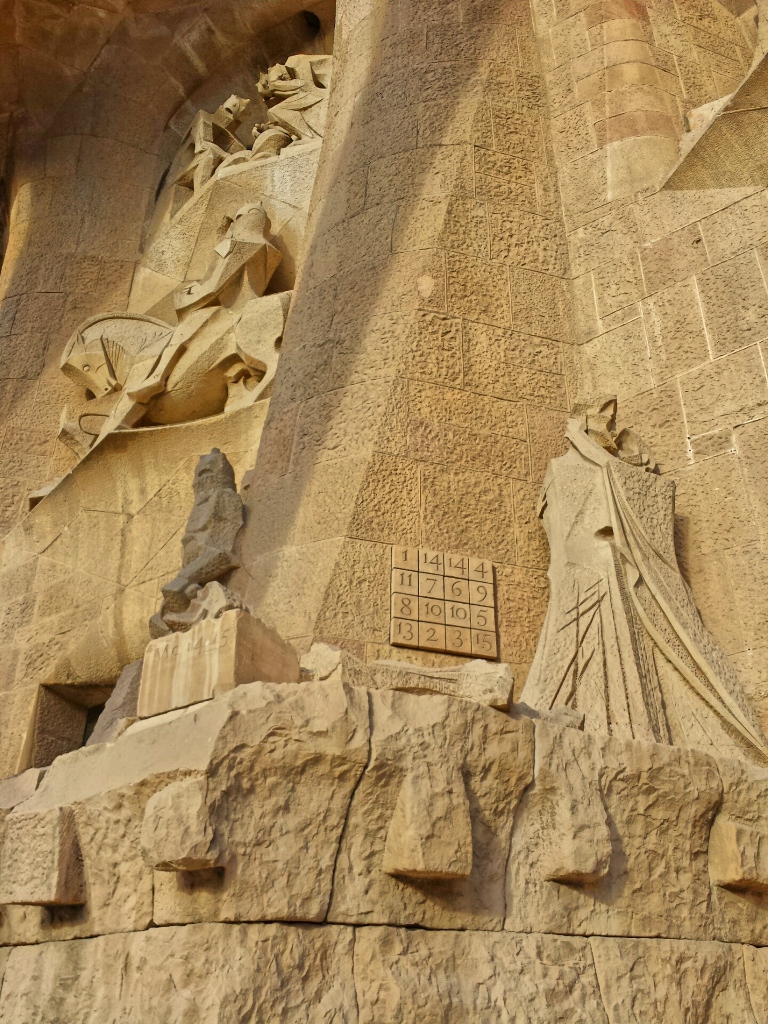


Column without end, part 5

By Bart Barry–
2014-12-09 21.28.22 (768x1024)
Editor’s note: For part 4, please click here.

*

It is a question of competence much as intent.

That is where boxing now stumbles in an exaggerated way that defies expectations more than most things in America do anymore. Whether the larger part of this country was ever competent is a question for fantasy, not history, but it is not uncommon now for the world to accept American incompetence, raising awareness of it till the printing press rolls and the dollars fan out. Today, payoffs are what we do better than we do anything: We shower problems with money till they resolve themselves or drown in our largesse.

Do not mistake that, either, for a form of contemporary competence. It is not. We own the world’s reserve currency because of what the Europeans, Russians and Japanese did to one another in the last century, and what we helped do to them once we finally participated in their carnage. Whatever autohagiographies America’s private sector pens to itself about itself, there is nothing essential being done here, and there hasn’t in 50 years. Most of the technology required to read this column, whether on your phone or laptop or PC, came from the Department of Defense, or at least financing from the Department of Defense – whose primary purpose is to kill others, or threaten to kill others, before others can kill Americans.

Your technology came from the public sector. The shiny, white-plastic cover with a glowing piece of fruit in its middle? That’s the private sector.

Probably this system is unsustainable, but that hardly passes for an indictment. Whenever it ends, our system has already proved more resilient than expected. There’s solace in that.

Most people are bad at most things, and Americans are no different, whatever exceptionalism we attribute to ourselves. We are outfitted with extraordinarily overgrown minds that conjure up 10,000 inane patterns for every workable one, and if you doubt that, and you have a biological impulse to do so, of course, ask yourself what activity in your day might impress another species on Earth. There’s efficient acquisition of food, and reproduction. After that, the list thins.

We invent goals and reward ourselves for their accomplishment, in a way all other creatures must regard with something between amusement and fright. If an announcement were made tomorrow Homo sapiens is a virus devouring its host, not a predator, would it surprise you?

There’s precedent for being bad at most things: The human mind does not abide repetitive tasks. No sooner is the mind asked to concentrate on the same thought more than five or so times, and it wanders elsewhere, pulling any one of the six or seven fully developed cinematic storylines playing at all times on its edges to center stage, and the repetitive task immediately begins to suffer in its execution. It’s a large reason computers fascinate us; even more than their speed, their competence at repetitive tasks strikes us as supernatural. Computers do not have our creativity, and will not, but they have a sort of concentrated presence we struggle to fathom even while watching it.

A moment after we successfully complete some task a half-dozen times, we declare mastery in a quietly triumphant way, fold our hands behind our heads, and begin rummaging about for a new task. Mastery, meanwhile, requires thousands of repetitions, hundreds of hours of aching boredom, and finally informed risk-taking that brings some new efficiency. But who wants to dedicate his life to something trite as all that when he can do badly a thousand trite things every year?

What has happened with Mayweather and Pacquiao negotiations, playing vacuum to the oxygen of interest in our sport, reduces, once more, to competence. The fighters themselves, whatever leverage they fancy they have, are both destined for what punchy bankruptcy awaits men who make a career doing what they do. The heads of participating television networks, whose compensation is, in the contemporary corporate tradition, proportionate to the amount of culpability they will accept in a case of failure – a failure American corporations now dedicate more resources to obfuscating than research or development – have been plainly hoodwinked by the fighters’ handlers and now dodder about, having serious conversations about infomercials and announcing crews.

Realize this, if you realize nothing else: These are the concerns of a cabal looking to trick consumers one time.

Nobody involved in any of this expects a good fight that births a three-part franchise, a historic trilogy that brings a billion dollars to be split four or five ways, for if they did, all of this could have been resolved with a profit-sharing agreement years ago. No, these enervating, incompetent negotiations are about wringing all that can be got from the desiccated towel of American interest in prizefighting. “History repeats itself!” will sing philistines in a chorus that implies this has all happened before and boxing survived it. But history only repeats itself until it doesn’t, and it doesn’t-repeat itself far more frequently than it repeats itself.

There is no reason, then, to be assured boxing will survive the final consequences of 2010-2015. And so, we bear witness . . .

*

Editor’s note: For part six, please click here.

*

Bart Barry can be reached via Twitter @bartbarry



Column without end, part 4

By Bart Barry–
SagradaFamilia4 (1024x768)
Editor’s note: For part 3, please click here.

*

Another week comes to pass in the decisive erosion of public interest in our sport. Those curious about The Fight to Save Boxing do not migrate elsewhere within – they do not, anymore, find a minimumweight master or junior middleweight from a few towns over and redirect their gazes; they migrate away. Intention in these matters cannot be read easily as action, so there’s this to impart, once more: If manager Al Haymon detested boxing and wished to see it abolished from the public consciousness before the year 2025, would he alter a single act he has taken in the last three years?

Nearly every active fighter worth watching between 140 and 160 pounds, right now, awaits a resolution of some sort on The Fight to Save Boxing – even Mexican Saul “Canelo” Alvarez, who has the youthful defiance and fanbase to do as he wishes, and a promoter with little left to lose, doesn’t dare schedule his next match on a weekend commemorating his people’s successful default on their loan from the French, lest an African American and Filipino prefer Mexicans’ pay-per-view buys for themselves.

Mayweather and Haymon and promoter Bob Arum are empowered by our collective imaginations and very little more. Whatever monetary estimates Haymon or Arum feed the media – giving reporters two or three numbers, and letting those aces decide whether to separate them with ‘+’ or ‘x’ or assign them as exponents – not a penny of that money will make its way to you, so stop caring about it. Without the obfuscating factor of gross sales, which, regardless of what today’s economists tell you, are not the same as gross items produced, the match that now issues ransom notes to an entire industry comprises a past-his-prime welterweight who needed two fights last year to defeat Marcos Maidana conclusively and a past-his-prime welterweight reduced in his last match to fighting a Stony Brook nutritionist in China.

Alvarez and De La Hoya, in other words, should announce Alvarez vs. Austin’s James Kirkland at Alamodome on May 2, already, open the bidding to whichever television network wishes to cover it, knowing Mexican television will do so happily, and give Haymon and Arum and HBO and Showtime an option: Watch their superfight’s revenues subverted by the exodus of boxing’s last reliable fanbase, Mexican – or did you think a man unoriginal as Mayweather covets Cinco de Mayo and El 16 de Septiembre because his schedule as Showtime executive producer is otherwise full? – or pay De La Hoya and Alvarez and Kirkland a large sum of step-aside money. A large sum of very poor previous choices now limits De La Hoya’s mobility, sure, but he works for Alvarez, needing Canelo far far more than Canelo needs him, and however much his foundering company now needs to be peaceful with Arum and Haymon, if De La Hoya loses Canelo, he becomes a regional promoter with a magazine.

Canelo’s chutzpah and self-assurance are not justified by anything he does in the ring, no, but who cares? Mexicans know he’s the best they can do right now, and so does he, and he’s right, and so are they, to be enkindled by an American and a Filipino taking hostage a calendar entry fully meaningless but for what significance Mexicans assign it.

Goodness, this column has veered too deeply into meaninglessness. Woody Allen’s “Vicky Cristina Barcelona”, frankly, is the righteous subject of today’s spire, because it is tangible and excellent, not ephemeral and unneeded, and because it stars Spanish actor Javier Bardem, about whom I’ve written enthusiastically before. Back then, though, I was more confined by convention than I am now; we were only one year into negotiations for Mayweather-Pacquiao, and there was still interest enough in boxing for talented young writers to believe covering our sport might some day provide a sustainably supplemental sort of income, even if the days of making a living from it were expired, and so the sentences were shorter and crisper and often isolated in paragraphs of their own.

That can still be done.

The point of this series, though, is to obey no conventions whatever, a betrayal of the conventional wisdom that betrayed a generation of young sportswriters, and so we return to Javier Bardem and his wonderful portrayal of Juan Antonio, a Catalan painter desperately and violently enamored of Maria Elena, a desperately and violently enchanting Catalan painter played expertly by Spanish actress Penelope Cruz – expertly enough to win an Oscar. So rich is the movie that neither the name of Bardem’s character nor Cruz’s appears in its title – as those names belong to a grounded American tourist, Vicky, played by British actress Rebecca Hall, and seduced first by Juan Antonio, and Cristina, a flighty American tourist played by American actress Scarlett Johansson, and seduced second by Juan Antonio and then Maria Elena. The story’s arc is gentle, its narration relying on the word balmy, its writing excellent, and its acting superb; whatever wealth of ill will some Americans now bring to Woody Allen’s work, it is hard for anyone to watch “Vicky Cristina Barcelona” and not enjoy it.

The title, and its reference to the movie’s third and most important character, is revelatory. Like the city it portrays in beautiful and soft colors, the movie’s title is nonsensical, and the city of Barcelona, cooler than any city more famous, follows no conventions, either, because of its inspiration, Antoni Gaudi.

Perquè el Barcelona és la ciutat de Gaudí . . .

*

Editor’s note: For part 5, please click here.

*

Bart Barry can be reached via Twitter @bartbarry