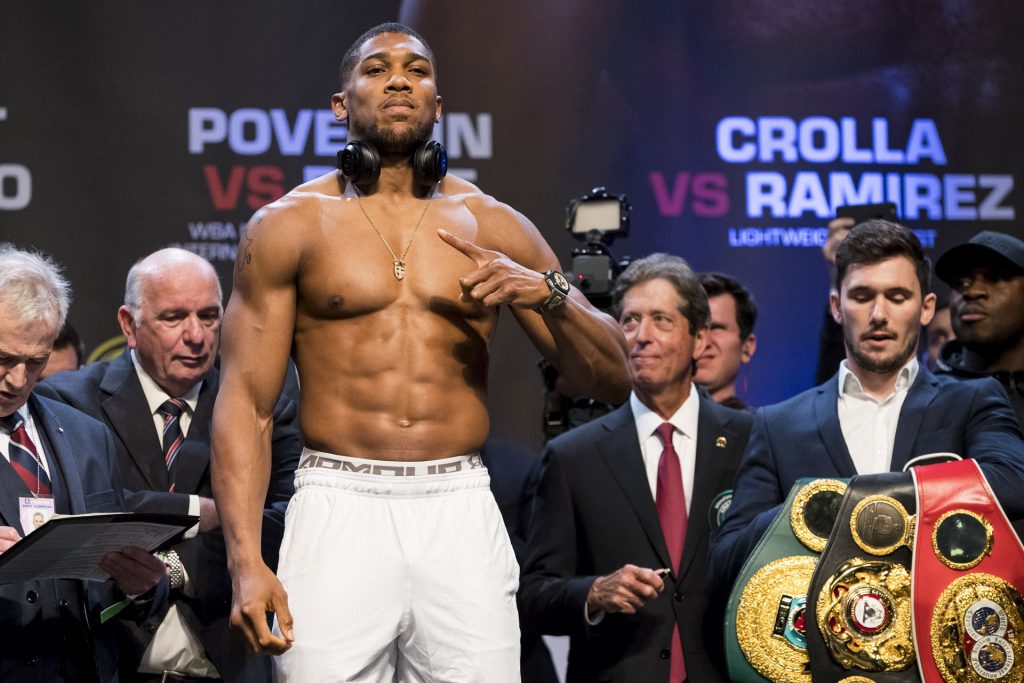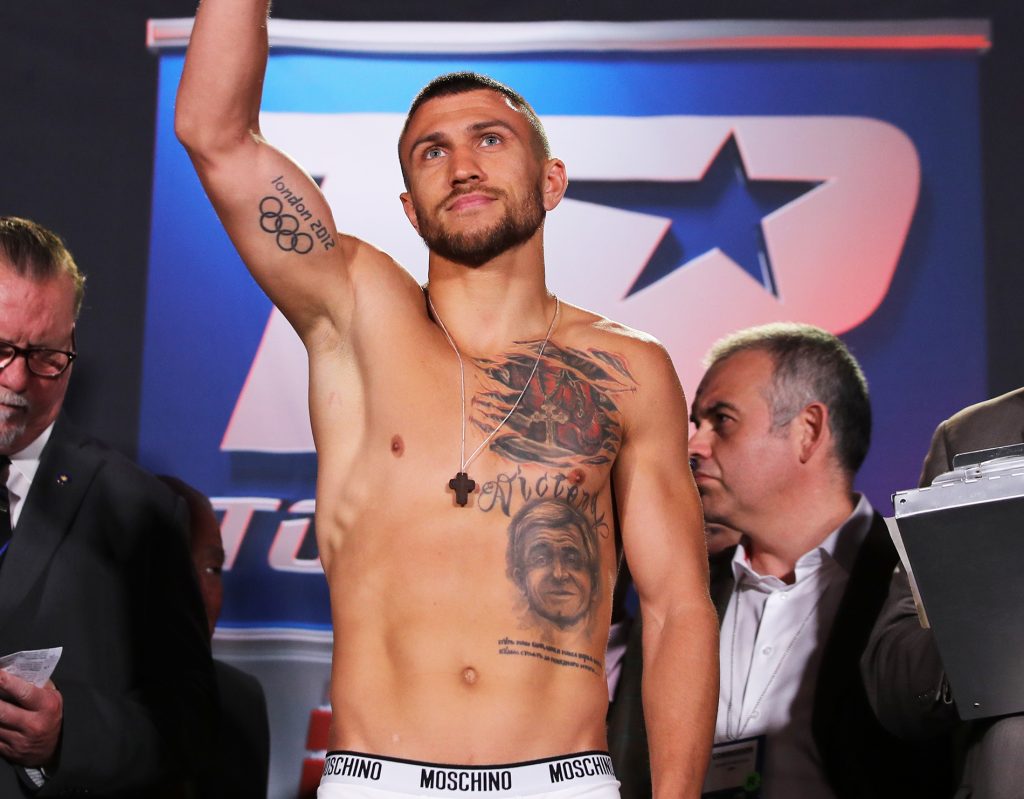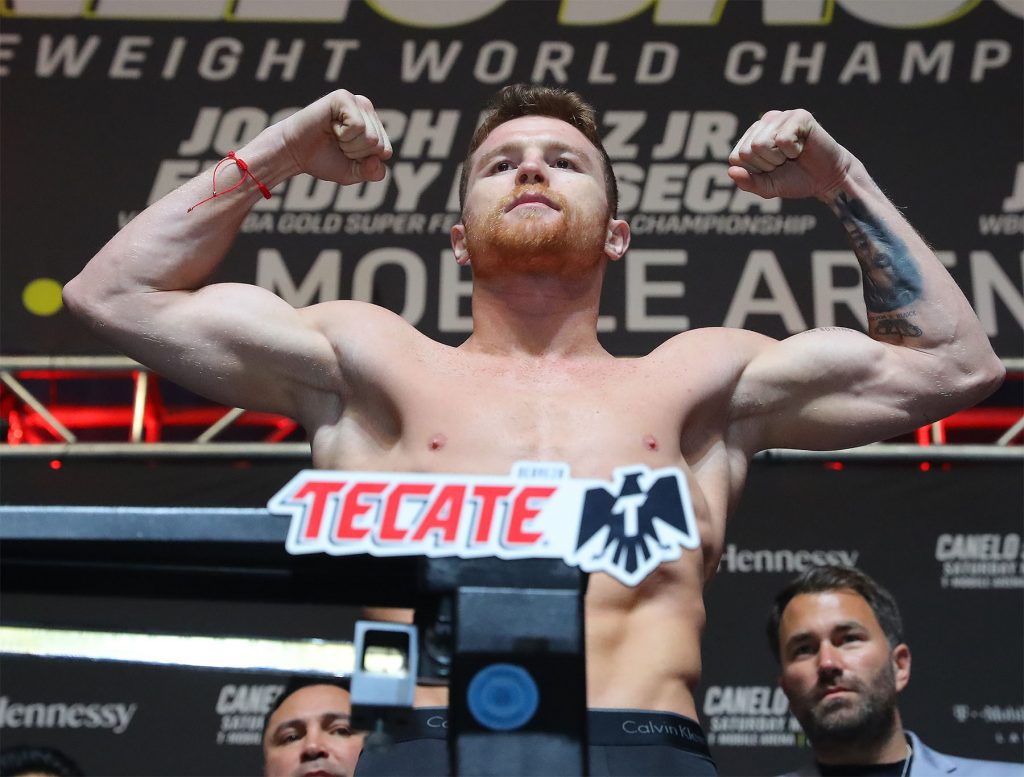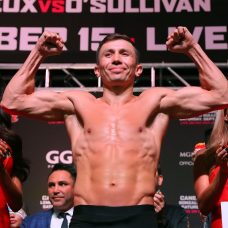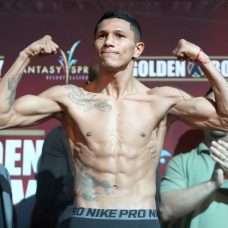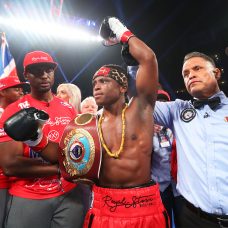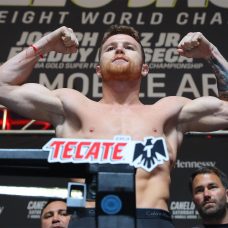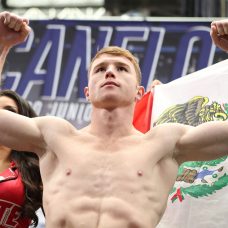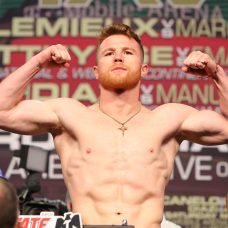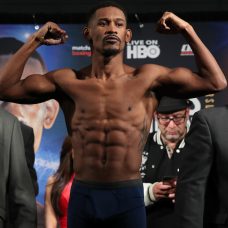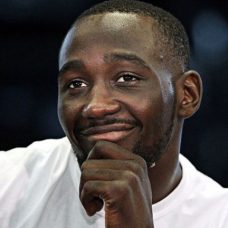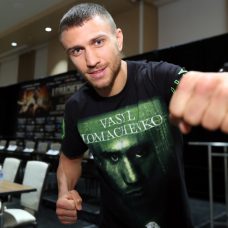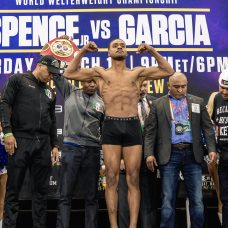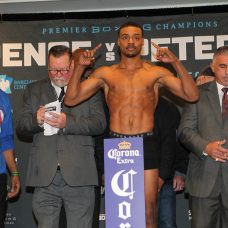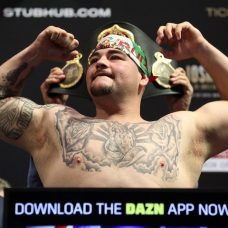
GGG is back for another duel in a bid to reassert his middleweight dominance

By Norm Frauenheim-

The whispers are hard to ignore. Gennadiy Golovkin has surely heard them. He’s changed, they say. A different guy, they say.

But the only thing for certain is what we know from his birth certificate. He’s older, a 37-year -old fighter who intends to silence those whispers and reaffirm what he has always believed.

Pre-Canelo and Post-Canelo, Golovkin has always been a middleweight. It’s the division that defines him. It’s also a division he dominated.

It’s that domination, perhaps, that he intends to re-assert in a tricky bid to reclaim a major 160-pound belt against Sergiy Derevyanchenko Saturday at New York’s Madison Square Garden in a DAZN-streamed bout.

After all of the mind-numbing controversy swirling about Canelo Alvarez’ move up to light-heavyweight in decision to bypass a third fight with Golovkin, GGG says nothing has changed. He says he is back in the gym with the same work ethic and same vigilance.

 “You can’t underestimate your opponent,’’ he said during a conference call. “It’s kind of like a duel. If you underestimate it, it could be your last one.’’

GGG (39-1-1, 35 KOs) is sick of talking about Canelo, who said he was finished with GGG on the day his step-up to 175-pounds against Sergey Kovalev on Nov. 2 was announced. Ask the inevitable and you can almost hear a weary sigh. Hard to blame him. But there’s no escaping the questions

This time, he was asked if he feared that there might be a void in his career if he doesn’t get a third shot at Canelo.

“My biggest opponent is not a particular person,’’ said GGG, who is 0-1-1 against Canelo. “My career is about what I do.

“It just looks like he (Canelo) couldn’t or didn’t want to fight me. Sergey Kovalev was his only option. How can I be disappointed, looking at those people?’’

“I feel great, just like I always have. I always feel like I am a champion. For me, every fight is the same.’’

For now, he can look at what, who is in front of him. Derevyanchenko (13-1, 10 KOs) is a Ukrainian who put himself in the middleweight mix last October with a split-decision loss to Danny Jacobs, also at Madison Square Garden.

He went on to score a unanimous decision over Jack Culcay in April, a few weeks before Canelo scored a one-sided decision over Jacobs on the Cinco de Mayo weekend.

Despite a record that includes only 14 fights (13-1, 10 KOs), Derevyanchenko has the look of a fighter who is just beginning to figure out how good he really is. He’s 33 and a late bloomer.

His promoter, Lou DiBella, thinks the time and place are perfect for Derevyanchenko to spring a major upset.

DiBella believes the whispers. He says GGG is a step beyond his prime.

“At this point in his career, he’s not getting younger, he’s not getting faster, he’s not getting better,’’ DiBella said. “Sergiy Derevyanchenko is an incredible risk to GGG.” 

Prediction: GGG wins a unanimous decision against a tactically-skilled fighter aptly named “The Technician.’’


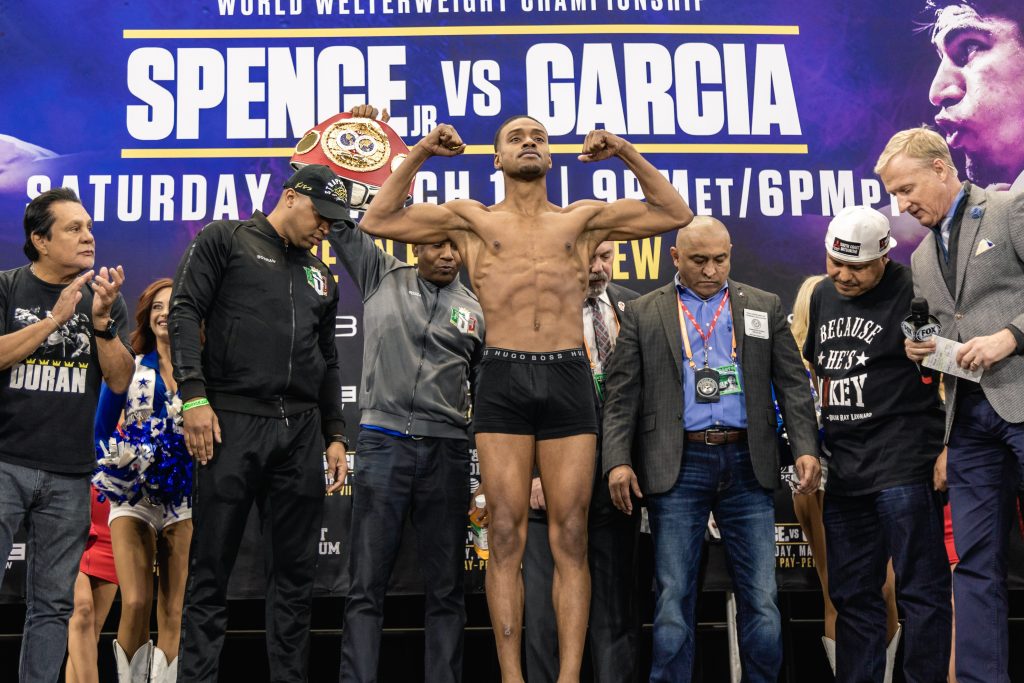
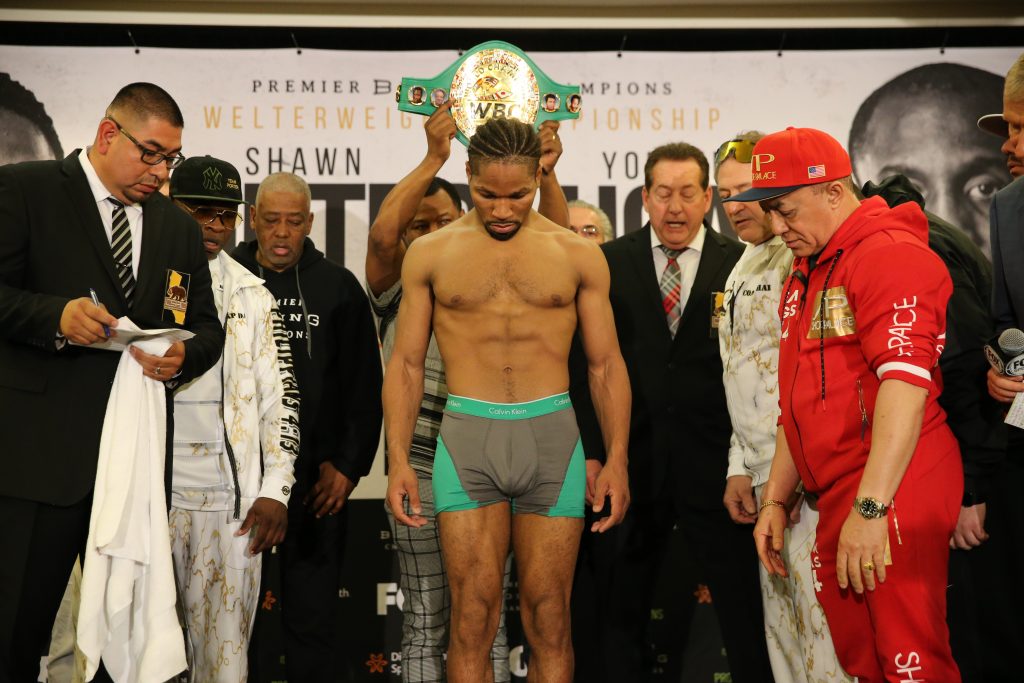
Spence wins split decision over Porter in a unanimous crowd-pleaser

By Norm Frauenheim-

LOS ANGELES — Only the judges disagreed.

There was no debate about the drama that began early and lasted throughout 12 rounds Saturday night in a split decision won by Earl Spence Jr. over Shawn Porter for two pieces of the welterweight title in front of roaring crowd of 16,709 at Staples Center.

Judges Rey Denescon of California and Steve Weisfeld of New Jersey scored it 116-111 for Spence. Larry Hazard, Jr., also of New Jersey saw it different. Hazard scored 115-112 for Porter.

The crowd? It was unanimous. There was no dissent about what a terrific fight was. There was a little bit of everything. Porter made it rough and repeatedly forced Spence to show he had some grit to go along with his reach, power and speed. Spence had poise, a jab and the wherewithal to control the center of the ring at exactly the moments he had to. In the end, Spence also had one quick counter, a left, perfectly timed and placed, to score a knockdown of Porter. It was the key to the fight.

It knocked Porter off balance in the closing moments of the eleventh round. Porter grazed the canvas with a glove. But the touch was like a torch to his chances at an upset.

“I think that knockdown was the difference,” Porter (30-3-1, 17 KOs) said “I couldn’t come back to the corner with my head down after that.”

No, he didn’t. He pursued throughout the 12th round, the bout’s final three minutes. He rocked Spence with a couple of lefts. But there was no way to knock victory out of the bigger man’s powerful grasp.

“Porter was throwing a lot,” said Spence, still unbeaten at 26-0 with 21 KOs. “I wanted to show I was the bigger and stronger welterweight.”

Bigger and stronger, however, doesn’t necessarily mean the best. That’s still up for debate. Spence hopes to further cement his claim at being No. 1 at 147 pounds against Manny Pacquiao. But that still leaves the unresolved question about when or if he’ll ever face the Top Rank-promoted Terence Crawford, who celebrated a birthday Saturday. He’s 32. There are stiil no signs that a Crawford-Spence fight will happen before his next birthday.

“if I can’t get Pacquiao and nothing happens with Terence, maybe Danny Garcia,” said Spence, who collected a $2 million guarantee and could wind with more depending on the pay-pe-view numbers for the Fox telecast..

A sign of what might happen next, perhaps, was there among those who rushed into the ring to congratulate Spence. Danny Garcia was there, perhaps the most prominent face in Spence’s future.

“I’ve told my team, you line them up, I’ll knock them down,” Spence said.

Meanwhile, there was little talk of a rematch, despite a split card scorecards that seemed to dictate a sequel. Porter had no argument with the scoring.

“For me to say it was robbery, no, that ain’t coming form me,” Porter said. “Did you all like the fight?”

Oh, yeah.

In the co-main event, 22-year-old super-middleweight David Benavidez (22-0, 19 KOs) became boxing’s youngest two-time champion, scoring a ninth-roundd soppage of bloodied Anthony Dirrell (33-2-1, 24 KOs). Benvidez claimed the 168-pound title that was stripped from him when he tested positive for cocaine last year

“There are so many emotions coming at me at once, said Benavidez, whose $1 million purse is the biggest collected by an Arizona fighter since Hall of Famer Michael Carbajal, also of Phoenix, cashed a $1 million paycheck for his rematch loss to Humberto “Chiquita” Gonzalez in 1994. “We put so much hard work into this training camp. We left home and were away from everything. But I had the dream to become the youngest two-time super middleweight world champion and I made my dreams come true.

“Everything just fell in place perfectly. From the suspension to all the big fights I’ve been in. All of that helped me out in this fight. I did not make a mistake or open myself up more than I needed to. I worked behind my jab and got the stoppage. Things are going to get better and get tougher and I’m ready for the challenge.”


Porter will need more than a microphone to beat a bigger Spence

By Norm Frauenheim-

Shawn Porter is good with a microphone. He uses it to analyze. He uses it to comment. Predict and argue, too. He also uses it to deliver a few opening salvos in the opening rounds of the fight before the fight. Psychology always precedes the punches, and that’s where Porter appears to have gained a slight edge over the favored Errol Spence in their welterweight unification fight Saturday night at Los Angeles’ Center.

Porter, a Fox studio analyst when he isn’t in the gym, has spun all the rhetorical angles at Spence, who delivers more ounches from angles than one liners.

It’s been entertaining. It’s also been something of a diversion. It’s hard to tell if any of the talk has had any impact on Spence. He’s tough to read. Tougher to beat. Just ask Mikey Garcia, who came up in weight and appeared to be winning all of the news conference and media appearances. At opening bell in a ring at about the 50 yard line on the Dallas Cowboys home field at AT&T Stadium in Arlington, Tex., last March, however, Garcia never had a chance in losing a one-sided decision. Porter, of course, has an explanation for that. He has said repeatedly that Garcia was a lightweight making a futile jump to welterweight.

“Truth is,” Porter said in repeated play on Spence’s nickname, “is that I’m a real 147-pounder.”

But, truth is, Porter rarely mentions a common foe who sums up the difference between the two: Kell Brook. Porter (30-2-1, 17 KOs) lost to Brook. Spence (25-0, 21 KOs) beat him.

Spence knocked him out in in 2017, scoring an 11th-round stoppage in an eye-opening upset in Sheffield, Brook’s hometown in the UK. Brook was coming off a loss, a fifth-round stoppage, to Gennadiy Golovkin at middleweight at a time when GGG was in his prime. The two-division jump up the scale was too much for Brook. He returned to his natural weight, which he had dominated. But he had no answer for Spence.

About three years earlier in 2014, Porter, a heavy favorite, lost a majority decision to Brook in Carson, Calif. The victory over Porter did for Brook what the victory over Brook did for Spence. Each went from interesting to the most feared welterweights of their day. In terms measured by physical dimensions, Porter will see and then encounter a fighter built a lot like Brook Saturday on Fox PPV. At 5- foot 9, Brook was a big welterweight. At 5-10, Spence is even bigger. Spence also has three more inches in his reach than Brook, 72 to 69.

Truth is, all of those numbers add up to tougher task for Porter, who is listed at 5-7 with a 69 1/2-inch reach. Porter’s argument is that Spence has never had to face the kind of adversity Spence has. Porter has had to fight his way out of trouble. Spence never has. But there’s a reason for that, one as simple of that tale on the tape and a common foe, Brook.

Prediction: Spence wins a unanimous decision.


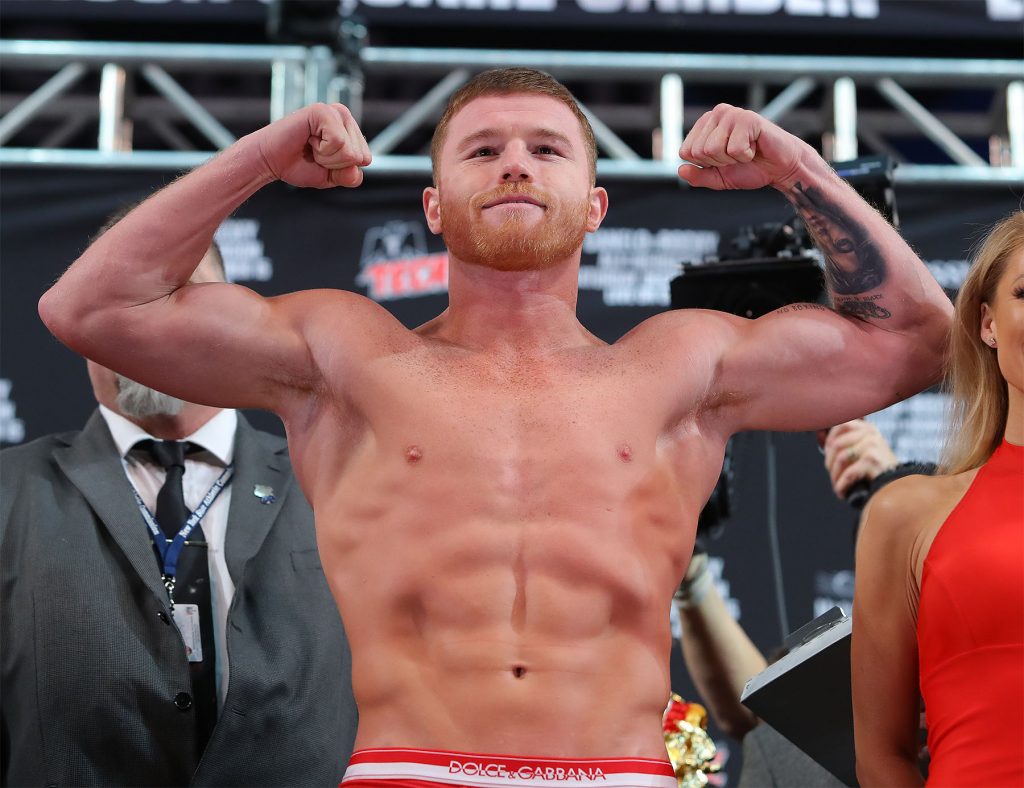
Canelo moves up the scale and away from GGG, but DAZN money has the final say-so

By Norm Frauenheim-

Canelo Alvarez says and does whatever he wants these days. Money buys that kind of power and Canelo has plenty.

It’s hard to argue with his $365-million contract with DAZN. But money exerts its own price. Makes its own demands.

At some point that money is going to force Canelo to take the fight he says he doesn’t want.

In formally announcing a Nov. 2 bout with Sergey Kovalev at Las Vegas MGM Grand in a risky jump up the scale from middleweight to light-heavy, Canelo said he was finished with Gennadiy Golovkin.

Canelo, who still holds three middleweight belts, said he would go back to 160 pounds no matter what happens against Kovalev in his bid to win a fourth title at a fourth weight.

But, he told reporters at a news conference Wednesday at Los Angles’ Union Station, it won’t be against GGG, who is 0-1-1 against him. Both fights were close, close enough to beg for a third.

But, no, Canelo said.

“We are finished ,’’ he said.

I’d bet $465 million that they’re not. That’s the total DAZN has invested in exactly the bout he now says won’t happen. There is his deal, the lion’s share. There is another $100 million in a contract that GGG signed in the wake of Canelo’s landmark deal.

GGG advisor Tom Loeffler has said GGG signed with DAZN because he saw it as the fastest way to a third fight. But only social media are immediate these days.

From Tyson Fury-Deontay Wilder to GGG-Canelo, there are no quick turnarounds. There’s just the waiting.

But DAZN has time and reason to wait on the one rematch that might allow it the streaming network to cash in on its investment. Demetrius Andrade is an interesting fight, but it doesn’t have the upside that third bout with GGG has. Take it the bank.

Canelo promoter Oscar De La Hoya continues to say the third bout will happen in 2020.

“Oscar says many things that make no sense,’’ Canelo said in a counter that raises some question about where the Canelo-Golden Boy Promotions relationship is headed.

But De La Hoya is right about his one. It makes sense. Lots of cents.


Staying Busy: Navarrete punches renewed meaning into an old concept

By Norm Frauenheim

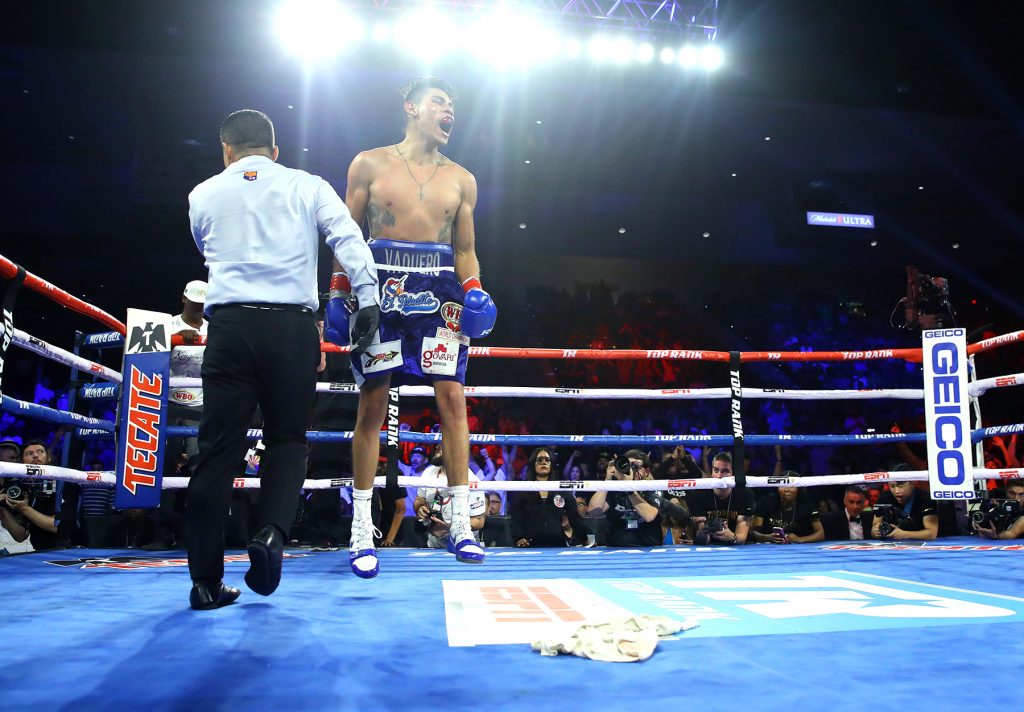
LAS VEGAS – Emanuel Navarrete

Is restoring an old-school definition to a term that has long been part of the boxing glossary.

Busy is today’s way of describing a fighter’s work rate. It’s a simple description for a relentless attack driven by fast feet, faster hands and inexhaustible energy.

Navarrete, a super-bantamweight from Mexico City, is all of those things. Just ask Isaac Dogboe, who got knocked off the fast track to stardom by Navarrete’s tireless assault, first by decision last December and again by an overwhelming stoppage in May.

Within the ropes, Dogboe could do nothing to slow down Navarrete. It’s outside those ropes, however, that Navarrete is making promoters remember what busy also used to mean.

Navarrete is back in the ring Saturday night on the Tyson Fury-Otto Wallin card on ESPN+ for a second title defense within one month. Navarrete, who scored a third-round stoppage of Phoenix fighter Francisco De Vaca on August 17, said yes to Saturday’s bout against Filipino Juan Miguel Elorde without hesitation.

“Your answer came quicker than your punch,’’ Top Rank promoter Bob Arum said to Navarrete Thursday during a news conference for a T-Mobile Arena card that is part of Mexico’s annual celebration of Independence on Sept. 16.

It was also an answer that must have been a trip back, way back, in time for Arum. Arum, 87, was there, in the last century when fighters would answer an opening bell every other month. Compare that to today when twice-a-year is thought to be busy enough.

But the 24-year-old Navarrete (28-1, 24 KOs) is seemingly ready at all times.  Ring rust has no chance against him.

“I just want to tell him I’ll fight in December too,’’ Navarrete said as an interpreter translated his Spanish into English for Arum.

Arum smiled at words that define an ever-ready fighter. Some fight for money, and if it’s big enough they’ll fight as seldom as possible. Why risk a big paycheck?

But at the heart of the craft, there’s passion that keeps a fighter restless and always seeking for a chance to punch in, punch out.   

“If you’re a fighter, you want to fight as much as possible,’’ Arum said. “If he could, this kid could would fight eight times a year.’’

During this week, at least, Navarrete isn’t looking past Saturday against the grandson of a Filipino legend. There’s more than one. Before Manny Pacquiao, there was Flash Elorde, the world’s junior lightweight champion from 1960 through 1967.

Juan Miguel Elorde (28-1, 15 KOs) was born about a year after his famous grandfather died in 1985. The grandson’s first chance at world title is a steep one, especially on a card put together in honor of Mexico’s Independence Day.

“It is my lifetime dream to become a world champion, and I think it is becoming a reality,’’ Elorde said.

Elorde best chance might rest on the tale of the tape. He is an inch taller than Navarrete, who at 5 feet 7 is usually bigger than most in the 122-pound division. But Elorde is also about eight years older than Navarrete, a young man who is as ambitious as he energetic.

Navarrete is seeking to unify the 122-pound belt, before moving up the scale. He foresees himself at junior-welterweight one day. For now, however, another super-bantam belt is on the agenda. Enter Arum, who says unbeaten Rey Vargas, a 122-pound belt holder from Mexico City will be at ringside Saturday.

“Thank you for bringing him,’’ Navarrete said to Arum. “He can see what he will face.’’Probably, sooner than later. 


Joshua’s Journey: Search for a road win takes him to Saudi Arabia

By Norm Frauenheim-

Anthony Joshua is unbeaten at home in the UK. He’s winless on the road.

It’s hard to know whether his record serves as much of a roadmap, but it might be a signpost of why he’s headed to Saudi Arabia, a site as unlikely as it is controversial for a heavyweight title fight.

Joshua, 22-0 in the UK and 0-1 on the road, has yet to prove he can fight away from the UK’s adoring fans and media. He even won his Olympic gold medal in 2012 at the London Games.

He could no wrong until he answered his first opening bell on foreign shores where Andy Ruiz Jr.’s fast hands left him looking confused and his fans betrayed throughout a stoppage loss at New York’s Madison Square Garden.

The futile journey to New York June 1 was supposed to represent his first step toward would-wide celebrity. It was designed to raise American awareness of a UK heavyweight who had been sold and packaged as a transformational athlete. All it did, however, was raise a red flag.

It’s not exactly clear what happened in New York to Joshua, who was bewildered by Ruiz combinations throughout six-and half rounds. The bewildering defeat was followed by strange behavior. Joshua celebrated with Ruiz. He smiled like a naive kid who didn’t look as if he exactly knew where he was or why he was there.

“There’s pressure, being an ambassador for boxing, to be bigger than boxing,” Joshua said Thursday in a return to New York in the second stop of a three-city tour for the Saudi Arabian rematch with Ruiz. “That’s my ambition and I have to deal with it.”

Boxing needs another ambassador like it needs a new Don King. A genuine heavyweight champ isn’t created by diplomacy, although some of today’s matchmaking might suggest otherwise. It’s just about skill and will, a couple of ingredients that were missing in Joshua’s last performance.

Whether a sense-of-self shattered in New York can be repaired a half-year later in Saudi Arabia is anybody’s guess. But the journey might be worth the risk. Might be the only option, too.

A lot has been made of the site fee. Saudi Royals reportedly are paying $40 million to Joshua promoter Eddie Hearn for the right to a fight that has been called part of a PR campaign to clean up the country’s image with “sportswashing.” Forty million buys a lot of bone saws.

The trip to Saudi, however, also is an opportunity for Hearn to control much of what can never be controlled in New York. There’s still no clear news on how the fight will be regulated. Or by whom. It’s not even clear how many seats will be available in an arena still under construction.

It’s hard to imagine Joshua’s UK fans will want to travel to a country where they can’t buy a beer. They might just prefer to watch the bout on DAZN at home where they won’t need a ticket or a visa. Then, at least, a stocked refrigerator will be nearby in the event Joshua’s journey fails to produce a victory that says this heavyweight can still travel onto much bigger things.  


Dormant Debate: Lomachenko promises to re-awaken pound-for-pound talk

By Norm Frauenheim

It’s a debate looking for a few good arguments. For the last few months, there haven’t been any. The pound-for-pound title is vacant these days.

Vasiliy Lomachenko hopes to change all of that Saturday in an attempt to knock the dormant out of the old debate in an interesting lightweight title fight against Luke Campbell in London.

Lomachenko has as good a chance as any to re-invigorate talk about who has a leading claim on No. 1. Among a few good men, Lomachenko might be the best.

“I think I’m the best, pound-for-pound,’’ Lomachenko (13-1, 10 KOs) told the UK’s Daily Mail this week during the usual hype before opening bell at O2 Arena (ESPN+, 5 p.m. ET/2 p.m. PT). “Terence Crawford thinks he is. Canelo Alvarez thinks he is.

“For me, Crawford is second, Canelo is third.’’

No argument with Lomachenko’s claim or contenders. From this corner, Japanese bantamweight Naoya Inoue and Dallas welterweight Errol Spence Jr. also belong.

Both are unbeaten and each has a chance later this year to further their own argument – Spence against Shawn Porter on Sept. 28 at Los Angeles’ Staples Center and Inoue against Nonito Donaire on Nov. 7 at Saitama, Japan.

Of the five, Inoue might be in the best position to deliver the most powerful argument. He’ll be in his home country against a clever, yet fading Donaire, a Filipino-American whose name recognition in the United States will further awaken American interest in the intriguing Inoue.

For now, however, the first shot in re-awakening the pound-for-pound debate rests in Lomachenko’s creative hands, which continue to introduce new angles to a brutal geometry sometimes called The Sweet Science.

The guess here is that the resourceful Lomachenko will prevail, but not with the convincing performance he’ll need to win the pound-for-pound debate in 2019.

Above all, Campbell (20-2, 16 KOs) has some skill of his own. He’ll also be in his home country and the city where he won Olympic gold in the 2012 London Games. Above all, he is bigger than Lomachenko, who can be seen looking up at Campbell in photos of the ritual face-off this week.

At 5 feet 7, Lomachenko is two inches shorter than Campbell, who is listed at 5-9. Another key dimension: Campbell has a five-and-a-half advantage in reach over Lomachenko.

Lomachenko is a featherweight fighting two classes above his natural weight. There’s risk in that. It was evident in Lomachenko’s 10th-stoppage of lightweight Jorge Linares. Linares knocked him down in the sixth.

More of the same would not be a surprise in a bout Lomachenko figures to win, yet not without at least one moment that leaves questions about whether he is pound-for-pound’s undisputed No. 1.

It looks as if Lomachenko’s best chance at a performance that sweeps away the doubt is at 126 pounds. But against whom? Mikey Garcia was taken off the pound-for-pound board in his equally-risky jump in weight to welter in a one-sided loss to Spence at AT&T Stadium in March.

Spence’s victory over Garcia marks a beginning of the troubling silence in the pound-for-pound debate, a popular pastime, yet also a significant marker in determining the state of the game.

A vacant pound-for-pound crown is just another empty seat, and there have been too many of those lately. The good news is that no vacant seats are expected at the O2 Saturday. It’s a beginning, perhaps, at filling that vacancy at the top the game. 


Remembering John McCain: Boxing Senator is gone, but Ali Act is still there and in need of an update

By Norm Frauenheim-

Sunday represents a sad anniversary. John McCain, statesman and soldier, died a year ago on August 25 on his Arizona ranch, about 100 miles north of an NHL arena in nearby Phoenix where ESPN was about to televise a fight card.

An opening bell was followed by 10 bells, a mournful memorial for a former amateur fighter who was called “the boxing Senator” by Bob Arum. McCain’s death wasn’t a surprise. His battle with cancer was public. And painful.

Yet, the timing was almost haunting. He died, 81, at about the same time young fighters, kids, on the undercard began to make that long walk from the dressing room to the ring. McCain identified with them. He had been one of them at the Naval Academy.

Later in life, he fought for them, a powerful advocate for young men from tough streets who knew that only their fists would fight for them.

McCain wrote, lobbied and pushed through the Muhammad Ali Act, which was introduced in 1999 and enacted in 2000.

McCain is gone, but the Ali Act is still there. It’s a small part of McCain’s many-sided legacy, seemingly made more powerful 12 months after his death. McCain stands in stark contrast with a president who did not like him and has always been quick to rip him. In life. In death.

The unfathomable depth of Donald Trump’s anger – call it hate – for McCain often makes me wonder why he hasn’t tried to rescind the Ali Act, which includes an attempt to ensure some financial transparency.

After all, Trump pardoned Jack Johnson without ever mentioning McCain or his tireless leadership in pushing for one. Trump, too, learned a trick or two in the boxing business with Don King. King lied about crowds long before Trump ever did. Yet even with Mike Tyson on the marquee, Trump drove his Atlantic City casino into bankruptcy.

Maybe, Trump is just too busy, what with Greenland and all. The sad truth, however, is that the Ali Act just doesn’t matter much. It has never been enforced the way McCain hoped it would.

Early on, it did force promoters to open up their books to fighters, who have a right to know what the gross income is expected to be. They are only negotiating for their fair share of that projected pie. That financial transparency is one reason boxers still make more money than mixed-martial artists get from the UFC, which is not subject to the Ali Act

But everything else about the legislation – conflicts of interest, enhanced safety measures – have been mostly ignored. Like his pursuit of the Johnson pardon, McCain had hoped to further empower the Ali Act with patience and time. But there was never enough interest in it from McCain’s Congressional colleagues. It’s still a law, but it’s little bit like the speed limit. Nobody pays attention to it anymore.

Two deaths in the wake of McCain’s death, however, are reason to re-energize his pursuit of some rhyme, regulation and reason instead of the usual chaos. Two of the kids with whom McCain identified are gone, dead from head trauma suffered in bouts.

First, Russian junior-welterweight Maxim Dadashev died July 23, about four days after fighting in Maryland. Two days later, Argentine junior-welterweight Hugo Santillan died from injuries sustained in a fight in Buenos Aires.

A shocked game moved on, as it always does. The attention quickly turned to what Canelo Alvarez isn’t doing and what Gennadiy Golovkin will do. There’s always another opening bell, which is another way of saying it’s business as usual.

If McCain were still alive, however, it’s fair to say he’d be calling for a thorough investigation in Maryland and an update of the Ali Act. But the Arizona Senator’s voice is long gone. What he left, however, was a blueprint, still a pathway to ensure that death never becomes usual in the boxing business.


Canelo-Golden Boy: Fight with Sergey Kovalev would mean more to fans than an apology

By Norm Frauenheim-

Trouble between Canelo Alvarez and Golden Boy Promotions isn’t exactly a surprise. Seeds and signs of discontent have been circulating for at least a year.

It’s not clear how it will end. For now, Golden Boy is saying all is okay, meaning business as usual will continue despite news a couple of weeks ago that Canelo is unhappy.

That wasn’t a mere rumor. It came from him in a social-media salvo full of frustration at how he said he was kept in the dark by Golden Boy throughout the futility that led to the International Boxing Federation’s move to strip him of its middleweight title.

Canelo wanted answers.

A couple of weeks later, it’s not clear how many he got. There was a reported meeting this week about what to do next, or at least when to do it.

November 2 is the proposed date for Canelo’s next bout, his fourth since signing a $365-million landmark deal with DAZN. Golden Boy president Eric Gomez told ESPN Thursday that the first Saturday in November has been placed on the Nevada State Athletic Commission’s agenda for consideration at its meeting on Tuesday.

But there’s not much else about where or even against whom. There are only the questions.

Demetrius Andrade, who holds the World Boxing Organization’s 160-pound belt, still appears to be the most likely foe. But there’s also persistent talk that Canelo, who has a World Boxing Council “franchise belt” and the World Boxing Association’s title, is still thinking about a jump up to light-heavy for a shot at Sergey Kovalev, who fights Anthony Yarde on Aug. 24 in Russia.

Just a guess, but DAZN executive John Skipper’s preference might be Kovalev. Andrade could be a tougher challenge for Canelo. But Andrade is not as well-known as Kovalev, who generated headlines throughout controversial losses to Andre Ward, first in 2016 and again in 2017.

Kovalev also might be a perfect fit for Canelo in a PR battle to halt the erosion in the Mexican’s popularity. In boxing’s traditional good-versus-evil plot, Kovalev would play the bad guy. He’s a natural.

There are lots of reasons for fans to wonder why they like Canelo. Against Kovalev, however, he’d look good in comparison and perhaps even better in fact if he wins definitively. Winning, however, is the risk. Kovalev has proven to be resilient since Ward.

The Russian is still dangerous. For Canelo, however, there’s more danger to his career and public persona if he doesn’t try to halt a string of controversy that has left fans exasperated.

First, there were negotiations with just about everybody but Gennadiy Golovkin.  Then, there was the announcement that Canelo would forgo his expected bout on Sept. 14, a date that would coincide with Mexico’s annual Independence Day on Sept. 16. Then, there were failed talks with Ukrainian middleweight Sergiy Derevyanchenko and the IBF’s subsequent stripping.

Canelo apologized to the fans in the same message that asked Golden Boy for answers. But fans aren’t very forgiving. Guess here, they want Kovalev, more than an apology or an Andrade.

For a while, at least, a winnable bout at 175-pounds against Kovalev might make fans forget about Golovkin while also re-assuring DAZN that it made a good investment. GGG would still be there, waiting and ready for a third fight. For now, however, GGG is off the board. But Kovalev will be there, if – as expected – he beats Yarde, a UK prospect.

Kovalev and a Canelo victory over the feared Russian also might be the only way Golden Boy and Canelo can start over. It’s a risk, but business-as-usual poses even bigger risks.


On Alert: Death and serious injury heightens concern for fighters’ safety

Two deaths within a few days in late July are part of a dangerous trend for fighters, whose safety was addressed with a sense of growing concern and urgency by officials throughout the sport this week at a convention of the Association of Boxing Commissions.

The Association (ABC) met for five days in Scottsdale, Ariz., for its annual conference in the wake of Russian junior-welterweight Maxim Dadashev’s death on July 23 in Maryland and Argentine Hugo Santillan’s death on July 25 in Buenos Aires from injuries sustained in the ring.

The deaths follow serious injuries suffered by Canadian light-heavyweight Adonis Stevenson, welterweight Zab Judah, Mexican bantamweight Felipe Orucuta and Christian Castillo, the son of former lightweight champion Jose Luis Castillo.

Stevenson, a former 175-pound champion, underwent emergency surgery and was placed in a medically-induced coma following an 11th-round knockout loss to Ukrainian Oleksandr Gvozdyk on Dec. 1 in Quebec City.

Judah, a former champion at 140 and 147 pounds, was hospitalized with bleeding on his brain after an 11th-round KO loss to Cletus Seldin on June 7 in Verona, N.Y.

Orucuta, a two-time challenger for major titles, suffered a brain injury, also on June 7, in a knockout loss to Jonathan Rodriquez in Zihuatanejo, Mexico. He underwent emergency surgery to remove a blood clot.

Stevenson, 41, was able to walk and talk two months after surgery.

Judah, also 41, was “awake, communicating with his family and doctors and making progress,” Star Boxing promoter Joe DeGuardia told ESPN two days after the injury. Judah’s family asked for privacy, DeGuardia said.

Orucuta, 33, was awake and showing signs of improvement last week, according to reports in the Mexican media.

Castillo remained hospitalized late Thursday after suffering an injury last week while sparring for his second pro fight scheduled for last Friday in Tijuana, according to ESPN Deportes. His condition was complicated by pneumonia, according to the report.

“We are all concerned,’’ said World Boxing Council President Mauricio Sulaiman, who attended the ABC convention.

Symposiums on drug testing and safety dominated the convention’s agenda, including one conducted by Sulaiman, whose Mexico City-based organization is monitoring weight with periodic weigh-ins for its champions and leading contenders. Wild fluctuations in weight are believed to be a factor in ring injuries and fatalities.

“Weight is a key,’’ said Sulaiman, whose organization also sponsors VADA – the voluntary drug testing program run by former Nevada ringside physician Dr. Margaret Goodman. “There are many things we have to consider and research. It is a process. There are bad matches. Late substitutions are dangerous There are injuries suffered in the gym. Many things can happen and do.’’

It’s not clear what any regulatory agency or sanctioning body can do, however. Boxing is inherently dangerous, made more dangerous by a lack of uniformity in the regulations that govern it in from country-to-country, state-to-state. Despite the Muhammad Ali Act, there is still no single governing body in the United States.

The Ali Act’s author, Arizona Senator John McCain, died last September. A fan and advocate, McCain was seen as the last real proponent of boxing regulation in government. Without him, there has been little interest or energy to enhance or enforce the Ali Act. This year’s ABC convention honored McCain’s role in boxing. His son, James McCain, was the keynote speaker as the convention concluded its business with a banquet Wednesday night.

`

Still, the ABC has no real authority. It can only advise and educate. It has no real role in an expected investigation of the Dadashev death by the Maryland State Athletic Commission and its executive director, Patrick Pannella

“We will support Patrick in every we can,’’ said Brian Dunn, a Nebraska commissioner who was elected the ABC’s new president this week. Legal advice, whatever we can do. This happens in boxing.’’

Happens too often.


Death And The Ring: Two fighters die in long week that forces fans and media to ask questions that have always troubled a troubled game

By Norm Fraueheim-

Boxing has been called life in a shot glass. From tragedy to triumph, it’s all there all at once, 180-proof. It tests your limits, takes you for a dizzy ride and sometimes leaves you in the gutter.

This week is one of those times.

Two deaths – first Russian junior-welterweight Maksim Dadashev Tuesday from injuries sustained in a fight Friday in Maryland and then Argentine junior-welter Hugo Santillan Thursday after a bout Saturday in Buenos Aires — just days after celebrating a dramatic display of skill, guts, resilience and class in Manny Pacquiao’s split-decision over Keith Thurman leaves a hangover full of troublesome questions. Doubts about why we watch.

I had other plans for this week’s column. There was the 40-year-old Pacquiao and a legacy that continues to make history. There was Errol Spence Jr. and his hopes to maybe fight Pacquiao and his determination to one day face Terence Crawford.

But none of that seemed to matter after the deaths of young fighters known by few of us. Dadashev was 28. Santillan was 23. They were young guys who labored on undercards for small purses and in front of empty seats.

Nobody much cares about them as fighters. But we care about them in death, because, I think, of what it says about us. If the unknowns can die, the great ones can, too. There’s no immortality on either side of the ropes.

In that ever-present danger, there’s drama.

A dilemma, too, and it’s inescapable.

They give – make that gave – it all in game compelling because of what it takes to conquer the fear. Fighters accept that risk. Fans are there to see how they deal with it. Unlike just about any other sport in this universe, there’s no ambivalence about what we’re watching and perhaps why some watch and some won’t.

In another lifetime, I used to cover auto racing, mostly NASCAR in Daytona. Drivers died. I always believed many of the more than 100,000 fans jammed into the Speedway were there just because any race was always a blown tire away from a massive accident.

Death would happen. That was always a danger and, in fact, part of the tension that drew those fans to the track. But it was also a byproduct.

The drivers weren’t there to disable each other.

But boxers are.

There wouldn’t be boxing if not for each fighter’s intent to disable the other. That’s the difference and it’s a dramatic one. It is as honest as it stark, a reason why many people just won’t watch. Boxing’s abolitionists figure to repeat their demand that the sport be outlawed in the wake of this week’s deaths. I can’t argue with them. I can’t agree with them, either. That’s part of the aforementioned dilemma.

Much, perhaps too much, about boxing offends the reasonable people concerned about the long-term damage done to the boxers who do survive. I understand. But I also understand that young men will always fight in the ring or on the street. Unregulated or regulated, they’ll fight with intent and no doubt about the danger.

Over the years, I have learned to sit at ringside for every fight on every undercard, no matter how big the main event. I didn’t know Dadashev. I didn’t know Santillan. But I have watched fighters like them for years and my admiration for their courage has grown during the many rounds before Pacquiao, or Floyd Mayweather, or Canelo Alvarez or Gennady Golovkin.

I’m there because of what might happen, what did happen to Dadashev and Santillan. I’ll be there, at ringside, all over again and I’ll pray I won’t have to write about another ring death. But that’s hoping against hope. Life in boxing’s shot glass means death, too.


Pacquiao-Thurman: Compelling bout has some legends buzzing

By Norm Frauenheim-

LAS VEGAS – There were three legends and one who wants to be one. They were there to talk about a legend and one who promises to be one.

Manny Pacquiao, already a longtime legend, and Keith Thurman, the man seeking to make his own, are at a compelling crossroads. It’s young lion versus old. It’s legacy versus wannabe. Pacquiao-Thurman Saturday night at the MGM Grand and on Fox pay-per-view television is loaded with all of the elements for a potential classic.

It’s anybody’s guess whether all of those pieces fall together into picture of anticipated drama or simply fall apart. There are lots of questions. Can Pacquaio’s 40-year-old body hold together against a younger and bigger Thurman? Can the 30-year-old Thurman battle through the injuries that have put his once-promising career on hold? Only the moment after an opening bell can provide those answers.

For now, however, there are platy of opinions about a welterweight bout that looms as the biggest fight of the summer, especially in the wake of Wednesday’s announcement that reigning middleweight Canelo Alvarez will postpone his planned Sept. 14 bout because of futile search for a suitable opponent.

For now, at least, there is a good fight that sets up further possibilities at 147 pounds. The PBC path leads to a welterweight unification bout, probably early next year against the Pacquiao-Thurman winner and the Errol Spence Jr.-Shawn Porter winner on Sept. 28 at Staples Center in Los Angeles.

In part, that’s why Porter was there Thursday, part of round-table at the Grand Garden Arena alongside former middleweight champion Winky Wring, and ex Pacquiao foes Marco Antonio Barrera and Erik Morales.

For the record, Porter was one of three who figures he’ll be facing Pacquiao. No reason to ask whether he thinks he’ll beat Spence. He wouldn’t have agreed to the fight if he didn’t think so.

“Pacquiao by decision,’’ said Porter, the World Boxing Council champion who did offer a disclaimer, saying that Thurman’s confidence and power could force the Filipino Senator into retirement.

Morales and Barrera agree with Porter. Barrera picks Pacquiao to win a decision. Morales says the Filipino wins, by knockout or decision. Both faced Pacquiao when he was near or at his prime. Morales fought him three times, winning the first and losing the next two.

“When I beat him, I was at my technical best and that’s what Thurman will have to be if he hopes to have a chance,’’ Morales said.

Pacquiao went 2-0 against Barrera — an 11th-round knockout in 2003 and a unanimous decision in 2007.

“Psychologically, it’s tough to fight Pacquiao, because he keeps that pressure on you,’’ Barrera said.

Only Wright picked Thurman. But that was no surprise. Wright was a mentor a to young Thurman in gyms around the Tampa Bay area, where both grew up. Thurman was there, then a 16-year-old amateur, when Wright stunned Felix Trinidad, scoring a unanimous decision over the heavily-favored Puerto Rican on May 14, 2005, also the MGM Grand.

“Bobble-head night,’’ Thurman said of a bout he remembered for the way Wright’s deadly-accurate jab made Trinidad’s head bounce around as though his head were attached to his body by a spring.

Wright admires Pacquiao. But, he says, not even legends can beat the clock.

‘’Only Father Time is undefeated,’’ he said. “Over the many years and fights, it might take away just a split second from his speed. But that might be enough. How fast is this Manny as opposed to the Manny we knew in the day?’’


Many-sided Thurman in the role of a lifetime in his fight to unseat Pacquiao

By Norm Frauenheim-

Keith Thurman has lots to say, more than enough for Manny Pacquiao to pick and choose whatever he might need for just the right amount of motivation before their welterweight fight July 20 at Las Vegas MGM Grand.

“Never been more focused,’’ Pacquiao said Wednesday during a media workout at the Wild Card Gym in Los Angeles and again on Thursday during a conference call.

Never more grateful, either.

Pacquiao has heard it all over nearly two decades at the top of a very noisy game. At this point, the Filipino Senator, boxing’s humble elder, knows what to use and what to discard. It doesn’t matter if it’s true. It just matters if it works. Enter Thurman, who is providing a whole menu of rhetorical options.

Want outrage? Thurman can do that. In the early news conferences, he promised to “crucify” Pacquiao, a deeply religious man.

Want cocky? Thurman can do that, too. Throughout subsequent media days and conference calls, he said he had the most complete resume in the welterweight division. Terence Crawford and Errol Spence Jr. are the consensus best at 147 pounds, but they don’t’have the bully pulpit this week or next.

For now, that stage belongs to Thurman, a many-sided personality who is doing his job. Big fights are about salesmanship, and Thurman is delivering it fearlessly and relentlessly. That’s a dangerous combination. But it is endlessly fascinating from a fighter who has also called himself an entrepreneur. He understands risk and roles. He has taken on both in a difficult challenge of Pacquiao, who has always played the good guy.

That’s Pacquiao’s natural role, his only role. Guess here, Thurman knows that and has filled the only role left to him. He knew he was the bad guy the day he signed for the fight. The black hat fits him well. But does it define him? I don’t think so.

“I bring entertainment,’’ Thurman said this week in a conference call. “If I win, I bring entertainment. If I lose, I bring entertainment.’’

If that stretch of canvas between the ropes is theater, Thurman might be the most versatile actor of them all. There’s a fair question as to whether he has as many punches as he has sides to his personality. But his bold salesmanship is bound to attract an audience full of Pacquiao fans who want to see him silenced and another crowd wondering whether he can in fact back it up. For now, it’s a pick-em fight

After it is all over, however, it would be no surprise to see two fighters more alike than different. Many-sided often means inherent contradictions, and there were plenty of those on display in Thurman throughout the build-up for the Fox pay-per-view fight. Thurman practices yoga. There is a spiritual side to him, just like Pacquiao.

There’s a practical side to him.

I asked him last week if he envisioned fighting at 40. He’s 30; Pacquiao is 40.

“Hell, no,” he said. “At 35, I’ll pick up a book and maybe go to college.

“At least now, I can afford a college education.’’

Oh yeah, he’s funny, too.

Mostly, however, there are repeated reasons to believe he really admires Pacquiao, despite all of that over-the-top trash talk. Thurman watched Pacquiao beat Adrien Broner at the MGM Grand in January, his first fight after he turned 40 in December. Thurman had a fight a week later against Josesito Lopez, whom he beat in a so-so performance on Jan 26 in Brooklyn.

But Pacquiao inspired him.

“I went out for a run at 1 a.m. the week before my own fight because of what Manny did,’’ Thurman said. “I was inspired by what I saw in him, by what he wants to do now at 40.’’  

Now, Thurman is in a role to stop who, what inspired him.


Pacquiao-Thurman: A title fight and battle to regain identity

By Norm Frauenheim-

It’s a fight hard to pick, mostly because Manny Pacquiao and Keith Thurman are welterweights fighting to recreate themselves or perhaps re-discover who they were.

The guy who wins the identity crisis wins the fight. That’s one theory, anyway.

Sixteen days before opening bell at Las Vegas’ MGM Grand, there’s only one familiar trait. Pacquiao’s likability is unchanged, un-eroded by time and controversy. His popularity has been evident ever since the Filipino Senator arrived back in Los Angeles a couple of weeks ago for his final stretch of training at the Wild Card Gym.

Social media is full of photos of Pacquiao doing his roadwork on LA streets. Crowds of runners follow him in scenes straight out of Forrest Gump. At a couple of levels, Pacquiao is little bit like the Gump character. The Senator has done it all in an unlikely rise from crushing poverty to international celebrity. But like the Gump film, there’s also that line about a box of chocolates. You never know what you’re going to get.

That sums it up for just about every 40-year-old fighter. Pacquiao is beyond his prime, yet still has muscle memory that can recapture legendary moments. For one night at least, he could be the younger guy. Then again, he could be just another old guy trying to extend his career with one more paycheck. The reviews for Pacquiao’s last two outings have been good.  Power was there in a stoppage of Lucas Matthysse in 2018. Speed was there in a decision over Adrien Broner in January.

But Matthysse was shot, a hollowed-out version of the feared puncher he had been. Broner was there to outrage, insult and entertain. He did all of that and more. He did everything, however, but fight. His punch output barely registered on the CompuBox meter.

Neither Matthysse nor Broner provided enough opposition to really get a fair look at what kind of fighter Pacquiao really is at 40. Maybe, it won’t matter against Thurman, who is called One Time yet has looked Past Time over his last few bouts. Perhaps, injuries and inactivity help explain his forgettable performance against Josesito Lopez.  Or, perhaps, he is exactly the fighter he has appeared to be.

 That said, he is 10 years younger than Pacquiao. He should be at his prime and he promises to be there – or back there – against a middle-aged fighter whose name is still as current as ever. There’s a better chance that the younger man can recapture his edge more readily than the older man. Thurman is still young enough to be the welterweight he has always been projected to be.

For Pacquiao, it’s not that easy. A lot of it just depends on what his aging body feels like when he wakes up on July 20, fight day.

Guess here, the odds will remain even until opening bell. Pacquiao might be a slight favorite, simply because of his enduring popularity. Those guys running behind him in those roadwork photos will bet on him too.

 Meanwhile, don’t be surprised if Thurman attempts to do what a forgotten name did to Pacquiao in Australia a couple of years ago. Remember Jeff Horn? Horn roughed up Pacquiao in a punishing fight in Brisbane in July 2017. Horn won a controversial decision before hometown fans. In Vegas, it is fair to say the scoring would have gone the other way in a decision for Pacquiao, a longtime Vegas favorite.For now, however, Horn’s performance provides a tactical blueprint for Thurman, who like the Aussie can use his strong upper body to tie up, slow down and perhaps beat Pacquiao. It all depends on who shows up.  


Fury-Wilder II: Fury is already winning the preliminary rounds

By Norm Frauenheim-

Reviews continue, days after Tyson Fury sang his way to a second-round stoppage over an unknown German in what was more of a Vegas lounge act than a fight.

It was fun. It was boxing’s version of junk food. But I’m not sure what to make of it, other than to say that Fury could be a very good Elvis impersonator if his day job as a heavyweight doesn’t work out.

Above all, it was an introduction, and a successful one in terms of what Fury hopes to accomplish next year.

Put it this way:

Fury is already winning the rematch.

For all that it mattered, Fury could have been fighting Tom Schwarz or Sergeant Schultz. The whole point to the song-and-dance last Saturday at Las Vegas’ MGM Grand was the long-anticipated rematch with Deontay Wilder, projected for some time in 2020’s first quarter.

Psychologically and politically, the rematch has been underway for a while. A lot still has to happen – and not happen – before an opening bell.

Wilder has to beat Luis Ortiz in a rematch tentatively scheduled for September.

Fury has to beat whomever he faces on either Sept. 21 or October 5. Please-please, don’t it let be Jarrell “Big Baby” Miller, who comes off a WBA-mandated suspension on Sept. 19. A positive-PED test got Miller bounced from the Anthony Joshua fight, allowing stand-in Andy Ruiz Jr. to spring an all-time upset on June 1. More on Miller later, hopefully much later.

In the here-and-now, only two heavyweight fights matter: Wilder-Fury and Ruiz-Joshua, both rematches. Most of the current talk is about Wilder-Fury. The attention – and money – invested in Fury is astonishing. ESPN did a two-hour special on Fury before last Saturday fight on ESPN+. Two hours of prime time for fewer than two rounds, or fewer than six minutes of one-sided boxing.

But the media and promotional investment – reported to be $100 million – gives Fury an early edge in the projected sequel, especially if it is in Vegas. Top Rank already is promoting Fury as though he is a Vegas fighter.

It’s a smart and subtle move. The rematch feels like a Vegas fight and you know what they say about Vegas: The House always wins. Imagine if Fury’s had already gained a public foothold in Vegas and the first Wilder-Fury bout had been at the MGM Grand instead of Staples Center in Los Angeles.

Wilder-Fury I remains controversial. It was a draw. Fury out-boxed Wilder for at least eight rounds, but Wilder scored two huge knockdowns in the final rounds, including one in the 12th that saw Fury climb off the canvas like a man climbing out of a coffin.

Judges are supposed to be objective. Some more than others. But they are all human, meaning they are influenced by what they hear and see. Had it been in Vegas and those judges had witnessed a Fury they already knew in his amazing display of resilience in the 12th, the guess here is that scorecards would have been Fury in a narrow decision instead of a draw.

There is every reason to think the rematch will play out in much the same way the first bout did. Fury’s reach, clever versatility and footwork are the same. Wilder’s fight-ending power is the same. It’s still close, very close.

But, for now, Wilder is winning all of the preliminary rounds.


No Fury Necessary: Instead, Tyson Fury promises a show and delivers one in quick stoppage of Schwarz

LAS VEGAS — It began with Tyson Fury walking down the hallway toward the ring looking ominous. He was dressed, all 6-foot-9 of him, in funereal back. Then, suddenly, The Grim Reaper transformed into Captain America. The black was gone.

Beneath it, there was an American flag fashioned into a robe and Top Hat that could have been straight out of Apollo Creed’s closet. It ended, with Fury at the center of the ring, singing I Don’t Want To Miss A Thing. It’s an Aerosmith song. But Fury made it sound like Elvis.

Hey, an Elvis impersonation had to be in there. This is Vegas, after all. And that’s what Fury promised. A show. It wasn’t much more than that. Yes, there was a fight – or at least a facsimile of one – for nearly two full rounds between The Grim Reaper-turned-Captain America and Elvis.

But it was a fight that appears hard to judge, at least in terms of what it means to the heavyweight division. Deontay Wilder will have to wait, probably until early next year. There’s still plenty of time to argue and re-argue all of the possibilities in the proposed rematch. Nothing that in Saturday fight figures to change the outlines of what to expect in Fury-Wilder II.

German challenger Tom Schwarz didn’t do anything to make anybody change any minds. He was there as a prop. He vanished like a prop in what could have been another part of the show. Fury was the magician, making Schwarz vanish within two rounds Saturday night of a bout televised by ESPN+.

“Me key tonight was to enjoy myself,’’ Fury (28-0-1, 20 KOs) said after retaining the lineal heavyweight championship and a purse estimated to be $12,5 million. “I hope everybody enjoyed it as much as I did.’’

If the crowd’s enthusiasm was any sign, nearly everybody did, other than probably Schwarz (24-1. 16 KOs) and his trainer. The German corner threw in the towel at 2:54 of the second, not long after a succession of punches dropped Schwarz along the ropes. Schwarz got up. But Fury’s punches kept coming, one after another in a blitz without interruption.

A sure sign of the end was evident in the beginning. Fury immediately began to work his long jab. He developed a rhythm – feint, feint, jab, hook, feint. Then, there was some mocking. Fury stuck out his tongue at Schwarz. He smiled at him. He did just about anything he wanted to.

“What’s next?” said Fury, who then deflected the question to his promoter, Bob Arum.  “Bob will tell you we have September 25 or October 5.

“Then ,next year we are going to hold down Deontay Wilder to give me that green (WBC) belt.’’

Jesse Hart wins at light-heavyweight, beating Barrera

Jesse Hart, a former super-middleweight contender, moved up in weight and discarded the former. He’s still a contender, this time at light-heavyweight. Hart (26-2, 21 KOs) beat top-10 contender Sullivan Barrera (22-3, 14 KOs) knocking him down once in the eighth round en route to 99–90, 96-93, 97-92 victory over the Cuban fighter, now a resident of Miami.

“Watch out, cause I’m on my way,” said Hart, a Philadelphia fighter who continues his lifelong pursuit of a major title. ” I hurt my right hand in the seventh. But I’m OK. I think I need just one more fight at 175 to feel completely comfortable at the weight.”

Mikaela Mayer stays unbeaten

Mikaela Mayer stayed unbeaten and undeterred about her hopes for an eventual  showdown with Irish star Katie Taylor Saturday with a tough, yet convincing decision over Lizbeth Crespo in a 10-round, 130-pound fight.

Mayer (11-0, 4 KOs), an Olympian from Los Angeles, endured some powerful shots in the early rounds from Crespo (13-5, 3 KOs), who learned how to fight because of domestic abuse while growing up in Argentina. But Mayer employed power, precision and a superior reach to gain control over the final few rounds. 

Toledo super-featherweight Albert Bell (15-0, 4 KOs) relied on a three-inch advantage to control distance and tempo in the early rounds, scoring a unanimous decision over Andy Vences (22-1-1, 12 KOs), a San Jose, Calif., fighter whose aggressiveness and power in the later rounds weren’t enough.  

UK featherweight Isaac Lowe wins unanimous decision

UK featherweight Isaac Lowe started the fight. Finished it, too.

Lowe (18-0-3, 6 KOs) shoved Duarn Vue (14-2-2, 4 KOs) during a face-t-face pose fro the camera after a staged weigh-in Friday. Punches might have been thrown then if not for 87-year-old Top Rank promoter Bob Arum, who rushed across the stage and pulled Vue to one side. 

The punches would wait, but 24 hours later Love threw and landed most of them, scoring a unanimous decision over Vue.

Abel Sanchez-trained heavyweight scores overwhelming stoppage

He calls himself the Gladiator, an appropriate nickname for a fighter from a city known for its ancient Colosseum. Rome heavyweight Guido Vianello (4-0, 4 KOs) did everything his nickname demands. The Abel Sanchez-trained  scoring three knockdowns of Keenan Hickman (6-4-1, 2 KOs) for a second-round TKO. 

First Bell: German heavyweight opens Fury-Schwarz card with a decision win

In front of a matinee crowd of people trying to escape The Strip’s sole-melting temps, a young German heavyweight did what a fellow German hopes to do on the main event.

Peter Kadiru (4-0, 1 KOs), of Hamburg, won.

The 21-year-old Kadiru opened the show at the MGM Grand, scoring a unanimous decision over Houston’s Juan Torres (3-2-1, 1 KO) in a four rounder on an eight-fight card scheduled to end with German Tom Schwarz in an attempt at an upset of lineal heavyweight champ Tyson Fury. 


Weigh-in Show: Tyson Fury goes to the scale twice, first for the Commission and then the fans

By Norm Frauenheim-

LAS VEGAS – Show Tyson Fury an empty stage and it won’t stay empty for long. He’ll fill it, all 6-foot-9 of him and a charisma for which there is no tape. No tale, either. But that intangible charisma is there, big enough to fill a stage and a room.

Fury did both Friday for his bout Saturday against German challenger Tom Schwarz for the lineal heavyweight title in an ESPN+ televised fight at the MGM Grand.

He took the stage for a weigh-in re-done for ESPN cameras at a prime-time hour. The real weigh-in – one regulated by the Nevada Commission – had already happened in the morning. The weights were documented and filed by the time Fury stepped onto the scale for what was a little bit like lip-synch.

But the show must go on. So, too, must a showman.

Fury was there for, fulfilling his promise to entertain in first fight in a new deal with ESPN and Top Rank.  A small crowd roared. Fury waved one finger at Schwarz. Maybe, it was his way of saying the fight would last one round. Or that one punch would finish Schwarz. Or that Schwarz didn’t have one chance. Fury is a prohibitive favorite. In the UK, Schwarz is a 12-1 longshot.

Oh yeah, Fury (27-0-1, 19 KOs) was 263 pounds, six-and-a-half pounds heavier than he was for his last fight in a controversial draw with Deontay Wilder in December in Los Angeles. Schwarz (24-0, 16 KOs) was at 245.5 pounds.   


Tyson Fury back at a work on one plan that emerged after he was hit

By Norm Frauenheim-

LAS VEGAS – He is named for a fighter who these days is remembered for some wisdom about how vulnerable a plan can be.

Everybody has one, Mike Tyson said, until he gets hit. Tyson left it open-ended, leaving an implicit suggestion that there was only chaos after one punch lays waste to any plan, no matter how carefully plotted and practiced.

But Tyson Fury, whose dad named him for Mike more for the heavyweight chaos he caused than the wisdom he left, survived the hit without a planned victory, yet with a new plan already as rich as perhaps it will be far-reaching. It came about, maybe because of Fury’s resiliency or instinctive creativity.

He was born to fight.

Born to promote, too.

Fury has done more of the latter than the former in the wake of an astonishing moment last December when he awakened from a lightning bolt of a shot from Deontay Wilder. One moment Fury was face down on a stretch of canvas at Los Angeles Staples Center. A moment later, he was upright, a fighter resurrected and soon a man with a plan that for a few perilous seconds looked as if he were finished.

If you subscribe to his namesake, the new plan is as vulnerable as the old one was. But that’s why Fury (27-0-1, 19 KOs) is about to re-enter the ring Saturday night (ESPN+) against a German challenger, Tom Schwarz (24-0, 16 KOs) at the MGM Grand Garden Arena. 

“I believe the fight with Wilder only helped my profile here in the United States, and here we are again, only a few days away from the biggest fight of my life,” said Fury, whose comeback in the ring marked a longer, more compelling battle with depression, including thoughts of suicide. “I talk about mental health a lot because it’s very important to me. Only 18 months ago, I was in a very, very dark place. I just wanted to prove to people that there is a way back. You can come back from anything. Nothing is impossible, and if you’d seen me a time ago when I was very heavy and very unwell.’’

Fury is back for his first bout since the Wilder drama in an opening step to introduce the UK heavyweight to the American market. He signed rich deal with ESPN and Top Rank’s Bob Arum, who sees some of the same charisma in he saw in Muhammad Ali and George Foreman.

Fury, Arum says, “is a guy people can relate to. He has the ability to capture pubic imagination.’’

Sure enough, Fury has been busy working on exactly that is appearances throughout the last couple of weeks. He showed up early at a news conference Wednesday, presumably just to schmooze. He was shirtless under a wildly-colored sports coat. It was reminiscent of Foreman in the comeback stage of his career. Foreman would show up in hotel lobbies and press rooms, sometimes with a cheeseburger in one hand, always a smile and never speechless. He was impossible to dislike.

So, too.is Fury, nicknamed The Gypsy King for his bare-knuckled heritage as a son of the Irish Travellers. They crisscrossed the UK, a travelling circus. In other words, Fury gets it. He grew up in the family business, which – first and foremost – means show biz.

“Did we entertain you?’’ Fury said in his first words to reporters at the Staples press room after he got up off the canvas like a guy getting out of a coffin last December.

Fury got his answer, chorus-like, from a room full of sportswriters who joined him in singing Bye-Bye, Miss American Pie. It was fun. It was a bite of Foreman’s cheeseburger. And it screamed for an encore, although the sequel is not exactly what had been immediately expected. A Fury-Wilder rematch has been postponed until at least early next year. Wilder said before Andy Ruiz Jr’s upset of Anthony Joshua a couple of weeks ago in New York that a deal was in place.

That poses an inherent risk. Ruiz’ stunner over Joshua at Madison Square Garden is proof of that. Nobody gives Schwarz much of a chance. He is fighting in the United States for the first time. But nobody gave Ruiz a chance either. Again, remember Mike Tyson’s caveat about plans They can come crashing down with one big punch, especially from a heavyweight. In part, that’s what makes the division makes the division so thoroughly unpredictable and dramatic. But it is also the very thing that makes it so risky.

Ruiz’ victory took the Joshua-Wilder showdown off the table, at least for now. Arum called that one “unlikely” in a conference call this week. For now, at least, the Wilder-Fury rematch is the biggest heavyweight fight out there. First, however, Fury has to elude an unforeseen punch from a mostly-unknown German and then Wilder has to avoid the same from the skilled and powerful Luis Ortiz in a September rematch.

Lots of plans. Lots of punches, too.  


GGG: No matter how you spell it, Golovkin re-enters the ring looking for changes and a Canelo trilogy

By Norm Frauenheim-

The name is little bit different. The corner is a lot different. Whether the differences add up to a reinvented fighter are about to be tested, first Saturday at New York’s Madison Square Garden in what looks to be a rehearsal for a third fight in a trilogy that could define a middleweight legacy still known for the GGG signature.

Let’s start with the name. Call him Gennadiy. That’s no typo. There’s an i between the d and y because there always has been, said Golovkin (38-1-1, 34 KOs), the former Gennady who fights Steve Rolls (19-0, 10 KOs) in his first bout (DAZN 9 p.m. ET) since a majority-decision loss to Canelo Alvarez in a rematch last September.

Go ahead and try to connect the dots on why he added the single vowel now and not before the controversial draw and then loss in his rivalry with Canelo. You still wind up with a speculative puzzle. But the guess here is that Golovkin wants to start anew by righting all the wrongs.

First, the name. Then, a third fight with Canelo that he believes will forever prove he should have been judged the winner in each of the first two. Just a matter of correcting the record. For Golovkin, however, that task is accented with some urgency.

He’s 37, which is somewhere between prime time and retirement on a fighter’s career clock. He hits the reset button by — in effect — re-introducing himself with a first name altered with an appropriate I, as if to say:

“I have changed.’’

Maybe, he has.

If so, a key to those changes will come about because of a new corner, Johnathon Banks instead of Abel Sanchez. There was nothing pretty about the split with Sanchez, the longtime GGG trainer who was angry at what he said was an insulting offer after Golovkin signed with DAZN for a reported $100 million. GGG’s lowball might have been his way of moving on. Sanchez’ pride would get in the way of a renewed deal. And it did.

It was painful. But it was boxing. And it was business. In retrospect, it simply looks like a GGG step toward change. It’s clear he’s back in the ring for one reason: A third fight with Canelo.

“One of the reason Gennadiy chose The Zone (DAZN) was that it was the clearest path to a third fight,’’ GGG promoter Tom Loeffler said at news conference introducing Banks on the afternoon before Canelo, DAZN’s marquee client, scored a unanimous decision over Daniel Jacobs on May 4 at Las Vegas’ T-Mobile Arena.

Golovkin sat at the T-Mobile ringside that night and witnessed a dominant Canelo victory over Jacobs that was full of lessons about why change was necessary. Go ahead and argue about the judging in each of their first two fights. Against Jacobs, however, it was clear that Canelo is on a roll. From fight-to-fight, he is getting better by increments. At 28, Canelo is entering his prime. At 37, Golovkin is leaving his

There were signs of stagnancy in his two fights against Canelo. He landed big shots, especially in the first fight. In the second fight, however, Canelo’s newfound upper-body moment was a key to eluding much of GGG’s power. There was an ominous sign in the CompuBox stats. GGG landed only eight body shots in the first fight. He landed only six in the rematch. Over 24 rounds, he’ averaging less than one body punch a round.

If Canelo’s momentum continues at its steamrolling rate and GGG stays at a career plateau, the third fight could be all Canelo. Hence, the GGG changes.

“He’s a big puncher, which in my opinion is why he needs to throw more of them,’’ Banks, a former cruiserweight campion and an Emanuel Steward student, said at the May news conference.

More punches, a lot more, would be the punctuation – dotting the i in Gennadiy – for what might be the most significant change of all.


Andy Ruiz Jr. makes history with stunning upset of Joshua

NEW YORK – History and hype. The first was made by Andy Ruiz Jr., the first heavyweight champion of Mexican descent. The second was exposed in Anthony Joshua, whose reign came crashing down Saturday night in front of UK fans who witnessed their chiseled king get undressed by the most unlikely of challengers.

 Ruiz entered Madison Square Garden, perhaps the world’s biggest stage, looking like he had spent more time at the dessert table than the gym. He jiggled, almost from head to foot. The UK crowd dismissed him. Then, booed. Then, sang God Save The Queen.

 But neither God nor the Queen can save Joshua from the ridicule he heard after he was dropped four times, pulled down like a statue from a pedestal by a short- pudgy stand-in. Ruiz knocked down Joshua four times, finishing him in the seventh when his corner said no mas.

At one level, it was pathetic.

 At another level, it was exhilarating.

 At every level, it was historic. It was the biggest heavyweight upset since Buster Douglas upset Mike Tyson on Feb. 11 in 1990.

 “I did this for my people,’’ Ruiz (33-1, 22 KOs) said. “Nobody ever gave me a chance.’’

 You could probably put Douglas and Tyson among those who thought that Ruiz only had a chance to get knocked out. He did get knocked down in the third. But that only seemed to embolden him, unlike Joshua (22-1, 21 KOs), who appeared to be more interested in saying hello to American fans in his U.S. debut.

 Ruiz got up and took the fight to Joshua, who never responded. He waved a jab in front of Ruiz. It looked like the Queen waving her gloved hand at adoring fans from the backseat of her London limo.  Meanwhile, Ruiz knocked down Joshua twice before the third was over. Then came the seventh. Joshua was looking around, seemingly confused and unsure of the speed that powered Ruiz’ hands. The punches came at Joshua like New York cabs racing out of blind corners.

Two more knockdowns in the seventh and suddenly it was over. Joshua’s corner had surrendered. Still, Joshua smiled. But the winning in that smile was gone, at least from the perspective of the once-trusting UK fans. The genuine was gone from the grin. The fans who mocked Ruiz now directed a deeply genuine ire at their fallen hero. They booed and headed toward Joe Louis Plaza, the sidewalk that surrounds the Garden. For them, Joshua could have been just another Bum-of-the-Month that was once part of Louis’ heavyweight reign.

 Does Joshua come back from this? Can he, perhaps in a rematch? Remember all the talk about a showdown with Deontay Wilder? Joshua promoter Eddie Hearn said that the inability to put together Joshua-Wilder was “embarrassing.’’ 

But nothing was more embarrassing than what happened to Joshua in what was supposed to be his hello to a bigger audience.

 For now, it just looks like a goodbye delivered by the fast hands that made history. 

Callum Smith wins in a crushing stoppage

Three rounds. Three knockdowns.

Callum Smith (26-0, 19 KOs), the UK’s WBA super-middleweight champion,  must have been giving Canelo Alvarez at least three reasons to think about fighting somebody else.
 
At least, Hassan N’Dam was no match from Smith, who finished it with with the third knockdown, a straight ring hand that N’Dam saw and couldn’t. N’Dam was unconscious at the moment it landed. N’Dam (37-4, 21 KOs) fell like a flat board, the back of his hand slamming onto the canvas  


Katie Taylor takes majority decision over Persoon in a women’s all-timer

Katie Taylor and Delfine Persoon did what no woman has since Christy Martin. Martin was the original, an acknowledged pioneer of women’s boxing. Taylor and Persoon took it a step further with 10 punishing rounds fora world lightwweight title.

 
Taylor (14-0, 6 KOs), the popular KT to her Irish fans, won, scoring a 96-94, 95-95, 96-94 majority decision over Persoon (43-2, 18 KOs) of Belgium. Many in the Madison Square Garden crowd Saturday night thought Persoon had done enough to win. There were boos. But give Persoon credit. She fought bravely throughout 10 rounds that left her faced, battered and swollen.
 
Give them both credit

Hands down. it was Josh Kelly in a majority draw

It’s hard to score points with defense. But there’s a price for not practicing defensive fundamentals, and it looks as if UK welterweight Josh Kelly might have paid it on the Joshua-Ruiz undercard. Kelly (9-0-1, 6 KOs) kept his hands at his side in a Roy Jones-like posture for several rounds. Finally he put them up, but it was too late to save him from his first bout without a victory.

 
Kelly was left a with majority draw with Ray Robinson (24-3-2, 12 KOs), a Philadelphia fighter who opened up a cut near Kelly’s right eye. Kelly was a winner on one card, 96-95. On each of the other the two cards, it was 95-95. 

UK light-heavyweight Joshua Buatsi wins stoppage 

Joshua Buatsi had the right first name. He had the right style. He had the right opponent. All of the pieces came together for the UK light-heavyweight on a card featured by Anthony Joshua’s American debut against Andy Ruiz Jr. Marco Antonio Periban, of Mexico, was no match for him.

 
Buatsi (11-0, 9 KOs) overwhelmed Periban (25-5-1, 16 KOs)in the fourth with a succession of punches, leaving the Mexican exhausted and defenseless midway through the round. The referee ended it at 1:39 of the fourth.

Chris Algieri wins stoppage

Chris Algieri (24-3, 9 KOs) was left with darkening welts beneath both eyes. He took punishment. But he took more than that. He took Tommy Coyle’s best shots and countered with even more, forcing Coyle’s corner to end it after eight rounds of a hard-fought junior-welterweight bout.

Algieri, of New York,  scored a knockdown in the fourth. He battered Coyle (25-5, 12 KO) around the ring throughout the eighth. Just when it looked as it was over, however, Coyle, of the UK,  delivered a long counter hook. It might have been Coyle’s way of saying he wanted to continue. But his corner had seen enough, saying no mas to the ringside physician and Coyle.

First Bell: Heavyweight Garden Party opens with Cissokho winning unanimous decision

Souleymane Cissokho, a quick powerful and middleweight from France, added the sound of punches to empty echoes at Madison Square, opening a Garden party featuring Anthony Joshua American debut against Andy Ruiz Jr. Saturday.

Seconds after first bell, there was little doubt that Cissokho (9-0, 6 KOs) was a better fighter than Wladimir Hernandez (10-4, 6KOs). Throughout eight rounds, Cissokho scored repeatedly, winning a unanimous decision.

Houston middleweight Austin Williams scores quick stoppage
 

Houston middleweight Austin Williams calls himself Ammo. He didn’t need much of that in a swing bout on the Joshua-Ruiz undercard. Williams (2-0, 2 KO) blew out Quadeer Jenkins (0-2), of Trenton, N.J., within three minutes, scoring a first-round stoppage at 2:14 of the round.  


Heavyweight Blues: Joshua hopes to knock them out in a place synonymous with legends

By Norm Frauenheim-

The heavyweights, bigger than life in fact and fiction, are hard to judge. That’s another way of saying nothing much at all has changed in a division still dormant. It’s been that way for maybe a decade, or perhaps long enough to declare it dead instead of dormant, a kinder yet still deadly diagnosis.

There are always reasons to think it is about to stage some sort of resurrection. There was Anthony Joshua’s stoppage of Wladimir Klitschko in 2017. There was the controversy and compelling drama ofDeontay Wilder’s draw with Tyson Fury in December.

Each was terrific, yet neither bout looks to represent the milestone marking when the old flagship resurfaced with its past glory eventually restored. Battleships just stay on the bottom and rust away.

Yet, the attempt at restoration continues. At least, it does with Joshua’s American debut Saturday night (DAZN 8:30 p.m. ET) against Andy Ruiz Jr. in a place that defines the heavyweight’s golden age. Mention Madison Square Garden and you think of Ali-Frazier. First names not necessary. Ali-Frazier is a universal metaphor for what rivalries do. A sport without one is crickets.

Too bad the heavyweights haven’t had one for at least the aforementioned decade. For a while, you could just blame it on an absence of good heavyweights in the post Mike Tyson-Evander Holyfield-Lennox Lewis era. Cycles are like the tides. They come. They go. This time around, however, an incoming opportunity at rebuilding the division is being squandered.

There was momentum, first with Joshua’s stunner over the dominant Klitschko in London and then the Fury-Wilder draw in Los Angeles. Maybe, some of that momentum can be recaptured with Joshua’s debut in an arena with a name synonymous with the one rivalry to which all rivalries are compared.

 Ali-Frazier is the historical standard.

But boxing fans aren’t asking for history. Just Wilder-versus-Joshua. Or a Fury-Wilder rematch. At this point, one of the two would do. Do just fine.

But, no, now we’re talking about Wilder-Joshua sometime next year. Wasn’t next year what we were talking about last year? Like I said, the heavyweights never change.

“It’s embarrassing,’’ Joshua promoter Eddie Hearn said while talking to the media in New York this week amid the pre-fight hype for the UK heavyweight’s U.S. debut against Ruiz.

Hearn was specifically addressing Wilder’s announcement this week that he had agreed to a rematch with Luis Ortiz in September. Hearn’s hope had been to secure a deal for the Joshua-Wilder showdown later this year.

He foresaw November, a Holiday date to celebrate a heavyweight rebound.

“The main man is Joshua,’’ Hearn told the BBC. “But the fight the world wants to see is Wilder. Unfortunately, he is not giving the public what they want. He is not even talking about that fight.

“Which is frustrating.’’

Check and check.

Embarrassing and frustrating.

That’s not a combo good for fans, promoters, networks or the fighters in a hopelessly balkanized business. In Wilder’s case, it’s also not much of a surprise. Since the Fury draw, he has been talking, talking and talking. He’s also thrown one massive right hand, knocking out Dominic Breazeale with one righteous shot.

For all of the criticism of all he doesn’t do, his right hand is a thing of beauty. It’s a silencer, too. His crazy rant about wanting to add “a body” to his record was virtually silenced by a home-run shot to Breazeale’s chin.

Wilder’s right is a punch to behold. Fear, too, especially if you are Joshua. Remember, Klitschko knocked down Joshua with a right hand. If that right had been thrown by Wilder, Joshua might not have gotten up.

Also, Wilder might have become a better fighter, thanks to 12-rounds against the skilled and resilient Fury. Wilder threw that right against Breazeale with more focused resolve than he has in perhaps any prior bout. We’ll learn more about that in a rematch with Ortiz.

However, Ortiz also is real threat to what Hearn had hoped would finally happen later this year. Ortiz is clever enough to unravel a promoter’s best-laid plans with a skillset versatile enough to win a decision over Wilder. Wilder only escaped a scorecard loss in their first one because of that right hand. It landed late. But it landed.

Meanwhile, Joshua (22-0,21 KOs) has to produce a performance against Ruiz (32-1, 21 KOs) that validates his claim on being the face of the heavyweight division. There was no argument in the immediate aftermath of his victory over Klitschko. But subsequent victories over Carlos Takam, Joseph Parker and AlexanderPovetkin left doubts, questions about whether Joshua had left the best of himself in the ring againstKlitschko, who is rumored to be thinking about a comeback

Joshua can deliver a convincing knockout of those doubts against Ruiz, who took the bout when a positivePED test forced Jerrell Miller out of the bout and into disgrace.

Still, Ruiz is exactly the kind of fighter who can make the winner look very bad. He’s chubby. He’s short. Next to the chiseled Joshua, Ruiz looks like a sagging mattress. But looks are deceiving. Ruiz’ hands are as fast as any in the business. If he were dealing cards, he could make a King look like a deuce. In the ring, he could make a Joshua look like a Joker.

That’s the scenario that Joshua and Hearn need to avoid. They need a quick KO. So, too, does the heavyweight division that has been dormant and done for too long. 


Dangerous Equation: A Pacquiao victory over Thurman puts the 40-year-old Senator closer to a fight with Errol Spence

By Norm Fraunheim-

He’s been Pac-Man and Congressman. Honorific titles and belted ones are all part of his resume. He been called just about everything, including a few that are four-letters long. Hey, nobody wins them all, and Senator Manny Pacquiao hasn’t. He has heard it all, and some would say done it all.

But an eight-time champion in boxing’s various weight classes and a two-time Filipino office-holder is not finished. His comeback continues July 20 against Keith Thurman. Maybe, we shouldn’t be surprised. Pacquiao’s evident generosity and his day job as a Filipino politician seemingly needs an inexhaustible revenue stream. That means boxing. It’s what he has known for just about as long as he’s been alive.

It fed him when he was a starving teenager fighting for a few pesos on Filipino streets. Then, it made him rich enough to run for office. For a couple of years, he was one of the highest-earning athletes in the world.

Of course, he is back for more and he’ll be there for as long as his dangerous craft produces the kind of money he couldn’t get anywhere else. But here’s reason to fear the second part of that equation.  The bigger the bucks, the bigger danger.

By all accounts, Pacquiao will collect a $20-million guarantee against Thurman in a PBC bout at Las Vegas MGM Grand. That’s more than enough money to convince Pacquiao to seek some more if he beats Thurman. Will he? Maybe. Can he? Definitely. At last check, Pacquiao is a slight underdog to Thurman, who is about a decade younger than the 40-year-old Filipino.

But odds for this welterweight fight are hard to judge, despite Thurman’s bold words.  He has promised to end Pacquiao’s career in much the same way that the Filipino finished Oscar De La Hoya’s long run in a 2008 stunner. Actually, Thurman has done more than promise. He’s gone biblical.

“I know he likes to quote Bible verses,’’ Thurman said to his elder this week during promotional stops in New York and Los Angeles. “So, I’ll let you know:

“He’s getting crucified.’’

Maybe, but don’t bet on it, not after Thurman’s uninspiring performance in winning a majority decision over Josesito Lopez January 26 in his first bout in nearly two years. Maybe, it was just inertia, the so-called rust from extended inactivity.  Still, the bout left question about whether the welterweight called One Time was beyond prime time because of injuries.

To be fair, it’s also hard to judge Pacquiao. He beat Adrien Broner in his last outing January 19. But Broner didn’t throw many more punches than a ring post. He posed and postured. In terms of aggression and willingness to fight, Pacquiao looked good. But Broner offered nothing. It was an exhibition of a Pacquiao still mobile and quick. But it wasn’t a fight.

It’s hard to say what might happen if the “One Time” Thurman shows up. He might connect with Pacquiao’s jaw the way Juan Manuel Marquez did in that stunning 2012 KO.  If so, he might be doing Pacquiao a favor. For now, there’s no sign that Pacquiao will ever get a rematch with a guy closer to his age. Pacquiao keeps mentioning Floyd Mayweather Jr., who beat him in the much-hyped revenue record-setter in 2015.

But Mayweather has not said or done anything that indicates he’s interested. Like him or not, Mayweather is still the smartest guy in the room.   

Without the Mayweather possibility, a Pacquiao victory puts him in line for Errol Spence Jr., the PBC star who scored a dominant decision over pound-for-pound contender Mikey Garcia in March. Spence might not be the world’s most skilled welterweight. From this perspective, the most varied skillset at 147 pounds still rests in Terence Crawford’s dangerous hands. But that’s a different argument for a different day.

There’s no debate about size and power. Spence has more of that than anybody in the division, more than enough to really hurt Pacquiao. It’s not worth the risk, no matter how big the reward. 


Wilder and Wilder: Deontay’s threats to Breazeale hard to hear, hard to excuse

By Norm Frauenheim-

Deontay Wilder has more words than punches.

At last check, the words are rocking the social-media landscape. Wilder has been all over the place this week with talk that has been either condemned by those who hear death threats or dismissed by those who hear just another boxer with a cliched promise to kill an opponent.

Maybe, it has all been more grist for a media mill with an ever-escalating lust for the sensational.

Or, maybe, it’s just stupid.

Or, in perhaps a more cynical take,
it’s just another heated step up in an effort to hype a hard-to-sell fight. In a sport with an orderly business plan, Saturday would have been a rematch of Wilder’s compelling – and controversial — draw with Tyson Fury. Instead, we get Wilder versus Dominic Breazeale. In boxing, that’s called business as usual.

Still, some of what Wilder has said is hard to ignore.

Example:

“This is the only sport where you can kill a man and get paid for it at the same time. It’s legal, so why not use my right to do so?

“His life is on the line for this fight and I do mean his life. I’m still trying to get me a body on my record.”

A boxing license is not a license to kill. Death in the ring happens, sometimes by match-making so horrible as to be criminal and sometimes by licensing of fighters who should never have been cleared medically.

It is life-and-death drama. The fighters understand those stakes. So, too, do fans, who watch to witness their courage and to see them employ feet and hands in a marvelous balance of skill in the face of adversity. They fight to win and get paid. But there is no right to kill, no matter how often that one four-letter word is used and over-used.

Wilder is under huge criticism for what he said, especially from UK fans and retired fighters (Lennox Lewis, Frank Bruno) who thought judges robbed Fury of a decision and the World Boxing Council’s heavyweight title at Los Angeles’ Staples Center last December.

Boxing has pretty much heard it all, of course. Mike Tyson used to talk crazy throughout his days in what he called “the hurt business.’’ After a 1986 victory over Jesse Ferguson, Tyson said he wanted to drive Ferguson’s “(nose) bone up into his brain.” But Tyson didn’t say – never said — he wanted to “put a body on his record.’’

From this corner, it’s hard to explain what Wilder (40-0-1, 39 KOs) did say. Perhaps, that’s because I’m a Wilder fan. I like the guy. His right hand is his only dimension, yet it’s a dimension nobody has been able to counter, much less elude. Guess here, it will land all over again, finishing Breazeale (20-1, 18 KOs) in an early stoppage at Brooklyn’s Barclays Center (Showtime 9 p.m. ET/6 p.m. PT). Increasingly, however, Wilder’s rants from the bully pulpit are baffling.

He gets on a roll, seemingly losing control in an undisciplined torrent of disconnected thoughts and words, sometimes funny and often angry. In a conference call about 10 days ago, Wilder said:

“People are simple-minded. My mindset is different. My mindset is so big that a spaceship can fit in it.’’

That, too, was baffling, perhaps cringe-worthy., But it was harmless, unlike this week’s controversial comment, which is enough to wonder whether that Wilder mindset is just an empty hangar.


Rematches more of the same for Berchelt and Navarrete

TUCSON –The card was dubbed Twice As Nice. Nice for the Winner. Nightmarish for the losers.

 Miguel Berchelt and Emanuel Navarrete picked up where the left off, Berchelt in a sixth-round stoppage of Francisco Vargas for the WBC’s super-featherweight title and Navarrete in a 12th-round stoppage of Isaac Dogboe for the WBO’s super-bantamweight title Saturday night in an ESPN doubleheader at Tucson Arena.

The difference in both rematches was in the way each winner accomplished the task. The dequels left no doubt or any reason to even wonder about trilogy. Each rematch was more definitive for the victor and a lot more painful for the vanquished. The losses were punishing, so much so that each bout ended the same way.

The respective corners ended it, Vargas’ corner before the seventh round and Dogboe’s corner with 58 seconds left in the fight.

“My trainer did what he was supposed to,’’ Vargas said. “He stepped in to protect me.’’

Vargas (25-2-2, 18 KOs) pretty much said it all, for himself and Dogboe. Vargas trainer, Joel Diaz, didn’t want to see any more of the pounding that Vargas had begun to take from the stronger Berchelt (36-1, 32 KOs).

“His corner did the right thing when they kept him from taking more punishment’’ said Berchelt, who collected $600,000, $450,000 more than Vargas’ $150,000 purse, according to contract filed with the Arizona Commission.

For the emerging Berchelt, the victory created a whole host of new opportunities. He has been mentioned as a potential opponent for pound-for-pound contender Vasiliy Lomachenko. In post-fight interviews, Berchelt said he wanted a shot at the winner Masayuki Ito-Jamel Herring on May 25 for the WBO title in south Florida.

In the night’s first rematch, Navarrete (27-1, 23 KOs) took the storm out of Dogboe (20-2, 14 KOs) and administered a royal beating of the Ghana fighter who calls himself The Royal Storm. The real surprise was that Dogboe had less of a chance in the rematch than he had in losing a decision to Navarrete in December.

The bigger Navarrete controlled distance and pace. The Mexican’s power shots to the body and head left Dogboe stumbling across the canvas throughout most of the 12 rounds. In the sixth, Navarrete’s uppercut knocked Dogboe off his feet and onto the bottom rope.

If not for that rope, Dogboe might have found himself face down on a ringside table. It was scored a knockdown. Somehow, Dogboe stayed upright, but he was an unconscious man walking, walking straight into more of Navarrete’s arsenal.

By the eighth, the end looked to be inevitable. In the12th, the inevitable landed, first with more Navarrete shots that dropped Dogboe on hands and knees. Again, Dogboe got up. But this time his corner had seen enough. At 2:02 of the 12th, it was over, leaving no doubt about Navarrete’s credentials.

“The men in this division know who I am, where I am,’’ said Navarrete, the WBO’s 122-pound super-bantamweight belt, who collected $90,000. Dogboe was guaranteed $100.000.

One thing is for sure: Dogboe said he is moving up in weight to 126 pounds. It has become too hard to make weight. Too hard, too, to beat Navarrete.

“Thanks to Navarrete,’’ said Dogboe, who also might have been saying thanks to an immediate future that won’t include another fight with the Mexican.

Mykal Fox wins decision

Maryland junior-welterweight Mykal Fox (20-1, 5 KOs) often looked as if he were about to be slam-dunked by Fazliddin Gaibnazarov (7-1, 4 KOs), who has the physical dimensions of a small forward. But Fox darted in, darted out and scored just enough to win 96-92, 95-93, 96-92 decision over Gaibnazarov, of Uzbekistan.

Carlos Castro stays unbeaten 

Phoenix junior-featherweight Carlos Castro continues to climb up in the rankings and into the conversation. It’s hard to ignore his unbeaten record, and it stayed that way with a thorough 10-round performance in a 100-89, 98-91, 100-89 decision over Mexican Mario Diaz.

Castro (23-0, 9 KOs) scored an early knockdown, employed a consistently quick jab and shook off repeated counters from Diaz (18-3, 7 KOs) in the late rounds.

“We knew it would be a tough fight,” Castro, who retained a WBC Continental belt and tightened  his grip on a ranking among the organizations’s top 10 contenders. “The goal is to fight for a world title. We’ll keep working.”

Miguel Marriaga scores stoppage

Miguel Marriaga has appeared in title fights, main events and undercards. On Saturday, it was an undercard before rematch doubleheader featuring Isaac Dogboe-Emanuel Navarrete and Miguel Berchelt-FranciscoVargas at Tucson Arena.

The Colombian lightweight (28-3, 24 KOs), who fought and lost to champions Vasiliy Lomachenko and Oscar Valdez Jr. in 2017, administered a painful succession of body shots, sending fellow Colombia Ruben Cervera (10-2, 9 KOs) to the canvas twice in the second. Cervera returned the favor in the third, scoring a knockdown with what looked like a push and a punch.  But Marriaga’s body blows kept coming. And kept hurting. It ended with Cervera sitting on his stool, unable to answer the bell for the fourth.

First Bell: BercheltVargas2 card underway

It didn’t take long for the card to take on the city’s identity. Tucson calls itself The Old Pueblo. That also means old school, which is what Manny Guajardo was in scoring a resilient four-round decision over Johnathan Espino.

Guajardo (5-0), a Tucson middleweight, rocked Espino early. But Espino (2-4, 2 KOs), of Escondido, Calif., came back with some counters of his own in the third and fourth. In the end, however, the momentum and the fight belonged to Guarjardo, who won a hard-fought majority decision in the second bout of an ESPN card featuring the Miguel Berchelt-Francisco Vargas rematch.

The card’s afternoon opener ended quickly. The matinee lasted a round. Mexican super-lightweight Miguel Parra (17-1-1, 11 KOs) knocked down Nicaraguan David Morales (13-11, 13 KOs) moments after the first bell at Tucson Arena. Morales got up slowly. There was no hiding the obvious. Morales trainer threw in the towel seconds before the start of the second round.


Rematch Test: Berchelt’s rising star depends on how he does in sequel with Vargas

By Norm Frauenheim-

TUCSON – Miguel Berchelt has heard all of the talk. It has him fighting pound-for-pound contender Vasiliy Lomachenko one day. It has him in showdown with Tevin Farmer. There’s speculation of junior-lightweight unification bout. Berchelt’s name is everywhere, a sure sign of an emerging star.

First, however, there’s some immediate business on his agenda.

“Francisco Vargas,” Berchelt said Friday after the formal weigh-in for a an ESPN-televised rematch Saturday at Tucson Arena of his 11th-round stoppage of Vargas in January 2017. “Have to win this one for anything else to matter. Vargas is a good Mexican fighter. It will be another great, great fight between to warriors. I don’t know how it will go. But whatever way it goes, I will be the winner.”

Berchelt is expected to win the sequel. There are even some bold predictions from Berchelt’s camp that an early stoppage looms in what might be the end of Vargas’ career. But Berchelt, himself, is cautious. He remembers the last meeting, a dramatic confrontation that was among the leading contender for Fight of the Year. Berchelt recalls Vargas’ resiliency. He expects to see it again. Vargas, meanwhile, is no mood to back down

Twenty-eight months have come and gone without too many days or even hours when Francisco Vargas hasn’t thought about Berchelt and a rematch.

Berchelt is there when he awakes. Sometimes, he’s there when he sleeps.

“I have thought of nothing else, but him and a chance to fight him again,’’ Vargas said. A chance at redemption — turning nightmare into a dream — has been a lifestyle for Vargas. That chance is finally here. Vargas looked into the eyes of Berchelt Friday for the first time since he lost to the feared junior lightweight in January 2017 in a bout that was a leading contender for Fight of the Year.

Saturday night, Vargas will face him for the second time in an ESPN televised bout (10 pm. ET/7 p.m. PT) at Tucson Arena in an intriguing rematch and perhaps another Fight of the Year contender on a card that also includes a rematch of WBO super-bantamweight Emanuel Navarrete’s upset of Isaac Dogboe in December.

Vargas expects the same blood, guts and drama. Only the result will be different, he vows.

“I did a few different things for this fight,’’ Vargas (25-1-2, 18 KOs) said after both fighters were at the junior-lightweight limit of 130 pounds. Dogboe (20-1, 14 KOs) was at 121.4 pounds and Navarrete (26-1, 22 KOs) at 121.6.

“I have a few different strategies,’’ Vargas continued. “I’m sure he will do different things too. But I’ll be ready. I am ready. I’ve been getting ready ever since the last one.’’

The last one ended with Vargas bloodied and finished in an 11th round stoppage at Fantasy Springs Casino in Indio, Calif. But finished did not mean forgotten. Vargas hired a new trainer, Joel Diaz, and won a couple fights, beating Stephen Smith in December 2017 and Rod Salka in April 2018. He hasn’t fought since.

“I’ve been waiting for the rematch,’’ Vargas, of Mexico City, said.

The long wait has spawned some inevitable speculation about Vargas’ chances in a second go-round against the emerging Berchelt (35-1, 31 KOs), a fellow Mexican who enters the rematch amid talk that one day he will fight pound-for-pound contender Vasiliy Lomachenko.

Berchelt doesn’t expect a changed Vargas.

“He was a very good fighter two years ago and he’s is very good fighter today,’’ Berchelt said. “I don’t know how it will end. But how ever it ends, I will be the winner.’’

Berchelt trainer Alfredo Caballero told Mexican-speaking media that the World Boxing Council’s junior-lightweight champion will finish Vargas career junior-lightweight champion will finish Vargas’ career.

“Those who are talking will have to eat their words,’’ Vargas said. “I am not the fighter they remember from a couple of years ago. My training is much more together. It’s much different. My trainers get it.

“I get it.’’


Royal Rematch: Isaac Dogboe in fight to restore a lost crown

By Norm Frauenheim-

TUCSON – Isaac Dogboe, whose African ancestry is at the root of his Royal Storm nickname, is learning kings don’t last long. They are only targets for ambitious challengers and always vulnerable to unexpected trouble, often self-imposed.

At 24, Dogboe returns to Arizona, still a crown prince coming off his first real lesson in what it is to be an ex-king, a former champion. That ex, he vows, will be gone Saturday night at Tucson Arena.

He intends to eliminate the temporary and restore the current in a rematch of his first defeat, administered thoroughly by a tough and skilled Emanuel Navarette last December.

The loss of Dogboe’s World Boxing Organization’s junior-featherweight title was a stunner for anybody who saw his abundant energy, charisma and power overwhelm Hidenori Otake in a first-round stoppage at Glendale, Ariz., last August.

Then, it looked as if a long reign had begun.

In December, however, it was abruptly ended by Navarette.

Dogboe’s scorecard loss was – and has been – a sobering lesson.

“A quiet humiliation,’’ Dogboe said before a media workout this week in a gym a few miles of desert south of a fabled arena where Sugar Ray Leonard, Salvador Sanchez, George Foreman, Michael Carbajal and Alexis Arguello have fought. Legends have won and lost there. It’s a place where Dogboe hopes to hit the restart button on what he foresees as his own legend.

It’s intriguing, because it won’t be easy. Navrette is the bigger fighter. Much bigger. He has a five-inch advantage in height and one-inch edge in reach. When they pose in the ritual face-off at Friday’s weigh-in, Dogboe will still be looking up at him. But that significant tale on the tape does not add up to the reason Dogboe sees for his only defeat. He sees himself. And five months later he sees a different fighter than the one who lost a unanimous decision at New York’s Madison Square Garden.

“I wasn’t prepared,’’ said Dogboe, whose bout is the first of two rematches on an ESPN telecast (10 pm ET) that will also feature Miguel Berchelt-Francisco Vargas in a junior-lightweight sequel to Berchelt’s 11th-round stoppage in 2017. “Weight was a problem. I had to sit in the sauna and sweat. I just wasn’t myself.’’

There were disruptions – Royal disruptions. Dogboe (20-1, 14 KOs) said he interrupted his training in early November for a chance to meet Prince Charles and Camilla in Accra in his native Ghana. The Royals met on Nov. 3. About a month later – Dec. 8, Navarette beat him. It’s no surprise that Navarette (26-1,22 KOs), of Mexico City, says he’ll do it again.

“The pressure is on him,’’ Navarette said. “If he feels it, I’ll knock him out this time.’’

Navarette had the WBO belt he took from Dogboe slung across one shoulder as he spoke to media and fans from a corner of the old gym in an industrial section of Tucson. When it was Dogboe’s turn in the ring, he seemed to spot Navarette and the belt, the symbolic crown the young prince once had. Dogboe suddenly looked energized. He hit his trainer’s mitts with a power that echoed throughout a place often rocked by fighter jets at nearby Davis-Monthan Air Force Base. For that moment, however, all you could hear was Dogboe’s hands pounding out what sounded like a message from a fighter on his own mission.

“This is about redemption for me,’’ Dogboe said. “I’m ready to go to war.’’


Canelo tightens monopoly on middleweight crown with decision over Jacobs

LAS VEGAS — It’s all about business. Canelo’s business, which these days is beginning to look a little bit like a monopoly of the middleweight division and perhaps a lot more.

 The Canelo biz continued to roll on, almost as if it had been scripted Saturday night in a unanimous decision over Daniel Jacobs at T-Mobile Arena for four pieces of the 160-pound tile. Jacobs was supposed to pose a real threat. He possessed all of the things that have troubled Canelo Alvarez in the past.

But Alvarez (52-1-2, 35 KOs) is never exactly the same fighter he was in the past. He evolves. He learns. He wins. Jacobs’ quick feet, long jab and switch-hitting versality were all there. But never long enough to upset Canelo or his ceaseless march through and over any perceived difficulty.

 Good businessmen are supposed to solve problems. Canelo has.  And does.  His is a career that unfolds almost like process. Jacobs’ had his moments — in the sixth round, again in the seventh and in the ninth. But they were never more than just that: Passing moments and none ever sustained over 12 rounds.

Canelo won on all three cards – 116-112 on one and 115-113 on two. Dispute the margins. But not the victory. In the early going, Canelo flashed some slick, newfound head movement that troubled Jacobs, who had said that the Mexican struggled against moving targets. In the early going, however, Canelo flipped that one. He was the moving target.

 In the middle rounds, he drew Jacobs (35-3, 29 KOs) into the center of the ring, real estate that was supposed to complement Jacob’s skillset. But. But a toe-to-toe exchange in the middle of that contested canvas allowed Canelo to exert his superior power. It left Jacobs wary at a moment when he needed to be bold. His defeat was imminent.

“It was just what we thought,,’’ Canelo said in his matter-of-fact tone. “We knew he was going to be a difficult fighter but,  thank God, we did things the right way, what we were going to do. It was just what we thought because of the style of fight that he brings. But we just did our job.”

Canelo created just enough doubt in Jacobs to keep the likable Brooklyn fighter down on the cards and unable to do enough for a scorecard victory, especially in a city known to favor the Mexican on the Cinco de Mayo weekend.

 It definitely took me a couple rounds to get my wits about me, to figure out his rhythm, because he’s a pop shotter,’’ said Jacobs, who was subject to a $1-million fine for being 3.6 pounds heavier than the contracted 170 pounds in a morning weigh-in. “He was a fast guy, very slippery. It was a great contest today, I look forward to the future. I feel like I gave enough tonight to get the victory, so I’ll have to go back to the tapes to see exactly what happened.”

Jacob’s quote might be the first in which a rival fighter has called Canelo fast and slippery. It is sure sign of the way he continues to evolve.

 For now, the questions is: What’s next? Gennady Golovkin was in Vegas and at ringside after announcing that he hired trainer Johnathon Banks, who succeeds Abel Sanchez. GGG is 0-1-1 against Canelo, both bouts controversial and both at T-Mobile.

The next date for Canelo to fight is in mid-September. Like Canelo, GGG has a  contract with DAZN, the streaming service that was expected to pay Canelo between $30 and $35 million for his victory over Jacobs.

 “One of the reasons Gennady chose the Zone (DAZN) was that it was the cleanest path to a third fight,’’ GGG promoter and manager Tom Loeffler said Saturday before opening bell.

 Canelo did say no to that possibility after his decision over Jacobs.

 “I’m just looking for the biggest challenge. That’s all I want,” said Canelo, who went on to say there was no lingering anger at GGG that might prevent the third step in a trilogy.  “No, for me, it’s over. But if the people want another fight, we’ll do it again, and I’ll beat him again.”

 Again, that’s business, the Canelo way. 

Golden Boy Promotions executive Eric Gomez called Vergil Ortiz Jr. “boxing’s best prospect” at a news conference. Hard to argue with that one. At least, it was Saturday night when Ortiz’ power did what nobody ever has: Knock out welterweight Mauricio Herrera.

Ortiz (13-0, 13 KOs), of Dallas, delivered rights that echoed throughout T-Mobile Arena. Herrera (24-9, 7 KOs), a journeyman from Riverside, Calif., was on the canvas in the final moments of the second round. He was finished early in the third after a beautiful right from Ortiz connected like bat to a ball. It was a home run.

Jo Jo Diaz wins stoppage, calls out Tevin Farmer

A new look doesn’t make for a new fighter. But a new weight class might.

At least, that’s what Jo Jo Diaz Jr can hope after a super-featherweight stoppage of Nicaraguan Freddy Fonseca (26-3-1, 17 KOs).

“126 (featherweight was just way too hard for me,” said Diaz (29-1, 15 KOs) whose lime-dyed hair made him look like like a big snow-cone.
The hair was funny. But his punches weren’t.  A succession of them in the seventh round forced Fonseca’s corner to throw in the towel.
“Where are you Tevin?” Diaz said of Tevin Farmer, who stepped in front of Diaz at a Thursday news conference and initiated a widely-seen exchange of trash talk.

Lamont Roach wins unanimous decision over Oquendo 

Lamont Roach took punches and gave up points early. But he took control of the tempo and his future late, scoring a unanimous decision over experienced Puerto Rican Jonathon Oquendo in a victory that could be a stepping stone toward a major super-featherweight title.

Roach (19-01, 7 KOs), of Washington D.C., overcame a punishing body blow in the opening moments of the first live-streamed fight on DAZN’s Canelo-Jacobs card. He got help from a 1-point penalty assessed Oquendo (30-6, 19 KOs) in the eighth for a head-butt and then capitalized in the ninth with a succession of head-rocking combos.

There was no escape from power and aggressiveness. Not this time. Sadam Ali had no where to run, no place to hide, from an incoming Anthony Young (21-2, 8 KOs), an Atlantic City welterweight who trapped the favored Ali (27-3, 4 KOs) along the ropes and finished the Brooklyn fighter with a succession of unblocked punches late in the third round of the final fight before DAZN-streamed portion of the Canelo-Jacobs card.

Ryder rolls to third-round stoppage for interim belt

It was an interim title. Aren’t they all? But John Ryder looked as if he might become a long-term champion.

Ryder (28-4, 16 KOs), a super-middleweight from London, did everything he had to and then some, walking through and over an over-matched Australian, Bilal Akkawy (20-1-1, 16 KOs) for an overwhelming third-round  stoppage and the WBA’s interim version of the 168-pound belt in the third bout on the Canelo-Jacobs card.
Russian featherweight Avagyan rolls to one-sided scorecard victory
Russian featherweight Aram Avagyan (9-0-1, 4 KOs) scored a second-round knockdown, scored with jabs, scored with combinations and scored with everything else he threw. Over 10 rounds, all of that scoring added up on cards that left Francisco Esparza (9-1-1, 3 KOs) of Las Vegas with a loss by unanimous decision. Esparza displayed resilience, climbing to his feet in the second with energy, but not much else in a futile attempt to slow down Avagyan in rhe second bout on the Canelo-Jacobs card..
First Bell: Super-middleweight prospect Alex Espino opens show with a one-sided decision
Only echoes filled the arena. That might have been a good thing. Nobody saw the opening fight on a card featured by Canelo Alvarez and Daniel Jacobs for the middleweight title Saturday at T-Mobile Arena.
Las Vegas super-middleweight Alexis Espino (2-0, 1 KOs), a Robert Garcia-trained prospect, opened the show with a four-round unanimous decision over Billy Wagner  (1-1) of Great Falls, Mont. Wagner was left bloodied in a fight that began without him having any chance.


Canelo-Jacobs: Finally, some buzz gets shoved into the fight

By Norm Frauenheim-

LAS VEGAS – A fight in need of a buzz suddenly got some.

Daniel Jacobs literally shoved some buzz into the proceedings at a formal weigh-in Friday for the middleweight-title bout Saturday against favored Canelo Alvarez at T-Mobile Arena.

There’s debate about whether it was spontaneous or planned. There’s also a fair argument about what to call it. On the combat scale, it ranks somewhere between a fracas and a dust-up. A brawl, it was not, although it could have turned into one if the opposing corners had not intervened.

Whatever it was, it woke up a weigh-in crowd of a few thousand fans, who had not heard any trash talk from either camp until the fighters made weight, stepped off the scale and stood in front of each other for the ritual face-to-face showdown.

Jacobs leaned forward. Canelo leaned forward. They were forehead-to-forehead when Jacobs shoved Alvarez. Emotion woke up a napping crowd. Yawns became cheers, then jeers. Canelo angrily pointed at Jacobs. Then, he held up his hands, looking as if he wanted to throw a few bare-knuckled blows more the 24 hours before opening bell. Boxing is nothing if not tribal. Finally, the opposing tribes had something to talk about it. Something to anticipate.

No wonder, Jacobs promoter Eddie Hearn can be seen smiling in the background of all those photos that were immediately posted. It was just the kind of thing that might lead to some new subscriptions to DAZN, the streaming service that will carry the fight (6 p.m. PT/ 9 p.m. ET).

But pushing and threatening gestures were just part of the scene. Angry obscenities followed. There was talk about mothers from each fighter. Let’s just say that neither Jacobs nor Canelo wished the other guy’s mom a Happy Mother’s Day.

“I won’t back down,’’ said Jacobs (35-2, 29 KOs), who was at 160 pounds.

“He’s scared,’’ said Canelo (51-1-2, 35 KOs), who was a half-pound lighter at 159.5

Both said a lot more, of course. And each word was a sure sign that pretense had finally left the building. Violence awaits.

The lingering question is how, or even if, the stormy exchange will affect the outcome. One big punch from either fighter could make the flare-up oh-so forgettable. But there a theory that Jacobs initiated it in an attempt to rattle Canelo. That’s hard to do. If anything, Canelo is unflappable. On the safe side and the dangerous side of the ropes, he is all business. Emotion is there. It was in a brief exchange with Gennady Golovkin at their weigh-in last September. Canelo won that one by a decision narrow enough to be controversial.

After the victory, there is video of Canelo gesturing toward the sound of scattered boos from the crowd. He places a forefinger across his lips. Silence, he says. The victory and the gesture were another reminder that he is fighter always under control. Jacob’s shove looked a little bit like a psychological play, an attempt perhaps to upset Canelo’s trademark poise. Lose control is a sure way of losing the fight.

One thing is certain: the fight began Friday at the weigh-in. For Canelo. For Jacobs. And for fans.


History Lesson: It’s all part of a process for the student in Canelo

By Nprm Frauenheim-

LAS VEGAS – Canelo Alvarez likes to talk about history. But don’t look for the kind forever carved in ancient marble. Canelo’s history is evolving, or at least he hopes it is.

“I’m ready, ready to continue writing history’’ Canelo said this week at a news conference memorable for everything that didn’t happen.

At one level, there was nothing special about the comment. In news conference-speak, it was boilerplate. Yet, it also was a reflection of Canelo, perhaps as pragmatic and patient a fighter as there ever has been.

His steady emergence from a kid better known for hair color than punches to the biggest earner in the game has unfolded, almost like pages in a business plan. To be sure, there has been the unexpected. This is boxing, after all. No fighter goes through a career at the sport’s highest level without stepping on some land mines.

For Canelo, there was a suspension for PEDs. There was discontent among Mexico’s loyal fans for his performance in a one-sided loss to Floyd Mayweather, Jr.

Yet, Canelo has moved through it all, moving forward with steady, almost uninterrupted purpose. The plan has held together. If there is a process to stardom, Canelo has found it. And furthered it. It looks simple. But nothing about landing a punch, much less taking one, is ever easy. By instinct or through experience, Canelo (51-2, 35 KOs) seems to understand that standing still – in the ring and outside of it – always ends up the same way. You get knocked out. Canelo’s career has been a lot like a lesson plan. So far, he’s been an A-student. A few mistakes, but no outright failures.

Now, however, a key test awaits in Daniel Jacobs (35-2, 29 KOs) at T-Mobile Arena Saturday night for the middleweight title and at least $30-million, Canelo’s expected purse for the second fight in his landmark deal with DAZN (6 pm PT/9 pm ET).

Jacobs’ skillset is the very collection of foot speed and movement that has always given Canelo fits. For the sake of argument, throw out the one-sided loss to Mayweather. He gave everybody fits.

For Canelo, the real questions were left by Austin Trout in 2013 and Erislandy Lara in 2014. Canelo won both fights, yet he didn’t look good in either. There is still a lingering argument, often voiced by Lara, that Canelo got a gift on the scorecards.

It is safe to say that Jacobs has probably studied – and re-studied — both the Trout and Lara fights. In a conference call, Jacobs referred to Canelo’s “uneducated feet.’’ He also said that Canelo has trouble against “moving targets.”

Translation: Jacobs thinks Canelo can be beat by quick fighters who know where to place their feet and how to move them. It’s a dance as timeless as it is critical. By now, however, it is also clear that Canelo learns, from fight to fight to fight. Remember, it’s all part of the process.

He’s not the fighter he was in 2013 against Trout and in 2014 against Lara. Canelo has evolved. He continues to evolve. It’s his way of writing history. Against Jacobs, he has a chance to make some more.

Attachments area


Jacobs back in Vegas for a possible Fight of Year after winning the Fight of His Life

By Norm Frauenhenim-

Mandatory Credit: Ed Mulholland/Matchroom Boxing USA

Daniel Jacobs is back in Las Vegas to fight for the first time in nearly a decade. Vegas has changed. But the city hasn’t changed nearly as much as the middleweight who once dreamed about the chance to fight in the main event on boxing’s biggest stage.

The dream is still alive.

So, too, is Jacobs.

He’s back as a cancer survivor.

By now, the Jacobs story is familiar, yet has lost none of its resonance, perhaps more so now than ever as he waits on his May 4 date with Canelo Alvarez at T-Mobile Arena for the unified 160-pound title.

Fighters come back from virtually everything. Adversity provides the drama. There are losses, gun shots, arrests, street brawls, auto accidents and the messy collection of concussions and busted appendages.

Jacobs was ready for all of that. Any prospect is, and Jacobs was as talented and ambitious as anyone in 2010. But he wasn’t ready to fight cancer, not at 23 years old or any other age for that matter.

But there it was in May 2011, 10 months after losing a fifth-round TKO to Dimitry Pirog at Vegas’ Mandalay Bay in July 2010. Just as he was launching a comeback from his first defeat, he got the feared news that has a sense of finality about it.

A cancer diagnosis sounds like a declaration of the end to any career, no matter how promising. There’s no bigger foe, not in the ring anyway. It’s a desperate fight, a lifetime-long fight to stay alive. But how?

After surgery and chemo, Jacobs’ answer was a surprise, at least to everybody at ringside who couldn’t foresee an improbable journey from cancer to contender to champion. It’s a path not often traveled. But Jacobs, the International Boxing Federation’s middleweight champ, has done it, done it all. Some road work would have been seen as a huge victory after he was diagnosed with a rare bone cancer. But there was no way to envision a road that would take him all the way to a reasonable chance at springing a huge upset in what might be Fight of the Year.

Jacobs said he returned to the gym and ultimately the ring – for the first time in October 2012 — because of one of the game’s enduring commandments. To wit: Don’t quit. He used that to fight and beat cancer. There’s an old line: You can’t play boxing. Jacobs is the living personification of that.

With potential stakes as stark as life or death, Jacobs now sounds as if he emerged from the struggle with that no-quit ethic forged into something even stronger.

“I’m a completely different fighter,’’ Jacobs said this week during a conference call when asked what he thought about returning to the city where he sustained his first loss. “I’m also a completely different person, with a mature mind, with a lot more skills, with a lot more mental strength. So, there’s no fear. There’s not a worry whatsoever when it comes to that.

“But it definitely will be sweet — not to avenge a loss that I’ve had before – (but) just to capitalize and be victorious in the fights where people predict it’s either 50/50 or against one of the best fighters in the world.

“For that reason, and for that reason alone, I’m just excited for it.’’

He’s not back in Vegas, he said, to correct — “patch-up anything that happened in the past.’’

The past, he went on to say, “makes you who you are today.”

An Undisputed Survivor.


Pay-Per-View Proof: Terence Crawford tests his popularity versus Amir Khan in his second PPV bout

By Norm Frauenheim-

In a quick-moving debate, it’s Terence Crawford’s turn to do what Vasiliy Lomachenko did last week. Guess here is that Crawford will deliver with a definitive victory over a name in a further claim on the top spot on the pound-for-pound debate.

Amir Khan still has name recognition, which is the last thing to fade in a game that will sell the last remnants of celebrity long after the physical reflexes are gone.

It’s unforgiving.

It’s dangerous.

It’s business

Few other than Khan (33-4, 20 KOs) think there’s much chance at upsetting Crawford (34-0, 25 KOs), who Top Rank’s Bob Arum is trumpeting as the best welterweight he has promoted since Sugar Ray Leonard. Arum, of course, is also saying that Khan has a better shot than either oddsmakers and/or pundits say he has. Crawford-Khan Saturday night at New York’s Madison Square Garden is an ESPN pay-per-view fight (6 p.m.PT/9 pm ET), after all.

Long term, the PPV number is critical. Above all, it looms as a way to measure Crawford’s drawing power. There’s no argument about the welterweight’s emergence as a fighter.

He’s a consensus top five in the pound-for-pound debate. In this corner, he’s No. 1, and has been for a while, even in the wake of the Top Rank-promoted Lomachenko’s breath-taking stoppage of an unknown lightweight last Friday at Los Angeles Staples Center. Lomachenko’s wizardry made Anthony Crolla look like a vanishing prop in a magic show. In the fourth round, Crolla was finished. Forgotten.

Khan’s hand speed might keep him around for a few more rounds than Crolla. The emphasis is on might. Khan was about a 16-1 underdog a couple of days before opening bell. The odds against Crolla were about the same at this time last week. Celebrity sells, but don’t bet on it.

In what looks like a very smart play. Arum is wagering Khan’s public profile will help the pay-per-view ($69.95 for high def). If Crawford ever gets a chance to fight Errol Spence Jr. – and there are plenty of familiar reasons to think he won’t, a strong PPV number looms as important leverage at the negotiating table.

There were reports of 380,000 to 400,000 buys for the FOX PPV telecast of Spence’s one-sided decision over Mikey Garcia at AT&T Stadium in Arlington, Tex., on March 16. Credit Garcia with creating the attraction by his gutsy jump in weight to 147 pounds. But Spence’s dominance was enough to win over many who initially invested in the PPV out of interest in Garcia’s risky venture.

A key is whether Crawford can produce a similar number. Khan, like Garcia, might help. Crawford has appeared on PPV only once. It wasn’t good. Between 50,000 and 60,000 bought a Home Box Office PPV telecast of his victory over Viktor Postol in July 2016. Arum said he lost about $100,000 of funds he invested in a telecast that went pay-per-view because HBO didn’t have the budget for it.

In the nearly three years since Postol, however, there are signs of a Crawford emergence that puts the Omaha welterweight at the doorstop of big-money stardom. His 12th-round stoppage of Jose Benavidez Jr. in October averaged 2.2 million viewers, peaking at 2.7 million, according to Nielsen.

It was a bout carried on ESPN’s regular channel instead of the premium ESPN+. It was the most viewed fight in 2018.

The question is whether momentum from Benavidez will propel Crawford into a New Year, this time with a definitive victory over a known name and a solid pay-per-view number. That could add up to combo hard to ignore, even for a Spence who for now looks as if he is more content to fight fellow PBC welterweights Shawn Porter, Keith Thurman and Manny Pacquiao.


Lomachenko still seeking a cutting-edge test for his artistry

By Norm Frauenheim-

There’s something singular about Vasiliy Lomachenko. That’s another way of saying there’s nobody else quite like him. His unique skillset is often compared to modern art, a cutting-edge exhibition on canvas that has seen it all.

The portrayal works. At least, it has in promotional terms for the last couple of years. Against Anthony Crolla Friday at Los Angeles Staples Center in an ESPN+ televised bout (8 p.m. PT/11 p.m. ET), the artist will be back at work.

Crolla is just there, another opponent Lomachenko is expected to add to his brilliant body of work. The idea is to watch how Lomachenko does it. The result doesn’t appear to be in doubt. If you believe the odds, Crolla is nothing more than a piece of clay that Lomachenko’s array of many-angled punches will sculpt into another victory.

Crolla is an 18-to-1 underdog. There are reports that a betting site has listed Lomachenko as a 100-to-1 favorite. Art can be massacre, too.

It’s worth a look. Lomachenko always is. But we don’t watch fights because we’re looking for museum masterpieces. We’re seeking drama, often the kind that is painted in blood-red tones.

Lomachenko (12-1, 9 KOs) is facing Crolla (34-6-3, 13 KOs) because of a hand injury suffered by Richard Commey, whose IBF lightweight title represented a chance for the Ukrainian to add a fourth major belt to his collection.

Commey would get a better shot from oddsmakers than Crolla has. But probably not by much. Commey figures to wind up the way Crolla will when and if the IBF champ faces Lomachenko.

Lomachenko, probably the best Olympic boxer since Cuban heavyweight Teofilo Stevenson, wants unification.

Fans want a test.

A potential one has been there for years in Mikey Garcia, still the World Boxing Council’s lightweight champion despite his one-sided welterweight loss to Errol Spence Jr. on March 16. The Garcia-Lomachenko possibility had been No. 1 in the public mind of fights the fans wanted to see. But it cooled, in large part because of Garcia’s divorce from Top Rank and his current relationship with PBC.

Now, there’s also an erosion in the way some see Garcia, who was overmatched in his loss to a much bigger Spence. There’s still some question about what Garcia will do next.

To wit: Will he go back to 135 pounds? Or will he wait and hope for a shot at Manny Pacquiao, perhaps at 140?

Lomachenko still hopes for a showdown with Garcia, but he night have to wait until Garcia wins a couple of bouts that will help put the Spence loss in the rear-view mirror. Guess here: Garcia will still be the threat he was at 135, but he will have to restore credibility lost in the risky venture against Spence.

“I still want that fight, 100 percent, but it is up to Mikey,’’ Lomachenko said in interviews before Friday’s opening bell. “Can he cut the weight? I don’t know. But if he can make 135, I want that fight.’’

Both Lomachenko and Crolla made weight Thursday at a weigh-in moved from Staples Center to the Los Angeles Convention Center because of a memorial service for rapper Nipsey Hussle. Lomachenko was 134.4 pounds; Crolla 134.8.

Top Rank is making alternate plans. It’s no secret that Garcia and the promotional company don’t exactly get along. Emerging sensation Teofimo Lopez has been mentioned as a Lomachenko possibility. So, too, has Miguel Berchelt, if Berchelt beats Francisco Vargas in their May 11 rematch at Tucson’s Community Center in an ESPN-televised card that will also include a Isaac Dogboe-Emanuel Navarrete rematch.

But Lomachenko has always want to fight Garcia. Perhaps, the artist in him foresees a classic. But there’s something else, too. In the end, he understands that his mastery of the ring craft only becomes enduring art if it is challenged, tested by another acknowledged master.


Empty Frame: Fight is on to be Face of the Game

By Norm Frauenheim-

It can be scarred. It can be friendly. Scary, too. Sometimes, it’s a booking photo.

It’s the face of the game.

It’s anybody’s guess as to how it started and how it continues to evolve. At one level, it’s as subjective as the pound-for-pound debate. It’s also closely linked to it, yet not defined by it.

Think Roberto Duran and then Roy Jones Jr. At some point in their careers, they were a solid choice for the pound-for-pound No. 1. Yet, neither was ever really seen as the game’s face, not during respective eras when bigger crowds and television ratings were generated by Sugar Ray Leonard and then Oscar De La Hoya.

Think Mike Tyson. For many years, he was that face, even when he was losing. Evander Holyfield would beat him, yet Tyson’s lifestyle was the imminent accident that crowds and pay-per-view customers could not resist.

In a notoriously jagged business, it’s safe to say that the pieces don’t always fit. Yet, the search goes on – and on — for the right face to fill what now appears to be an empty frame, left vacant by Floyd Mayweather Jr.’s retirement.

A fight to fill that frame is underway, starting three weeks ago with Errol Spence Jr.’s one-sided decision over Mikey Garcia and continuing April 12 with lightweight champion Vasiliy Lomachenko’s title defense against Anthony Crolla on April 12 at Los Angeles Staples Center.

Then, there’s welterweight champion Terence Crawford on April 20 against Amir Khan at New York’s Madison Square Garden followed by middleweight champ Canelo Alvarez on May 4 against Danny Jacobs and finally UK heavyweight Anthony Joshua’s American debut against Jarrell Miller on June 1, also at Madison Square Garden.

It’s an intriguing spring. But it’s hard to tell whether it will produce a clear successor to Mayweather’s rich reign as the face.

Spence has been trying it on, almost like a crown prince rehearsing a role he believes he will soon have to himself. The numbers for his decision over Garcia – more than 47,000 at AT&T Stadium in Arlington, Tex., and between 300,000 and 400,000 pay-per-view customers – add up to a face that has the potential fill the frame

But he won’t win the role against Keith Thurman or Shawn Porter. To repeat what’s already been said here and elsewhere, the PBC welterweight can only win it in a showdown down with Top Rank’s Crawford, who first has to beat Khan. Negotiations for that one figure to be problematic at best

Then, there’s Lomachenko. He’s up next, meaning he’ll have the bully pulpit to amplify his claim for the next couple of weeks, or at least until Crawford gets back in the pulpit against Khan. A shoulder injury and getting knocked down by Jorge Linares has left some lingering questions about Lomachenko, but the Ukrainian’s unique skillset speaks for itself and figures to so with its usual dynamic edge against Crolla. Question is, can he draw?

The same question has been asked of Crawford, although less so since scoring a big rating for ESPN in a twelfth-round stoppage of Jose Benavidez Jr. last October. The bigger current question is about who he has beaten. It’s one Khan has parroted in the build-up for their April 20 opening bell. Khan has been quoted as saying Crawford’s fights have been “walks in the park.’’ Guess here: It’ll be a walk that Khan will regret he took. Nevertheless, Crawford has the same chance Spence does at being the next face. To wit: They have to face each other.

For now, the best chance is with Canelo. It’s no coincidence that most of the money is with him, too. DAZN bet $365 million over five years that he already is the new face. PPV proof is on Canelo’s resume. Each of his two victories over Gennady Golovkin did over one million buys – 1.3 in 2017 and 1.1 in 2018. But the results leave questions. The first one was a split draw. The rematch went to Canelo in a majority decision. Canelo needs a convincing victory in a rivalry that begs to be a trilogy. DAZN is gambling that he will.

Then, there’s Joshua, who for now is the face of another British Invasion. At stake is whether he can become the face of the American side of the pond. U.S. fans were captivated by his dramatic stoppage of Wladimir Klitschko. He got up from a sixth-round knockdown before Wembley crowd of 90,000 UK fans for a stoppage of Klitschko two years ago.

Since, however, he has appeared cautious, promoting questions about whether the Klitschko battle tempered his aggressiveness. Against a Miller with nothing to lose, an answer looks likely. Beating Miller would presumably set up a long-awaited bout against American Deontay Wilder.

An empty frame is waiting.


Who’s Talking? If it’s Spence-Crawford, everybody is

By Norm Frauenheim-

Bob Arum threw a rhetorical combo this week, intriguing because of the timing and significant because it further heightened talk about a Terence Crawford-Errol Spence Jr. fight.

It’s hard to know whether a buzz on all of the various digital platforms translates into real momentum for a fight that has rapidly risen to the top of the public-wish list. If it was an early move in a play to make the fight happen, however, it was a good one.

On Monday, Arum tweeted:

@ErrolSpenceJr said that he is ready to fight @terencecrawford. We are ready to do that next, once Bud is successful against @amirkingkhan on April 20. It’s what fight fans want. Al, should I call you or will you call me? @premierboxing

12:05 PM – 25 Mar 2019

On Tuesday, Arum confirmed that the tweet — and message to PBC’s Al Haymon — was his own during a conference call before introducing Crawford as the successor to one of the greatest names in welterweight history.

“Forty years ago, I promoted the great welterweight of that time, Sugar Ray Leonard, and now, 40 years later, I have the honor of promoting the successor to Sugar Ray Leonard, Terence Crawford,’’ Arum said on the call to promote Crawford’s title defense against Amir Khan on April 20 in an ESPN pay-per-view bout at New York’s Madison Square Garden.

Arum, a promoter who understands that hyperbole sells, generated some predictable arguments. That was the idea, of course. To wit: If Crawford is indeed the successor to Leonard, does that mean he is better than the welterweight Arum didn’t mention? Better than Floyd Mayweather Jr.? Better than the retired welterweight who sells himself and T-shirts as TBE, The Best Ever?

A fight against Spence is the only way to answer those questions, a few among many. Making it happen, however, is as problematic as ever. Arum’s Top Rank and Haymon’s PBC mock instead of talk. If Arum can generate some serious momentum on social media, however, the subsequent money will presumably be enough to lure even bitter rivals to the table.

For now, Spence versus PBC welterweight Shawn Porter appears to be more realistic. It’s easier for PBC to keep it in house. Also, it’s a fight that makes money. Increasingly, however, it’s beginning to look as if there is no moneymaker out there bigger than Crawford-Spence. Spence has already done his part, attracting a crowd of more than 47,000 around a ring on top of the Dallas Cowboys home field at AT&T Stadium. Spence asserted his own claim on a spot in the long succession of welterweight greats with a dominant performance against an overmatched and undersized Mikey Garcia.

After a scorecard shutout of Garcia on March 16, Spence addressed all of the PBC possibilities, including Keith Thurman and Porter. Then, he was asked about Crawford.

“We can do him, too,’’ Spence said.

Now, it’s up to Crawford to deliver – and deliver with an exclamation point – against Khan, who has a slick skillset, yet a chin that has repeatedly betrayed and beaten him. Guess in this corner: Crawford’s smarts and dynamic versatility will methodically search for that chin, find it and beat Khan in a stoppage that will further fuel the talk that continued this week with Arum’s combo.

The looming Spence question was inevitable during Tuesday’s call. Khan addressed it. Crawford was asked about it.

“There is a lot of talk about Crawford with Spence, who just came off a fight,’’ Khan said. “All of those people should be talking about Spence against me. I’m not just a number. I know when I have to turn it on. I can turn it on. Maybe in previous fights, I won the fight, but maybe I didn’t look the best. But I know I belong at the level of both.

“I am one of those fighters that — if I am fighting a guy that is supposed to be at the top of his game — that will bring me to the top of my game and bring the best out of me. If Crawford is talking about maybe that fight happening and overlooking me, it’s going to be a big shock. I’m going to be ready.’’

Crawford heard him and promised not to overlook him, in part perhaps because he knows Khan’s long reach and quick hands can give him trouble, especially in the early rounds. But Crawford, who is as smart as he is dangerous, knows something else, too. Khan still has name recognition. Garcia was too small to be a welterweight, but the lightweight champ gave Spence a victory over a big name. Khan’s skillset might be fading, but his name is not. Like Garcia was for Spence, Khan represents a name that can further embellish Crawford’s resume and feared reputation.

“Of course, it is makeable,’’ Crawford said when asked about a Spence bout. “I believe it would be the biggest fight in the welterweight division. But like you said, I have this fight against Amir Khan. After the fight, we can talk about Errol Spence and Al Haymon and Top Rank doing business together. But right now, I am not even thinking or worried about Errol Spence.

“…I am never going to be complacent. I know about the threats that he brings into the ring and the troubles that I can have if I overlook Amir Khan. He’s got everything to gain, so we have to take this fight real serious because the fights that slip out of a fighters’ hands happen when they think the fight is in the bag and it didn’t even start yet. We are going into the fight 110 percent focused and ready for the best Amir Khan come fight night.’’

A fight night that might help set the stage for the biggest welterweight fight in years.


Pound-for-pound, Spence-Crawford is at the undisputed top of this wish list

By Norm Frauenheim-

It was a disappointing fight. A significant one, too.

Within the ropes, there’s really not much to say about Errol Spence Jr.’s blowout of Mikey Garcia last Saturday. It was forgettable. But it leaves an immediate impact. It can still be heard in the roaring echoes from that hard-to-ignore crowd at AT&T Stadium in Arlington, Tex.

What’s next?

There’s no more relevant question in boxing or any other business for that matter. Spence’s dominant validation as a leading pound-for-pound contender created an ongoing buzz, an unmistakable demand for the biggest fight out there. Today, there’s a lot more debate about the pound-for-pound’s top spot than there is about the one fight everybody wants to see.

It is Spence-Terence Crawford.

Spence’s scorecard shutout of Garcia put it there and it will stay there for a while, or at least until boxing’s byzantine web of rival promoters and networks suffocates another landmark opportunity.

I’ve heard all the reasons why a potential welterweight classic won’t happen anytime soon. Truth is, I’ve heard those reasons for decades. Different names, different times, same reasons. I know them. Everybody among the more than 47,000 at AT&T Stadium knows them. Everybody in a pay-per-view audience projected to be between 300,000 and 400,000 for the Fox telecast of Spence-Garcia knows them.

Knows them ad nauseam.

The litany of why it won’t happen is all too familiar. It also explains why boxing stays on the fringe, where – to be sure – there’s still money to be made. Yes, Spence and PBC can stay busy through at least next year against Keith Thurman, Shawn Porter, Danny Garcia and maybe Manny Pacquiao. But I’m guessing many in that AT&T Stadium crowd last Saturday would skip those dates. Spence beats all four and beats them predictably.

The biggest bucks are with the fights that belong on the biggest stage. For now, there’s only one of those bouts. It is Spence against Crawford, who figures to beat a faded Amir Khan on April 20. The rest of the welterweight division will probably avoid each of them. But they have each other and they have a stage waiting for it to happen. If anything, Spence-Garcia will be remembered for a major-league audience hungry for the big-league bout that should soon follow.

All the reasons to believe it won’t, however, are still in place, too. There are no signs that the rival promotions will ever get together on a deal. Spence is with Premier Boxing Champions (PBC); Crawford is with Top Rank. Never the twain shall meet, or at least it looks as if Spence and Crawford won’t until they’re past their primes or have been beaten a couple of times.

Imagine if the boxing business was as divided four decades ago as it is today. History might have been robbed of Sugar Ray Leonard’s 14-round stoppage of Thomas Hearns in 1981. Leonard was 25; Hearns was 23. They were in their primes and at their optimum weight, welter. It was an enduring classic, followed about eight years later in a thoroughly forgettable rematch.

I’m not suggesting that history would repeat itself with Spence-Crawford. Still, it has a chance, a chance to be a classic for a new generation of fans. But there is some urgency to doing it and doing it within the next couple of years. Crawford is 31 years old. Spence, who might soon outgrow the welterweight division, is 29.

Time to make some money. Maybe, some history, too. But it can only happen if the promoters take the time to talk to each other.