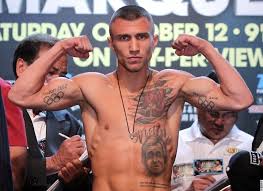
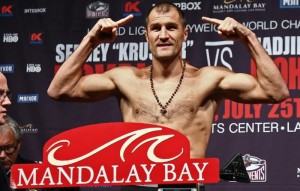
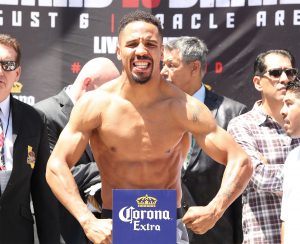
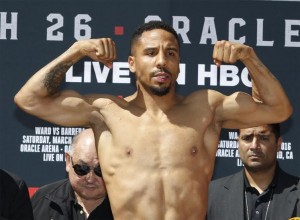
Rematch or retirement? Ward keeps all options on the table

By Norm Frauenheim
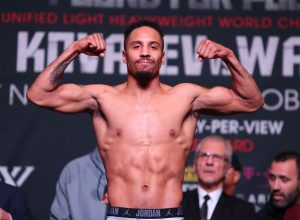
Andre Ward has talked retirement not just once, but at least twice, since his controversial victory over Sergey Kovalev. It sounds like some early posturing in negotiations that began the moment the news conference commenced in the wake of the 114-113 scores that favored Ward in November.

This time, Ward dropped the possibility in an interview with Rolling Stone. Never take anything off the table. Ward hasn’t. Retirement represents the nuclear option. Push that button and there’s no rematch.

It puts pressure on Kovalev, who was predictably unhappy with the decision and wasted no time in exercising the rematch clause in his side of the contract. That clause gives Kovalev some legal and financial leverage, but only if Ward continues to fight.

If he retires, that rematch clause wouldn’t buy that proverbial cup of coffee, much less a refill.

“I really just got to take my time right now because I really don’t have to fight anymore,” Ward told Rolling Stone.

He went on to say that he wanted to be “sure that every decision that I make and every fight that I take is the right situation because if it’s not, I don’t know if it makes sense to continue on.’’

Translation: Back off Kovalev.

Ward repeatedly suggested that he would continue to fight and even said there he had personal reasons to consider a rematch with the smart and dangerous Kovalev, who must have spent the Holidays wondering why he let Ward off the hook after knocking him down in the second round.

“You have to entertain [a rematch] and I would love to put my stats on in such a way that there isn’t a conversation about who won and who lost,” Ward said.

Then, he added: “Proving something to people is a tricky thing to get involved in. If we did the rematch it would be more just to silence Kovalev and silence his team and to just put a stamp on the rivalry we had.’’

There’s a strong suggestion in those words that Ward would like to silence more than just Kovalev and the Russian’s corner. There are also the fans and media who argued that Ward got an early Christmas gift.

His immense pride compels him to prove his critics wrong. It always has. I was there, at the Athens Games in 2004, when he was the last American man to win Olympic boxing gold on a day when nobody gave him a chance.

The U.S. men’s Olympic program was a mess then and has been ever since. But Ward rose above it all, the last American man to stand stop the medal stand’s summit. He didn’t lose in Athens and he hasn’t lost as an amateur or a pro since 1997.

To this day, Ward and his trainer, Virgil Hunter, talk about losing to Ernie Gonzales and John Revish as if it happened yesterday. He was 13 or 14 years old, yet he remembers the scorecards, the judges and the lessons. Those long-ago defeats are at the heart, the beginning, of what still drives Ward.

He finds a way. There’s an ongoing debate – as reasonable as it is noisy – about whether Ward’s way was good enough for a victory over Kovalev. Only a rematch for the light-heavyweight title and perhaps pound-for supremacy will settle that. The good news is that Ward knows that, mostly because nobody will let him forget about it. A rematch gives him another chance to say he was right the first time around.

Still, the negotiations are problematic for a couple of reasons. Above all, the money just doesn’t appear to be there anymore. Ward-Kovalev was a pay-per-view loser, generating a reported 160,000 buys, or nearly half of modest expectations.

Would promoters even try to go the pay-per-view route again? In boxing’s current business climate, can either Ward or Kovalev get a raise in a rematch? Ward collected a $5 million purse. Kovalev was guaranteed $2 million. How much money would be in the total purse for a rematch? How would it be split?

Ward told Rolling Stone that “it’s not about the money anymore.’’

I’m not sure it ever has been. It’s been about that pride. It motivates him to fight again in an answer to his critics. In part, it’s measured by his percentage of the total purse.

Offend that pride, however, and he’s shown that he’s willing to walk. He fought only once over nearly three years at the peak of his prime in large part because of a legal dispute with late promoter Dan Goossen.

Retirement? Not likely. Not at 32 and not with a chance to extend his unbeaten record, including a shot at an undisputed claim on the top spot in the pound-for-pound debate. Then, of course, there are all of those critics. Ward has another chance to do what he’s been doing all of his life:

Answer them.


Mourning a tough year and hoping for a better one

By Norm Frauenheim-

One year ends and another begins in a couple of days amid regrets and grief from the last 12 months and a wellspring of hope for something better in 2017.

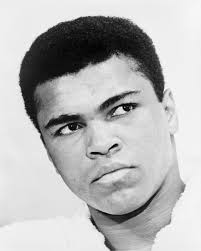
It’s been a year to mourn, remembered mostly for who and what boxing lost. Legends are gone. Goodbye, Muhammad Ali, Aaron Pryor and Howard Bingham.

Their deaths are powerful symbols of an era that has passed. The business long sustained itself on Ali, Bingham’s poignant photographs of him and great fighters who followed in a generation personified in part by Pryor.

Where does it go from here? Who knows? At 85, former Ali promoter Bob Arum is optimistic. Throughout the last year, Arum’s consistent theme was the sports’ international look and reach.

The business has always been international, of course. History’s great moments have played out all over the globe. There was Africa for Ali’s epic victory over George Foreman in the Rumble in the Jungle. There was Manila for Ali’s rematch in a triumph of courage, will and skill over the late Joe Frazier.

But the fighters were American. That’s what has changed. Today, they are from Kazakhstan, Russia and Ukraine. Gennady Golovkin, Sergey Kovalev and Vasyl Lomachenko are as skilled as anyone in today’s generation.

But can they draw? Does anybody in the American audience care? Ratings and pay-per-view numbers from 2016 say no.

Home Box Office’s PPV number, a reported 160,000, for Andre Ward’s controversial scorecard victory over Kovalev in November was a disappointment, even in the face of modest expectations.

The light-heavyweight fight was thought to be the biggest in a year made barren by further, frustrating delays in a Canelo Alvarez-Golovkin showdown.

Ward was the American end of the marketing equation. He was the last American to win an Olympic gold medal. He’s unbeaten and he was moving up in weight after dominating the super-middleweight division. Yet, not even his resume moved the meter.

Perhaps, it will in 2017 in a rematch mandated by a contract clause already exercised by Kovalev. Perhaps, it’ll be the second step in a trilogy. Fundamentals for a rivalry are in place. Yet, questions about whether either Ward or Kovalev can ever draw an audience linger.

Maybe, the problem rests in the pay-per-view business model, which collapsed after Floyd Mayweather Jr. and Manny Pacquiao squeezed every last dollar out of it in their dud of a bout in May 2015.

Boxing isn’t dying, but pay-per-view might be. Junior-welterweight Terence Crawford, emerging welterweight Errol Spence and the return of lightweight Mikey Garcia are just three reasons to think there’s still some life in the American end of the business.

Meanwhile, most of next year’s business figures to get done in the UK.

From Belfast featherweight Carl Frampton and his Jan. 28 rematch of a victory over Leo Santa Cruz in Las Vegas to heavyweight future Anthony Joshua and his April 29 Wembley Stadium showdown with Wladimir Klitschko, the UK has the stars and an audience that wants to see them.
UK fans also travel.

They were there in Vegas, for Ricky Hatton, first against Mayweather and then Pacquiao. For Frampton-Santa Cruz II, they’ll be back, but this time with an unquenchable thirst for Guinness. Imagine the UK crowd that would follow Joshua to Vegas.

Arum is right. Potential for a huge rebound is there.

But a few things have to happen. First and foremost, there’s Golovkin-Canelo, which Canelo promoter Oscar De La Hoya promises will happen in September. Then, there’s Ward-Kovalev II, perhaps sometime in late spring or early summer. Above all, there has to be a way that GGG, Kovalev and Lomachenko can be transformed into names that fans know and personalities with whom they can identify.

Without all three, it’ll be hard to have a Happy New Year.


No Lie: No polygraph needed to ban boxing in Russia

By Norm Frauenheim–

Alexander Povetkin and everybody in his camp were scheduled to undergo a polygraph this week, according to promoter Andrei Ryabinksy, who in media reports from Russia insists he is determined to get the truth and nothing but the truth about the positive drug test that scuttled the WBC title fight with Bermane Stiverne in Ekaterinburg last Saturday.

No kidding.

I’m not sure who will be conducting the test. But to whoever is at the controls: A question or 15, please, about why Povetkin was allowed to fight Frenchman Johann Duhaupas, who was there as if the promotion knew that Povetkin would test positive and Stiverne would just say nyet.

The whole sequence of events is beyond believable. If not so dangerous, it would be laughable. Somewhere in media reports from Russia, it was reported that “regulators” allowed Povetkin to fight despite the Russian heavyweight’s positive test for Ostarine, a banned supplement reported to be a steroid.

There’s nothing – nada – on who the regulators might have been. Vladimir Putin’s relatives? Russian hackers freelancing after exposing Hillary Clinton’s E-mails? AA couple of hamsters? All week long, I’ve been waiting for the polygraph results. Maybe we’ll have to wait on something from Wiki-Leaks.

Ryabinsky was quoted as saying that Ostarine can come from tainted meat. Yeah, maybe, although the recent positive test were related to tainted meat were for clenbuterol from cattle injected with the substance in Mexico.

Whatever the substance and its source, Povetkin should not have been allowed to fight, period. It was his second positive test for a banned performance-enhancer. He tested positive for meldonium, scuttling a fight with Doentay Wilder last May in Moscow. His ban was dropped because of a technicality and perhaps because of some influence from the case involving tennis star Maria Sharapova, whose two-year ban for the same drug was reduced to 15 months.

The substance and why he tested positive demands an investigation, which the World Boxing Council has promised. But the bigger issue is just why Povetkin went on to fight a stand-in. From here, there is no good answer. We don’t need a polygraph. We need a ban on title fights in Russia.


From common to special, the fight never ends for Bernard Hopkins

By Norm Frauenheim-

Shtick is often strategy and sometimes dangerous. Bernard Hopkins knows that, perhaps better than anybody. He’s been using it like a survival skill throughout an uncommon career that has always been about being ready for fights waged in all of their various forms, from brutal to subtle.

Hopkins was at it, all over again, during a news conference Wednesday a few days before what he says will be his last bout within the ropes Saturday night against Joe Smith Jr. at The Forum in Inglewood, Calif.

Hopkins (55-7-2, 32 KOs) sat on one side of the dais, looking like a hawk searching for an opening – rhetorical prey – to appear. Sure enough, there it was.

Smith (22-1, 18 KOs), a laborer with an active union card from New York’s Local 66, was called the common man in an introduction from his promoter Joe DeGuardia. Smith is a good story. But this was Hopkins’ moment. His stage. Smith’s story was Hopkins’ opportunity.

The best fighters can turn a foe’s strength into a weakness and that’s what Hopkins tried to do nearly three days before opening bell to his planned finale in an HBO-televised light-heavyweight bout (10 p.m. ET/PT).

“I listen to what people say,’’ Hopkins said in his turn at the bully pulpit. “I listen to words, because words give you some kind of blueprint on what a person is thinking. What he’s about.

“How articulate, or whatever, it’s not fully judging, but it gives you some type of platform to work with. Joe DeGuardia said ‘common.’ ‘’

Hopkins went on to say he is not.

In a theatrical gesture, he looked directly at Smith and then delivered words that he has so often used as psychological blows – punches before the opening bell.

“Special,” Hopkins said as he pointed to himself.

Then, he paused, almost as if he had rehearsed it.

“Common,” he then said, pointing at Smith.

Smith, a common man with a common name, never blinked. He must of felt like a prop, albeit a dangerous one if the power he exhibited in his June stoppage of Andrzej Fonfara is any sign.

It wasn’t as if Smith could have done or said much. Hopkins was on a roll.

“Common man, special man,” Hopkins repeated. “Which one you want?

“I want the special.’’

He has been, in large part because of the defiance that has driven him since the day he walked out of Graterford Prison after serving five years on a robbery conviction. Then, he was going to follow the common path of an ex-con. When he was released, warden Buddy Rush told him he’d be back in six months. Hopkins promised he wouldn’t. Turns out, that was the first in a lifetime full of fulfilled promises. Rush heard what sportswriters, promoters, lawyers and fans have been hearing from him ever since.

Hopkins’ life has been about doing what everybody says he can’t. There were 20 successful defenses of the middleweight title. There was the victory over Felix Trinidad. And another one over Kelly Pavlik. Nobody beats Father Time. Then again, no 49-year-old has ever held a world-title belt, either. Now 51, Hopkins will challenge Father Time once more against the 27-year-old Smith.

For anybody else in the post-50 crowd, the task would just be foolish. But Hopkins has made it special, because of his cunning and – also his clever mastery of every aspect of what it takes to be a fighter.

But there’s another element, too. He understands what it is to be common. His common touch is part of his charm. Writers who have been around him throughout his long career know he remembers names and faces. Then, he’ll always be remembered for carrying that Costco card, which is a lot more familiar to the common man than one of Floyd Mayweather’s Jr.’s Bugattis ever will be.

He keeps his common roots close to him, almost as if they were a touchstone of motivation. Hopkins’ identity as an inmate is a number he never forgets.

“He’s from the Union, I’m from the Union of the State Correctional Facility of Gratersford,” Hopkins said, talking to Smith. “I never bought silk underwear, but let me tell you what I did keep in my pocket. It’s called a Y-4145 prison I.D. card with my picture on it.’’

He went on to say that the prison I.D card reminds him of who he was, who he is and why he fights.

“You can always be common, it’s so easy to be common,” said a special fighter, who has taken the commonplace to a place never envisioned.


Busy Saturday and two big questions precede 2017

By Norm Frauenheim-

The end is near for another forgettable year, memorable mostly for fights that didn’t happen and a controversy still raging over the one that did.

Yeah, 2016 was lousy, yet the year’s final month is a sure sign of a heartbeat despite the usual obituaries. Year-end diagnosis: Boxing isn’t dead, but pay-per-view might be.

A sure sign that the scarred patient is still kicking unfolds throughout a Saturday with five cards on three networks from time zones on all sides of the international dateline.

There’s heavyweight contender Joseph Parker-versus-Andy Ruiz Jr. in Auckland on HBO, tape delay. Featherweights Abner Mares and Jesus Cuellar meet on Showtime in Los Angeles. Unbeaten junior-welterweight Terence Crawford is at home in Omaha against John Molina Jr. on HBO. Anthony Joshua, the projected face of a resurrected heavyweight division, faces Eric Molina in the UK on Showtime. Julio Cesar Chavez Jr., now 30, is back, back all over again, against German Dominik Britsch on beIN in Mexico.

The sun never sets on the pro ring. Not yet, anyway.

Each of the cards helps set the table for a New Year, hopefully a better one. A year from now, however, it looks as if only two things will determine how we’ll look back at 2017:

· An immediate rematch of Andre Ward’s controversial decision over Sergey Kovalev for the light-heavyweight title.

· Gennady Golovkin-versus-Canelo Alvarez for the middleweight title.

Both have to happen. If they don’t, we may be hearing last rites instead of reading tired obits. Kathy Duva of Main Events, Kovalev’s promoter, exercised the rematch clause within minutes after Ward was declared the winner, 114-113, on all three scorecards on Nov. 19 at Las Vegas’ T-Mobile Arena.

Meanwhile, Oscar De La Hoya of Golden Boy, Canelo’s promoter, has promised repeatedly that the long-awaited showdown with GGG will happen in September.

But this is boxing, which means caveat emptor is attached to every promise and rematch clause. With less than a month left in the year, we’ve yet to hear Ward’s management even acknowledge that the reported rematch clause is in place.

It’s clear that Ward’s management is keeping options open, perhaps for an immediate bout against somebody other than Kovalev. The Russian would have to agree, but only at a steep price. It’s called step-aside money.

In this case, it would be stepping all over public expectations for a quick sequel, if not an immediate resolution to the noisy debate over the scoring. The business — still reeling from 2015’s Floyd Mayweather Jr.-Manny Pacquiao dud — can’t afford a postponement. A 2016 full of frustration over no Canelo-GGG bout is symptomatic of an impatient fan base that won’t tolerate much more delay.

Canelo is working his way back from a right-thumb injury sustained in a stoppage of the UK’s Liam Smith in September. Projections are that Canelo will fight again, perhaps some time in early 2017. Will the junior-middleweight champion need one fight, or two, against a true 160-pounder before GGG? Will the thumb hold up?

In most years, small questions. But the answers loom large, larger than ever in a critical 2017.


Just say no to more talk of Mayweather-McGregor

By Norm Frauenheim-
Floyd Mayweather
Talk, talk and more talk about Floyd Mayweather Jr.-versus-Conor McGregor continue to light up social media these days with no end – or relief – in sight.

Not sure who to blame, but the tirelessly talkative McGregor appears to be doing what Mayweather mastered in marketing himself and then landing a huge Showtime contract that led to about a $220-million payday against Manny Pacquiao.

McGregor could generate international attention for getting a driver’s license these days. Essentially, that’s what the UFC’s mega-mouth did in acquiring a boxing license in California. It cost him 60 bucks. He had to fill out a four-page form and pass a physical. It was quick, simple and nobody asked him to parallel-park.

In no time, Twitter, Facebook, websites and even mainstream media exploded all over again with speculation about a McGregor bout with Mayweather. Stock the shelves with antacid, because there’s going to be a lot more of this stuff.

Chances appear to be slim-to-none that the bout would — could — happen. McGregor is under contract to the UFC. Meanwhile, Mayweather continues to send out mixed messages about whether he wants to come back.

If McGregor tries to get out of his UFC contract in pursuit of a Mayweather bout, a long and tangled legal battle is likely. Mayweather, who is one victory short of 50-0, has a lot of things, but time isn’t one of them. He’ll be 40 on Feb. 24.

I doubt it will happen. But I’m old, more than old enough not be included in the emerging generation of MMA fans. I also suspect that my doubts reflect an opinion shared by many in the aging crowd of fellow boxing fans. To wit: I hope it doesn’t happen. Could it? In an era when a presidential campaign is won with tweetstorms, anything can.

There’s momentum in the internet fascination. Betting odds were even posted by Westgate in Las Vegas Thursday. If the bout went from mythical to fact, Mayweather would be a 25-1 favorite in what would be a boxing match against McGregor, who began as an amateur boxer as a 12-year-old in Dublin.

Translation: Nobody thinks McGregor would have any kind of chance at all. So why is social media still buzzing about it?

There are all kinds of reasons, including a compelling one offered by Mayweather Promotions CEO Leonard Ellerbe. Ellerbe told ESPN’s Dan Rafael that people are talking about it because of race. McGregor is Irish and white, Mayweather is African-American and boxing has a long racial history defined by The Great White Hope.

If Ellerbe is right – and I think he is, the racial component will only fuel further talk about the bout. More talk means more of the one thing that could make it happen: Money, which also happens to be Mayweather’s nickname and motivation. Speculated numbers have been all over the place. They’ve also been uniformly big, anywhere from $800 million to a billion.

That would pay a lot of McGregor’s legal bills and might be enough to lure Mayweather back through the ropes. Then, however, the global bubble of anticipation would quickly deflate. Remember the mix of disappointment and outrage over Mayweather’s decision over Pacquiao in May, 2015? Multiply that, again and again.

There’s also precedence for what might happen. Classic boxing matches between a boxer and MMA fighter have been a mixed-martial-arts mess. I sat through one in Phoenix, Ariz., last March.

That’s when aging Roy Jones Jr. scored a second-round stoppage in a made-for-pay-per-view event over a guy named Vyron Phillips, who had been fighting MMA and had experience as an amateur boxer.

Phillips got a boxing license from the Arizona State Boxing and MMA Commission, but he had no business in a ring within punching range of a boxing legend way past his prime. The event was a joke, an embarrassment not worth repeating, especially on a global stage that could be a billion times more embarrassing.


From The East To The Beast: Lomachenko might be the best

By Norm Frauenheim-
Lomachenko
The evolution of boxing’s surprising new generation – fighters from the old Soviet Union – continues Saturday with Vasyl Lomachenko, who many believe will be the best of them, if not one of the best ever.

In the lead-up to the Lomachenko-Nicholas Walters bout at The Cosmopolitan in Las Vegas, his promoter, Bob Arum, compares the Ukrainian to Muhammad Ali.

Being called the next anything can create some problematic expectations. To wit: There’s never been another John Wooden or Jack Nicklaus and the NBA is still looking for the next Michael Jordan.

But, it’s fair to argue, that there’s never been anyone in any sport quite like Ali. In the arena of history’s icons, Ali is the greatest ever. On the boxing canvas, he’s Michelangelo. Whether there’s a Sistine Chapel in Lomachenko’s creative hands is anybody’s guess. After all, the two-time Olympic gold medalist has only seven pro bouts (6-1, 4 KOs).

But Arum is absolutely right about one thing: Lomachenko is fascinating to watch. Arum has seen them all. First of all and above all, Ali.

The promoter, who turns 85 on Dec. 8, celebrates his 2,000th card Saturday night. That amounts to boxing every night for nearly five-and-half years. Arum thought he had seen all the angles until he saw Lomachenko, who has been creating some new dimensions in boxing’;s traditional geometry

He possesses a bewildering array of punching angles augmented by hand speed and clever footwork. Ali?

We’ll only know more about that one in the face of further adversity, perhaps in an HBO-televised bout (10:35 p.m. ET/PT) against a dangerous Walters (26-0-1, 21 KOs) who has frightening power.

Lomachenko has already encountered some of that in a loss to a stubborn and brawling Orlando Salido. Salido might have taught him a career-full of lessons during one long night in March 2014. Lomachenko is no dummy. The guess here is that he will be cautious early and creative late for a stoppage in the final couple of rounds over a tiring Walters.

A successful defense of his WBO junior-lightweight belt might propel him to an immediate jump in class, perhaps to a 2017 bout at 140 pounds against Manny Pacquaio. I would also like to see a bout with Mikey Garcia, although that one could be difficult to put together because of Garcia’s split with Top Rank.

Nevertheless, Lomachenko against the tactically skilled and always-poised Garcia would loom as an intriguing match-up and another test of what Arum foresees for the Ukrainian.

For now, Lomachenko ranks No. 3 on this list of fighters from the old Soviet bloc making an impact in the U.S. Middleweight Gennady Golovkin is still no. 1. Light-heavyweight Sergey Kovalev is No. 2, despite his controversial loss to Andre Ward last Saturday.

If fans angry at Ward’s one-point victory on each of the judges’ card had a vote, Kovalev might in fact be No. 1. Despite the noisy controversy, however, it still goes down as a loss for Kovalev, who seemed to let the clever Ward off the hook after the Russian scored a second-round knockdown.

For Lomachenko, that’s an opportunity to become No. 2 on what might just be an early list of all that Arum thinks he’ll achieve.


Ward wins narrow decision in dramatic victory over Kovalev

andre-ward

LAS VEGAS — Andre Ward delivered. He got stung by punches early. He was down early, on all fours and only canvas looking back up into his dazed eye. But he got up. He adjusted. And, in the end, he did what he has done for just about as long as anybody can recall.

From winning a gold medal on the last day of the 2004 Olympics in Athens to his career defining moment against a feared Russian light-heavyweight, Ward prevailed with subtle moves, quick punches and unshakeable poise.
Sergey Kovalev represented the biggest test of all those Ward qualities. Kovalev had — still has — all of the stuff to perhaps beat Ward in what appears to be an inevitable rematch. On Saturday in an HBO pay-per-view bout, many of the right moves and most of the timely punches belonged to Ward. So did the victory by the narrowest of margins. Ward won, 114-113, on all three scorecards.
“We did what we set out to do,” said Ward (31-0, 15 KOs), who was a 2-1 betting favorite at opening bell. “It’s amazing. It’s my most important and satisfying win.”
Amazing, yes. Yet, predictable too,
If taken within the astonishing context of Ward’s singular career. He always finds a way and he did again. This time, it was somewhat controversial. Scores alongside press row were split. HBO Harold Lederman had Kovalev wining by five points. The 15-rounds.com scorecard was 114-113 for Ward, identical to the judges. It was that close.
Kovalev disputed the decision. No surprise there. He scored the bout’s only knockdown with a short right hand in the second round.
“It’s the wrong decision,” said Kovalev (30-1-1, 26 KOs), who surrendered the IBF, WBO and WBA titles in front of 13,310 roaring fans at T-Mobile Arena.  “I don’t want to say my opinion.  The witnesses are here. They saw it.  It was a fight of my life I am disappointed in the judges decision.
 
“He got maybe a few rounds. I agree with that.  I kept control.  I lost maybe three rounds the whole fight.
Kovalev has a rematch clause in his contract. Nobody had to ask him or his promoter, Kathy Duva of Main Events, whether he intends to enforce it.
“Of course,” he said after his first loss. “And I will kick his ass.”
In the end, Kovalev’s loss might be boxing’s win. It has a rivalry. It needs one.

Ward-Kovalev undercard finally ends with a dull draw

A forgettable undercard finally came to an end with a result that summed up everything that came before it.

It was a draw.
A dull one
As a crowd began to gather for the Andre Ward-Sergey Kovalev showdown at T-Mobile Arena Saturday night, Dallas junior-welterweight Maurice Hooker (21-0-3, 16 KOs) and Darleys Perez (33-2-1, 21 KOs) left it yawning.
Hooker couldn’t capitalize on his reach. Perez, of Colombia, couldn’t sustain his aggressiveness. On one scorecard, it was 97-93 for Hooker. On another, it was 97-93 for Perez. On the third, it was 99-99. A unanimous dud.

Gvozdyk punishes Chilemba for a TKO victory

Ukrainian light-heavyweight Oleksandr Gvozdyk calls himself The Nail. It’s an appropriate nickname. At least, it was on HBO’s pay-per-view undercard before the Sergey Kovalev-Andre Ward main event.

Gvozdyk (12-0, 10 KOs), an Olympic bronze medalist, nailed Isaac Chilemba (24-5-2, 10 KOs) with repeated punishment, forcing him to quit after eight rounds Saturday night. With blood streaming from both nostrils,Chilemba, a South African, finally surrendered because of a fractured right hand.

Stevens retains minor middleweight title with a unanimous decision

Curtis Stevens retained his role as a fringe middleweight contender with a 96-92, 98-90, 96-92 decision over James De La Rosa for a minor 160-pound title in the first pay-per-view bout on a card featuring Kovalev and Ward Saturday.

Stevens (29-5, 21 KOs), of New York, scored an early knockdown with a short left counter in the opening moments. Then, he fought in spurts, offsetting a one-point penalty for a low in the seventh round. De La Rosa (23-5, 13 KOs), of Harlingen, Tex., damaged his chances at an upset in the sixth when he appeared to hurt his right hand.

Claressa Shields wins pro debut

There’s more than Olympic gold in Claressa Shields’ possession. There some pro power, too. Shields, a two-time gold medalist from Flint, Mich. used it repeatedly in a head-rocking debut for a unanimous decision over Franchon Crews, a Baltimore super-middleweight who also was making her debut on the Kovalev-Ward undercard.

A sparse crowd booed. Only Tyler McCreary cheered. The Toledo featherweight had good reason to. McCreary (12-0, 6 KOs) won a controversial majority decision over Vincent Jennings (5-3-1, 4 KOs) of Grand Rapids, Mich., in a dreary eight-rounder in the fourth bout on the pay-per-view card featuring Kovalev-Ward

Toledo junior-welterweight Sonny Frederickson (15-0, 9 KOs) employed quicker hands and superior reach to score a unanimous decision over Gabriel Duluc (11-2, 2 KOs), a Boston fighter who was left with nasty over his left eye midway through an eight-rounder on the non-televised portion of the Kovalev-Ward card.

Rock rock solid in winning one-sided decision

Philadelphia heavyweight Darmani Rock stayed unbeaten (6-0, 4 KOs) with a one-sided decision — a four-round shutout on all three scorecards — over Brice Ritani-Coe of San Pedro, Calif., (4-5-1, 3 KOs) in the last bout before HBO’s pay-per-view telecast of the Kovalev-Ward card.

Russian middleweight scores Kovalev-like stoppage

Russian middleweight Bakhraim Murtazaliev (7-0, 5 KOs) came into the ring wearing trunks with Sergey Kovalev’s last name on the belt line. It didn’t take long for the Robert Garcia-trained Murtazaliev to do what the guy with the familiar name does in the second bout on Kovalev-Ward card. He crushed Bortirsher Obidov (6-1-1, 2 KOs), knocking down the Uzbekistan fighter three times in the second for a stoppage at 2:52 of the round.

First Bell: Kovalev-Ward card underway with middleweights in opening bout
In an empty NHL arena seven hours before the main event, a couple of unknown middleweights opened a card that would end later Saturday night with Sergey Kovalev and Andre Ward.

Meiirim Nursulatnov and Henry Beckford stayed upright. Nobody got iced. But heavy-handed Nursulatnov (1-0) of Kazakhstan emerged with an easy victory in his pro debut, winning a unanimous decision with a shutout on all three scorecards over Beckford (5-5, 1 KO) of Hempstead, N.Y


Kovalev-Ward: Fighting for a classic and an audience

By Norm Frauenheim-
Sergey Kovalev
LAS VEGAS – On the scale, there was no difference. Not even a fraction of an ounce separated the two. It was 175 pounds even for each in a weigh-in that seems to reflect how tough it is to pick between Sergey Kovalev and Andre Ward.

The betting odds are almost as even as the scale was Friday for the light-heavyweight bout scheduled for Saturday night at T-Mobile Arena and HBO’s pay-per-view television. Talk in the press room tips one way, then another, favoring Kovalev at one moment and Ward the next.

It’s a fight that looks to be as close as possible. Each has 30 victories. Each has never lost. As advertised, it also should have a heavy impact on the pound-for-pound debate. The winner figures to get No. 1 recognition in the first bout between unbeaten fighters ranked among the top five in The Ring’s pound-for pound ratings since Felix Trinidad’s upset of Oscar De La Hoya in 1999.

The only real question is whether anybody really cares. Ticket sales have been slow. Seats at all prices were available Friday. Less than two years since Floyd Mayweather and Manny Pacquiao disappointed a record 4.6 million PPV customers, the boxing pay-per-view business has been in the toilet. Kovalev-Ward promoter would be happy – make that ecstatic – with 300,000 buys.

It’s anybody’s guess what a reasonable PPV expectation might have been in the heady days before Mayweather-Pacquiao. Kovalev-Ward has all the elements that would have made it a solid attraction. Maybe there would have been 500,000 PPV buys in the bout’s history, knockout power in Kovalev’s right hand and tactical skill in Ward’s overall ring IQ. It’s puncher versus boxer. It could be a classic.

For now, however, it might be fight that a lot of people wished they had had seen. That might represent a new beginning for a battered business. A great fight might lead to a rematch, a renewed appetite and perhaps a recovery. In the here and now, however, Kovalev (30-0-1, 26 KOs) and Ward (30-0, 15 KOs) can only take care of the immediate task that awaits them at opening bell.

The close nature of the bout has led to each camp trying to get an edge, which means there has been a lot of talk over the last few days.

“I think it’s simple,’’ Ward said moments after he stepped off the scale. “He doesn’t like me. I don’t like him. This will be my best performance of all time. I’m not leaving Las Vegas without those belts.’’

The belts – an acronym collection that includes the IBF, WBO and WBA light-heavyweight titles – belong to Kovalev, a Russian whom Ward has repeatedly called a bully.

“I’m not going to disappoint you,’’ said Kovalev, an unknown amateur in Russia whose steady rise began in North Carolina five years after Ward got big headlines for winning America’s last boxing gold medal at the 2004 Olympics.

In many ways, it’s an unusual fight. To wit: The purses are upside-down. Kovalev, the champion, is getting $2 million or less than half the challenger’s purse. Ward is getting $5 million.

“The challenger gets a boat load of money, but the champion don’t,’’ said Ward trainer Virgil Hunter, who has had a lot to say throughout press conferences and even weigh-ins. “I don’t understand it. Maybe, it’s not true. But it bothers me.’’

Over the last couple of weeks, Hunter has spent a lot of time confronting Kovalev trainer John David Jackson, questioning his credibility and even his readiness on the eve of the bout. As Kovalev and Ward posed after stepping off the scale, Hunter started in on Jackson in an exchange that proved to be the weigh-in’s only fireworks.

He told Jackson that Kovalev looked “a little dry,” suggesting that the Russian might have weakened himself in battle to make weight. Jackson replied, saying that Hunter isn’t taking the punches.

“Ward will,’’ Jackson told him.

Enough said.


Andre Ward never forgets the lessons from losses long ago

By Norm Frauenheim-
Andre Ward
LAS VEGAS – Andre Ward has done nothing but win for as long as just about anybody can remember. In fact, it’s been so long since a Ward loss that it takes a little research – or maybe an archaeologist – to figure out exactly when it happened. How it happened.

For a while, Ward’s loss happened he was 13 years old to Ernie Gonzales, who went on to fight to 29 pro bouts as Jesus. After some checking through amateur records, however, that has been corrected. The last loss, also as a 13-year-old, was in fact to John Revish, a former Louisiana junior-welterweight, Ward said.

Amateur records can sometimes as hard to verify as UFO sightings. But you get the idea. Ward’s combined record, pro and amateur, is otherworldly. Over almost two decades, the 32-year-old light-heavyweight hasn’t lost.

The 2004 Olympic gold medalist says he is 125-5 as an amateur. Add that to the 30-0 pro mark he’ll risk Saturday night against Sergey Kovalev at T-Mobil Arena in an HBO pay-per-view bout, and he is 155-5 as a fighter. Modern translation: He’s an adult who doesn’t lose, perhaps because of what he learned against Revish and Gonzalez. Lessons learned as a kid have stayed with Ward the mature fighter. To this day, he and his trainer, Virgil Hunter, recalls the defeats as though they happened yesterday.

“I remember how it felt and I remember telling myself that I won’t let it happen again,’’ Ward said Thursday before a formal news conference at the MGM Grand.

There’s an ongoing guessing game that Kovalev’s long powerful right will do enough damage to pound out a memory that Ward has so agilely, so smartly eluded for so very long. But don’t bet on it.

Gonzales, for one, wouldn’t. The former Phoenix fighter picks Ward to win by unanimous decision. These days, Gonzales, a one-time prospect who went 27-2 with 14 KOs as a middleweight, works with kids in a Houston gym when he isn’t driving a truck to support his family, which includes two sons, 9 and 5. He has watched Ward ever since he won a split decision over him in a controversial bout in Ontario, Calif., a few generations ago.

“I didn’t know who he was then, but I had begun to hear about him,’’ said Gonzales, who says the bout was fought at 139 pounds. “To get to Ward, I had to beat Timothy Bradley.’’

Yeah, that Timothy Bradley.

“Hey, I beat everybody,’’ said Gonzales, whose pro career ended in a crushing knockout loss to Adonis Stevenson in 2012 in Montreal.

Gonzales recalls winning a 3-2 decision. Instead of computer scoring, the bout he said was determined by five ringside judges. To this day, Ward and his trainer, Virgil Hunter, dispute the loss, almost as if it is as controversial today as it was a couple of decades ago.

“Ernie’s mom was one of the judges,’’ Hunter said Thursday.

But Gonzales remembers something else. He recalls a winning strategy. He said Ward was just learning how to use a counter punch.

“I kept my left hand out there and moved my back foot backwards, almost a full foot back,’’ Gonzales said. “He just couldn’t get to to me. But what I remember mostly is that he was a real nice guy. After the fight, we ran into each at the concession stand and he bought me a hot dog.’’

Gonzales looks at today’s Ward and sees a fighter who he believes can thoroughly frustrate Kovalev.

“To me, he’s a lot like Floyd Mayweather,’’ said Gonzales, who was a Mayweather sparring partner for Mayweather’s victory over Robert Guerrero in May, 2013. “It’s just really hard to predict what he’s going to do.’’

It’s only easy to predict that he won’t forget.


Ward-Kovalev: Different roads lead to the same place

By Norm Frauenheim-
Andre Ward
Only the records are similar, almost identical. Unbeaten on one resume. Unbeaten on the other. But that’s where the similarities end.

Sergey Kovalev (30-0-1, 26 KOs) and Andre Ward (30-0, 15 KOs) come from different sides of the globe, grew up speaking different languages and eating different foods.

Then, there are their respective career paths. They began at opposite ends of the professional spectrum in a journey that will put them in the same dangerous place, a ring at Las Vegas’ T-Mobile Arena on Nov. 19, in a fight more intriguing than any over the last year-and-a-half.

Ward has the Olympic pedigree, gold in 2004 and the last American man to fight his way on to the medal stand’s top pedestal. When Ward was winning gold, Kovalev was virtually unknown, even at home in Russia.

Ward had fame before he answered his first bell as a pro. Kovalev toiled in anonymity, first in Russia, then North Carolina before anybody in the U.S. could pronounce his name. Now, these light-heavyweights are fighting on equal terms for perhaps the top spot in the pound-for pound debate.

“There’s no A-side and no B-side,’’ Kovalev promoter Kathy Duva of Main Events said this week during a conference call. “It’s two great fighters fighting each other. Sergey holds the titles right now, Ward has held titles in the past. Ward is a legendary fighter; Sergey is trying to become one. …There are certain fights that defy that A-side/B-side description and I think this is one of them.”

Ward, a slight favorite when the bout was announced, is considered the boxer. Kovalev is seen as the puncher. But their assigned roles in an anticipated classic are too simplistic. Both are blessed with ring intelligence as well as an ability to know when and how to adjust.

Kovalev gets the edge in power because he has the better knockout ratio and long, precise right hand as lethal as any in the business. Ward has the edge in boxing skill, in part because he a switch-hitter who seamlessly switches from left to right and back again. Show Ward a style, and he’ll adjust quickly and with chameleon-like subtlety.

The fight is fascinating, because of the psychology. It’s a thinking man’s fight and Kovalev thinks he has the edge.

“For me this is a mental fight,’’ he said. “It’s not who is stronger, but who is smarter and brings best skills into the ring and who is mentally stronger.’’

It’s an old game, one that Ward has played often.

“Mentally, it’s honestly the same to me,’’ he said. “Obviously, there’s a lot at stake and it’s a different challenge moving up in weight, pay-per-view, all of those things make it a little bit different. Whether it’s Alexander Brand or Sergey Kovalev, I approach every situation the same way. I wouldn’t be able to get to this level and stay at this level if I checked in and checked out.

“It’s the same dedication and it’s the same work. For me it’s about trying to be the best in sport where there’s little room for error. I understand that every time I step into the ring and leads to me making sure I prepare accordingly.’’

But the HBO pay-per-view bout ranks as a potential favorite among thinking fight fans because of that anticipated moment, or moments full adjustments and counter adjustments. To wit: Puncher becomes boxer; boxer becomes puncher.

Duva suggests that Kovalev might have an edge because of his life experience in an industrial corner of Russia

“I’ve seen Sergey demonstrate his mental toughness time and time again,’’ she said. “He’s been through more adversity in his life than most fighters have ever even contemplated. I’m aware that Ward has faced adversity, but I never heard Sergey talk about how boxing is a sacrifice, where we frequently hear from Ward about how it is. Sergey’s attitude towards boxing has always been, ‘Oh wow, this is a great opportunity and I’m so happy I’m doing it.’

“I know he has tough times and there’s days at the gym where he probably doesn’t feel that way. But his attitude has always been about loving his work, and loving what he’s doing. He can’t wait for the fight to start. He works hard because he wants to be the best. It’s not just his mental toughness, it’s his mental attitude, I think it’s very positive and I think that’s the thing that carries him.

“That and the chip on his shoulder. That has been there forever. Just wanting to prove he’s the best. You take that combination of work ethic, and chip on his shoulder and focus like a laser, and then loving what he’s doing. Sometimes, when he gets in the ring, he looks like he’s about to have a steak. That’s the kind of look on his face. I think that’s part of what makes it so much fun to watch him.”

The counter is Ward’s life experience, told for the first time in a poignant HBO documentary. Ward lost his dad.

“This is the first time that I really, really opened up,’’ he said. “From my standpoint, I’m a private person, Number One. Number Two, I’ve always wanted to respect my mom and dad. My dad was a dying addict. My mother is doing well right now and I’ve always seen the rags to riches, the kids that come from the ghetto, and I didn’t want to come into the game with that type of story preceding me.

“I wanted it to be about who I was as a person, about my talent, my ability. Then I felt like at the right time I’ll start to open up about it. It took twelve years. I’ve been a professional for almost twelve years now and it kind of got me going, where I just started to feel content with myself. I feel like my supporters and my fans know me and know part of my story. But I felt it was important to open up and pull back the curtain and let them know it hasn’t always been easy.’’

No, it hasn’t. Not for either fighter. Both have been tested and tempered by different kinds of adversity that has brought them to a time and place that might be defining.
Attachments area


Senator Champ: Pacquiao takes WBO title from Vargas

Pacquiao_trains_150422_003a

LAS VEGAS–Governments across the world are filled with senators who address themselves as honorable. But there’s only one who can call himself champ. Meet the Honorable Manny Pacquiao, Senator Champ.

Pacquaio restored the championship part to his name with a WBO welterweight title he took from a game, yet overmatched Jessie Vargas on a pay-per-view card at Thomas & Mack Saturday night. A Pacquiao with a boxing title instead of political title is the one remembered in every part of the world outside of the Philippines.
At 37 years old, the fighter with titles in eight weight classes was not exactly that same any more. If he had been, his knockout drought wouldn’t be at seven years and counting. Make no mistake, his punches still sting. Vargas’ badly-bloodied right eye was evidence of that. But the opponents he would have stopped a decade ago are withstanding his punches now. Vargas did, although he was dropped by a straight right in the second round and it often looked as if he was perilously close to getting stopped in the late rounds.
“I was cautious,” said Pacquaio (59-6-2, 38 KOs), who expected to get at least $4 million and a percentage of the PPV buys. “I didn’t want to get drawn in and hit by a counter. I felt like I could do more. With every round, I thought I got closer to a knockout.”
But the KO never came, in part because of Vargas’ inherent toughness and some power of his own, especially in a dangerous right hand.
“I thought it was a very close fight,” said Vargas (27-2, 10 KOs), who collected $2.8 million. “It was a very fast chess match.”
What’s next? Pacquiao can only be sure that he goes back to work in the Filipino Senate on Tuesday. There’s bound to be intense speculation about who he’ll fight next, sometime in 2017. Floyd Mayweather Jr.’s presence in the crowd of 16,123 guarantees months of speculation on Twitter. Terence Crawford was there, too.
“We’ll see,” said the Senator, a champ who knows that boxing is sometimes as hard to predict as politics.

Valdez stops Osawa in 7

Oscar Valdez Jr. went to his knees in thanks. He celebrated in joy on top of trainer Manny Robles shoulders. He screamed. He cried. He did it all. Above all, he won.

A first-time featherweight champion became a two-time champ, blowing away Japanese contender Hiroshige Osawa with a seventh-round TKO in the final undercard bout Saturday on the pay-per-view card featuring Manny Pacquiao and Jessie Vargas at Thomas & Mack.
Valdez (22-0, 19 KOs), a two-time Mexican Olympian who grew up in Tucson, appeared somewhat tentative early in  a defense of the WBO title he won in July. Osawa (30-4-4, 19 KOs), unknown outside of Asia, was taller and possessed a four-inch advantage in reach. But he had little else.
A deliberate and careful Valdez would begin to figure figure that out with devastating certainty in the fourth round. That’s when he put Osawa on the seat of his trunks with a left hand that was precise as it was long.
The inevitable was just three rounds away. Midway through the seventh, Valdez landed another left, backing up Osawa. Valdez pursued, step-for-step, with a blitz of punches that finally ended with the Japanese fighter defenseless and finished against the ropes.

Magdaleno thrives, survives for a stunner over Donaire

Speed and toughness. Quicksilver, then iron.

Jessie Magdaleno possessed a motherlode of both in an alloy that Nonito Doanire couldn’t capture, then couldn’t break Saturday in a terrific junior-featherweight bout for the WBO’s 122-pound title on the Manny Pacquiao-Jessie Vargas card at Thomas & Mack.
Magdaleno (24-0, 17 KOs) took the  belt from Donaire (37-4, 24 KOs), scoring a unanimous decision, first with speed that scored often and easily in the first few rounds. Magdeleno suffered a cut above his left eye in the fourth, but it didn’t bother him. Nothing did.
From the eighth round on, a slower Magdaleno caught one right hand after another from Donaire, who was surprised that the judges scored against him.
“Losing never crossed my mind,” said Donaire, who argued that he controlled the second half of the bout.
But he couldn’t finish Magdaleno. Donaire’s big right rocked Magdaleno’s head, sending his brightly dyed-shock of hair flying in every direction. The blows buckled his legs at the knees. They sent him crashing into the ropes. But nothing could send him into defeat. And nothing would.
Zou wins first major title in a one-sided decision
 Sometimes, it was dull. Often, it was funny. In the end, it was a first, at least for Zou Shiming.
Zou, a Chinese icon for his three Olympic boxing medals, won his first pro title, the WBO’s flyweight version, with a decision over Thailand’s Prasitak Phaprom that was unanimous on the cards and one-sided in every way
In the first pay-per-view bout on the Manny Pacquiao-Jessie Vargas card Saturday night at Thomas & Mack, Zou (9-1, 2 KO) eluded most of Phaprom’s  punches with his reach and quick feet. But the Chinese fighter was never able to end the 12-rounder, a rematch.
He appeared more content to dance away or mock the Thai than finish him. In the sixth, Phaprom (39-2-2, 24 KOs) lunged at Zou in an attempt at landing a big punch. He swung for the fences and landed on his face.  A Zou uppercut could have been there to meet him before met canvas. But Zou had already danced away.
It’s hard to know what’s next for Zou. But he has a major title and that could lead to some big money in China, especially in an Asian showdown with Japanese prodigy Naoya Inoue. Maybe easy money for Inoue, too, although he appears to be more interested in a tougher challenge against pound-for-pound king Roman Gonzalez
Brazilian gold medalist wins debut
-There was gold in Rio. There might be more in the United States. Brazilian lightweight Robson Conceicao, a gold medalist at the 2016 Olympics in August, flashed all of his potential with power that echoed throughout Thomas & Mack for a successful pro debut, a unanimous decision over Clay Burns (4-3-2, 4 KOs) of Alexandria, La
Teofimo Lopez prevails in five knockdown bout  
There was nearly a knockdown a  minute. In the end, only Teofimo Lopez was standing.
Lopez, a featherweight from Florida, scored four knockdowns, two in the first round and two more within 2:02 of the second, ending his debut in the second bout on the Pacquiao-Vargas undercard with a body shot for a knockout of Ishwar Siqueiros (3-2-2) of Mexico.
Russian prospect stays unbeaten
Alexander Besputin has trainer Robert Garcia and Sergey Kovalev manager Egis Klimas in his corner. Much is expected from the Russian junior-middleweight. His promise remains intact after forcing Panamanian Azael Cosio to quit after six rounds. Besputin (5-0, 5 KOs) got rocked a couple of times, but his energy never flagged in a performance that saw him repeatedly back up Cosio (20-5-2, 17 KOs) with movement and precise body shots.

First Blows: Fuentes opens Pacquiao-Vargas card with a decision over Chinese featherweight

 With nearly as many people in the ring as there were in seats at Thomas & Mack, featherweights Fernando Fuentes and Xu Que opened the show.
Fuentes (9-7, 2 KOs), of Riverside Calif., landed the first punch and won the first fight on the Manny Pacquiao-Jessie  Vargas card Saturday, scoring a 58-56, 59-55, 58-56 decision in the Chinese fighter’s first loss. Xu (9-1-1, 2 KOs) proved to be elusive in the middle rounds, but could never sustain much of an attack in any round.


Motivational Chip? Vargas might have one in quest to upset Pacquiao

By Norm Frauenheim-
Vargas_DeMarco_weighin_141121_002a
LAS VEGAS – There was enough room on Jessie Vargas’ shoulder for a world title belt when he faced Manny Pacquiao in the nose-nose, eye-to-eye ritual for cameras Friday after the formal weigh-in for their welterweight bout Saturday at Thomas & Mack.

Apparently, that chip didn’t get in the way.

That proverbial chip — and all the motivation it is supposed to represent – has been among the many story lines leading up to Top Rank’s pay-per-view card (6 p.m. PT/9 p.m. ET). Vargas has been friendly enough. The bigger the media, the friendlier he became. He seldom betrayed any sign he might be angry at being the so-called B-side despite his ownership of the WBO title.

But it’s there, Vargas trainer Dewey Cooper said.

“He’s kind of pissed at you all,’’ Cooper said to reporters during a roundtable session. “I’m trying to keep him clam about all of this.’’

Mission accomplished, at least through the last days and final few hours before opening bell to the scheduled 12 rounder. Vargas has kept his emotions in check, saying the expected.

“I feel great,’’ Vargas (27-1, 10 KOs) said after stepping off the scale at 146.5, nearly two pounds heavier than Pacquiao, (58-6-2, 38 KOs) who was at 144.8. “My motivation is to prove I’m the best in the division. Pacquiao is a legend. Fighters who have beaten him become legends. I plan to be a legend.’’

Odds say otherwise. They were at 7-1 in favor of a Pacquaio victory Friday in the crowded sports book at the Wynn, the host hotel. The one-sided line suggests a blowout victory for Pacquiao, a Filipino senator who hopes to add a major boxing championship to his political title.

Pacquiao’s historical pursuit and his international celebrity are irresistible for the media. In prefight interviews, there’s also a sense that Pacquaio’s energy and instincts have somehow been reborn. He’s been thoughtful and often funny. His English has never been better. In part, that’s because the Filipino Senate conducts its business in English. He has had to speak it and write it every day since he won a Senatorial seat in May.

That and more mean it has been easy to overlook Vargas. Maybe, too easy. But that’s nothing new for Vargas, who is a decade younger and four inches taller than Pacquiao. He’s made a career out of being overlooked.

In an impressive stoppage of Sadam Ali last March at the D.C. Armory in Washington, Cooper said Vargas didn’t get any respect. Didn’t get a dressing room either.

“We were out in a hallway, near the door,’’ Cooper said. “We were brought in as a sacrificial lamb.’’

But the lamb walked out of that hallway with a title he won with power few thought he had. The question is whether any of that power will be able to slow down and perhaps even stop Pacquiao. The, there’s a question whether Vargas might have a bit too much motivation. He is promising to be aggressive from the beginning. Pacquiao welcomes that prospect. So does Pacquiao trainer Freddie Roach.

“If he comes too aggressively, he gets knocked out early, maybe in four or five rounds,’’ said Roach, who says Pacquiao is more motivated for a stoppage than ever in part because of the media reporting repeatedly that he hasn’t scored one since 2009.

Timothy Bradley, who will be at ringside as an analyst for the pay-per-view telecast, has fought both. He believes Pacquiao’s overall speed will be too much for Vargas. He picked the Filipino to win. But he also says that Vargas’ is very tough.

And maybe motivated just enough.

Best of the undercard: WBO featherweight champion Oscar Valdez Jr. (21-0, 18 KOs), of Tucson and Nogales, Mexico, makes his first title defense against Japan’s Hiroshige Osawa. Valdez (21-0, 18 KOs) weighed 125.25 pounds. Osawa (30-3-4. 19 KOs) was also at 125.25.

In the immediate wake of Valdez’ victory for the WBO title in July, Top Rank had tentative plans to stage the two-time Mexican Olympian’s first defense in Tucson, where he went to school. His mom also still lives in the southern Arizona city. But Arum opted to put him on the pay-per-view card. Arum said this week that he still plans for a Valdez bout in Tucson, perhaps next year when he is expected to fight at least four times.

In another undercard bout, Nonito Donaire (37-3, 24 KOs) faces Jessie Magdaleno (23-0, 17 KOs) in a junior-featherweight bout. Donaire weighed 121.8 pounds. Magdaleno was 121.1. Donaire has talked about moving back up to featherweight. If he beats Magdaleno and Donaire beats Osawa, Donaire-Valdez is a possibility.


Oscar Valdez Jr. poised for the next step in his plan to be a longtime champ

By Norm Frauenheim-
Oscar Valdez
LAS VEGAS – There’s fusion in cooking, music and sometimes fighters. The best of them are often a product of attaining that perfect mix. It’s deliberate, yet looks natural when complete. It’s a process that is beginning to look a lot like Oscar Valdez Jr.

Valdez already has a major title. But his WBO featherweight belt is just the beginning, one ingredient in the evolving face of a new champion who intends to be around a lot longer than an interim title.

“The thing is not to became a world champion, but to stick around as one,’’ Valdez said Thursday at The Wynn during at a news conference for his first title defense on the Manny Pacquiao-Jessie Vargas pay-per-view card at Thomas & Mack on Saturday (6 p.m. PT/9 p.m. ET).

Valdez is facing an unknown Japanese featherweight, Hiroshige Osawa, who is a WBO-ranked contender fighting in the United States for the first time. Osawa doesn’t appear to be much of a risk to take the title Valdez won in a powerful second-round stoppage of Argentina’s Matias Rueda in July.

But don’t say that to Valdez, who grew up in Tucson and in Nogales on the Mexican side of the border with Arizona. Valdez learned two languages, a couple of cultures and respect for both of them. He looks at Osawa and sees an equal.

“The more I see of him and the way he keeps coming at you, the more I realize he’s a tough opponent,’’ Valdez said.

It would be no surprise if Valdez (21-0, 18 KOs) sees Osawa (30-3-4, 19 KOs) flat on his back sometime early in a scheduled 12 rounder. But it would have been a huge surprise if Valdez had been anything but respectful in interviews before opening bell. He’s as disciplined with his manners as he is with his punches.

“A dedicated, serious young man,’’ his promoter, Bob Arum, said.

A powerful one, too.

His power has quickly caught the attention of the best at 126 pounds. It’s even surprised him.

“To be honest, it has,’’ said Valdez, a two-time Mexican Olympian. “I knew I had some power, but not this kind.’’

The power is reflected in stoppages in all but three of his 21 bouts. Valdez says his father, Oscar Sr., told him that the power is the result of his speed. That speed comes from an unlikely place. His dad told him that it comes from the water.

“We’re swimmers,’’ Valdez said. “When I was a kid, I swam competitively for a few years before I began to spend more time boxing in the gym. I was never big enough to be a competitive swimmer anyway.’’

Yet, he and his father believe his speed is a byproduct of his days in the pool.
Fast hands and fast feet complement each other in a increasingly fluid style that over the last few last bouts appears to flow from round to round and over one opponent after another.

Who’s next? Maybe Nonito Donaire. Donaire is on the undercard Saturday against Jessie Magdaleno, who is managed by Valdez manager Frank Espinoza. If Donaire beats Magdaleno at 122 pounds, he has talked about moving back up to 126, possibly in a bid for Valdez’ title.

“I’m looking for Jessie to win,’’ Espinoza said. “I’ll have a better plan after Saturday night.’’

An alternate plan might be as intriguing as any. Arum is talking to Al Haymon, which means the PBC’s stable of great featherweights – Carl Frampton, Leo Santa Cruz, Lee Selby, Abner Mares and Jesus Cuellar – might be on Valdez’ horizon. Mares faces Cuellar on Dec. 10 in Los Angeles.

“I’d love that fight (Mares),’’ said Espinoza, who managed Mares before he jumped to Haymon. “It would be a great LA fight. But for now, I want to keep Oscar as busy as possible. He really loves to fight. We hope to have him back fighting in March.’’


Pacquiao says he has given away half of his boxing income

By Norm Frauenheim-
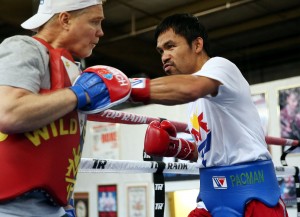
Pacquiao_Wildcard_150423_004a
LAS VEGAS – Two-hundred-and-fifty million dollars mean all kinds of things. A quick check with Google will deliver a list of hedge finds, tax evasion, lawsuits, Donald Trump, luxury condos, good bets, lousy bets and maybe Floyd Mayweather Jr. posing next to an open suitcase full of cash.

It’s all there, except for Manny Pacquiao’s generosity. It’s mostly been a story about anecdotes. He builds homes for Filipinos. He buys a fleet of new boats for a coastal town’s fishermen. His promoter, Top Rank’s Bob Arum, has called him the Pacific nation’s one-man social welfare system.

For the first time, however, maybe a number can be attached next to an inexhaustible generosity from a guy who never seems to stop fighting or giving. Best estimate: $250 million.

“Every income I receive in boxing, almost half of it goes to the less fortunate,’’ Pacquiao said Wednesday before a formal news conference at The Wynn for his pay-per-view bout against WBO welterweight champion Jessie Vargas at Thomas & Mack Saturday night (6 p.m. PT/9 p.m. ET).

Pacquiao’s career income for purses and endorsements is at $500 million after his April victory over Timothy Bradley, according to Forbes. Half of that adds up to a lot homes, fishing boats and meals for Filipinos who need them. It also amounts to some – make that a lot – of political clout for the fighter who was elected to the Filipino Senate in May.

As a Senator, Pacquiao’s duties include membership on 15 committees, two of which he chairs, according to Arum. His life as a full-time Senator resumes on Tuesday, just a few days after at least one more fight as a full-time boxer. The question of whether he continues with full-time roles in both the political and boxing rings looms over his bout with Vargas.

“I’m sure he’s going to be known as a great Senator,’’ Vargas said during the news conference in a comment that said he intended to end the Filipino’s greatness in boxing.

Without boxing, it’s unlikely that Pacquiao could continue to give away the kind of money that is funding the current construction of 1,000 houses in Sarangani Province. All of the money for the land, homes and labor is coming out of Pacquiao’s pocket. That’s just the latest example of Pacquiao, a people’s champ in more than just one way.

“I don’t like politics,’’ he said. “I hate politics. After each fight, half of my income goes to the poor.

“But I don’t like to announce it.’’

He doesn’t like to brag, either. Not when he can give.


A Senator’s Fight: Pacquiao hopes to add Champ to his political title

Pacquiao_workout_150428_001a
By Norm Frauenheim-
They call him Senator these days. The hope is that they can call him Senator Champ in about 10 days. Manny Pacquiao is seeking what is believed to be an unprecedented combo.

Senators get called a lot of things and as — Donald Trump keeps proving at an ad nauseam pace – most are a lot more insulting than honorable. But even a Filipino version Trump might have to use the double honorific when addressing Pacquiao if he beats Jessie Vargas on Nov. 5 at Las Vegas’ Thomas & Mack for the WBO’s welterweight title.

Titles of every kind are nothing new to Pacquiao, who has already been a Filipino Congressman. He also jumped from Command Sergeant Major to Lieutenant Colonel in his nation’s military reserve.

The leap in rank from enlisted to officer had to have been something of a battlefield promotion. Pacquiao’s battlefield has always been the ring. Eight world titles on that front have been the storyline and the propellant in his phenomenal rise from impoverished street kid to high political office.

It’s hard to even hazard a guess as to where it will all lead. There have been times when even the Filipino presidency has been mentioned as a Pacquiao possibility. For now, it’s just safe say it depends on how the 37-year-old Pacquiao fares against an improving Vargas, who is a decade younger and appears to be more dangerous than the 9-to-1 odds against him suggest.

Throughout the buildup for a pay-per-view fight that Top Rank will telecast, much of the talk has been about Pacquiao’s job as one of 24 Filipino Senators. The questions are there, of course, because there is nobody in any Senate like Pacquiao.

“Manny has always been a busy person but because of the Senate he seems to be a lot more serious than anything else he has done,’’ Pacquiao trainer Freddie Roach said during a conference call this week when asked about how training went while their camp was still in the Philippines. “He is in Senate sessions on some nights until 7:30 or 8:00 at night and, when he is done, we go right to the gym.’’

There was no distraction, Pacquiao said when repeatedly asked the inevitable question. There was only time management and the discipline to sustain it.

“The most difficult part of training in the past has always been when I do a bad job of managing my time,’’ Pacquiao said. “This time I managed my time and disciplined myself from going to my work to my training and that’s what I did in the Philippines. I don’t have any time to spend with my friends – just time for hard work.’’

The real answer, of course, won’t be there until opening bell. That’s when we’ll know if a full-time Senator can still be a full-time fighter.

To be sure, Pacquiao has been busy with a legislative agenda and issues that have confronted his country.

“Right now I am pushing for the establishment of a boxing commission in the Philippines,’’ he said.

He added that he is “also sponsoring the restoration of the death penalty.”

Then, there is the Philippines new president, Rodrigo Duterte, who has begun to generate some Trump-like controversy. Duterte told U.S. President Barack Obama that he “could go to hell” after Obama’s criticism of his push for draconian penalties for drug pushers.

Duterte also went to China and Japan, saying he wants to split with the U.S., a longtime ally. Then, Pacquiao landed in Los Angeles for the final stretch of training. Yeah, that question was inevitable, too.

“He has clarified everything about the relationship between the United States and the Philippines and it is a healthy relationship,’’ Pacquiao said when asked about Duterte early in the conference call. “We all respect his statement and he clarified it already.

“The bond between the United States and the Philippines is one of longstanding and there is a great kinship between the people of our two countries.’’

Pacquiao’s career has always been about multi-tasking. But tasks outside of the ring have gotten a lot bigger since the days when basketball and karaoke were the potential distractions.

He’s older now, which means wisdom and more discipline, yet also potential erosion in the physical qualities that have made the legend. We know about the power outage. He hasn’t scored a stoppage since 2009. That might be because he’s at 147 pounds instead of a more natural 140. But time is an inescapable factor.

He is a young Senator. But is he an old fighter? Against Vargas, we’ll find out.


Requiem for a Great White Hope

By Norm Fraueneheim-
donald-trump
The third Donald Trump-Hillary Clinton debate, the only fight worth watching throughout a barren October full of cancelled and postponed bouts, was anther example of how closely politics and boxing are linked by language, tone and turmoil.

History, too.

The more I watched Trump, the more I thought of a Great White Hope. He’s just another one and – if the polls are accurate – he’ll go the way of James J. Jeffries and Jerry Quarry.

Jeffries, the original White Hope, quit in the 15th-round against Jack Johnson on July 4, 1910, in Reno, Nev. Then, there was Jeffries’ successor, Jerry Quarry, who was saddled with an unwanted title in losing to Muhammad Ali in Ali’s 1970 comeback from a suspension for refusing to be drafted during the Viet Nam War.

Over more than a century, The Great White Hope has become a piece of Americana, memorialized in a Broadway play, later a film and then part of a Ken Burns documentary, Unforgivable Blackness, for PBS.

It’s an old story. A current one, too.

It was all there, all over again, Wednesday in the face of Trump, who had tried to cast doubt about Barack Obama’s right to be president by questioning his birthplace and now confronts Hillary Clinton for the political arena’s heavyweight title.

Trump turned each of the debates into a boxing new conference. It’s as if he learned the art of insult, confrontation and chaos during his days as an Atlantic City casino owner in business with Don King and Bob Arum.

Arum, by the way, had tickets to the debate at Las Vegas’ Thomas & Mack Center, according to ringtv.com. Hope he got good seats. Arum, a Clinton supporter, says Trump still owes him $2.5 million for Evander Holyfield’s 1991 decision over George Foreman.

The fact that Trump and Hillary came to Vegas for the last faceoff in their trilogy couldn’t have been more appropriate.

It’s where Mike Tyson took a piece of Evander Holyfield’s ear. It’s where a parachutist named Fan Man dropped into an outdoor ring like the 82nd Airborne midway through a Holyfield-Riddick Bowe bout. It is a where rigged – one of Trump’s favorite words – is another way of saying buyer beware to every customer entering one of The Strip’s casinos.

It’s where boxing and politics met all over again, with pundits using words created by boxing writers.

The media, pre and post-debate, were full of head fakes and body blows and KOs. Pre-debate, I listened to MSNBC’s Chris Matthews, who sounded more like Michael Buffer than sober pundit. Matthews pounded the hype drum, saying everything but “Let’s Get Ready To Rumble.’’

After the debate, the various networks included moderators and guests who had to shout above crowds that shouted and chanted like rival fans at post-fight news conferences.

I heard Fox News’ Sean Hannity, who sounded a lot like Trump’s Towel Boy. Hannity’s analysis favoring Trump reminded me of former ringside judge C.J. Ross, infamous for one card that favored Timothy Bradley in a controversial decision over Manny Pacquiao in their first fight and another that scored Floyd Mayweather’s one-sided victory over Canelo Alvarez as a draw.

I’m not sure what Matthews was hyping. I’m not sure what in the hell Hannity heard or saw. But I am certain that I had witnessed another Great White Hope still on the wrong side of history.


Opening Salvo: WBC takes first step in PED fight

By Norm Frauenheim-
wbc
The World Boxing Council’s rankings, once considered a joke, emerged this week with potential to be a serious weapon in the long and often futile fight against performance-enhancing drugs.

Twenty-five fighters ranked among the 15 in each of the WBC’s 17 weight classes were dropped for not enrolling in the Clean Boxing Program, which was introduced in early May.

It’s a little early for sweeping judgments, but the first real step in implementation of the VADA-administered program says the announcement at Las Vegas’ MGM Grand before Canelo Alvarez’ stoppage of Amir Khan on May 7 was more than just another empty news conference.

From top to bottom, the list of fighters dropped from the October rankings included well known and unknown.

There was Khan and ex-heavyweight champ David Haye and former light-heavy beltholder Jean Pascal.

There were also junior-flyweight Angel Acosta and strawweight Janiel Rivera. Never heard of them? Neither have I.

Point is, the list went beyond the names sure to generate a few headlines. It appeared to be comprehensive, an important symbol in what WBC President Mauricio Sulaiman and VADA President Dr. Margaret Goodman have said they hope to do. To wit: They intend to rid the sport of PEDS as best they can.

Initially, I was as skeptical of their plan as I have been of any acronym’s ratings. Nothing has been as troublesome as PEDs. It’s a swamp, infested with lies that have been repeated for at least four decades. Enter at your own risk.

From the old East Germans to Ben Johnson, Lance Armstrong, A-Rod and now the Russians, it has evolved into what looks like a mess without a solution. I had begun to think like so many others: Go ahead and make it legal. Use at your own risk.

That’s cynical, but a lot of pragmatic thinking is. I’m still uncertain about whether Sulaiman and Dr. Goodman can succeed. History is as irreversible as that proverbial ship. After moving in only one way for so long, it’s hard to turn around.

But I admire their beginning. It looks to be deliberate and disciplined. And cautious. Nobody is running to the media, shouting insults and allegations while pointing to all the telltale signs about who’s using and who isn’t. It as if everybody at ringside thinks a press credential is a medical degree.

Most of the time, I’d be annoyed about prepared statements and little else. Too often, that’s just a sign of somebody with something to hide. But the history of PEDs and chaotic tenor of the debate has left only a trail of suspicions, contempt and not much else

The assumption is that nothing works. I suspect that many of those dropped from the WBC’s rankings for not enrolling in the start-up of a program subjecting them to year-round testing was rooted in exactly that kind of thinking. They ignored it as if it were just another telemarketer. But this week they got an early warning. Maybe serious, too.


Olympic investigation is worthy of a Conlan encore

By Norm Frauenheim–
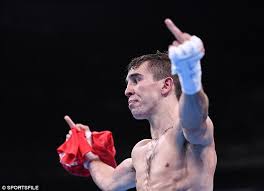
michael-conlan
One obscene gesture continues to sum up the state of Olympic boxing.

No matter what the amateur acronym does in the wake of another scandal-plagued Games and still another investigation, Michael Conlan’s one-finger salute will define it for as long as it is allowed to rule an Olympic sport as ancient as it is legendary.

AIBA announced Thursday that the 36 referees and judges, who worked the Rio Games, are under suspension pending an investigation, according to Reuters.

No applause necessary. A Conlan encore is the appropriate response.

I’m not sure how many times Olympic boxing has investigated itself since Roy Jones Jr. got jobbed in the Seoul Hold-Up in 1988. Let’s just say that the fox has been running this hen house for so long that nobody seems to care anymore. There have always been rumblings that the Acronym-In-Chief, the IOC, might just ban boxing altogether.

But has anybody heard from the IOC about this latest boxing controversy? Didn’t think so.

The IOC silence speaks volumes. For the boxing abolitionists in the IOC’s comfortable suites, the sport has already been doing a pretty good job at eliminating itself. Conlan’s damning gesture after the Belfast bantamweight’s controversial loss in the quarterfinals last August might also be another way of saying goodbye. NBC did exactly that several years ago.

According to a statement published by Reuters, AIBA determined that “a small number of decisions under debate indicated that further reforms in the AIBA R&J (referee and judging) procedures were necessary.’’

The statement added that “the results of the investigation, currently underway, will allow AIBA to fully assess what action needs to be taken.’’

I guess the statement means we should all be relieved that a remedial process is underway. Yet, somehow, this sounds a little bit like Donald Trump promising he’ll release his tax documents after an audit is complete. Yeah, and that check is in the mail, too.

We already know where the boxing process has been. After the 2000 Sydney Games, amateur boxing announced that referee Stanislav Kirasnov had been suspended for four years for his questionable work in a controversial decision that cost American Rocky Juarez the gold medal.

Yet, Kirasnov was back, working international tournaments, long before the scheduled end of the announced suspension. Not much ever seems to change, other than the fighters themselves. Conlan has moved on. But that doesn’t mean his condemnation of AIBA has gone away.

As it turns out, his gesture might have been worth as much as a gold medal. He signed with Top Rank in a deal that resulted in a lot of publicity for him and promoter Bob Arum.

Both appeared in photos, each flashing that upraised finger, a gesture appropriate for what happened all over again in Rio and for the investigation that was announced Thursday.


Fourth Quarter Fury: End of the year and back to the brink

By Norm Frauenheim-
Tyson Fury
Boxing enters the year’s fourth quarter looking to make the kind of defining comeback that happens when it is at its dramatic best.

Just when the sport is down and written off in obits that have been written before, it gets up and recovers just in time for another Rocky sequel.

I’m not sure that another resurrection will be so easy or predictable this time around. But it’s always a mistake to underestimate the battered game’s resilience. It’s been inexhaustible. Other than broken jaws and slurred words, it also has been the only reliable commodity in a feast-and-famine cycle.

The famine is here, marked by a barren October full of only cancellations, including Tyson Fury’s sudden withdrawal from an Oct. 29 rematch with Wladimir Klitschko, reportedly for mental-health reasons. Fury’s rise to the top of the heavyweight heap was marked by erratic behavior.

It was also behavior often encouraged by media and fans. We were entertained. If stories about Fury’s mental health are accurate, we also might have been complicit.

We might have pushed him there, looking for a few more laughs. That’s a different story, perhaps.

But it’s also part of the context that has always drawn fighters and fans to a precipice as crazy as it is dangerous.

Fury is named Tyson because his father admired Mike Tyson. Fury shares a name and perhaps a fate with a heavyweight, who in 1998 had to undergo a mental evaluation before he could get a license from the Nevada State Athletic Commission.

Every painful detail about that evaluation made it into the media. We knew when he was on Zoloft. We knew when he was on lithium.

It was unseemly. Yet, it was irresistible, mostly because editors demanded the dirty details that readers and fans wanted. Somehow, Mike survived, much to the media’s surprise and even his own. He’s a happy, doting dad today. I also suspect he recognizes where Fury is right now.

Fury’s uncle and trainer, Peter, told UK media that he would be back, sometime next year.

But Mike Tyson’s example is powerful enough to say he should just walk away. Walk, Tyson Fury, walk away for everybody’s sake, mostly your own. With today’s social media, he’ll be under intense scrutiny no matter what he does. A return to the ring would only further inflame the Twitter universe.

Imagine if Twitter had been around during Mike Tyson’s career. Multiply crazy by 140 and more, a lot more.

The business is already preparing to move on, no matter what happens to Fury. There’s already talk about the UK’s young sensation, Anthony Joshua, against Klitschko, who has been training and doesn’t want to let all of his work go to waste.

The guess is that Joshua-Klitschko would happen sometime later this year, which – with apologies to Tyson – will end in a fury.

After an empty October, November is loaded, first on Nov. 5 with Manny Pacquiao featured against Jessie Vargas in a Top Rank pay-per-view production in Las Vegas that is mostly interesting for the undercard. Oscar Valdez Jr.’s coming-out party continues against Hiroshige Osawa in his first title defense in a bout that should propel the emerging featherweight into a main-event attraction in 2017.

Then, there’s the biggie, Sergey Kovalev-Andre Ward in a light-heavyweight showdown on Nov. 19 in a PPV bout, also in Las Vegas. Main Events, Kovalev’s promoter, has tempered PPV expectations. In a declining market, 300,000 would be a success. However, a great, competitive fight could set up a money-making rivalry and a PPV blockbuster in a rematch.

Then on Nov. 26, Vasyl Lomachenko faces Nicholas Walters for a 130-pound title. On paper, it looks like a great fight. The guess here, however, is that Lomachenko’s clever execution of his versatile skillset will be too much for Walters. It’ll be anoter reason to think that Lomachenko will be boxing’s next great, multi-weight champ with eventual titles at 135, 140 and 147.

Then, there’s December. There’s talk of Gennady Golovkin in a middleweight bout against likable Danny Jacobs, who has whipped cancer and everybody else since a loss in 2010. It’s not GGG-Canelo Alvarez. But it’s a projected fight with elements that might help a frustrated fan base forget about those futile GGG-Canelo discussions.

It’s a busy, intriguing run of fights, each with enough potential to restore a declining game in 2017. But will they? Will 2016’s fourth quarter plant the seeds for another comeback? Who knows? But I’m here, back at the precipice anyway, wondering whether those stories about Tyson Fury’s condition are accurate and wondering why I’m here all over again.


PPV report might knock Canelo off the A-side

By Norm Frauenheim
canelo-alvarez
So who is the A-side now?

In a not-so-surprising report, Canelo Alvarez’ crown as the reigning pay-per-view king got knocked sideways, if not completely off his redhead, with news that the PPV audience for his victory over Liam Smith last Saturday is not expected to be bigger than 300,000.

The Los Angeles Times reported the news, citing sources who blamed the disappointing number on mounting frustration at Canelo, who has yet to agree to a fight with Gennady Golovkin.

Meanwhile, Golovkin’s victory on Sept. 10 over Kell Brook, a British welterweight fighting at middleweight, was a PPV success in the UK with a reported audience of 500,000.

The Canelo-Smith fight was promoted as a way to showcase Canelo at AT&T Stadium, the Dallas Cowboys home field, during a celebration of Mexican Independence. The live gate was considered a success.

In terms of leverage in potential negotiations for Canelo-Golovkin, however, the key is in the PPV numbers. Golovkin appeared to gain a significant edge at London’s sold-out O2 Arena against a fighter, Brook, better-known in the hot UK market than Smith.

Meanwhile, chances of Golovkin-Canelo appear to be as uncertain as ever. Canelo suffered a fractured thumb during his business-like stoppage of Smith in a junior-middleweight bout. That means he won’t fight in December, as has been planned.

His next appearance could be in early May as part of the annual Cinco de Mayo celebration, but it’s safe to say it won’t be against Golovkin. Even before the thumb injury, talk was that September, 2017 was the chance for Golovkin-Canelo.

Now, who knows? Meanwhile, there are reported talks for an intriguing fight between Golovkin and Danny Jacobs, possibly on Dec. 10 in a middleweight unification bout in New York.

It could be another opportunity for Golovkin to add further evidence that he is boxing’s A-side. Or is that the GGG-side?


Oscar Valdez Jr. to make first title defense in Vegas instead of Tucson

Oscar Valdez
The championship belt is probably not going anywhere, but Oscar Valdez Jr., figures to retain it in Las Vegas instead of Tucson.

Valdez’ first defense of the WBO’s featherweight title against Japanese contender Hiroshige Osawa was officially added this week to the pay-per-view card featuring Manny Pacquiao-Jessie Vargas on Nov. 5 at Thomas & Mack Center.

Top Rank’s initial plan was for Valdez to make his first defense in Tucson, where he grew up, on a later date in November.

Valdez was in Tucson at Casino del Sol for a Univision-televised card featuring Juan Diaz on August 6, two weeks after he won the WBO’s 126-pound belt in a second-round stoppage of Argentina’s Matias Rueda.

Valdez signed autographs and his management team talked about whether to stage his first title defense at an outside pavilion or in one of the Tucson casino’s ballrooms.

But plans changed when HBO said no to the PPV possibility, forcing Top Rank to stage the Nov. 5 card at its own expense. It needs a fighter who can attract a PPV audience and Valdez (20-0, 18 KOs) qualifies. The two-time Mexican Olympian has emerged as one of Top Rank’s bright young talents.

In Osawa (30-3-4, 19 KOs), Valdez faces a fighter who has won eight straight bouts, yet has fought outside Japan only twice – once in Korea and then in General Santos City, Pacquiao’s hometown, in his last one.

Valdez-Osawa is one of three title fights on a card that also includes two-time Chinese Olympic gold medalist Zou Shiming (8-1, 2 KOs) and Kwanpichit Onesongchaigym (39-1-2, 24 KOs) of Thailand in a rematch.

The third title fight features Nonito Doniare in a defense of the WBO’s 122-pound title against Jessie Magdaleno of Las Vegas.

At some point, Donaire said he would like to go back up to featherweight in a bid to regain a major 126-pound title. Victories by Donaire and Valdez could set up an intriguing featherweight bout in 2017.


Waiting Game: Time is the only scale that matters in talk about Canelo-GGG

By Norm Frauenheim-
Canelo_Alvarez
In the political season, Gennady Golovkin and Canelo Alvarez are acting a lot like candidates.

Maybe, that’s because they have been campaigning longer than Hillary Clinton and Donald Trump for a fight presumably sometime after somebody finally moves into the White House next January.

The Golovkin campaign stopped in London last Saturday with a predictable stoppage over welterweight-turned-middleweight Kell Brook in a bout surprising only because of marks left on GGG’s usually unmarked face.

A week later, this Saturday, Canelo takes his turn in the bully pulpit against unbeaten, yet little-known UK junior-middleweight Liam Smith in a ring on top of the Dallas Cowboys home field at AT&T Stadium in Arlington, Tex., in a pay-per-view bout (HBO 9 pm ET/6 pm PT).

For those reading the tea leaves – and that’s just about everybody, the bruises represent early signs of vulnerability in GGG. Then again, they also might only mean the feared middleweight champion can take a punch.

Safe to say, the 26-year-old Canelo and his partisans connected the abrasions and welts like dots in a progression that perhaps confirms what they’ve been doing all along. Time has begun to do what no punch ever could to a younger GGG. It’s inevitable. It’s also business.

Next year –say in May during the annual Cinco de Mayo celebration, Golovkin will be 35, late enough in his prime to attack early signs that had not been evident until Brook’s punches landed. Of course, a potential symptom might also be nothing more than a pimple.

Nevertheless, there’s good news in talk from Dallas that Canelo and his corner are finally beginning to see a chance at beating GGG.

It’s never been about the weight, although Canelo’s corner continues to insist he’s really a 154-pound fighter, still growing into a true middleweight.

Yet, he declined to step on a scale for HBO in his dressing room just before his crushing stoppage of ex-junior-welterweight Amir Khan last May for the WBC’s 160-pound title, which he subsequently relinquished amid mounting criticism from frustrated fans who only want to see him against GGG.

The guess here is that Canelo didn’t want any of those fans to know that he is in fact a true middleweight already and perhaps a division or two heavier.

Time is the only scale that really matters here. As long as Canelo stays at 154, Golovkin gets a little older and maybe a lot more vulnerable to big punches from a fighter entering his prime just as GGG is exiting his own.


Roman Gonzalez extends his pound-for-pound reign with a fourth title in decision over Cuadras

INGLEWOOD, Calif. – Roman Gonzalez came to honor Alexis Arguello. He also came to get what eluded his late mentor.


Mission accomplished.


Gonzalez further cemented his place atop the pound-for-pound debate and gained an enduring spot in Nicaraguan history by wining a fourth title in a fourth weight class — the WBC 115-pound championship — with a unanimous decision over Carlos Cuadros Saturday night at The Forum.


Arguello won three. A fourth, Gonzalez (46-0, 38 KOs) said, would be his way of saying thanks to the Nicaraguan legend who had introduced him to the sport when he was a kid in Managua. Gonzalez’ thank-you proved to be a brilliant display of tactical mastery and durability.


When the 117-11, 116-112, 115-113 scores were announced, Gonzalez looked to The Forum’s ceiling, tears streaming from his bruised eyes. It was a moment he had envisioned. It was also a moment over which he probably agonized during the weeks and months before opening bell.


“This was always for Alexis Arguello,’’ Gonzalez said as a crowd of 6,714 roared in cheers of approval. “I wouldn’t be here without him.’’


In the beginning, Gonzalez’ energy was evident. He bounced on his agile feet as though there were springs in his shoes. Through the first six rounds, his versatile punches landed with intent and precision. At times, his balance and poise made Cuadras (35-1-1, 27 KOs) look awkward. At times, Cuadras, looked frustrated. In the fifth round, Cuadras smiled, did a quick shuffle and smiled at Gonzalez as if to say he would still have fun even if he lost.


In the later rounds, however, Cuadras displayed some surprising resiliency. Not enough perhaps to win the fight, but enough to raise some questions about how Gonzalez might do against Japanese prodigy Naoya Inoue, who was at ringside.


In the last two rounds, Cuadras, of Mexico City, was the stronger fighter. In his first bout at 115 pounds, Gonzales appeared to fade in the late moments.


“It was a close fight, but I felt I won,’’ said Cuadras, who was unhappy at having to surrender the belt in the fight’s immediate aftermath.  “You can see he has never been hit as hard as he was tonight.’’


In a punishing rematch of a draw before the Gonzalez-Cuadras bout, junior-middleweights Yoshiro Kamegai of Japan and Jesus Soto Karass picked up where they left off in April. This time, however, Kamegai (27-3-2, 24 KOs) prevailed, wearing down Soto Karass (28-11-4, 18 KOs) with blunt blows that had the Mexican falling forward in near exhaustion in the seventh round and then down on hands and knees in the eighth. Before the ninth, it was over when Soto Karass’ corner asked referee Jack Reiss for a timely halt.


Ring announcer makes a Steve Harvey-like mistake

Scorecards always get booed. But don’t blame the judges this time. Blame the guy who announced their scores.


Mark Kriski announced the wrong winner after he read the scores for an eight-round flyweight bout between Seniesa Estrada and Nancy Franco Saturday night on the non-televised portion of a card featuring Roman Gonzalez against Carlo Cuadras at The Forum.


For a fleeting few seconds, Nancy Franco got to celebrate. But the party came to an abrupt end, going flat faster than cheap champagne. Kriski took a second look after hearing an angry crowd boo the shutout – 80-72 on all three cards.


Oops, it turns out that Estrada won, which was pretty clear from even the cheap seats. Within the time it takes to throw a three-punch combination, Franco (14-10-2, 4 KOs), of Mexico, went from claiming an upset victory to being an upset loser. Meanwhile, Estrada (8-0, 1 KO), of Los Angeles, tried to celebrate after suddenly learning she had in fact won. By then, however, it looked as if she was just angry, first at hearing she had lost and then at hearing Kriski’s mistake.


Kriski has a day job as a weatherman at KTLA.  We’re not sure if he says the sun is shining when it’s really raining. But he might be pretty god as Steve Harvey’s successor as host of the next Miss Universe contest. He’s as good at picking the winner as Harvey ever was.


Rest of the undercard


Cleveland lightweight Ryan Martin (16-0, 9 KOs) had more power, more speed, more of everything in scoring a unanimous decision over Colombian Cesar Villarraga (9-2, 4 KOs), who was troubled by loose tape on one shoe throughout the eights round and was floored in the fourth by a right.


Aloha means hello and goodbye. Brahmabigi Montgomery, (2-1-1, 1 KO) a lightweight from Apple Valley, Calif., said both to Chazz Moleta, who made the trip from his home in Hawaii only to have his debut cut short by a succession of punches in a TKO loss at 2:44 of the fourth round.


By Norm Frauenheim


INGLEWOOD, Calif. – Scorecards always get booed. But don’t blame the judges this time. Blame the guy who announced their scores.


Mark Kriski announced the wrong winner after he read the scores for an eight-round flyweight bout between Seniesa Estrada and Nancy Franco Saturday night on the non-televised portion of a card featuring Roman Gonzalez against Carlo Cuadras at The Forum.


For a fleeting few seconds, Nancy Franco got to celebrate. But the party came to an abrupt end, going flat faster than cheap champagne. Kriski took a second look after hearing an angry crowd boo the shutout – 80-72 on all three cards.


Oops, it turns out that Estrada won, which was pretty clear from even the cheap seats. Within the time it takes to throw a three-punch combination, Franco (14-10-2, 4 KOs), of Mexico, went from claiming an upset victory to being an upset loser. Meanwhile, Estrada (8-0, 1 KO), of Los Angeles, tried to celebrate after suddenly learning she had in fact won. By then, however, it looked as if she was just angry, first at hearing she had lost and then at hearing Kriski’s mistake.


Kriski has a day job as a weatherman at KTLA.  We’re not sure if he says the sun is shining when it’s really raining. But he might be pretty god as Steve Harvey’s successor as host of the next Miss Universe contest. He’s as good at picking the winner as Harvey ever was.


Rest of the undercard


Cleveland lightweight Ryan Martin (16-0, 9 KOs) had more power, more speed, more of everything in scoring a unanimous decision over Colombian Cesar Villarraga (9-2, 4 KOs), who was troubled by loose tape on one shoe throughout the eights round and was floored in the fourth by a right.


Aloha means hello and goodbye. Brahmabigi Montgomery, (2-1-1, 1 KO) a lightweight from Apple Valley, Calif., said both to Chazz Moleta, who made the trip from his home in Hawaii only to have his debut cut short by a succession of punches in a TKO loss at 2:44 of the fourth round.


Alone On The P4P Pedestal: Roman Gonzalez fights for a mentor and a country to stay there

By Norm Frauenheim-
Roman Gonzalez
INGLEWOOD, Calif. – He wrapped himself in the blue-and-white Nicaraguan flag before and after stepping on the scale. Roman Gonzalez, a man of his people, has also become his country’s lone symbol of sporting success.

Nicaragua didn’t win a medal at the 2016 Rio Olympics last month. Saturday at the Forum, however, Gonzalez enters the ring on boxing’s top pedestal. He’s alone, the consensus No. 1 in the pound for-pound debate. It’s a lonely place to be. Surprising and precarious, too.

Gonzalez, who goes after another title at another weight against WBC 115-pound champion Carlos Cuadras, is the lightest fighter to ever be at the top of The Ring and ESPN ratings. He’s been there ever since Floyd Mayweather Jr. announced his retirement more than a year ago. In other words, for a long time.

But this is boxing, which means that there is always an argument and a burden of proof. The prevailing theory is that Gonzalez is keeping the top spot warm for middleweight champ Gennady Golovkin, who faces Kell Brook Saturday in London in the first part of an HBO telecast (2:30 p.m. PST/5:30 p.m. EST).

Then, there’s the November clash between light-heavyweight Sergey Kovalev and Andre Ward. It fair to assume that the winner of that one will have claim of his own. The assumption is that the bigger fighters, heavier hands will eventually sweep aside Gonzalez drop him to those rungs of that rating that once belonged to Ricardo Lopez, Michael Carbajal and Humberto Gonzalez.

But it could be a tough argument to make if Gonzalez (45-0, 38 KOs) continues to display his technical brilliance at more than one, two or even three weights.

Against Cuadras (35-0-1, 27 KOs), the former 105, 108 and current 112-pound champion goes after a fourth belt, also on HBO (7 p.m. PST/10 p.m. EST) on a portion of the card that includes a junior-middleweight rematch between Jesus Soto Karass (28-10-4, 18 KOs) and Yoshihiro Kamegai (26-3-2, 23 KOs).

A fourth major title at a fourth weight would add up to a first for Gonzalez, Nicaragua and Central America. It would surpass the three-title achievement of Gonzalez mentor and Nicaraguan hero, the late Alexis Argyle.

“I dedicate this fight to Alexis,’’ Gonzalez said to Spanish media that gathered in The Forum’s parking lot for an outdoor weigh-in beneath the roaring path of commercial jets preparing to land at nearby LAX. “I feel very comfortable knowing that Alexis had success here.”

Arguello was 4-0 at The Forum, winning titles at featherweight and super-feather. In his fourth fight at the rebuilt arena, he beat Bobby Chacon in November 1979. Chacon, 64, died Wednesday.

In two bids for a fourth title, Arguello, who died in 2009, fell short, losing by stoppage to Aaron Pryor in 1982 and again in 1983.

“I know how badly he wanted a fourth divisional championship,’’ said Gonzalez, who Friday was 114.6 pounds, two-tenths of a pound lighter than Cuadras. “I want to do this for him.’’

And for his people.


Small weight, small purses: Going up the pay scale a long climb for Roman Gonzalez

By Norm Frauenheim–
Roman Gonzalez (640x360)
INGLEWOOD, Calif. — Roman Gonzalez is rapidly moving up the scale in weight, skipping seamlessly from belt to belt like a flat stone on a championship pond.

His ascendancy is what makes him the lightest fighter to ever gain pound-for-pound recognition on an unbeaten path that figures continue Saturday night at The Forum in his bid for a title in a fourth weight class against WBC 115-pound champion Carl Cuadras on HBO (10 p.m. ET/PT).

Gonzalez is considered the biggest little man ever in terms of skill and stature. But not in dollars. Nothing has changed at the top of the pay scale for the lightest weights in nearly a quarter of a century. Michael Carbajal and Humberto “Chiquita” Gonzalez are still there.

In a significant test of his marketability, Roman Gonzalez is the headliner on a card in the same arena where Carbajal became the first fighter lighter than 128 pounds to collect the $1 million milestone in a February, 1994 rematch that Chiquita Gonzalez won in a split decision more than 22 years ago.

It was supposed to be the fight that opened the door, or at least the vault, for fighters who had traditionally paid a bloody price for a chance at boxing’s version of the minimum wage.

A sign that a new, enhanced payday had finally arrived was in The Forum crowd. It was announced at 15,102. Magic Johnson was there. It was good day to be a Lord of the Flies. Nine months later, in November 1994, Chiquita got his seven figures, collecting $1 million for another close decision in front of an estimated crowd of 30,000 at a Mexico City bullring.

But in the years since the Lakers packed up Showtime and moved from The Forum to Staples, those paychecks have never be equalled. Not even close.

Make no mistake, Gonzalez (45-0, 38 KOs), who is favored to become the first Nicaraguan to win a fourth title against Cuadras (35-0-1, 27 KOs), has begun to make a very good living.

Over his last two fights, his cumulative income is a reported $550,000, $250,000 for a stoppage of Brian Viloria last October and a career-high $300,000 for an April stoppage of McWilliams Arroyo.

It’s comfortable, but still nearly half of what Carbajal and Humberto Gonzalez collected in single fights against each other a lot of inflation ago. It’s also a wage not associated with the acknowledged leader in the pound-for-pound debate.

There’s been some serious deflation in money and expectations since casual fans headed for the exits in the wake of the disappointing Floyd Mayweather Jr.-Manny Pacquiao bout in May 2015. But not even the Mayweather-Pacquiao dud explains it. Middleweight champion Gennady Golovkin, second or third to Roman Gonzalez in pound-for-pound ratings, is reportedly getting $5 million against Kell Brook Saturday in London in an HBO-televised bout that will precede Roman Gonzalez-Cuadras.

Roman Gonzalez purse has yet to be disclosed, but it’s safe to say it’ll be a fraction of Golovkin’s purse and probably won’t equal the bar set by Carbajal and Humberto Gonzalez in history’s richest 108-pound trilogy.

Both history and money lead to the same place. Roman Gonzalez still needs a rival, a business partner. Without one, he is Ricardo Lopez, perhaps history’s greatest little fighter, yet without ever getting a check that approached the kind of money collected by Carbajal and Gonzalez.

Maybe, Japanese prodigy Naoya Inoue is the other half of a partnership that can unlock all of financial potential evident in the pound-for-pound skill, poise and power that Roman Gonzalez has consistently exhibited in his ongoing introduction to the American market.

There were reports that Inoue planed to be at ringside at The Forum Saturday, a week after his 10th-round stoppage of Petchbarnghborn Kotietgym in Japan for a 115-pound title. However, there were also reports of injuries to Inoue, who appeared to hurt his right hand in his latest victory. Roman Gonzalez can only hope Inoue is healthy. For now, a healthy Inoue might be the only way he can also move up that pay scale.


No Ordinary Smith: Promoter Frank Warren promises extraordinary upset of Canelo

By Norm Frauenheim-
Liam Smith
He appears to be a mere prop in Canelo Alvarez’ long-term design on creating a legend that still awaits a defining moment, perhaps against Gennady Golovkin. He’s another Smith.

He’s the brother of Paul and Stephen, who are about as forgettable as any other Smith who has fought in the United States.

Betting odds, which opened at 11-1 and are about 10-1 in the UK, suggest that this Smith Brother, Liam, won’t last longer than a cough drop on Sept. 17 against the heavily-favored Canelo on Sept. 17 in a ring on top of the Dallas Cowboys home field at AT&T Stadium in Arlington, Tex.

Liam Smith and his management have other ideas. No surprise there. It would be a bigger upset than a Liam Smith victory over Canelo if they didn’t, of course. But they, like Canelo, also have plans on making history, both for the Smith family and the UK.

Unlike Canelo, however, their plans are more immediate. The unknown Liam Smith and his well-known promoter, Frank Warren, are talking about an upset that would be one for the books.

Warren put it this way during a conference call Thursday when asked if Liam Smith would fight in November after a predicted loss to Canelo:

“No, that’s not possible, because he’s going to win.’’

The one-sided odds say otherwise. So, too, does the Texas location and the September date that coincides with the celebration of Mexican Independence.

Canelo, who has taken back the Mexican holidays in May and September since Floyd Mayweather Jr.’s retirement, is hugely popular in Texas. He has fought in front of big crowds in Houston and San Antonio.

Now, he fights for the first time in Dallas, where he intends to further cement his claim on being the face of boxing while also gaining leverage in negotiations for a GGG showdown in 2017.

Translation: All of the pressure is on Canelo to deliver a dominant performance in a fight that will happen one week after GGG faces Kell Brook in London on Sept. 10. If all goes as predicted, the two performances will be a reference point in analyzing who would win and how in a GGG-Canelo bout.

An intriguing footnote is that Canelo is a bigger favorite over Smith at 154 pounds than middleweight champion Golovkin is against Brook, a welterweight champion who is jumping from 147 to 160. GGG is a 7-to-1 favorite.

Liam Smith, the WBO’s 154-pound belt-holder, feels he has as good a shot as Brook has.

“Yes, I like my chances,’’ said Liam, whose brothers were beaten in their last trips to the U.S.

Paul Smith, a super-middleweight, lost to Andre Ward last year in Oakland, Calif. Stephan Smith, a super-featherweight, lost to Jose Pedraza last April in Mashantucket, Conn.

Warren suggested Thursday that Liam is the best of the Smiths, one whom he says will record an upset as big as any in UK boxing history.

“So often, people go over to the States to fight, thinking that they have nothing to lose,’’ said Warren, who said a Liam Smith victory would place him alongside Joe Calzaghe’s upsets of Jeff Lacy, Bernard Hopkins and Roy Jones Jr. “But Liam has something to lose: His pride.’’

So, too, does Canelo, whose own brand of fierce pride is just one of many things at stake.


Phoenix featherweight Carlos Castro fights to stay unbeaten Saturday

PHOENIX, Ariz. – Phoenix featherweight Carlos Castro fights to stay unbeaten Saturday night at Celebrity Theatre against Jorge Diaz Jr. of New Brunswick, N.J.

Castro (15-0, 8 KOs) won a decision in is last outing, also at Celebrity Theatre on Iron Boy Promotions card. Diaz (18-4-1, 10 KOs) is 1-1-1 over his last three bouts.

Castro-Diaz is the featured fight on an Iron Boy card scheduled for 10 bouts. First bell is scheduled for 6 p.m. (PST).


Jose Benavidez Jr. injured in Phoenix shooting

By Norm Frauenheim–
jose_benavidez_signing_100114_001
PHOENIX – Former junior-welterweight champion Jose Benavidez Jr. is recovering from injuries suffered when he was shot in west Phoenix.

The injuries are not believed to be serious. TMZ reported Thursday morning that Benavidez had been shot in the leg, although it was not clear which leg. He was scheduled to leave a Phoenix-area hospital late Thursday.

There was confusion about when the shooting happened. According to one report, it happened Tuesday when he reportedly encountered an armed, unknown man while walking his dog. According to another report, it happened Thursday morning. No arrests have been made, s spokesman for the Phoenix police said.

Benavidez, 24, was not available for comment late Thursday.

Benavidez (25-0, 16 KOs) is coming off a solid performance in his welterweight debut — a unanimous decision over journeyman Francisco Santana on July 23 on the undercard of Terence Crawford’s victory over Viktor Postol at Las Vegas’ MGM Grand.

Benavidez, who held a WBA interim title at 140 pounds, had been expected to fight again at 147 sometime in November.

He was a possibility for the Nov. 5 card featuring Manny Pacquiao-Jessie Vargas at Las Vegas’ Thomas & Mack Center. Benavidez called out Vargas in the immediate aftermath of his victory over Santana.

There also had been talk that he would fight in Tucson on a Top Rank card featuring featherweight champion Oscar Valdez Jr. in his first title defense later in November


The Obscene Truth: Gesture sums up Olympic boxing

By Norm Frauenheim-
royjones2
Roy Jones Jr.’s nightmare continues. He and boxing are subjected to it every four years for the last 28 years. It never changes. Head gear on, head gear off, there’s just no disguise for a mess that began before the Berlin Wall fell.

Jones ranks as the greatest pro of his generation, yet he is remembered more for the 1988 controversy that has defined Olympic boxing ever since the Seoul Games.

The fix that robbed Jones of the gold medal is the reference point for every controversy that happens, ad nauseam and always with no end in sight. It’s beginning to look as if there’s no way back to the day when a Sugar Ray Leonard-led US team in 1976 was an Olympic centerpiece.

Boxing has pushed itself so far to the Olympic fringe that I’m not sure anybody cares anymore. Has anybody heard NBC utter a single mention of anything that has transpired at the Rio de Janeiro boxing venue? Didn’t think so.

In the U.S., Spanish-speaking networks carry the bouts. But the only NBC story about anything resembling a fight involves “whatever’’ happened at a Rio gas station’s bathroom involving security guards and U.S. swimmers, including Ryan Lochte. Gary Hall Jr., a three-time Olympian and 10-time swimming medalist from Phoenix, once said that it’s hard to develop a personality when you spend so much time with your head underwater. He could have been talking about Lochte, the 32-year-old Peter Pan of world-class waters.

I mention Lochte, because swimming’s tsunami of unwanted attention happens as history repeats itself in Olympic boxing. There are the usual judging controversies – this time scored under the pro-style, 10-pound must system. Yet its been mostly ignored by mainstream media, despite a photo of an obscene gesture – an upraised middle finger on each hand– from Irish bantamweight Michael Conlan after losing a quarterfinal decision —29-28 on all three cards – to Russian Vladimir Nikitin.

In perhaps a telling coincidence, Nikitin withdrew from a Thursday bout with emerging American Shakur Stevenson, reportedly because of injuries sustained against Conlan. Predictably, amateur boxing’s ruling acronym, AIBA, announced the familiar shuffles, suspending anonymous judges, unknown referees and faceless bureaucrats.

AIBA said Thursday that executive director Karim Bouzidi of Algeria has been “re-assigned.’’ But to do what from where? It all reminds me of what happened in the aftermath of American Rocky Juarez’ loss to Bekzat Sattarkhanov of Kazakhstan at the 2000 Sydney Games in the featherweight gold-medal match.

Amateur boxing announced that referee Stanislav Kirsanov would be suspended for four years for allowing Sattarkhanov to hold and clinch in the second and third rounds. That prevented Juarez from scoring on the inside, where he was always at his best.

But it looks as if that suspension didn’t last long, if at all. Ringside colleague Bill Dwyre, the former Los Angeles Times sports editor, called Kirsanov while he was still supposed to be under suspension. No, Kirsanov told Dwyre, he was scheduled to work an upcoming international bout and that he had been working for a while.

From Jones to Juarez, from Seoul to Sydney to Rio, nothing really changes. Hate to say it, but Conlan’s gesture says it best.


What retirement? Pacquiao decides on Vargas and hopes for Mayweather

By Norm Frauenheim-
May Pac PC 3
It’s hard to know what to make of Manny Pacquiao’s decision to fight Jessie Vargas on November 5, other than to say he never retired.

Please, don’t call it a comeback. Pacquiao never went away. He ran for office. He won, changing his Filipino title from Congressman to Senator. He wrote some legislation and apparently a lot of checks.

He said this week he would continue to fight, in part because his Senate salary just wasn’t enough, despite the $100-plus million he reportedly collected for his loss to Floyd Mayweather Jr. just 15 months ago.

“Boxing is my main source of income,’’ Pacquiao said Wednesday in announcing he would fight Vargas at Las Vegas’ Thomas & Mack Arena. “I can’t rely on my salary as a public official. I’m helping the family of my wife and my own family, as well.

“Many people also come to me to ask for help and I just couldn’t ignore them.”

If it’s possible, Pacquiao gives away money faster than Mayweather spends it. At this rate, there’s a better chance Pacquiao will still be in the ring than there is Michael Phelps will be in the Olympic pool at the 2020 Tokyo Games. If nine figures can’t cover what Pacquiao spends over less than a year-and-a-half, what can?

It’s not clear how much he’ll earn against Vargas, the WBO’s welterweight champion. But it’s safe to say it won’t be the $20-to-25 million minimum Pacquiao collected over the last few years, including his last fight – a decision in April over Timothy Bradley in a second rematch.

That kind of money isn’t there any more, mostly because of a steep decline in pay-per-view numbers in the wake of the disappointing Mayweather-Pacquiao fight.

Before junior-welterweight Terence Crawford’s one-sided decision over Viktor Postol on July 23, Pacquaio promoter Bob Arum said that the Filipino understood that the business had changed. He said he could make a deal with the Senator.

“We’re not talking about those kind of crazy numbers,” Arum told the Los Angeles Times this week.

But those numbers are still a guessing game until Arum announces how and who will telecast the pay-per-view. It looks as if it won’t be HBO, the premium network that carried Pacquiao’s top-earning bouts. ESPN has been rumored. But at what price?

The decision to fight Vargas instead of the emerging Crawford appears to be a bet on a rematch with Mayweather, perhaps next May. Signs that Pacquiao would sidestep Crawford were apparent in the wake of Crawford’s blowout of Postol.

Crawford’s agile footwork and versatility surprised Postol trainer Freddie Roach, also Pacquiao’s trainer. It was evident that Crawford’s overall speed would be very hard to overcome, even at 140-pounds, perhaps Pacquiao’s ideal weight. Roach said as much.

A loss to Crawford would likely mean irrelevancy, if not a real retirement, for Pacquaio. Surely, it would badly damage any chance at a Mayweather rematch. Hence, Vargas, the safer choice, at 147 instead of 140.

But even that’s a risk. Mayweather has been mostly silent since he spent all that time talking about a big-money deal in a bout with the UFC’s Conor McGregor. There’ no indication that he is any more interested in a comeback than he was at the moment he formally announced his retirement after beating Andre Berto in September 2015.

Mayweather has said he might be interested if the money – his nickname and motivation – is right. He reportedly collected $240 million for Pacquiao. He had a $32-million guarantee for each of his bouts in a six-fight deal with Showtime.

Like Arum said, crazy numbers. But it’s also crazy to think Mayweather would ask for anything less than $32 million, even if he were interested. The guess – and that’s all it is – is that he will be. He’s still young enough. He’ll be 40 on Feb. 24. He retired at 49-0. Fifty-and-0 has to be a temptation.

The bigger question is whether there’s even an audience for an encore. The bout in May 2015 set a record for PPV buys at 4.4 million. The theory is that a rematch could do at least 1 million, meaning it would make money. But the ongoing decline only raises questions about whether anyone wants a sequel that would only remind everyone of the original.


Juan Diaz wins another comeback bout, hopes for shot at fifth title

Juan Diaz
TUCSON – Juan Diaz remembers when he was younger. When he was busy. Real busy.

He was known as much for a whirlwind pace as he was for his nickname, Baby Bull. He threw punches at the rate of a propeller at take off. They were hard to see and often erratic.

It was fun. But not always effective. About a decade later, Diaz looks back and smiles at what has to look like a hyper-active, four-time champion.

“I don’t know if I could have beaten the Baby Bull who started winning titles,’’ he said. “But I could beat the Baby Bull who was fighting just before he retired.’’

An older, wiser, more patient and a lot more deliberate Diaz (42-4, 21 KOs) has emerged in his comeback. It continued Saturday night with a stoppage of Cesar Vazquez (27-4, 16 KOs, whose corner called it quits at 2:09 of the eighth round of a UniMas televised bout.

“I’m more precise than I was when I was younger,’’ said Diaz, who is 7-0 in his comeback. “I see things now that I didn’t before. I can see punches coming at me, almost like they’re in slow motion. I’m thinking, adjusting.’’

At 32, Diaz hopes his comeback has put in line for a shot at another lightweight title, perhaps against WBA champion Anthony Crolla or WBO champ Terry Flanagan. Both are from the title-rich UK.

“Let’s go to England,’’ said Diaz, who owns a a transportation company, JD Trucking, in his hometown, Houston. “I’ll fight them there. I’ll fight them anywhere.’’

On the Undercard
The Best: Alexander Besputin , a Russian super-welterweight trained by Robert Garcia, didn’t need much time to get the show started. Two minutes and eight seconds after first bell, Besputin (4-0, 4 KOs) landed a left hand for a first-round knockout of Kevin Womack (7-12-3, 2 KOs) of Baltimore.
The quick stoppage left Besputin manager Egis Klimas lots of time to watch Andre Ward against Alexander Brand in a tune-up for the Ward-Sergey Kovalev clash in November. Klimas also manages Kovalev.

Surprise, Surprise: On the first full day of the Rio Olympics, 2012 gold medalist Egor Mekhontsev was lucky to get a majority draw versus Alexander Johnson of Oxon Hill, Md. Mekhonstsev (11-0-1, 7 KOs) was staggered by a right in the third.

The Russian light-heavyweight survived the next five, but his unbeaten record sustained a blemish. He won on one card, 78-74. It was 76-76 on the other two. If Johnson (16-4-1, 7 KOs) had been his opponent in Olympic prelims four years ago in London, Mekhontsev might never have reached the medal stand.

The rest: Phoenix light-heavyweight Trevor McCumby (23-0, 18 KOs) stayed unbeaten, scoring a TKO of Dion Savage (12-10, 6 KOs), a Flint, Mich. fighter whose corner called it quits after the fourth.

Tucson super-lightweight Alfonso Olvera (8-2, 3 KOs) had one key advantage: He was bigger. His size added up to points in a unanimous decision—60-54 on all three cards over a shorter Jose Maruffo (8-5-2) of Phoenix.

Tucson super-featherweight Jesus Arevalo (2-0) won a majority decision over Manuel Lopez (1-2-1) of Phoenix.
Attachments area


Still Dreaming: Valdez back in Tucson with one dream fulfilled and many more to go

By Norm Frauenheim-
Oscar Valdez
TUCSON — One journey has ended and another has just begun for Oscar Valdez Jr., who returns Saturday to his boyhood roots with a world-title belt that fulfilled a school kid’s dreams and now represents options for an emerging champion in what has become boxing’s most competitive division.

Valdez, the WBO’s new featherweight champ, is back in Tucson to appear at a Top Rank-promoted card featuring former champion Juan Diaz (41-4, 20 KOs) on the comeback trail against junior-lightweight Cesar Vazquez (27-3, 16 KOs) in a UniMas-televised bout at Casino Del Sol.

Valdez’ appearance is no coincidence. Plans are for him to make his first title defense in the southern Arizona city where he first began to box. The timing also coincides with heightened drama and anticipation about the featherweights.

Valdez, a two-time Mexican Olympian whose mom still lives in Tucson, won the WBO’s 126-pound title two weeks ago in a definitive second-round stoppage of Argentina’s Matias Rueda at Las Vegas’ MGM Grand. A lot has happened since then.

One week after Valdez’ eye-catching triumph, there was upheaval at the top of the division in Irishman Carl Frampton’s 126-pound debut, a majority decision over favored Leo Santa Cruz at Barclays Center in New York.

What’s next? Who’s next?

Hard to say, but Valdez manager Frank Espinoza says his unbeaten featherweight is prepared for whatever happens.

“Yes, Oscar is ready, ready to fight anyone,’’ Espinoza said when asked about Frampton or Santa Cruz.

There’s some confusion about whether there is a contract clause that could force an immediate Santa Cruz-Frampton rematch. The Santa Cruz management says yes. Meanwhile, Frampton’s Belfast management talks about Lee Selby in what could be a rich UK showdown.

No matter what happens, Frampton, Santa Cruz and Selby figure to be on Valdez’ horizon for awhile. So, too, do Gary Russell Jr. and Abner Mares. Valdez has even mentioned by Nonito Donaire, back at 122 pounds, yet still interested in regaining a 126-pound crown.

Mares, a former Espinoza-managed featherweight, looms as an intriguing possibility. But his future is unclear. A June fight against Jesus Cuellar in Brooklyn was canceled when Mares failed the New York eye exam.

Mares, who underwent surgery for a detached retina in 2008, told the Los Angeles Times that he is healthy and determined to continue his career, perhaps against Cuellar on Oct. 15 at Staples Center. If Mares gets his career back on track and beats Cuellar, the three-time champ will be looking for a shot at a fourth title. He probably won’t have to look for long

Valdez’ looked like he was just at the start of a longtime reign in his victory over Rueda, which followed a powerful performance against ex-champ Evgeny Gradovich. It’s still not clear whom Valdez might face in his first defense, perhaps on Nov. 26 at either Casino Del Sol or the Tucson Community Center. One possibility is the winner of Guy Robb-Miguel Marriaga in a WBO eliminator on Aug. 27 at Fallon, Nev., also on UniMas’ SoloBoxeo series.

Tonight’s telecast (11 pm ET/PT) is the featured bout on a card including Phoenix light-heavyweight Trevor McCumby (22-0, 17 KOs) against Dion Savage (12-9, 6 KOs) of Flint, Mich. First bell is scheduled for 6 p.m. (PT).


Brothers In Arms: David Benavidez hopes to push family record to 41-0

By Norm Frauenheim-
David Benavidez (640x480)
They are brothers who have sparred former champs, current champs, emerging champs and sometimes each other.

For David Benavidez and Jose Benavidez Jr., long rounds in gyms from Phoenix to Southern California have been about learning the craft and building the family business.

Business is good these days and it could get a little better Friday night when David Benavidez tries to improve on the family’s unbeaten record against veteran Denis Douglin in an ESPN-televised super-middleweight bout (9 p.m. ET/6 p.m. PT) at the 2300 Arena in Philadelphia.

A David Benavidez victory would put the family mark at 41-0. Going into a bout scheduled for 10 rounds against Douglin (20-4, 14 KOs), the 19-year-old has won all 15 of his bouts, 14 by stoppage.

His older brother, 22-year-old Jose Jr, went to 25-0, 16 by knockout, with a unanimous decision over Francisco Santana in a welterweight debut on the July 23 undercard of Terence Crawford’s one-sided decision over Viktor Postol.

Eight years ago, David was the other Benavidez while his older brother, a 16-year-old National Golden Gloves champion in 2009, began to get a lot of internet attention for holding his own in sparring against Amir Khan.

Since then, David Benavidez has emerged — steadily and stubbornly –in his own right, becoming his brother’s equal, at least in terms of media attention. If there’s a sibling rivalry, however, it’s not readily evident. In fact and in spirit, they’ve each been in the other’s corner. David was there for Jose Jr.’s decision over Santana.

In style and approach, however, they’re different. Jose Jr. is more athletic than David, who has gained muscle and shed upper-body baby fat over the last 18 months. David is more instinctive. He moves forward and toward the fight, unlike Jose, who has unmatched hand speed, yet often exasperates fans and father-trainer Jose Sr. by fighting off the ropes in what looks like a tactical, calculated move.

If you could fuse the best of the brothers into one Benavidez, you might have a pound-for-pound contender. Just imagine Jose Jr.’s precise jab and David’s instinctive aggressiveness, all in one feared fighter. Fantasy? Maybe.

Over time, however, the family business might wind up with two fighters who learn from each other. Remember, both are still young. Jose Jr. is probably five years from his prime. David’s prime is about a decade away. By then, he might be a heavyweight. David’s recent growth has taken him out of the sparring he used to do with his brother.

Over the last year, David sparred with Gilberto Ramirez before he won the WBO’s 168-pound belt against Arthur Abraham on April 9. He got ready for Douglin by sparring with Alexander Brand.

Brand (25-1, 19 KOs) faces Andre Ward (29-0, 15 KOs) Saturday night in Oakland, Calif., in an HBO-televised bout that is considered a tune-up for Ward’s planned light-heavyweight showdown with Sergey Kovalev on Nov. 19.

Already, there’s talk from promoter Sampson Lewkowicz about David becoming the youngest champion in super-middleweight history. First, of course, he has to beat Douglin, a New Jersey fighter with world-class experience in losses to George Groves and Jermell Charlo.

This time, it is Jose Jr.’s turn to be in the corner. After all, David’s victory would also be his own in what could become business as usual for the Benavidez brothers.


Featherweights: A sign the business will go from bust back to boom

By Norm Frauenheim-
leo-santa-cruz
A compelling clash between Leo Santa Cruz and Carl Frampton Saturday in Brooklyn one week after Oscar Valdez Jr.’s ongoing emergence is a sure sign that the featherweights are a loaded division rich with reasons for optimism in a business otherwise clouded by doom and gloom.

In boxing’s boom-and-bust history, the featherweights have become a reliable way to predict better days.

To wit: Manny Pacquiao. His ascent from unknown Filipino kid to worldwide celebrity started with his 2003 upset of Marco Antonio Barrera for a featherweight title in his first bout at 126 pounds.

He caught the attention of hard-core fans with sensational victories at 122 pounds, called either super-bantam or junior-feather, depending on the acronym. It was at 126, however, that casual fans got familiar with his name and copy editors learned how to spell it.

There are some familiar circumstances unfolding in the division now. It begins – and perhaps ends — with Vasyl Lomachenko. He began his pro career already known. He’s a two-time Olympic gold medalist from the Ukraine. In just seven pro bouts, he’s already won two titles and is No. 7 in The Ring’s pound-for-pound ratings.

His promoter, Bob Arum predicts a Muhammad Ali-like impact from Lomachenko, who has already moved up the scale, beating Roman Martinez in a dramatic stoppage for his first title in his first fight at 130 pounds, called either super-lightweight or junior feather. Whatever it’s called, it’s also where Oscar De La Hoya and Floyd Mayweather Jr. began their Hall of Fame careers.

Will Valdez, Santa Cruz, Frampton, Gary Russell Jr. and Lee Selby follow Lomachenko up the scale – in weight and pay – the way Barrera, Juan Manuel Marquez and Erik Morales followed Pacquiao?

Valdez’ convincing stoppage of Argentina’s Matias Rueda at Las Vegas MGM Grand for his first major title at 126 – the WBO version that Lomachenko held – was evidence that history is repeating itself. The guess here is that Santa Cruz and Frampton will provide further evidence Saturday at Barclays Center Showtime-televised bout (9 p.m. ET/6 p.m. PT).

Valdez, a two-time Mexican Olympian, figures to make his first title defense in Tucson, where he went to school and first began to box, maybe on Nov. 26.

It promises to be a bout that will further solidify his championship credentials and his place alongside the better-known Santa Cruz or Frampton. It’s also a bout that would allow Top Rank to continue marketing its new featherweight champion in a way that could lead to a major 126-pound bout against one of Al Haymon’s featherweights –Santa Cruz, Frampton, Russell, Selby, Jesus Cuellar and Abner Mares.

Mares had a fight scheduled for June 25 in Brooklyn against Cuellar canceled because he reportedly failed the New York eye exam. It’s not clear what’s next for the popular Mares, also a former Mexican Olympian. If California licenses him, however, a bout with Valdez is an intriguing option

It’s also possible. Arum settled his $100-million suit against Haymon a couple of months ago. By all accounts, they’re talking. Part of the discussion must include the featherweights. They’ve always been a good reason to get out of the courtroom and back to business.