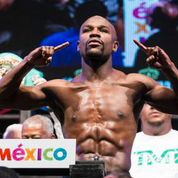
De La Hoya says fans know the difference between what’s real and what’s not

By Norm Frauenheim-

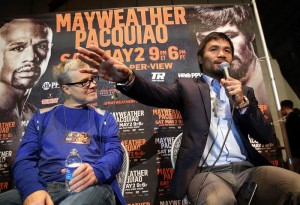
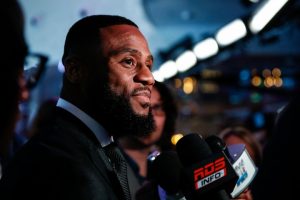
Oscar De La Hoya isn’t losing any sleep worrying about whether the potential pay-per-view audience for Canelo Alvarez-Gennady Golovkin on Sept. 16 will suffer some erosion because of Floyd Mayweather-Conor McGregor on Aug. 26.

Fans know the difference between what is real and what isn’t, De La Hoya, Canelo’s promoter, said during a conference call this week.

“We’re concentrating on our fight,” De La Hoya said Tuesday on a call that included Canelo. “We’re concentrating on our event, our fight. Obviously we have the real fight. We have a serious fight. This is a serious fight, a serious event. Two of the best fighters, fighting each other. And I think that the fans have recognized that.

“…So have the sponsors and a lot of the media people. They’ve recognized that this is the real fight. This is the fight that they want to be at. This is the fight that they want to see. A clear indication is we sold out in ten days.’’

If the quick sellout is a reliable indicator of pay-per-view expectations, Golden Boy Promotions is way ahead of the game with Canelo-GGG, which De La Hoya believes can be the biggest fight in middleweight history, bigger than even Marvin Hagler’s legendary victory over Thomas Hearns in 1985.

According to a report in the Los Angeles Times last week, thousands of tickets remained unsold for Mayweather-McGregor at Las Vegas’ T-Mobile Arena, also the site for Canelo-GGG.

For now, the best explanation for the slow sale rests in exorbitant ticket prices. Ringside seats are $10,000. The cheapest seats were $500. They sold out. According to reports about three weeks before opening bell, as many as 7,000 tickets could still be available. Mayweather didn’t toss that many dollar bills into the air during his international press tour with McGregor.

Lower the prices and a sellout will quickly follow, according to rival promoters. But what if De La Hoya is right? What if fans have decided that the long-awaited Canelo-GGG clash is the only true contest. It’s quickly becoming a pick-em fight, one that could easily lead to a rematch. Or two

Despite betting odds – anywhere from 7-1 to 5-1 – that appear to give McGregor a real chance, the consensus is that Mayweather, the best boxer of his generation, wins easily. McGregor, a UFC star, has never boxed professionally.

If McGregor somehow lands a lucky punch for a stoppage, it might go down as an upset bigger than even Buster Douglas’ 1990 KO of Mike Tyson in Tokyo. Douglas, who had a lot more experience as a boxer than McGregor ever had, was a 42-to-1 underdog.

Nevertheless, Mayweather-McGregor continues to generate a lot of talk on the internet and at water coolers. Not even Canelo could escape it Tuesday. He was asked if would fight McGregor if the Irishman some how won.

“If that miracle was to happen, then it’s a different conversation,’’ Canelo said. “You know, if that miracle was to happen. But I doubt it very much.’’


Back to the Future: Carbajal in Vegas for Hall of Fame induction

By Norm Frauenheim-

LAS VEGAS – Michael Carbajal is back in the city where his fame began.

Carbajal, who got up from two knockdowns for a seventh-round stoppage of rival Humberto Gonzalez in 1993 at the then-Las Vegas Hilton, will be inducted to the Nevada Boxing Hall of Fame at Caesars Palace.

“This means everything to me,’’ said Carbajal, a Phoenix junior-flyweight and one of history’s best little guys. “People know me for that fight.’’

In the non-Nevada resident boxer category, Carbajal joins Thomas Hearns, Michael and Leon Spinks, former four-division titleholder Erik Morales, women’s star Lucia Rijker and the late featherweight champion Salvador Sanchez.

Elected to the Nevada resident boxer category was late former heavyweight champion Ken Norton and former bantamweight champ Richie Sandoval.

Late referee and judge Davey Pearl, public relations specialist Debbie Munch, late Las Vegas promoter Mel Greb, trainer/cut man Rafael Garcia and Dr. Elias Ghanem, the late Nevada State Athletic Commission chairman will also be inducted.

The fifth annual dinner is scheduled for 6 p.m. to 10 p.m. (PT) at The Roman Ballroom.


Rerun Season on ESPN

By Jimmy Tobin-

Saturday night at The Microsoft Theater in Los Angeles, Vasyl “Hi-Tech” Lomachenko tormented Miguel “The Scorpion” Marriaga to a corner stoppage at the end of the seventh round. For the third consecutive fight, a Lomachenko opponent stayed on his stool, bereft of answers, reconciled to leaving the ring with his senses and whatever palliative might be salvaged from the better part of valor.

Lomachenko had his way with Marriaga as everyone expected, and as no other fighter has; though the point about expectations should dominate the narrative. He lost perhaps a handful of seconds over the course of the fight, scoring two knockdowns, including one at the end of the seventh that started with a Lomachenko left hand but finished courtesy of Marriaga’s stumbling escape. This is what Lomachenko does: beat opponents into a doomed retreat, one that ends with them slumped on their stools, peeking past protective handlers like baby musk oxen. There is no award for best between-round corner stoppage of the year, alas.

Thus went another showcase bout for Lomachenko, who for better and worse has turned his last half dozen or so fights into such spectacles; one-sided affairs that illuminate not the intimacy of combat so much as a fighter’s ability to resist it. The chasm between Lomachenko’s ability and that of his opponent’s is profound, which is perhaps why the commentary of those fights echo each other so. Only this showcase, televised on ESPN, was intended to present Lomachenko to a broader audience than HBO (and certainly HBO PPV) could reach. With the fight starting after midnight on the east coast, however, when you are more likely to find ab-routines and ultra-blenders showcased on cable than you are elite practitioners of niche sports, it is fair to wonder how many new eyes found Lomachenko that night. An NFL Hall of Fame broadcast that ran late and required viewers to switch from ESPN to ESPN2 and back to follow the card didn’t help. That is not Lomachenko’s fault of course, though should the ratings disappoint rest assured he will shoulder much of the blame.

So too will he be skewered for what little heat was born of the friction between him and Marriaga. Lomachenko treated Marriaga like he does all his opponents, which is to say disdainfully, though it took some time for that disdain to culminate in visuals that might leave a new viewer wondering what sharing the ring with Lomachenko might be like, and as a result of that thought experiment, what things might be preferable to such an experience. Yet it is abstractions like these that so often drive interest in a fighter.

Nor does Lomachenko’s wizardry—an entire catalogue of basics applied in spellbinding concert—easily lend itself to such abstractions. And in this sense he benefits from the commentary: a trained company eye will be able to point out for viewers the individual elements of Lomachenko’s craft. That process of identification is complete at about the time when an opponent too is finished; a measured approach begets a measured analysis. When the conclusion is not a prone fighter but one on his stool accepting mercy, however, the likelihood that talk of the fight survives to the watercooler Monday is lessened some.

And that is why you are as likely to find gifs of Lomachenko showboating against Marriaga as you are the two knockdowns he scored. In particular, there was Lomachenko’s homage to Roy Jones Jr.’s taunting of David Telesco, with Lomachenko backing himself into the corner and beckoning Marriaga to attack. Like Telesco, however, Marriaga quickly learned the penalty for accepting such an invitation and froze in the face of it. To you, the initiated, Lomachenko’s antics were probably a sign that either he could not put Marriaga away, or that he should have. And, if a fighter won’t accept what appears to be a free shot, what does that say about the quality of the fight?

In the context of a showcase bout, however, where a fighter, not a fight, is meant to dominate the discussion, the currency Lomachenko’s showboating may have should not be entirely dismissed. There are worse things for an unknown boxer to be than reminiscent of Jones. Generational talent and athleticism are bewitching at first, second, third, glance, and while you, the initiated, mark certain other similarities between Lomachenko and a great fighter who clowned no-hopers there are surely others discussing that little tattooed white guy who did “that thing Roy Jones did.”

Thankfully, for you, the initiated, that is not all Lomachenko showed against Marriaga. He looked significantly bigger than Marriaga which means Lomachenko can be expected to invade another division in confirming greatness already bestowed. His body attack, deliberate, ruthless, brings a smile, though it betrays what little regard he had for Marriaga that Lomachenko waited until the second half of the fight to employ it. Lomachenko’s response to a cut from a headbutt is also worth noting. Bleeding above his left eye, he stepped immediately to Marriaga when the action resumed.

That is a meager yield in terms of entertainment, sure, but for a fighter who in the minds of aficionados lives primarily in the future, where better opponents will make greater demands of him, these little forecasts are informative.

As for that future—it is coming, right?


High technology, low fidelity

by Bart Barry-

Saturday Ukrainian super featherweight titlist Vasyl “Hi-Tech” Lomachenko defeated Colombian featherweight Miguel Marriaga after seven rounds when Marriaga’s corner decided not to continue. Though Lomachenko felled Marriaga in round 7 it was Lomachenko’s face, not Marriaga’s, bleeding when the fight got stopped by a trainer that was merciful – the sort of mercy we’re told often is a proper substitute for suspensefulness.

By a show of hands, how many aficionados want another Soviet Bloc nonheavyweight Olympic medalist to dash through showcase matches with undersized men while his handlers claim nobody will fight him?

Nope, didn’t think so.

Me either.

What made Lomachenko so initially refreshing dissipates with each showcase match and subsequently so does the refreshment of watching his technical acumen. Back when Lomachenko was an undercard fighter for “Son of the Legend” Julio Cesar Chavez Jr. he performed in San Antonio and did not impress. Lomachenko got roughed and decisioned by Orlando Salido a year after Salido got dropped a fourtime by Mikey Garcia.

I recall two sensations ringside that night: Sympathy and relief. Lomachenko clearly prepared for a contest betwixt sportsmen more than a fight and hadn’t technology high enough to discourage Salido’s hitting him wherever Salido pleased after the Mexican missed weight whimsical audaciously the day before. That brought sympathy. The sense of relief came with a rude pop just after the decision got read and Lomachenko’s hyperbole balloon burst.

Though evidently it’s forgotten now, back then there was a burgeoning controversy about Lomachenko’s actual record, too. Editorial instructions from The Ring led my report to read:

“Lomachenko (7-1, 1 KO), whose official record on Fight Fax showed as 7-0 before Saturday, counting the six World Series of Boxing matches for which Lomachenko received payment . . .”

That clause happened prefight when all assumed Lomachenko’s tilt with Salido be a limp formality, not a lesson that was stiff, and journalism wanted to preempt loose promoter taglining on record this and historic that. Lomachenko got manhandled forthwith, and I recall thinking: Good, he’ll have to go deep and redemptive before we hear exclamation marks about him again.

So naive. Not only do veteran commentators now parrot Lomachenko’s promoter, but Lomachenko believes so deeply his run is historic he cannot believe a 130-pound athlete who speaks Golovkin English is not a sensation in the United States already and the rest of the world. Well. If he thinks boxing owes him a celebrity run at super featherweight like Manny Pacquiao’s he needs be told boxing thinks he owes us a Marquez, a Barrera and a pair of Morales.

Lomachenko gave us Gary Russell in 2014 and Nicholas Walters in 2016, both are good and neither belongs in the preceding sentence, but Lomachenko’s 2017 is not thusfar near so dazzling. Instead, with Marriaga, Lomachenko’s handlers began down the tired path Lomachenko’s fellow Olympian blazed for them: No 130-pound man in the world dares face Lomachenko, so we had to get a 126-pound man to do it!

This ain’t gonna work for a few reasons, the first being th’t that trail is already blazed, razed and worn baldly. The second concerns the 70 pounds of opponents between Lomachenko and heavyweight among which must be found a handful that do not cower at the syllables Hi Tech. The third if not final reason is Lomachenko’s promoter and its new network. Top Rank is better than Lomachenko-Marriaga; it’s the sort of jam-it-past-the-keeper garbage-goal the outfit scored often and lucratively on HBO.

It feels like ESPN knows this. Compared with Horn-Pacquiao what happened Saturday and the way it was broadcasted was inferior. Along with leaving Friday Night Fights’ crew in place like wait-and-see ESPN overwrote the twofight undercard with a reheated NFL marathon of football players making speeches – something unimprovable by metaphor.

You give us a Donaire-Narvaez main, we put your undercard on a smartphone app.

Nevertheless aficionados now are expected to play the opponents-in-common game with Lomachenko in lieu of seeing him compete, like: “Yes, Nicholas Walters and Oscar Valdez each beat Marriaga in the last two years, but they didn’t stop him, and speaking of Walters, Lomachenko beat him the way Sugar Ray Leonard beat Roberto Duran.”

This game is one more lamentable part of the fallout from the illadvised buildup to Mayweather-Pacquiao, when the hypothetical wholly supplanted the actual, and therefore one more lamentable effect Money May took on boxing. If we play this game we put ourselves in a bidding battle with our own imaginations till we see in an undertested titlist Harry Greb’s footwork and Sonny Liston’s jab. Or we can choose not to play. We can say: You look supercute in a kiwi bodystocking, yes, and you have more angles than a cubed octagon, but your career mark is 2-1 in fights anyone thought you could lose and that is the squareroot of historic.

Whatever Teddy and Max opine of Lomachenko the lad is yet to do fractionally enough in his career to make appealing the way he taunted Marriaga, who looked more than a weightclass smaller. Your promoter puts you on national TV with a little guy coming off a loss, you snatch his consciousness in three – you don’t squaredance your way to cuts and a midrounds corner stoppage.

There’s nothing invincible about Lomachenko – Salido proved that – and he can make fantastic and compelling fights against larger men. Even a 135-pound version of someone like Marriaga might’ve been interesting. But a few more showings like Saturday’s and there’s a good chance ratings are going to remand Hi-Tech himself to the high technology of ESPN’s smartphone app.

*

Author’s note: This column will not appear next week, as its author will be in Peru en route to being conquered by Montaña at Machu Picchu.

*

Bart Barry can be reached via Twitter @bartbarry


Righteous Retirement: Wladimir Klitschko picks the right time to say goodbye

By Norm Frauenheim-

It’s time for a change and he knew it. As always, Wladmir Klitschko did the right thing.

That’s how he’ll be remembered in the writing and rewriting of heavyweight history. Klitschko, who retired Thursday, was neither dramatic nor sensational. He was just righteous in a reliable sort of way at a time when the old flagship division had begun to look like a sunken relic beneath the waves of some bygone battle.

When it appeared as if the heavyweights were vanishing, there was always Klitschko winning, setting records, or staging a comeback. He was a pillar, a significant caretaker of a division that maybe can now move back on to a relevant stage with Anthony Joshua and Deontay Wilder. We’ll see.

Whatever happens, Klitschko gave them and the sport that chance with his long, predictable reign at the top of the division.

Will he go down as an all-time heavyweight? Tough to say. We know the numbers, all record-book quality, yet also compiled against collection of nobodies in a division that was at the bottom of a historical decline. We’ll never really know how good he was, mostly because of the business itself.

Evander Holyfield and Lennox Lewis were the best in the division when Klitschko won his belt, yet he never fought either. Blame the business. It suffered for that. So will Klitschko’s ring legacy.

Think of it this way: Put Klitschko into a fantasy tournament with some of history’s greatest heavyweights. Here’s just one Sweet 16: Muhammad Ali, Joe Louis, Jack Johnson, Rocky Marciano, Jack Dempsey, George Foreman, Joe Frazier, Jersey Joe Walcott, Floyd Patterson, Sonny Liston, Larry Holmes, Ezzard Charles, a young Mike Tyson, Holyfield and Lewis. Add Klitschko and you’ve got 16. Put them in brackets. Match them any way you like. Would Klitschko get out of the first round? I’m skeptical. Had he fought Holyfield and/or Lewis, we’d have a better guess.

His nine-year run as the champ, including 18 successive title defenses, is an amazing stat. But boxing isn’t baseball. It’s measured by more intangibles. One punch can knock out all of the analytics. In judging Klitschko, intangibles matter. They did – they do – with Ali.

Foreman has his own take on the classic, cross-generational argument about whom was the greatest: Louis or Ali? Foreman, who lost to Ali in the legendary Rumble in the Jungle, argues that Louis was a greater fighter than Ali. But, he says, Ali was a greater man.

It’s impossible to separate Ali’s stand against the Viet Nam War and his fight for civil rights from his heavyweight era. They are one and the same. Apply the same standard to Klitschko. He has stood up for the Ukraine against Russia alongside his brother and ex-heavyweight champ, Vitali. In retirement, the guess is that he will take on more political fights en behalf his country and what he thinks is right, which is what will always keep him among history’s greats.


No Alarms and No Surprises: Garcia Cruises Past Broner

By Jimmy Tobin-

Saturday night, at Barclay’s Center in Brooklyn, New York, Mikey Garcia dealt Adrien “The Problem” Broner a wide and comprehensive 12-round defeat in a fight of little fire and scant revelation. Garcia is Broner’s fighting superior at any weight the two might conceivably meet at, a reality that speaks little to professionalism, however much Broner’s detractors might wish to see that flaw of his precipitate his undoing. No, Broner, on weight, clean shaven, and thus motivated anew (!), was found wanting (again) because he stepped up in class (again).

Since living too large for lightweight, where his imposing physicality acted as a force-multiplier for a handful of appreciable tricks, Broner has been anything but a problem. Like a ship in the swath of a lighthouse, Broner has spent years moving in and out of the spotlight, advancing on a course set for his own wreckage. Unfortunately for him, the response to his first defeat was so ecstatic that future ones will be fractionally satisfying.

If one does not go in for his antics, there is little that is particularly fetching about Broner, save for when he is matched appropriately: which is to say a few rungs below where his ego would prefer and even an hour or so earlier than a headliner hits the stage. But a fighter who makes for a few thrills, a nod, an appreciative smile or two, when matched against the mediocre; a fighter who loses conclusively against the best, who serves at best to confirm that his conquerors warrant consideration for if not membership in an elite fraternity—what title is ascribed to such fighters? Is “opponent” too harsh?

He is not yet an opponent, though his showing against Garcia smacked of a man who ranks preservation ahead of victory. Perhaps a forgivable order of concerns provided it be arranged under duress, such a change in priorities is hardly endearing when not prompted by pain (and whatever Garcia’s dominance, he appeared to hurt Broner not once). Speed, power, determination, Broner flashed all enough to remind us that there is a quality fighter under the patina of disorder and buffoonery that, more than anything he has done in the ring, have been his hallmarks. Outfitted with those glimpses of Broner’s best self, a commentary team equally concerned with preservation could encourage viewers to wonder what might happen if Broner were to next time or even the time after that, suddenly not be himself anymore. But at this point no one, not even his bandmates, can resuscitate such delusion. And why should they? Better to match Broner appropriately and drain what value from him you might. A stoppage of Broner? Why that still would mean something.

Is it any wonder then that Garcia agreed to fight him? Back but a year from a two-and-a-half year self-imposed retirement, a recently crowned lightweight titlist who, at least early in the promotion, made clear his plans to return to 135 pounds, why would Garcia accept the fight if not because he and his team recognized an easy mark? By fight time the odds may not have reflected the mismatch that was to unfold, but odds do not reflect competitiveness so much as promote gambling. Provided he did not get hit with something disastrous there was little chance Garcia would lose. Hit with something disastrous; wording the puncher’s chance in the would-be victim’s perspective does not alter whatsoever the message implied.

A counter-puncher by nature and craft, Garcia was able to eschew his trademark style and play the aggressor against Broner, figuring quite rightly that both the pace and Broner’s stiff switches between defense and attack would keep Garcia safe. If there was anything new learned Saturday night it was that Garcia is capable of initiating the action—a revelation that might shrink considerably the list of things he cannot accomplish in the ring—though the question of whether he could employ such a strategy against a more formidable opponent will linger until he finds one.

And should he find one, more vulnerability might come to bear. There was a tremor in Garcia’s resolve when Broner came for him late in the fight; typically unflappable, Garcia wavered, became hurried, a little too concerned with what damage might be accruing on his face. These were signs Broner intimated but could not fully exploit, but they showed Garcia vulnerable in ways his supporters might prefer to ignore for the moment. There is plenty of room for error in reading such behavior, of course, especially with the evidence Garcia has given to the contrary, but that behavior is there. Might he go to pieces should the right kind of fighter unnerve him? Perhaps, though there is likely only one fighter below welterweight with the skill and power to make Garcia consider again the lure of the badge.

His post fight comments, where Garcia expressed his desire to fight anyone willing and able to fight on Showtime were curious for the same reason that Adonis Stevenson’s talk of network/promotional allegiance was curious. Garcia understands the business, which bodes poorly for interest in his future. For the sake of that interest, one would hope the business allows ESPN fighters to fight on Showtime once or twice.


No problem: Garcia decisions Broner

By Bart Barry–

Saturday in Brooklyn a junior welterweight special attraction broadcast by Showtime saw California’s Mikey Garcia decision Cincinnati’s Adrien Broner by three fair if fairly generous (to Broner) scorecards. There were no knockdowns, no kneetremblers and only a trickle of noseblood in 36-minutes of fistfighting.

It was an average fight, however much reporting so betrays the narrative.

Garcia, who has long been considered at least as good as he is and on occasion considerably better, decisioned convincingly a b-grade fighter and a-grade selfpromoter without once imperiling either man. It was, in other words, about the best fare for which one dares hope from PBC and its many broadcasting benefactors and affiliates and aliases. Now aficionados’re expected to attempt a contortion like: It was a great fight between two great fighters that lacked action because Garcia’s extraordinary class neutralized Broner till he was the sort of mediocre fighter who might get decisioned 8-4 or 9-3 in a championship match.

Afterwards Garcia’s brother and trainer said Mikey only looks basic when you watch him, 1-1-2 and 1-2 and 1-2-1-1, but in the ring, where we might assume none of us will spend time with Mikey, he’s altogether more complicated. Perhaps. But truly there’s nothing wrong with basic boxing – in fact in just about any confrontation any man is likely to have in any lifetime basic boxing beats the stripes off its myriad of alternatives. Even in prizefighting.

There was absolutely nothing wrong with Garcia’s performance Saturday. It was perfect for those who want to build Garcia as an undefeated attraction and for familiars who of course wishn’t see their brother or son elephantgunned, but it left a goodish amount to be desired by aficionados who watch for what entertainment spontaneity brings, which is different from watching to confirm one’s own expertise.

Broner never lacked offensive artistry and made himself famous in large part by being a large part bigger than his opponents; much of his early run happened via his ability to absorb others’ punches to deliver his own. It happened so fast, oftenly, and others’ punches so lacked effect, it was unapparent Broner traded evenly. Then Marcos Maidana, a slugger considered limited even by his fans then, exposed Broner in the fairest sense of the word and made 12,000 San Antonians euphoric in so doing. That win got Chino a chance at Floyd Mayweather that went so much better than expected Maidana got a second chance at Mayweather, but aficionados’ collective estimation of Broner improved little along the way. Maidana, after all, hit Floyd with sky hooks and sundry oddities, not clean lefthook leads – Broner’s defense against which was a stiffarmed thing he flashed in his other loss, to Shawn Porter.

Whether he extended his arms downwards, elbows locked knuckles ogling the canvas, or upwards, elbows locked knuckles saluting the ceiling, Broner did not have a fundamental sense of what to do when a likesized man charged him. Even the forearm shimmy Mayweather mentored him worked less well against a man of comparable strength. Broner ever suffered the imitator’s dilemma: He could passably ape an innovator like Floyd without understanding why. Where Floyd successfully improvised defensive adjustments, Adrien queried the database first what Floyd would do and when a nullset came back Adrien tried to improvise himself – which victoried his hands overhead or downed them pistonpopping.

Had he a classic sense of discipline Broner might’ve stayed at 135 pounds and enjoyed a historic run as a lightweight anyway but AB was about billions not selfrestraint which kept him in his best weightclass for merely a twofight.

Long forgotten in the Mikey remake is Garcia’s own struggles with discipline, specifically a 2013 featherweight title defense against cult hero Juanma Lopez that saw Mikey miss weight by 32 full ounces after comporting himself questionably enough against Orlando Salido five months before th’t aficionados who took him for boxing’s future in 2012 took a harder look. That harder look was only commencing when Garcia disappeared in a contractual conflict. Garcia’s comeback is but three fights along and in 37 prizefights Adrien Broner marked his sternest test; let us not hyperbole just yet.

There’s a frontrunner’s perfection about Garcia but nary an adjustment to be found. This makes him less entertaining than Terence Crawford, even while future comparisons of their reigns should prove apt. Crawford mightn’t have stopped Broner Saturday either but at least would’ve switched stances a halfdozen times between southpaw and orthodox. Garcia made no offensive adjustments and showed no creativity in the championship rounds because he was unsure his footing – whatever private desire he had to finish Broner stayed altogether private because after 30 minutes with Mikey’s fists Broner was not shaped half badly as expected.

Bullies and buffoons be expected to fold, but no matter Broner’s buffoonery the man does not fold. Ask anyone at Alamodome for Broner’s first loss: Aside from Richard Schaefer everyone in attendance was there to see Broner get jigsawed proper, so everyone in attendance was more than a bit tense after round 11. If this reads like a nostalgic sendoff for AB it shouldn’t; yes, there’s a wee bit of nostalgia one should give any man who courts others’ hatreds and does not bend, but no, Broner’s not going anywhere. Hell, PBC’s braintrust fully expected Broner to prevail Saturday because the company’s cultural cornerstone is a concert promoter, not a matchmaker.

Probably Broner’ll fight again before Garcia does, and probably Garcia’s next opponent won’t be anyone you want him to be. When 2018 begins Broner will remain about billions and Garcia will remain undefeated.

Bart Barry can be reached via Twitter @bartbarry


FOLLOW BRONER – GARCIA LIVE FROM RINGSIDE

Follow all the action LIVE from Ringside at Barclays Center when Adrien Broner meets Mikey Garcia in a 140-lb showdown.  The action begins at 9 PM ET / 6 PM PT with a WBC Middleweight elimination bout between Jermall Charlo and Jorge Sebastian Heiland

THE PAGE WILL UPDATE AUTOMATICALLY..NO BROWSER REFRESH NEEDED

12-ROUNDS–SUPER LIGHTWEIGHTS–ADRIEN BRONER (33-2, 24 KO’S) VS MIKEY GARCIA (36-0, 30 KOS) 
ROUND 1 2 3 4 5 6 7 8 9 10 11 12 TOTAL
 BRONER  9 9   9  9  9 9  9   9  10 9  9  10   110
 GARCIA  10  10 10   10  10  10  10  10  9  10  10  9  118

Round 1: Right from Broner..Left from Garcia…Right and left from Garcia..

Round 2:  Broner jabs..2 left hooks from Garcia..Right to body..

Round 3:  Left hook from Broner..Jab from Garcia..Harc counter left hook..Right..Hard combination on the ropes..

Round 4 Quick counter from Broner..Right,,Left to body and uppercut from Garcia,,,Left

Round 5: Left hook from Broner..left..Right from Garcia..Right..Jab from Broner…Right to body and straight right from Garcia (snaps Broner head back)

Round 6 Jab from Garcia,,Kab from Broner,,,Right to body from Garcia

Round 7 Right from Broner…Jab…Jab..Right and left from Garcia…Right from Broner,..Right to body from Garcia..Right..Flush right

Round 8 Good counter right from Broner…Right from Garcia,,Jab from Broner..Right from Garcia,,4 punch combination..

Round 9 Right and jab from Broner,,Counter right,Uppercut from Garcia..Body work and a right from Broner,,Good counter left hook

Round 10 Garcia jabbing..Jab from Broner,,Hard right to body from Garcia,,Right to body,,Body shot and right,,straight right..

Round 11 Body shot from Garcia,,counter right..right,,right to body..combination

Round 12 Lead right from Broner…Left from Garcia…straight right…Right from Broner…Blood dripping from nose of Garcia..Body combination from Broner..Good flurry at the end of round

117-111, 116-112 TWICE FOR MIKEY GARCIA 

12-ROUNDS–MIDDLEWEIGHTS–JERMALL CHARLO (25-0, 19 KO’S) VS JORGE SEBASTIAN HEILAND (29-4-2, 16 KO’S) 
ROUND 1 2 3 4 5 6 7 8 9 10 11 12 TOTAL
 CHARLO  10 10  10                     30
HEILAND  9   8  9                   26

Round 1 Jab from Charlo

Round 2 Hard right from Charlo..HARD RIGHT AND DOWN GOES HEILAND..Hard left and uppercut from Charlo…Big right..Right buckles Heiland..5 hard shots on the ropes

Round 3 Right from Charlo..uppercut..

Round 4 Doctor checking on Heiland before round starts…Left from Heiland..Right from Charlo..Hard uppercut..HUGE LEFT HOOK AND DOWN GOES HEILAND AND FIGHT IS OVER


Ali hopes victory will get him back into title mix

By Norm Frauenheim-

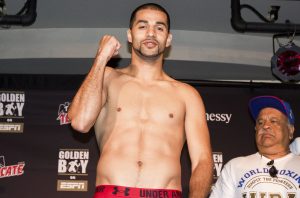
TUCSON, Ariz. — Brooklyn welterweight Sadam Ali hopes to fight his way back into title contention Saturday against well-traveled Johan Perez in an ESPN2-televised bout at Casino del Sol in the second Golden Boy Promotions card at the southern Arizona casino since Oscar De La Hoya’s signed a 43-fight deal in January with the cable sports network.

Ali (24-1, 14 KOs), a 2008 Olympian and the first boxer of Yemeni descent on a U.S. team, has won two straight since Jessie Vargas stopped in the ninth of his only world-title bout in 2015.

Perez, a 34-year-old Venezuelan who beat a then-unbeaten Yoshihiro Kamegai in 2013, also has won his last two, but he’s 3-2-1 over his last six.

Ali was at 147 pounds Friday at a weigh-in that included a mount when Perez jammed his nose into Ali’s nose during the ritual stare down for the photographers. Perez was at 146.6 pounds.


Broner sees no Maidana in Mikey Garcia

By Norm Frauenheim-

Adrien Broner looks at Mikey Garcia and says he see no hints of his past. There’s nothing in Garcia that looks, or fights, or wins like Marcos Maidana, says Broner, who has been trying to resurrect his career ever since a 2013 loss to Maidana.

“He ain’t no effin Maidana,’’ Broner said Thursday at the final news conference before the Showtime telecast of the crossroads confrontation with Garcia Saturday night at Brooklyn’s Barclays Center. “He’s nowhere near Maidana.

No, he’s not. He’s better.

The real question is whether Broner (33-2, 24 KOs) is any better than he was against Maidana on that December night in a stunner at San Antonio’s Alamodome. He’ll have to be against Garcia (36-0, 30 KOs), who appears to have all Maidana’s power and is more fundamentally sound than the Argentine ever was.

If anything, the Maidana-Garcia comparison seems to have annoyed, if not rattled, Broner. It’s in his head and probably for good reason. Been there, done that and he definitely doesn’t want to have to endure it all over again. That’s just one compelling stake among many in the junior-welterweight bout (6 p.m. PT/9 p.m. ET). Beat Garcia, and Broner can finally declare that he’s back, all the way back.

“I don’t think that he’s going to be desperate, but he knows that I’m not an easy opponent,’’ Garcia said during his turn at the speaker’s dais Thursday. “That’s why he’s taken camp so seriously. I expect him to be at his best and be ready. He knows if he beats me he can launch his career back to where it was.’’

On paper at least, Broner appears to have a key advantage. Broner, who lost to Maidana at 147 pounds, is back at 140, a weight at which he has never lost. Still, there are some questions about whether he’ll make weight Friday. If he doesn’t, he pays a $500,000 fine, according to his contract. That’s plenty of motivation, he said.

“I ain’t giving nothing back,’’ Broner said last week during a conference call.

The guess here is that Broner won’t eat any cake before he steps on the scale. His birthday is Friday. He’ll be 28 at opening bell, presumably smarter and better prepared for the tactical savvy possessed by the favored Garcia.

“I’m going to lo look to box effectively and show that I’m the better fighter,’’ said Garcia, whose brother and trainer, Robert Garcia, was in Maidana’s corner. “We’re both smart fighters but neither of us will run from the other. When you have styles like ours, with two guys who like to exchange punches, you’re in for a great battle.

“I think Adrien will be fine with the weight. He’s a pro and he knows that he really has to make weight. He’s learned from his mistakes. Sometimes he jokes around but that’s just part of his character. He takes things a lot more seriously because he’s facing me.’’

Broner is facing somebody who hopes to enhance his pound-for-pound credentials. There’s talk about Garcia in a fight against Terence Crawford and/or Vasyl Lomachenko. Garcia, who has a lightweight belt, has doubts about both. There are differences in weight. Crawford, a 140-pound champion, appears headed for 147. Lomachenko is still at 130. More problematic, both are Top Rank fighters. Garcia left Top Rank in a divorce that kept him out of the ring for more than two years.

For now, Garcia appears more interested in a lightweight unification bout against the Jorge Linares-Luke Campbell winner on Sept. 23 at The Forum in Inglewood, Calif.

“I won’t let Adrien Broner stand in my way,’’ Garcia said. “This is my chance to show the best version of myself.”

A version that won’t look anything like Maidana.
Attachments area


Another interview with the boxing writer by the boxing writer

By Bart Barry-

Editor’s note: Eleven months ago we asked Bart Barry to interview himself about the state of the craft. On Tuesday Bart sent a note saying he’d no idea a subject for this week’s column, his seventh such note of the year. To spark his flagging interest, once again, we asked him to return to the subject of writing and boxing.

BB: Sometime soon, maybe even next month, Conor McGregor fights Floyd Mayweather in what is widely expected to be . . .

BB: . . .

BB: . . .

BB: Go on.

BB: You were supposed to interrupt and rail against this mess.

BB: Nah.

BB: Then you support it?

BB: I won’t be watching.

BB: That’s slippery.

BB: I have no strong feelings about it, pro or con. I saw enough enthusiasm on Twitter to watch some clips of those staged performances in the cities, and it didn’t do much for me.

BB: Were you familiar with McGregor’s work previously?

BB: No.

BB: Were you impressed by his gift for trashtalking?

BB: Are we considering that a gift now – like athleticism or perfect pitch or eloquence?

BB: Aren’t we?

BB: No. As you know from watching Mayweather it’s a con created for five-second sound clips. It’s like a live rehearsal with a hundred takes. They say the same thing over and over and over, and then they keep the best one for YouTube.

BB: Floyd was outgunned.

BB: He’s a great, great fighter. But he’s not witty or creative. He’s a miserable dude. The best sorts of performers in the hiphop set, which has never seen Floyd as one of its own – unlike, say, Tyson – take the craft of wordplay incredibly seriously but not themselves. They wink at you. Floyd gets this backwards. He takes himself altogether too seriously and says the same unoriginal thing every promotion. During the best performances, the artist interrupts himself to say he’s only kidding, then at the end you realize how serious he was. Floyd interrupts himself to say how serious he is, then after the fight he tells you he was kidding the whole time.

BB: Not sure that works as an analogy.

BB: Then edit it out.

BB: And defeat the purpose of this?

BB: Don’t take ourself so seriously.

BB: Name one professional athlete you’ve never met but would like to.

BB: Bode Miller.

BB: Last year you’d given up on boxing but were approaching the craft of writing with immense enthusiasm and hope. This year, that has switched.

BB: Started to, anyway. Something started to happen in January, it’s too early to say what, but the compulsion to write, and by extension to read, dissolved very quickly. It was like waking up one morning, looking in the mirror, and discovering I was now a seven-foot woman from Beijing. An attractive, intelligent woman with a loving husband, maybe, but still an entirely different identity than I took to bed the night before.

BB: Seventeen years of saying “Hello, I’m Bart, a writer” sort of became “Hello, I’m Bart.”

BB: Yet there’s an optimism in your view of our beloved sport you haven’t had for years.

BB: Very true. It coalesced during the Horn-Pacquiao broadcast.

BB: You sure about this?

BB: Yes. Because it was unplanned. The opposite was planned, frankly; it was to be a chance to criticize ESPN’s approach to sports broadcasting and roll eyes at Arum telling the truth tomorrow, again.

BB: But instead you enjoyed it?

BB: I really did. The volume was off, so I don’t know what that commentary did to the experience for others. But the sunshine, and the vindication for the longshot, and Pacquiao’s always infectious enthusiasm. It just felt warm. It felt good. It felt authentic. Real fans, really smiling, really caring.

BB: Yet your column was satirical.

BB: In retrospect I didn’t trust my own enthusiasm. The last few years have taught us to trust reflexively our doubts but rarely our enthusiasm. I trust my enthusiasm for a fighter, for Chocolatito as an example, but not for events. Boxing was always cynical, but somewhere within that cynicism there was authenticity – genuine men genuinely bleeding. PBC changed that, methinks.

BB: A Mayweatherization of boxing.

BB: Yeah.

BB: That’s changing because of Top Rank’s alliance with ESPN?

BB: I’m almost ready to say yes with an exclamation mark. Top Rank has the best development plan for its fighters and the best matchmakers. But for the longest time they’ve trapped themselves in this premium-cable-capture game, where they try to get one over on HBO or sell Showtime a dud. There’s nothing to save it for now.

BB: And they don’t have a Pacquiao in the pipeline.

BB: There’s no obvious pay-per-view star in their stable, no. They have to make the best fights on the best network. It’s no longer about Arum outsmarting a few corporate guys. It’s now about the entirety of Top Rank’s outfit proving it is what it thinks it is.

BB: Why didn’t PBC’s model work?

BB: That’s the sweet irony of this. It did! PBC sold its product at a massive, anticompetitive loss for a couple years in order to get a major network interested enough in boxing to pay for the rights to broadcast it. That network was ESPN. But it chose to pay Top Rank instead.

BB: The longer a fight goes . . .

BB: The more class tells, yes.

BB: Whither HBO?

BB: Who cares?

BB: Go on.

BB: That’s not flippant. Does an NBA fan worry about the health of basketball based on what “Real Sports” says? Does an NFL fan think football is dead if “Hard Knocks” gets cancelled? Some of HBO’s cards this year are good, and that one in September is perfectly excellent. But more and more, if you’re not ordering HBO PPV, you halfway expect to see a Just for Men ad between rounds.

BB: Showtime?

BB: They’ve got the heavyweight champion of the world. And he’s another reason for a recrudescing excitement about our sport. They’ve got PBC’s stable whenever they want it.

BB: Why couldn’t Haymon go back to HBO?

BB: HBO’s no longer that rich or that dumb.

BB: You look healthy, kid.

BB: I feel good.

BB: This was fun.

BB: Dave Grohl looks at Paul McCartney and says, “Why can’t it always be this easy?” And McCartney says –

BB: “It is!” Touché.

Bart Barry can be reached via Twitter @bartbarry


Adrien Bleep: Broner a changed fighter with a familiar promise

By Norm Frauenheim-

They’re promising a new and improved Adrien Broner on July 29 against Mikey Garcia, but Broner is promising what he has always promised.

“I’m coming to eff him up,’’ Broner said Thursday during a conference call for his intriguing 140-pound bout with Garcia at Brooklyn’s Barclays’ Center.

First, full disclosure: Broner didn’t really say eff. But you get the idea. Broner says he is older and wiser, but he’s as profane as ever in a business punctuated by punches and profanity.

“The hurt business,’’ says Broner, who repeated Mike Tyson’s apt summation of a brutal craft once known as The Sweet Science.

Not so sweet anymore, at least not for Broner, whose ups and down in and of the ring are an inseparable part of his story, perhaps his temperament and probably his motivation.

Maybe, he’s more mature, but there’s no doubt about the anger. Besides, you just wouldn’t know him without the F-bombs.

Any doubt about that was eliminated in the way he opened his segment of the conference call.

“At this point, eff the press,’’ he said. “They’re all against me. I’m ready to fight. …So, I’m ready to to get the eff off this call.’’

He didn’t, of course. Too effing much to say. Broner loves to talk. That said – and plenty was, Broner said he has worked to get beyond a long list of problems, including jail time. He has talked about leaving the “ghetto stuff” behind.

By that, he says he means to take “boxing more seriously.’’

Against Garcia, he’ll have to. Garcia, unbeaten and an emerging pound-for-pound contender in a talked-about fight with Vasyl Lomachenko, is the favorite.

According to some betting sites, odds favoring Garcia are as high as 7-1, despite a couple of key advantages that Broner holds in his capable hands.

He’s younger. Broner will celebrate his 28th birthday next Friday, the day before opening bell in Brooklyn. Twice beaten at 147 pounds, he’s unbeaten at 140. Garcia, a 29-year-old lightweight champion, has never been more than 138 pounds at a weigh-in.

The theory, however, is that Garcia has a more varied skill set. He has said he will outbox Broner.

“That’s a damn lie,’’ Broner said. “…He knows he’s not a better boxer than me.’’

Throughout the call, Garcia did most of the listening and some of the talking. He says he wants to fight the best possible Broner and all of the profanity seemed to say that he would.

“That’s exactly the Broner I want to hear,’’ said Garcia, who figures to hear a lot effing more next week.


The good on B.A.D., and the innovative

By Bart Barry-

Saturday in Inglewood, Calif., Mexican Miguel “El Alacran” Berchelt defended his super featherweight title against former titlist Takashi Miura in a good mainevent televised by HBO’s “Boxing After Dark” program. Meanwhile, one state to the east, an improved broadcasting experience happened.

Miguel Berchelt is a good fighter who won his belt the right way – as a b-side, by knockout – but not a world champion so long as Vasyl Lomachenko can make 130 pounds and not a great Mexican super featherweight, either, so long as there survive men who saw Marco Antonio Barrera or Erik Morales or Juan Manuel Marquez at that weight. Berchelt will experience some accumulating ambivalence about that; because of those three men casual fans now watch prizefighters who weigh 100 pounds less than those fans’ general preference, and because of those three men Berchelt will be judged by his merits more than his birthplace and judged to be considerably less than he thinks he is.

El Alacran came of age in Mexico when broadcasting logistics precluded the best Mexican fighters and their best fights from happening on public airwaves, which meant far fewer Mexican boys found a passion for boxing. More ambivalence for Berchelt: It is much easier for a talented prizefighter in this generation to get out of Mexico, but he is unlikely to fare nearly so well at the championship level as his predecessors did. If Berchelt’s path to a title had included a prime version of Barrera or Morales or Marquez, in other words, Berchelt would’ve remained an undercard gatekeeper very, very far from an HBO main event.

This is no criticism of his Saturday win. Berchelt found himself matched against a worn veteran who knew lots of tricks and years ago had better technique then Berchelt imposed the rude force of youth on his elder, exactly as one should. Berchelt adhered to his handlers’ strategy and made Miura move much more than a man of Miura’s age and resume wishes to anymore. Berchelt fought no more than he had to fight. That kept Miura discouraged from opening bell to closing. When things got rougher for Berchelt than he preferred he made appeals to the referee that received sympathy, including an uncommon timeout for rabbit punching.

Something about El Alacran, maybe his pleas to Raul Caiz Sr. or the wide punches or his neck tattoo, feels a bit fragile, alas. And he is way open to counters. That’s what gets one thinking about previous generations of Mexican prizefighters and the comparative cleanliness of their technique: Marquez never wasted a step, Barrera never floated his chin, Morales never threw an arm punch. These were men told from a very young age they could not expect to be the fastest or the strongest or even the toughest in a championship prizefight, and therefore they must employ at all times precision, economy and leverage. To see Berchelt bounce in wide circles and cock his chin much as he cocked his punches and swim forward flailing was to imagine how quickly a 130-pound Manny Pacquiao might’ve raced through him.

If Berchelt never will rival Marco Antonio or Erik, in his best moments he does resemble slightly Juan Manuel’s little brother Rafael. Berchelt has Rafael Marquez’s frame and desire to win with his right hand but not quite Rafael’s matchstopping power.

Still, it’s proper to applaud HBO for the informal super featherweight tournament Boxing After Dark has hosted thus far in 2017. Though the network lost the division’s most talented fighter when Top Rank departed for ESPN, the division’s most talented fighter lost most of the competition that could justify what hyperbolic acclaim he enjoys, too, and while Vasyl Lomachenko’s technical domination of contender-level competition already grows tired, ferocious combat between Latino and Asian prizefighters will not.

Writing of broadcasting: Saturday also comprised a card from Arizona that featured an innovative medium worthy of discussion. Roy Jones Jr. Boxing promoted a show presented on pay-per-view ($0.99) by Ultracast, a company specializing in 360-degree content. Effectively, Ultracast is a bunch of cameras pointing in different directions mounted above a single ringpost, with their various feeds stitched together in a way that allows a viewer to both zoom and roam his perspective in most every direction he could move his eyes were he similarly situated atop a ringpost.

I used the Ultracast app for Android on a Samsung Galaxy S8 phone, and despite the comparatively small screen it was a more rewarding experience than most fight-viewing parties and any sportsbar. It’s not a social way to partake of our beloved sport, but it exceeds the standard HDTV experience and rivals the ringside experience – and all previous jokes about stationing stepladders for visually impaired judges aside, it presents a surprisingly apt and innovative way to score fights more accurately.

What you experience is a static, unobstructed look at two fighters – no anxiously orbiting referee blocking you, no videogame-emulating camera switches from the production truck, no narrative-building replays between rounds. You see every punch (from an unfamiliar angle, yes, but still), you see the entirety of the fighters’ bodies – including, and most importantly for those who know what they’re watching, the fighters’ feet – and you see as far as the backdoor of a small arena and as near as a ringside doctor taking notes during an undercard match. If I were a trainer or fighter reviewing footage of a future opponent, it is absolutely the view I would wish to have.

Without seeing the hardware involved, one imagines it’s far less cumbersome than previous attempts with 3D, which means it might be a portable solution that complements Showtime’s recent modernization attempts with live sports on social media platforms (something HBO surely will adopt once AT&T finishes selling off its parent company’s assets). Take Ultracast, switch the commentary team for an enhanced arena-sounds audio feed, charge $0.99 for every fightcard in the land and $5 for world championships, and call it The Aficionados App: Eventually you could get a reliable $50/year from about 500,000 hardcore boxing fans. That might just be viable.

Bart Barry can be reached via Twitter @bartbarry


Hide The Kids: Mayweather-McGregor tour is an X-rated ride

By Norm Frauenheim-

Other than to say it was hard to watch, it was hard to know what to make of the first three stops this week in the Floyd-Mayweather Jr.-Conor McGregor tour.

It was funny in Los Angeles. Kind of.

It was silly in Toronto. Sort of.

It was embarrassing in New York. Period.

It was impossible to think there can be any kind of an encore in London. More than a tour, the exhibition for their Aug. 26 event in Las Vegas has been a steep decline into a tired exchange of gestures and obscenities.

Not any role models here, not that any were expected. But I’m guessing it’s not something that Mayweather or McGregor would want their kids to ever see, much less emulate.

Both are going to make tons of money and then have to spend a lot of it just to make sure their kids don’t grow up to be like daddy.

All the profane posturing and over-the-top insults appear to be exactly the spectacle that some predicted would be more entertaining than the match itself. A classic boxer, the best of his generation, versus a mixed martial arts star in sanctioned boxing bout?

As an event, it is neither fish nor fowl, which means nobody will be surprised if the pay-per-view audience screams foul after paying the $99.95 price tag for high-def.

If anything, disappointment in the so-called fight seems to be baked into the expectation for fans more amped about a chance that McGregor might kick Mayweather in the face at the Vegas weigh-in.

After all, there’s just not a whole lot to say after Los Angeles, Toronto and New York. These fans want spectacle, not substance, and it’s spectacle they’re going to get. The guess from this corner is that the bout will be about as meaningful as Donald Trump’s “take down” of Vince McMahon at ringside of a WWE production in 2007.

Then again, that bit of lowbrow theater went from fake news to real news a couple of weeks ago when Trump re-tweeted a redone video of the staged moment with the CNN logo as McMahon’s head.

Serious journalists debated that one, right alongside health care. Seriously. Maybe, spectacle is today’s substance. I’ll leave that one up to people a lot smarter than an old boxing writer still not sure what to make of Mayweather-McGregor.

There are the betting odds, only 7-to-1 in favor of Mayweather. Really? The best in the business for about a decade against a novice boxer, and yet the odds give the novice a real chance?

Then, there are news reports this week about Mayweather’s tax liability. I’m not sure what to believe about the reported numbers or even if he in fact owes the IRS for back taxes. But I heard the crowds this week, chanting “Pay your taxes, pay your taxes.’’

The reports are troublesome on a couple of levels. If accurate, they might be symptomatic of a deeper financial problem. Consider this scenario: Instead of scoring a one–sided TKO of McGregor with a couple of precise counters midway through the event, let’s say that Mayweather wins a decision close enough to argue for a rematch.

That’s when those chants might get nasty. To wit: He needs the rematch to pay those taxes. The again, what’s a good spectacle without some suspicion?


Gnawing, helpless monotony: David “The Destroyer” Lopez (1977-2017)

By Bart Barry-

Thursday night Mexican middleweight contender David “The Destroyer” Lopez and his son were attacked in Nogales, Sonora, Mexico, Lopez’s hometown, while driving in Lopez’s pickup truck. Lopez was declared dead at the site of the shooting and his son was taken to the hospital in critical condition. No motive for the shooting is currently known, or at least none is being reported by Mexican media. The murder of Lopez is a boxing death that appears to have nothing to do with boxing but leaves anyone who covered Lopez’s career with what gnawing sense of helpless monotony one feels after receiving tragically bad news.

I did not know Lopez well but sat ringside for seven of his matches in Southern Arizona at Desert Diamond Casino, a property of Tohono O’odham Nation not technically in Tucson though nearby. More to the point Desert Diamond Casino is an hour’s drive north on I-19 from Nogales, a bordertown that exists in both Arizona and Sonora – effectively a single city with a large wall slicing its middle – once a place of reasonably safe diversion. Many aficionados made that drive northwards to Desert Diamond; Lopez drew disproportionate to his talents. He was a durable spoiler type, a natural underdog, an attrition fighter, without any particular punch or charisma. For a stretch, though, 2005-2009, Lopez was Nogales’ hometeam, and 800-1,000 Arizonans and Sonorans reliably attended his every match.

When Oscar De La Hoya and Richard Schaefer created Golden Boy Promotions they began hosting bimonthly cards at Desert Diamond as a farm league of sorts for their growing stable of prizefighters. The cards were exceptionally well constructed by local matchmaker Roger Woods and exceptionally well attended for what were effectively Spanish-language telecasts of club shows. Invariably Golden Boy would send one of its partners along, too, Marco Antonio Barrera or Shane Mosley or Bernard Hopkins or De La Hoya himself, and Desert Diamond’s publicity team would ensure those guys were available for interviews with local media. After each undercard match publicists would visit the press table and ask if anyone were interested in a postfight interview then lead the winner and loser to a small conference room in the back, beside the fighters’ dressing rooms, and let us ask whatever we wished. During those four years every Golden Boy fighter – Juan Manuel Marquez, Winky Wright, Robert Guerrero, Kassim Ouma, Deontay Wilder, Rocky Juarez – spent time in that small conference room politely conversing with the same dozen reporters. (Even Richard Schaefer occasionally dissembled for our amusement.)

Back then Telefutura’s fantastic “Solo Boxeo” program was at its best and the main and comains were generally excellent. But no one drew like The Destroyer. Lopez built his fanbase quickly and passionately with a TKO loss to Colombian Fulgencia Zuniga the first week of 2005, just before Zuniga made another wonderful Arizona fight with Mexican Jose Luis Zertuche – not long before both Zuniga and Zertuche got pistonstroked by Kelly Pavlik. The loyalty Lopez’s fans showed was the sort best founded upon a courageous loss – these were middleaged, workingclass, bordertown men who didn’t respect or trust sparkly things. Lopez returned to Desert Diamond four months later in the comain of a card that marked Alfredo Angulo’s professional debut, coincidentally, and began a torrid streak that saw him go 8-0 (4 KOs) at Desert Diamond, while converting himself from a narrow middleweight to an even narrower super welterweight in the hopes of a world title challenge.

That challenge came eight months after his final match at Desert Diamond, in the form of a lopsided decision loss to Austin Trout. It broke the spell for Lopez. He fought six more times in the four years that followed and posted a typical, career-unwinding record of 2-3-1 against foes like Jose Uzcategui in venues like the Salinas Storm House.

Even that torrid run of eight Desert Diamond wins in four years isn’t particularly torrid-looking, is it? Yet there was something electric about Lopez’s fights in that venue, an accidental chemistry of performer and stage few enjoy and no one quite explains.

Lopez was somewhat prickly after his matches, much like Desert Diamond’s other synonymous performer, Jhonny “Jhonny” Gonzalez, and memorable for his terse, tense answers about wanting his title shot. At the ringside media table we didn’t really understand Lopez’s popularity but didn’t deny it either. Guys who wrote for Tucson papers knew they had to cover Lopez because local interest in Lopez was genuine. Sincere inquiries about The Destroyer’s outsized popularity from Phoenix journalists generally got some jocular variation of “Because he’s ‘The Destroyer’!”

We didn’t understand his career and evidently understood the fortunes of his retirement even less. If someone’d’ve asked me to name Desert Diamond fighters I expected to have pleasant lives after boxing I mightn’t have named Lopez straight away but if the followup question had been “What about David Lopez?” I’m certain I’d have said “Yup, him too.” Some sort of dreadful twist changed that Thursday night. The tenor of the reports from Mexico suggests Lopez was a target – the victim of heavily armed shooters, not a traffic dispute gone to lunacy.

Mexico has always been a dangerous country in the style of every other region of the Spanish conquest and possessed of a cultural view of death quite different from its neighbor’s to the north. But the last decade’s internal war has created a toxicity that beggars scale. It poisons the root of a people famous the world over for its humility and friendliness; every Mexican has been traumatized by it regardless of residence. David Lopez’s death is a reminder unpleasant as it is unneeded.

Bart Barry can be reached via Twitter @bartbarry


Argue the decision, but there’s no argument about Pacquiao’s future

By Norm Frauenheim-

A contentious blame game in the wake – and we do mean wake – of Manny Pacquiao’s controversial loss to Jeff Horn is almost as regrettable as it is predictable. Above all, it’s all too familiar.

It’s the acrimonious noise that always seems to be there at the end of a legendary career. It’s as if few could foresee the ride was headed for a crashing conclusion. In hindsight, I suspect Pacquiao promoter Bob Arum did. He issued a warning few days before last weekend’s opening bell Down Under, saying that Horn could really fight.

It sounded like a warning, Arum’s way of saying that Pacquiao might lose if he wasn’t ready for a real fight. By now, we know he wasn’t. Argue about the scorecards all you want. On this one, Pacquiao was a 115-113 winner.

But I didn’t see the robbery that was so loudly alleged at ringside. Neither did Arum. Turns out, neither did Pacquiao trainer Freddie Roach, who in the aftermath of Horn’s 115-113, 117-111, 115-113 decision hinted at a less than satisfactory training camp and a fighter with energies divided between the gym and the Filipino Senate.

“To me, they were so overconfident going in — [conditioning coach] Justin Fortune tells the press that the only way Horn can win is if Manny trips going into the ring,’’ Arum told the Los Angeles Times a couple of day after the welterweight bout in Brisbane. “I had seen the kid. I told everybody he was a big, tough kid who could take a punch. I didn’t think he’d beat Manny, but it wasn’t the same Manny.”

It wasn’t. Truth is, Pacquiao hasn’t been the same Manny since his last stoppage in 2009, a 12th-round TKO of Miguel Cotto. Eight years are a career for some fighters. For Pacquiao, the power drought represents a drip-drip-drip in an erosion of an identity created by astonishing stoppages of Erik Morales, Ricky Hatton and Oscar De La Hoya. We had waited for that defining characteristic to reappear. But it never did, not against Brandon Rios or even Chris Algieri.

A great fighter without a stoppage over nearly eight years is bound to lose a few on the fickle scorecards. It happened against Timothy Bradley in 2012. To a lesser degree, it happened again in Australia, where it appeared Pacquiao was poised to finish it after a ferocious beating of Horn in the ninth, yet didn’t in the 10th simply because it just isn’t in him and hasn’t been for a while.

From religion to politics – there were different interests. From partying to gambling, there was a different lifestyle. He had changed, changed for good and forever. Still generous and likeable, the old instinct was gone. Inevitably, the physical reflexes would begin to go, too.

I don’t need a rematch to see whether Pacquiao can still be Manny. There’ll be a sequel with Horn if he decides to exercise his contracted right to one. But are we really going to see something more from a fighter whose decline has been evident for so long?

Imagine if Pacquiao had escaped with a scorecard victory over Horn in Las Vegas instead of Australia. Even in victory, there would still be the same doubts about whether he should continue, especially if that meant a fight against Terence Crawford. But his performance the workman-like Horn is proof that a fight against the emerging Crawford would be a sad end to a Pacquiao career as dramatic and colorful as any.

As of Thursday, there was no word on whether Pacquiao would fight on. I take that as good news. But I fear he’ll be tempted by one more bite at the financial apple. He’ll never be able to make as much as he did in the ring. In the political business, he’ll never have as much money as he needs. That means he’ll always be tempted.

But I prefer to remember Pacquiao when he was the Manny with one punch that launched Hatton so high that I could see the bottom of the Brit’s shoes from my ringside seat. I’ll remember the Manny who made De La Hoya quit after eight rounds.

I can only hope Pacquiao recalls what De La Hoya said on that December 6th night in 2008. After the fight was stopped, De La Hoya crossed the ring and told Roach, his old trainer: “You’re right, Freddie. I don’t have it anymore.’’

De La Hoya was 35 then. Pacquiao is 38 today.

“My heart still wants to fight, that’s for sure,” De La Hoya said then. “But when your (body) doesn’t respond, what can you do?”

Retire.


A Funny Thing Happened in Australia

By Jimmy Tobin-

Welterweights Manny Pacquiao and Jeff Horn met at Suncorp Stadium in Brisbane, Australia, Saturday night in a fight broadcast by ESPN; a fight that delivered an outcome in keeping with the off-brand look of the production and cacophony of inane commentary typical of a network that for so long was in the glorified club fight business. Horn was awarded a unanimous decision over Pacquiao, the most absurd one yet hung on the aging Filipino, though not so heinous that that title too couldn’t one day change hands.

There was once a nostalgic quality to the aged Pacquiao’s performances; all those signature moves, however diminished in their effect, conjured memories of the excitement his arrival, his ascension to dominance, the mania his very presence at LAX or in the Wild Card parking lot, once produced. Nostalgia too for a period when fighters identified as such; when there were fewer reasons to consider boxing a business or show interest in the machinations that delivered or failed to deliver this fight or that; when there were spectacles of consequence and futurity and an endgame still discernible in the wayward paths.

Granted there is some historical bias at work here (this is what nostalgia does) and any sober examination of the years before Pacquiao’s decline would reveal a sport as charmingly flawed and frustrating as ever. Indeed, a number of boxing’s more modern malaises can be traced back to Pacquiao, in particular, the fight that more than any other made managers and promoters of us all, made contract negotiations an acceptable substitute for the fight itself, and proved actively lowering expectations brings scant penalty to those responsible.

But it was only because he remained a relatively close approximation of his former self that Pacquiao could have this mnemonic effect (compare, for example, what feelings are elicited by the sad spectacle of Roy Jones Jr., or how tedious Bernard Hopkins, former executioner, became in the later years of his career). Yet despite deserving the victory, Pacquiao produced little of that nostalgia against Horn. Yes, his ring walk was rich in its usual levity, and Pacquiao flashed genuine relish at his opponent’s aggression, but his legs, and with them his accuracy and timing, have left him. So too, it looked, has some of his fighting joy, perhaps a casualty of where his career has been navigated in recent years. In an open air stadium in Australia, under the ruthless afternoon sun, against an opponent whose every forearm, headlock, and half-nelson was cheered—and this mess televised for free on ESPN? Even someone as sanguine as Pacquiao must have wondered how he ended up in such a state.

And then the scores were read.

In writing about bogus decisions like the one delivered at Suncorp Stadium, courtesy dictates one bestow a charitable judgment on the efforts of the victor; the goal being to separate the fighter from the scorecards he did not produce. One need only remember how Timothy Bradley fared in the aftermath of his reviled decision over Pacquiao to see the importance of not holding the fighter responsible for the judges’ appraisal.

Very well.

Did the punch stat numbers, overwhelmingly favoring Pacquiao, misrepresent the competitiveness of the fight? A bit. Human error corrupts their tally and they capture neither force nor effect; such stats are often only as credible as they are convenient. Is Joe Tessitore a fool for struggling to understand how a fighter nearly stopped could nevertheless win a decision? Yes (or maybe he’s just a loyal employee). Could the opinions of slowly emptying balloons Teddy Atlas and Stephen A. Smith promote controversy where there might not be any? Certainly. (Though if there is anything Atlas’ deafening lunacy engenders it is an urge to disagree. He makes for hypercritical if not antagonistic listeners, a fact that hurts more than helps the fighter he is endorsing. Smith probably does the same).

In the ring, Horn comported himself admirably in the biggest fight of his career (no meager compliment, that). The Pacquiao of even last year probably beats Horn conclusively, but on Saturday this smoldering version of the Filipino looked as far removed from his incendiary peak as he ever has, and Horn should claim some credit for that. Let him have it, then. And let him confirm his supposed potency against another top opponent—the decision, however dubious, must be reckoned with, and Horn, however undeserving, is for now belted and consequential.

Pacquiao-Horn played out similarly to Roman Gonzalez’ fight with Srisaket Sor Rungvisai earlier this year. The smaller fighter faced adversity early, fought through cuts from headbutts to wrest control of the action, nearly scored a stoppage in the later rounds, and lost not so much to his opponent as to the optics of blood and the larger man’s incessant aggression, to the rationale that an unheralded opponent should be rewarded for outperforming expectations.

Such factors should not victors of Rungvisai or Horn make, but incompetence in a sport like boxing is impossible to insulate against. Still, since neither Gonzalez nor Pacquiao was interested in grabbing a pitchfork and lighting a torch neither should we. Not when laughing is so much easier.


Welcome new boxing fans from ESPN!

By Bart Barry-

Hi new boxing fans! We’re excited to have you!

By “new” of course I mean “smart” and “knowledgeable” and even “surprisingly insightful”; hell, I’m almost half as sure you can teach me new things about our beloved sport as you are 🙂 You’ve seen everything Sylvester Stallone has worked on – every Rocky movie, The Contender, Canelo Alvarez beer commercials – and you already know everything about other sports, and although you’ve never put gloves on you’ve been in a couple shoving matches with bouncers and almost beat up a plethora of bros from other fraternities a decade or so ago. I’ll give you a wide berth because I know what’s good for me.

You’ve got a very strong take about what happened Saturday night or Sunday morning in Australia – and admittedly, late as the telecast ran, it verily transcended timezones – your hot take’s like a hybrid of Teddy Atlas and Stephen A. Smith, raging adlib or flowing shock, and you already know you’re right, and you probably are, but I’m going to take a shot at nuance here, nambypamby spineless milquetoast weakass nuance, roughly my 600th such weekly effort, then hand the mic back to you and everyone else who knows better, OK?

Australian welterweight Jeff “The Hornet” Horn decisioned Filipino Manny Pacquiao Saturday in Brisbane in an excellent match. What’s actually important about that sentence is what happens after the words “in”; the unfortunate souls straining at the oars of ESPN’s mothership have hundreds if not thousands of hours to fill between now and the next ESPN prizefight and thereby have the onerous job of dissecting events for microscopic departures from the network’s promotional script, microscopic happenings they can magnify with hyperbole till there are controversies everywhere, but really, truly, it isn’t your job to rebrand life’s anxieties into outrage about a sport.

Did you enjoy the fight? Of course you did. That’s enough then.

I know you think I’m missing the point. But I think you’re giving me the benefit of your inexperience. So I guess we’re even.

Here’s my point: The longer I’ve watched boxing the more I’ve learned not to care about any result that is not a knockout. Prizefighting is not about selling yourself to ringside judges or commentators; prizefighting is about hurting the man across from you unto unconsciousness or incapacity of some other sort. Did you see what Andre Ward did to that Russian guy a few weeks ago? Of course you didn’t. That’s OK, very few people did, apparently. But that was the essence of prizefighting: Ward hurt the other man till he was fatigued – and fatigue makes a coward of every man – struck him precisely till he was broken, and then continued to beat him savagely, even illegally, until the referee commanded him to stop.

That’s it. That’s what happened. Its summary took 43 words and about as many seconds to type. Imagine if I had to fill 24 hours with highlights and commentary about it, though? I’d deserve your pity, I would.

What happened in Australia on ESPN does not lend itself to such decisiveness because neither man’s consciousness got taken, neither man’s spirit got broken. That means neither guy won decisively or it doesn’t much matter if he did. You didn’t score Saturday’s match because you didn’t really know what you were watching – even at 38 years old Pacquiao moves way faster than Ivan Drago – and that set you at the mercy of the broadcaster’s cameras and replays and scorecard, and those, my new friends, are not disinterested entities. Not disinterested in the slightest. Television is an entertainment medium, and while live sports have always entertained a fraction of the populace for a fraction of its time, in order to justify shareholder expectations by selling exponentially more advertisement time broadcasters that are publicly traded decided a few decades ago scripting or at least framing outcomes was a better business practice than merely rolling the cameras and hoping.

Saturday’s script featured the legend Manny Pacquiao departing pay-per-view for the first time in forever – except in the fight’s host country of Australia, where the fight was broadcasted on pay-per-view, but never mind – to knock out a tough Aussie in front of a record crowd of rugby fans in Brisbane. The limited Jeff Horn would do his level best for 15 or 20 minutes then succumb to Pacquiao’s class and power.

We know this was the frame because ESPN analyst Teddy Atlas told us so before the opening bell. Pacquiao would tilt to his right, throw his left cross, and spearchisel The Hornet. This didn’t happen, no matter how often or passionately Atlas willed it from ringside (and yes, that was Teddy’s anger at being almost exactly wrong you saw him projecting on the judges’ decision, and that poor table, postfight). What Atlas’ prefight analysis omitted, and appropriately so, was that Pacquiao has ever set that punch by moving counterintuitively to his left, conceding outside lead-foot position, and thereby turning his bemused opponent into the left cross.

Pacquiao didn’t set Horn properly for the leftcross because Pacquiao lacked the legs for it. Is that because he’s 38, or because he was fighting in baking sunlight at 38, or because he was fighting in baking sunlight at 38 against a younger man who didn’t give him time and space enough to do it? Yes.

Horn fought Pacquiao. He didn’t box him – he forearmed him, shouldered him, wristed him, taped him, butted him, and bled all over him. Pacquiao has always thrilled at roughtrade and did Saturday, too – his lust for feral exchanges is why he’s beloved by aficionados – but the expected ratio of Pacquiao’s class to Horn’s resiliency was wrong. And so it goes.

If Pacquiao keeps fighting it will be for the same reason every great fighter keeps fighting long after he can ice the likes of a Jeff Horn: money. Pacquiao also thrills at combat – there was nothing feigned about his ringwalk elation; he’s been that way his entire career. Pacquiao will retire as a legendary attraction for his fights with Oscar De La Hoya and Ricky Hatton and Miguel Cotto and Floyd Mayweather, yes, but there’s something you should know that ESPN won’t tell you: Pacquiao could have retired before all of that, nine years ago, and gone in the Hall of Fame, first ballot, for what he did to Marco Antonio Barrera, Erik Morales and Juan Manuel Marquez, for what he did before you knew his name.

One last thing. Be happy for Jeff Horn. Or just be happy, anyway. Our ranks have too many sour prigs already.

Bart Barry can be reached via Twitter @bartbarry


FOLLOW PACQUIAO – HORN LIVE !!!

Follow all the action as Manny Pacquiao defends the WBO Welterweight title against undefeated Jeff Horn in fornt of over 55,000 fans at Suncorp Stadium in Brisbane, Australia.  The action begins at 9 PM ET / 6 PM PT/ 11 AM Sunday in Brisbane and 9 AM Sunday in the Philippines with a 3 fight undercard that will feature the IBF Junior Bantamweight title between Jerwin Ancajas and Teiru Konoshita; Michael Conlan battles Jarrett Owen Shane Mosley Jr. takes on David Tousaint

NO BROWSER REFRESH NEEDED.  THE PAGE WILL UPDATE AUTOMATICALLY 

12 ROUNDS-WBO WELTERWEIGHT TITLE–MANNY PACQUIAO (59-6-2, 38 KO’S) VS JEFF HORN (16-0-1, 11 KO’S) 
ROUND 1 2 3 4 5 6 7 8 9 10 11 12 TOTAL
 PACQUIAO  9  10  10 10  10   9 9   9 10  10  9   10  115
 HORN  10  9 9   9  9  10 10  10   9  9  10  9 113

Round 1: Combination from Horn..Body punch and right uppercut…Counter from Pacquiao..Good exchange

Round 2 Right hook to body from Pacquiao.Body shot from Horn..Right..Left from Pacquiao..Good left to body…Horn lands..Left from Pacquiao..

round 3 Right from Horn. Horn cut over right eye..Great exchanges…

Round 4 Horn landed a right..Left from Pacquiao..Good body shot..Good uppercut from Horn,,Left from Pacquiao..

Round 5 Right from Horn..Short left from Pacquiao..Right from Horn,,Left to head from Pacquiao..Jab from Horn..Straight left from Pacquiao..Hard left..

Round 6 Uppercut from Horn..Pacquiao cut from the hairline (Headbutt)..Hard right buckles Pacquiao

Round 7  Pacquiao cut over left eye (Headbutt)..Short right from Horn,,Hard left..Body shot

Round 8 Straight left from Pacquiao..Right from Horn,,right from Horn

Round 9 Straight left from Horn..Pacquiao landing..Horn starting to tire,,Straight left..Horn face is a mess with blood…Hard left..

Round 10  Hard right from Pacquiao…Left,,,Straight right from Horn,,

Round 11 Jab from Horn..Hard left from Pacquiao..Right from Horn…

Round 12 Left from Pacquiao…Good exchange,,,1-2 from Pacquiao..Right from Horn,..Straight left from Pacquiao..

117-111, 115-113 twice FOR JEFF HORN

12 ROUNDS–IBF JR. BANTAMWEIGHT TITLE–JERWIN ANCAJAS (24-1-1, 16 KO’S) VS TEIRU KINOSHITA (25-1-1, 8 KO’S) 
ROUND 1 2 3 4 5 6 7 8 9 10 11 12 TOTAL
 ANCAJAS  10  10 10   10  9  10              59
 KINOSHITA  9  9  9  9 10   10              56

Round 1 Ancajas throwing lead right hooks and jabs…

Round 2 Kinsoshita cut over the right eye

Round 3 Left from Ancajas…Good right…

Round 4 Good body work from Ancajas..

Round 5 Body shot from Kinoshita

Round 6  Good short right from Ancajas…Sharp left from Kinoshita..

Round 7 Kinoshita’s right eye closing..HARD BODY SHOT AND DOWN GOES KINOSHITA, AND THE FIGHT IS STOPPED

6 ROUNDS–FEATHERWEIGHTS–MICHAEL CONLAN (2-0, 2 KO’S) VS JARRETT OWEN (5-4-3, 2 KO’S) 
ROUND 1 2 3 4 5 6 7 8 9 10 11 12 TOTAL
 CONLAN 10   10  TKO                    
 OWEN  9  9                      

Round 1: Good right from Conlan

Round Hard right from Conlan

Round 3 Conlan working the body…Chopping right..Owen is hURT AND THE CORNER THROWS IN THE TOWEL

8 ROUNDS–MIDDLEWEIGHTS–SHANE MOSLEY JR (10-1, 7 KO’S) VS DAVID TOUSSAINT (10-0, 8 KO’S) 
ROUND 1 2 3 4 5 6 7 8 9 10 11 12 TOTAL
 MOSLEY  9 9 9  9   9  9 10  9           73
 TOUSSAINT 10   10 10  10   10 10  9  10           79

Round 1 Toussaint a southpaw..Straight right from Mosley…Left from Toussaint..Short left

Round 2 Right hook from Toussaint…Toussaint bleeding over the right eye..Right and body shot from Mosley..Straight left from Toussaint..Right from Mosley..Right hook from Toussaint..Good exchange at the bell…Toussaint lands a left

Round 3 Short left on inside from Toussaint..Jab..right to body..glancing blow on the inside..Right from Mosley..Lead uppdercut from Toussaint.

Round 4 Straight left from Toussaint..Uppercuts on the inside..another uppercut on the inside..

Round 5 Straight left from Toussaint..Left hand..Good combination

Round 6  2 straight lefts from Toussaint..Right from Mosley..

Round 7   Good right to body from Mosley..

Round 8  Right from Mosley..Toussaint lands a combination..Counter right hook..


FOLLOW EASTER – SHAFIKOV LIVE!!!

Follow all the action as Robert Easter, Jr. defends the IBF Lightweight title against mandatory challenger Denis Shafikov. The action begins at 9 PM ET / 6 PM PT with a battle of junior middleweights as former world title challenger Julian Williams takes on Joshua Conley.  The action kicks off with a super welterweight bout between Ivan Golub and Jamontay Clark.

NO BROWSER REFRESH NEEDED.  THE PAGE WILL UPDATE AUTOMATICALLY 

12-Rounds–IBF Lightweight title–Robert Easter, Jr. (19-0, 14 KO’s) vs Denis Shafikov (38-2-1, 20 KO’s) 
ROUND 1 2 3 4 5 6 7 8 9 10 11 12 TOTAL
 Easter  10  10  10 9   9  9 10  10   9  10  9 10   115
 Shafikov  10  9 9   10  10 10   9  9  10  9  10  9  114

Round 1 1-2 from Easter..Jab from Shafikov..working body..

Round 2  Right from Easter..Good 1-2…Huge uppercut..Big right snaps Shafikov’s head back…Right..

Round 3  Good right from Easter.. Good Left from Shafikov..Good uppercuts from Easter..2 straight rights

Round 4 Shafikov lands 2 lefts and a right..left

Round 5 Good jab from Shafikov..Straight right from Easter..Left from Shafikov..

Round 6 Easter lands a left to the body..Left from Shafikov and another

Round 7 Good 1-2 from Easter…Nice uppercut..Counter right..Long right

Round 8 Nice uppercut from Easter…Right..Good combination in center of ring

Round 9 Easter counters on the inside…Shafikov lands a left..Right from Shafikov

Round 10 Easter lands a combo on the inside..4 punch combination..Right..

Round 11 Nice right from Shafikov

Round 12 Good jab from Shafikov..Easter lands a right..Left from Shafikov…Shafikov cut around right eye

120-108 twice and 116-112 FOR EASTER

10-Rounds-Jr. Middleweights–Julian Williams (22-1-1, 14 KO’s) vs Joshua Conley (14-1-1, 9 KO’s) 
ROUND 1 2 3 4 5 6 7 8 9 10 11 12 TOTAL
 Williams  10  10 10   10  10 10   TKO            60
 Conley  9  9  9  9  9  9              54


Round 1 
Right from Williams..Body shot..Good right to the body

Round 2 Uppercut from Williams..Double left hook from Conley..Good body work from Williams..Right..Straight right..Over hand right..Good body shot…2 big uppercuts

Round 3 Good right from Williams..Right down the middle..Left..Body shot..Flurry

Round 4 Uppercut from Conley..2 uppercuts from Williams..uppercuts..

Round 5 Combination from Williams

Round 6 Right to the body..Good right to the body…Good uppercut..Williams cut from around the right eye

Round 7 RIGHT HAND AND DOWN GOES CONLEY…HARD LEFT AND CONLEY’S CORNER THROWS IN THE TOWEL

8-Rounds–Super Welterweights–Ivan Golub (13-0, 11 KO’s) vs Jamontay Clark (11-0, 7 KO’s) 
ROUND 1 2 3 4 5 6 7 8 9 10 11 12 TOTAL
 Golub 10   9  10  10  10 9  10  10          78
 Clark  9  10  9  9 9  10   10  10         76

Round 1 1-2 from Clark..Body shot from Golub…Right hook..body and head shots..Nice right from Clark,,Straight left from Golub..Right from Clark

Round 2 Clark lands a left to the body and a left upstairs..Good right from Golub..2 nice rights from Clark and a left..Good left…Golub lands a 4 punch combination..Nice body shot from Clark..Left..Good body shot…

Round 3 Hard left stuns Golub..3 punch combo from Golub..Nice body shot from Clark..Hard b0dy shot from Golub, and another.1-2 to the body…Clark lands a big left and stuns him again with a left…Left from Golub..5 punches from Clark..3 landed shots from Golub

Round 4 Left to body from Golub..5 punch combination..Clark rips to the body..Both guys going to the body..Straight left from Clark behind   a double jab…Big right from Golub and Clark is hurt

Round 5  Golub lands a big shot that drives Clark to the ropes..Hard straight left..1-2 from Clark..Jab and left from Golub..Good hook from Clark..

Round 6 Good left from Clark..Uppercut..Big right..left from Golub…

Round 7 Left from Golub..Left from Clark

Round 8  Counter left from Clark..2 shots from Golub…Left from Clark..Body shot from Golub..

79-73, 77-75, 77-75 TWICE FOR JAMONTAY CLARK


Down Under: Pacquiao goes to another continent and back to old business model

By Norm Frauenheim-

From Pac Man to The Honorable, it’s been one wild, wonderful ride. Sometimes wacky, too, but that’s boxing, the only place Manny Pacquiao’s improbable story could have happened.

It continues, this time Down Under in Brisbane against a fighter nobody really knows – and if Pacquiao has his way – nobody will remember after this weekend.

Pacquiao is fighting somebody named Jeff Horn, who is as unknown as the Filipino Senator was a couple of decades ago. Horn has never answered an opening bell to a pro bout in the northern hemisphere.

At 16-0 with one draw and 11 knockouts, it’s hard to judge what kind of fighter Horn is. Video shows he’s aggressive and throws straight punches. I look at the Aussie school teacher and I think of Ricky Hatton without he post-fight pints or Brandon Rios without the craziness. But who knows?

Truth is, the same question applies to Pacquiao — the fighter — these days. His bout with Horn has the feel of one stop in a long, worldwide farewell to the sport that turned him into an international celebrity and even a possible Filipino presidential candidate.

The welterweight fight itself has some significant implications for the business. There’s no pay-per-view price tag attached to it. ESPN will televise the bout (6 p.m PT/9 p.m ET). In Australia, it will happen Sunday afternoon at Brisbane’s Suncorp Stadium in front of a potential crowd of 60,000.

It’s the first time Pacquaio will appear in a non-PPV fight since 2005. There has been lots of evidence over the last couple of years that the PPV model no longer works, either because of cost or all the ways the signal can be pirated.

Whatever the reason, if Pacquiao in a non-PPV bout works, it’s a sure sign the business has moved on from a model that some say has enriched a few, yet left other good fighters without access to a larger audience.

Pacquaio is not the inexhaustible maelstrom he was against Oscar De La Hoya in 2008, but he’s still as reliable indicator of the where the business has been and where it’s going. People watch because of the name. Without the PPV price, the best estimate for ESPN’s audience is 2 million.

If he looks good and scores his first stoppage since his stoppage of Miguel Cotto in 2009, tired talk about a rematch with Floyd Mayweather Jr. is inevitable. Don’t believe it.

Mayweather is fighting UFC star Conor McGregor on Aug. 26 in a sanctioned boxing match because the Irishman is no threat. Pacquiao still is and chances are good that he’ll prove that against Horn, who has never encountered anybody with his speed.

“Yes, this is a great opportunity to show the fans of boxing that we are still here and not done in boxing,’’ Pacquiao said Tuesday in a conference call from Brisbane. “So, this is a good chance, and we believe that a lot of people will be watching.’’

Above all, it’s good chance to remind people of Pacquiao’s popularity. He’s not the fighter he once was. Few at 38 are.

“He probably doesn’t pull the trigger,’’ Horn said. “Look, he is still a super-fast fighter that has easily taken apart his last few opponents. I don’t know if he has a knockout in him But who knows?’’

That’s the bottom-line question. Could Horn be the Down Under version of Joe Smith Jr., the light-heavyweight who ended the Bernard Hopkins legend in December? Not likely. Smith had introduced himself as legit threat with a stoppage of Andrzej Fonfara last June.

But who knows?

For once, we can get an answer without the PPV.


ESPN party: Everyone back in the Pacquiao pool

By Bart Barry-

Saturday or Sunday somewhere in Australia, Manny Pacquiao will fight an Australian welterweight named Jeff “The Hornet” Horn in a match televised by ESPN. While Horn is exactly the sort of fighter one expects to see on ESPN, Pacquiao, even at this late stage, is an extraordinary improvement. In its press release ESPN indicates Pacman-Hornet will be privy to a full suite of the network’s promotional instruments. This sort of immersion commitment should prove beneficial to Pacquiao’s promoter, Top Rank, and may even prove beneficial to our beloved sport as a whole.

Hand it to Top Rank, the outfit understands how to stretch an attraction longterm. Imagine if Manny Pacquiao’d stayed with Murad Muhammad or Gary Shaw or Golden Boy Promotions all those years ago – would Top Rank even be in business any longer?

Yes, absolutely. Nothing about its current business model or the model of its last decade would resemble its current business model, but Top Rank would be in business and profitable because it is institutionally better at what it does than anyone else in boxing. While its founder occasionally plays a crazy old uncle on TV the company moves conservatively and reliably follows reliable revenue streams.

Yes, it once built a pay-per-view infrastructure to promote its fighters after they were signed to large contracts but before HBO might supplement those contracts, a broadcasting arm that monetized Julio Cesar Chavez Jr. without improving him more than an iota or two, but even that riskylooking model was about recovering its investment someday from Time Warner (did a Top Rank a-side ever lose a main event on Top Rank PPV?). Years ago even Pacquiao fought on Top Rank PPV to keep him busy before politics did but then returned for a fouryear stint on HBO pay-per-view before Top Rank moved him, for a single fight, to Showtime and then back to HBO pay-per-view for a fouryear promotion of his eventual loss to Floyd Mayweather. When the fights were too risible to be promotional themes themselves – Joshua Clottey, Shane Mosley, Brandon Rios, Chris Algieri – Top Rank made the venue or broadcaster the theme, encouraging a suspension of disbelief like: I know this won’t be any good, but seeing a boxing ring in a football stadium, or a Chinese casino, or on the child affiliate of an American terrestrial broadcaster, why, to miss those things would be to ensure a lifetime of regret!

Where Arum was improvisational, relying on experience and charisma to propel him through whatever exotica the week’s announcement needed, his step-son, Todd DuBoef, was more strategic, talking about a concept he called Brand of Boxing, from whose spirit Al Haymon’s PBC borrowed liberally a few years later. The one enormous difference between the two visions was talent; Top Rank has a collective talent for spotting potential, developing it and matching it in a properly violent spectacle that is historic; PBC does not. DuBoef assumed if boxing’s popularity ascended his company would benefit because it had the best matchmaking, while Haymon assumed saturation was a better ploy – especially with someone else’s money. PBC was more innovative than Top Rank in its gambit but its founder’s enduring contempt for the very media whose platforms he expected to saturate kept his model insulated from what negative feedback journalism freely offers and thus vulnerable to what expensive feedback shareholders do.

The common wisdom in architecture is that there are but two ways to avoid catastrophic mistakes when building something: Get lucky, or make many tiny mistakes. PBC, whose blueprint began with a figurehead who does not conduct interviews, made the same mistakes over and over because it set itself in professional conflict with its critics, ensuring no small mistakes would be noticed till they became catastrophic ones.

To switch metaphors, if PBC is a long, well-set banquet table with one man at the head and nobody else in the room, Top Rank is more of a family style buffet with people arguing at every table and tables arguing with other tables. Where Haymon refuses interviews, Arum spars with members of the media routinely. Top Rank makes thousands of tiny mistakes and corrects them – if it lacks PBC’s derringdo it also lacks PBC’s ideological purity. Top Rank was on free-television decades ago then went to cable, Top Rank was on HBO for years then went to Showtime, Top Rank was on premium cable for decades now returns to basic cable – all the while Arum makes enemies of last year’s friends and friends of last decade’s enemies and enemies of their friends and friends of their enemies.

Were Pacquiao-Horn scheduled for Friday Night Fights it would be no better than an admission Pacquiao-Horn couldn’t do 50,000 buys in the U.S., and all the details to follow whatever details they followed wouldn’t matter – just Arum making noise again with whatever materials he can bang together. But then one hears the weighin will happen live on SportsCenter, an institution that quite rightly ignored its network’s Fright Night Fights franchise for however long Joe and Teddy were shouting about the abominable judging of what meaningless fights happened in between Just for Men commercials, and it does bring pause.

Whatever one opines of ESPN’s prepositional approach to hyperbolic coverage – on SportsCenter, for instance, this would be “the first column ever written, on a Chromebook, in the month of June, by an Irish-American writer wearing a pink Kangol, in a San Antonio Starbucks, during a rainstorm, for a website named after the previous duration of a championship prizefight” – the network owns a fantastic share of what thoughts happen in the minds of American male consumers, ages 18-34. As a fighter Pacquiao has been what the kids call “washed” since Juan Manuel Marquez snatched his soul 4 1/2 years ago, but as a brand? Goodness, ESPN has vended much, much sillier things.

HBO hasn’t had its heart or soul in boxing for a good long while, and if that trend showed any signs of reversal Top Rank would not have begun its ESPN overtures when it did. After bemoaning the cycle for a few years, Top Rank now accelerates it – leaving HBO with Tom Loeffler, Oscar De La Hoya and Kathy Duva to sustain an entire boxing ecosystem.

What’s that – a pick for Pacquiao-Horn? No, that’s OK.

Bart Barry can be reached via Twitter @bartbarry


Mayweather-McGregor: Different names in a familiar circus with $$$ in the center ring

By Norm Frauenheim-

Boxing loves freak shows. Always has. Always will. They get people talking. They fuel outrage, argument, insults and jokes. They also make money, which of course is the very reason for the talk, outrage, argument, insults and jokes over the Floyd Mayweather Jr.-Conor McGregor circus.

Throughout the nine to 10 days since it was announced, Mayweather-McGregor has been the question – front and center – at the pre and post fight news conferences for Andre Ward’s victory over Sergey Kovalev last Saturday.

It was there, the shiny object in the room, for the Canelo Alvarez-Gennady Golovkin press tour this week.

That, of course, is no coincidence. There’s been a lot of analysis about when the McGregor-Mayweather Vegas show will happen. August 26 is said to be good date because most people are on vacation or huddled around their overworked air conditioners. When it was announced, however, was calculated.

Doing it the day before the formal news conference for Ward-Kovalev meant easy headlines for McGregor-Mayweather on the day of the presser. Both promotional camps dismissed it. Turns out, that was about the only thing Main Events and Roc Nation agreed about throughout the contentious week.

This week, GGG called Mayweather-McGregor “a funny show.’’ Canelo said fans would know the difference between a sideshow and real fight.

Mayweather and McGregor? They loved every slight, every insult. They piggybacked on the news conferences, getting lots of free publicity off events staged and paid for by rival promoters. Main Events’ Kathy Duva, Roc Nation’s Michael Yormack and Canelo promoter Oscar De La Hoya used different words to express the same thing. They were annoyed, angry. But the circus doesn’t apologize. It just entertains.

The show figures to be as boring as just about anything pre-ordained can be. I’ve looked at all the various prop bets. One is missing. What are the odds that McGregor never lands a punch? I’m guessing maybe 15-1. Then again, Mayweather was about a 9-1 favorite to win when the fight was announced.

Since then, money has been pouring in on McGregor like Guinness out of a free-flowing tap. If you believe the tightening odds, McGregor has a chance. Other then the proverbial lucky punch, however, he doesn’t. There’s a better chance Mayweather fractures an ankle on his walk to the ring.

Put it this way: Buster Douglas had a much better chance as a 42-1 underdog at beating Mike Tyson in 1990 than McGregor will ever have against Mayweather in 2017. I know, I know. Mayweather is smaller. He is 40 years old. He hasn’t boxed in a couple of years.

Those facts will be trotted out and repeated ad nauseam in the weeks before this exhibition. But McGregor is reported to have never boxed. Never ever, yet somehow the Nevada State Athletic Commission sanctioned this show as a legitimate fight. That means it will count in Mayweather’s record. It means his official record is about to go to 50-0. Rocky Marciano finished 49-0 in 1955 with a victory over legendary Archie Moore.

I mean, Henry Aaron didn’t bypass Babe Ruth on the all-time home run list by hitting a baseball off a tee in 1974. Aaron faced real major-league pitching. But this is the circus. Only the money is real. Major league, too.


Get Fighted: Ward Works Over Kovalev

By Jimmy Tobin-
Sergey “Krusher” Kovalev got the opportunity he wanted Saturday night at the Mandalay Bay Resort and Casino in Las Vegas. Seething from what he believed to be a bogus decision loss to Andre “Son of God” Ward in November, enraged by Ward’s conduct in a dead promotion leading up to their rematch, Kovalev swore to deliver a display of ultra-violence that would permanently remove Ward from the sport. In the eighth round, without a whiff of protest, Kovalev let referee Tony Weeks save him from that opportunity.

At least that is one way of interpreting the ending of a rematch that will be remembered for outdoing its predecessor in controversy. The outrage that met Ward’s disputed win in the first fight was mitigated by the likelihood of a rematch, one that Ward, after stringing Kovalev, HBO, and aficionados along as is his wont, agreed to.

Controversy, however, in the form of blows borderline and low and a stoppage either premature or appropriate will forever attend any mention of this fight. There are grounds for controversy here, objections rooted in something less trivial than a dislike of Ward. And for that reason, if you were looking for more than a boxing match waged at the highest level (not an unfair request given the price tag), complete satisfaction was not to be found in the ring Saturday. Ward indeed worked maliciously at the margins of sportsmanship—as everyone except Kovalev seemed to anticipate—and should you look for fouls in that work you will certainly find them. So too will you find a sympathetic ear if you believe the stoppage was premature. Many will argue that even if Weeks missed the low blow that punctuated Kovalev’s undoing, he should have offered a ten-count to a fighter neither protecting himself nor fighting back.

Perhaps Kovalev deserved a chance to try and recover; Ward, a chance to remove any controversy from the stoppage. Instead, Ward is left with a second disputed win over a fighter so many hoped would forcibly remove him from the sport, and that outcome, in the hands of those who do not respect let alone see greatness in the Oakland fighter, will only stoke the flames of animosity toward him.

But if what you wanted was the answer to the question of who is the better fighter, did Saturday not bring it? And in a manner that provides less room for debate than the outcome of either of their fights?

That is why there will be no trilogy: not because Ward should see no reason to provide it (true), not because Kovalev does not deserve it (true for now), but because the superior fighter has been established at the expense of yet another pay-per-view bomb. Ward is a fighter in ways Kovalev for all his formidable technique and power is not, and that has become increasingly clear since a second round knockdown in their first fight brought Ward as close as he has ever come to professional defeat.

It was Ward operating as a fighter that saw him fix his attack on, above, and below, Kovalev’s beltline. Had Kovalev, responded in a manner befitting the “WAR” cap he sported days earlier, which is to say, responded in kind, Ward would have tempered his assault. Weeks may have shown greater interest in policing such tactics, too. Instead, Kovalev turned imploringly to the referee, away from the action, bringing to mind lyrics from Alexisonfire’s “Get Fighted”: “Cuz all the fashion (in the world can’t save you now).” That behavior told Ward there were places Kovalev would not go, and that trapped in that uncomfortable territory he would break.

There is an education to be had when you share the ring with a dirty fighter, one that Kovalev has not acquired. This is not to defend such fighters (though they are certainly not without their charm). Still, it is naive to operate on the assumption that a man fighting for his livelihood will respect the rules if he knows how to skirt them. Naive too to expect referees, each with his own interpretation of how a fight should unfold and where his grounds for involvement lie, to enforce those rules ever to your favor. And yes, a feeble apology for Kovalev the sportsman can be offered here, but think what praise would have been heaped on him had he intentionally strayed his best cross to the belly six inches low and set clear for all the terms of engagement.

It was difficult to watch Kovalev, a fighter both vilified and adored for his relish in cruelty, look to the referee for help and not recall the concern he raised to trainer John David Jackson early in his career: that he might not hit hard enough to find success as a professional. There is a fragility there; a need for reassurance that should things go poorly Kovalev would have with him the means to a quick escape. This is something Ward, who has never been a puncher but does not doubt himself, would never ask for. Granted, Kovalev’s fragility only became an issue against a great fighter, which is where such weaknesses should be brought to bear, where they are most forgivable too. But for all Kovalev’s menace, Ward is the nastier of the two, and Kovalev conceded as much at about the time of his precipitous wilting from the fight.

Perhaps the fight came down simply to that, what with so little separating Ward and Kovalev technically: not fouls, not liberal officiating, but a question of poise and bearing in a bloodsport. Those seem like fine determinants of superiority in an evenly match prizefight. They would determine the outcome were Ward and Kovalev to meet again. And they would yield a similar result.


Andre Ward, a fighter, finishes Sergey Kovalev, the bogeyman

By Bart Barry-

Saturday at Mandalay Bay, in a rematch barely anticipated for being unpromoted, American Andre Ward defended his light heavyweight championship by stopping Russian Sergey Kovalev at 2:29 of round 8. Aficionados will litigate the finale for a long while because, bereft of reliably violent spectacles these last five years, aficionados have evolved into a litigious, petty bunch.

Here’s how the match ended: One man, contracted to fight, bent himself at the waist, perched himself on the ropes, and silently beseeched the referee to intervene. The other man contracted to fight threw haymakers at his opponent’s midsection until the referee made him stop. Because this was a fight, the man who kept fighting won, and the man who stopped fighting lost. If you’re looking for more nuance than that, stop reading this and go watch HBO replays with the volume turned up.

There is something uniquely nauseating about a man who uses the word “unfair” to describe his plight. It implies both a lack of volition and a childish belief some parental figure or other is supposed to ensure outcomes correspond to his wishes – whether those wishes are for fairplay or preferential rulings or a compliant media. It is an expression of weakness that says: “Whoever was supposed to protect me from the unfavorable didn’t, and I had to fend for myself, and I couldn’t, and it’s not my fault.” It’s a speech difficult to abide from a toddler and impossible to respect from a man.

Immediately after being folded in two by an opponent whose career he promised to end violently, Kovalev didn’t use the word “unfair” – and the charitable interpretation of this is that he has enough character, enough masculinity, not to do so. The uncharitable explanation is that he lacks the vocabulary. For, at various moments in the fight, Kovalev did wear the mien of a man whose mind cycled through the Russian word for “unfair” way more than a prizefighter’s should.

In the first match of what will not be a trilogy Kovalev dropped Ward, and Ward wore the customary look of surprise – lead actor in a theater of the absurd – every great fighter wears whenever he gets dropped. Ward was not prepared for what happened but soon regained, through some combination of character and great conditioning, sufficient semblance of himself to neutralize Kovalev’s attack just enough to get to his corner and 60 seconds of refuge. By comparison to Ward, Kovalev looked singularly unprepared for the experience of pain and fatigue he felt in Saturday’s eighth round.

Did Ward’s punches land below the upper line of Kovalev’s silvertrimmed trunks? Yes. Did they land below Kovalev’s bellybutton? Maybe. Did they land on Kovalev’s testicles? No.

The universal remedy taught in every gym in the world for a man who hits you low is to repay him with the same coin. This is prizefighting, after all, not boxing, and when you are paid 40 or so times a workingman’s salary to entertain workingmen with your savagery you forfeit some of the appellate processes afforded lawyers and bankers, see; you are expected to remedy most injustices with your own hands. Heaven knows Tony Weeks would’ve allowed it. Weeks is a fight-friendly ref – part of the reason Marcos Maidana roughedup Floyd Mayweather three years ago, part of the reason Ward broke Kovalev in half Saturday, and all of the reason Kenny Bayless was in the ring for Mayweather-Maidana 2.

One of the qualities that make Ward a great prizefighter where Kovalev is a good one is the men’s differing reactions to what adversity happens when their opponents break rules. Kovalev struck Ward behind the head a number of times in the match, and each time sharpened Ward’s concentration on the objective of giving Kovalev commensurate pain. Ward struck Kovalev lower than Kovalev expected to be struck a number of times in the match, and each time sharpened Kovalev’s concentration on the inadequacy of the referee’s reaction. “Krusher” Kovalev, the man who would beat Ward till he could no longer support his family with prizefighting, lowered his hands and lowered his head and winced and turned his back – overcome with pain and an acute sense of unfairness.

Again, if your fortune is made pandering to Americans’ lasting fears of psychopathic Soviets, you don’t get to sit on the lower ropes, arms crisscrossing your belly and a look of betrayal on your face, while a guy from Oakland wales the daylights out of you – it’s catastrophic to your brand.

Writing of brands, since that’s the thing these days, Krusher will probably be back on HBO before Ward is because HBO no longer has the money or energy to do better; Kovalev can fire his American trainer, import some legendary coach from Chelyabinsk, go back to hipthrusting at overmatched opponents for reliable purses, conduct ferocious postfight-interview callouts at men who’ve no reason to fight him, and dance nimbly round the fact his career’s defining win came against someone two months from his 50th birthday.

For Ward the future is trickier. A unification match with Adonis Stevenson is the best idea, but Stevenson’s understandable fidelity to Showtime (who else’d’ve paid him to fight such challengers?) is an obstacle only pay-per-view revenue might surmount. Trouble is, Ward’s not a pay-per-view draw, and everyone in the fight game knows it except Ward and his promoter. Ward’s not a ticketseller or a salesman, a very good commentator or interview. Honestly, he’s not much of an an entertainer of any sort.

But he is one hell of a fighter.

That’s worth more than the sum of every other thing.

Bart Barry can be reached via Twitter @bartbarry


WardKovalev2: Even on the scale, but different in almost every other way

By Norm Frauenheim-

LAS VEGAS – A day after tension at a news conference was off the scale, Andre Ward and Sergey Kovalev weighed in Friday amid a few words and gestures, yet without incident.

Kovalev smiled instead of scowled.

Ward talked at him during the ritual face-to-face pose after the weigh-in. It was probably the first time they were so close to each other since the fight was announced at a formal news conference ago on April 4.

It was the last time they’ll merely look into each other’s eyes before the hostilities commence Saturday night at Mandalay Bay in a light-heavyweight rematch in a HBO pay-per-view bout (6 p.m. PST/9 p.m. EST)

The biggest surprise was the sight of a relaxed Kovalev. He was an angry man Thursday when he walked out of a formal news conference after boycotting a scheduled session with reports.

“I didn’t want to waste my energy with words,’’ said the Russian, who wore a red cap covered with endorsements instead of the black hat that said WAR in white letters Thursday. “Tomorrow, you are going to see the true Krusher.’’

Ward (31-0, 15 KOs) and his corner have other ideas. They say that Ward’s hotly debated victory by unanimous decision in November is just the beginning of the end for Kovalev (30-1-1, 26 KOs). Ward manager James Prince has called him Usher instead Krusher. No interpretation necessary. They intend to usher him out of light-heavyweight contention, if not out of his career altogether

In the face-off for photographers, Ward stared at Kovalev and said words he didn’t share with fans or media in the weigh-in’s immediate aftermath.

“As long as he understood me,’’ said Ward, who grew up in Oakland, Calif., and hopes to extend the hometown that started with the Golden State warriors NBA championship. “That’s all that matters.’’

Ward trainer Virgil Hunter said he has been training Ward to knock out Kovalev.

“Wow,’’ Kovalev joked. “Really? Okay. By the way, who is Virgil Hunter?’’

There’s been a lot of talk that Kovalev’s anger will make him too emotional at opening bell. But there was no hint of rage in the Russian Friday. He appeared to be poised and very much under control.

“I keep saying that Sergey is a happy man when he’s angry,’’ his promoter, Kathy Duva of Main Events said. “He really enjoys his work when he’s angry. He’s in a perfect place right now.’’

Duva looks at Kovalev and recalls a story he told her. He was 18 years old. A gang of about 10 confronted him at store near his home in Chelysbinsk, Russia. They wanted whatever he just purchased and whatever else he had on him.

“I could’ve run or I could fight,’’ Duva said Kovalev told her. “If I run, I have to live with this.”

According to Duva, Kovalev said he knocked down five of the young men. Then, he went to his car and got a hammer. The other five others fled.

“Sergey’s life is fighting,’’ Duva said. “It started in the street. From early on, he knew not to let anger and rage prevent him from knocking out five guys.’’

Now, he faces a sixth, easily the toughest he has ever encountered.

The differences between the two are gigantic, so big that they help explain the mounting tension between them. They come from opposite side of the world, speak different languages and grew up in different cultures. Their very different perspectives of the world clash.

Only the weights were identical with both at 175 pounds Friday. At the sports book, Ward is a slight favorite. He’s a huge favorite in almost every other way.

According to a contract filed with the Nevada State Athletic Commission, Ward is guaranteed $6.5 million by his promoter, Roc Nation.

Kovalev will collect 75 percent of Main Events net profit, according to Duva, who estimates that Kovalev will get a check for about $1 million.


Ward-Kovalev2: Kovalev lets his black hat do all the talking

By Norm Frauenheim-

LAS VEGAS – There’s not much left to say, so Sergey Kovalev probably said it best by not saying much at all.

One word across the front of Kovalev’s cap might have summed it up best Thursday at a contentious news conference when promoters, managers and trainers exchanged insults the way Floyd Mayweather Jr. and Conor McGregor will for the next couple of months. More on them later.

WAR in white letters stood out boldly on a Kovalev cap that, appropriately enough, was black. The Russian picked the right color for the role he has in his rematch Saturday against Andre Ward in an HBO pay-per-view bout at Mandalay Bay. He’s the bad guy, perhaps by choice or maybe because he remembered the red cap with the same word stitched in gold that Marvin Hagler wore for his legendary victory over Thomas Hearns more than 32 years ago.

Whatever the motivation, Kovalev declared his intent with silence both ominous and perhaps deadly. He skipped a session with a handful or reporters before the formal news conference. His promoter, Kathy Duva of Main Events, and his manager, Egis Klimas spoke for him.

“He is stressed out,’’ Klimas said. “…He came here to fight, not talk.’’

Duva said Kovalev was like a tiger, pacing back and forth up in his hotel room. Klimas said Kovalev had grown restless at endless rounds of interviews conducted in English instead of his native Russian. It’s also no secret that he just doesn’t like Ward or anybody else around the light-heavyweight champion who took his titles in a hugely controversial decision last November. The tension between the two is evident and it adds an intriguing element to a rivalry as genuine as it unappreciated.

Kovalev appears to dislike Ward so much that he doesn’t even want to be in the same room with him for long. At least, the Russian didn’t hang around Thursday. He showed up for the news conference with a scowl that seemed to say that the message on his cap was dangerously real.

When it was his turn to speak, he thanked his promoters and Mandalay Bay. Then, he looked to his right and at Ward, who was appropriately dressed in good-guy white.

“I’ve already said enough,’’ Kovalev said as he then pointed at Ward. “And, you, be prepared.’’

Ward didn’t like what he heard. Or saw. His rhetorical counter was immediate.

“Don’t point your finger at me,’’ said Ward, who showed up for his session with reporters before the news conference.

Kovalev turned his back on him, walked off the stage and out of a room adjacent to the Mandalay Bay Events Center, site for Saturday night’s fight.
What happened next was predictable. The news conference turned into a Kovalev roast.

Kovalev calls himself Krusher. Ward manager James Prince had fun with that.

“Usher,’’ Prince said.

Prince also suggested Kovalev was rude.

“I don’t know how they act in Russia, but we don’t act that way in the USA,” he said.

Without Kovalev at the end of the news conference, there was no ritual, nose-to-nose pose for the cameras. With the mounting tension, you can only wonder what might happen when the two are asked to face each other in a pose for the photographers after Friday’s weigh-in.

The bumpy news conference was just another chapter in in the overall tension between the Ward and Kovalev camps. Duva and Klimas say that Kovalev has been doing the lion’s share of promotional work.

“On this, Sergey does not think Ward is doing enough,’’ Klimas said. “Ward has a sugar daddy who pays him $7 million for this fight. Sergey is earning every single penny. He is promoting this fight as much as he can.’’

But Roc Nation, Ward’s promoter, argues that Main Events hasn’t done its share.

“I find it is odd that they comment about it,’’ Roc Nation’s Michael Yormark said. “They haven’t done anything to promote this fight.’’

The build-up this week for the rematch has also been lost amid all of the hype over the announcement Wednesday that Mayweather will fight Conor McGregor, a UFC star, in a Nevada-sanctioned boxing match on August 26 at Las Vegas’ T-Mobile Arena in a Showtime PPV spectacle.

“It is also a kick in the teeth, at least to me personally, in terms of the circus they announced yesterday. That’s been on the front page of
everything. That’s a little discouraging.’’

Meanwhile, Yormark opened the news conference by saying that Kovalev-Ward is “not the money-grabbing spectacle that will play out later this year.’’

No, it’s not. Ward-Kovalev 2 includes heightening tension and mounting stakes. It’s real as a fight can be. About that – and perhaps only that, there’s no disagreement.


Ward-Kovalev 2: Less interesting this time round

By Bart Barry-

Saturday brings a rematch of 2016’s most-anticipated match, Andre Ward versus Sergey Kovalev, in Las Vegas, on HBO pay-per-view, and it may be 2017’s most-anticipated rematch, but that’s the most to be said for it. Good as the first fight was it ended in a way that anticipates a predictable result the next time, no matter how many mean sentences the combatants now speak about one another.

As this fight nears interest dwindles. There are various reasons for this – neither guy is particularly likable or charismatic hence neither guy’s vindication feels particularly relevant to any of us – but that’s nothing good promotion should be unable to surmount. Except nothing like good promotion is anywhere near this fight, is it? The HBO “24/7” franchise is hollowed-out from exhaustion; the idea turned 10 years-old a few months ago, making it a three-year idea stretched to thrice its proper duration, and now it sputters leglessly along with cameos from a branding executive and a lawyer and whatever media still shows up for kickoff press conferences.

Remember when folks thought Jay-Z’s Roc Nation would change boxing because Jay-Z was a hustler and boxing had never seen one of those before? Whatever ingredients make a great promotional outfit Roc Nation has none of them.

Here’s Saturday’s promotion thus far:

Ward thinks Ward won. Kovalev thinks Kovalev won. HBO’s unofficial scorer thinks Kovalev won. HBO’s onair hypeman thinks Ward won or maybe Kovalev did but it really doesn’t matter because whoever won is a great fighter which means it really matters a lot or not at all or a whole lot!

By the fifth minute of the first HBO infomercial I started trying to remember who I thought won the first fight and arrived at the conclusion I cared deeply about the match in its first four rounds, when someone might be knocked unconscious, and substantially less with each round that followed. I vaguely recall surprise Harold Lederman’s scorecard was not tilted to Ward and vaguely recall not-disagreeing with it, which makes me think I thought Kovalev won, but that’s no reason to feel enthusiasm for this rematch. More telling: I traveled to Oakland years ago to watch Ward fight Chad Dawson but haven’t seriously considered attendance at either of his fights with Kovalev. This looks like evidence one can disembark the Ward bandwagon without he becomes a Kovalev fan – which I kind of imagine I was, too, a couple years back.

Ward is tired of Kovalev’s smiling-psychopath schtick, and evidently so am I (though I didn’t realize it till the moment I wrote it). It’s a generational thing. I was in highschool when the Cold War ended and in college when it became apparent the Soviet Union had rotted from within way back when I was in grammar school, hence Perestroika, and therefore a pivot to Japan as our new bogeyman was just the thing – business as an another form of warfare, etc. What was obvious to hockey fans even before Glasnost – Soviet athletes were disciplined and conditioned and creative but in no way evil – became increasingly obvious to the rest of my generation, even while our parents remained fixated on Russian nukes and domino theories and satellite states and the like.

Sergey Kovalev’s handlers have capitalized on Americans’ abiding suspicions of Russian malice, and a weak era in boxing history generally, to make of Kovalev a mythical creature many times more malevolent and less crafty than he actually is. According to HBO’s intrepid reporting, though, Satan got fatigued after round 5 of his November match in large part because a biased referee was letting Satan get held and clenched before biased judges stole Satan’s belts and . . . well, they don’t make evil quite like they used to.

Kovalev assures us he will end Ward’s career Saturday, Ward claims there’s nothing frightening about Kovalev, and reality is leaning Wardwards. Kovalev’s best chance of beating Ward happened 10 rounds ago, and every moment since then, to include the rest of their match and the months that preceded their rematch’s signing and their trainingcamps, has made a Kovalev victory less probable. Ward solved Kovalev, and if he didn’t deserve the decision in their first fight he would have had he not been dropped by a threequarter cross, and he won’t be dropped by that punch Saturday. If Kovalev intends to beat Ward he will have to make a messy attrition of it. There’s a good chance Kovalev doesn’t have the constitution or technique for that. More to the point: Kovalev’s promotion of this match is that he will visit an atrocity upon Ward and Ward knows it and fears it, and you can’t talk like that and then pout if judges don’t give you a decision again.

Ward’s wager is on Kovalev’s emotional fragility – the Russian is a frontrunner who folds when things start to feel unjust. Ward likely will begin the fight at distance, a touch disengaged, looking to run Kovalev into an accidental headbutt or two, while exaggeratedly endeavoring to steal rounds in their final 30 seconds. If this drives Kovalev to a paralytic froth of rage Ward will look to stop him in the championship rounds, otherwise Ward will continue adapting and hitting Kovalev’s body in clinches till Kovalev has another inexplicable onset of midfight fatigue. Other scenarios are possible but don’t feel probable.

I’ll take Ward, UD-12, more decisively this time.

Bart Barry can be reached via Twitter @bartbarry


Ward-Kovalev: Lots to like in a sequel between fighters who dislike each other

By Norm Frauenheim–

One is portrayed as scary and angry, yet Sergey Kovalev has a keen sense of humor with an engaging ability to deliver one-liners as though they were jabs.

The other is seen as stubborn and aloof, yet Andre Ward talks about home, controversy and maturity like a philosopher willing and ready to adjust his thoughts as though they were tactics.

Contradictions abound in a rivalry as fascinating as it is unappreciated. There is mutual respect for the dangerous skills that each possesses. There is mutual contempt for what one thinks he has heard and seen from the other.

All of that and so much more were abundantly evident in back-to-back conference calls this week, first with Kovalev on Tuesday and then Ward on Wednesday in the buildup for their light-heavyweight rematch on June 17 at Las Vegas’ Mandalay Bay.

They are picking up where they left off after Ward’s victory over Kovalev in November. The decision was unanimous in name only. It angered Kovalev.

Yet in one of the surprising twists to the rivalry, it also won the Russian some fans he might not have had if not for the outrage expressed by so many after scores — 115-113 on all three cards — were announced.

Mention Russia in the United States these days and a lot of people think collusion. Mention Kovalev and lot of people think People’s Champ.

“Even in America, boxing fans of Ward text me by Facebook, by Instagram, by social media that I won the fight,’’ Kovalev (31-1, 26 KOs) said Tuesday during a call when he cracked wise, saying Adonis Stevenson fights only Uber drivers and other guys he can beat. “They right now are going to support me in (the) next fight.’’

In the immediate wake of the November bout at Vegas T-Mobile Arena, social media became a noisy megaphone for those fans who thought the judges had colluded. It was surprising, even suspicious enough to wonder if both fighters got robbed.

Only 160,000 were reported to have bought HBO’s pay-per-view telecast. But the social-media reaction was huge, seemingly much bigger than the PPV number. It was as if everybody had watched. In a hackers’ world, there are many ways not to pay anymore. But that’s a story for another day, perhaps the day when HBO’s PVV results for the June 17 rematch are reported.

For now, the lingering outrage from November’s bout is a source of motivation for Ward, who might find himself in a curious position before opening bell next week. Ward is the last American to win an Olympic gold medal —at the 2004 Athens Games. Yet, he might not be the fans’ favorite in his home country in the rematch because of controversial scorecards in the first one.

“I enjoyed my victory just like I would any other victory,’’ said Ward, whose unbeaten record (31-0, 15 KOs) matches the playoff mark of his hometown Golden State Warriors as they go into Friday’s Game 4 of the NBA Finals against Cleveland. “People have to understand that anytime there’s a close decision, you’re going to have opinions either way. I’ve never refuted the fact that it was a close decision. But all those out there that say that it’s some home cooking, they’ve got to remember that I’m not, you know, from Las Vegas, Nevada.

“You can’t just highlight that side of it. You got to highlight the people that also felt I deserved the victory and (that it) was a tremendous comeback. It doesn’t take a close decision to get criticism. I’ve shut guys out for 12 rounds and got criticism. So you become immune to it after a certain period of time.’’

Philosophical about it, too


Star In The Making: Teofimo Lopez Shines Since Turning Pro

By Kyle Kinder-

Four bouts prior to Terence Crawford’s thorough dissection of Felix Diaz on May 20th, Teofimo Lopez III performed a celebratory backflip inside the boxing ring at Madison Square Garden. His opponent that night, Ronald Rivas, lay ten feet his opposite, flat on his back, staring up at the rafters atop the “World’s Most Famous Arena.” It was Lopez’s fifth professional fight. His fifth victory. His fifth knockout.

For a 19 year old kid born just a few subway stops from Broadway, in Brooklyn, there
could be no bigger thrill. But the very sport that provided that stage hasn’t always been kind to the Top Rank prospect, who since the age of five has called Davie, FL home.

While preparing to compete at the US Olympic trials in Reno, NV, in an attempt to
qualify for the 2016 Rio games, Lopez received some unexpected news.

“USA boxing actually called me about two or three weeks prior to the Olympic trials,” Lopez, said. “They let me know that [Carlos] Balderas got the spot [at lightweight].”

Lopez, who is trained by his father, Teofimo Lopez, Jr., continued, “I got off the phone with Mike Martino (executive director of USA Boxing) and Matthew Johnson (director of high performance at USA Boxing) and they told me that Balderas qualified and earned an Olympic berth for the 2016 games and that there was nothing they could do.”

Shortly before Olympic trials, Balderas participated in the World Series of Boxing (WSB), a lengthy international competition run by the International Boxing Association (AIBA). AIBA, the governing body that oversees international amateur boxing, including the Olympics, awarded Balderas an Olympic slot based on his fourth place WSB finish. In doing so, Balderas became the first US boxer to qualify for the 2016 summer Olympics and the first in US history to qualify via this roundabout route. AIBA’s decision handcuffed all other American lightweight hopefuls.

Reflecting on that phone call with USA boxing, Lopez recalled, “I just felt like my soul…I was cold, I was dead.” Later adding, “All the hard work that you put in, they took it away.”

Determined to prove that he was the best American amateur at 132lbs., the 2015 National
Golden Gloves Champion and his father packed their bags and headed to Reno. When the tournament concluded, five days after it began, Lopez had accomplished what he set out to do: win the US Olympic Trials.

But because Balderas already occupied USA’s lightweight slot, Lopez sought and found an alternative route to Brazil, earning an opportunity to represent his parents’ birth country, Honduras.

Lopez’s dream of winning a gold medal was short-lived, however, when he found himself on the losing end of a controversial unanimous decision against France’s Sofiane Oumiha in the tournament’s opening round.

“I truly believe that I won that fight. All judges had it for my opponent,” Lopez said. “I don’t ever recall, and I had over 170 amateur fights, losing by unanimous decision. I felt that I would win that fight by split decision. I didn’t like the second round, but I felt that I still won the fight.”

Less than two months after the Olympics commenced, AIBA suspended all 36 judges and
referees that participated in the Rio games.

Eager to forego his amateur status and begin a new chapter in his pugilistic journey, Lopez linked up with manager David McWater of Split-T Management and signed a multiyear promotional contract with Top Rank in October 2016.

“Amateur style was never for me. I’ve always had a pro style since I was 13,” Lopez said. “I’m so happy, I’m so comfortable, there’s so much weight off my shoulders because I’m not an amateur fighter anymore.”

Lopez, who formerly sparred with the likes of Guillermo Rigondeaux and Shawn Porter, debuted last November on the Manny Pacquiao-Jesse Vargas undercard. In his first pro fight, the energetic Honduran-American sent Ishwar Siqueiros to the mat four times inside two rounds. The definitive blow came courtesy of a meaty left hook to the liver; a punch that forced Siqueiros to a knee, where he remained for a ten count and beyond.

Since then, Lopez has continued to mow down his opponents, stopping all four challengers inside the scheduled distance.

“I don’t look for the knockouts, they just come,” Lopez said. “With my placement, I break them down little by little and they feel it. Whether it’s a TKO or a knockout, it’s going to be a stoppage.”

When discussing what makes him so dangerous between the ropes, the energetic Brooklyn-born fighter said, “I’m accurate, I’m fast, I’m sharp, smart, defensive…I have the whole package, I have all the tools.”

And while he is not shy to tout his impressive skillset, Lopez is also aware that a fighter never knows all.

“I still have a lot more to learn, I’m only 19 years old and I’m just growing, getting older and maturing,” Lopez declared.

“I know I’m young, but I’m not dumb. I know at any moment a punch can change a
fight,” the former Golden Gloves champ said. He later added, “You’re going to get hit in this sport, but it’s about how you react when you do get it and how you adapt. A true champion can adapt to anything.”

Lopez is scheduled to be back in the ring on July 7 in Orlando, FL. No doubt his yet-to-be-determined opponent will be carefully selected by Top Rank’s veteran matchmakers, Brad Goodman and Bruce Trampler.
Well aware that as his career progresses, the level of fighting ability his opponents possess will steadily increase, Lopez is confident that he can be a chameleon inside the ring if necessary. He knows soon enough he’ll be pitted against a foe that presents stylistic obstacles that must be overcome in order earn to a victory.

“Styles make fights. If I have a sharp fighter in front of me I’m going to be sharp and you’ll see a whole different side of me,” Lopez said. “But every fighter is different and every fighter makes me different.”

So far, Lopez has dazzled in his first five fights, punching with purpose and delighting crowds with knockout victories. For a kid from Brooklyn, with an uncommon name, who’s had his ups and downs in the sport of boxing, it’s as good a start to a pro career as one could have hoped for.

“Teofimo Lopez is unique, nobody’s ever heard of that name,” Lopez remarked.

If there is any truth to that statement now — rest assured, if Lopez fulfills his fistic potential, it will only be a matter of time before that statement is rendered false.
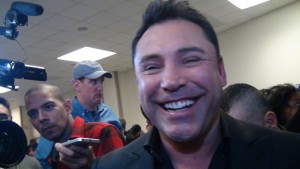

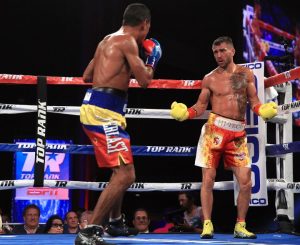
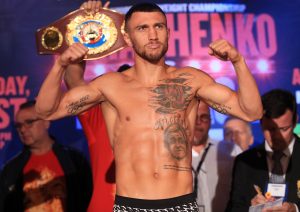
Stevenson, Pascal, and Bullets Both Spare and Spent

By Jimmy Tobin-

There was an infomercial of sorts at the Bell Centre in Montreal, Quebec, Saturday night. In a rematch undesirable and undesired, Adonis Stevenson did away with Andrzej Fonfara in brutal fashion, requiring but twice the time a part-time construction worker needed one year ago. If ever you needed proof that Stevenson remains a bridge too far for Fonfara…ah, but you didn’t need such proof did you? Stevenson remains one of the best fighters in the division, your eyes can tell you that. Yet however successful, his has been a forgettable reign (which should sit just fine with a promoter who can keep Deontay Wilder belted).

If the broadcast was salvaged at all from relegation to the formality scrapheap (which is not to suggest it was) the co-main is to thank. There, Jean Pascal fought off yet again the creeping shadows of irrelevance in dropping a majority decision to Eleider Alvarez. True to form, Pascal left a little more of himself in the ring; and while what remains of him can barely be stretched effectively over three minutes let alone twelve rounds, it was enough to make a showboat, not a killer, of Alvarez. Pascal succeeded then, in making Alvarez look mediocre—which is audition enough for Alvarez to become the ninth successful defense of Stevenson’s title.

But a Stevenson hit piece this is not, at least not quite.

“Superman” made clear his intentions in 2015—after another two-hour infomercial—when an HBO microphone was put in his face with the expectation that he would utter a specific name and Stevenson swerved. Offer whatever apologies you wish, attribute blame wherever you like—that moment encapsulates Stevenson’s championship run, his conduct since then only reinforces the message, and no number of Fonfaras, Sukhotskys, and Karpencys, however savagely chilled, will convince people otherwise.

He is fighter enough to change all of that with a left hand on the right chin and to suggest he is anything less is to watch him with more than your eyes. The number of light heavyweights who can absorb Stevenson’s Sunday punch may not be exceeded by the number of fighters who can keep him from landing it. He knocked cold the only man to beat him, has gotten off the canvas to win, and responds to adversity as the fighter with greater firepower should, which means that Stevenson, if matched as a champion should be, will provide many a spectacle. He remains a nightmare proposition, but for the opponents that matter only ever a proposition.

That is something that cannot be said of Pascal. Nor was it ever really said of him, there being so few stretches in his career when he was not trying himself against men able to find him wanting. He faced another such opponent in Alvarez and watching Pascal lay on the ropes setting transparent traps, winging counter left hooks too slow to land, lunging with lead crosses carried on unsteady legs, provided the only compelling action on Saturday. Barring the lone scorecard meant to preserve him as a viable future opponent for Stevenson, Pascal’s efforts were more endearing than effective. That has been true for a few nights over his career, one that is marked more by high profile losses than victories.

It is easy to romanticize and recast aging fighters, to allow a more charitable view of them the more punishment they absorb; even the objectionable ones seem less so in their increasing absence. Pascal is as deserving as any of such a treatment, and should likely be treated to it the next time a younger, stronger man shortens his night. Yet that reimagining is unnecessary. There is almost always drama in a Pascal fight because he is an athlete above all else, which has resulted in a fighter who takes a goodly amount of punishment  and responds by trying to light up everyone in front of him. Nor do you get shorted on toughness with Pascal. Take a break from defending Kell Brook and revisit the night Pascal turned back a then-rampaging Adrian Diaconu while fighting nine rounds with a broken bone in his shoulder.

No, Pascal has never quite been elite, evidenced by his record against Bernard Hopkins and Sergey Kovalev (a meager 0-3-1 with two stoppage losses), but such are the consequences of flying too close to the sun. A sober appraisal of his time in the ring cannot be anything but complimentary, and of the two Haitian-Canadians on the broadcast Saturday, it is Pascal whose career is most endearing. It is also the one more difficult to replicate (an unfortunate reality considering that boxing would be better off for having dozens of Pascals). Again, this is not to romanticize his career, only to suggest to remember it accurately. Pascal has long suffered from mischaracterization.

Entertaining at something approaching the highest level, Pascal never shied from a challenge, never shied even, from a beating, and more and more those seem like fundamental criteria worth evaluating a fighter by. Where a fighter ranks in his division, how many titles he’s won, how often he has defended them, his standing with a major network or promoter, even how many tickets he sells—all of these details can mislead. And if there is anything to be learned from the proliferation of televised boxing in recent years it is that restricting your viewing to those fighters who are earnest and able in their violence, those who with some frequency place themselves in contests where the outcome is unclear at the opening and subsequent bells, deprives you of little.

Still, even if boxing is becoming more and more concerned with fabricating instead of cultivating excellence, it feels foolish to suggest that Pascal is the last of a dying breed. Such platitudes are out of place in a sport as resilient as ours—there will always be a need for men like Pascal, and those men will be found. This one feels right though: the spent bullet is preferable to the spare one.


The untrustworthy compass

By Bart Barry-

A large portion of my thoughts in the last few months has gone to the consequences of a psychological compass that does not point due north but instead a few or many degrees east or west of its magnetic calling and the events – disease and depression and addiction, specifically (and often kinfolk) – that can cause such untrustworthiness. I’ve been having many fewer relatable thoughts lately so nothing should be read into the outsized portion of this thinking; it’s more like a portion of a fraction than anything direr.

No subject more interesting than this happened in our sport Saturday, and as some of this might pertain to Andre Ward and Sergey Kovalev’s upcoming rematch, it feels appropriate as not a time to treat such things.

The metaphor to the compass feels aptest because there are few scenarios more dispiriting than finding oneself lost in the woods with a compass one doubts. But here’s one: Being lost in the woods with a faulty compass one trusts absolutely. Magnetism and electricity and polarity and the rest ensure this doesn’t happen, but all the more reason to use it as a metaphor. Blinded by rage, as an example of a competing metaphor, feels comparatively flimsy; the blind person is well aware he doesn’t have sight and compensates for his blindness in sundry ways. Depression and disease and addiction in general do not work quite that way; a diseased person is not blind at all but rather filled with vibrant sight of a world that is sideways or motioning backwards or colored otherwise.

This is why oldfashioned appeals to bootstrapping and willfulness bring exponents of satisfaction more to their speechmakers than their audiences: “I remember when I overcame blah blah blah by making a list of blah blah blah and doing blah blah blah, daily!”

Yes, but what if you can’t help misplacing your list, or finding your whiteboard routinely erased, or adhering to a calendar that mixes days with weeks and hours?

A lesser malady to all this and a nearly universal part of the human condition is anxiety. Back when I had many more relatable thoughts than I have lately I committed a disproportionate portion of these thoughts to anxiety’s eradication. Identifying one’s anxiety, though, becomes an exercise fulfilling as picking oneself up by his own hair: a robust and ceaseless search for anxiety’s every harbinger evinces nothing so much as anxiety, and what could be more anxious than an anxiety-hunt that causes anxiety? And around.

And around.

There are ways to begin in a better direction, yes – and if anyone relates painfully to any of this, at least try a meditation routine of some sort before arcing the white towel over toprope – but if there be an ultimate solution, however temporarily enjoyed, it resides, again and probably, in anxiety’s eradication, not its maintenance. And the irony of that riddle is here: Anxiety reduces in most cases to narcissism, and a partial remedy to that seems to be this: Endeavor to make others like the version of themselves they are in your presence. Inwards to outwards to inwards to outwards; the remedy to the first problem, faithfully applied, is nearly the opposite of the second problem’s remedy. #WelcomeToLife

This is a boxing column?

OK, OK.

The art of championship prizefighting – used in this case like a synonym for combat between two evenly matched men – is many times the art of discomfiting another man by repeatedly making him do something he does not wish to do till he is exhausted. Sluggers do this by giving their opponents pain with each blow; boxers do this by frustrating their opponents’ offense and punctuating that frustration with counters that sting; volume punchers do it by setting a pace that is at least a beat or two faster than their opponents’ natural fighting rhythms.

Being thus discomfited becomes an emotional or at least mental state from which the world’s best prizefighters must recover quickly. It’s a function of proper conditioning much as the physical elements are – who can return closest to full strength, however defined, in the 60 seconds between rounds (while the very best, like Floyd Mayweather, are able to do it midround).

Since this entire column is an aside of sorts, let’s have one more: Emotional states work like this, too, for all of us, and the folks we consider the stablest are at best marginally less prone to disequilibrium from life’s quotidian events but mark themselves exceptional via quicker recovery times.

Much of Andre Ward’s comportment since his questionable decisioning of Sergey Kovalev in November, one hopes, is attributable to some effort to discomfit Kovalev prefight by making Kovalev so angry his compass stops pointing due north. Some of this, too, could be a matter of good luck: Ward’s generally unlikable demeanor and his promoter’s generally accepted incompetence are events Kovalev mistakes for personal affronts, but beyond a certain talent threshold, we already know, the greatest professional accomplishments are leavened significantly by luck.

Trying to divine the arbitrary border where talent ends and luck begins (beginning with the luck of one’s genetic predispositions that begin with the luck of one’s parents) is an anxious fool’s errand that unduly courts what anxiety someday can court disease, depression and addiction. And we shan’t have that.

Bart Barry can be reached via Twitter @bartbarry


FOLLOW STEVENSON – FONFARA LIVE!!

Follow all the action as Adonis Stevenson defends the WBC Light Heavyweight championship in a rematch with Andrzej Fonfara.  The action begins at 9 PM ET / 6 PM with a light heavyweight battle between Eleider Alvarez and former world champion Jean Pascal.

No refresh needed.  The page will update automatically.

 12 rounds WBC Light Heavyweight Title–Adonis Stevenson (28-1, 23 KO’s) vs Andrzej Fonfara (29-4, 17 KO’s)
ROUND 1 2 3 4 5 6 7 8 9 10 11 12 TOTAL
 Stevenson* 10   TKO                      10
 Fonfara  8                        8

Round 1: Straight left from Stevenson…HARD LEFT AND DOWN GOES FONFARA..Straight left..Big left backs Stevenson up..Hard left hurts Fonfara..Hard left and Fonfara is in bad trouble

Round 2 3 lefts snaps the head back and FoNFARA’S CORNER STOPS THE FIGHT

12-Rounds–Light Heavyweights–Eleider Alvarez (22-0, 11 KO’s) vs Jean Pascal (31-4-1, 18 KO’s) 
ROUND 1 2 3 4 5 6 7 8 9 10 11 12 TOTAL
 Alvarez 9   10 9  10   10  10 9   9 10   9  10  10  115
 Pascal 10   9  10  9  9  9 10  10   9  10  9 9    113

Round 1 Alvarez lands a jab..Good counter right from Pascal..Left and right…Right from Alvarez

Round 2 Good over hand right from Alvarez…Hard jab..Pascal Holding on..2 uppercuts to body from Alvarez..Jab..Lead left from Pascal..Good combination from Alvarez..

Round 3 Alvarez lands a right over the top..Good counter right from Pascal..Right..Furious exchange

Round 4 Hard 1-2 from Alvarez..Jab…Left hook..3 jabs..

Round 5 Alvarez lands a combination..Hard jab..2 jabs and a right..double jab..Jab..

Round 6 Good right from Alvarez..Jab..

Round 7 Right from Alvarez..Pascal lands a body shot..Good right

Round 8 Alvarez lands 2 jabs and a left hook….Body and right to head from Pascal..Double left hook..Right and body work..Body..Short right from Alvarez

Round 9 Right from Alvarez..Huge uppercut..Flurry on the ropes..3 punch combo from Pascal..Body and head shot..Lead right..Hard left hook from Alvarez…Jab

Round 10 Counter right from Pascal..Double jab from Alvarez..Counter left from Pascal…Left from Alvarez..Right from Pascal..

Round 11 Hard right from Alvarez..Good combination..Jab

Round 12 Left from Alvarez…Jab..

114-114….117-111 and 116-112 for Eleider Alvarez


Mikey Garcia-Adrien Broner: Easy to make, tough to pick

By Norm Frauenheim-

They are dangerous men moving in opposite directions. It was inevitable perhaps that their paths would cross in a fight with no title at stake, yet everything else at risk.

“This was a very easy fight to make,’’ Showtime executive vice-president Stephen Espinoza said Thursday in announcing Mikey Garcia-versus-Adrien Broner on July 29 at a venue still undetermined.

It was easy for all kinds of reasons. In a bid to enhance his pound-for-pound credentials, Garcia was looking to unify his lightweight title, maybe against Jorge Linares or Terry Flanagan. But they had other ideas. There were no options. But there was Broner.

“I haven’t fought anybody else who has been champion in four divisions,” Garcia (36-0, 30 KOs) said during a conference call after the junior-welterweight bout was announced. “That’s a big accomplishment in itself there. That’s what I mean. There is no one else available who has that resume.’’

Broner was — is – at a point of no return in a quest to regain relevance. He has won titles at super featherweight, lightweight, super lightweight and welterweight, but his recent record includes criminal charges and jail time.

“I’ve gotten older and I’m getting more wise,” Broner said. “I’m more mature. This next half of my career, I’m just focusing more on doing everything the correct way. The first half, I tried to do everything my way. It worked, but I could have been better.

“So, I want to try to do everything correctly.”

That Broner will attempt to do that in the ring instead of the Department of Corrections is an acknowledgement that his career – his life — is at a crossroads.

Against Garcia, however, he has taken on a steep challenge. Broner’s identity as the self-proclaimed “Problem’’ began to come apart in the wake of a crushing loss to Marcos Maidana in 2013. Maidana’s relentless aggression and power fractured the noisy confidence in a fighter who liked to say that his initials, AB, meant About Billions. About Bail, too.

The bragging and insults are gone. At least, they were Thursday. A quiet Broner was quick to praise Garcia, whose star has been ascending ever since his scary knockout of Dejan Zlaticanin on Jan. 28 in Las Vegas.

“Everybody is a puncher,’’ Broner said. “It all hurts. I don’t want to be hit, and I don’t care if it’s Paulie Malignaggi or Marcos Maidana.’’

At his best, Broner figures to be a lot harder to hit than a Zlaticanin ever was. What’s more, Broner is bigger. He fought as a welterweight. Broner’s size and athleticism promise to be a challenge for Garcia, who will be fighting at 140 for the first time. Yet, there are questions about whether Broner can in fact make the weight.

Broner lost his junior-welterweight belt on the scale before facing Ashley Theophane 14 months ago. He failed to make weight and went on to win by TKO.

In his last fight, Broner a split-decision winner at welterweight against Adrian Granados on Feb. 18. The weight was increased to 147 pounds a couple of weeks before opening bell because Broner was having trouble cutting weight.

Espinoza said Thursday that the deal included penalties for not making weight. But he would not divulge details. Don’t worry, said Broner, who promised to make the contracted weight.

“This fight gives me a reason to make 140 pounds,’’ he said. “I’ll make the weight no problem, just like when I fought for the title. I’ll make the weight easy.”

Making weight, however, might be his only victory, said Garcia, whose chances at facing Vasyl Lomachenko in an eventual pound-for-pound showdown might be determined by how he does against Broner (33-2, 24 KOs).

“He loses,’’ the unbeaten Garcia said. “He has lost. I don’t lose. I don’t believe anyone around my division can beat me. I believe I’m the better fighter.”


Errol Spence bends then breaks Kell Brook

By Jimmy Tobin-

American welterweight Errol “The Truth” Spence beat England’s Kell “Special K” Brook into submission before 27,000 or so of Brook’s supporters at Bramall Lane Football Ground in Sheffield, Saturday. In the eleventh round, Brook, feeling himself sufficiently mauled, escaped Spence via the only avenue remaining and kneeled before what looks more and more like the next man to rule the welterweight division.

For no welterweight has the futurity of Spence. Manny Pacquiao remains the greatest 147-pound fighter, easily its most distinguished. Futurity for Pacquiao, however, is almost entirely restricted to his opponents, who do little in defeat to further establish the Filipino’s greatness, but in victory would define their careers. Nor have Top Rank or Pacquiao shown much interest in ratifying the future, even with Terence Crawford ready to become it. And while Keith Thurman, undefeated, with two belts about his waist, is more accomplished than Spence, his ceiling feels lower, a byproduct of facing better opposition perhaps, but also of how he’s fared against it. It is likely that all in the division would be underdogs against Spence, and that he would prove why if granted the opportunity.

Spence was the favorite against Brook too, despite Brook’s credentials and considerable home-canvas advantage. That the fight bore those odds out provided some an opportunity to gripe that Brook, bursting at his welterweight seams, had been undone by the scale; or that he suffered residuals from his ill-fated cash-grab against Gennady Golovkin last September, a fight where Brook’s flashes of success continue to overshadow the substantial punishment he took. Perhaps Brook indeed entered the ring Saturday a ghost of the version that went undefeated in his first 34 fights. But what joylessness there is in such excuses. And how little proof. Better to let Spence have his moment, one that showed ambition and ability, that validated the expectations and intrigue surrounding him. Revisionist history awaits all fighters, but who can be so cynical as to already start tearing down Spence?

Especially considering the quality of his win Saturday. Spence went overseas and won a title by knocking out the defending champion on his home turf in a test that was more fight than formality. Brook had faced grotesque pressure before, using strength, nerve, timing to hold his ground and turn back a raging Shawn Porter. But against Spence, who scrambled Brook’s timing with his jab and who hits with a force and accuracy that Porter cannot match, the Sheffield fighter was quickly drawn into the wrong kind of fight. When it was clear that countering would only leave him pulped (a realization he had before all those malignant knuckles to the gut depleted him) Brook brought the fight to Spence with some success. In doing so he improved his prospects for victory and knockout loss alike, though the longer he employed that strategy the more only one of those outcomes loomed.

It was in Brook’s defiant moments that Spence flashed rare emotion, curling a wry smile at the ends of exchanges, enjoying what he gleaned from Brook’s body. It was here too that Spence quieted the whispers about his chin, taking well a number of stern punches. In a moment reminiscent of Anthony Joshua’s coming of age against Wladimir Klitschko last month, Spence dropped Brook with a barrage in the tenth only to find himself hurt and pursued soon thereafter. But Spence survived, a testament to his toughness and to the dividends of his unrelenting body attack. A note on Spence’s body punching: his left to the body is telegraphed a bit, and yet he throws it with such conviction that it need land only a few times before opponents abandon any notion of countering it, and concern themselves instead with bracing for its impact. It is then, a punch that not only whittles men away, but controls them.

If the ending was anticlimactic that is on Brook, who needed to last but five minutes more, who was defending his title before his people, and who pawed at his damaged eye but suffered no punches in the seconds leading up to his capitulation. This is not a suggest Brook needed to fight on, the decision to continue or not was rightly his to make. There are examples aplenty of fighters risking more under similar circumstances, though, and the reverence they enjoy Brook is not welcome to. Still, there is something satisfying about such stoppages too, where the specter of what the other man might do forces a fighter into the realm of taboo and the fallout that follows.

While he proved much against Brook, whether Spence revealed anything new—beyond a decent chin—depends mostly on how you apprised him and Brook heading into the fight. He is hardly flawless, and that which troubles an earnest pressure fighter will trouble Spence. But like his power, his disposition, his ambition, any weakness in Spence’s game is welcome: it makes him intriguing in a way the last American welterweight to lay claim to the division was not. Like Terence Crawford, Spence is the type of fighter American boxing has been waiting for, except the latter has a more compelling pool of opponents (and Crawford should be encouraged to join those ranks).

The man who guides Spence’s career, long been maligned for squandering resources, may no longer be in the financial position to cradle such an asset. Which means Spence could soon be embarking on the type of run that leaves the last American fighter to lay claim to the division dying for attention.